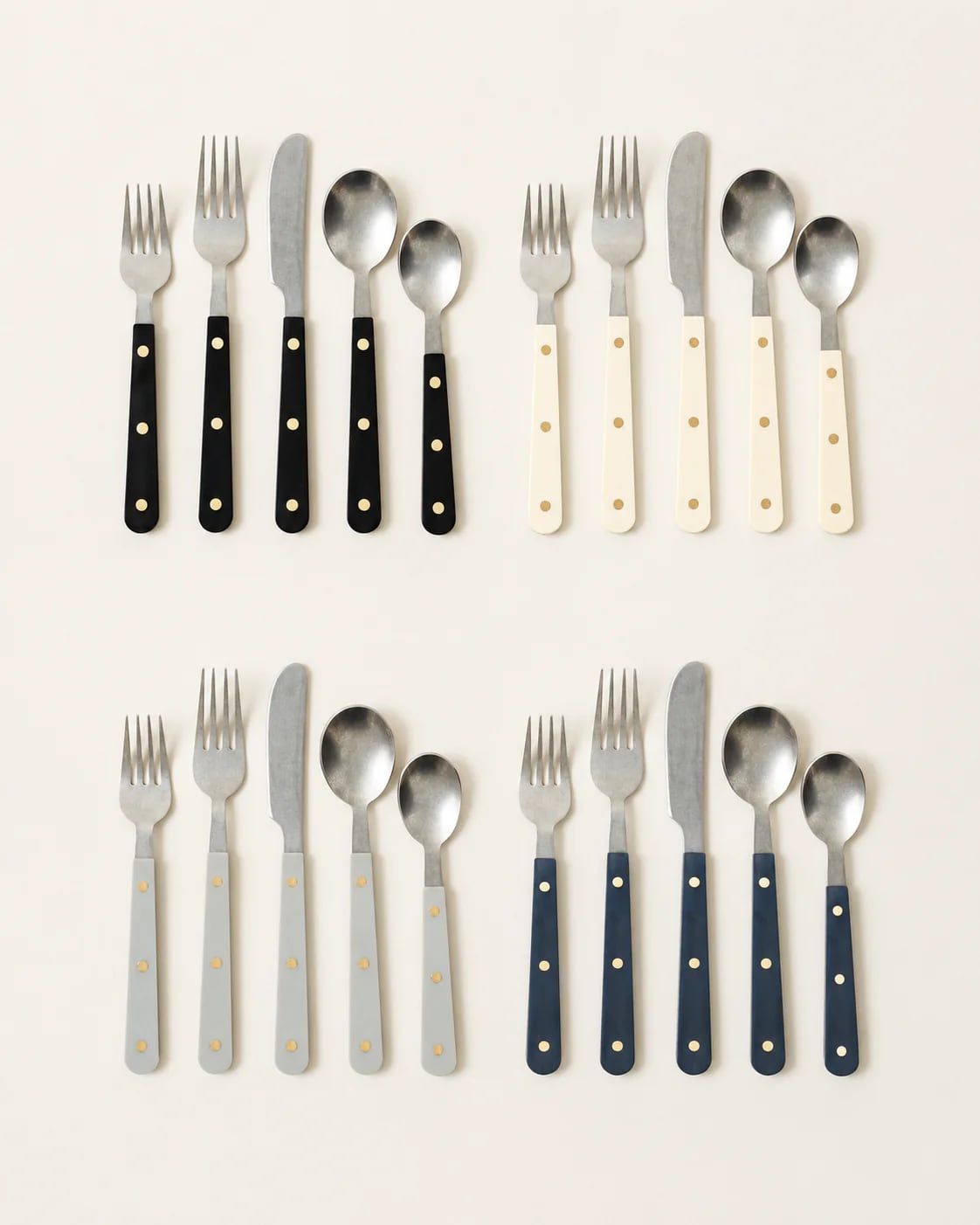
Pick up a well-made fork and you feel it before you can name it: the weight sits right, the tines line up, the handle balances against the bowl, and the finish catches the light without showing a single tool mark. That feeling is not an accident. At Gemixx Exports, an average of sixteen artisans touch each flatware piece on its way from raw metal to a finished, food-safe product. This is a walk through that chain — the same one we have been refining since we began in 1982 as a contract electroplating facility for India's leading flatware manufacturers.
It starts with form: forging and casting
Every piece begins as form. For the working parts of flatware — the bowl of a spoon, the blade of a knife, the body of a fork — we use forging, by hand and on semi-automatic equipment, to compress and shape the metal so it holds its geometry under daily use. Forging is what gives a piece its spine; a forged spoon resists bending in a way a stamped one never will.
For handles and sculptural elements, we turn to casting. Our network runs sand casting, lost-wax casting and die casting, and the choice depends on the design. Lost-wax casting captures the fine detail of a bow handle or an animal-topped finial; die casting is right for repeatable volume; sand casting suits larger, characterful forms. Casting is where a flatware program gets its personality, because it is where a designer's sketch becomes a three-dimensional object you can hold.
The middle of the chain: grinding, fitting and assembly
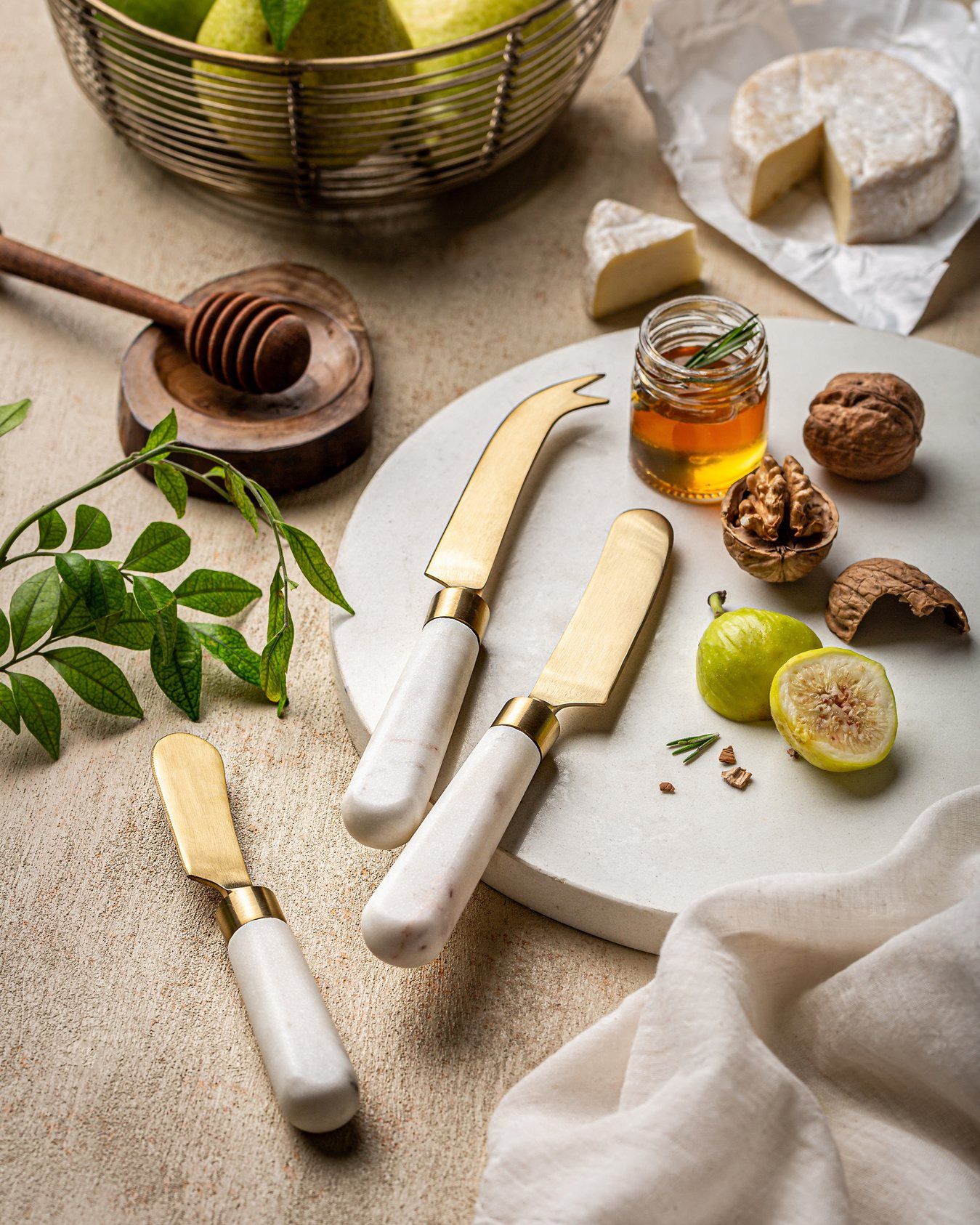
A forged or cast part is not yet a flatware piece. It has to be ground and trued so the edges are clean, the proportions are correct, and the surfaces are ready to take a finish. Knife blades are profiled and edged; fork tines are separated and rounded; spoon bowls are smoothed. Where a design calls for a separate handle — wood, bone, marble, resin or enamel — that handle is turned or carved and then fitted to the metal component by hand. This is also where mixed-material pieces come together, and it is one of the most demanding stations in the workshop, because a misaligned handle is visible forever.
Where it earns its finish: polishing, plating and texture
Polishing is slow, patient work. Each surface is taken through progressively finer steps until it reaches the look the program calls for — a mirror polish, a satin brush, or a deliberately rustic surface that shows the desirable imperfections that are the hallmark of true handcrafted work. We have spent more than forty years designing flatware that celebrates those imperfections rather than sanding them away.
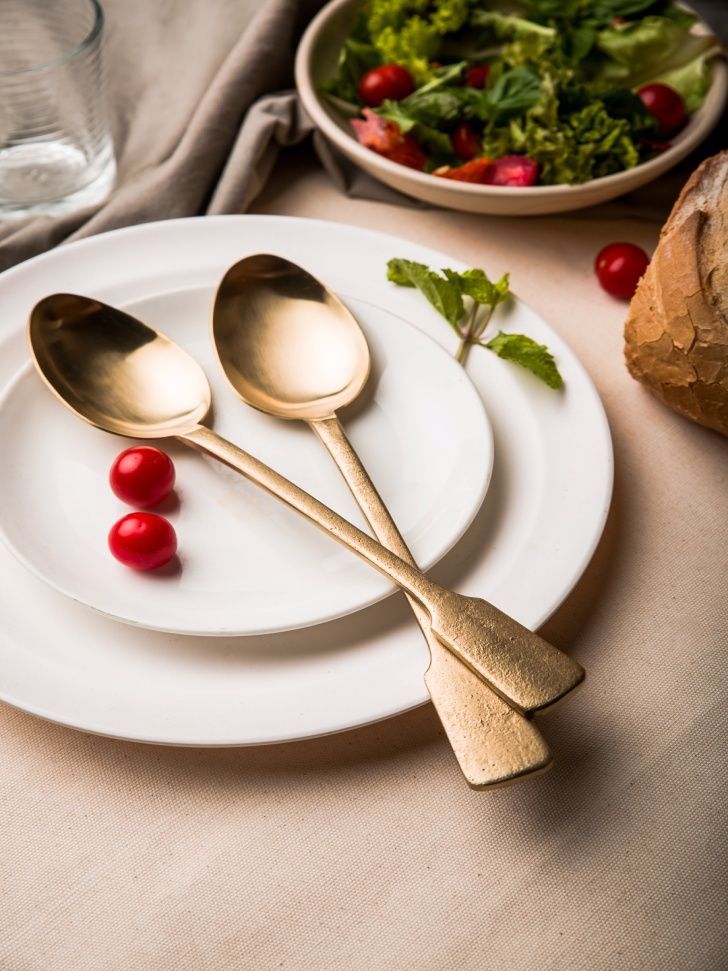
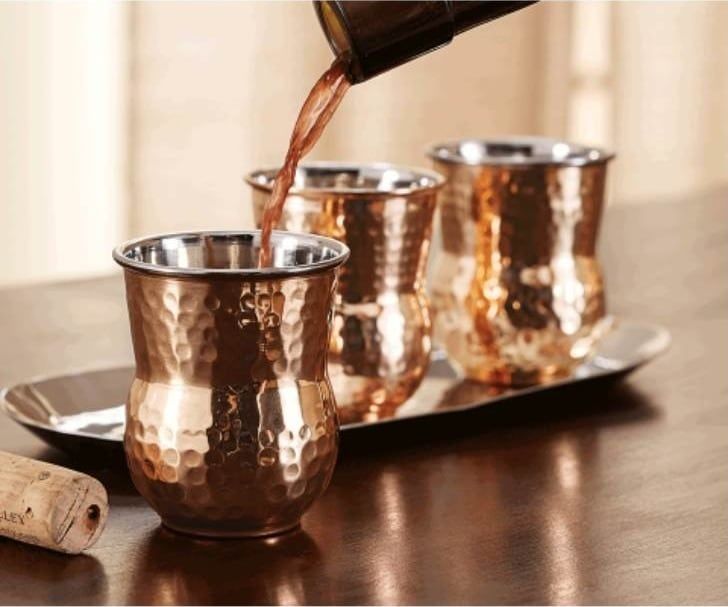
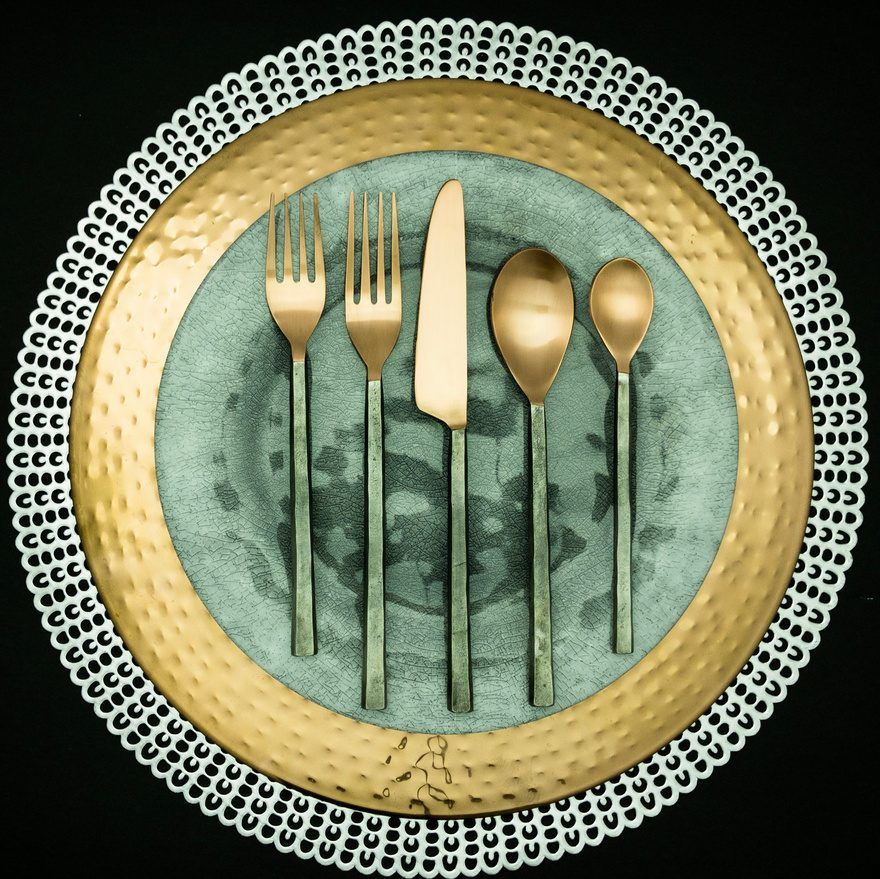
Then comes the finish itself. Our roots are in electroplating, and that heritage shows in the range we can apply: Gold PVD, Champagne Gold PVD and Black PVD for hard-wearing, premium color; brushed and polished stainless for a clean contemporary look; and copper tones for warmth. Alongside plating, we apply mechanical and chemical textures and finishes, plus laser etching and finishing where a design needs a logo, pattern or mark. PVD finishes in particular are chosen because they wear beautifully over years of service rather than dulling after a season.
Why sixteen hands matter
Counting the people is not a marketing flourish; it is a description of how the quality happens. Each artisan owns one discipline and answers for it, so a flaw introduced at the forging station is caught at grinding, and a finish that is not right is sent back before it is ever boxed. That distributed accountability is part of why our product issue rate sits at a fraction of a percent across the network. It is also why we reinvest a meaningful share of our operating budget into research and development — new tooling, new finishes and new processes — so the craft keeps improving rather than standing still.
The piece you finally hold is food-safe by design. Our stainless steel is FDA-compliant, our finishes meet California Proposition 65 requirements, and the whole operation is run as a SEDEX member with SMETA audits behind it. The result is flatware that earns its place in the lines of leading global houseware brands — and a partner who can take your next design from a sketch through every one of these stations to a finished collection.