How flatware is made, from raw steel to a packed set
Journal · Buyer’s Guide

How flatware is made, from raw steel to a packed set

Anyone who buys flatware in volume benefits from knowing how flatware is made, because many quality problems trace back to one stage of the process. This article walks through the stages involved in making our flatware, coordinated from our own metalware factory in Moradabad, India, and explains what each stage decides for the buyer: the feel, the finish, the fit of the handle and the consistency from piece to piece. It builds on our shorter journal piece, Sixteen Hands, and gives the buyer's view.

· Gemixx Exports

Stage 1: the brief and the steel

Everything begins with a decision about shape, steel grade and gauge. Steel grade and gauge are set in the quote, and a mill test certificate per lot records what steel went in for the commercial range. If you are still choosing a grade, read 18/10 vs 18/8 vs 18/0 flatware first.
Stage 2: forming the metal

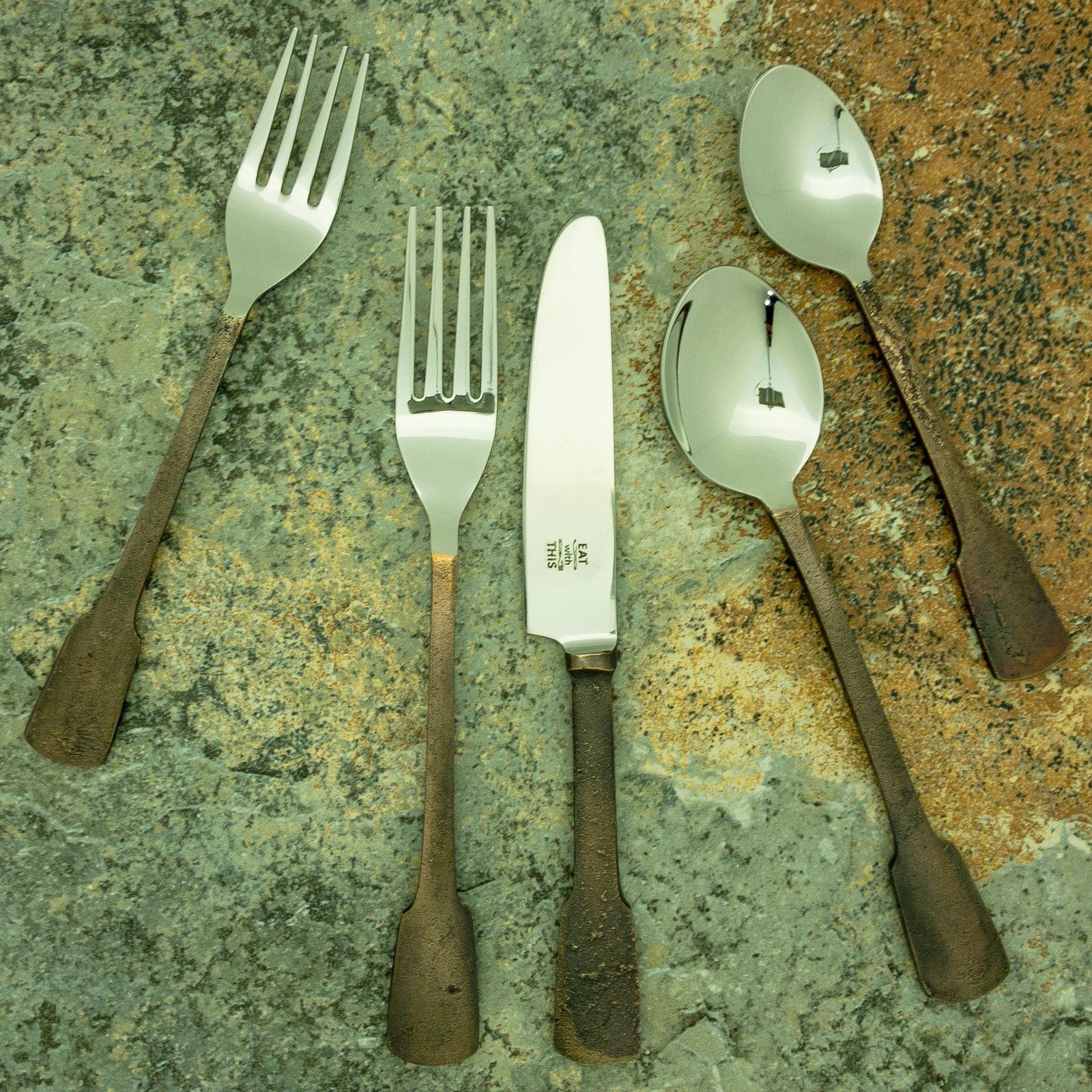
The working parts of a piece, such as a spoon bowl, a knife blade or a fork body, are forged by hand or on semi-automatic equipment. Forging gives the metal strength and sets the basic shape. Handles and sculptural elements follow a different route: they are cast, using sand casting, lost-wax casting or die casting, depending on the design. A sculpted bow or an animal handle, for example, has to be cast, because it cannot be formed from a flat blank.

Stage 3: grinding and truing

Forged and cast parts come out rough. They are ground and trued, which sets proportion and clears the edges. Knife blades are profiled and edged, fork tines are separated and rounded, and spoon bowls are smoothed. This stage decides how the piece sits in the hand, and it is where an uneven tine or a heavy shoulder is corrected.

Stage 4: fitting the handle

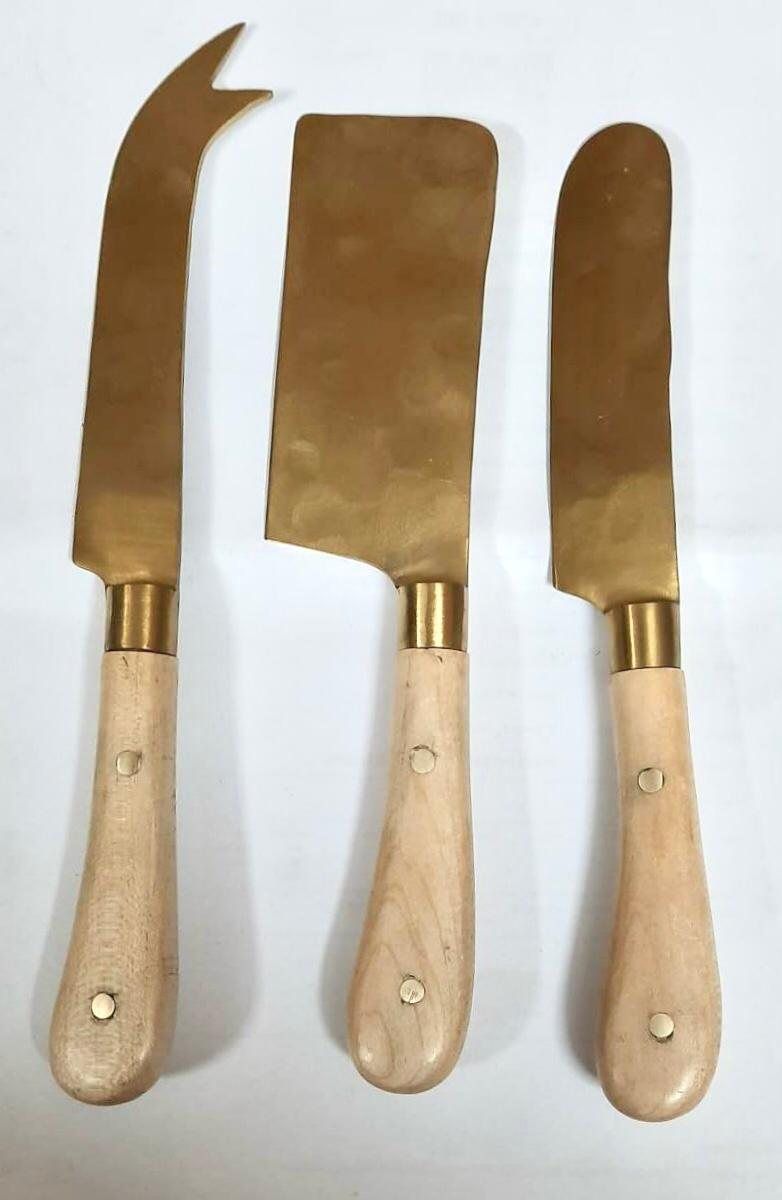
Many patterns have a separate handle in wood, bone, marble, resin or enamel. These are turned or carved, then fitted by hand to the metal. Handles in wood, bone, resin or enamel are fitted after plating or PVD, because they cannot go through the coating process. All-metal pieces are coated as one. Fit is judged by eye and by hand: the join should be tight, flush and comfortable. Material choice matters here, and the hammered flatware and handle materials page describes what each material brings.

Stage 5: polishing

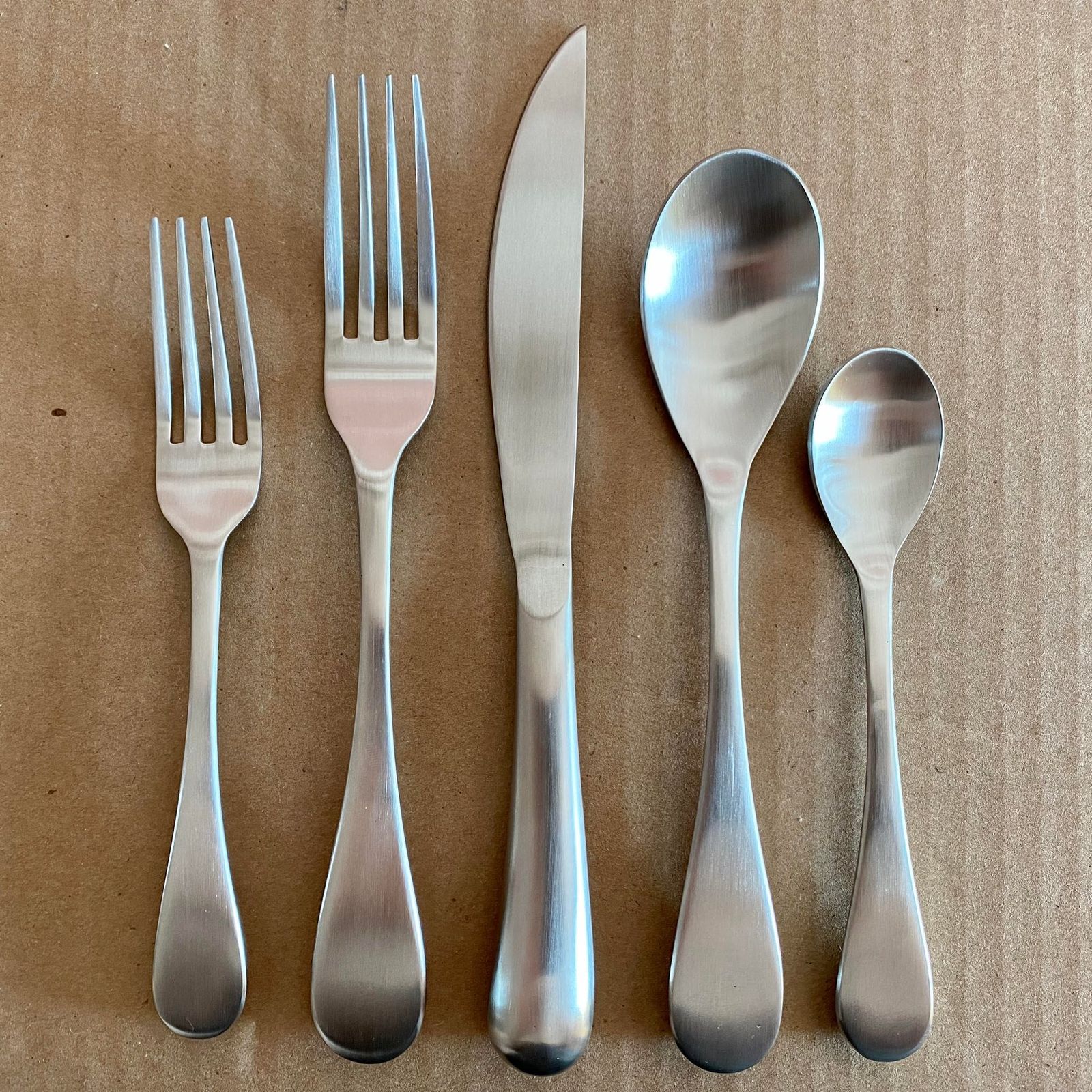
Surfaces are polished in progressively finer steps, from a coarse cut to a mirror, or to a satin brush or a rustic finish, depending on the design. Our commercial mirror-polish patterns are buffed so that edges carry no burr. Polishing is skilled work: too much removes the pattern detail and too little leaves marks that show through coating later.

Stage 6: texture and decoration

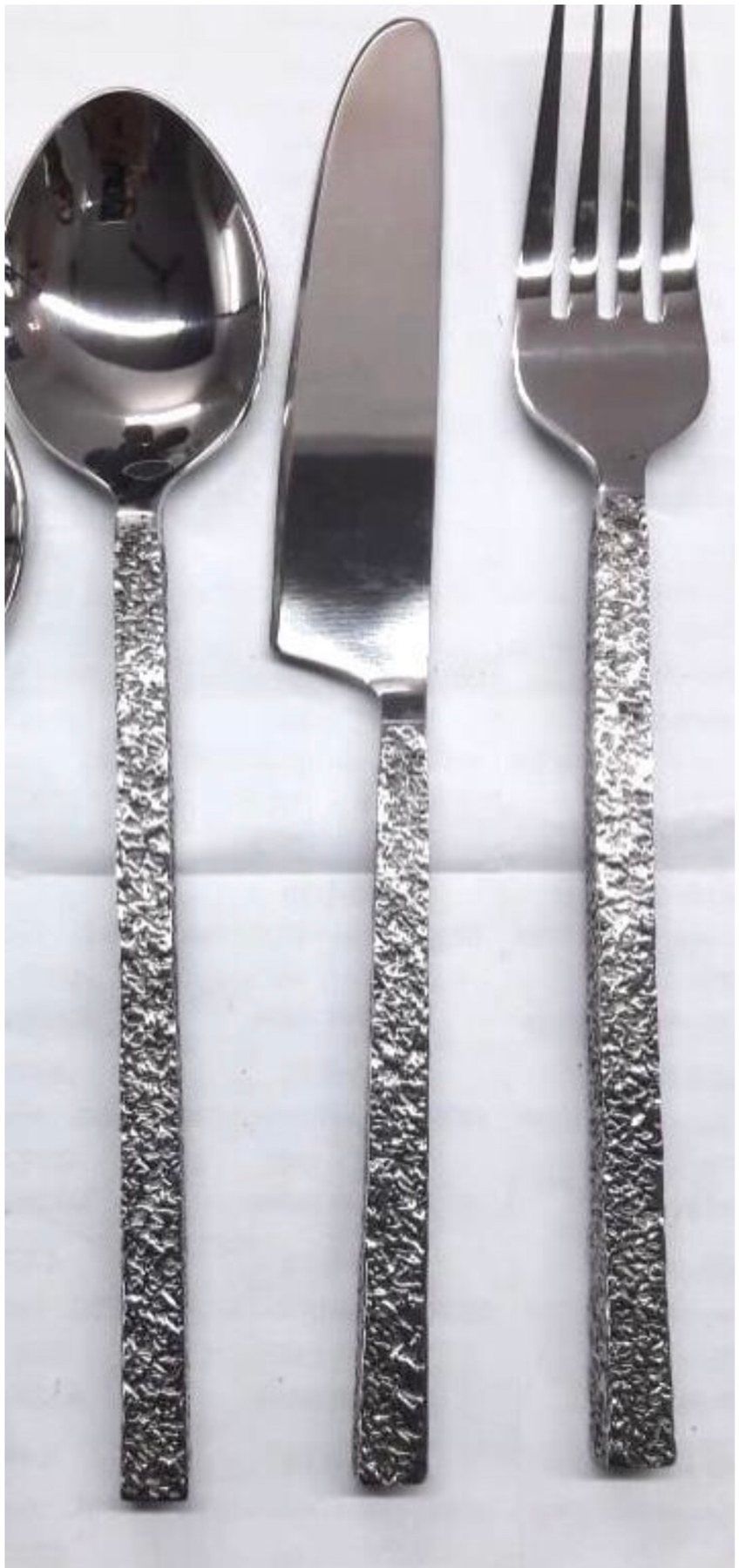
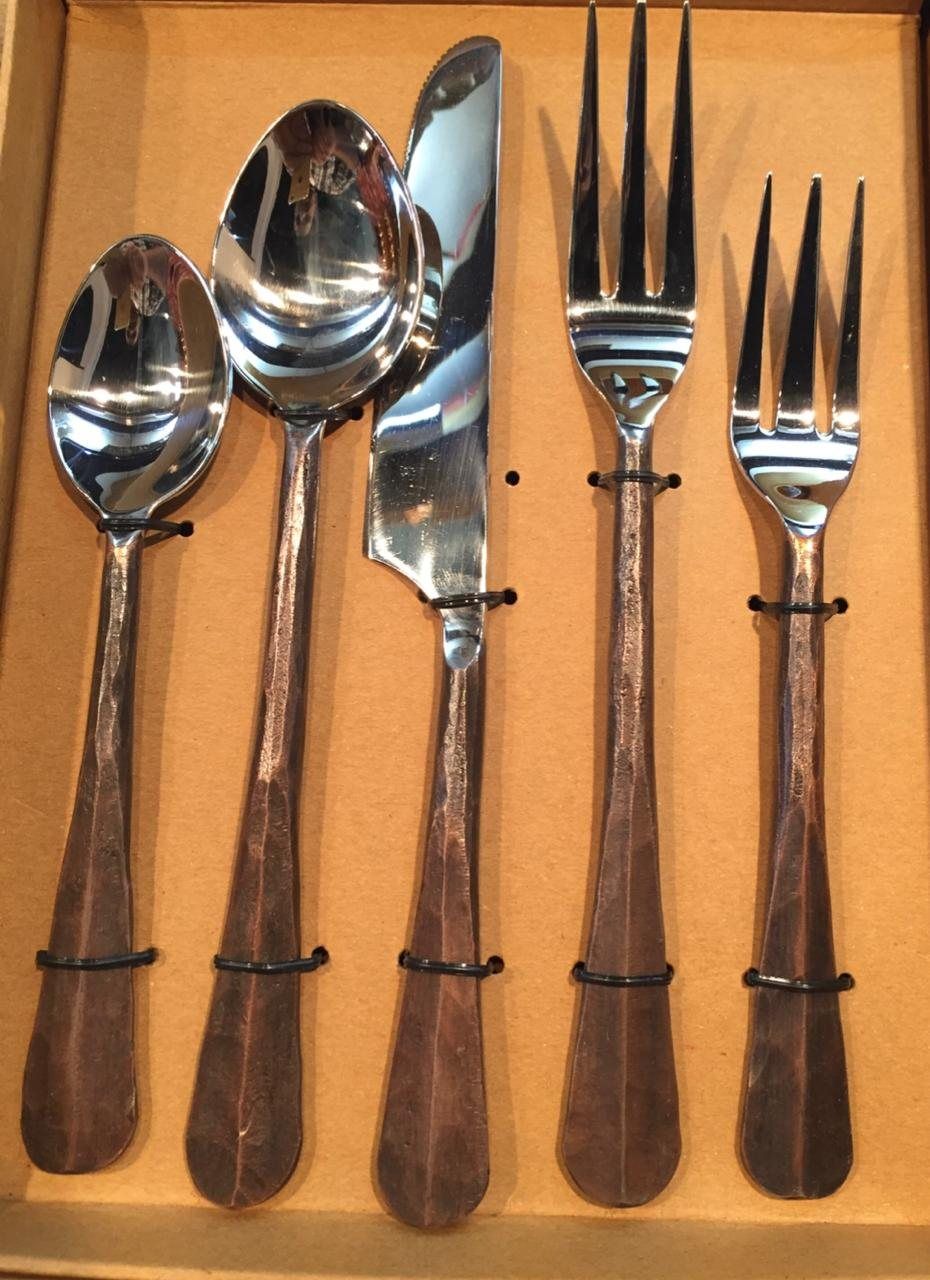
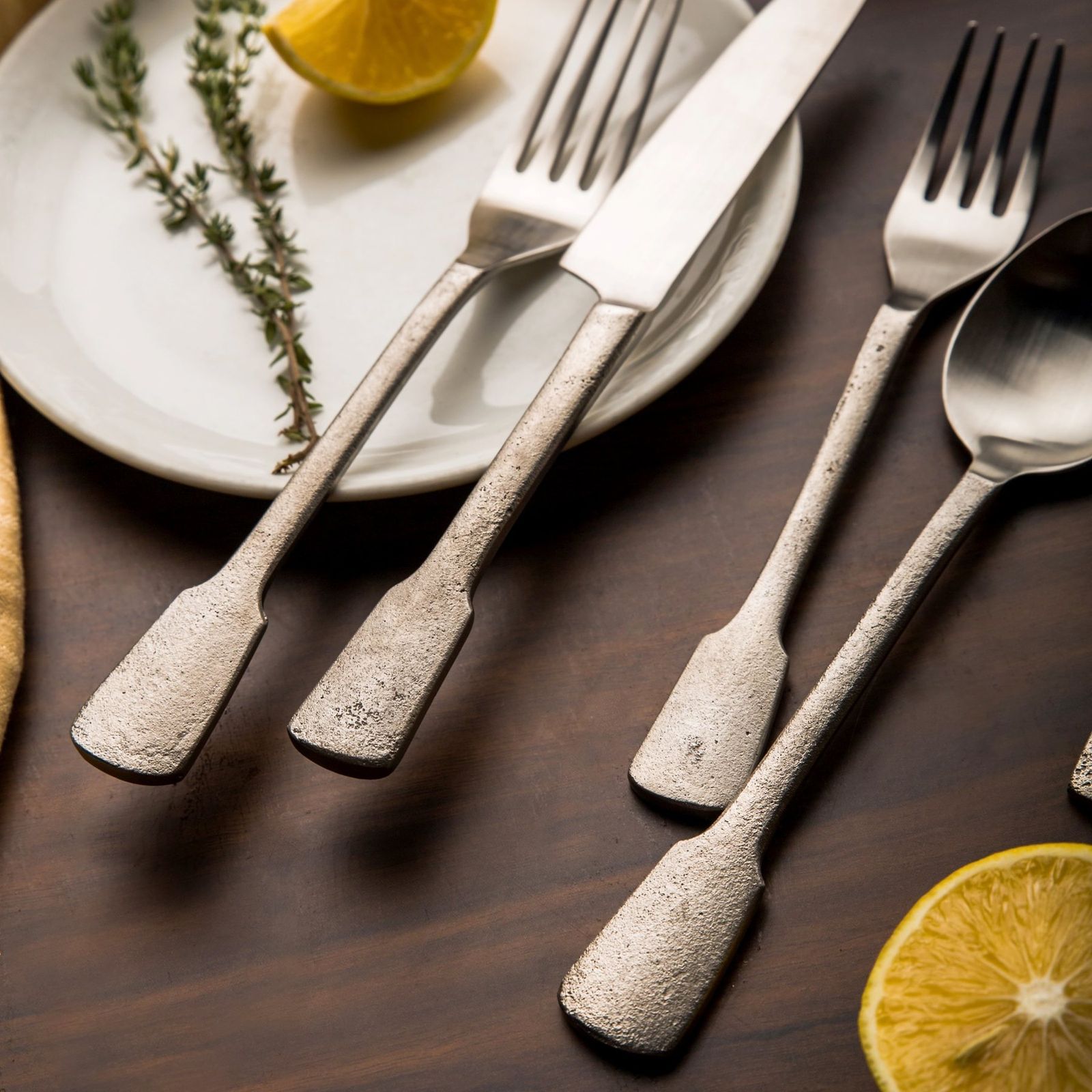
Texture can be added by pressing, by hand and by laser etching. In our commercial range, a press-formed hammered field runs along a handle, faceted handles carry geometric facets, engraved handles show a cross-hatch lattice and laser etching produces chequer and mosaic handles. Some patterns keep a flat surface for laser marking or logo etching at a later stage.

Stage 7: plating and PVD colour

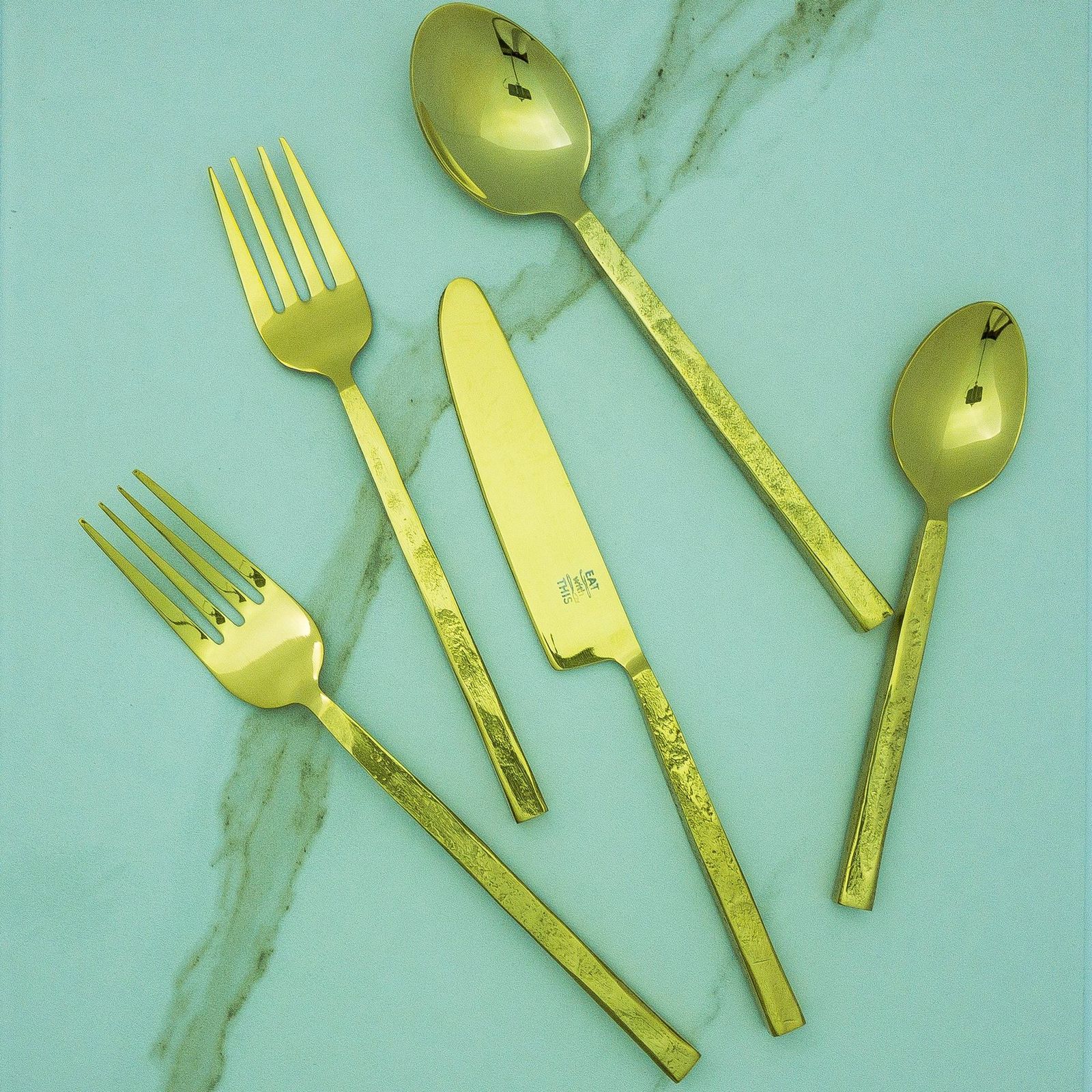
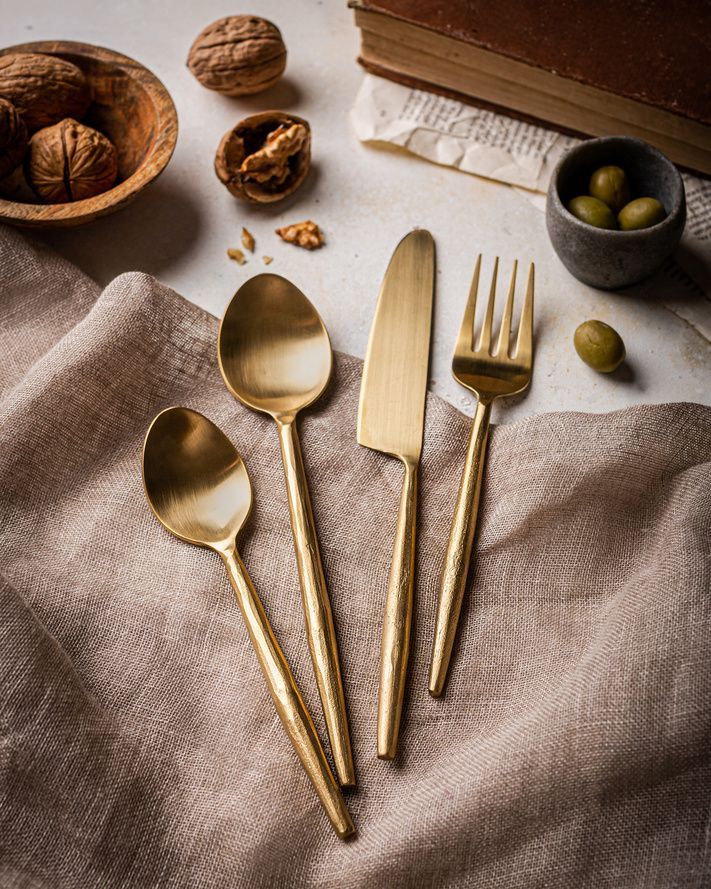
Colour is applied to the metal body before any non-metal handle is fitted. Colour finishes include gold, champagne gold, black and copper tones; brushed and polished stainless are surface finishes, not coatings. PVD, or physical vapor deposition, lays a thin coating over the steel inside a vacuum chamber. Gemixx started in 1982 as an electroplating contractor to India's flatware makers, which is why surface finishing is central to how we work. See the gold and PVD flatware finishes page for the colour range.

Stage 8: inspection, packing and shipping

On average sixteen artisans touch each piece, each responsible for one discipline, so flaws are caught at the next stage and not passed on. Inspection and packing take place at our Noida site. Packing details for open-stock flatware are on commercial flatware wholesale. Buyers who need a sale-ready pack can add presentation boxes or custom packaging.

What this means when you order

Samples show the process: handle fit, finish and weight are visible in a sample, so approve one before production starts.

Lead time follows the stages: the more stages a pattern needs, the longer production runs, and the two ranges quote different times.

Custom changes touch several stages: a new handle, a new colour and new packaging each add steps, which is why a custom flatware manufacturer needs the whole line in one place.

For buyers placing recurring orders, see wholesale flatware and commercial flatware wholesale. For the sourcing side, see flatware made in India.

Good to Know

Questions about how flatware is made

Is flatware forged or stamped?

Both methods exist in the industry. At our factory, working parts are forged by hand or on semi-automatic equipment, and handles and sculptural elements are cast.

How many people work on one piece?

Around sixteen hands, as our shorter article describes.

What is PVD on flatware?

PVD means physical vapor deposition. A thin coating is applied to stainless steel in a vacuum chamber to give colours such as gold, champagne gold and black.

How long does it take to make flatware?

It depends on the range, and the lead times for each are on the flatware manufacturer and commercial flatware pages.

How are handles attached?

Non-metal handles are fitted by hand after the metal body is finished; cast metal handles are ground and trued with the body.

How is quality checked?

Each stage has its own specialist, final checks happen in Noida, and the commercial range ships with a mill test certificate per lot.

Keep Exploring

Related pages

Flatware manufacturer

Handcrafted premium flatware and serving sets in gold, champagne, copper and black PVD finishes, plus wood, bone and enamel handles. Made to spec.

Read more

Wholesale flatware

Wholesale flatware direct from an Indian manufacturer: open-stock patterns, place settings, gold PVD and bulk silverware, quoted per pattern and volume.

Read more

Custom flatware manufacturer

Custom flatware manufacturer for private label and OEM programmes: your pattern, finish, handle and packaging, made in our own Moradabad factory.

Read more

Hammered flatware and handle materials

Hammered flatware and handle options from the manufacturer: wood, bone, marble, resin, enamel and glass bead handles on stainless steel, made in India.

Read more

Gold and PVD flatware finishes

Gold flatware wholesale from the manufacturer: matte gold, rose gold, champagne, black and copper PVD finishes on stainless steel, approved on a sample.

Read more

Flatware made in India

How to import flatware from India: vet a supplier, specify steel grade, gauge and finish, and follow an order from sample to shipment.

Read more
Start a Conversation

Start a flatware development brief.

Send a sketch, photo or CAD. We reply within one business day.