Material
Acrylic, in detail
Moulded to our dies and dyed to the reference: the widest colour latitude in the library, half the weight of glass, and no shatter risk.
Specs and sizes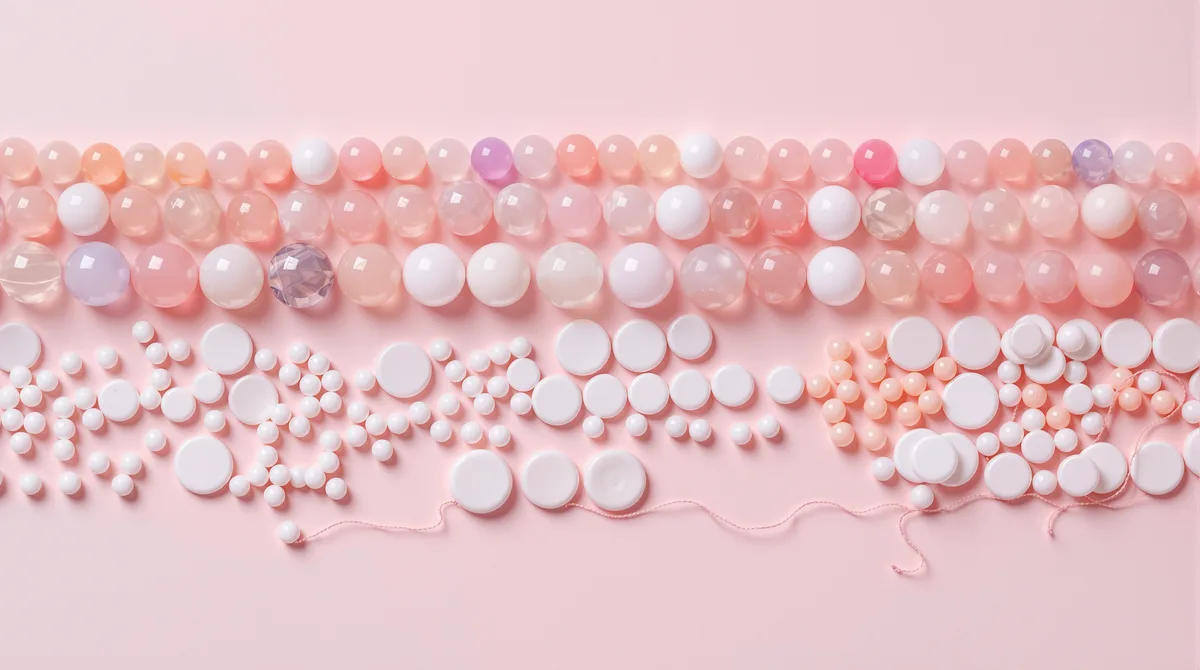
Guide · Material
Plastic is not a material, it is a category, and the two plastics that turn up in bead curtains behave nothing like each other. One is worth specifying and one is worth asking about.
Groups of plastic beads laid out in bands across the frame — glossy moulded acrylic rounds, matte opaque rounds and small cast discs — with loose beads scattered below them.
Plastic in a bead curtain nearly always means acrylic: moulded and dyed to a named colour, rigid, clear or opaque, and odourless. It occasionally means PVC, which is softer, cheaper, often smells when new and carries a different chemical-compliance conversation. Ours are acrylic, moulded and dyed to our colour, to our own dies where a design needs a custom bead.
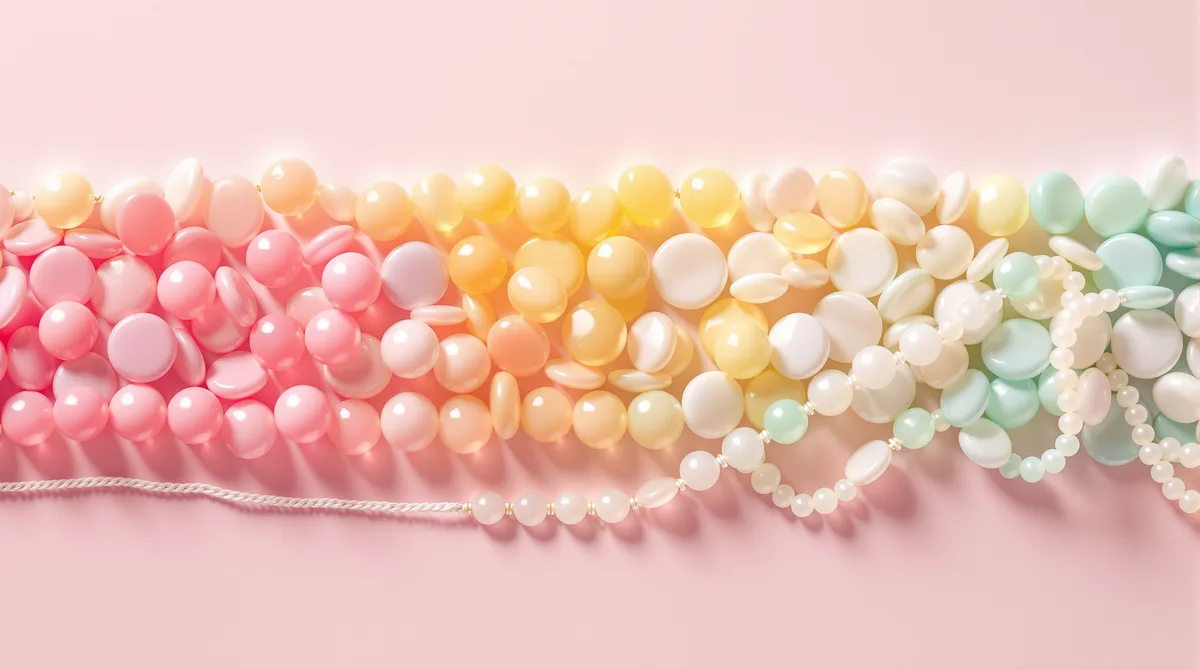
That is the whole question, and a listing that only says "plastic" is withholding the useful part.
Two polymers turn up in bead curtains. Acrylic is rigid, clear or opaque, dyed through, odourless and takes a moulded shape with crisp detail. PVC is softer, cheaper, frequently smells when new because of its plasticiser content, and holds detail less sharply.
They look similar in a photograph. They are not similar in a room, and they are not similar on a compliance sheet.
By hand and by nose.
Acrylic is hard. Squeeze a bead and nothing gives. Two acrylic beads knocked together produce a bright, short click — the sound that puts acrylic between wood's soft knock and glass's chime.
PVC is slightly yielding under a fingernail, and it sounds duller because the material damps its own vibration. A new PVC panel often arrives with a distinct plasticiser smell that fades over weeks; acrylic has none at all.
If a panel smells when you unwrap it, it is not acrylic.
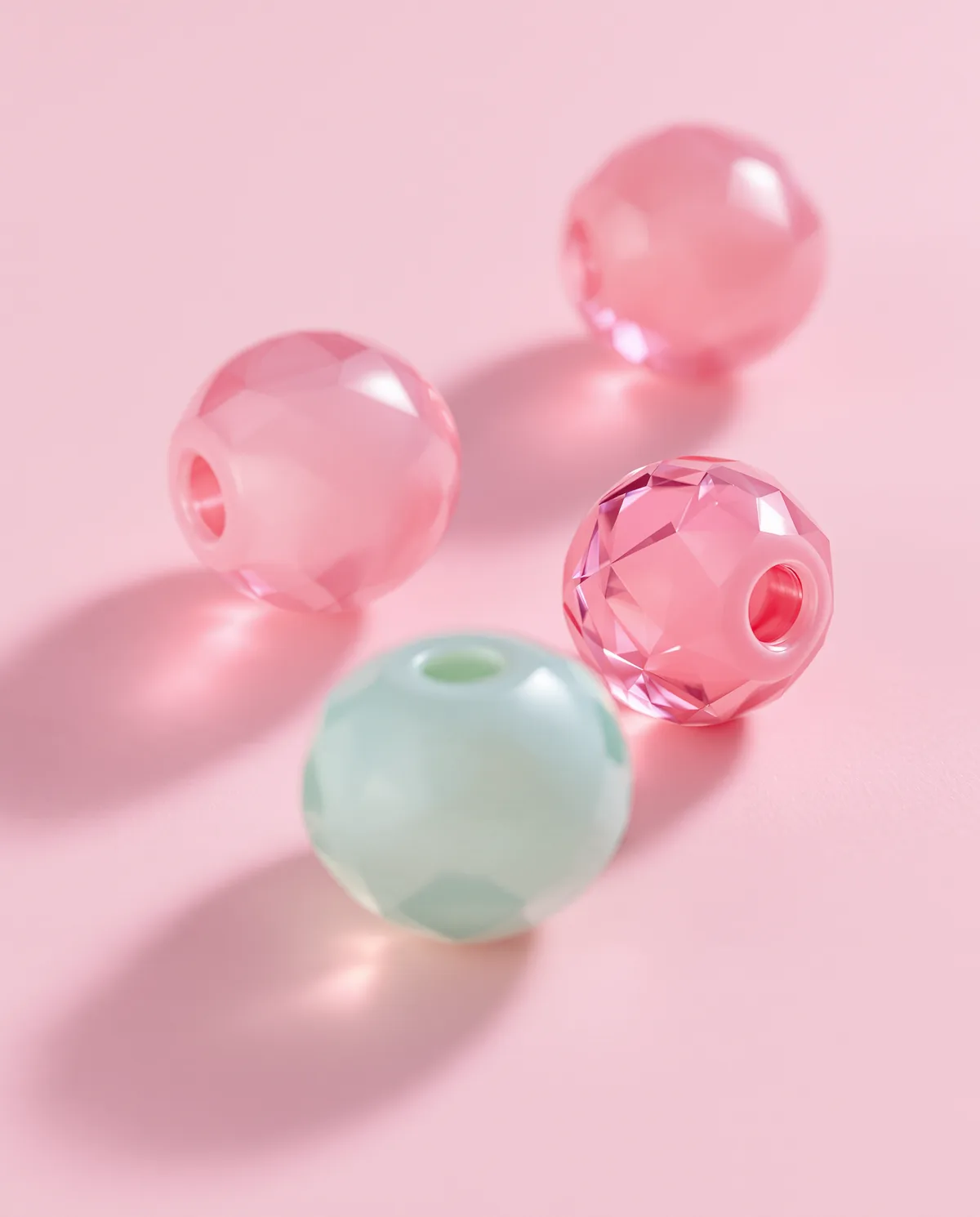
Acrylic. Our acrylic beads are moulded and dyed to our colour, and where a design needs a bead nobody makes, we cut our own die.
That has happened on real work. The three-inch almond beads that form the daisies on our pink café curtain are custom injection-moulded on dies we funded, and a custom flower bead for a 2025 portal development came the same way. Having your own die is what turns "acrylic" from a commodity bead into a design decision.
What we will not say is that we own an acrylic factory, because we do not. Glass is drawn in our own Firozabad glass works and wood is turned in our own Saharanpur factory; acrylic and resin are moulded and dyed to our colour, to our own dies. That is a manufacturing claim the record supports, and the stronger one is not.

Three properties follow from it.
Rigidity decides the sound and the feel. A rigid bead has a voice; a soft one does not.
Dye depth decides how it ages. Acrylic dyed through keeps its colour as the surface scratches; a coated or surface-dyed bead shows the wear. Our acrylic is dyed to the colour reference rather than coated to it, which is why it comes in translucent and opaque versions of the same shade — a distinction we sampled both ways on the 2025 coaster development precisely because they behave differently in light.
Density, around 1.2 g/cm³ against glass's 2.5 and most woods' below 1, decides how the strand hangs and what the fixing has to carry.
Lead-content testing to California Proposition 65 is run as standard on the beaded curtain programme. That is the testing that is in place.
Anything further — specific substance testing, children's-product testing, flammability — is scoped against the actual build, because bead, cord, header and finish all matter, and it is quoted separately. Certification is issued against a specific build rather than across a category.
The observation is that softer plastics raise questions rigid acrylic generally does not, which is another reason the "which plastic" question is worth asking of any supplier.
It can, and the cause is uniformity rather than material.
One bead size, one colour family, perfectly even spacing and a straight hem: that combination reads as a mass-produced import whatever the bead is made of. It happens to be the combination cheap plastic panels are usually built in, which is why the association formed.
Change any two of those four and acrylic reads as designed. Scatter the accents. Grade the bead sizes. Shape the hem. Acrylic's widest-in-category colour range is a real advantage once the build stops being uniform — and our own repeat-ordering lead portal is an acrylic panel, 30 hand-strung strands on a stained wooden header rail.
The beads outlast the cord by a wide margin. Acrylic does not craze, chip or shatter in ordinary indoor use. What ages is the surface, which picks up fine scratches where it rubs a door frame over years.
The cord is the service item, exactly as on every strung panel, and a parted strand is re-strung in bead-map order rather than written off.
Better than the natural materials. Acrylic is unaffected by humidity and its only real sensitivity is heat, at temperatures a domestic room does not reach. Wood raises grain and bamboo marks permanently; acrylic does neither.
The limiting factor in a bathroom or kitchen doorway is the cotton cord, not the bead, so a humid room shortens the panel's service interval rather than damaging anything. Pair acrylic beads with a metal rod rather than a wooden dowel in a steamy doorway and the whole panel is on the right side of the humidity question.
Name the polymer. Then the bead size, shape, drill hole and colour reference, and whether it should be translucent or opaque — that is a real choice on acrylic and it changes the panel completely.
If a custom shape is wanted, say so early: a die is a development with a lead time and a cost of its own, and it is the one decision on an acrylic panel that cannot be made late.
Acrylic beaded curtains is the page to read next, because it covers in detail the polymer this one recommends. Bead materials puts acrylic alongside the other eight families. A wood bead curtain is the natural-material comparison, and mixing bead materials is how most acrylic panels actually get their sparkle. Bead colour matching covers how a chip becomes a moulded bead, and graphic bead patterns covers the dies and bead maps behind a custom shape. For the fade question, light and beadwork explains what strong daylight does to a surface finish.
Good to know
Almost always acrylic. It is rigid, it takes a moulded shape with crisp detail, it is dyed through rather than coated, and it has no smell. The alternative is PVC, which is softer, cheaper and frequently smells when new. The two look superficially similar in a photograph and behave quite differently in a room.
By hand and by nose. Acrylic is hard and clicks against itself with a bright, light sound; PVC is slightly yielding and sounds duller. A new PVC panel often has a distinct plasticiser smell that acrylic does not. If a listing just says plastic, that is the question to ask before buying.
Acrylic. Our acrylic beads are moulded and dyed to our colour, and where a design needs a bead nobody makes, we cut our own die — the custom three-inch almond beads that form the daisies on our pink café curtain are ours. Our making reaches the tooling, the colour and the finishing.
There is a different conversation. Lead-content testing to California Proposition 65 is run as standard on the beaded curtain programme. Beyond that, any specific substance testing is scoped against the actual build and quoted separately — and softer plastics raise questions that rigid acrylic generally does not.
It can, and the reason is uniformity rather than material. One bead size, one colour family, even spacing and a straight hem is what reads as cheap, in any material. Change the bead size, scatter the accents and shape the hem, and acrylic reads as designed — the widest colour range in the category is a genuine advantage.
The beads outlast the cord by a wide margin. Acrylic does not craze or chip in ordinary indoor use; what ages is the surface, which picks up fine scratches where it rubs a door frame. Strong daylight will fade a surface-dyed bead, but acrylic dyed through holds its colour well.
Better than wood or bamboo. Acrylic is unaffected by humidity and its only real sensitivity is heat, at temperatures a domestic room does not reach. The limiting factor is the cotton cord, not the bead, so a humid room shortens the panel's service interval rather than damaging the beads.
Keep exploring
Material
Moulded to our dies and dyed to the reference: the widest colour latitude in the library, half the weight of glass, and no shatter risk.
Specs and sizesPillar
Door curtains, portals, café lengths and valances: the standard sizes, the strand counts and the one question each format answers.
Compare the optionsGuide
A soft knock instead of a chime, grain that never matches twice, low weight, and the one thing wood cannot tolerate.
Compare the optionsGuide
The lightest panel you can hang, the widest colour range, a light click rather than a chime, and no shatter risk.
How it is madeCompliance
Plasticised PVC against dyed acrylic, and pigment chemistry against material chemistry — where each risk really sits.
See the detail
Start a conversation
Send a reference, a colour chip or a sketch. Minimums are set per design and confirmed per quote; sampling is quoted separately and usually runs 16 to 20 days from an agreed brief.