Reference
The five craft families
Five craft families — strung, embroidered, wire-wrapped, knotted and wrapped fibre — and what each one is good for.
See the detailCraft topics
Seventeen beaded objects documented from inside the craft — what each one is, how the tradition builds it, and what it would take to develop one. We run five craft families in our own plants, which is why these pages can describe the bench as well as the object.
These pages document seventeen beaded objects from inside the craft: what each one is, how the tradition builds it, and what developing one would take. Some are objects we catalogue and build in our own plants. Others — torans, bead garlands, tassels, bead portieres and room dividers, macramé door curtains — are craft categories available to develop, and each page names the route.
Every craft topic
Traditions and object types first, then the craft families they belong to, then the seasons. Each page names the craft family behind the object and the route to developing one.
Craft topic
The threshold hanging of Indian homes — its meaning, its materials from mango leaf to zari, and why it is not the same object as a door curtain.
Craft topic
The bead, the hole, the cord and the tassel — how a wood-bead garland is actually made, and what separates a good one from a cheap one.
Craft topic
Why clay took the garland market from wood, what polymer heishi and fired ceramic each give up, and the breakage the format carries.
Craft topic
Head, skirt and loop — how each part is built, and the neck that decides whether it survives.
Craft topic
The portière, the screen and the divider — three different jobs that look alike in a photograph, and which of them we actually build.
Craft topic
How a bead is trapped between knots rather than strung, why the cord gauge limits the bead, and why knotted work runs 60 to 90 days rather than 40 to 60.
Craft topic
Four elements — form, ground, couched beads, hanging loop — at seven to eleven centimetres, and why the poles of a sphere are where ornaments fail.
Craft topic
Beaded flat, then made up: why the seam allowance has to stay bead-free, why the lining carries the load, and the hardware decisions that go with it.
Craft topic
Wire instead of thread, crimps instead of knots, and bead choices that survive keys — plus the wire-wrapped family behind the page.
Craft topic
A hoop, a clasp and one hand-formed bead — and why lampwork, where each bead is shaped at the torch, is the technique this format exists for.
Craft topic
Wire-wrapped and couched ring constructions, and the plain heat rule by material: the ring goes around a holder, never against hot glass.
Craft topic
Three routes — coiled rope on a wire ring, a bead net over a vessel, beads threaded into cane — and why the rim is always where these pieces fail.
Craft topic
Pinned beads over a foam form, the kit era that made it, what collectors check, and the one thing we make that is genuinely adjacent to it.
Craft topic
Thresholds and lamps: the two organising ideas behind Diwali beadwork, the zari and mirror techniques involved, and a note on what we make.
Craft topic
The formats a three-week window supports, why opaque beads beat translucent for this palette, and the backwards calendar that puts the brief in spring.
Craft topic
Eggs, flowers and birds at ornament scale, why a moving date tightens the calendar further, and the pastel palette problem nobody plans for.
Craft topic
Backdrop, aisle run and favour — three scales, three constructions, three lead times, and the fixed date that makes the arithmetic unforgiving.
If you want to see how this section handles a living tradition, start with torans and bandarwals. If you want construction we actually run, start with beaded purses and pouches or beaded Christmas ornaments. If the interesting question is how two crafts constrain each other inside one object, start with macramé door curtains, where the knot spacing decides where a bead is even allowed to sit.
Seventeen pages, each about a beaded object that people search for, build or collect. They are written as craft subjects: what the object is, how the tradition makes it, what varies between a good one and a poor one, and how it is hung, fixed or cared for.
Documenting the whole craft, rather than only the part we currently ship, is what makes the section worth reading: a specifier gets the object, the family it belongs to, and the route to having one made.
A craft family, a format and a sample. Torans, bead garlands, tassels, bead portieres, room dividers and macramé door curtains are documented here as craft categories available to develop, and the components each one needs already run in plants we own — drawn glass from Firozabad, turned wood from Saharanpur, plated findings from Moradabad, cord sized to the smallest drill hole in the build.
So development on any of them starts where it starts for everything else here: a drawing at true size, a bead list, a cost sheet, then a sample in 16 to 20 days from an agreed brief.
Every page in this section falls into one of two groups, and says which it is in its opening paragraph.
Objects we build. Bead-embroidered ornaments, purses, pouches and cases, wire-wrapped charms and keyrings, and lampwork wine charms are built in our own studios, with a development history behind each. The construction described on those pages is construction we run.
Objects available to develop. Torans, bead garlands, tassels, bead portieres and room dividers, and macramé door curtains are documented here as traditions. Their pages set out how the object is built, name the component capabilities behind it, and give the development route.
A buyer's first question is usually whether a thing can be made at all, at what scale, and by when. The seasonal pages answer the by when bluntly: beaded décor runs 40 to 60 days after sample approval and sampling runs 16 to 20 days from an agreed brief, which puts a Halloween delivery's brief in the early spring.
The object pages answer the at what scale question by naming the craft family involved, because that is what sets the hours. Couched embroidery is slow and can draw. Wire-wrapped work holds a shape. Knotted work is slower than both.
The pages about objects we build. A purse page that explains why the lining decides durability, an ornament page that explains why bead rows converge badly at the poles of a sphere, a charm page that explains why wire replaces thread in a pocket — those are specification arguments, and they transfer directly to a brief.
The craft families behind them have their own construction pages, and the macramé knotting page in particular is where the 60 to 90 day lead time on knotted work is explained rather than just stated.
Five, in plants we own. Glass is drawn and hand-strung in Firozabad; wood and dowels are turned, stained, waxed and lacquered in Saharanpur; ceramic is glazed and fired in Khurja; metal is finished and plated in Moradabad; acrylic and resin are moulded and dyed to our own dies. Bone, horn, shell and capiz are cut, drilled and finished in our own beadwork studios, and first-article and lot inspection run through our own Greater Noida house.
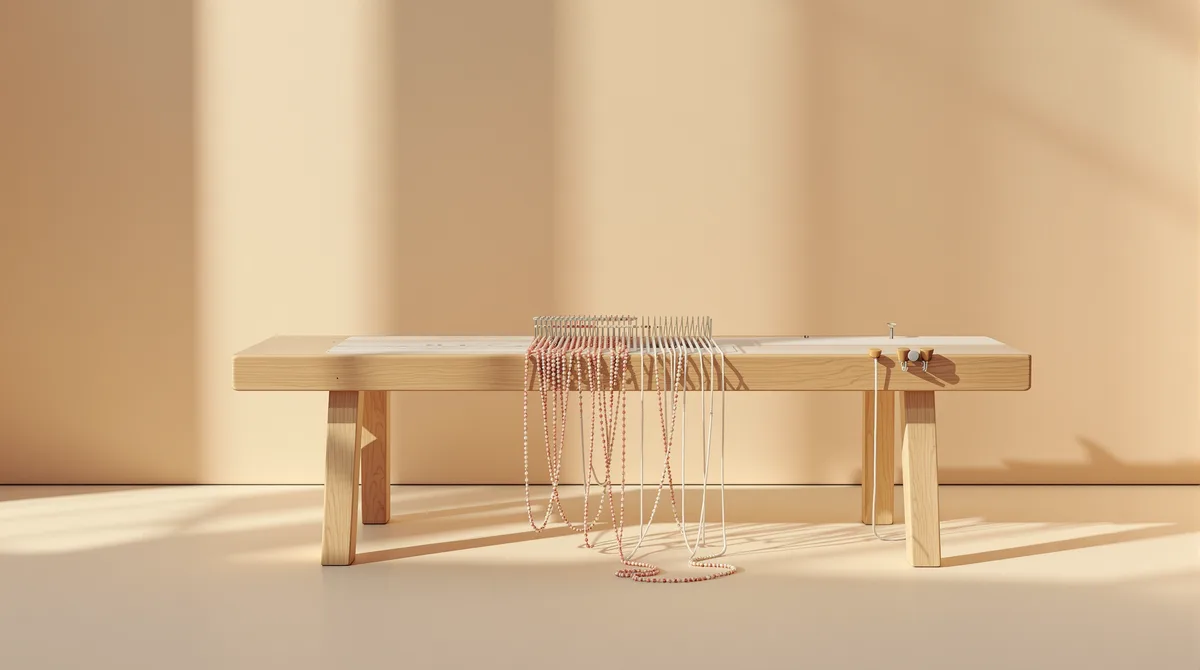
That is the reason an object page here can describe the bench. The craft family is what sets the hours on any of these objects, and the hours are what a quote is built from.
Good to know
Five craft families run in plants we own: glass drawn and hand-strung in Firozabad, wood and dowels turned in Saharanpur, ceramic glazed and fired in Khurja, metal finished and plated in Moradabad, and acrylic and resin moulded and dyed to our own dies. That is why these pages can describe the bench as well as the object. Bead-embroidered ornaments, purses and pouches, charms and lampwork wine charms are built here; the rest are craft categories available to develop.
By naming the craft family and the format, then sampling. Torans, bead garlands, tassels, bead portieres, room dividers and macramé door curtains are documented as craft categories available to develop, and the components behind each one — the bead, the cord, the knot, the metal finding — already run in our own plants, so development starts at a drawing and a cost sheet.
Traditions and object types first — the toran, the garland, the tassel, the portiere — then the craft families those objects belong to, then the seasonal pages where the calendar rather than the construction is the real subject. Reading the technique pages alongside them is the fastest way to understand why an object is built the way it is.
Torans and bandarwals, for a living tradition documented as craft and available to develop. Beaded purses and pouches, for a construction we build. Macramé door curtains, if the question is how two different crafts constrain each other inside one object.
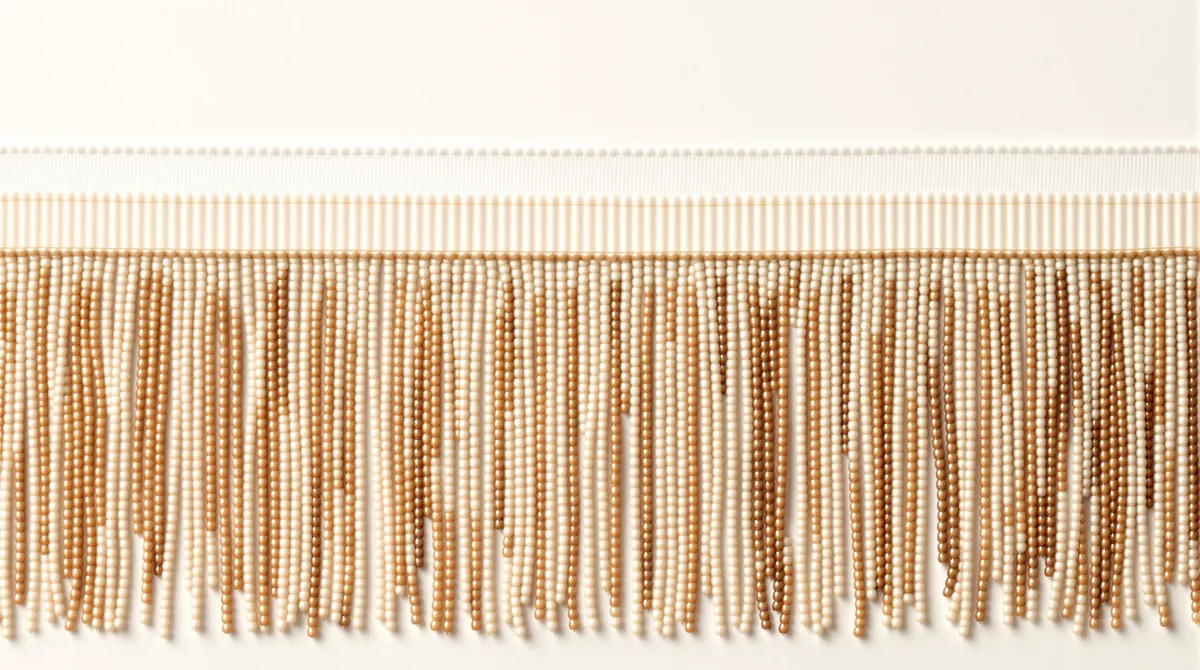
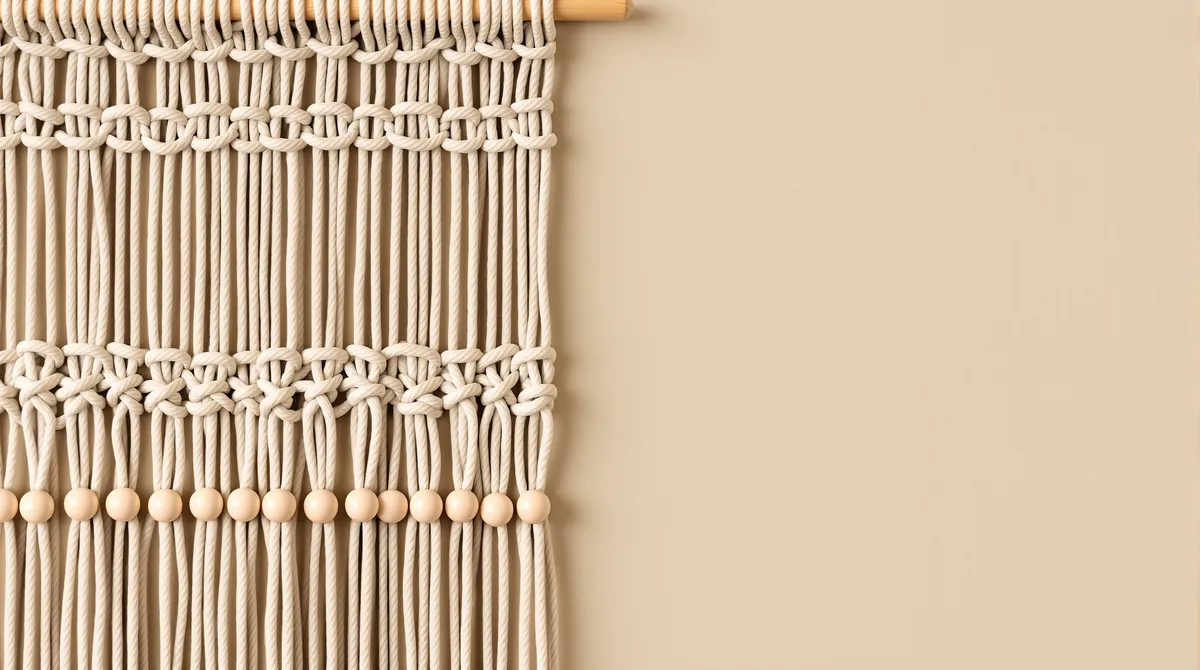
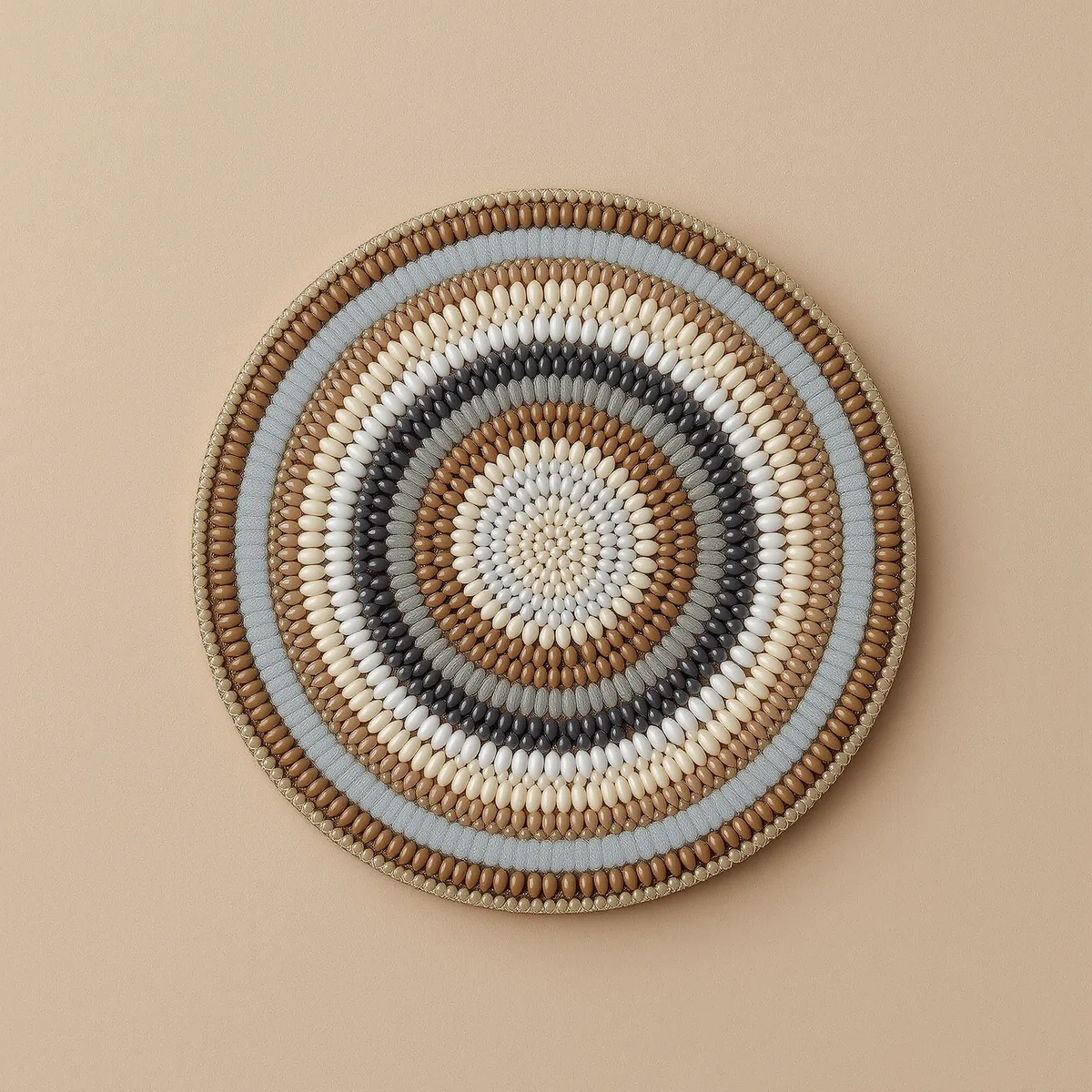
Hand-strung work, linked disc work, bead-and-thread embroidery in the zardozi tradition, wire-wrapped work over a shaped brass armature, and knotted work. The craft family sets the hours, and the hours set the cost: couched embroidery is slow, wire-wrapped work holds a shape, knotted work is slower than both. Every object page names its family first for that reason.
Keep exploring
Reference
Five craft families — strung, embroidered, wire-wrapped, knotted and wrapped fibre — and what each one is good for.
See the detailIndex
Twenty-four named looks, each described by the material, palette, pitch and hem that actually produce it.
Read the guidePillar
Door curtains, portals, café lengths and valances: the standard sizes, the strand counts and the one question each format answers.
See the detailHub
The full beaded range — curtains, portals, valances, tabletop, cushions, textiles and beads — from a leading manufacturer that makes the bead as well as the piece.
See the detailManufacturing
The header tape, the drop, the repeat length and the tolerances — how beaded fringe is built and quoted when it is a component in somebody else's product.
Open the referenceTechnique
Square and half-hitch knotting on a dowel or hoop, combed fringe, the documented knotted formats, and why the knotting sets the date for a whole order.
Specs and sizesManufacturing
Bead-embroidered glass coasters on stiffened felt, or moulded acrylic sets in translucent and opaque — construction, sizes and what moves the cost.
See the detail
Start a conversation
Send a reference, a colour chip or a sketch. Minimums are set per design and confirmed per quote; sampling is quoted separately and usually runs 16 to 20 days from an agreed brief.