Guide
Render to tech pack
The bead list becomes a colour-count sheet, the sheet becomes a costing, the costing becomes a sample — and what each stage needs from you.
See the detail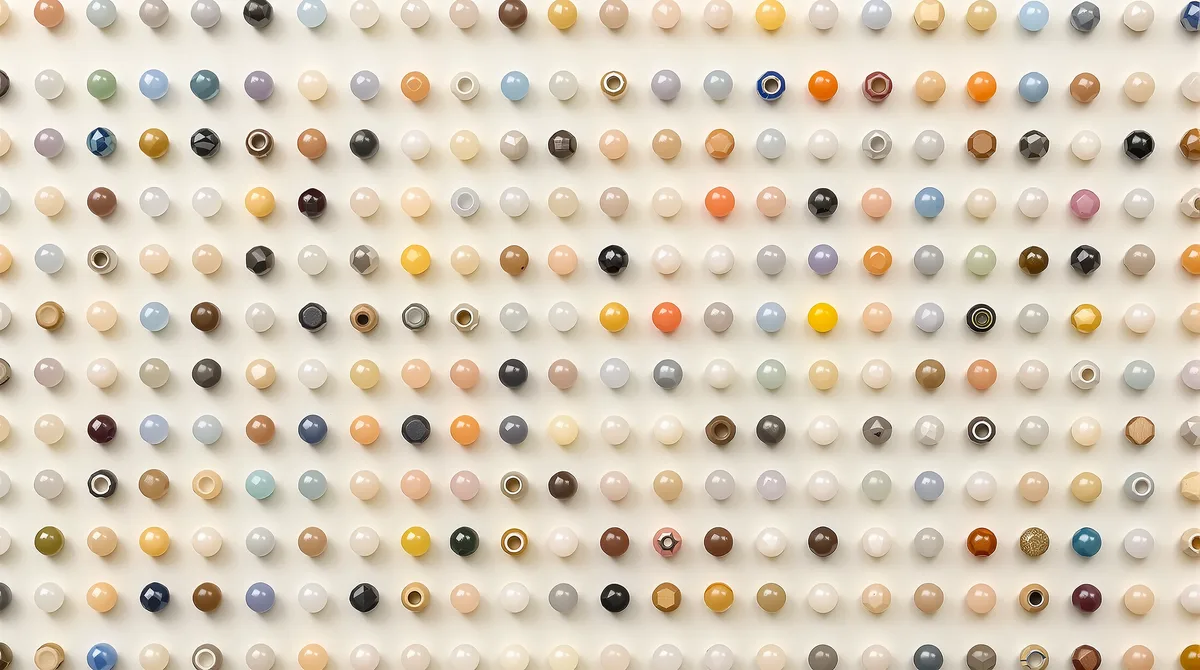
Gemixx Design Studio
Browse the whole bead library. Build a piece strand by strand, true to size. See it as a photoreal studio photograph in about a minute. Then send it back for a tech pack and a costing. Built and run by the manufacturer that makes every bead in it — one of very few in the world who can say that.
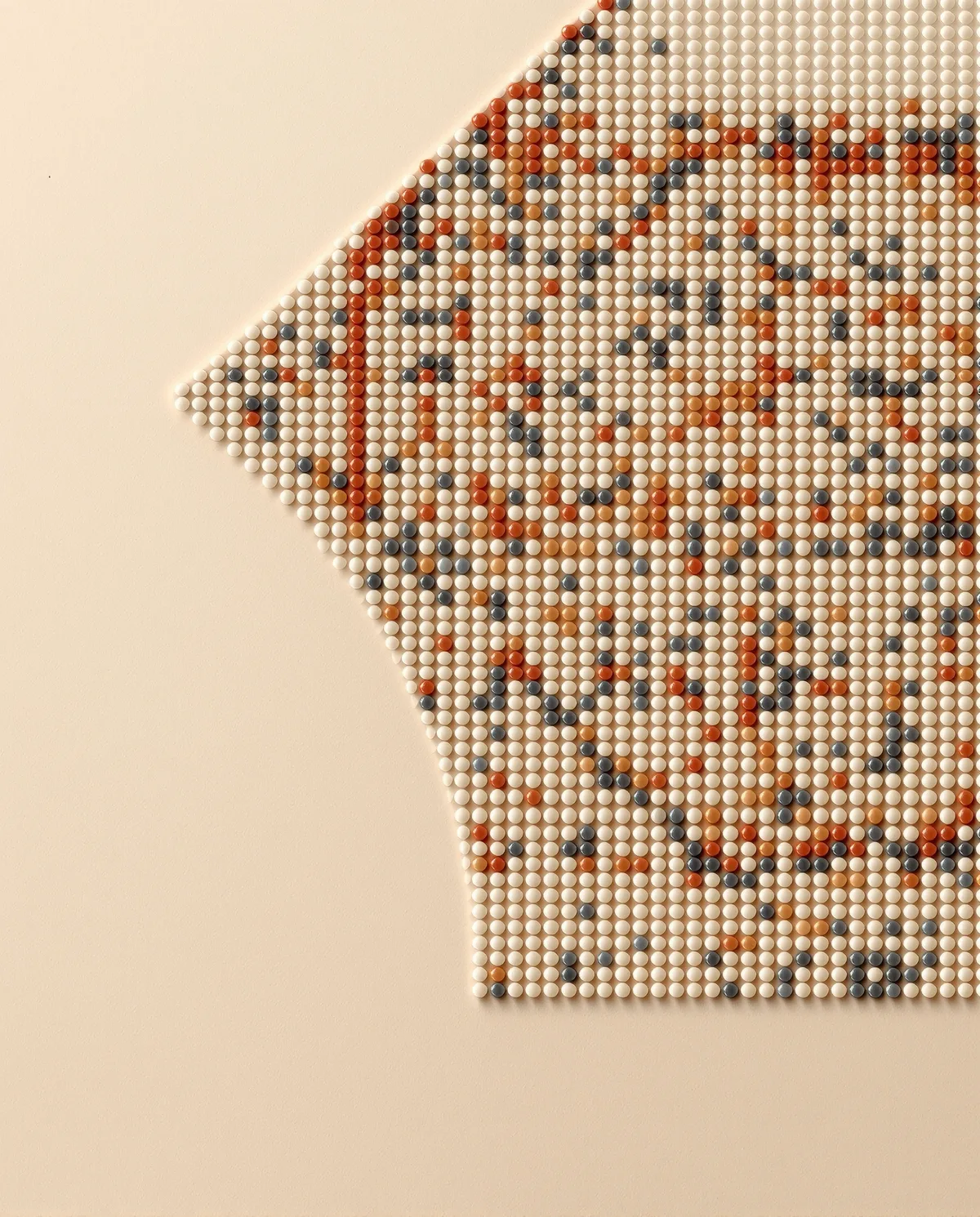
A flat grid of single beads laid out in even rows, every one different — glass rounds, pressed ovals, faceted crystal, glazed ceramic, turned wood, bamboo, acrylic and plated…
The Gemixx Design Studio is a live web application built and run by Gemixx at app.gemixx.com. It holds the whole working bead library and the Gemixx 2027 collections. A buyer builds a piece strand by strand and true to size, renders it as a photoreal studio photograph in about a minute, then sends it back for a tech pack and a costing.
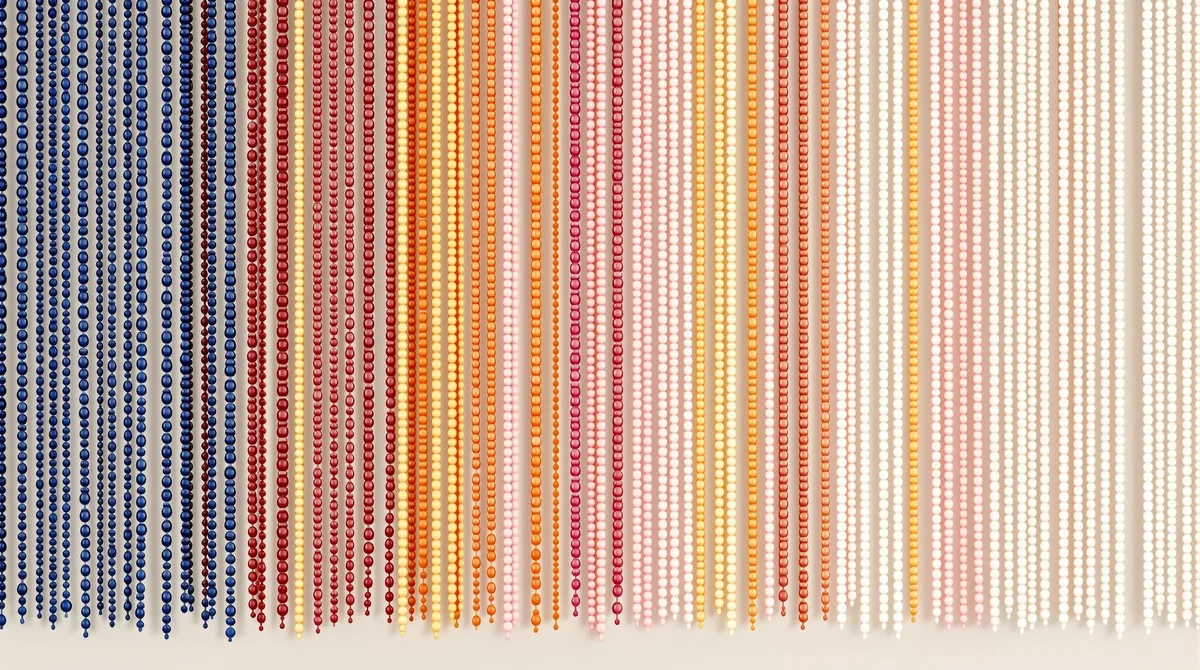
It is a live, authenticated web application that Gemixx built and operates, at app.gemixx.com. It went to production in early October 2026.
The loop is short and it is the whole product. Browse the bead library — glass, acrylic, wood, bone, horn, ceramic, shell, capiz and metal, deep enough in every family to hand a brand a bead nobody else is using. Build a piece strand by strand and true to size. Render it as a photoreal studio photograph in about a minute. Send it back to us for a tech pack, a costing and a sample.
The important part is that last step existing at all. A configurator that produces a picture is a toy; a configurator that produces a specification a factory can quote is a tool.
Almost everything can be changed. The Gemixx 2027 collections sit in the Studio, and in our own words to buyers: open any design and it becomes your own copy to change — colours, finish, size, anything.
What is fixed is the bead library. A design is assembled from beads that exist, with real dimensions and real hole diameters, which is precisely why the output converts into a specification. A tool that let you invent a bead would produce renders nobody could make.
Less than you would expect, which is the point. The Studio is where specification happens rather than something you prepare for: by the time a design has been built strand by strand, the bead identities, the strand count, the size and the colours are all already decided.
What is worth bringing is the context a tool cannot infer. The format you are buying for — portal, door curtain, café curtain, valance, wall hanging. The commercial target, so the first costing lands somewhere useful. And any colour you must hit, as a reference or a physical chip rather than a screen colour.
Buyers working a live bead programme are given access, so a design can be opened, recoloured and sent back without leaving the tool.
The pattern of use is self-serve. A product developer opens a collection, recolours a design, renders it and sends it for costing — without waiting for a sketch to be interpreted by someone three time zones away.
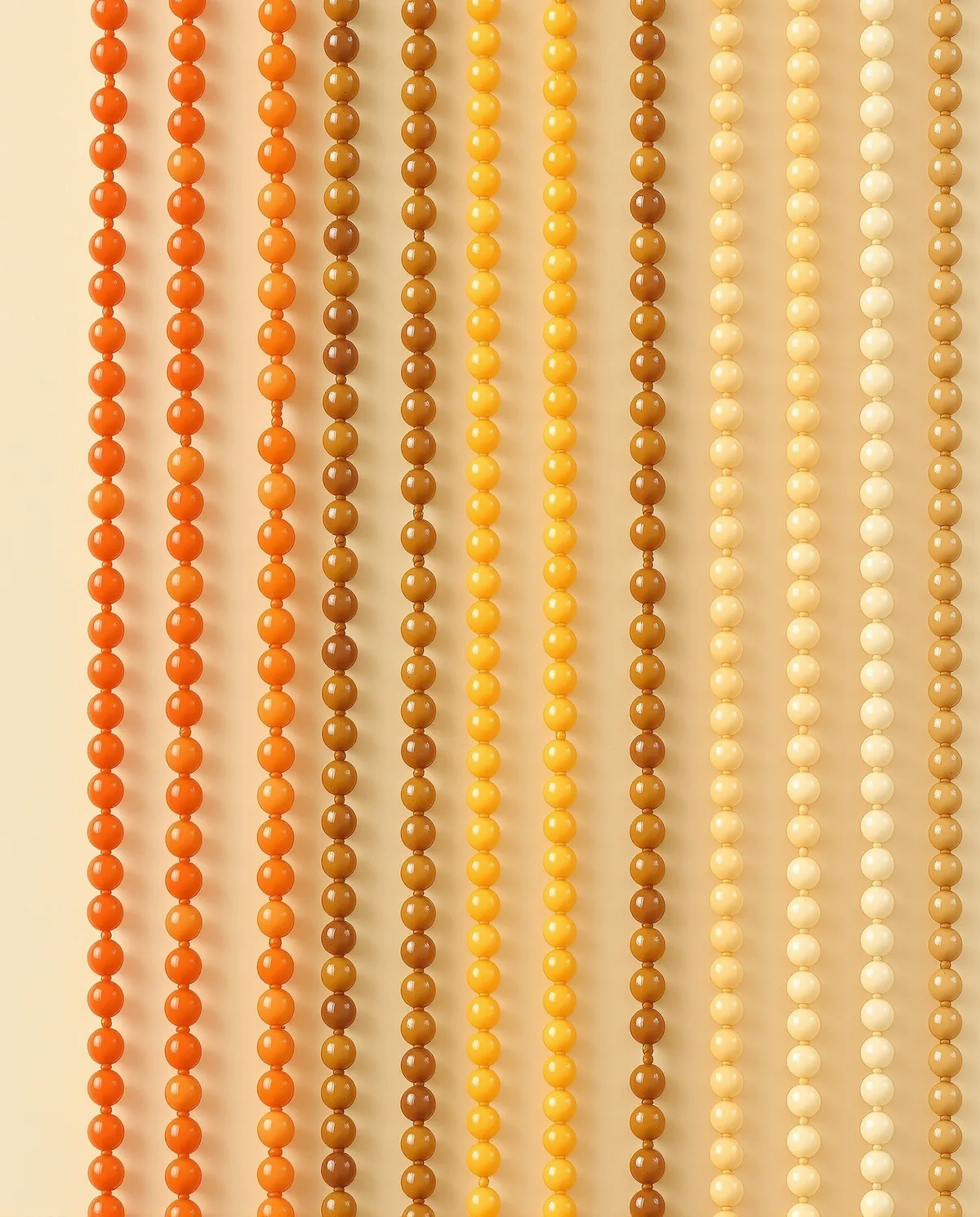
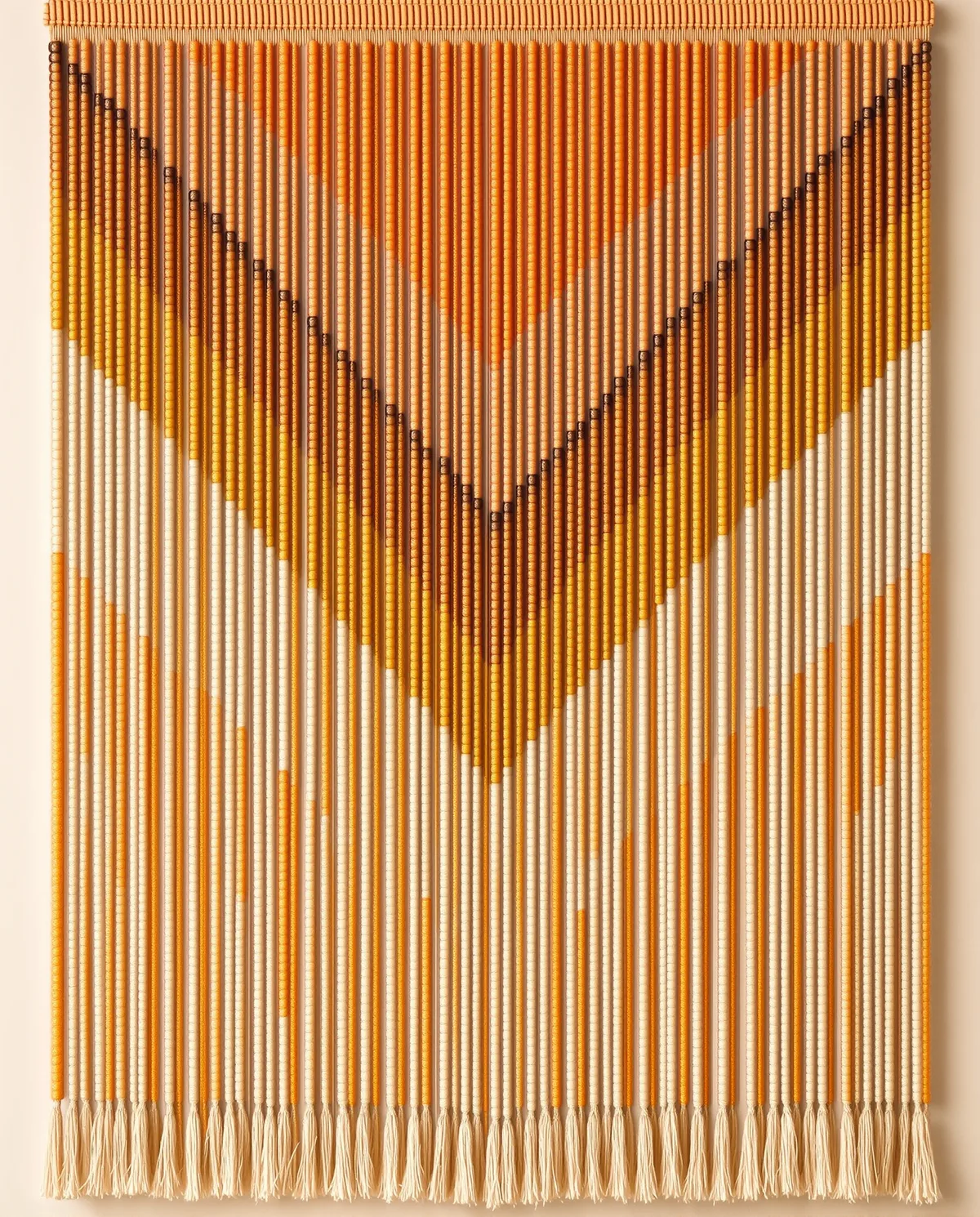
Glossy orange and canary glass with chocolate brown and cream soda — the beaded collection, with a door curtain, a sunburst valance and a wall hanging.
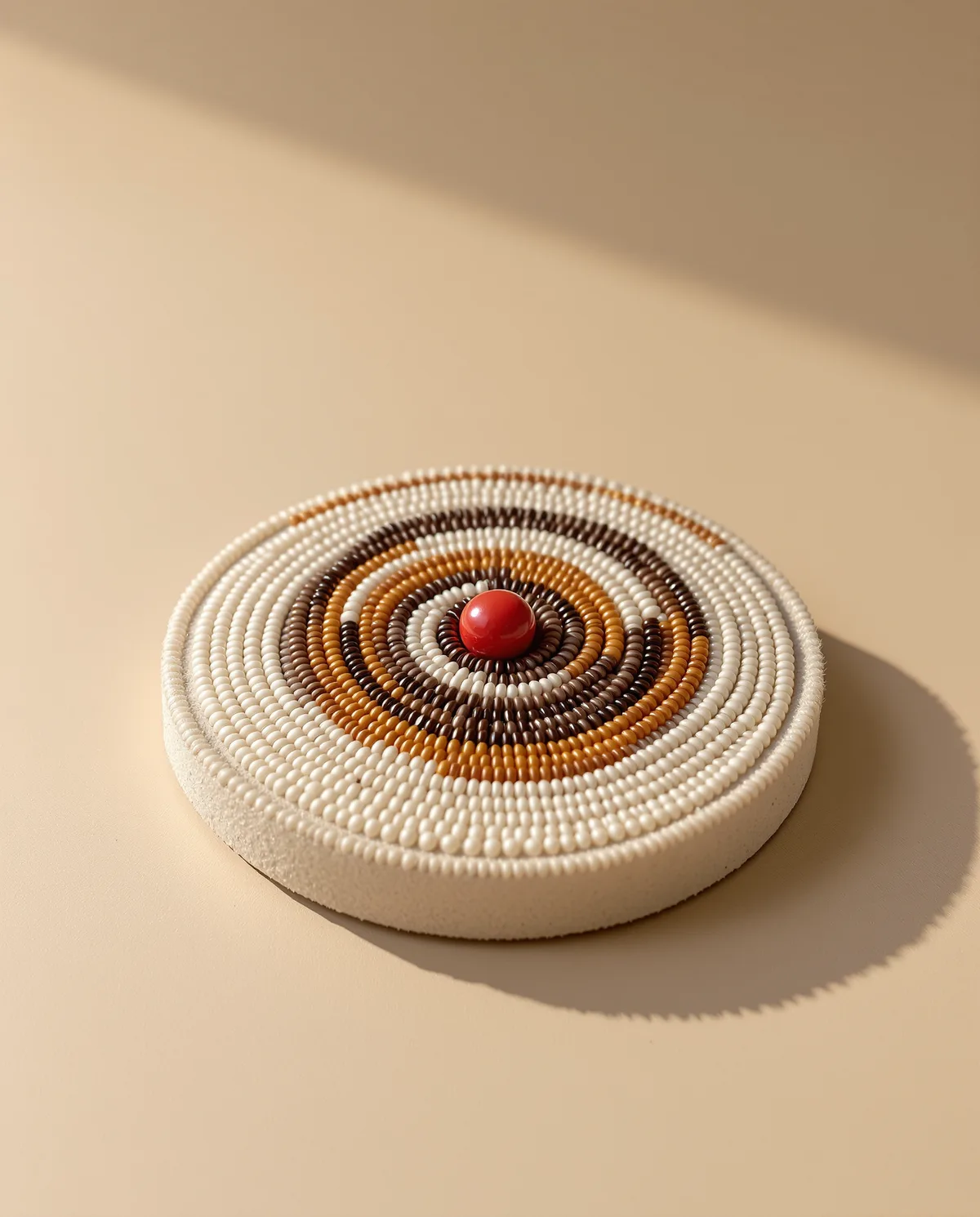
Espresso and cocoa brown, crema, dusty cornflower blue and pistachio, with one glossy cherry-red note.
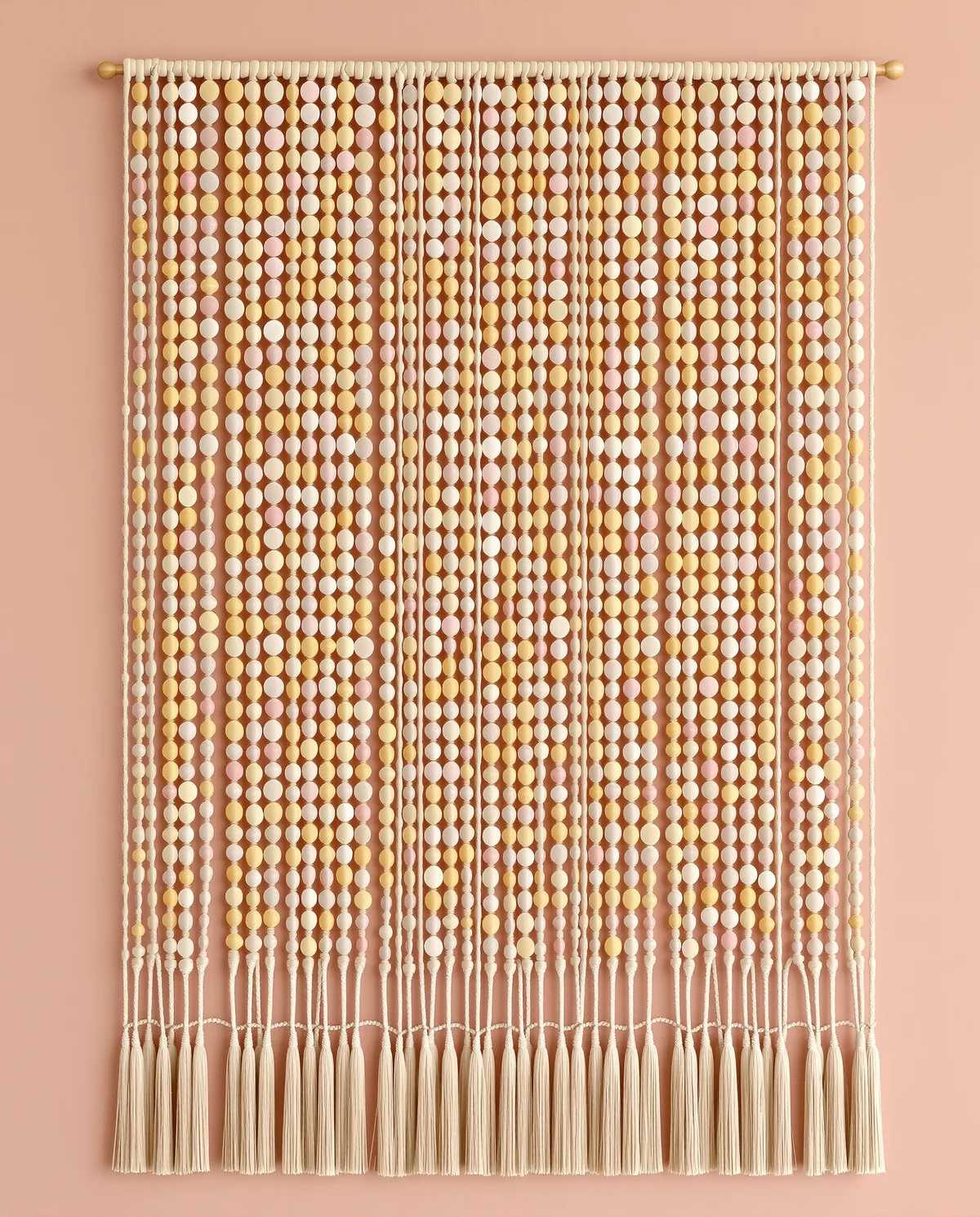
Sun-baked blush, soft sage, butter yellow and milky glaze, in matte and satin — the collection a linked disc hanging sits in.
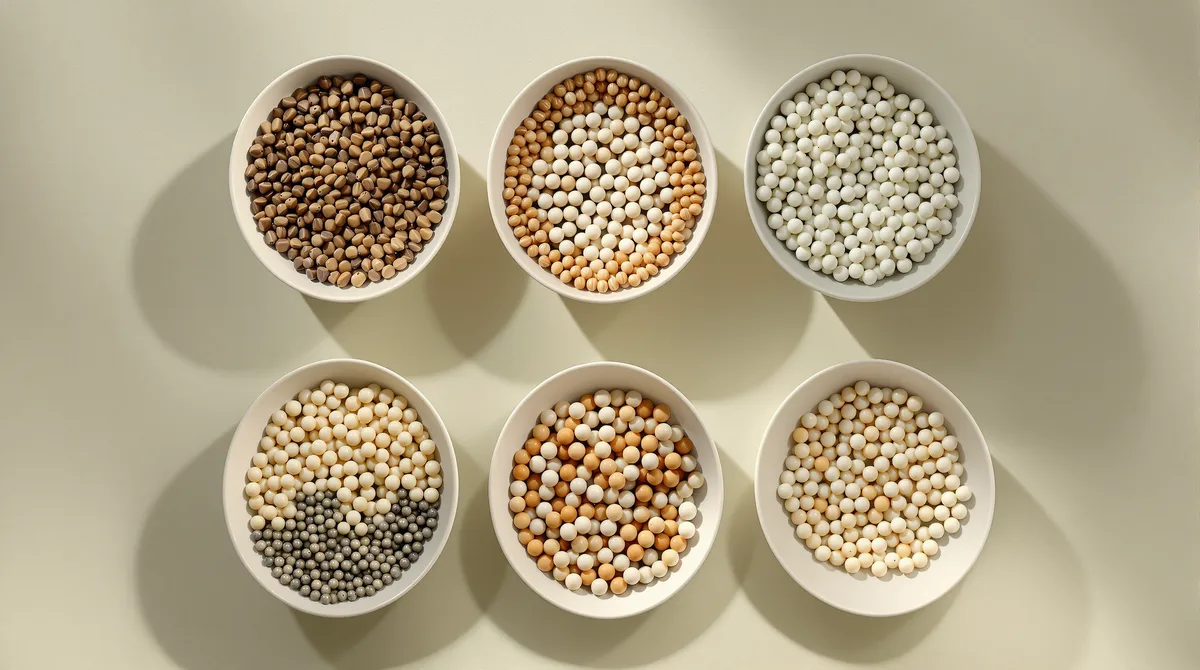
The full material library is in the Studio, which is the same library the material reference describes: three glass trades, acrylic, resin, wood, ceramic, metal, bone and horn, shell and faux capiz. Finishes follow the material — glossy and matte glass, frosted and ribbed surfaces, translucent and opaque acrylic, ceramic glazes, and the eight standard plated finishes on metal.
For beaded work the category coverage is home: wall hangings, door curtains, valances and capiz dividers. Tabletop and bar sit alongside, and beaded lighting was added for 2027.
The formats we build today are the place to start. Door curtains run around 90 by 200 cm, with 120 by 200 cm in the design library. Portals run 76 by 140 cm and a dual wall-hanging and portal format runs 90 by 67 cm. Café curtains sit around 60 by 76 cm on a cotton header with a three-inch rod pocket. Valances run around 76 by 61 cm, and strung wall hangings from 50 by 90 to 60 by 100 cm.
The 2027 library draws a doorway curtain at 40 to 60 strands and roughly 3,100 to 5,600 beads, and the design pages carry those figures design by design.
Against a physical reference, always. Inside the Studio you are choosing named beads, so the colour you see is a bead that exists. Outside the Studio, the colour is then confirmed the way every bead colour is confirmed: matched to a colour reference or a physical chip and approved on the sample, never on a screen.
Where a design needs a colour the library does not hold, two mechanisms cover it. A dyeable bead is dyed to colour, which is a short loop in acrylic and resin. Or the base beads are dyed to match the accent, which is how an immovable feature colour gets a ground that supports it.
The sequence is unchanged by the Studio. A brief is agreed. A rough cost sheet shows where the cost sits and which lever moves the price, before any sample is made. Colour is matched. A sample is produced — usually 16 to 20 days from an agreed brief — and photographs are approved before it ships. Then production runs against the approved sample.
What the Studio removes is the ambiguity at the front. A render built from named beads is not open to interpretation in the way a mood board is.
Beaded décor runs 40 to 60 days after sample approval. Bohemian and macramé work runs 60 to 90 days. Sampling is quoted separately from production.
Those are our published figures and the Studio does not change them. It changes how long it takes to arrive at something worth sampling.
Packing is a tech-pack entry rather than an afterthought, and it comes out of the Studio with everything else: carton, label and inner-packing specification, with the destination port or warehouse named. From a render to a costed tech pack follows what the output actually contains.
In the plants that made the beads the render is drawn from, which is the point of it. A named glass bead in a Studio render is a bead drawn and hand-strung at our own Firozabad works. A named dowel is turned at Saharanpur. A named acrylic is moulded and dyed to our colour on our own die, and a ceramic accent is fired at Khurja.
That is the whole reason the Studio can be this specific. Every render is built from named beads, so it converts into a colour-count sheet for sampling — and the beads are named because we make them.
Because it is a shorter path to the same place, and because it is checkable. A quote request is a question. A Studio design is an answer you built yourself, with real beads, at a real size, that converts directly into a bead list and a costing.
It is also the plainest demonstration of what owning the bead actually buys you. A maker who buys beads and strings them cannot hand a buyer a configurator built from its own bead library, because the beads in it belong to somebody else.
Studio pages
What comes out of the Studio once a design is finished, and what happens to it next.
Extractable data
| Attribute | Value | Note |
|---|---|---|
| Where it runs | app.gemixx.com | A live authenticated web application built and operated by Gemixx |
| Bead library | The full working library | Glass, acrylic, wood, bone, horn, ceramic, shell, capiz and metal |
| Collections | The Gemixx 2027 collections | Every design opens as your own copy to change |
| Build model | Strand by strand, true to size | A design is assembled from named beads, not sketched |
| Render | A photoreal studio photograph in about a minute | Rendered from the design, not photographed |
| Output | Tech pack, then costing and sampling | The render converts to a colour-count sheet |
| Collection deep links | seventies-sunroom · cafe-society · rose-clay-garden | Announced by name |
| Production launch | Early October 2026 | In use with buyers on live bead programmes |
Good to know
Yes. Designs are built true to size, so a width and a drop are parameters rather than fixed attributes, and a design opens as your own copy to change — colours, finish, size, anything. What a resize changes is the strand count, and the way to hold a design's character across sizes is to keep the strand pitch rather than the strand count.
Beaded décor runs 40 to 60 days after sample approval. A Studio design does not change that; what it compresses is the front of the process, because the design arrives already assembled from named beads rather than as a sketch that has to be interpreted.
To your carton, label and packaging specification, shipped to the port or warehouse you name. Packing is agreed at specification stage like any other entry, and it is one of the things a tech pack carries out of the Studio rather than something settled afterwards.
Glass beads are drawn and hand-strung in our own Firozabad glass works. Curtain dowels and header rails are turned in our own Saharanpur wood factory. Ceramic is glazed and fired in Khurja and metal is finished and plated in Moradabad. Acrylic and resin beads are moulded and dyed to our colour, to our own dies where a design needs a custom bead. Inspection and export packing run through our own Greater Noida house.
No. Minimums are set per design and confirmed per quote, because a plain-strand panel and a fully patterned one use very different amounts of material and stringing time. The Studio does not change that — it makes the design precise enough to quote against.
Yes, every time. Each piece is built to the colours, size and packing you approve, against a sample, from beads drawn, turned, moulded or cut in our own plants. A Studio design is a specification rather than a catalogue item waiting in a warehouse.
Yes. Beads are matched to a colour reference or a physical chip and confirmed on the sample. Inside the Studio you are choosing from named beads in the library; where a design needs a colour the library does not hold, the base beads are dyed to match the accent or a dyed-to-colour bead is developed.
Keep exploring
Guide
The bead list becomes a colour-count sheet, the sheet becomes a costing, the costing becomes a sample — and what each stage needs from you.
See the detailDesign
Colour stories documented by how they are built, not by how they look in a mood board.
Read the guideTechnique
What a bead map records, why a scattered accent has to be drawn rather than left to the bench, and why a reorder lives or dies on this one document.
Compare the optionsReference
Nine material families, what each gives in light, weight and colour, and how far our own manufacturing reaches into every one of them.
How it is madeHub
The full beaded range — curtains, portals, valances, tabletop, cushions, textiles and beads — from a leading manufacturer that makes the bead as well as the piece.
Open the reference
Start a conversation
Send a reference, a colour chip or a sketch. Minimums are set per design and confirmed per quote; sampling is quoted separately and usually runs 16 to 20 days from an agreed brief.