Design
The wall hanging library
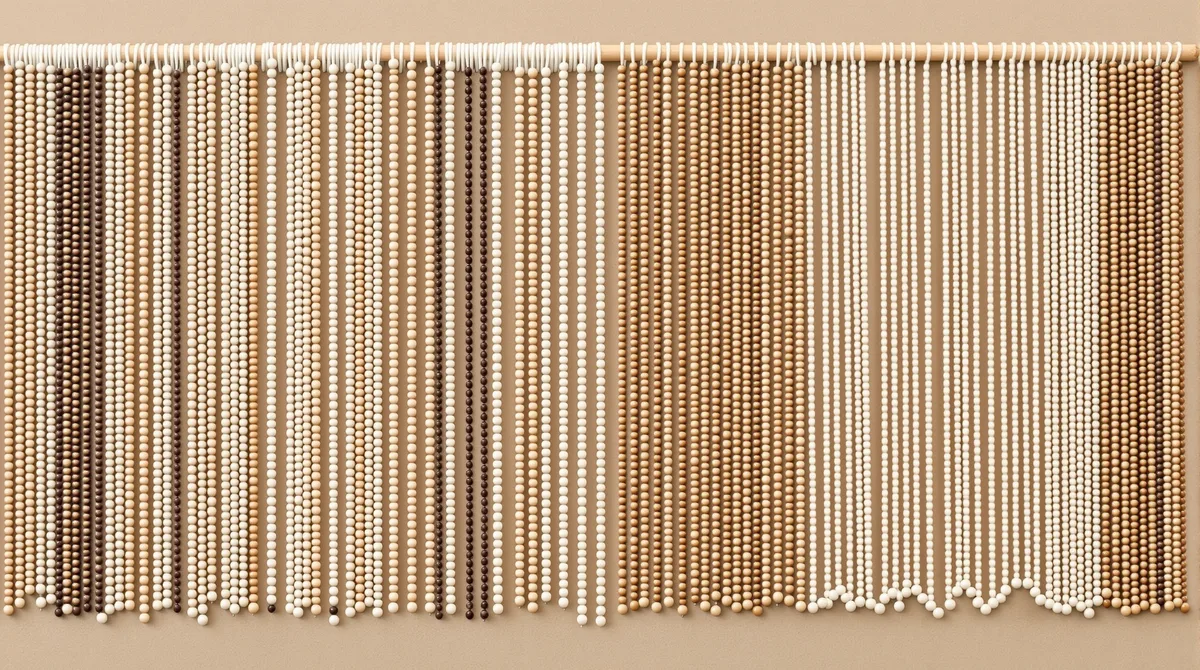
Strung wall pieces from 50 × 90 to 60 × 100 cm at 20 to 40 strands, documented by hem shape and bead list.
See the detail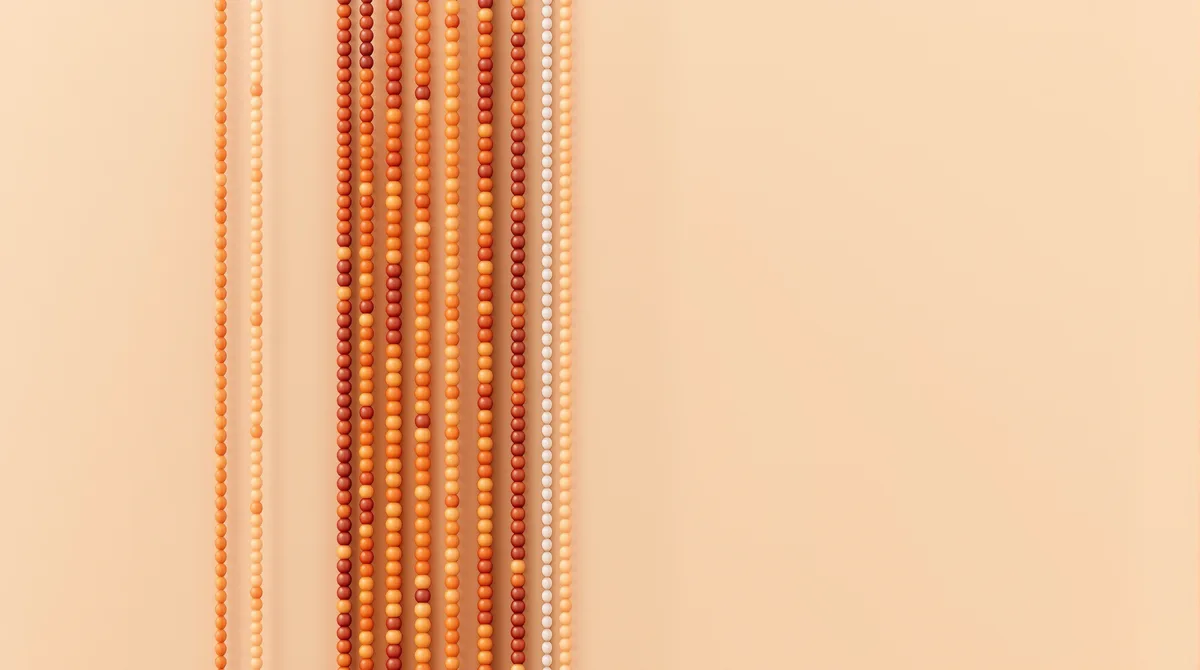
Manufacturing · Wall work
A wall hanging is a bead curtain that does not need a doorway. The construction is the same; the brief is not, because the piece is seen flat against a wall and never walked through.
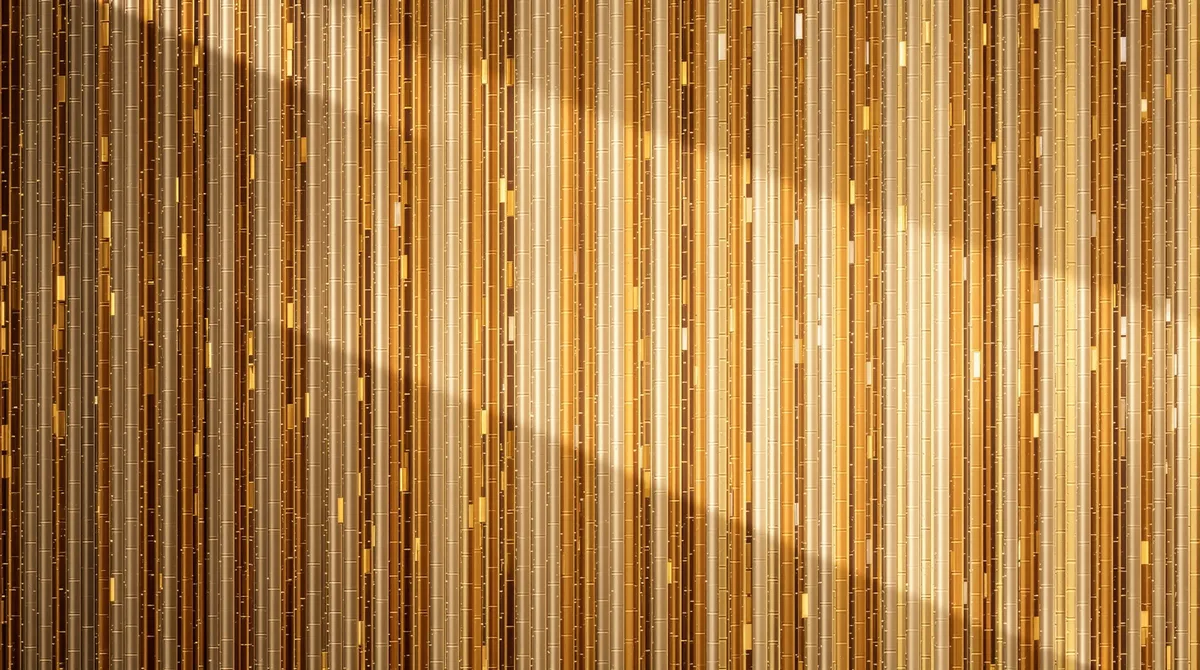
Close hand-strung strands of rust, burnt orange and amber glass beads filling one side of the frame against clear ground.
A beaded wall hanging is a strung panel made to be seen flat against a wall, normally 50 to 76 cm wide and gathered on a single turned wooden dowel. Glass, wood and cast faux capiz are all used. Strand counts run from about 20 to 40, and the hem shape — straight, V-point, inverted-V or scalloped — does most of the visual work.
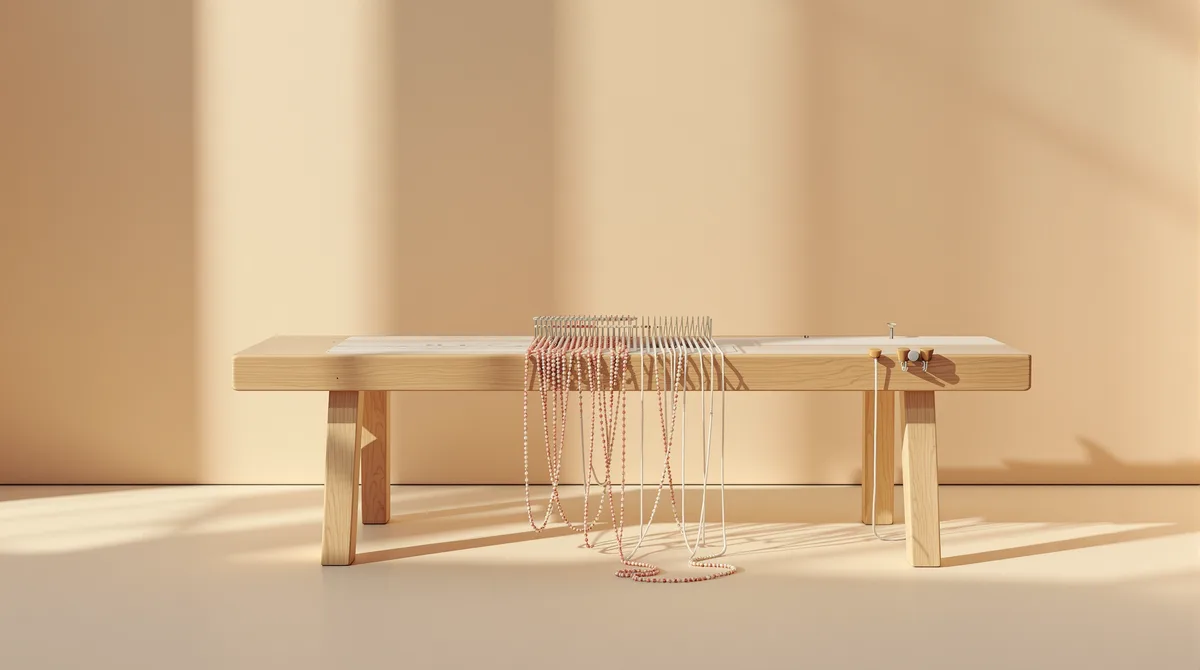
A beaded wall hanging is built exactly as a doorway panel is built: a bead map is drawn first, beads go onto cord one at a time in map order, and the finished strands are gathered on a single turned wooden dowel. What changes is the brief. Nobody walks through a wall hanging, so the strands never have to part, and the hem becomes the whole composition rather than a practical edge.
Our own published width range for the category is 50 to 76 cm on a dowel, in glass, wood and faux capiz. A second format, 90 by 67 cm, was developed in 2026 to work as either a wall hanging or a door portal from one construction.
This distinction matters more here than anywhere else in beaded décor, so it is worth stating plainly. The range is in continuous production — beaded portals, curtains, café curtains, valances and wall hangings. Wall hangings sit inside that programme, not alongside it.
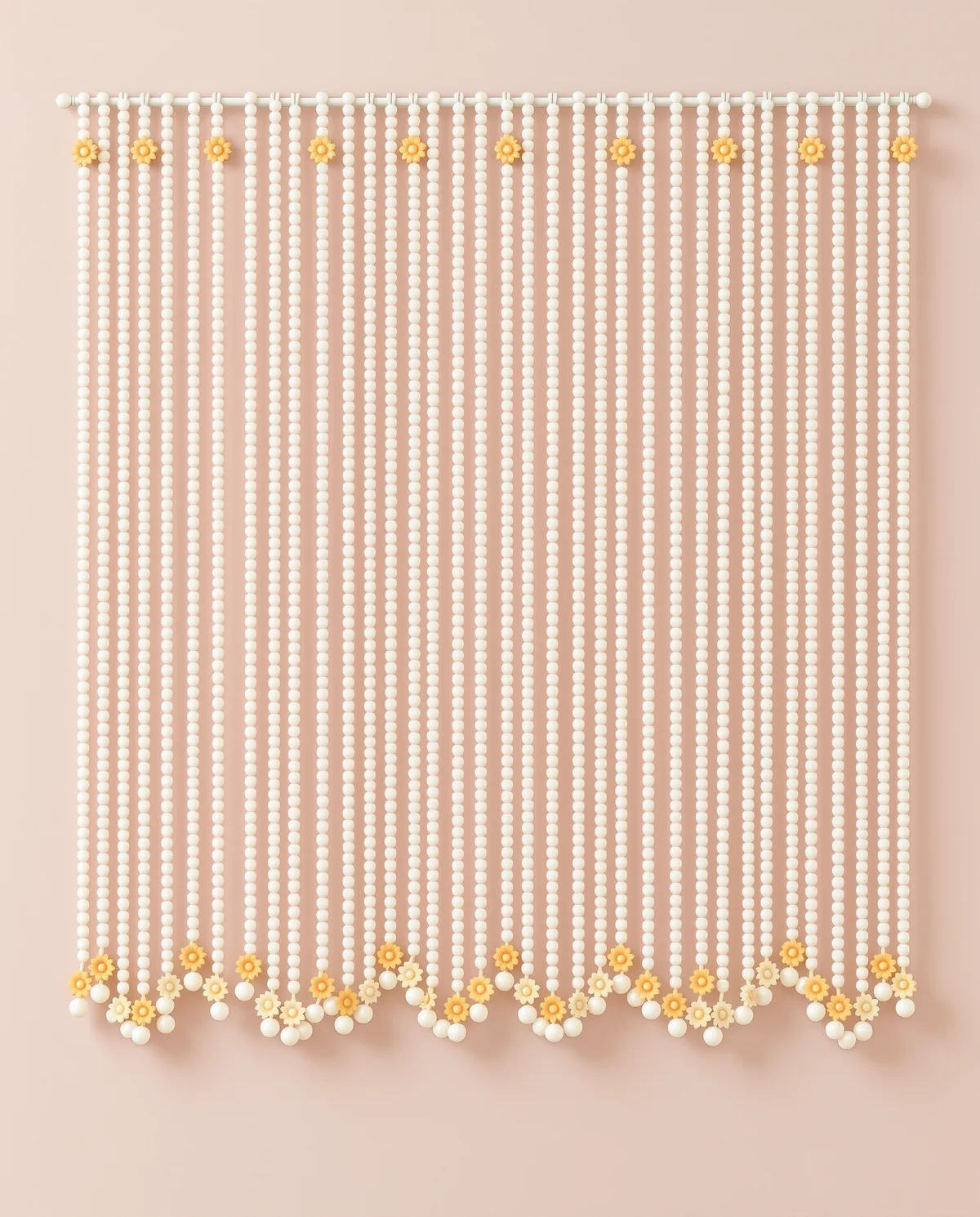
The shipped wall-hanging construction in our own record is a faux capiz blossom piece at 18 by 30 inches, built in two versions: a dowel version carrying 155 to 170 cast and dyed blossoms, and a rod-pocket version at 130. Beyond that, a rainbow seed-bead wall panel reached CAD and sampling, and large beaded wall panels were installed at a US casino resort.
The named pieces in the 2027 design library are concepts rendered for selection. They are real drawings against real beads and a sound starting point for a development — they are not evidence that a particular piece has been built.
Changeable: bead material, bead size, colour, strand count, pitch, drop, hem shape, the end bead, and whether the top is a dowel or a sewn rod pocket. The hem is the change that alters the look most. A straight hem with larger drop beads reads graphic and architectural; a V-point pulls the eye to a centre point and flatters a narrow wall; an inverted-V opens outwards above a sideboard; a scalloped hem reads softest and forgives an uneven wall.
Fixed: the piece is made to order, so nothing ships from stock. The bead map governs production, so a pattern cannot be adjusted on the floor. And cord is sized to the smallest drill hole in the build, never chosen for the drape — a cord that will not pass the base beads stops the build whatever it does for the hand of the panel.
Glass gives weight, so a glass hanging settles fast and hangs dead straight. Wood is warm and quiet, and wood-tone discs and ovals read as neutral rather than coloured. Faux capiz — cast resin or dyed cut acrylic, finished to imitate capiz shell — gives the pearlised shell look with none of the shell: consistent colour, no shell paperwork and better durability. It is an engineered imitation of Placuna placenta, which is the commercially stronger position as well as the accurate one.
Mixed builds are normal. A seed-bead base strand carrying a larger accent is the construction that photographs best, and dyeing the base to match the accent makes the accent unmistakably the subject.
| Specification | Value |
|---|---|
| Documented width range | 50–76 cm wide on a dowel |
| Dual wall-hanging and portal format | 90 × 67 cm, developed 2026 |
| Shipped faux capiz format | 18 × 30 in, 130–170 cast and dyed blossoms |
| Design-library sizes | 50 × 90 cm to 60 × 100 cm, plus 76 × 46 cm |
| Strand count in the design library | 20–40 |
| Linked-disc columns | 12–16 columns, 70 × 130 cm to 90 × 200 cm |
| Bead materials | Glass, wood, cast resin or dyed cut acrylic faux capiz |
| Top fixing | Single turned wooden dowel; rod pocket on request |
| Hems | Straight, V-point, inverted-V, scalloped, staggered |
| Colour matching | To a colour reference or a physical chip, confirmed on the sample |
| Sampling | 16–20 days from an agreed brief, quoted separately |
| Production | 40–60 days after sample approval |
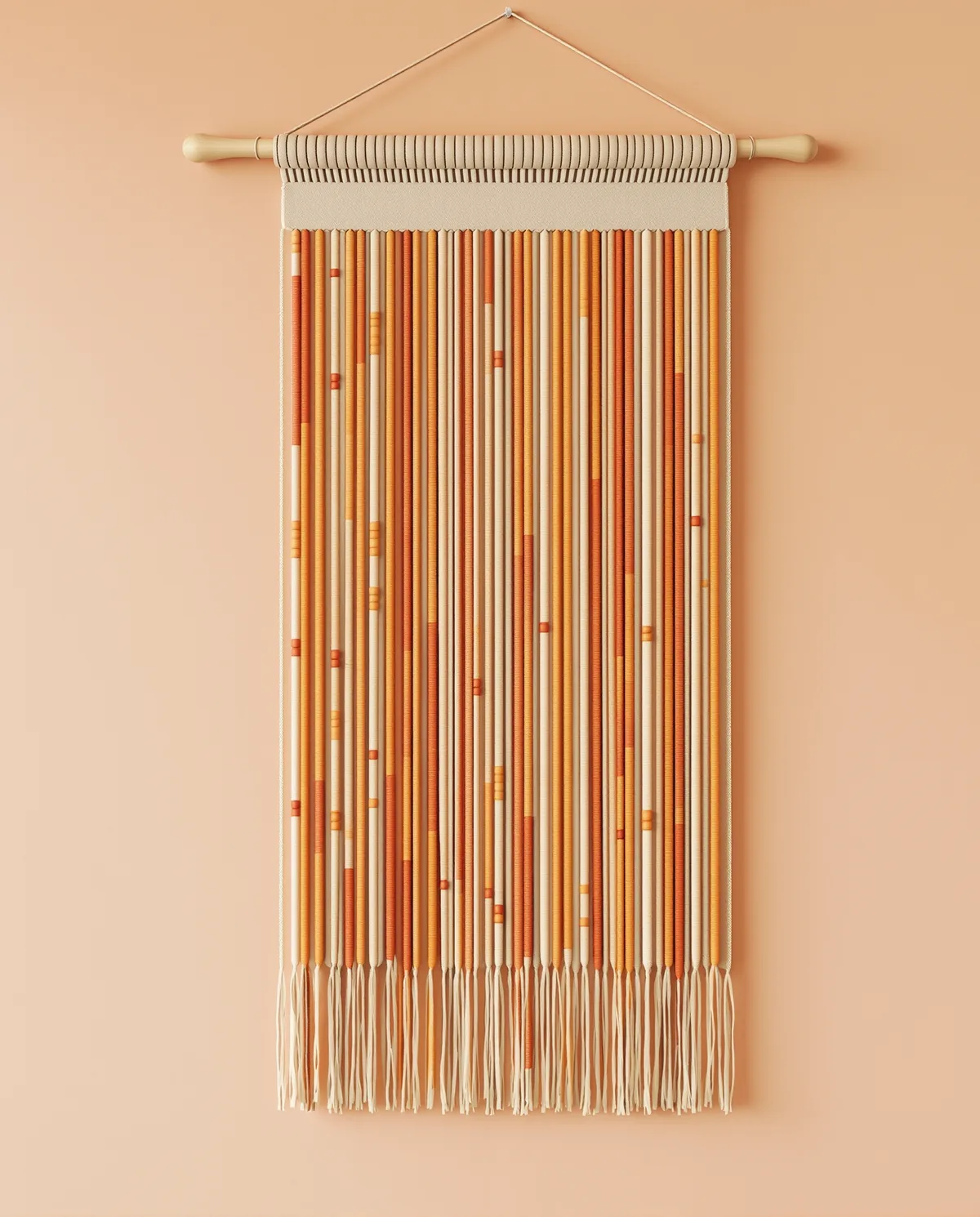
Linked-disc construction is the one genuine departure from strand work. Faux capiz discs are linked one below the next into columns, and the columns hang side by side from the dowel. That gives a far denser surface per unit of width, which is why the backdrop-scale pieces in the library are built this way rather than strung.
A wall-hanging brief differs from a curtain brief in what it drops and what it adds. Out goes the floor gap, because nothing reaches the floor. In comes the wall: the fixing substrate, since plasterboard and masonry take different anchors, and the finished drop measured from the underside of the fixing rather than from a track height.
The hem is the field most often left blank and the one that changes the finished look most. Everything else is the standard brief, and the quantity per colourway with its destination closes it.
Beads are matched to a colour reference or a physical chip and signed off on the sample, not on a screen. Where a base field carries an accent, the base is dyed to match so the two read as one decision — and on a piece with a cast or cut shape, the small spacer bead that locks the shape in place is dyed to the shape itself so the fixing disappears. Surface-dyed glass shifts between dye lots, which is a batch property rather than a fault, so the approved sample is the reference the run is held to.
A brief, a rough cost sheet, colour matching, then the sample. The step worth insisting on for a wall piece is a physical approval rather than a photographic one, because a hanging is read at close range against a flat wall and that is the one viewing condition a photograph cannot reproduce.
A piece needing a new cast or moulded shape carries a tooling conversation in front of all of this, and the shape has to be settled before colour is worth discussing.
Beaded décor runs 40 to 60 days after sample approval. Hand-knotted and bohemian work runs 60 to 90, which matters if a wall hanging mixes beadwork with knotted cord. Sampling is quoted separately from production.
Those are the only published figures and we do not shade them. A programme that needs a new die or a new cast shape adds tooling time in front of the 40 to 60 days, and that is a per-design conversation rather than a number we can put on a page.
Strands are kept in order so they cannot cross in transit, the dowel is protected at both ends, and the piece is packed to the carton, label and inner-packing specification you give us. Pack density is confirmed per design: one shipped faux capiz hanging packs ten pieces to a master carton of roughly 85 by 32 by 25 cm, which is the shape of answer to expect rather than a published standard. Oversize pieces that cannot be collapsed are the exception, and they need the packing decision taken at design stage rather than at the end.
Glass beads are drawn and hand-strung in our own Firozabad glass works, where the glass and bead vertical has run since 1992. The dowel is turned in our own Saharanpur wood factory. Acrylic and resin beads and cast faux capiz shapes are moulded, cast and dyed to our colour, to our own dies where a design needs a custom bead. Inspection, kitting and export packing run through our own quality and packing house at Greater Noida. We own the plants: no agents, no brokers.
Home and lifestyle retailers buying under their own label, who use a wall hanging as the entry point to a bead programme because it needs no doorway and no installation. E-commerce sellers, for whom a flat dowel-topped piece ships better than a full curtain. Interior and hospitality designers specifying for hotels, restaurants, bars and spas, where beadwork at wall scale does the job a mural would. And event and display companies, who buy the backdrop-scale linked-disc pieces.
Good to know
Strands are kept in order so they cannot cross in transit, the dowel is protected at both ends, and the piece is packed to the carton, label and inner-packing specification you give us. One shipped faux capiz hanging packs ten pieces to a master carton of about 85 by 32 by 25 cm, which is the kind of figure confirmed per design rather than published as a standard.
Glass beads are drawn and hand-strung in our own Firozabad glass works. The dowel is turned in our own Saharanpur wood factory. Acrylic and resin beads and faux capiz shapes are moulded, cast and dyed to our colour, to our own dies where a design needs a custom bead. Inspection and export packing run through our own Greater Noida house.
No. Minimums are set per design and confirmed per quote, because a twenty-strand hanging in plain seed beads and a forty-strand hanging in cast blossoms use entirely different amounts of material and stringing time. One range-wide number would be meaningless and we do not publish one.
No. There is no retail stock programme for beaded décor. Every wall hanging is made to order against a sample you have approved, in the colours, size and packing specified.
Yes. Beads are matched to a colour reference or a physical chip and confirmed on the sample. On a piece with a cast or cut shape, the small spacer bead that locks the shape in place is routinely dyed to match the shape itself, so the fixing disappears.
Yes, and resizing is a redraw rather than a stretch. Strand count, pitch and bead count are recalculated for the new width and drop, and the pattern is checked to confirm it still reads at the new size. A motif that works at 60 cm can fall apart at 90 cm if the repeat is not redrawn.
Beaded décor runs 40 to 60 days after sample approval. Sampling is usually 16 to 20 days from an agreed brief and is quoted separately. A piece that needs a new moulded or cast shape adds tooling time in front of that.
Keep exploring
Design
Strung wall pieces from 50 × 90 to 60 × 100 cm at 20 to 40 strands, documented by hem shape and bead list.
See the detailPillar
Twenty settings, from a closet front to a hotel lobby, each with the format that suits it, the fixing it needs and the standard that applies.
How it is madeReference
Five craft families — strung, embroidered, wire-wrapped, knotted and wrapped fibre — and what each one is good for.
View the rangeHub
The full beaded range — curtains, portals, valances, tabletop, cushions, textiles and beads — from a leading manufacturer that makes the bead as well as the piece.
View the rangeManufacturing
Built on a cotton or organza header with a three-inch rod pocket: the band, the strands, the hem and the sizes we have shipped.
Read the guideManufacturing
Short strung panels at 120 × 35 cm and other formats, 56 to 60 strands, with scalloped, fan-arch, V-point and straight hems — and why height is the cost lever.
Open the referenceManufacturing
Bead-embroidered glass coasters on stiffened felt, or moulded acrylic sets in translucent and opaque — construction, sizes and what moves the cost.
Read more
Start a conversation
Send a reference, a colour chip or a sketch. Minimums are set per design and confirmed per quote; sampling is quoted separately and usually runs 16 to 20 days from an agreed brief.