Pillar
Beaded curtains
Door curtains, portals, café lengths and valances: the standard sizes, the strand counts and the one question each format answers.
Specs and sizes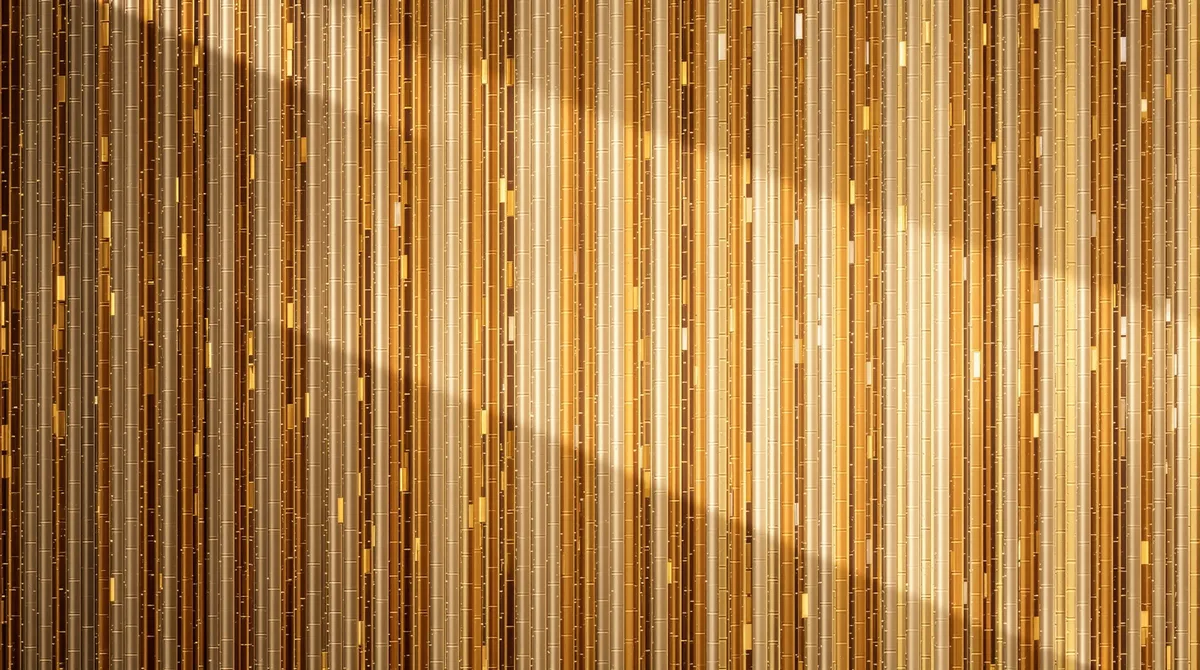
The beads property
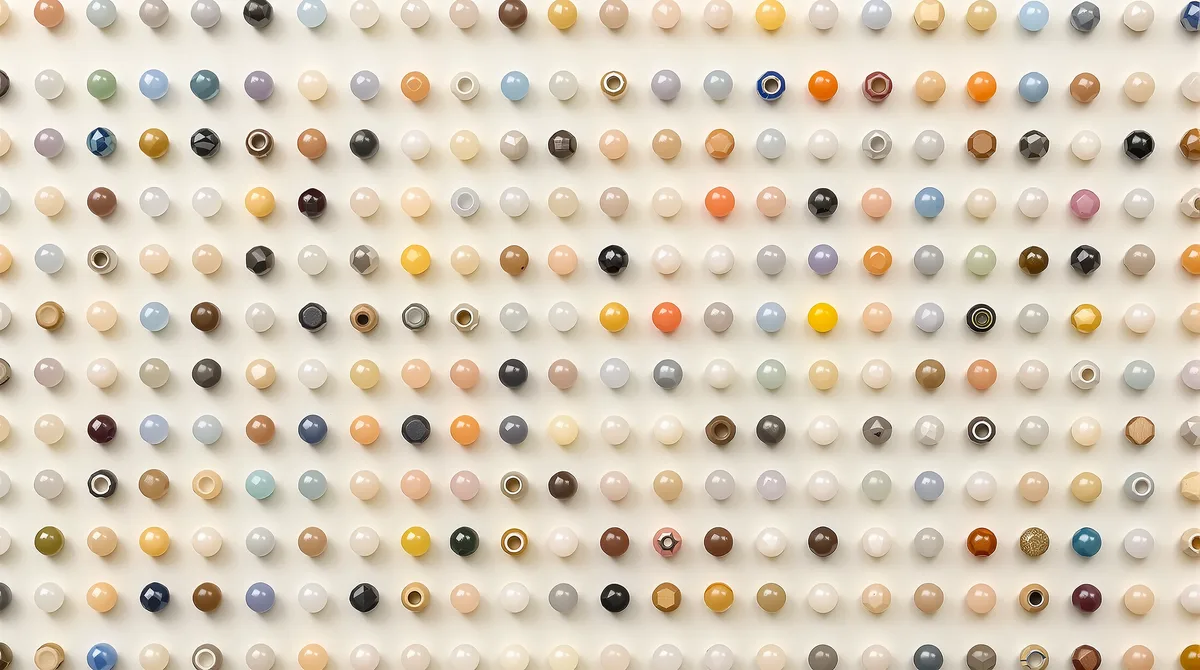
Beaded curtains and doorway portals, valances and café curtains, wall hangings, tabletop and placemats, cushions and beaded textiles — and the beads themselves. We draw our own glass and turn our own wood in five plants we own, mould acrylic and resin to our own dies, and hand-string every strand ourselves.
Editorial frame. Light through hand-strung glass, not a specific SKU.
Beaded décor is any decorative object built from beads rather than decorated with them: strung panels for doorways and windows, bead-embroidered pieces for the table, and wire-wrapped and framed shapes. Gemixx is a beaded-décor specialist that draws and hand-strings its own glass in its Firozabad glass works, and every piece is made to order against an approved sample.
The useful distinction is structural. In beaded décor the bead is the material: remove the beads and there is no object left. A strung doorway panel, a bead-embroidered coaster, a wire-wrapped napkin ring and a framed bead shape are all beaded décor. A cushion with a beaded motif on a woven face is embroidery on textile — related work, different trade, different costing.
That distinction decides what follows: which bead materials are available, which construction method applies, what the panel weighs, how it packs, and how it is cleaned.
Almost everyone in beaded décor buys beads and strings them. We draw ours. Glass-bead drawing and hand-stringing are on the published capability list of our own Firozabad glass works, alongside mouth-blown soda-lime and borosilicate glass, mould-blown and pressed glass, colouring, frosting, ribbing, cutting and etching. The glass and bead vertical there dates to 1992.
That changes what can be written down. Because the furnace is ours, a bead colour is a batch chemistry decision we can trial rather than a catalogue we have to accept. Because the annealing kiln is ours, a breakage problem in a large glass portal could be solved by changing the furnace process, annealing the beads and revising the palette — which is exactly what happened, and is the kind of detail nobody who books a vendor can publish.
Five plants are ours: Firozabad for glass, Saharanpur for wood and dowels, Khurja for ceramic, Moradabad for metal finishing and plating, and a quality and packaging house in Greater Noida. We own the network; we are not a sourcing office.
Doorway curtains and portals, café curtains, valances, window panels, wall hangings, table décor — coasters, placemats, runners, chargers and napkin rings — cushion covers and lamp shades. Each has its own section saying what the format is, what it costs you and what has to be on the drawing.
Beaded picture frames and beaded fringe exist as designs to develop rather than as ranges held. Torans, beaded garlands, tassels and beaded room dividers appear on this property as craft categories where the technique pages need them.
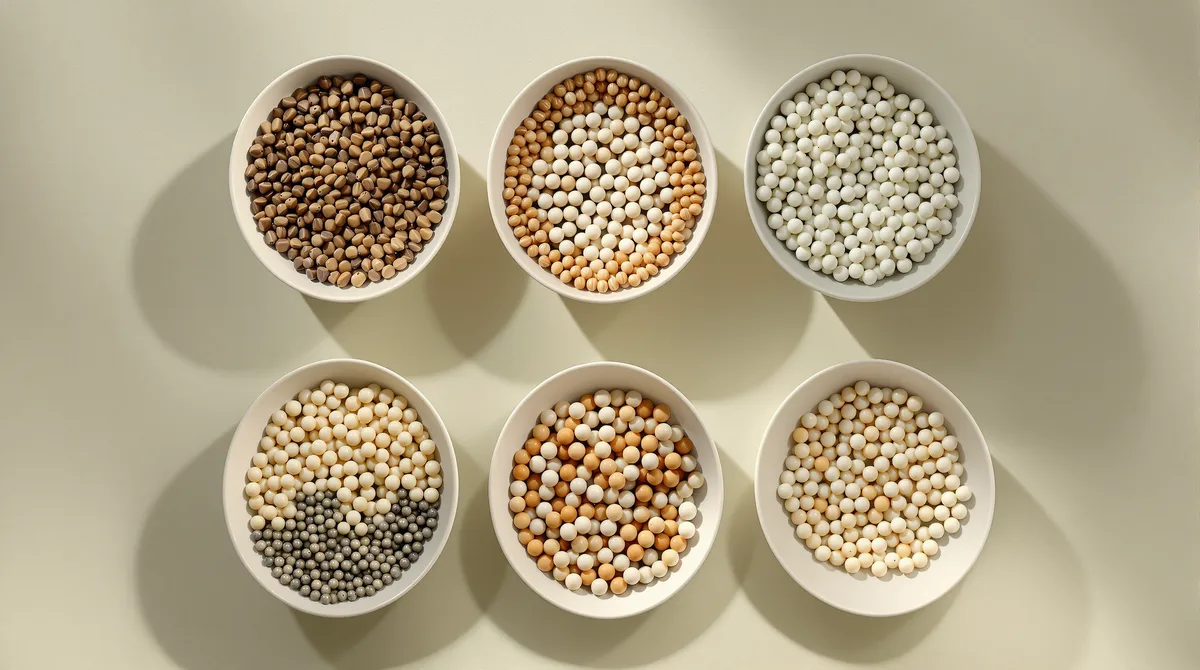
Nine material families are in regular use: glass, acrylic, wood, bone, horn, ceramic, shell, capiz and metal. Within glass alone there are three different trades — hand-made lampwork, pressed glass and drawn glass seed beads — and they are not interchangeable. The material library sets out what each family gives and what it costs you in weight, light and handling.
How far our own manufacturing reaches into the bead varies by family, and the material library states it family by family: glass drawn in Firozabad, wood turned in Saharanpur, ceramic glazed and fired in Khurja, metal finished and plated in Moradabad, and acrylic and resin moulded and dyed to our colour, to our own dies where a design needs a custom bead.
Four construction methods cover most of the category. Strands are strung on cord and gathered on a dowel or a rod pocket. Bead and thread embroidery couches beads onto a stiffened ground in the zardozi tradition. Wire-wrapped beadwork wraps beads over a shaped brass armature. Framed and woven shapes hold beads in a rigid outline. The beadwork techniques pages take each in turn; if you read one, read hand-strung strands, which carries the most volume and the most cost levers.
A bead specification that can actually be quoted names the bead material, the outside diameter, the drill hole, the cord, the strand count, the strand spacing, the finished width and drop, the hem shape and the mount. Leave the drill hole out and the piece cannot be assembled; leave the strand count out and it cannot be costed.
The reference desk holds those sheets. Bead sizes and stringing specifications is the one to send to a designer before they draw.
Colour is agreed against a reference or a physical chip and confirmed on the approved sample, never on a screen. Two mechanisms do most of the work: dyed to match, where a base bead is dyed to an accent bead so the accent carries the design, and size grading, where the colour change lands on a change of bead size rather than on a change of dye.
The design library documents the colour stories themselves. The honey ombre colour story is the clearest example of grading by size.
The shortest route into this property is not a quote request. It is the Gemixx Design Studio: a live application holding the whole working bead library and the Gemixx 2027 collections — deep enough to hand a brand a bead nobody else is using, and deep enough that most designs never need a new die cut. Browse the bead library, build a piece strand by strand and true to size, and render it as a photoreal studio photograph in about a minute. Every design opens as your own copy to change — colours, finish, size, anything.
What makes it more than a configurator is what comes out of it. Each render is built from named beads, so it converts into a colour-count sheet for sampling rather than into a picture somebody has to interpret. From a render to a costed tech pack follows the documents from there.
We manufacture for world-leading brands and retailers. Beaded portals, curtains, café curtains, valances and wall hangings run in continuous production in our own plants, with the lead portal reordered season after season. In hospitality, the beaded décor walls at a US casino resort are the reference project. Every piece is made to order against an approved sample, and it ships under your label rather than ours.
Doorways and open-plan zoning, windows and café fronts, retail entrances and fitting rooms, hotel lobbies, restaurants and bars, salons and spas, event backdrops, photo and film sets. The applications section takes each in turn, because a panel for a hotel lobby and one for a nursery are different objects even when the design is identical — fixing, weight and handling all change.
Who buys it splits the same way. Retailers and e-commerce sellers, brands buying under their own label, interior and hospitality designers, and event and display companies each need a different thing from the same programme, and the buyer-type pages say which. The markets pages cover the United States, the United Kingdom, Europe and Australia, where we manufacture, import and warehouse product in the US and quote a single delivered price at a named location.
Weight is the figure buyers forget until the first quotation. Glass is the heaviest common bead material and acrylic the lightest for the same volume, and strand spacing multiplies whichever you pick: a densely spaced panel can carry several times the beads of an open one at identical dimensions. Bead material therefore decides the freight line as much as the look, which is why the material library records weight behaviour alongside colour and light.
Testing decides whether a design can ship, and it is quoted per market rather than assumed. The tests a bead programme commonly has to pass are lead testing for California Proposition 65, incremental testing for the United Kingdom and the European Union, flammability testing, and child-safety labelling where a range is aimed at children. Which applies depends on the market and the buyer; the compliance section sets that out, and each is arranged against the approved sample.
On the audited side the set is short and precise: SMETA-audited on the Sedex platform, Forest Stewardship Council certification for our wood lines, Customs-Trade Partnership Against Terrorism for United States import clearance, and Omega social-compliance auditing. A programme written against ISO, BSCI, GOTS or Fair Trade should be raised at briefing, so the right audit route is agreed before the first order.
Cost in beadwork is set in the design, not negotiated afterwards, and we own every step that sets it — so we can move it. Bead size is the largest lever there is: the same look reached on a larger bead is a lower bead count per strand. Strand pitch, drop length and format height move it next. Then the bead itself, because a design built from library beads carries no tooling step, and where a design does need a shape nobody makes we cut the die ourselves rather than pay someone to. Pattern complexity decides whether a bench works from a chart or maps by hand. Carton cube decides the freight, and on goods this bulky and this light the freight is a real share of the landed cost.
That is cost engineering rather than quoting: tell us the price architecture the design has to live in, and we will tell you which levers reach it and which ones change the look. Drawing the glass, moulding the acrylic, turning the wood and stringing the strand under our own roofs is what makes that conversation short.
Pricing, minimums and fire performance are all set against a specific design rather than published across a range. Minimums are set per design and confirmed with your quote. Fire performance is tested on the specified build and quoted with the project. Panel weight is taken off the approved sample, so the fixing can be sized to a real number.
Twenty-seven sections in four groups, and the list below is in the order they are meant to be read.
Ranges first: the formats and what each is for. Then how the work is made — the material library, the beadwork techniques, the Design Studio and the colour stories. Then how it is specified and ordered: specification, the reference desk, the guides, made to order, ordering and compliance. Then the context: where beaded décor gets used, who buys it, which markets we ship to, the style and trend pages, and craft topics for techniques we document but do not sell.
Read down, not across. Every page names the one question it owns, and no question has two pages: the build refuses to publish two that claim the same one.
Every section of this property
Ranges first, then how the work is made, then how it is specified and ordered, then where it gets used. Each section carries its own fully-linked list; one page per buyer question, and no question has two pages.
Pillar
Door curtains, portals, café lengths and valances: the standard sizes, the strand counts and the one question each format answers.
Manufacturing
Strands that frame an opening and leave a clear walk-through: arched and inverted-V drops, built to order on a turned dowel or a stained rail.
Manufacturing
Built on a cotton or organza header with a three-inch rod pocket: the band, the strands, the hem and the sizes we have shipped.
Manufacturing
Short strung panels at 120 × 35 cm and other formats, 56 to 60 strands, with scalloped, fan-arch, V-point and straight hems — and why height is the cost lever.
Manufacturing
Widths from 50 to 76 cm on a turned dowel, in glass, wood and cast faux capiz — hem shapes, strand counts and what is a shipped format against a concept.
Pillar
The table cluster: coasters, placemats and chargers, runners and napkin rings, with the construction and ground material each one needs.
Manufacturing
Bead-embroidered glass coasters on stiffened felt, or moulded acrylic sets in translucent and opaque — construction, sizes and what moves the cost.
Manufacturing
The face cloth, the couched bead field, de-densified infills and the closure — and what actually keeps beads attached on an object people lean on.
Manufacturing
Pendant drums, empire table shades and sconce shades in glass beads — how the frame carries the shape, and why we supply shades only.
Manufacturing
Frames for a 4 × 6 in print, drawn bead by bead on a 6 mm core, with the nine ways a bead can be held on a flat face.
Manufacturing
The header tape, the drop, the repeat length and the tolerances — how beaded fringe is built and quoted when it is a component in somebody else's product.
Reference
Nine material families, what each gives in light, weight and colour, and how far our own manufacturing reaches into every one of them.
Reference
Five craft families — strung, embroidered, wire-wrapped, knotted and wrapped fibre — and what each one is good for.
Pillar
A live app holding the full bead library and the Gemixx 2027 collections: build a design, render it in about a minute, take it to tech pack and costing.
Design
Colour stories documented by how they are built, not by how they look in a mood board.
Specification
The dimensions, strand values, fixings and performance limits a drawing and schedule have to carry.
Reference
Specification sheets and definitions — the pages to send a designer before they draw.
Guides
One guide per question that arrives often enough to be worth answering properly.
Manufacturing
Brief, rough cost sheet, colour match, sample, production, packing — the route from a sketch to a packed carton, in plants we own.
Pillar
Brief, rough cost sheet, colour match, sample, production, packing — the six stages with the real published timings.
Pillar
Lead, CPSIA, Prop 65, REACH, fire standards, electrical listing and audit — what applies, who carries it, and what we hold.
Index
Retailers, own-label brands, interior and hospitality designers, event companies, display teams and children's retail — and the one thing each cares about most.
Markets
Four markets, what changes in each on rules, vocabulary and freight, and the offices that carry them.
Pillar
Twenty settings, from a closet front to a hotel lobby, each with the format that suits it, the fixing it needs and the standard that applies.
Index
Twenty-four named looks, each described by the material, palette, pitch and hem that actually produce it.
Index
Eleven trend reads on beaded décor for 2027, from the floor the movements land on first.
Index
Seventeen beaded objects documented from inside the craft — what each one is, how the tradition builds it, and what it would take to develop one.
Good to know
The manufacturer. Glass beads are drawn and hand-strung in our own Firozabad glass works, curtain dowels are turned in our own Saharanpur wood factory, and inspection and export packing run through our own Greater Noida house. Acrylic and resin beads are moulded and dyed to our colour, to our own dies where a design needs a custom bead. We own the plants — no agents, no brokers, and nothing booked out to a vendor.
Nine families: glass, acrylic, wood, bone, horn, ceramic, shell, capiz and metal. Glass alone covers hand-made lampwork, pressed and drawn seed beads. The working library is deep enough that a brand can be given a bead nobody else is using, and deep enough that most designs never need a new die cut.
Everything is made to order. There is no retail stock programme for beaded décor: a specification is agreed, a sample is approved, and production runs against that approved sample.
Minimums are set per design and confirmed per quote, not fixed across the range. A plain-strand panel and a fully patterned one use very different amounts of material and stringing time, so one range-wide number would be meaningless.
Sampling usually runs 16 to 20 days from an agreed brief, and you approve photographs before the sample ships. Production for beaded décor runs 40 to 60 days after sample approval. Sampling is quoted separately from production.
Yes. The Gemixx Design Studio is a live application at app.gemixx.com holding the whole working bead library and the Gemixx 2027 collections. You build a piece strand by strand and true to size, render it as a photoreal studio photograph in about a minute, and send it back for a tech pack and a costing. Each render is built from named beads, so it converts directly into a colour-count sheet.
Yes. Beads are matched to a colour reference or a physical chip and confirmed on the sample. Base beads are routinely dyed to match an accent bead so the accent reads as the subject rather than fighting the ground.
Keep exploring
Pillar
Door curtains, portals, café lengths and valances: the standard sizes, the strand counts and the one question each format answers.
Specs and sizesMaterial
How seed beads are drawn, why dye lots are quoted per run, what the drill hole limits, and where seed-bead work earns its cost.
See the detailTechnique
The bead map, the cord, thirty strands on a dowel, hem shapes, suspension loops — and the three levers that move the cost.
Open the referenceSpecification
Diameters, drill holes, cord selection, strand counts and format dimensions — the sheet to copy into a tech pack.
Open the referencePillar
A live app holding the full bead library and the Gemixx 2027 collections: build a design, render it in about a minute, take it to tech pack and costing.
Specs and sizesReference
Nine material families, what each gives in light, weight and colour, and how far our own manufacturing reaches into every one of them.
How it is made
Start a conversation
Send a reference, a colour chip or a sketch. Minimums are set per design and confirmed per quote; sampling is quoted separately and usually runs 16 to 20 days from an agreed brief.