Guide
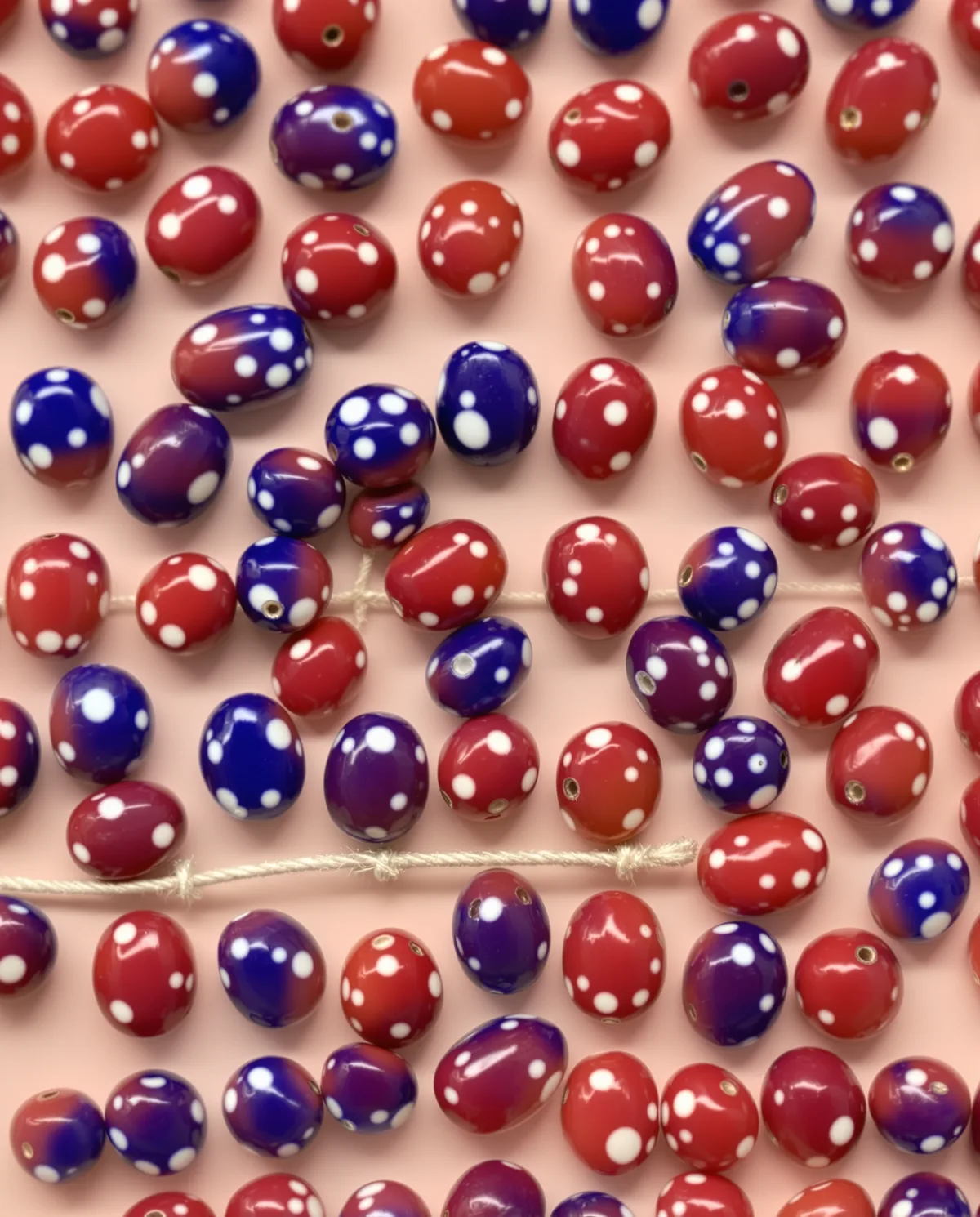
Seed bead against pressed glass
Resolution, weight, repeatability, cost per covered area and breakage risk, with the working figures from production.
Open the reference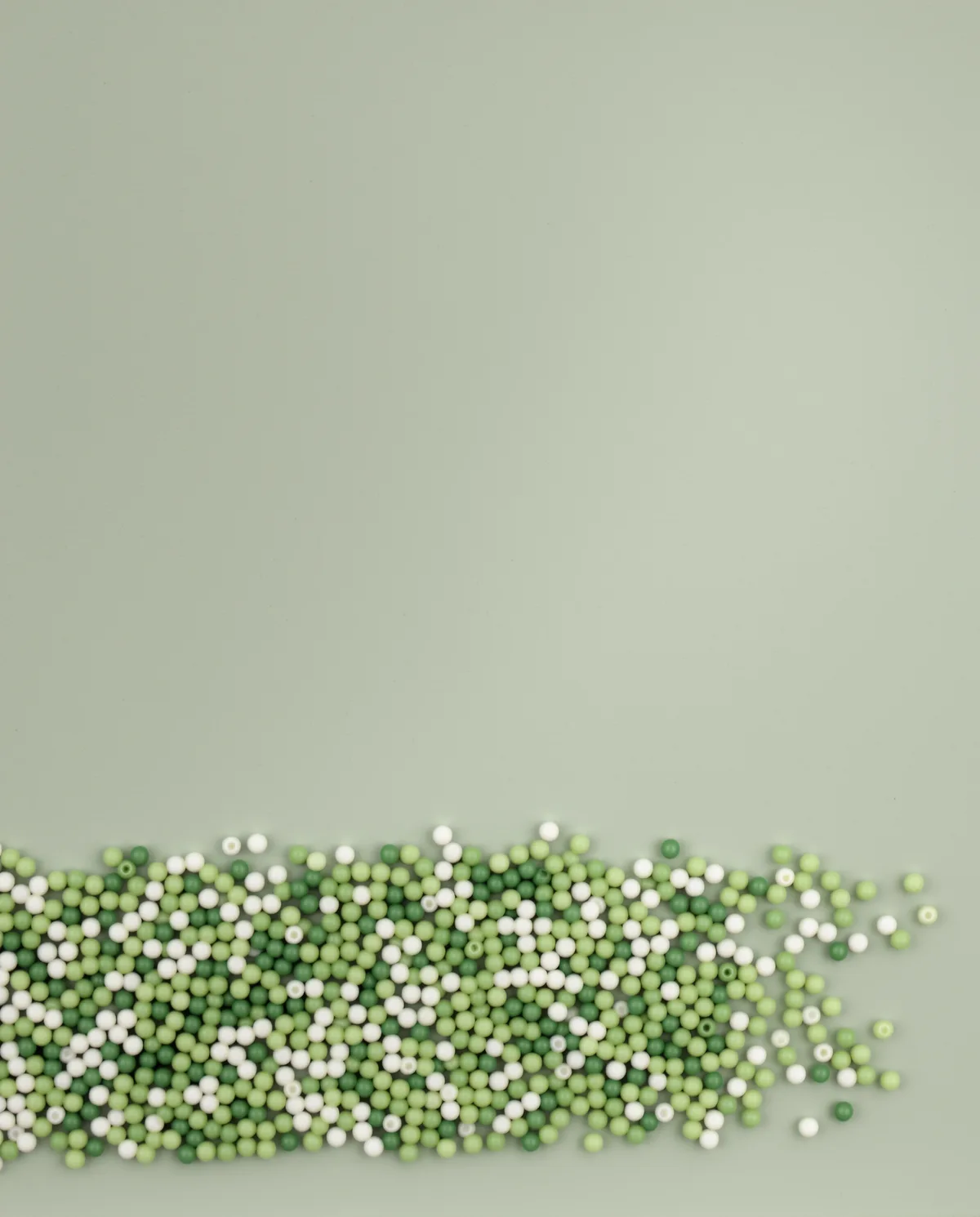
Material · Glass
Seed beads behave less like objects and more like a material you can pour. That is what lets a beaded panel hold drawing — and what makes dye lots and drill holes the two specifications that matter.
Drawn glass seed beads in lime, forest green and chalk white, scattered loose beside a short threaded sample strand, graded across three sizes from about two millimetres up.
Glass seed beads are very small beads cut from drawn glass cane, usually one to three millimetres across. Because they are tiny and uniform they behave as a continuous material rather than as separate objects, which is what lets beadwork hold a drawn image. Gemixx draws and hand-strings them in its own Firozabad glass works.
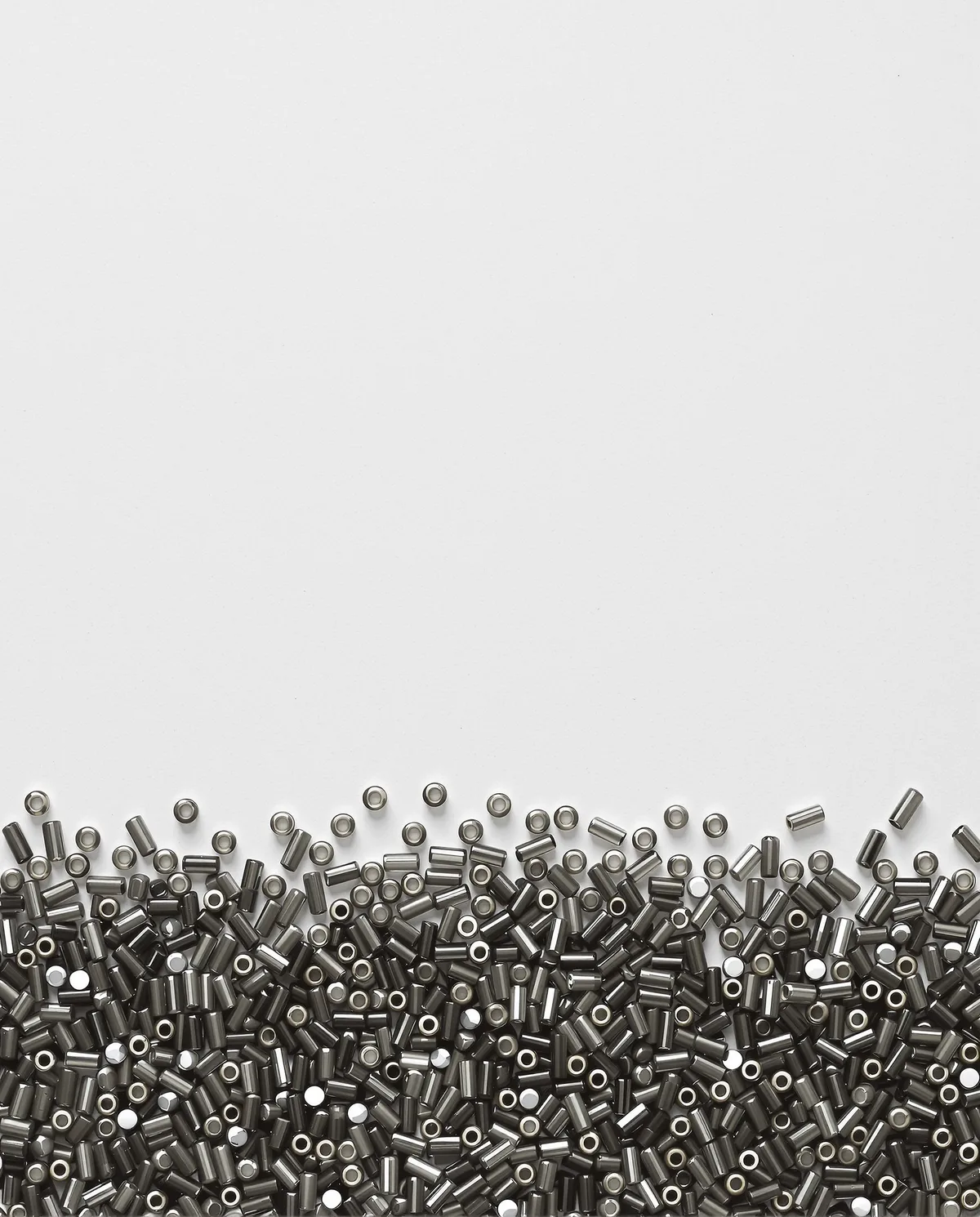
A seed bead is cut from drawn glass cane rather than pressed in a mould. Molten glass is drawn into a long tube, the tube is cut into short lengths, and the pieces are tumbled until the cut ends round over. The result is a bead that is extremely consistent in size, with a hole running the length of the original tube.
That production route is the whole reason seed beads behave differently from every other bead family in the material library.

Cane is drawn, cut and tumbled, so every bead in a run is the same size. Uniformity is the whole value.

The same specification across three deliveries gives three slightly different greens. Hold the lot or allow for the shift.

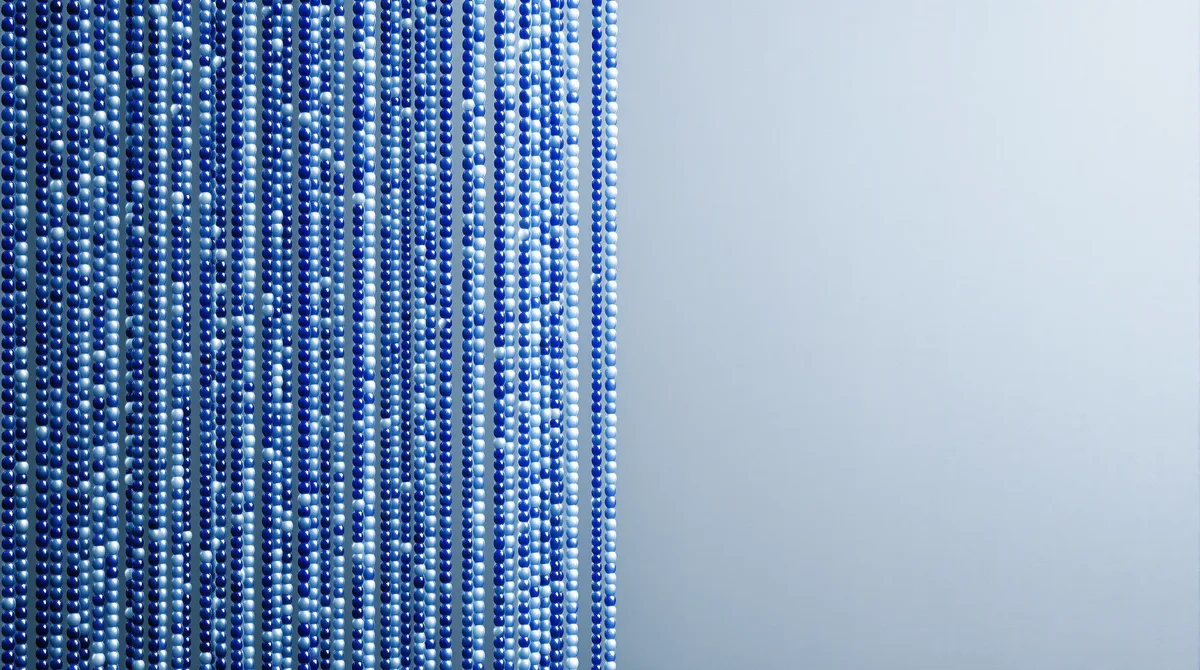
Grading bead size down the drop lets a colour change land on a size change — a tonal shift with no dyeing involved.
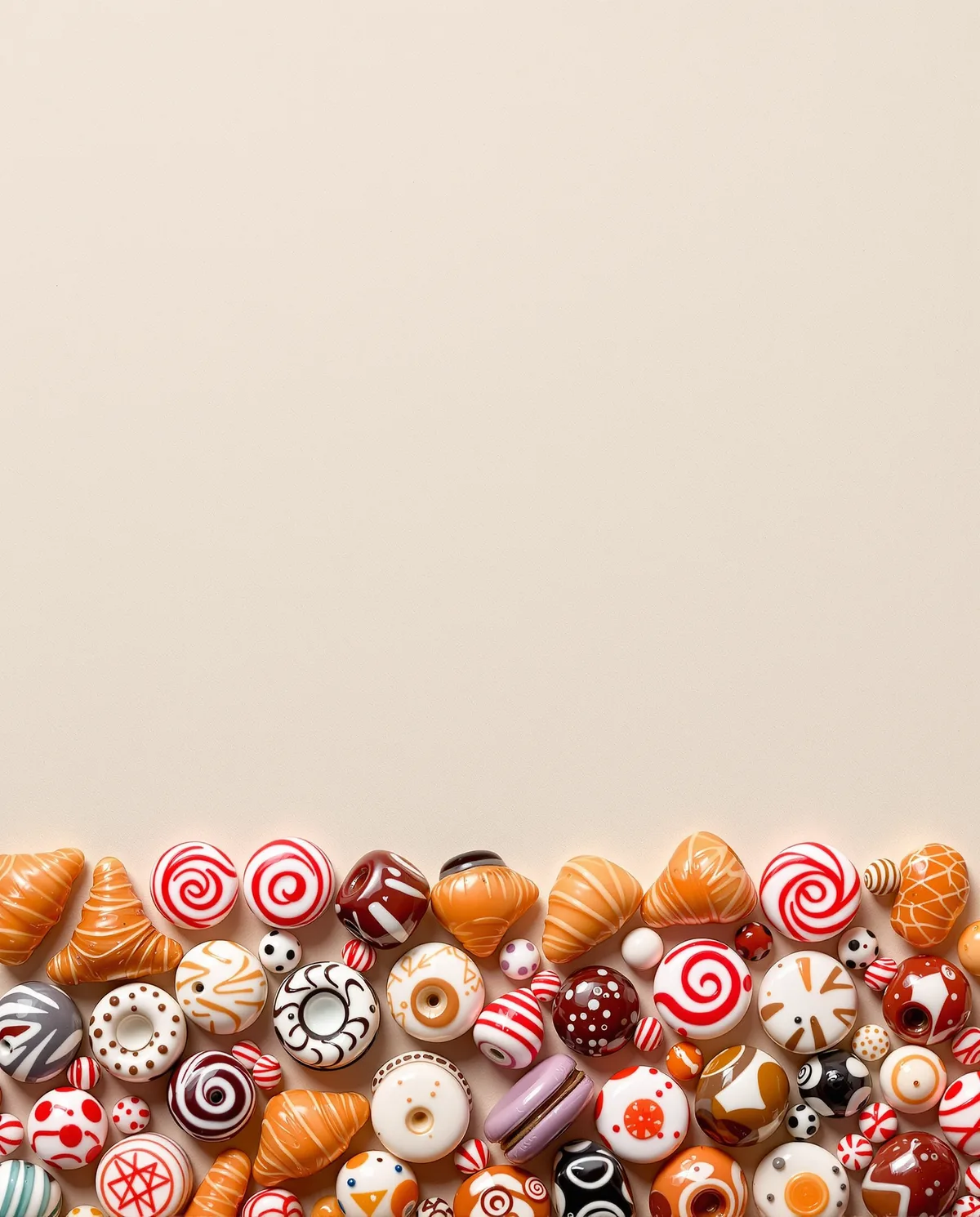
Pressed glass gives an object: you place it, and the eye reads the individual bead. A seed bead is closer to a pixel. Lay enough of them side by side and the eye stops seeing beads and starts seeing an image, which is why bead and thread embroidery can hold real drawing while strung panels of large beads can only hold pattern. It is also why table beadwork is almost all seed-bead work.
The outside diameter tells you how a bead looks. The drill hole tells you whether the piece can be built at all. Seed beads take thread or fine cord; they will not accept the cord used to carry a full-height strung panel, which is the first thing hand-strung strands has to resolve on a mixed build.
This is the single most common error in incoming bead specifications, and it is why bead sizes and stringing specifications lists the hole diameter for every bead in a build, not just the diameter.
Glass body colour is stable. Surface-dyed colour is not: it is a property of the batch, and two runs made to the same reference will sit slightly apart. On a coaster nobody notices. On a two-metre panel, or across a repeat order six months later, the eye catches it at once.
There are two answers. Hold the dye lot for the whole programme, which constrains the order pattern. Or write the acceptable variation into the specification and accept that a reorder will not be identical.
The normal structure is a seed-bead ground carrying a larger accent. Dotted oval glass beads, glass mushroom beads, faceted drops: the accent is the subject, and the ground is dyed to match so it reads as a field rather than as a competing colour. The accent is scattered rather than aligned — three or four to a strand, never in a row — because an aligned accent reads as a stripe and loses the effect entirely.
A seed-bead field holds less dust than a large-bead panel because there is less flat surface facing upwards, but the thread carrying it is finer and less forgiving when wet. Routine care is dry brushing, downwards, with damp work reserved for the beads themselves; cleaning a beaded curtain covers the sequence, and embroidered pieces are never immersed at all.
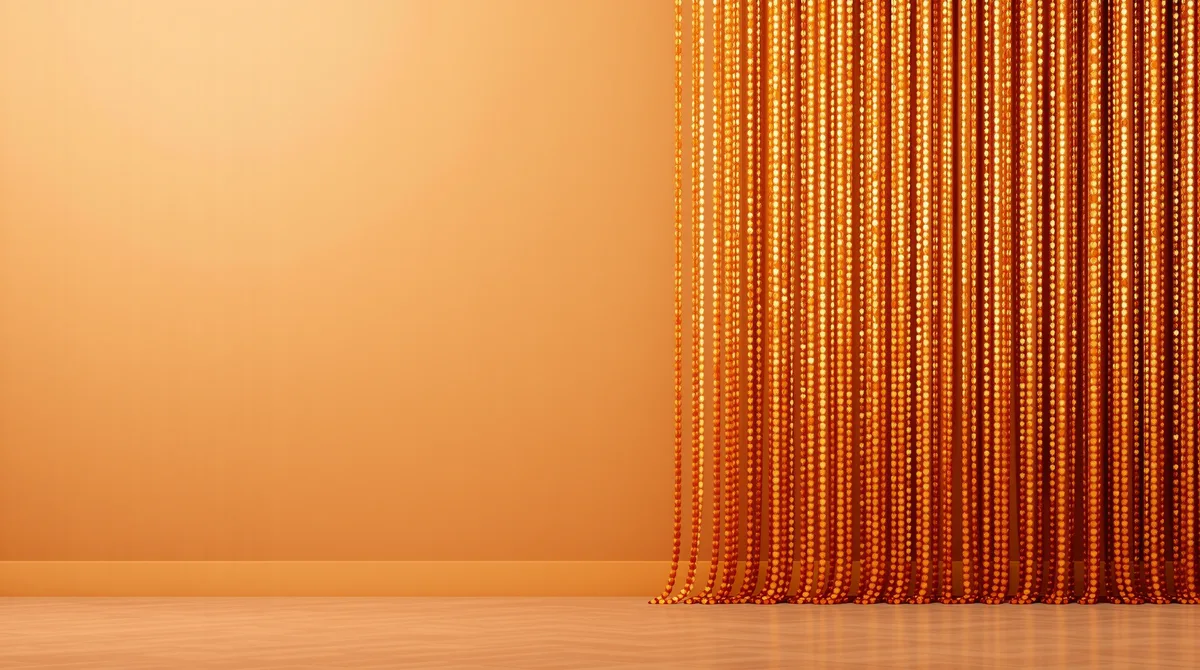
A tonal gradient can be built without a gradient dye. Grade the bead size down the drop and the colour change lands on the size change: smallest and palest at the header, largest and deepest at the hem. The honey ombre colour story is built exactly this way, and it is far more robust in production than trying to hold a dyed gradient across a run.
Resolution, not coverage. If a design needs an image — a motif, a letter, a figure — seed beads are the only route, and the cost is justified. If a design needs a field of colour, a larger bead covers the same area with a fraction of the units and a fraction of the stringing time, and at normal viewing distance the difference does not read. De-densifying an infill is usually invisible; dropping to a coarser bead for a flat field almost always is.
Name the bead size range, the drill hole, the surface finish (matte, glossy, frosted, iridescent), the colour method — body colour, surface dye or dyed to match — the dye-lot policy, the thread or cord, and the ground material if the work is embroidered. That is enough to quote and enough to reorder against. Anything less and the sample will be a guess.
Extractable data
| Specification | Working value | Why it matters |
|---|---|---|
| Outside diameter | About 1–3 mm in décor use | Sets the resolution of a motif and the bead count per area |
| Drill hole | Smaller than the cord used for strung panels | Seed beads go on thread or fine cord, not curtain cord |
| Production method | Cut from drawn glass cane, then tumbled | Uniform size, so a run behaves as one material |
| Colour method | Glass body colour, surface dye, or dyed to match | Dyed colour is a batch property and shifts between lots |
| Typical décor use | Embroidered grounds, strand bases, ombre grading | Rarely the whole object; usually the field an accent sits on |
| Combined with | Bugle beads, pressed glass accents, metallic thread | The accent bead is the subject; seed beads are the ground |
| Made where | Drawn and hand-strung in our own Firozabad glass works | Colour and annealing are specification decisions, not constraints |
Good to know
In décor work, roughly one to three millimetres across. There are finer sizes in jewellery, but below about a millimetre the labour per square centimetre rises faster than the visual gain on a piece seen from across a room.
Because surface-dyed glass colour is a batch property. Two runs made to the same reference will differ slightly, and on a large panel the eye catches it immediately. For a repeating programme we either hold a dye lot or write the acceptable variation into the specification.
Yes, and they often are — as the base strand that an accent bead sits on. A panel of nothing but seed beads is possible but unusual: the bead count becomes very high, which shows in both the weight and the stringing time.
Thread or fine cord, decided by the drill hole rather than by the outside diameter. This is the most common specification error we see: a cord chosen for the look of the panel that physically will not pass through the beads it has to carry.
Constantly. The base strand is dyed to match the accent bead so the accent reads as the subject. On our dotted and mushroom portal constructions the base seed beads are dyed to the accent colour precisely so the scattered accents carry the design.
Both, plus frosted and iridescent surfaces. Within one piece the surface mix matters as much as the colour: a matte ground under a glossy accent separates the two far more cleanly than a colour change on its own.
Keep exploring
Guide
Resolution, weight, repeatability, cost per covered area and breakage risk, with the working figures from production.
Open the referenceTechnique
The bead map, the cord, thirty strands on a dowel, hem shapes, suspension loops — and the three levers that move the cost.
Specs and sizesMaterial
Why a mould, not a draw: how a pressed shape repeats across a run, what the mould seam costs you, and where a feature bead earns its weight.
Read the guideMaterial
Wound at the torch one bead at a time: what that buys in shape freedom, what it costs in hours, and how variation is specified instead of eliminated.
Specs and sizesMaterial
Cut long instead of short: how a tube gives beadwork direction, where it outperforms a round, and why the cut ends decide the thread.
Specs and sizesProcess
The gather, the drawn cane, the cut, the tumble and the anneal — and why colour is decided in the melt before any bead exists.
Specs and sizesColour story
Cornsilk to deep amber down the drop, with the colour change landing on a change of bead size rather than on a dyed gradient.
View the range
Start a conversation
Send a reference, a colour chip or a sketch. Minimums are set per design and confirmed per quote; sampling is quoted separately and usually runs 16 to 20 days from an agreed brief.