Material
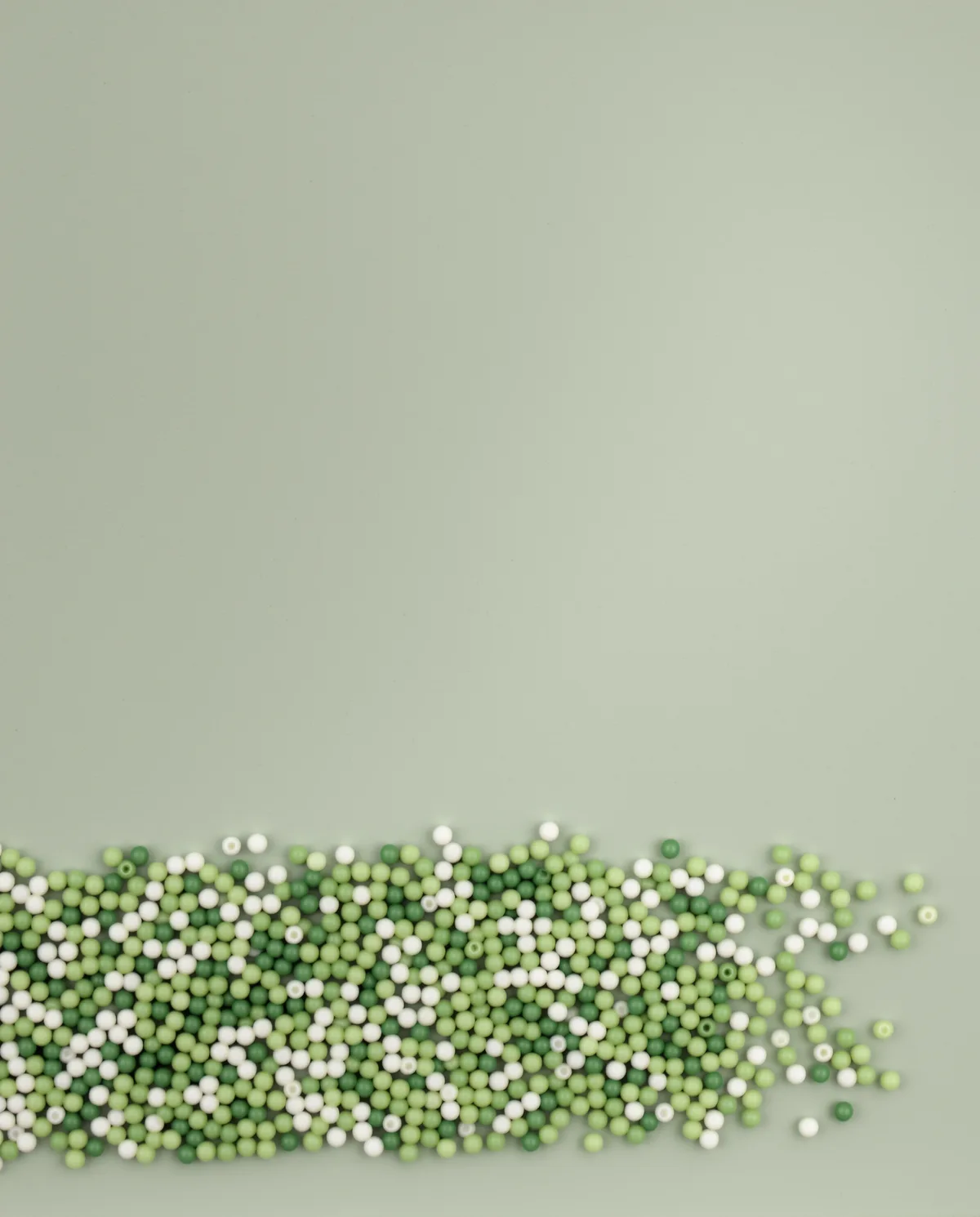
Drawn glass seed beads
How seed beads are drawn, why dye lots are quoted per run, what the drill hole limits, and where seed-bead work earns its cost.
Open the referenceMaterial reference
Nine material families are in regular use, and three different trades hide inside glass alone. This is what each gives you before you commit a design to it.
Nine bead material families: glass, acrylic, wood, bone, horn, ceramic, shell, capiz and metal. We manufacture in all of them — glass drawn in our Firozabad glass works, wood turned in Saharanpur, ceramic fired in Khurja, metal finished and plated in Moradabad. Glass alone splits into three trades: lampwork, pressed glass and drawn seed beads. Material choice sets weight, light and colour latitude before design begins.
Material pages
Thirteen pages: three glass trades plus bugle beads, then acrylic and resin, faux capiz, wood, ceramic, metal, bone and horn, and real shell. A page lands when there is real construction detail behind it.
Material
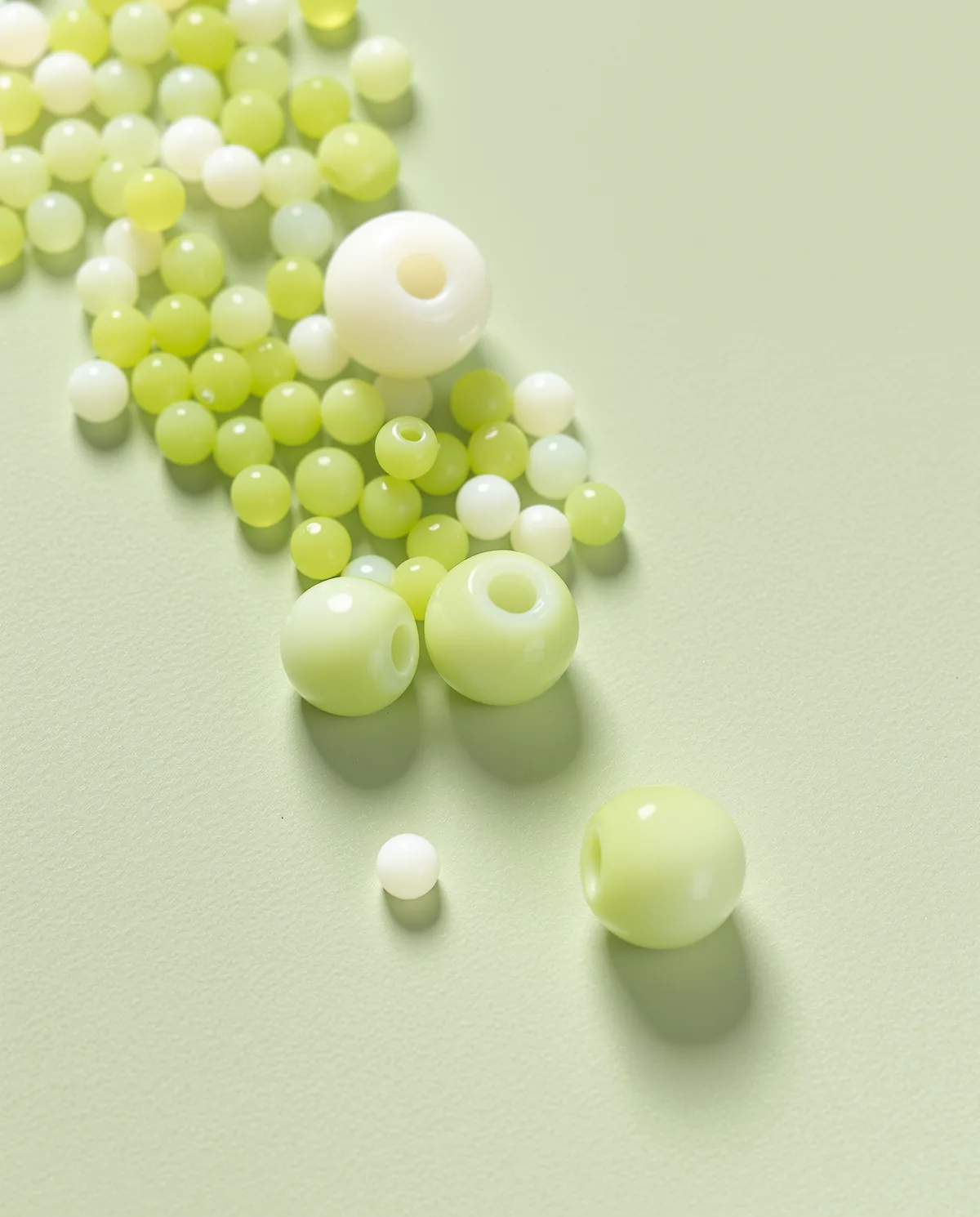
How seed beads are drawn, why dye lots are quoted per run, what the drill hole limits, and where seed-bead work earns its cost.
Material
Cut long instead of short: how a tube gives beadwork direction, where it outperforms a round, and why the cut ends decide the thread.
Material
Why a mould, not a draw: how a pressed shape repeats across a run, what the mould seam costs you, and where a feature bead earns its weight.
Material
Wound at the torch one bead at a time: what that buys in shape freedom, what it costs in hours, and how variation is specified instead of eliminated.
Material
Faceting, refraction and weight — why the market says crystal, why a specification says glass, and where the premium is actually earned.
Material
Moulded to our dies and dyed to the reference: the widest colour latitude in the library, half the weight of glass, and no shatter risk.
Material
Poured, not pressed: why casting makes figural shapes possible, how colour goes through the body, and what the mould line costs you.
Material
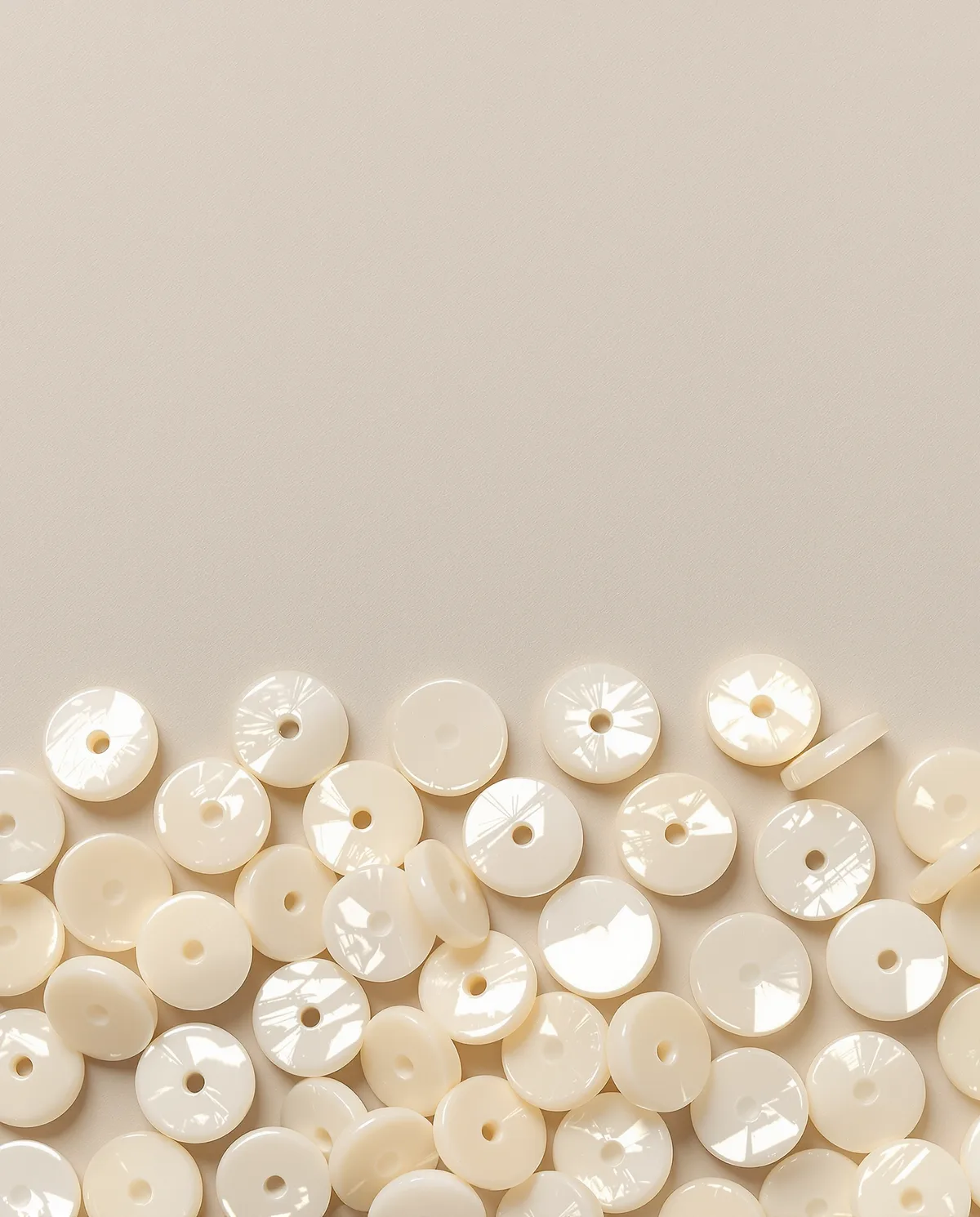
Cast resin or dyed cut acrylic, finished to imitate capiz shell: what it gives that real shell cannot, and why thin discs tangle.
Material
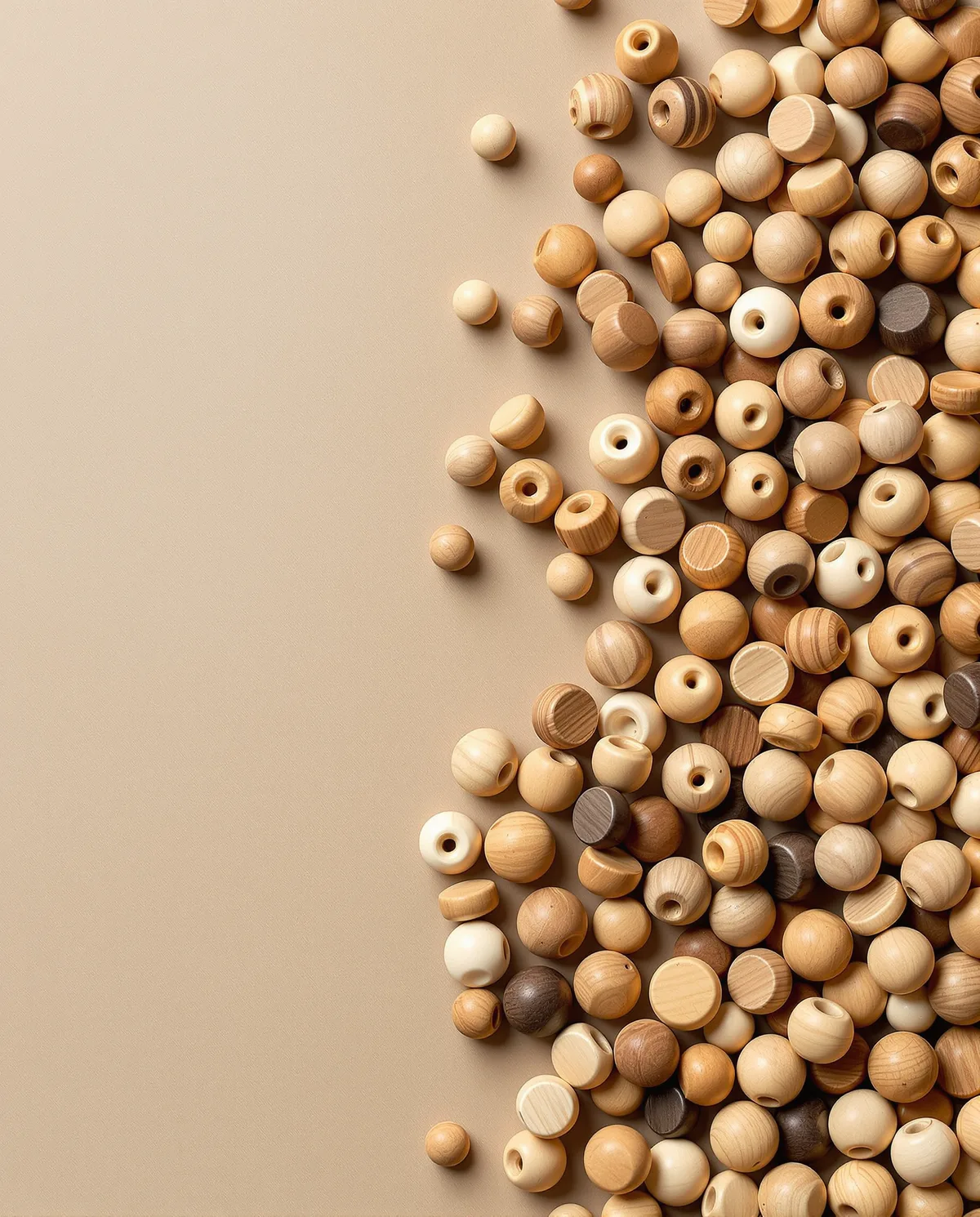
Turned and drilled in our own wood factory: grain variation you approve rather than eliminate, the finishes that hold colour, and the dowel from the same plant.
Material
Glazed and fired in our own ceramics plant: glossy, matte, speckle and reactive glazes, and what a dense opaque bead demands of the fixing.
Material
Finished and plated in our own metal plants: eight standard finishes, why metal reads as an accent rather than a field, and what plating does to wear.
Material
Cut, drilled and finished to specification in our own beadwork studios: dense quiet surfaces, natural markings, and the tone range a brief has to allow.
Material
Why nacre looks the way it does, what growth marks mean for a specification, and the reason most export programmes choose faux capiz instead.
| Family | What it gives | Where it is made |
|---|---|---|
| Glass | Light transmission, saturated colour, weight, a cool hand | Drawn and hand-strung in our own Firozabad glass works |
| Acrylic | Low shipping weight, bright colour, impact tolerance | Moulded and dyed to our colour — to our own dies where a design needs a custom bead |
| Wood | Warmth, matte surface, low weight for the volume | Turned in our own Saharanpur wood factory; dowels too |
| Bone and horn | Natural variation, a dense quiet surface | Cut and finished from blanks in our own beadwork studios |
| Ceramic | Opaque body, glaze colour, substantial weight | Glazed and fired in our own Khurja ceramics plant |
| Shell and capiz | Iridescence and translucency with visible growth marks | Cut and drilled to our specification |
| Faux capiz | Cast resin or dyed cut acrylic, finished to imitate capiz shell — dyeable, no shell | Cast or cut to our specification, then finished in our own beadwork studios |
| Metal | Reflectivity, plated finishes, accent weight | Finished and plated in our own Moradabad metal plants |
Each family is described by four properties that actually affect a design: how much light it passes, what it weighs for its volume, how much colour latitude it has, and how it behaves when two beads knock together. Everything else — finish, shape, size — is a variable within the family, and the dimensions themselves live on our reference sheets rather than here.
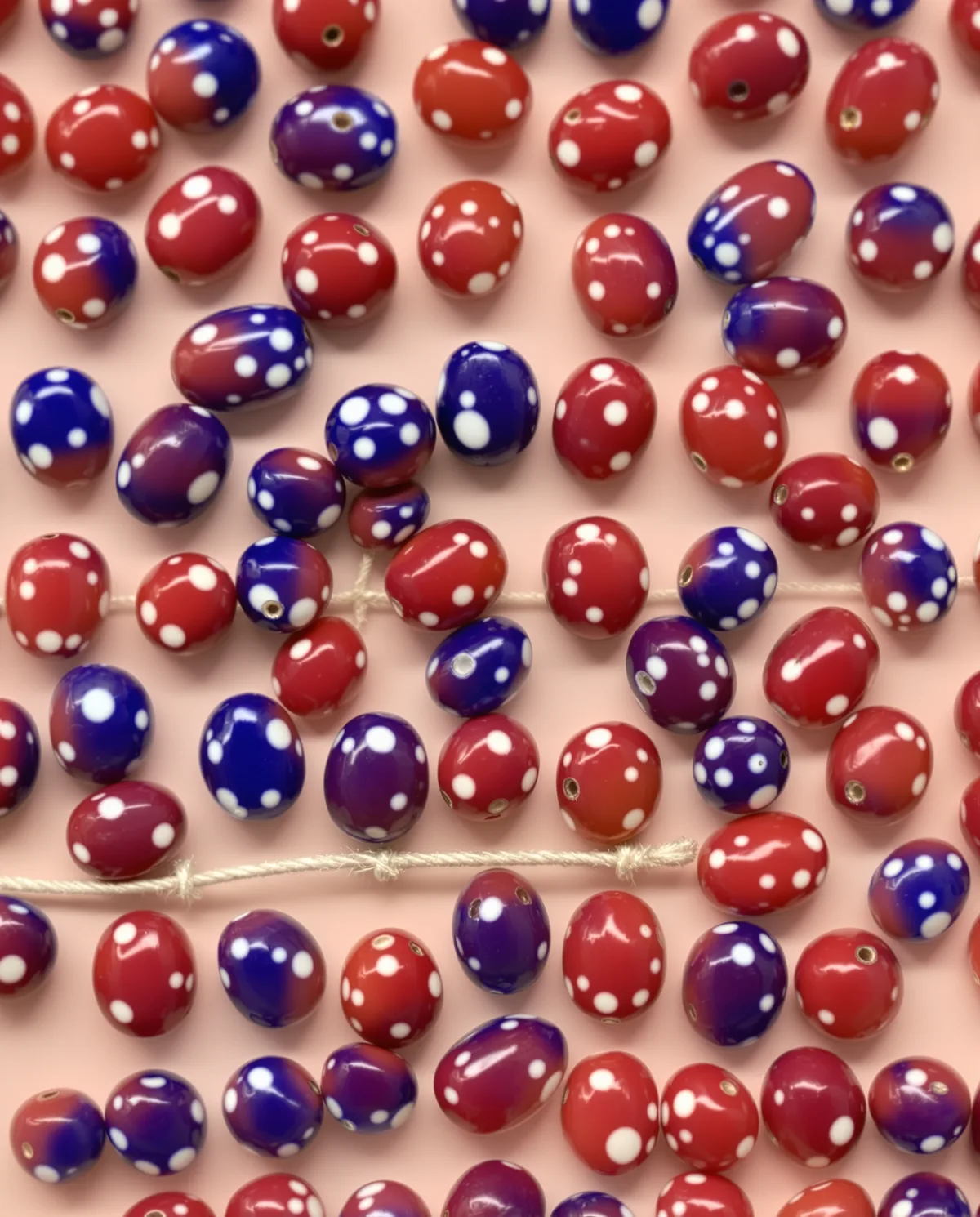
Hand-made lampwork shapes each bead at the torch, so the catalogue is whatever can be drawn. Pressed glass takes a mould, so a shape repeats exactly at volume. Drawn glass seed beads are cut from drawn cane at very small sizes, so they behave as a continuous material rather than as individual objects. Specifying "glass beads" without saying which of the three tells a factory almost nothing. Glass seed beads are the one most décor work is actually built on.
The comparison of seed bead against pressed glass sets out where each wins.
The construction method narrows the material list before the design does. Hand-strung strands will carry almost any bead, as long as the cord can pass the smallest drill hole in the build. Bead and thread embroidery, which is what beaded table décor is made of, needs beads small enough to behave as a field — in practice that means glass, and usually seed and bugle sizes. Wire-wrapped work needs a bead that tolerates being pulled tight against an armature.
Weight per panel, which decides the mount and the freight. Light behaviour, which decides whether the piece reads at all in a north-facing room. Colour latitude, which decides whether dyed to match is available or whether you take the colour the material comes in. And handling noise, which matters more than buyers expect in a doorway.
It also decides how the finished piece is looked after: cleaning a beaded curtain is a different instruction for wood and faux capiz than it is for body-coloured glass.
Good to know
All of it is our manufacturing — the question is only how far back it reaches. Glass beads are drawn and hand-strung in our own Firozabad glass works; wood, including curtain dowels, is turned in our own Saharanpur factory; ceramic is glazed and fired in Khurja; metal is finished and plated in Moradabad. Acrylic and resin beads are moulded and dyed to our colour, to our own dies where a design needs a custom bead. Bamboo is confirmed per design rather than held as an owned capability. We are not a sourcing office and we do not book vendors — every strand is strung in a plant we own.
All nine bead families, and a working library deep enough to give a brand a bead nobody else is using — glass we draw, acrylic we mould to our own dies, wood we turn, ceramic we fire, metal we plate. For a given design the practical shortlist is usually a dozen, once hole diameter, weight and colour latitude have been applied.
Not materially. Beaded décor runs 40 to 60 days after sample approval across materials. What material changes is the sampling conversation: a dyed-to-colour acrylic is a short loop, while a new glass colour can require annealing trials before anyone strings a strand.
Routinely, and it is often the point. Glass with wood, glass with faux capiz, beads with metal spacers. The constraint is weight distribution and hole compatibility rather than the look, which is why the stringing specification lists hole diameter for every bead in the build.
Keep exploring
Material
How seed beads are drawn, why dye lots are quoted per run, what the drill hole limits, and where seed-bead work earns its cost.
Open the referenceGuide
Resolution, weight, repeatability, cost per covered area and breakage risk, with the working figures from production.
View the rangeSpecification
Diameters, drill holes, cord selection, strand counts and format dimensions — the sheet to copy into a tech pack.
Read moreMaterial
Cast resin or dyed cut acrylic, finished to imitate capiz shell: what it gives that real shell cannot, and why thin discs tangle.
Read moreMaterial
Turned and drilled in our own wood factory: grain variation you approve rather than eliminate, the finishes that hold colour, and the dowel from the same plant.
See the detail
Start a conversation
Send a reference, a colour chip or a sketch. Minimums are set per design and confirmed per quote; sampling is quoted separately and usually runs 16 to 20 days from an agreed brief.