Reference
Shade frames and fitters
Spider, clip-on and Uno fitters, screw-on against slip-on retaining rings, and how each shade dimension is measured.
See the detail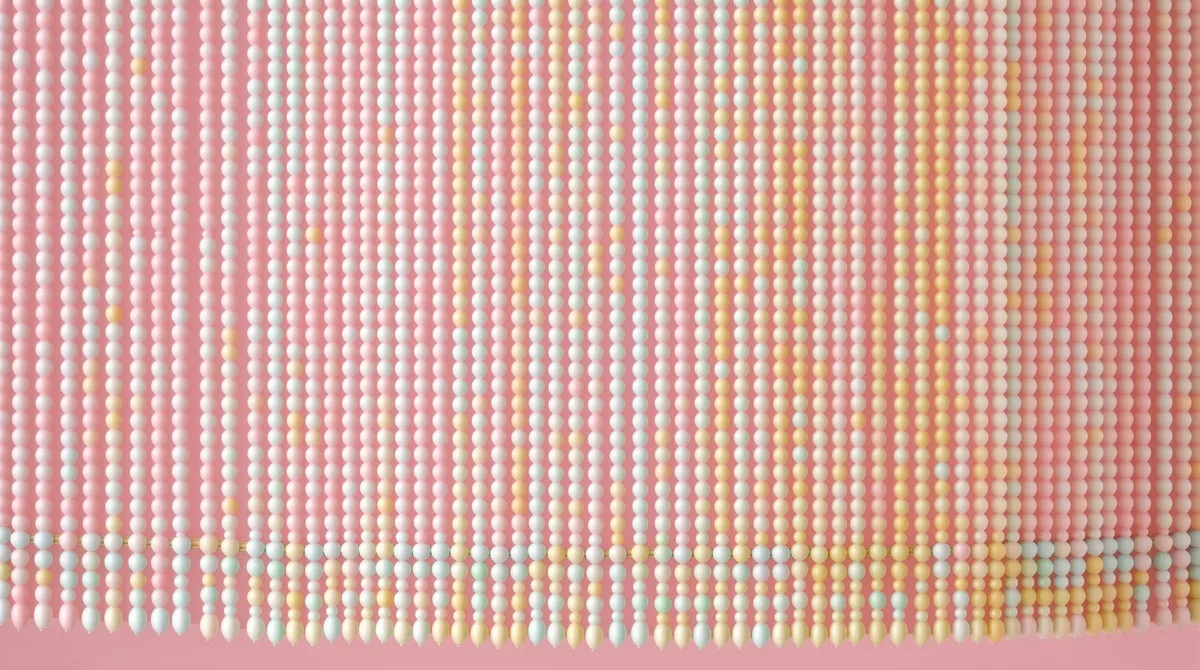
Manufacturing · Lighting
A beaded shade is a metal frame hung with strands of glass. The frame carries the shape, the beads colour the light, and the fitting is the buyer's decision — which is the part that most briefs leave out.
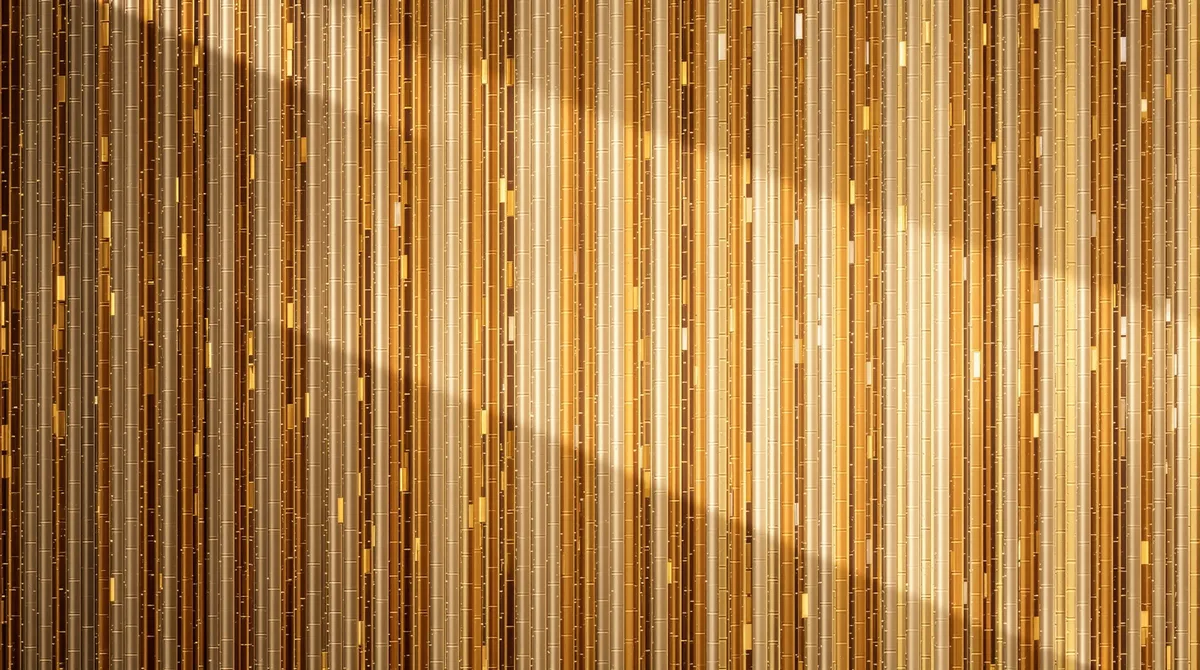
The close-strung bead wall of a beaded drum shade in candy pink, lemon and mint, shown unlit so the vertical bead rows and the fringe below read straight across.
We manufacture beaded lamp shades in three families: pendant drums, empire table shades and sconce shades, in glass beads we draw ourselves, strung on metal frames made, finished and plated in our own plants, and built to fit the fitting the buyer specifies. The electrical assembly is the buyer's, listed to their market.
A beaded lamp shade is a metal frame hung with strands of beads. The frame does all the structural work — nothing in the beadwork holds a shape — and the beads do the optical work, colouring and softening the light that passes through them. We manufacture three families: pendant drums, empire table shades and sconce shades, in glass beads.
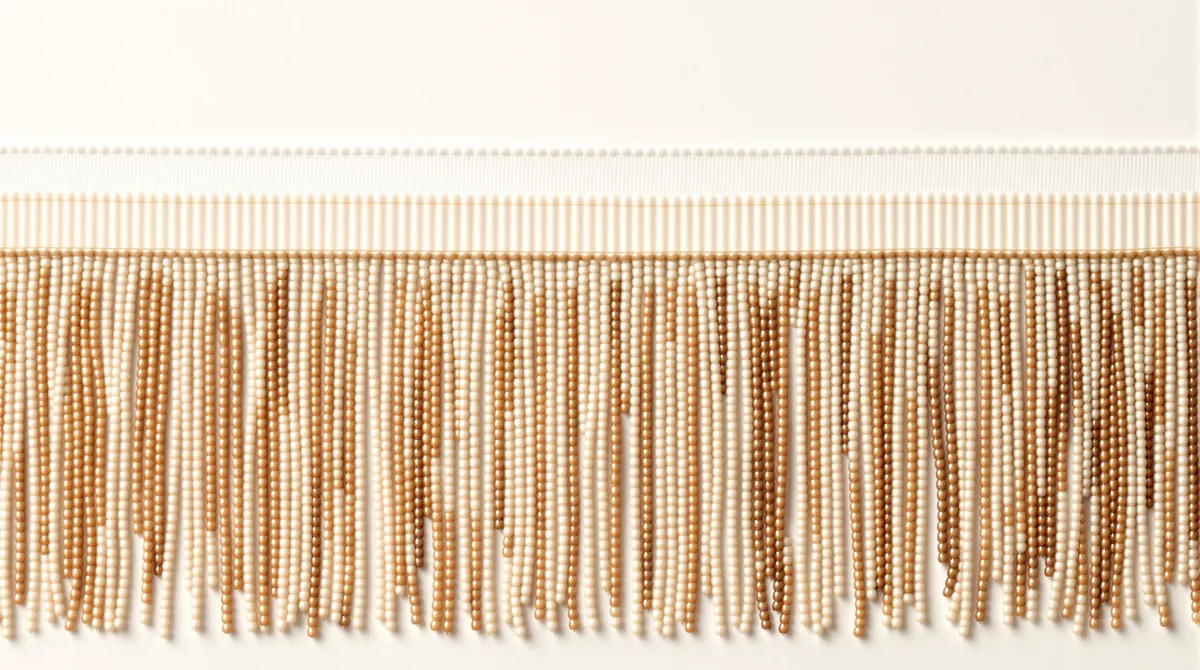
The build is strung work with the gravity turned sideways. On an open drum, every strand hangs free from the top ring, so strand length alone sets the hem. On an empire, strands run from a narrow top ring to a wider bottom ring, and it is the bottom ring that holds the slope.
Changeable: shape family, ring diameters, height, bead material and size, colour, strand count, hem shape, the end bead, the frame finish, and whether there is a fringe below the bottom ring.
Fixed: the shade is a shade. It carries no wiring, cord set, socket or base, and it is built to a fitting you nominate — the frame follows the fitting, not the other way round. Electrical certification belongs to the finished lamp and sits with whoever assembles it. Saying so early saves a sampling round.
Pendant drums, empire table shades and sconce shades are the three families we manufacture, and that is a published product line. Separately, our 2027 design library holds named shade designs with sizes, strand counts and hems worked out. Those are drawn against real beads at true size, rendered so a buyer can choose a silhouette, and every figure is confirmed on the sample when a design is developed.
The practical consequence is simple: pick a design and it becomes a development, not an order against stock. Everything in beaded décor is made to order anyway, so the route is the same; the difference is that the first piece is a sample, and it is quoted as one.
| Specification | Value |
|---|---|
| Shapes manufactured | Pendant drum, empire table shade, sconce shade |
| Pendant drum sizes in the design library | 30 × 22 cm and 40 × 28 cm |
| Long-fringe pendant in the design library | 40 × 50 cm |
| Tapered pendant in the design library | 35/50 × 35 cm |
| Empire table shade in the design library | 25/40 × 28 cm |
| Sconce shades in the design library | 15 × 12 cm and 10/18 × 14 cm |
| Strand counts in the design library | 36 to 120 |
| Bead materials | Glass seed, pressed, lampwork; acrylic where weight matters |
| Frame | Metal, finished and plated in our own plants |
| Supplied as | Shade only, to the buyer's fitting specification |
| Sampling | 16–20 days from an agreed brief, quoted separately |
| Production | 40–60 days after sample approval |
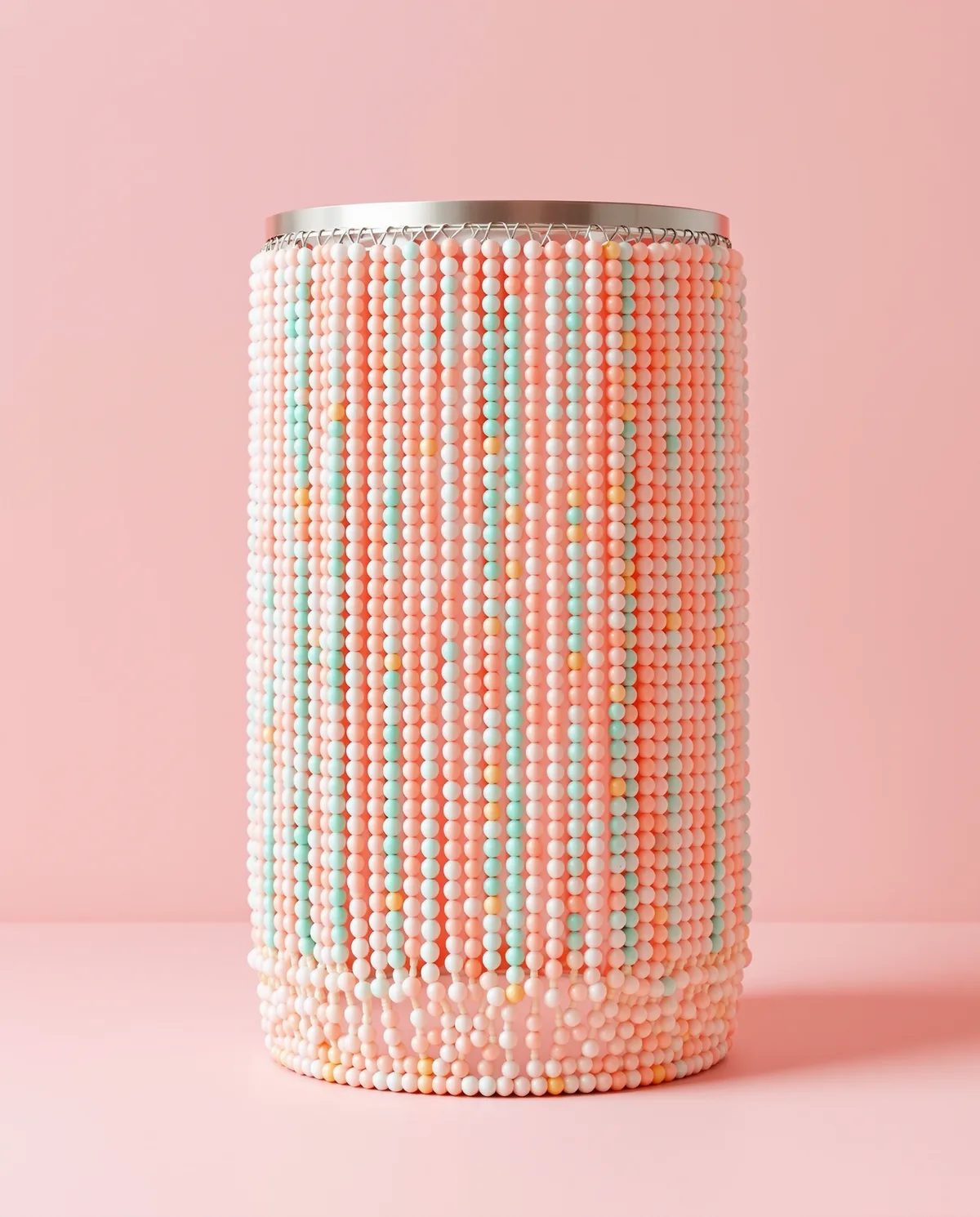
Two numbers do all the work in a shade specification: the ring diameter, which sets the strand count, and the height, which sets the bead count per strand. On a tapered shape the top and bottom diameters are both needed, because the difference between them is the slope.
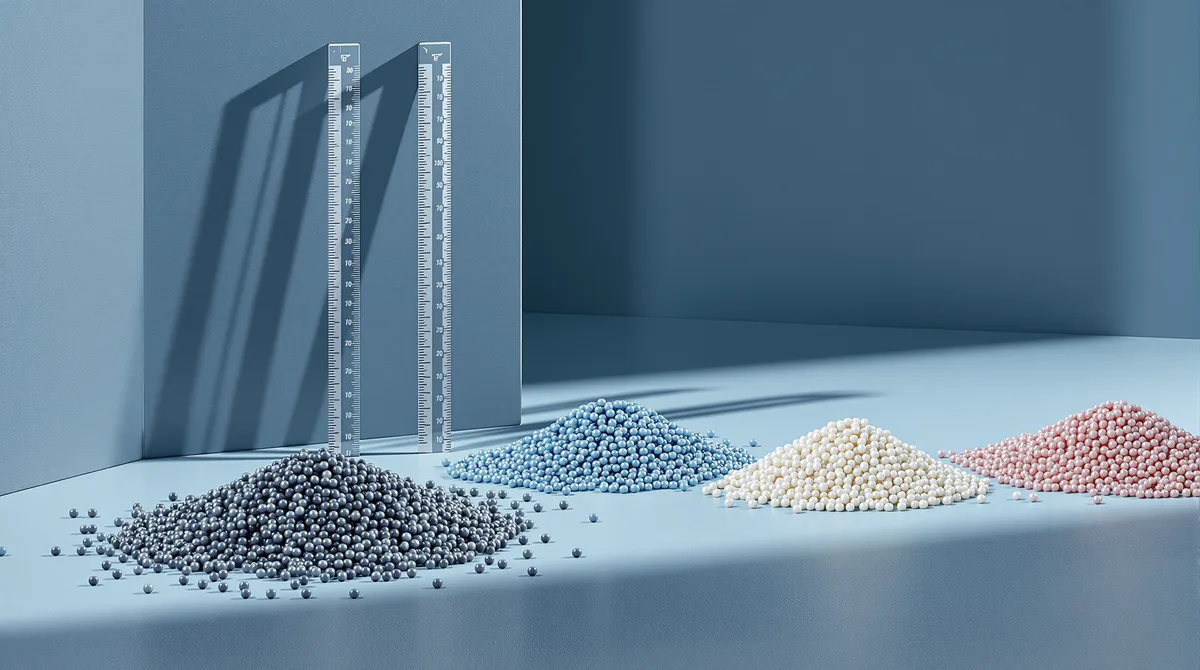
Glass is the default, because glass is what makes transmitted light worth looking at: tinted transparent beads colour the light, frosted glass diffuses it, and faceted or lampwork beads throw it. Pressed glass gives a repeatable motif bead at volume. Acrylic is the right answer where weight matters — a very wide pendant with 120 strands of glass is a serious load for a ceiling fixing, and acrylic takes that problem away while costing less to ship.
The frame can be finished in any of our eight standard metal finishes, because metal finishing and plating are in-house: matte gold, matte black, rose gold, brilliant gold, champagne gold, antique silver, brilliant silver and matte silver.
The fitter type and the frame it must sit on, first and always. Then the shape family, the ring diameters, the height, the strand count or pitch, the bead material and size, the colours with references or physical chips, the hem shape, the end bead, and whether a fringe hangs below the bottom ring. Then packing, quantity per colourway, and the port or warehouse.
A brief that names a look but not a fitting cannot be sampled accurately, because the frame comes first and the beads are strung to it.
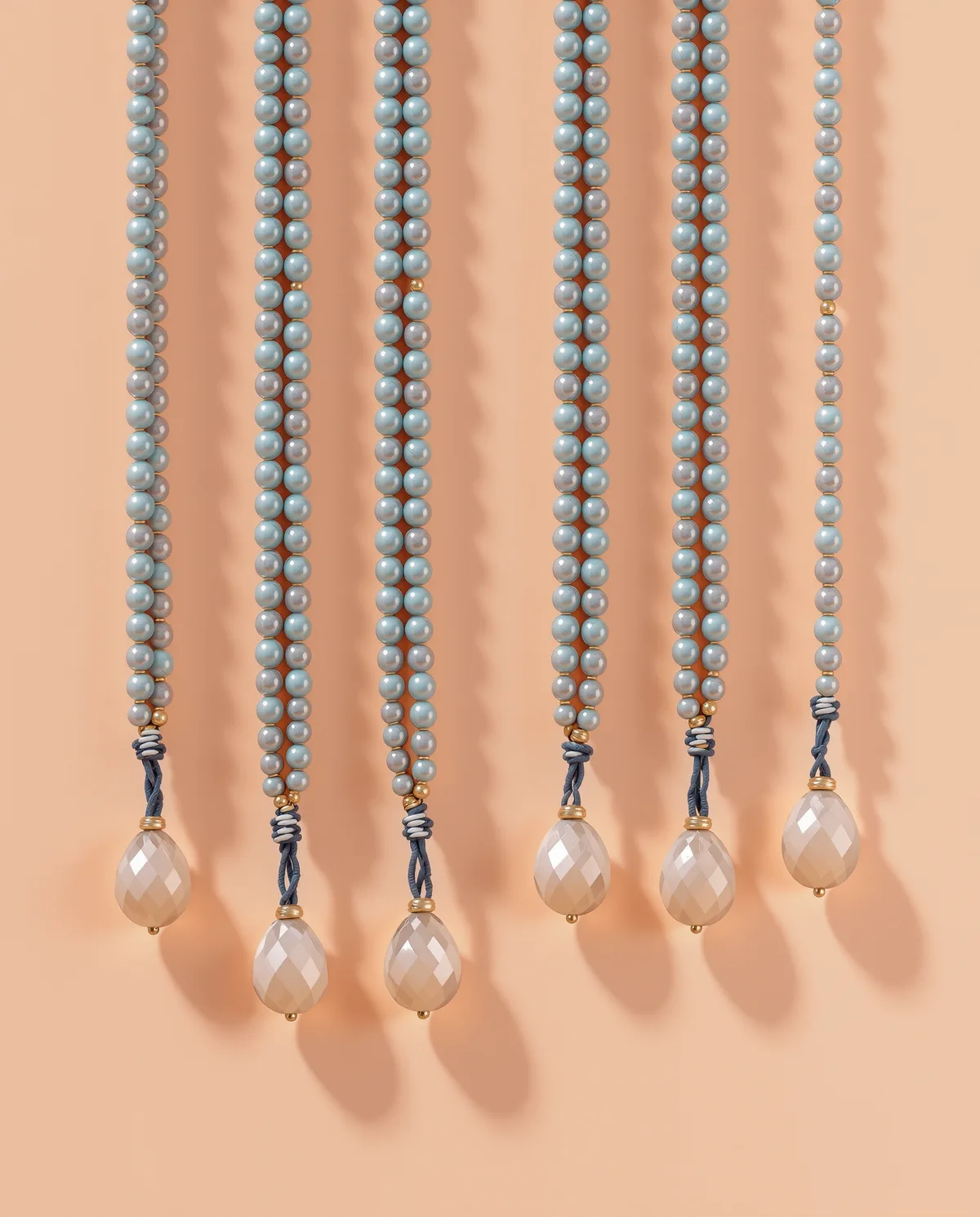
Beads are matched to a colour reference or a physical chip and confirmed on the sample. For a shade, approve the colour twice: unlit, as it sits on a shelf, and lit, as a customer will actually see it. Transmitted colour runs warmer and more saturated than reflected colour, and a palette that reads beautifully in daylight can go muddy behind a warm lamp. This is the single most common surprise on a lighting sample and it is entirely avoidable.
A brief with the fitting, the shape and the colours. Then a rough cost sheet before anything is made. Colour matching. Then the sample, usually 16 to 20 days from an agreed brief, photographed for approval before it ships — and for a shade, photographed lit as well as unlit. Production runs against that approved sample.
Where a design needs a frame geometry we have not built before, the frame is settled first, because restringing to a changed frame is a new sample rather than an adjustment.
Beaded décor runs 40 to 60 days after sample approval, and that is the figure that applies to shades. Sampling is quoted separately. Where the frame itself has to be tooled, that time sits in front of the 40 to 60 days and is quoted per design.
Those are the published lead times for this category; anything outside them is quoted against the specific programme.
Strand lengths are checked against the count sheet, knots and crimps are checked closed, and the frame is checked for true — a racked ring shows immediately as a hem that dips on one side. Colour is checked against the approved sample, lit. The frame finish is checked for coverage and for plating defects, which is a metal check rather than a beadwork one. First-article and lot inspection run through our own quality and packing house.
Strand count first, because it scales directly with ring diameter and a 120-strand pendant is more than three times the stringing of a 36-strand sconce. Bead size and material second. Height third. The frame and its finish fourth, and a plated frame in a specialty finish can be a bigger share of a small sconce shade than the beadwork is.
The most effective change on a shade that lands above target is usually a larger bead on a slightly more open pitch. It reads the same lit, and it takes out both material and hours.
Lighting manufacturers and lamp-parts distributors, who buy the shade as a component and marry it to their own fitting. Home and lifestyle retailers buying under their own label, where a small sconce shade sells as an impulse add-on beside a lamp base. Interior and hospitality designers specifying for hotels, restaurants, bars and spas, where a beaded pendant does more for a room than any other object at the same cost. And event and display companies, for whom a shade is a one-evening statement.
Good to know
A beaded shade is the most delicate beaded format to pack, because the frame has to carry the beads without the beads pressing on each other. The shade is packed so the strands are not compressed and the frame cannot rack, to the carton, label and inner-packing specification you give us. A collapsible pack is rarely possible, so the carton decision belongs at design stage.
Glass beads are drawn and hand-strung in our own Firozabad glass works. The metal frame is made, finished and plated in our own Moradabad metal plants, which is where our eight standard finishes come from. Acrylic beads are moulded and dyed to our colour. Inspection and export packing run through our own Greater Noida house.
No. Minimums are set per design and confirmed per quote. A 36-strand sconce shade and a 120-strand pendant drum are different jobs in material and in stringing hours, so one range-wide figure would tell a buyer nothing useful.
No. There is no retail stock programme for beaded décor, and that includes shades. Every shade is made to order against an approved sample.
Yes. Beads are matched to a colour reference or a physical chip and confirmed on the sample. A shade needs one extra check the other formats do not: the colour should be approved lit as well as unlit, because transmitted colour and reflected colour are not the same thing.
Yes. A resize recalculates the strand count for the new ring diameter and the bead count for the new height, so a pattern stays in proportion instead of stretching. On a tapered shade the slope changes too, so the strand lengths have to be re-plotted rather than scaled.
Shades are supplied as shades, made to fit the fitting you specify. Cord sets, sockets, switches and bases are yours, and electrical certification belongs to the finished lamp and to whoever assembles it. Name the fitter type and the frame it has to sit on, and we build the shade to it.
Keep exploring
Reference
Spider, clip-on and Uno fitters, screw-on against slip-on retaining rings, and how each shade dimension is measured.
See the detailPillar
Lead, CPSIA, Prop 65, REACH, fire standards, electrical listing and audit — what applies, who carries it, and what we hold.
Read the guideDesign
Linked faux-capiz disc hangings at 70 × 130 to 90 × 200 cm, and beaded shade designs from a 15 cm sconce to a 50 cm pendant.
See the detailHub
The full beaded range — curtains, portals, valances, tabletop, cushions, textiles and beads — from a leading manufacturer that makes the bead as well as the piece.
See the detailManufacturing
The header tape, the drop, the repeat length and the tolerances — how beaded fringe is built and quoted when it is a component in somebody else's product.
Specs and sizesManufacturing
Widths from 50 to 76 cm on a turned dowel, in glass, wood and cast faux capiz — hem shapes, strand counts and what is a shipped format against a concept.
Read the guide
Start a conversation
Send a reference, a colour chip or a sketch. Minimums are set per design and confirmed per quote; sampling is quoted separately and usually runs 16 to 20 days from an agreed brief.