Manufacturing
Beaded coasters
Bead-embroidered glass coasters on stiffened felt, or moulded acrylic sets in translucent and opaque — construction, sizes and what moves the cost.
View the range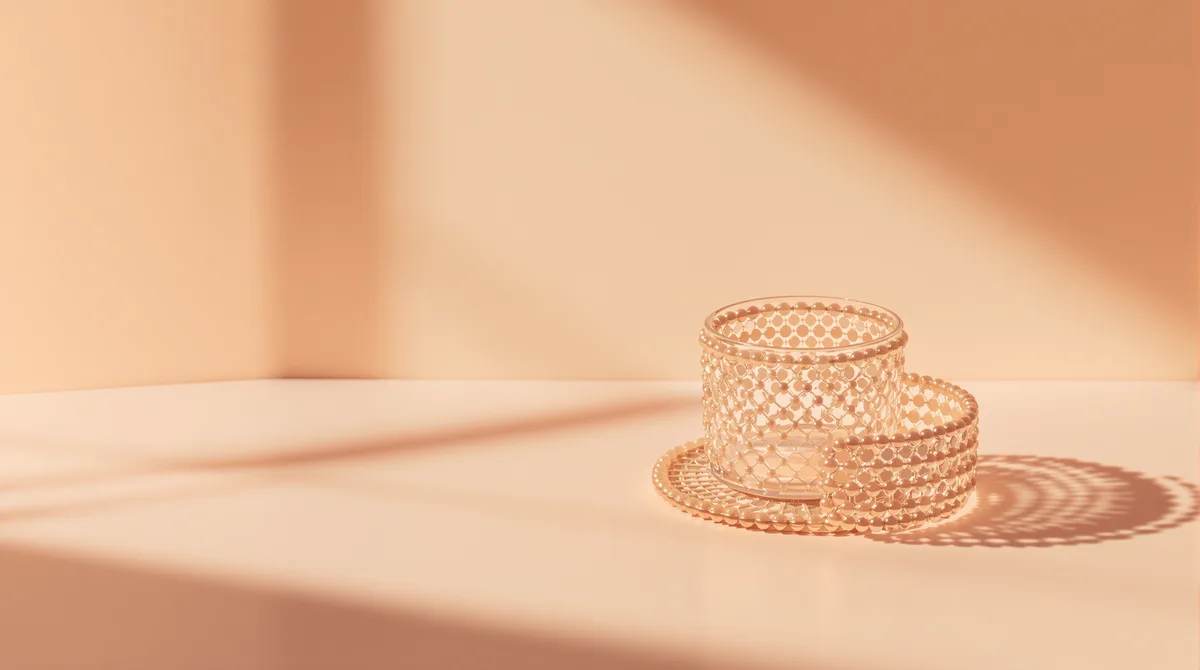
Cluster pillar
Beadwork for the table is a different trade from beadwork for a doorway. It is embroidered and wrapped more often than it is strung, and the ground material matters as much as the beads.
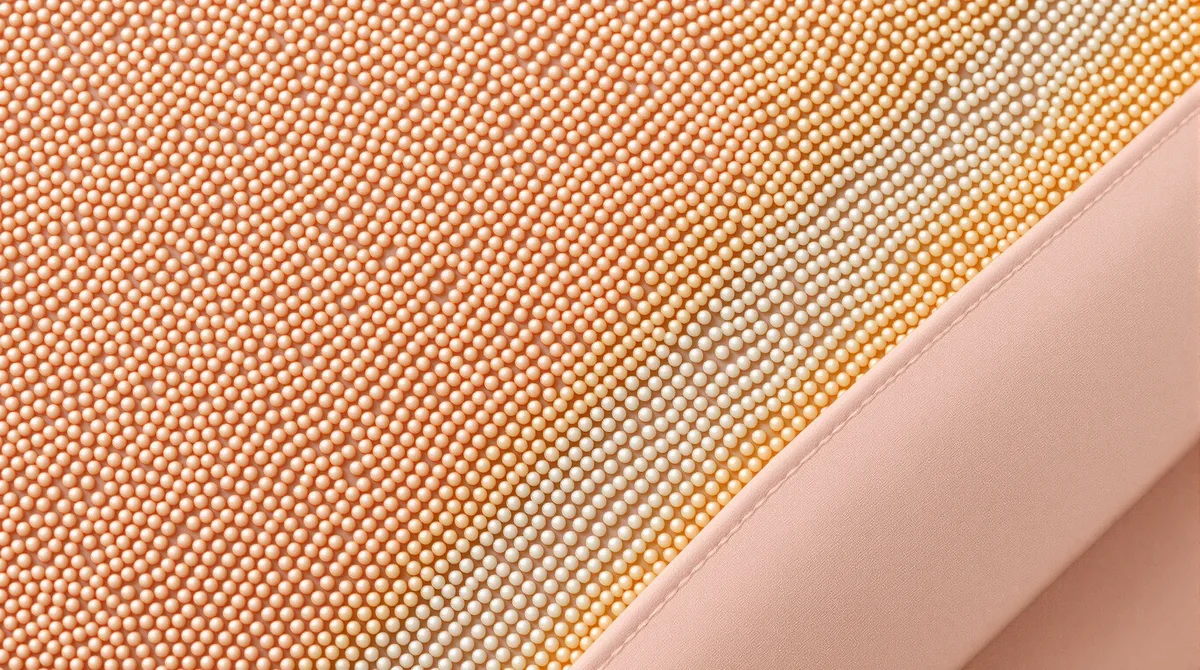
Editorial frame. Beadwork for the table, styled, not a specific SKU.
Beaded table décor covers coasters, placemats and chargers, table runners and napkin rings. Most of it is built by bead and thread embroidery on a stiffened ground or by wrapping beads over a brass wire armature, not by stringing. The ground material and the backing decide whether a piece lies flat and survives washing-up.
The category covers coasters, placemats and chargers, table runners, napkin rings, and the small objects that sit between them — candle rings, catch-alls, bottle collars. They share a buyer and a shelf, and almost nothing else with hanging beadwork.
A hanging panel is strung: the beads sit in a line on cord and gravity keeps them in order. A coaster is not. Beads on a flat object have to be held in place individually, which means thread or wire rather than cord.
That one difference changes the whole brief. Table beadwork needs a ground material, a stitch, a backing and an edge treatment. Hand-strung strands need a dowel, a hem shape and a mount. The two are quoted by different studios on different day rates.
| Piece | Usual construction | Ground or armature | Documented size range |
|---|---|---|---|
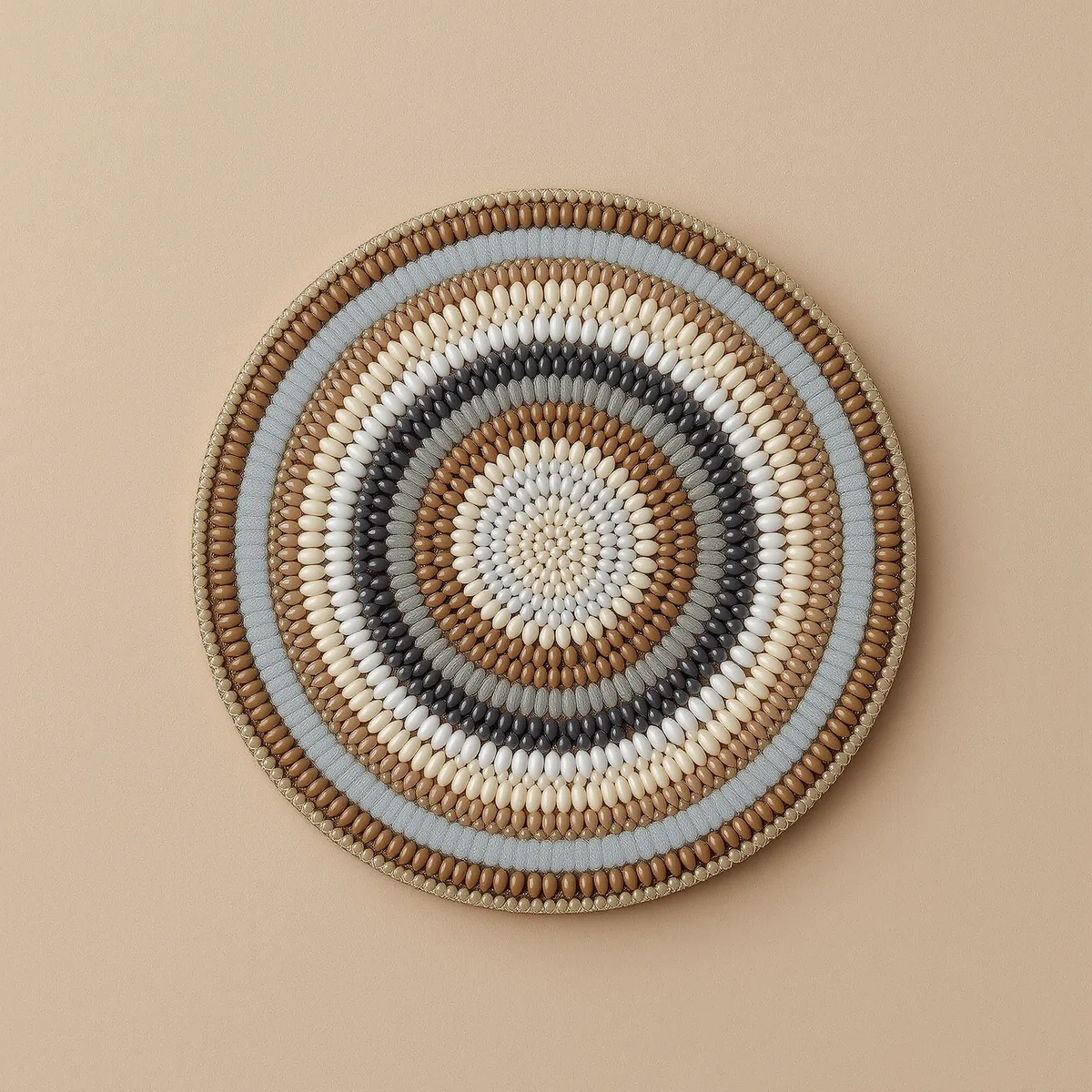
| Coaster | Bead and thread embroidery (zardozi tradition) | Stiffened fabric or felt, felt-backed | 10–11 cm diameter |
| Coaster, moulded | Acrylic beads assembled flat | None — the beads form the body | 3 in diameter, translucent and opaque |
| Placemat / charger | Bead and thread embroidery, panelled | Stiffened ground, turned edge | Specified per design |
| Table runner | Couched dimensional florals in rows | Stiffened ground | Dimensional motifs 9–12 cm |
| Napkin ring | Wire-wrapped beadwork, flat-back wrap | Shaped brass wire armature | 6–9 cm |
Bead and thread embroidery does most of the work, and it is the beadwork technique the whole cluster rests on. Glass seed beads and bugle beads are couched onto a stiffened ground with metallic thread in the zardozi tradition, which is the same craft family our coaster and runner work comes out of. Wire-wrapped beadwork takes over where the piece has to hold a shape on its own: a napkin ring needs a brass armature because nothing else will keep the circle.
The ground is the specification buyers most often leave out, and it is the equivalent here of the drill hole in strung work. Stiffened cotton or felt holds a dimensional motif and can be edge-turned. An unstiffened face ripples as soon as the bead density rises, and the piece will not sit flat on a table. Felt backing then hides the stitches and stops the base scratching a polished surface.
Name the ground and its stiffening, the bead material and bead size, the stitch, the motif placement, the finished diameter or dimensions, the edge treatment and the backing. Where an accent bead sits on a field, say whether the field is dyed-to-match it. For anything with a drill hole worth measuring, the bead sizes and stringing specifications sheet covers the same ground for strung work and is the right template to copy.
Three levers move the cost of table beadwork, in this order: bead count, bead size and motif density. Halving the bead count by using a slightly larger bead or by de-densifying the infill is the single most effective change, and it is usually invisible at arm's length. Which bead material carries the motif moves it again. Reducing the piece size saves less than buyers expect, because the edge treatment and the backing do not shrink with the face. Where a motif is doing the work, pressed glass covers an area for a fraction of the units a seed-bead field needs.
Home and lifestyle retailers buying under their own label; e-commerce sellers who need a repeatable set rather than a one-off; interior and hospitality designers specifying covers for restaurant and hotel tables; and gifting programmes, where a boxed set of bead-embroidered coasters does the work of a much more expensive object. Colour direction for all of them comes out of the colour stories rather than off a screen.
Four pages carry the cluster, and each owns one question. Beaded coasters answers how the two coaster constructions differ and which to specify. Beaded placemats and chargers answers how a mat is built and what it can take, including the heat and washing limits. Beaded table runners answers how length, repeat and end drop are set from a table. Beaded napkin rings answers why a ring is wire work rather than embroidery.
They share a buyer and a shelf, so they are written to be read together: the construction vocabulary, the colour approval route and the cost levers are the same across all four. Where the beadwork goes somewhere other than a table — a wall, a window, a lamp, a cushion — the construction changes with it, and the related pages below are the right next step.
Pages in this cluster
Coasters, placemats and chargers, runners and napkin rings each own one question. Nothing here is a spelling variant of anything else.
Manufacturing
Bead-embroidered glass coasters on stiffened felt, or moulded acrylic sets in translucent and opaque — construction, sizes and what moves the cost.
Manufacturing
Two constructions — a couched bead field on a stiffened ground, and coiled strung rounds lashed together — plus the limits on heat and washing.
Manufacturing
The ground, the couched bead field, the fringed or beaded end — and how runner length and end drop are set from the table rather than from the drawing.
Manufacturing
Six to nine centimetres, beads wrapped over a shaped brass armature with a flat-back wrap — the construction, the sizes and what sets the cost.
Good to know
No. Almost all table beadwork is embroidered or wrapped. Beads are couched onto a stiffened ground with thread in the zardozi tradition, or wrapped over a shaped brass wire armature. Stringing on cord belongs to hanging work, where gravity does the aligning.
The backing. A coaster is built on stiffened fabric or felt and then backed in felt with the edge turned, so the couching stitches sit inside the sandwich and the underside is flat. A coaster with exposed stitches on the base will never sit still.
Not immersed. Embroidered table beadwork is spot-cleaned: lift crumbs with a soft brush, then a barely damp cloth on the beads and a dry cloth straight after. Soaking swells the ground, slackens the couching and leaves a water line on felt.
Mostly glass seed and bugle beads, because dimensional motifs are built from very small beads held close together. Larger pressed or moulded beads appear as accents or, in acrylic coaster sets, as the whole body of the piece.
Yes, and that is the usual route. We work from artwork or a reference image, draw a bead map, agree the bead sizes and colours, then sample. Minimums are set per design and confirmed per quote, and sampling is quoted separately.
Keep exploring
Manufacturing
Bead-embroidered glass coasters on stiffened felt, or moulded acrylic sets in translucent and opaque — construction, sizes and what moves the cost.
View the rangeTechnique
The bead map, the cord, thirty strands on a dowel, hem shapes, suspension loops — and the three levers that move the cost.
Compare the optionsMaterial
How seed beads are drawn, why dye lots are quoted per run, what the drill hole limits, and where seed-bead work earns its cost.
Compare the optionsSpecification
Diameters, drill holes, cord selection, strand counts and format dimensions — the sheet to copy into a tech pack.
View the rangeGuides
One guide per question that arrives often enough to be worth answering properly.
Read the guidePillar
Lead, CPSIA, Prop 65, REACH, fire standards, electrical listing and audit — what applies, who carries it, and what we hold.
How it is madePillar
Door curtains, portals, café lengths and valances: the standard sizes, the strand counts and the one question each format answers.
Open the referenceManufacturing
The face cloth, the couched bead field, de-densified infills and the closure — and what actually keeps beads attached on an object people lean on.
Specs and sizesManufacturing
Widths from 50 to 76 cm on a turned dowel, in glass, wood and cast faux capiz — hem shapes, strand counts and what is a shipped format against a concept.
Compare the optionsManufacturing
Short strung panels at 120 × 35 cm and other formats, 56 to 60 strands, with scalloped, fan-arch, V-point and straight hems — and why height is the cost lever.
Compare the optionsManufacturing
Pendant drums, empire table shades and sconce shades in glass beads — how the frame carries the shape, and why we supply shades only.
Read the guideManufacturing
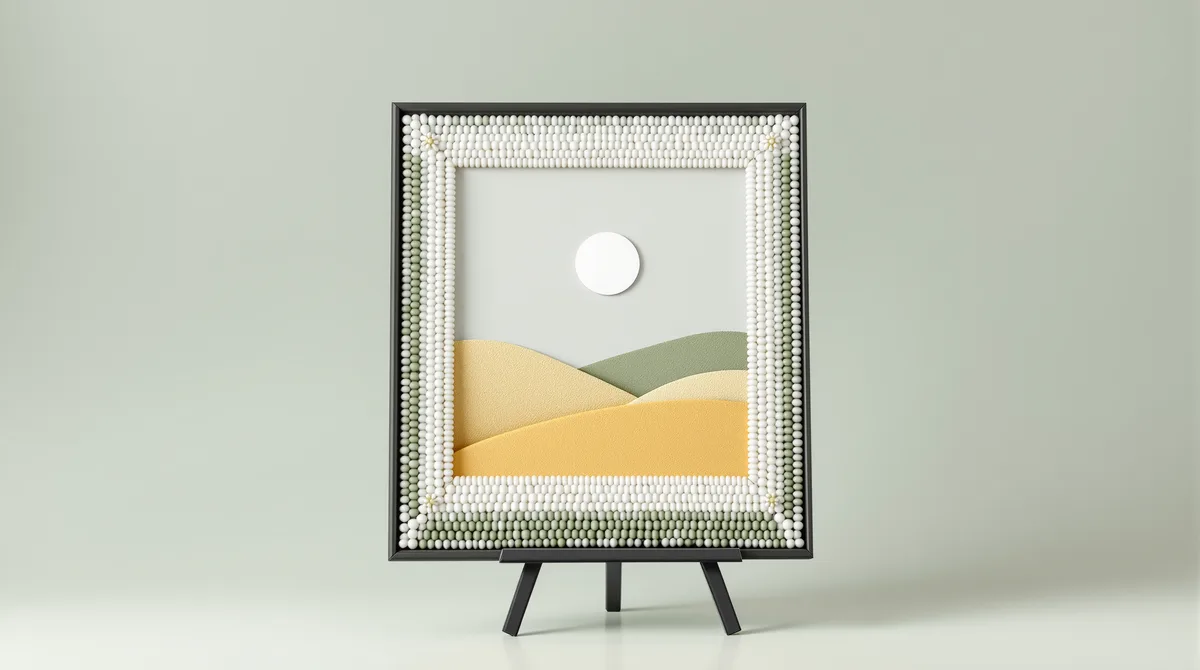
Frames for a 4 × 6 in print, drawn bead by bead on a 6 mm core, with the nine ways a bead can be held on a flat face.
See the detailManufacturing
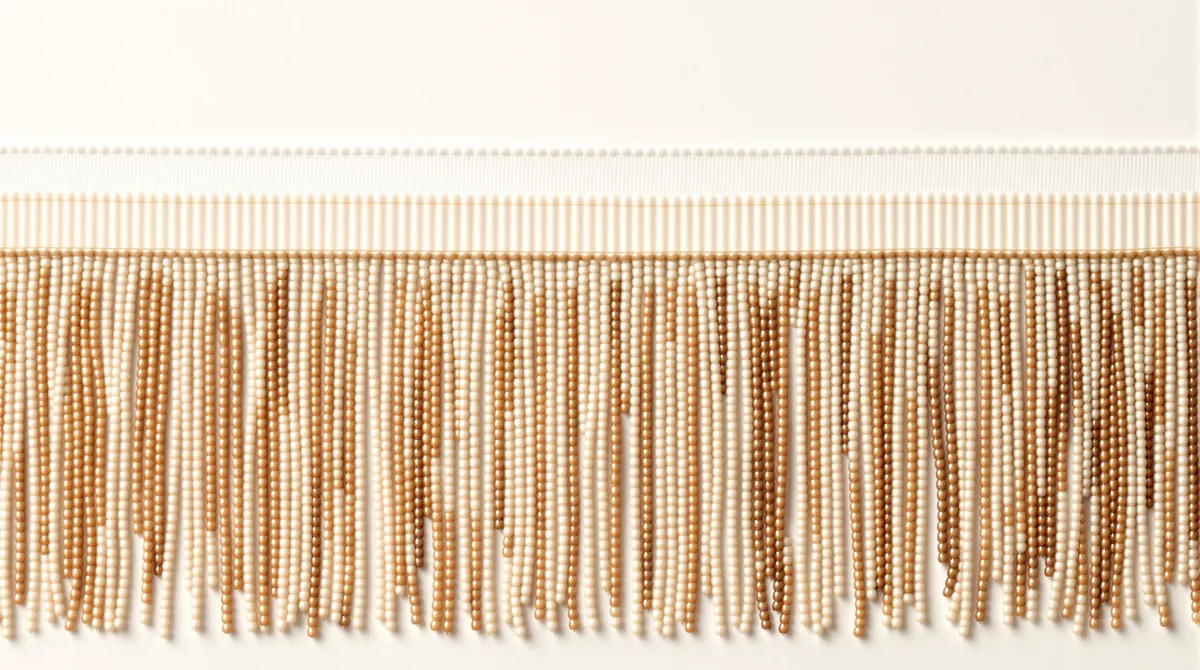
The header tape, the drop, the repeat length and the tolerances — how beaded fringe is built and quoted when it is a component in somebody else's product.
Read the guide
Start a conversation
Send a reference, a colour chip or a sketch. Minimums are set per design and confirmed per quote; sampling is quoted separately and usually runs 16 to 20 days from an agreed brief.