Design
Colour stories, by construction
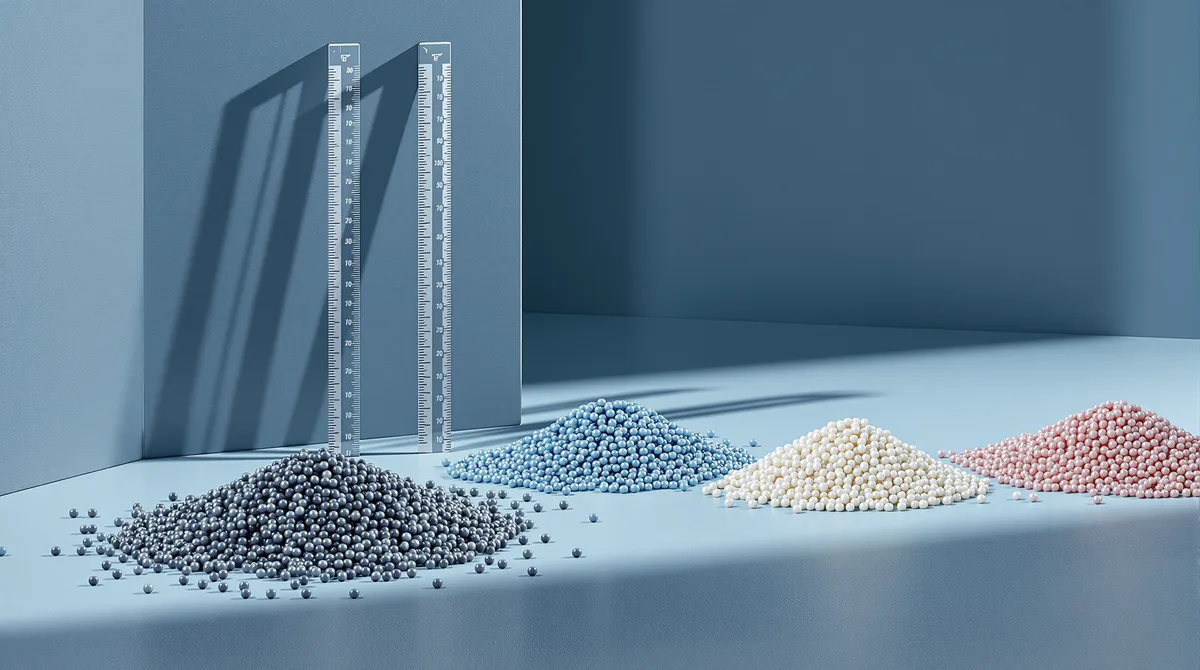
Colour stories documented by how they are built, not by how they look in a mood board.
Compare the optionsEra and style library
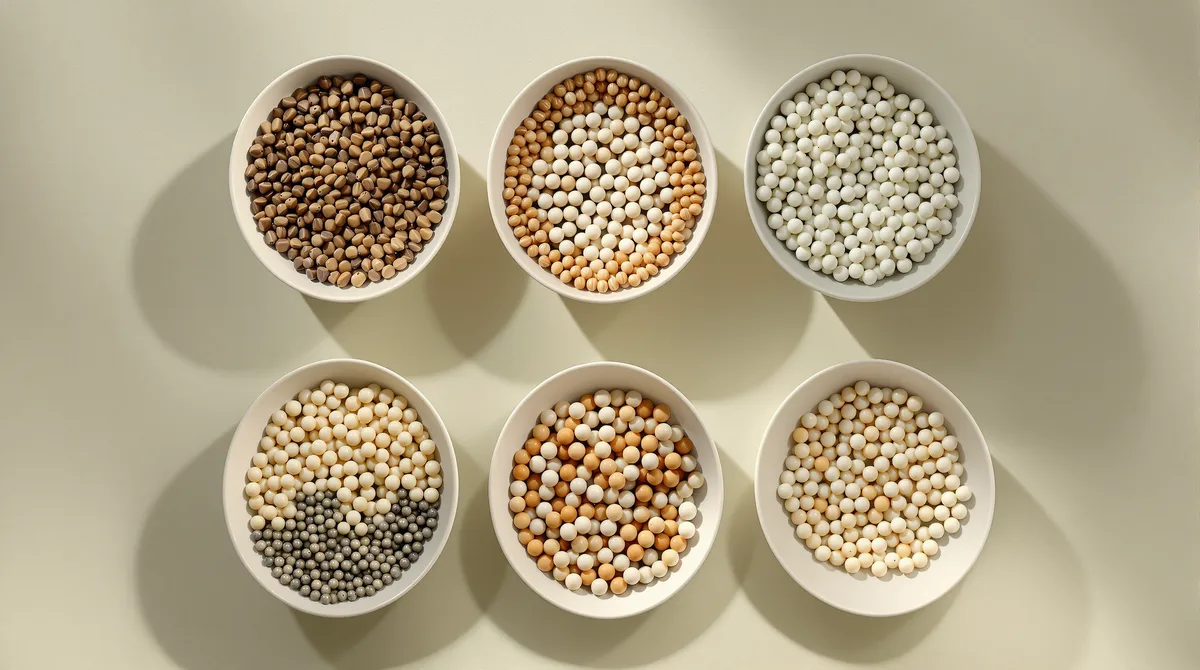
Style in beadwork is not a motif you apply. It is four decisions — material, palette, strand pitch and hem geometry — and each named look is a different setting of those four.
Beaded décor styles divide into decades, registers and motif families. What separates them is not ornament but four construction decisions: which bead material, which palette, how far apart the strands sit, and how the hem is cut. Set those four differently and the same doorway reads as seventies, Scandinavian or Y2K. We draw, mould, turn and plate those beads ourselves.
Style pages
Decades first, then registers, then the motif families. Each page names the beads, the palette and the hem that produce the look.
Style
Hard flat colour, discs and ovals, op-art repeats and a fabric-mounted header — and how it differs from the seventies.
Style
Rust, mustard, olive and amber at ten to sixteen millimetres in glass — why the palette needs the bead size.
Style
Translucent acrylic, frosted pastels and iridescent finishes — a material decade rather than a motif one.
Style
Smileys, mushrooms, daisies and cherries on translucent and iridescent grounds, scattered to a rule.
Style
Sixties geometry, seventies warmth, nineties translucence — separated by palette, bead shape, material and hem.
Style
Turned wood in walnut tones, consistent sizes and straight hems — the quiet register, and why it is quieter than retro.
Style
Why deco needs pressed glass rather than seed beads, and why symmetry is the expensive part rather than the palette.
Style
Unmatched beads and uneven strands are the signature, not a palette — and genuine randomness has to be engineered.
Style
Four rules that make a loose look cohere, and the one that briefs almost always miss.
Style
Uniformity is the whole design, which raises the quality bar rather than lowering it.
Style
The density-to-count relationship, with the figures: about 11,800 beads dense against about 3,100 spaced, at the same size.
Style
Bead consistency, specialty glass with internal character, a drawn hem and a header that reads as joinery.
Style
Pale wood and chalk glass at a wide strand pitch — the register where spacing matters more than colour.
Style
Why the farmhouse look is nearly all turned wood, and what the garland archetype does and does not mean for us.
Style
Frosted sea-glass tones, chalk whites and cast capiz discs — and the motif list to leave out.
Style
High-chroma lime, emerald, coral and turquoise in translucent glass — saturation and light, not palms and parrots.
Style
Lantern and zellige geometry, jewel tones and metal accents — and why the influence is named rather than the country claimed.
Style
Zardozi bead embroidery, wire-wrapped beadwork and glass-bead drawing — the techniques behind the phrase, and where each is made.
Style
A noren is split dyed fabric; a bead panel is strung glass. Same threshold job, different object, different maker.
Style
Three routes to a flower in beads — moulded connector, laser-cut blossom, bead-mapped field — and what each one costs.
Style
The strand grid is anisotropic, which decides which checks, chevrons and waves survive at a given bead size.
Style
The scatter rule from a design in production, and why one aligned row ruins the whole panel.
Style
Colour across the strands or down each one — two very different panels, two very different cost sheets.
Style
Counted and placed to a rule — about 120 mushroom beads to a thirty-strand portal, up to four a strand, never level across the panel.
With the decade pages if you are chasing a revival, because the three decades inside the word retro are not interchangeable and a brief that says retro without a decade will get a sample nobody wanted. With the register pages if you are specifying into a finished interior, because register is set by strand pitch and surface finish long before colour enters.
Twenty-four named looks, each written from the construction side. A style page here does not tell you that the seventies were warm; it tells you that those earth tones need a ten to sixteen millimetre glass bead to read at all, because at two millimetres rust and olive collapse into grey-brown. The style library sits alongside the colour stories in the design library, which document palettes by their mechanism rather than by their mood.
By the question a reader is actually holding. Decades answer what did this period look like. Registers — minimalist, maximalist, luxury, Scandinavian, farmhouse — answer how loud should this be in the room. Motif families answer how is this shape physically made out of beads. Those are three different conversations and merging them is why most décor writing on beadwork says nothing.
Minimalist, luxury, geometric and polka dot. These are the pages about tolerance, resolution and placement rules — the single bead size where every variance shows, the scatter rule that stops a dotted panel forming stripes, and the anisotropic grid that decides which geometries survive on a strand at all.
Retro, seventies, boho, hippie, Y2K and nineties carry the consumer demand in this category. They answer what the look is, what it costs relative to a plain strand, and what the cheap version gets wrong. Each one ends on the same practical question: what would we change to make this sell now rather than in 1974.
Our own. A seventies panel wants a ten to sixteen millimetre body-coloured glass bead, drawn and hand-strung in our own Firozabad works. A Y2K panel wants moulded acrylic dyed to our own dies. A Scandinavian register wants turned wood on a wide pitch, and a deco register wants plated metal findings against faceted glass. Nothing is published as a style we offer unless the technique behind it runs in our own studios — which is why these pages can tell you the bead size a look needs rather than only the mood it carries.
Good to know
If you are buying for a retail range, start with retro beaded curtains — it carries the most measured search demand in the category and it separates three decades that briefs constantly confuse. If you are specifying for an interior, start with the register you are working in: minimalist, luxury or Scandinavian.
Construction, from plants we own. Bead counts, strand counts, hem shapes and motif layouts come from pieces built and shipped out of our own works, or from the 2027 design library, drawn at true size against real beads and confirmed on the approved sample. Period history is design writing; the construction is ours.
Through the four decisions. Pick the bead material and the palette, set the strand pitch, cut the hem — and because glass is drawn in our own Firozabad works, acrylic is moulded and dyed to our own dies, wood is turned in Saharanpur and metal is plated in Moradabad, each of those four can be specified rather than approximated. A sample follows in 16 to 20 days from an agreed brief.
Three groups. Decades, where the question is what a period actually looked like. Registers, where the question is how quiet or loud the piece should be. Motif families, where the question is how a shape gets built out of beads at all.
By naming the influence rather than reproducing the object. Beadwork carries deep meaning in many cultures, and a doorway panel sold as décor is the wrong vehicle for a ceremonial or devotional form. Where a style brief heads that way we propose the influence by name and build from the technique instead, as the Moroccan page does.
Keep exploring
Design
Colour stories documented by how they are built, not by how they look in a mood board.
Compare the optionsIndex
Eleven trend reads on beaded décor for 2027, from the floor the movements land on first.
See the detailPillar
Door curtains, portals, café lengths and valances: the standard sizes, the strand counts and the one question each format answers.
How it is madeHub
The full beaded range — curtains, portals, valances, tabletop, cushions, textiles and beads — from a leading manufacturer that makes the bead as well as the piece.
View the rangeReference
Nine material families, what each gives in light, weight and colour, and how far our own manufacturing reaches into every one of them.
Open the referenceManufacturing
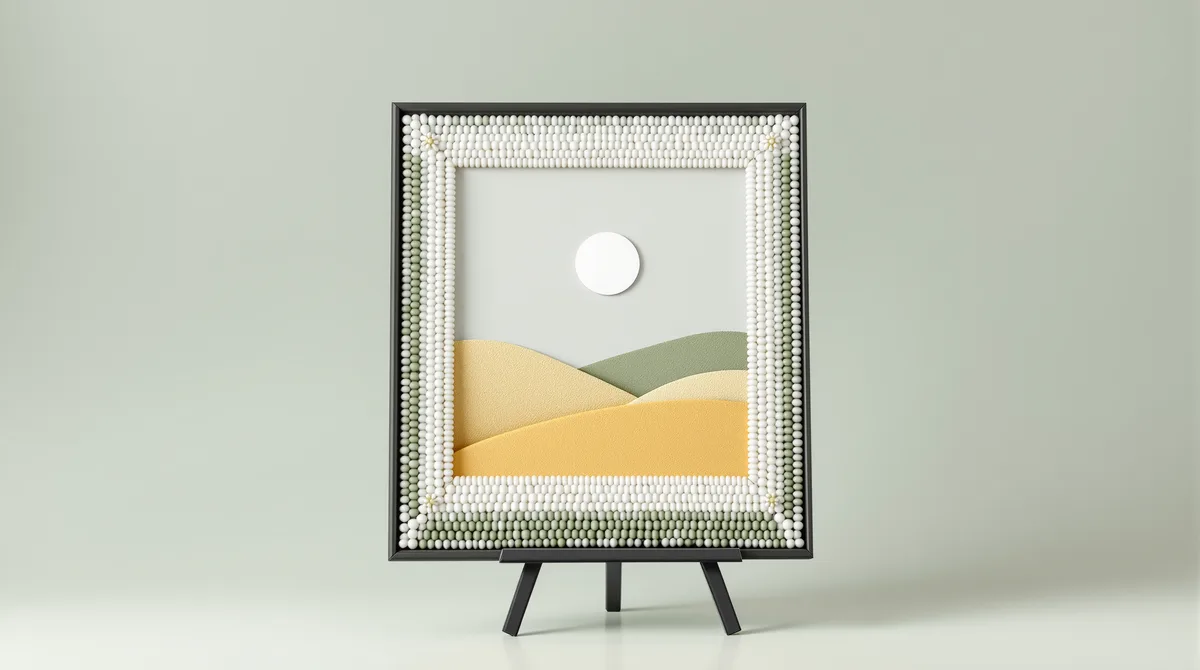
Frames for a 4 × 6 in print, drawn bead by bead on a 6 mm core, with the nine ways a bead can be held on a flat face.
Specs and sizes
Start a conversation
Send a reference, a colour chip or a sketch. Minimums are set per design and confirmed per quote; sampling is quoted separately and usually runs 16 to 20 days from an agreed brief.