Material
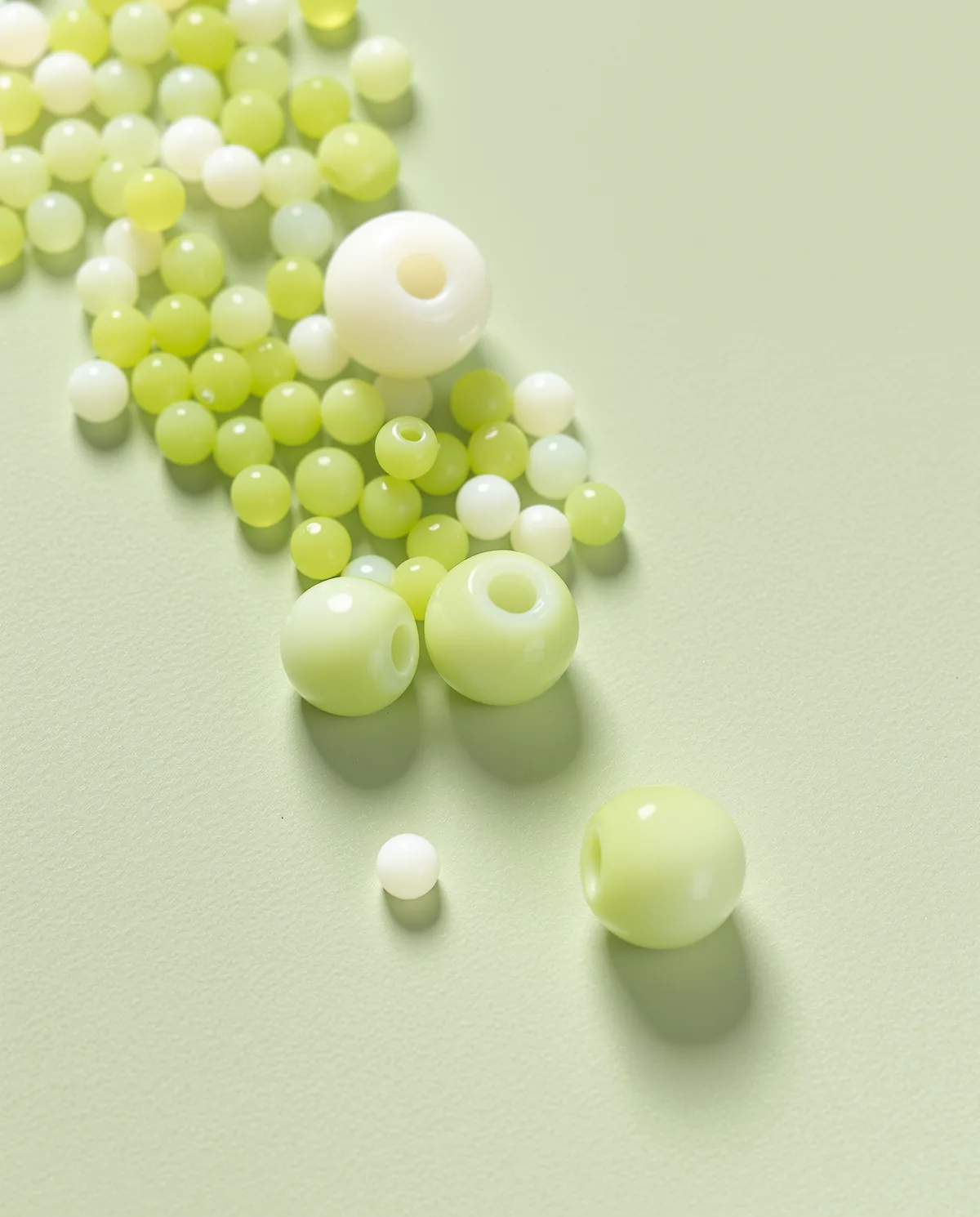
Drawn glass seed beads
How seed beads are drawn, why dye lots are quoted per run, what the drill hole limits, and where seed-bead work earns its cost.
See the detail
Technique · Strung work
Thirty strands, one dowel, and a drawing that fixes every bead position before anyone threads a needle. Strung work is the highest-volume construction in beaded décor and the one with the clearest cost levers.
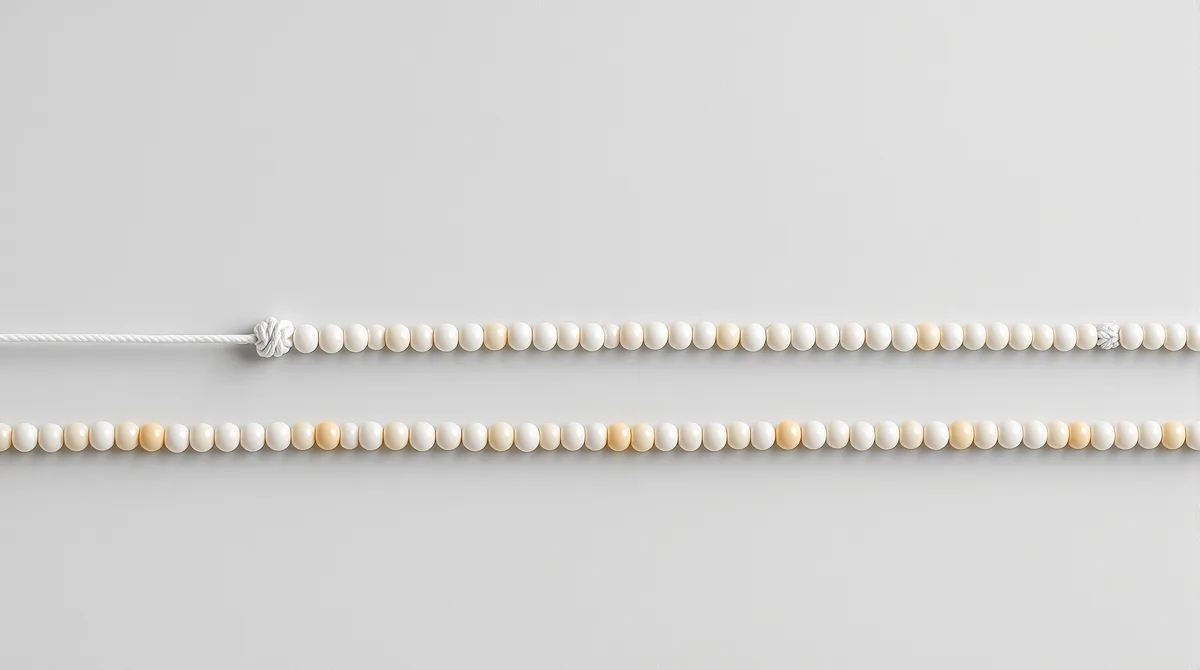
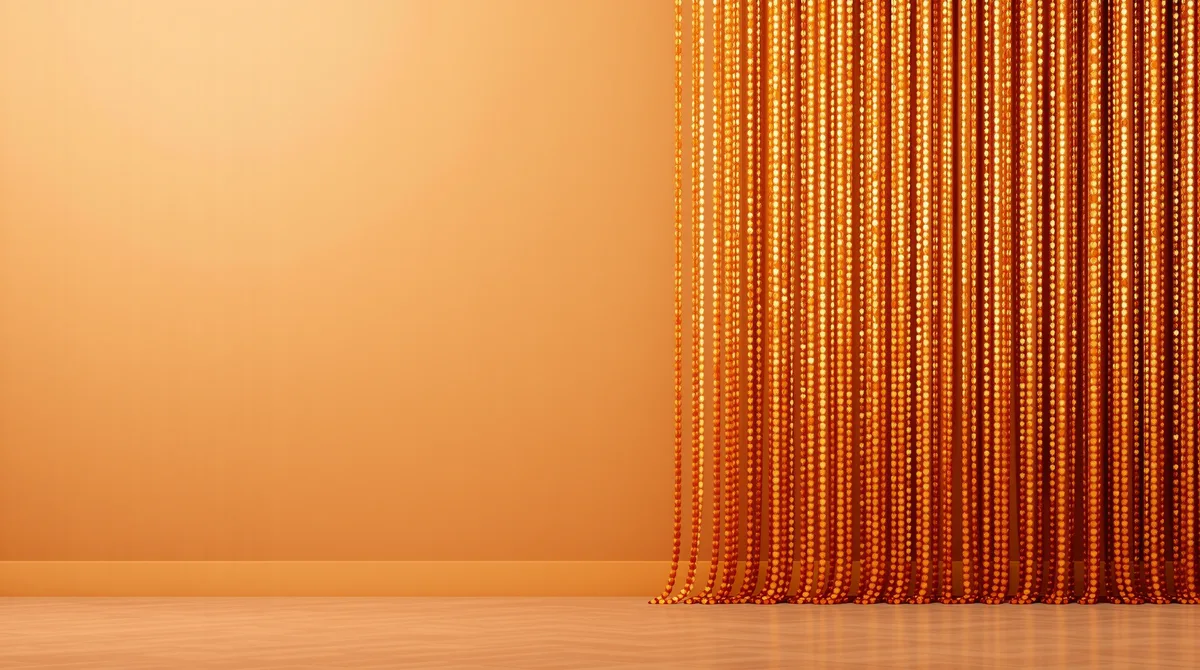
Beads threaded one after another down waxed cord, the cord just visible at each drill hole where the strands run out of frame.
A hand-strung beaded panel is built from a bead map: a drawing that fixes every bead position before stringing starts. Beads are threaded onto cord one at a time, the strands are gathered on a single turned dowel or into a sewn rod pocket, and the hem is cut to shape. A dense 90 by 200 cm curtain holds about 11,800 beads, each placed by hand.
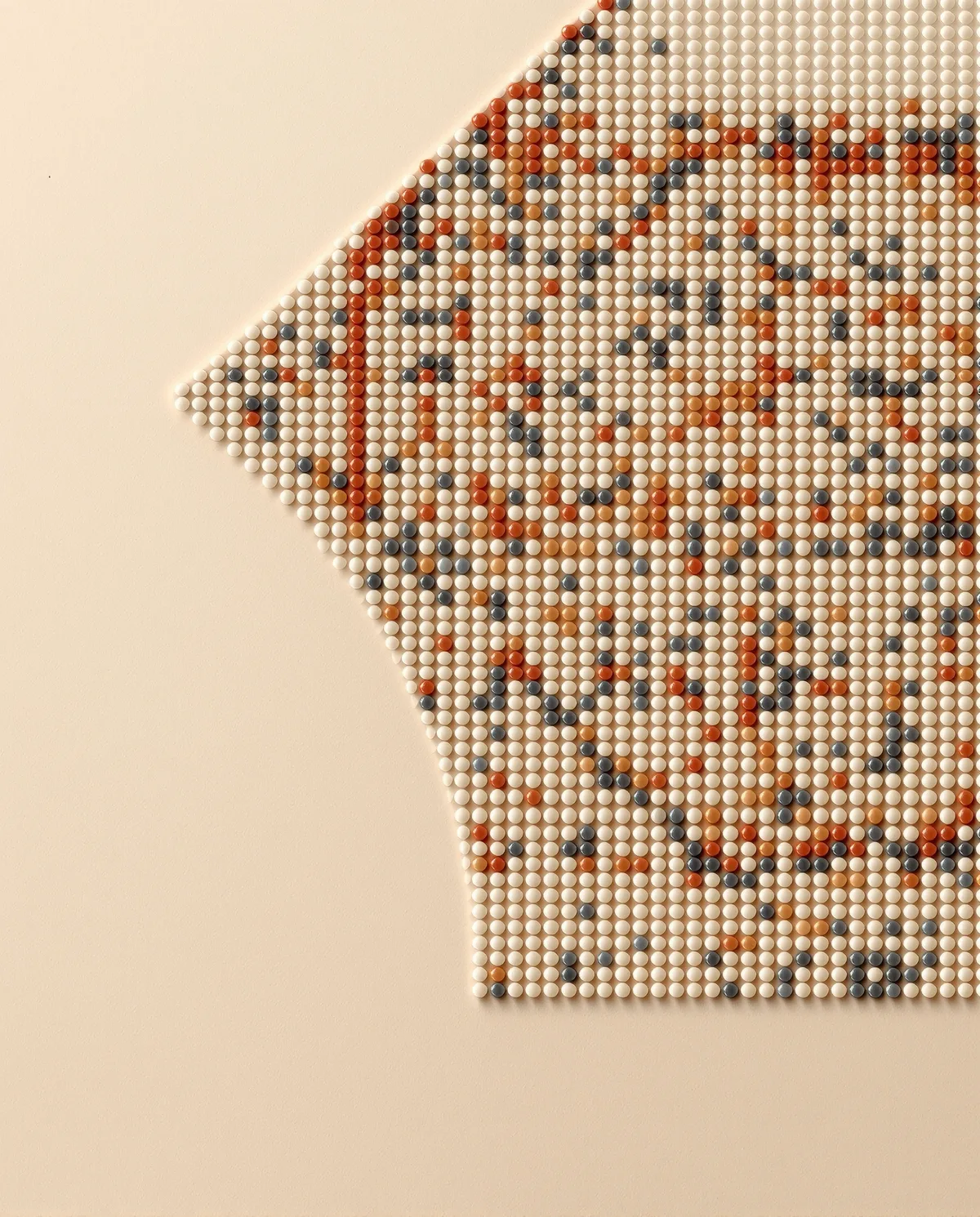
The bead map is the drawing that makes the construction method repeatable. It fixes every bead position — strand by strand, position by position — before a single bead goes onto cord, and it records which bead material sits where. Where accents are supposed to look scattered, the scatter is drawn in deliberately, with offsets that keep any two accents from landing level across neighbouring strands.
Leave this step out and two things happen: the accents drift into rows, and the second production run does not match the first. The same drawing is what a repair works from, which is why cleaning a beaded curtain treats a broken strand as a re-string rather than a write-off.
Beads are matched against a colour reference or a physical chip, never a screen, and confirmed on the approved sample. The base strand is then dyed to match the accent bead, which is what lets a scattered accent read as the subject of the panel instead of competing with its ground. Where the brief is a gradient rather than an accent, the honey ombre colour story shows the alternative: let the colour change ride on a change of bead size.
Cord is a structural choice. It is selected from the smallest drill hole in the build, which on almost every panel means the glass seed beads on the base strand rather than the large accent. The relationships between diameter, hole and cord are on the stringing specifications sheet, and a cord picked for the hand of the finished panel will frequently not pass the beads it has to carry.
Thirty hand-strung strands gathered on a single turned dowel is the common build for a 90 by 200 cm panel; the count sheets record the exact spacing for each format. Spacing at the header does more work than any other single decision: close spacing gives a dense, private panel with real weight, open spacing gives a panel you see through and a much lighter piece to freight.
Four hems cover most work, and the hem is the one place where a strung panel borrows from table beadwork: both are finished at the edge rather than at the face. A straight hem reads as a textile. A diagonal hem reads as a graphic. A scalloped arch, fullest at the sides and shortest in the middle, reads as a valance and is how a window piece gets its shape. An arched centre opening frames a walk-through, which is what turns a curtain into a portal.
End suspension loops are knotted at the top of each strand so the panel hangs level whether it goes onto a dowel or into a sewn rod pocket. One construction, two mounts — which matters when the same style ships to a retailer with a rod-pocket window-panel standard and to a buyer who wants the dowel visible.
Three levers, in order of effect. Fewer beads, by moving up a bead size for any flat field. A scattered accent instead of a fully covered strand. A shorter drop, which saves beads in proportion. Cutting the width saves least of all, because the header work does not shrink with it. Which bead material you pick decides how much coverage you get per gram.
It cannot hold an image. Gravity aligns beads in a line, so a strung panel can carry pattern, colour fields and gradients, but a motif has to be built from very small beads laid in two dimensions — which means bead and thread embroidery, not stringing. If a brief asks for a recognisable figure on a doorway panel, the answer is that it will be assembled by hand from a bead map at a much higher cost, and it will still read as pattern from more than a few metres away. Table beadwork is where images belong.
Extractable data
| Specification | Working value |
|---|---|
| Standard door panel | About 90 × 200 cm (35 × 79 in) |
| Wall-hanging and portal formats | 90 × 67 cm, and 76 × 140 cm in the design library |
| Café curtain format | Around 60 × 76 cm, on a cotton header with a 3 in rod pocket |
| Valance format | Around 76 × 61 cm, scalloped arch hem |
| Strand count | 30 hand-strung strands is the common build |
| Bead count, dense panel | About 11,800 beads in a 90 × 200 cm curtain |
| Accent density | 3–4 accent beads per strand, scattered, never aligned |
| Header | Single turned wooden dowel, or a sewn 3 in rod pocket |
| Mount | End suspension loops for level hanging |
| Production | 40–60 days after sample approval |
Good to know
A densely patterned 90 by 200 cm curtain can hold about 11,800 beads, and every one is placed by hand. A plain-strand panel at the same size holds far fewer, which is why minimums are set per design rather than across a range.
Because an aligned accent reads as a stripe. On our dotted and mushroom portal constructions the accents are placed three to four per strand, randomly, specifically so that no two land level across neighbouring strands. The randomness is drawn into the bead map, not left to the beadworker.
The smallest drill hole in the build. Cord is a structural specification, not an aesthetic one. A cord chosen for the hand of the panel that will not pass the seed beads on the base strand is the most common reason a sample stalls.
A single turned wooden dowel is the default and reads as the cleaner object. A sewn cotton header with a three-inch rod pocket is used where the piece has to go onto an existing rod, or where a retailer's window-panel standard requires it. End suspension loops let one construction serve both.
Three levers, in order. Fewer beads: a slightly larger bead covers the same drop with fewer units. A scattered accent instead of a fully covered strand. And a shorter drop, which saves beads proportionally. Cutting the width saves least, because the header work does not shrink with it.
It is a real risk with large hand-made glass, because the strength of glass is colour-dependent and some colours do not tolerate knocking against others. We solved it on one Venetian-bead portal by changing the furnace process, annealing the beads, and revising the palette so incompatible colours were not clinking together.
Keep exploring
Material
How seed beads are drawn, why dye lots are quoted per run, what the drill hole limits, and where seed-bead work earns its cost.
See the detailSpecification
Diameters, drill holes, cord selection, strand counts and format dimensions — the sheet to copy into a tech pack.
Compare the optionsProcess
What a machine can repeat, what only hands can place, and where the price difference actually comes from.
See the detailTechnique
What a bead map records, why a scattered accent has to be drawn rather than left to the bench, and why a reorder lives or dies on this one document.
View the rangeProcess
The tool, the shot, the dye bath — and the arithmetic that decides whether a custom bead shape is worth its die.
Compare the optionsGuide
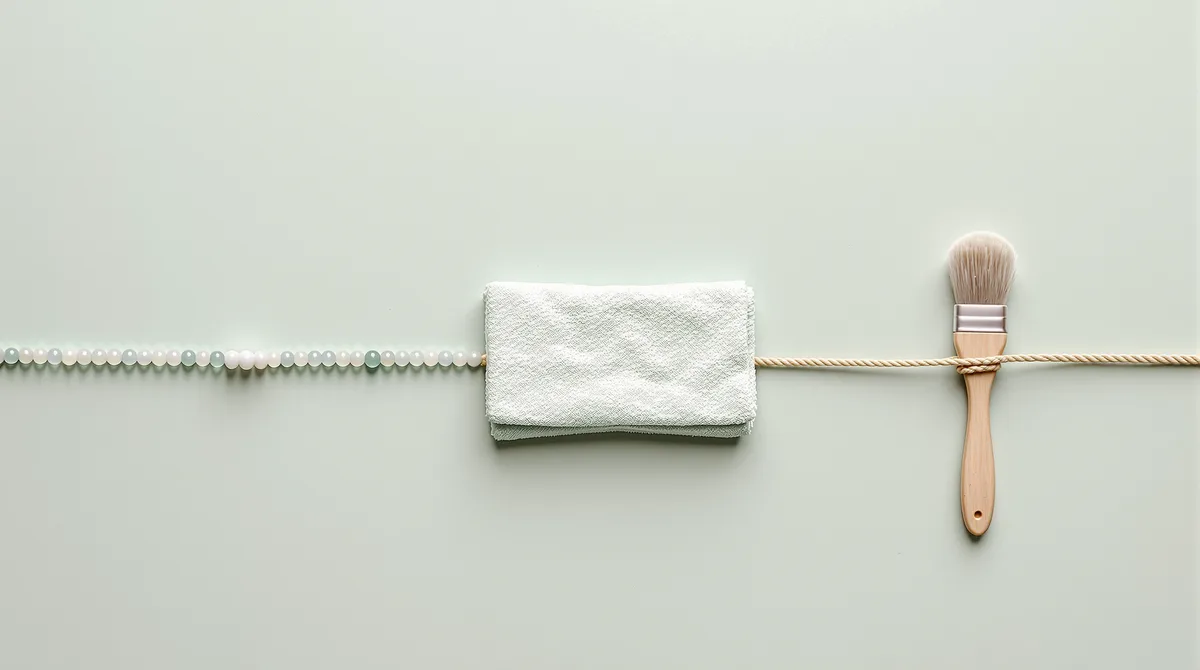
Dry dusting first, spot cleaning the beads, keeping the cord dry, what never to use, and how to handle a broken strand.
Read the guideColour story
Cornsilk to deep amber down the drop, with the colour change landing on a change of bead size rather than on a dyed gradient.
Specs and sizes
Start a conversation
Send a reference, a colour chip or a sketch. Minimums are set per design and confirmed per quote; sampling is quoted separately and usually runs 16 to 20 days from an agreed brief.