Guide
Tension rod hanging
Each no-drill method with the weight it holds, heaviest first, and the one material choice that makes all of them work.
How it is made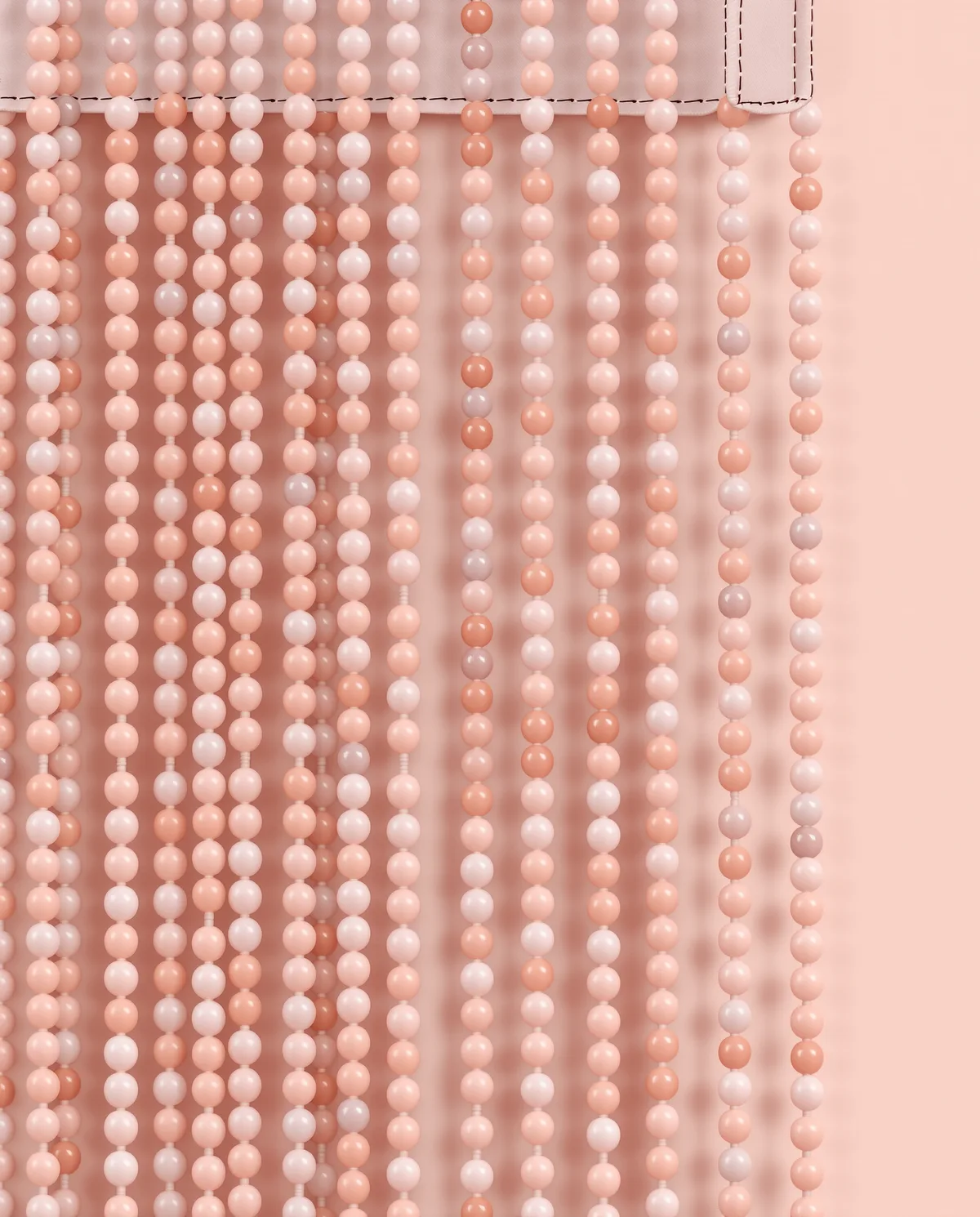
Guide · Install
A tension rod is a friction fixing. It does not fail gradually, it does not warn you, and it is still the right answer for a light panel in a rented room.
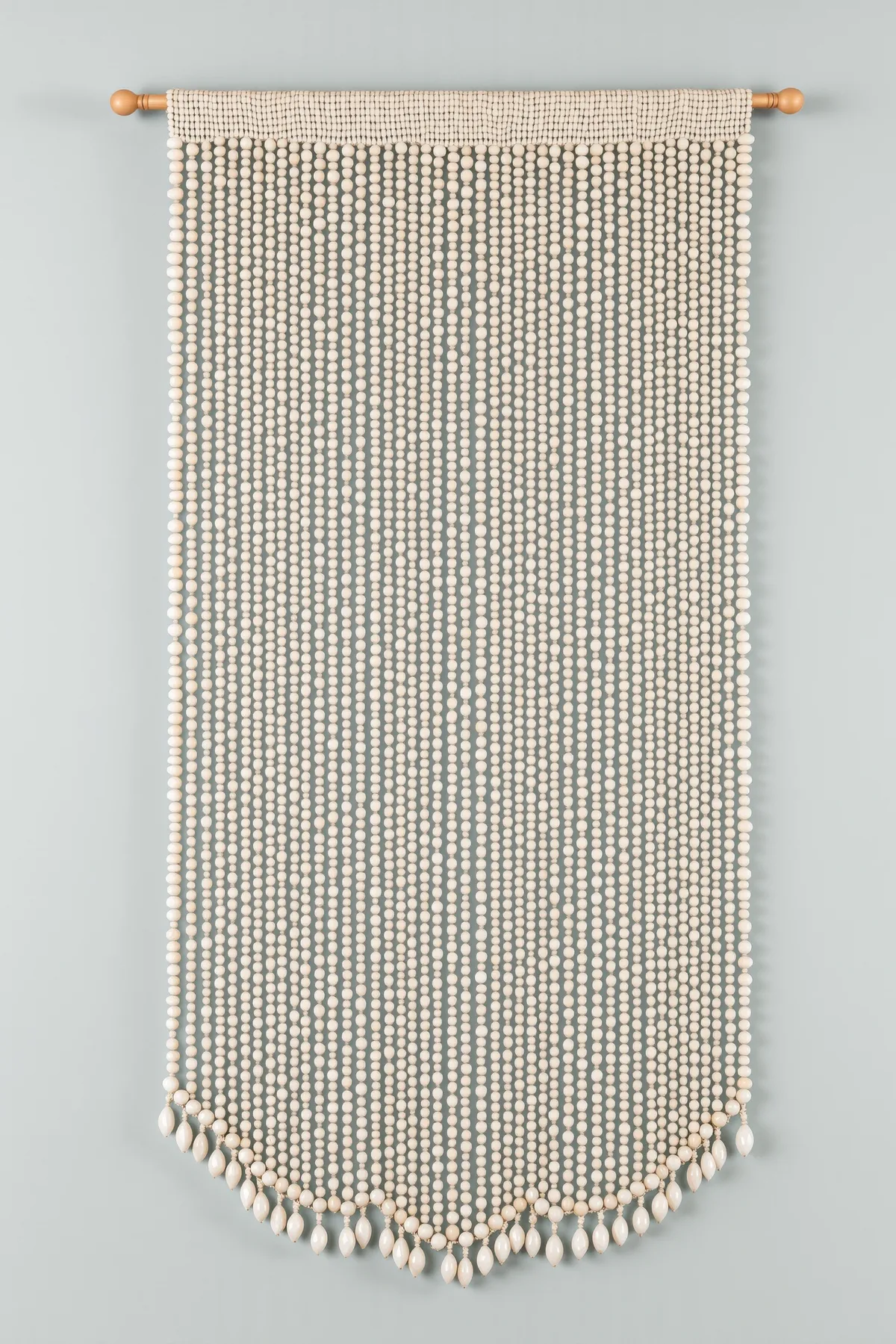
Bead strands hanging from a narrow stitched cotton header band, its top edge folded and stitched into a rod pocket.
A tension rod suits a light bead panel in acrylic, wood or bamboo inside a door or window reveal, and it is the standard answer for a rented room. It is a friction fixing, so it carries what the friction between its end caps and the reveal allows — which is far less than a glass panel weighs. It fails suddenly rather than gradually.
Measuring a reveal, buying a rod whose range brackets it, and twisting it until it grips. There is no third step.
What it does not involve is any assessment of load, which is both the appeal and the problem. A screwed fixing makes you think about what is behind the wall. A tension rod does not make you think about anything, which is why it is routinely used for panels it cannot hold.
The reveal measurement, taken at the height the rod will sit rather than at the widest point. A look at what the reveal is made of: a tension rod needs two opposing solid faces, and a plasterboard return will dent and then release.
And a clear view of the panel's weight, which means knowing what the beads are made of. Glass is a different category of load from everything else.
As much as the friction between its end caps and the reveal allows, which is a function of the rod's spring, the end-cap material and the surface it presses on — none of which we can quantify for you, and none of which the rod's packaging usually quantifies either.
What is reliable is the ranking. A tension rod is the right fixing for a light acrylic, wood or bamboo panel. It is the wrong fixing for glass. The panel is weighed on the approved sample, which is exactly why the instruction is to over-specify against that weight rather than to calculate.
Because friction is binary at the point of failure. The rod holds until the downward force exceeds what the friction can resist, and then it slides — and once it starts sliding the end caps are no longer pressed as hard, so it accelerates.
There is a partial warning, worth watching for: a rod that creeps a few millimetres down the reveal in its first week is a rod that will eventually let go. That is a reason to re-check it after a day rather than to accept it as settled.
Match the rod to the pocket. Our café-curtain builds use a stitched cotton header band with a three-inch rod pocket, and a pocket that deep is designed for a rod of real diameter rather than for a thin sprung tube.
A rod too thin for its pocket does two things wrong. The header sags between the rod and the stitching, so the top line looks slack. And the fabric bears on a small diameter, which creases it along one line. Neither is a structural failure and both look like poor making.
A rod at the end of its adjustment range, which has almost no spring left. A reveal that is not solid on both faces. A glass panel. And a rod fitted after the panel is already hanging on it, which is awkward enough that people under-tension it to get it in place.
The fifth: a doorway that is walked through constantly, where every pass puts a lateral and downward jolt into a friction fixing.
Five minutes. It is the fastest fixing available and that is a genuine advantage — for a rented room, a seasonal panel or a temporary display it is the correct answer and the speed is part of why.
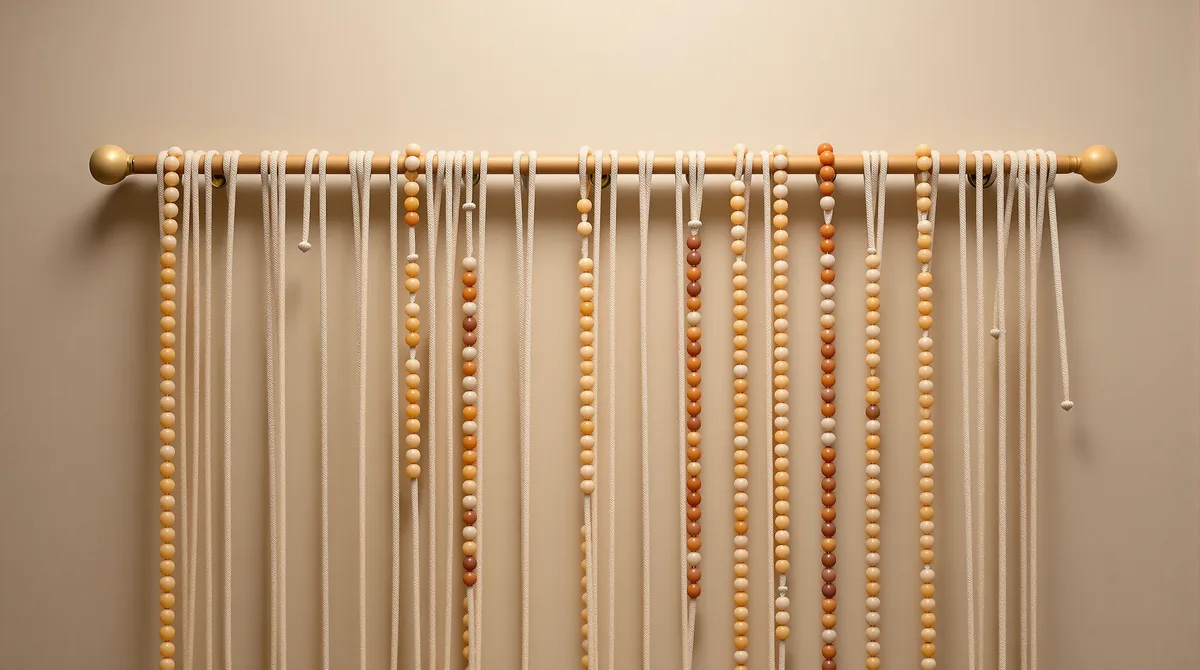
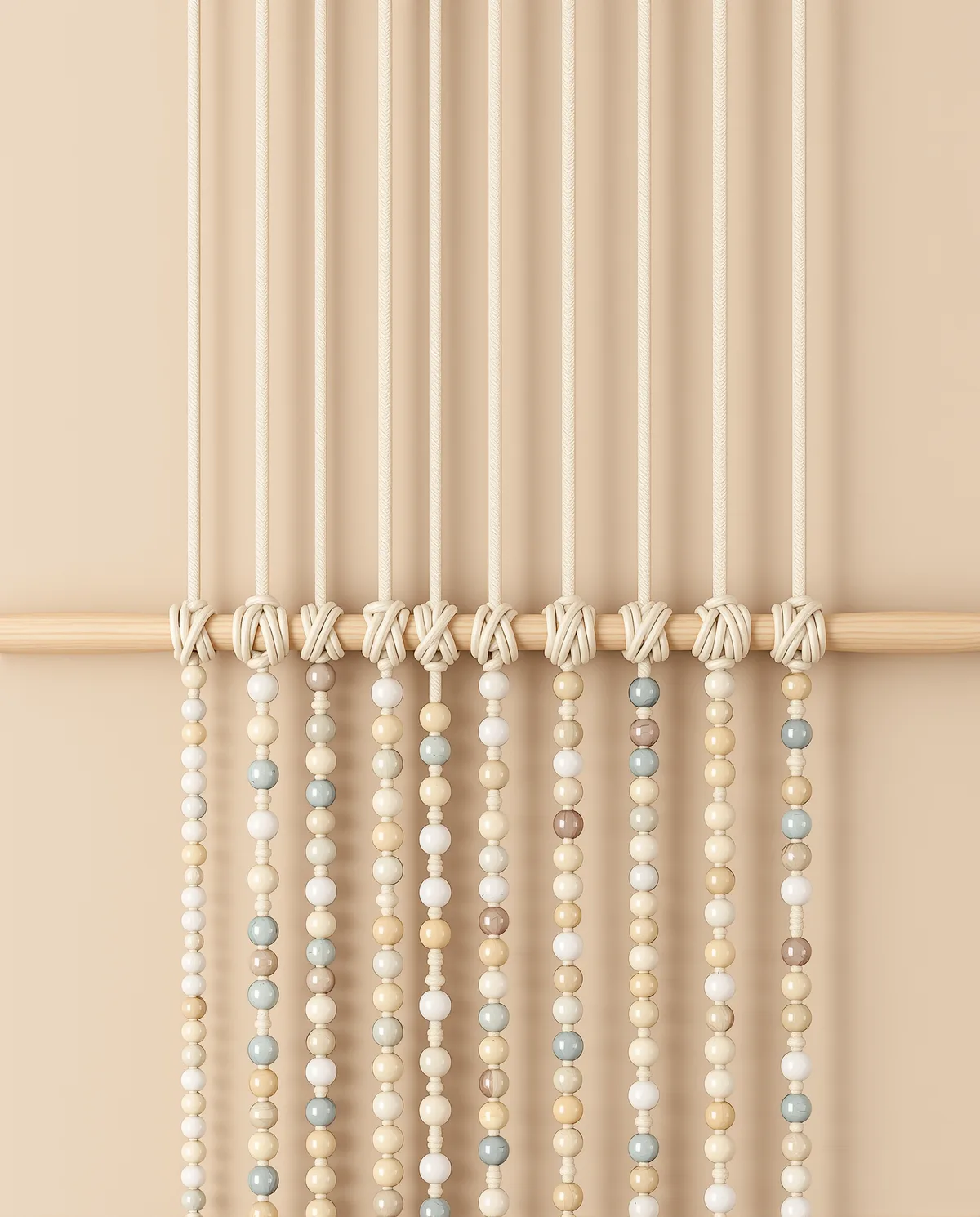
Builds the panel for the mount rather than the other way round. The four documented header constructions are a stained wooden header rail, a single turned wooden dowel, end suspension loops knotted at the top of each strand, and a stitched cotton header band with a three-inch rod pocket.
Only two of those suit a tension rod. A rod pocket is made for a rod, and end loops will hang from one. A header rail is a rigid component that wants to sit in brackets or on hooks, and a bare dowel can hang from hooks or rest on a rod but will roll on a smooth tube unless something stops it.
Glass panels. Spans much wider than a single interior door. Openings with no solid reveal. Permanent commercial fixtures. And panels above anything that matters, because the failure is sudden and the panel lands all at once.
In each of those cases the alternative is cup hooks in the frame, which costs two small holes and changes the failure mode from sudden to essentially nonexistent.
That a tension rod suits light panels only, that glass needs a screwed fixing, and that the rod should be checked after the first week. Three lines.
If the panel is supplied with a rod pocket, state the pocket depth on the listing. It is the single piece of information a customer needs to buy the right rod, and almost no listing carries it.
Nothing — the hardware is not ours and the rating comes from the hardware manufacturer. What the record does carry is the panel side of the question, which is what decides whether a friction fixing is appropriate.
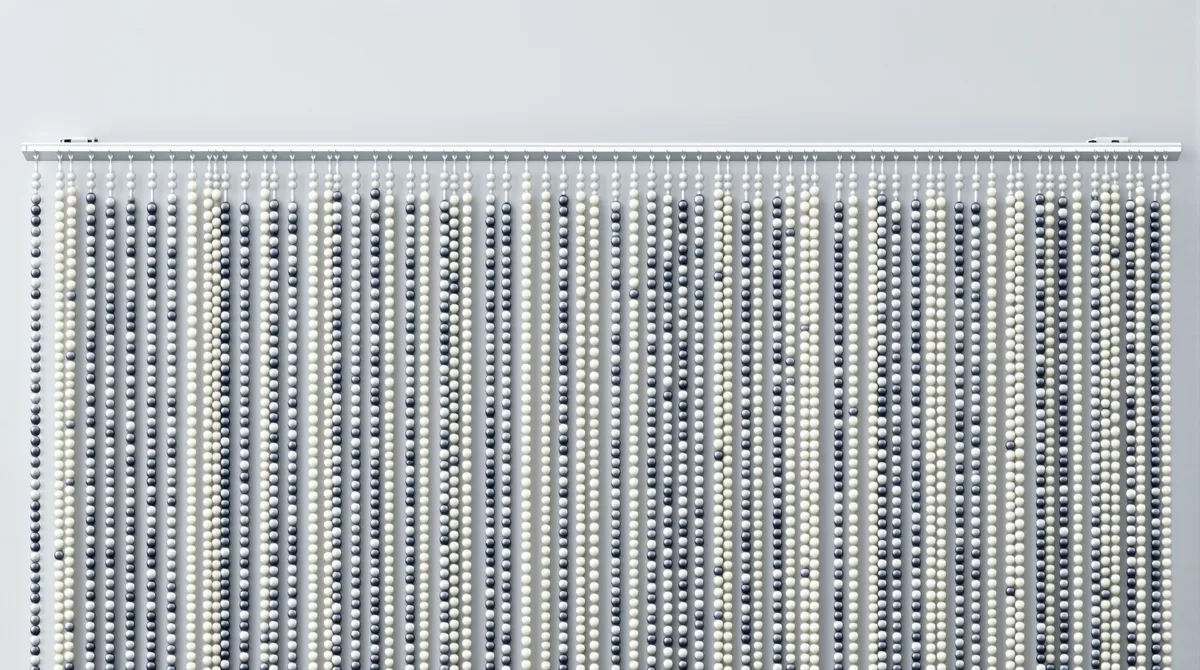
Published formats run to about 90 × 200 cm and 120 × 200 cm for door curtains, with live portal builds at 30 hand-strung strands on a single wooden dowel, and a densely patterned 90 × 200 cm panel holding about 11,800 beads. A panel at that bead count in glass is not a tension-rod proposition; the same format in moulded acrylic may well be. The material is the decision, and the rod is just the consequence.
Extractable data
| Fixing | How it holds | Drilling | Suits | Fails by |
|---|---|---|---|---|
| Tension rod | Friction against two faces | None | Light panels, rented rooms | Slipping, suddenly |
| Cup or screw hooks | Screw into timber | Two small holes | Most panels on a dowel or loops | Pulling out of board |
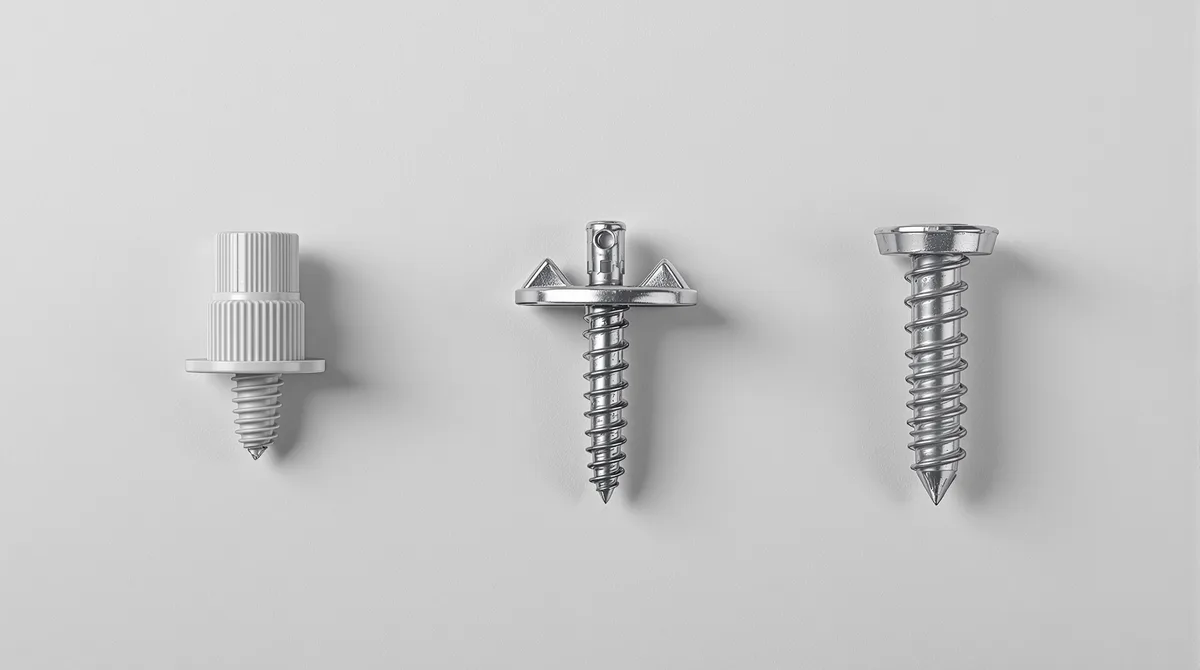
| Rod on brackets | Bracket fixings into structure | Several | Glass and wide openings | Bracket rated too low |
| Ceiling hooks or track | Into a joist | Into structure | Panels away from a wall | Fixed into board |
| Adhesive hooks | Adhesive to a smooth face | None | Nothing on this page | Creep, then release |
| Panel weight rating | — | — | Weighed on the approved sample | Hardware is then specified to that weight |
Good to know
Entirely — that is the point of it. Nothing is drilled, nothing is fixed, and the panel comes down by lifting the rod out. For a rented room it is the only fixing on the list that leaves no trace, which is why it survives its limitations.
A tape, and that is genuinely it. Measure the reveal, buy a rod whose adjustment range brackets that measurement comfortably, and twist it to tension. If a tool is needed, the rod is the wrong size.
Not the cord. It can mark a stitched cotton header if the rod is too thin for the pocket, because the fabric then bears on a small diameter and creases along a line. A rod sized to the pocket spreads that load, which is why pocket depth and rod diameter should be matched.
Yes, and it is the one firm prohibition on this page. Glass is the heaviest bead family by a wide margin, and a tension rod that comfortably holds an acrylic panel will slip under a glass one of identical dimensions. Nothing about the panel's appearance warns you of the difference.
For a temporary display of light panels, yes. For a permanent fixture in a shop, no: a display panel is handled constantly, and a friction fixing under repeated lateral load is the wrong choice. Shop fixtures should be screwed.
Repair it separately, by re-stringing that strand in its original bead order and re-knotting it at the header. It has nothing to do with the rod — but a panel that arrives with a broken strand is also a panel to weigh carefully before trusting it to friction.
Five minutes, including measuring. If it is taking longer, the rod is either the wrong length range or is being asked to press against something that is not solid — a plasterboard return rather than a timber lining, for instance.
Keep exploring
Guide
Each no-drill method with the weight it holds, heaviest first, and the one material choice that makes all of them work.
How it is madeGuides
One guide per question that arrives often enough to be worth answering properly.
Compare the optionsGuide
How to reach structure, how to establish the load first, and when a track beats a pair of hooks.
Read the guideGuide
Which part of a frame is solid, where to position the fixing relative to the door swing, and the screws that hold.
Compare the optionsGuide
How the two positions change the ordered width, the edge gaps and the clearance over a handle.
Read the guideGuide
Three failure causes in order: a fixing into board with nothing behind it, hardware rated below the load, and a dowel that can leave its seat.
Compare the options
Start a conversation
Send a reference, a colour chip or a sketch. Minimums are set per design and confirmed per quote; sampling is quoted separately and usually runs 16 to 20 days from an agreed brief.