Pillar
Build it in the Studio
A live app holding the full bead library and the Gemixx 2027 collections: build a design, render it in about a minute, take it to tech pack and costing.
View the range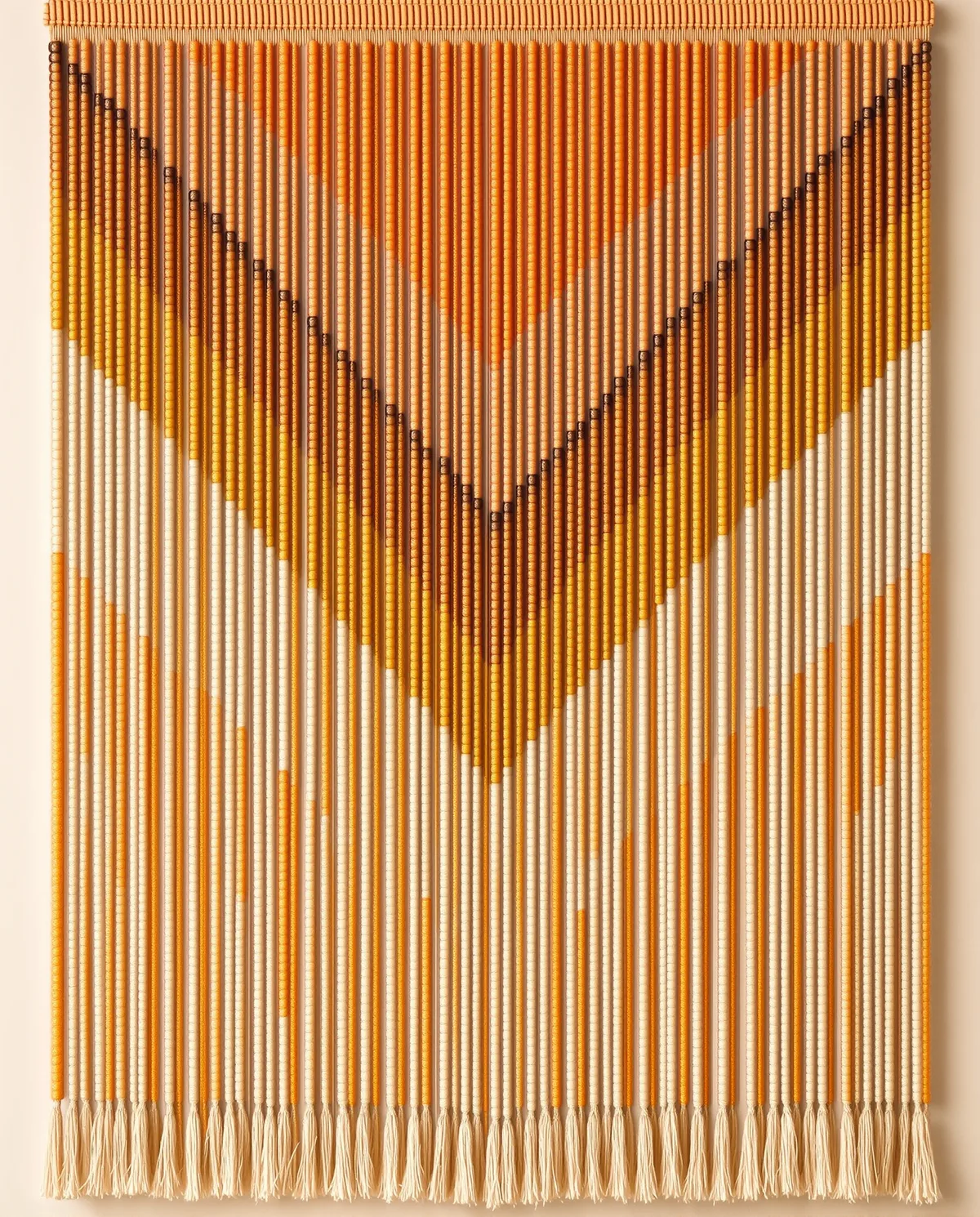
Studio · Output
A render is only useful if something can be made from it. The reason a Studio render can be is that it was assembled from named beads — so the picture already contains its own bill of materials.
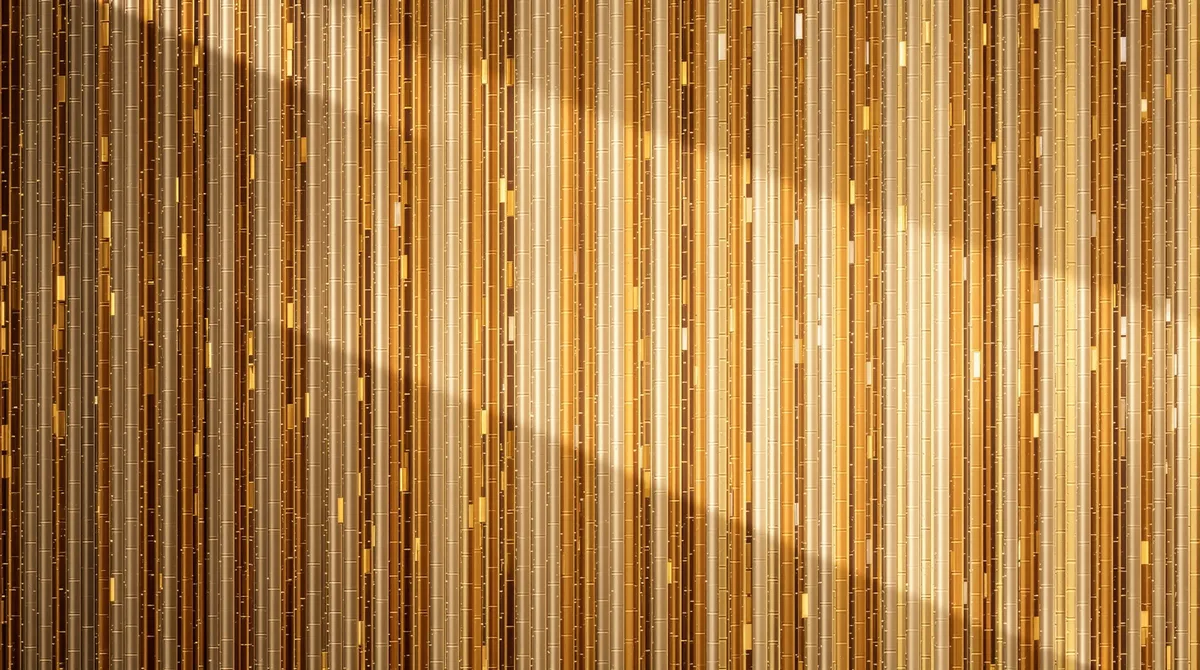
A beaded wall hanging in glossy orange, canary, chocolate and cream soda glass, the colour blocks stepping across the panel in a wide sunburst chevron.
A Studio render is assembled from named beads, so it already carries its own bead list. That list becomes a colour-count sheet — bead by bead, strand by strand — the sheet becomes a rough cost sheet showing which lever moves the price, and the costing becomes a sample. Nothing is interpreted from a picture along the way.
The render is not the deliverable. The bead list behind it is.
That is the whole mechanism, and it is worth being blunt about because configurators have a reputation. Most produce an image and then a human has to work out what the image implies. A Studio design is assembled from named beads out of the bead library — real materials, real dimensions, real hole diameters — so the render and its bill of materials are the same object viewed two ways. As our own design-library page puts it: each render is built from named beads, so it can be turned into a colour-count sheet for sampling.
| Stage | What changes hands | Published timing |
|---|---|---|
| Design built in the Studio | A render and its named bead list | Render in about a minute |
| Brief agreed | Format, size, target, colour references | — |
| Colour-count sheet written | Bead identity and position, pitch, drop set, cord | Days, by pattern complexity |
| Rough cost sheet | Where the cost sits and which lever moves it | Before any sample is made |
| Formal quotation | A quote against the specification | Within 48 hours of receiving specifications |
| Sampling | Photographs for approval, then the physical sample | Usually 16–20 days from an agreed brief |
| Production | Goods against the approved sample | 40–60 days for beaded décor |
| Inspection and packing | First-article and lot inspection, export packing | Through our own Greater Noida house |
Eight stages, and only two of them are slow. The design is built and rendered. A brief fixes format, size and commercial target. The colour-count sheet is written. A rough cost sheet shows where the cost sits. A formal quotation follows. A sample is made and photographs approved. Production runs. Inspection and export packing close it out.
The two slow stages are sampling and production, and they are slow for physical reasons rather than administrative ones.
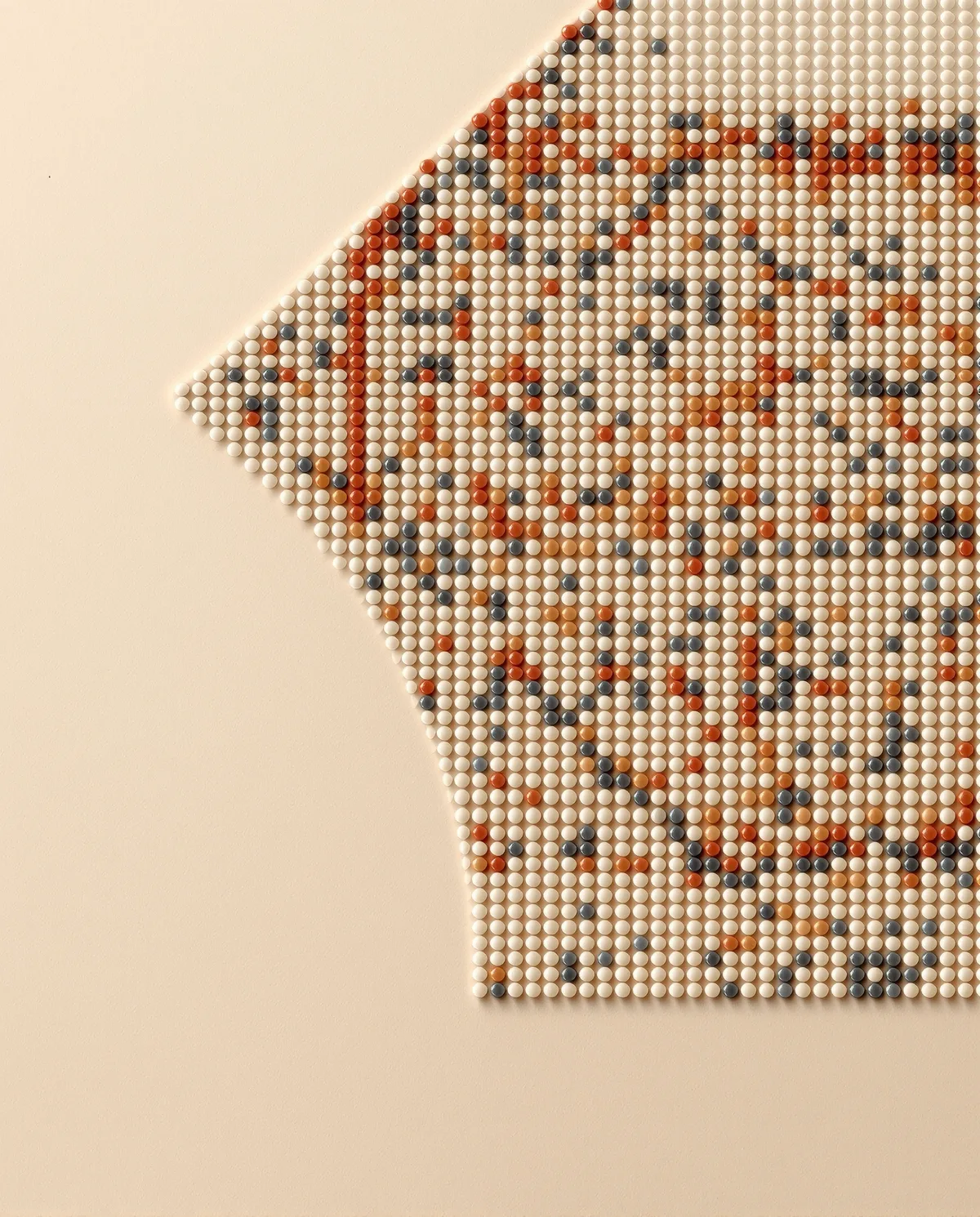
Bead count, bead size, and how much of each strand is covered — in that order. A densely patterned 90 by 200 cm curtain holds about 11,800 beads, each placed by hand, and that figure is the cost. Everything else is a rounding error against it.
The levers in order of effect: fewer beads by moving up a bead size on any flat field; a scattered accent instead of a fully covered strand; a shorter drop, which saves beads proportionally. Cutting the width saves least, because the header work does not shrink with it. A valance reached its target by losing four inches of height, and a beaded pillow by de-densifying its infills.
Three places, repeatedly. A cord specified for the hand of the panel that will not pass the smallest drill hole in the build — the single most common reason a sample stalls. A scattered accent that was not drawn with offsets, so the accents drift into rows and the design is lost. And a colour agreed on a screen rather than against a physical chip.
All three are upstream problems that a precise specification prevents. None of them is a manufacturing problem.
In two ways that matter at tech-pack stage. First, nothing is held in stock — every beaded piece is made to order against an approved sample, so there is no catalogue number to reorder and no warehouse to draw from. Second, the specification is unusually interlocked: bead size, hole diameter, cord, strand pitch, strand count and drop all constrain each other, so a single change propagates.
That is why the colour-count sheet is the document the whole programme hangs on, rather than one attachment among several.
Sampling usually runs 16 to 20 days from an agreed brief, with photographs approved before the sample ships. Production for beaded décor runs 40 to 60 days after sample approval; bohemian and macramé work runs 60 to 90. Formal quotes are delivered within 48 hours of receiving specifications, and we respond to inquiries within one business day.
Those are published figures. One further data point from our own development work is worth knowing: a genuinely new construction is drawn to a full tech pack before the first piece is made, and on a recent knotted development that route took about five weeks from tech pack to finished sample.
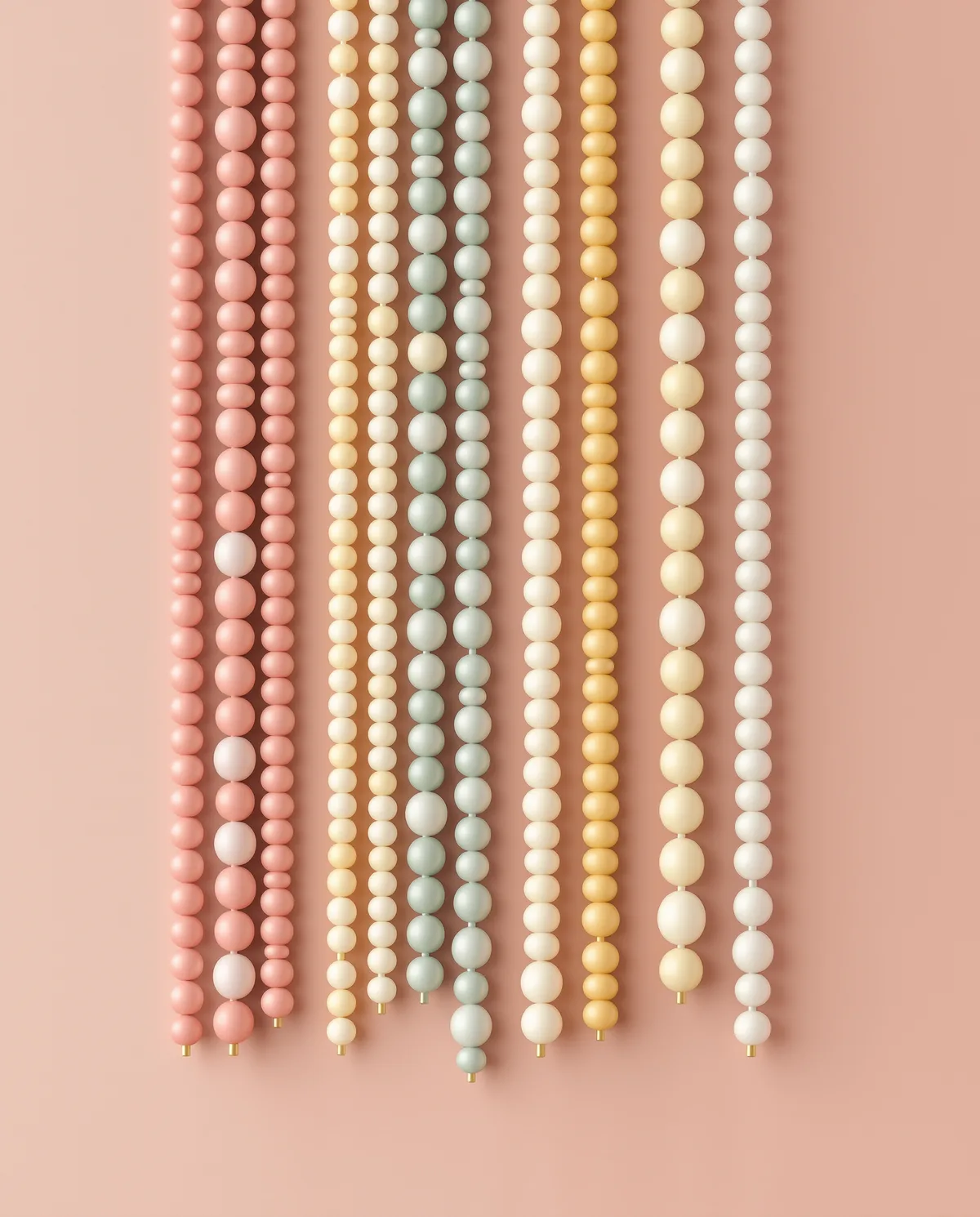
Everything on the colour-count sheet, plus the commercial frame. Product type. Finished size, with the longest and shortest drop where the edge is shaped. Strand pitch or strand count — pitch preferred, because it survives a resize. Bead material, shape and size for the main bead and every accent. Colours as references or physical chips. Pattern as artwork or a reference image. Top fixing. Edge shape and any end beads. Packing: inner packing, carton size and labels. And quantity per colourway with the destination port or warehouse.
The two entries buyers most often omit are pitch and the drill hole. The first changes the design; the second stops it being assembled.
Out of the Studio: a render and its named bead list. Out of specification: a colour-count sheet. Before any sample: a rough cost sheet, which exists specifically so a buyer can trade look against price while changes are still free. Then a formal quotation. Then sample photographs, then the sample. Then goods, with inspection and packing records.
Bead maps and colour-count sheets sets out what the central document contains and why a reorder depends on it.
Compressible: the design and interpretation stage, which is where a Studio design earns most of its value, and the costing stage, because a complete specification can be quoted inside 48 hours.
Not compressible: the sample loop and the stringing hours. Eleven thousand eight hundred beads take as long to place whether the design arrived as a render or as a sketch, and a sample has to be made, photographed, approved and shipped. Anyone promising to compress those is promising something else.
"Which of my design's features are hand operations?" That one question converts an abstract argument about handmade pricing into a list: a mixed bead family, a placed accent, a graded size, a shaped hem. Hand-strung or machine-strung works through it.
After that, "what is on the colour-count sheet?" — because that is the document a reorder will be held to, and it is the one worth reading before approving a sample rather than after.
Three things. The format and finished size. A commercial target, so the first costing is useful rather than theoretical. And any colour that must be hit, as a reference or a physical chip.
Everything else can be built in the Studio. That is the shortest version of this page: open a design, recolour it, render it, and send it back — the bead list travels with it.
Good to know
The format and the finished size, the commercial target so the first costing lands somewhere useful, and any colour you must hit as a reference or a physical chip rather than a screen colour. If the design was built in the Studio, the bead identities and the strand layout have already been decided.
Sampling is quoted separately from production. A formal quote against a specification is delivered within 48 hours of receiving it, and for complex or multi-item projects a discovery call is scheduled first.
The document flow is the same but the timing is not. Beaded décor runs 40 to 60 days after sample approval; bohemian and macramé work runs 60 to 90. A genuinely new knotted construction is also drawn to a full tech pack before the first knot, which adds to the front of the loop.
The front of the process compresses a lot, because a render built from named beads removes interpretation. The sample loop and the production run do not compress: a sample is roughly 16 to 20 days from an agreed brief and production is 40 to 60 days after approval, and no amount of upstream precision changes the stringing hours.
Minimums, which are set per design rather than across the range. Unit prices, because there is no fixed price list. Tooling costs where a design needs a new die. And testing, where a market requires it. All four are quote-stage figures and publishing a number for any of them would be inventing one.
It becomes a new colour-count sheet, and that is the answer rather than a cautious one. Bead positions, counts and cord are all interlocked, so changing a bead size or a strand count after production has started is a re-specification. The cheap place to change a design is at the render; the expensive place is at the bench.
The render is about a minute. Writing the colour-count sheet is days and depends almost entirely on pattern complexity — a plain-strand panel is quick, a graphic pattern with a figure in it is slow. The rough cost sheet follows the sheet, and the formal quote is within 48 hours of a complete specification.
Keep exploring
Pillar
A live app holding the full bead library and the Gemixx 2027 collections: build a design, render it in about a minute, take it to tech pack and costing.
View the rangeTechnique
What a bead map records, why a scattered accent has to be drawn rather than left to the bench, and why a reorder lives or dies on this one document.
Read the guideSpecification
Diameters, drill holes, cord selection, strand counts and format dimensions — the sheet to copy into a tech pack.
Specs and sizesDesign
Colour stories documented by how they are built, not by how they look in a mood board.
Specs and sizesHub
The full beaded range — curtains, portals, valances, tabletop, cushions, textiles and beads — from a leading manufacturer that makes the bead as well as the piece.
How it is made
Start a conversation
Send a reference, a colour chip or a sketch. Minimums are set per design and confirmed per quote; sampling is quoted separately and usually runs 16 to 20 days from an agreed brief.