Glossary
The glossary
The words a bead tech pack uses, defined one term to a page so a specification can cite them.
Read the guideGlossary
The word that decides whether a large hand-made glass bead survives six months of a doorway, or arrives at a shop floor already cracked.
Annealed means a glass bead has been cooled under a controlled schedule after forming, so that internal stress is relieved instead of locked into the glass. It is specified for larger hand-made feature beads, which are the beads that crack in service, and it changes what colours can safely sit next to each other in one panel.
Glass that has just been formed is hot on the outside and hotter inside. If it cools fast, the two parts of it finish shrinking at different times and the difference stays in the glass as stress. Annealing is the controlled cooling schedule that lets the whole bead relieve that stress before it is handled.
An annealed bead is not stronger glass. It is the same glass with less of its own force stored in it, which is why it survives being knocked for months instead of splitting along a line nobody can see.
On the bead line, next to the reference for the feature bead. A specification reads something like: hand-made glass feature bead, annealed, strung two per strand on a seed-bead base. It is a property of the component, so it sits with the component.
It should also appear in the sample note, because an approved sample made with unannealed beads has not tested the thing the specification is about.
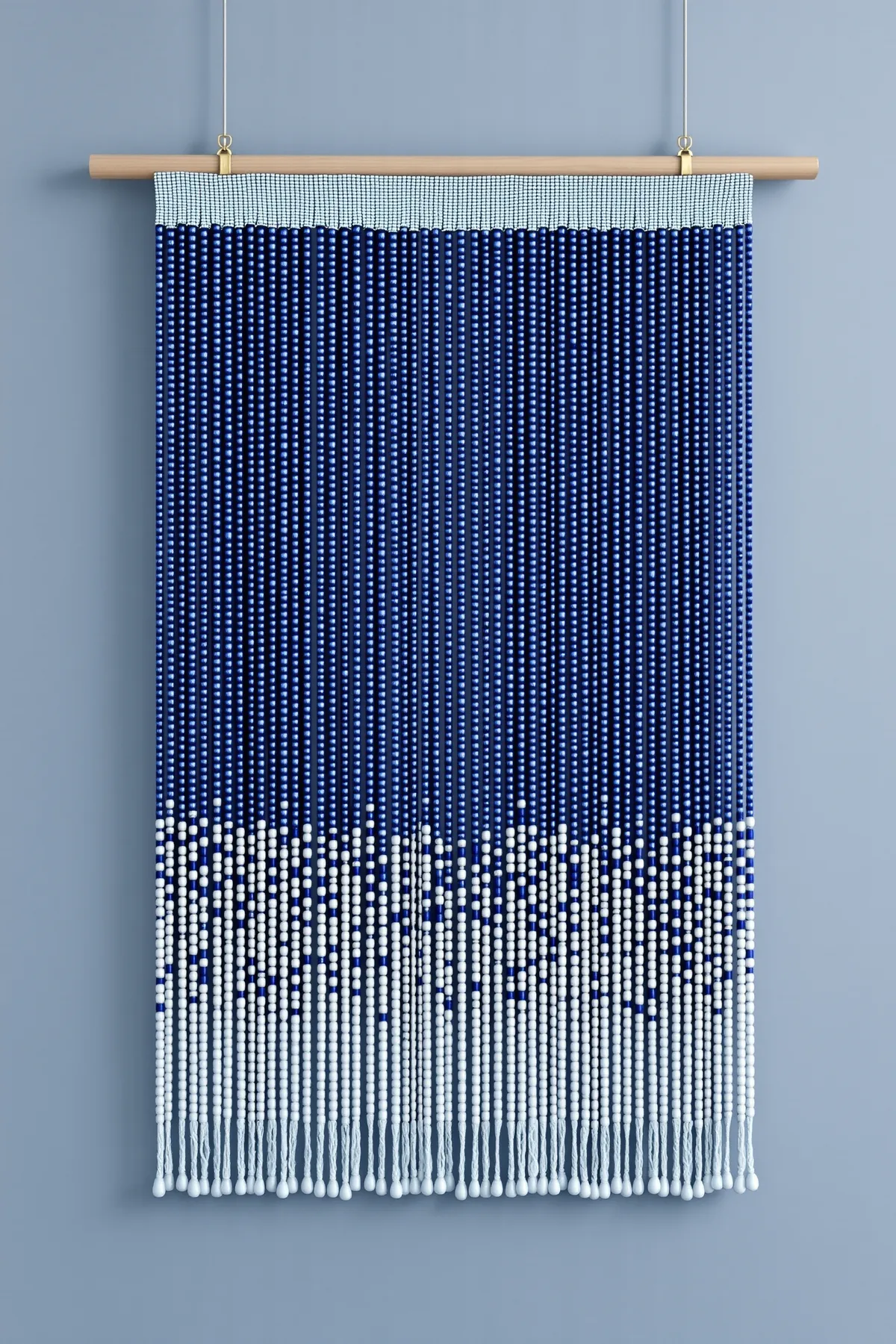
Because a hung bead panel is a machine for knocking beads together. Thirty strands moving in a doorway bring their beads into contact thousands of times a day. Small pressed beads shrug that off. A large hand-made bead with stress in it does not.
The failure is delayed and therefore expensive. It passes inspection, it ships, and it appears weeks later as cracked beads on a shop floor. Annealing moves that risk out of the product and into the furnace schedule, where it can be controlled.
Stress-relieved by slow, controlled cooling. If you have to say it to a buyer in a sentence: the beads were cooled on a schedule so they will not split from their own internal tension once the panel starts moving.
Avoid "strengthened" and "toughened" in buyer-facing copy. Both are claims about a different property and both invite a comparison to safety glass, which this is not.
Tempering, which deliberately puts a compressive skin on glass and is a different treatment for a different purpose. Fire polishing, which is a surface operation that rounds and brightens a cut edge. And the coatings — aurora borealis, pearlised, iridescent — which are appearance finishes applied after forming and have no bearing on how a bead behaves when it is hit.
Treating a coated bead as a strengthened one is a common and costly conflation in incoming briefs.
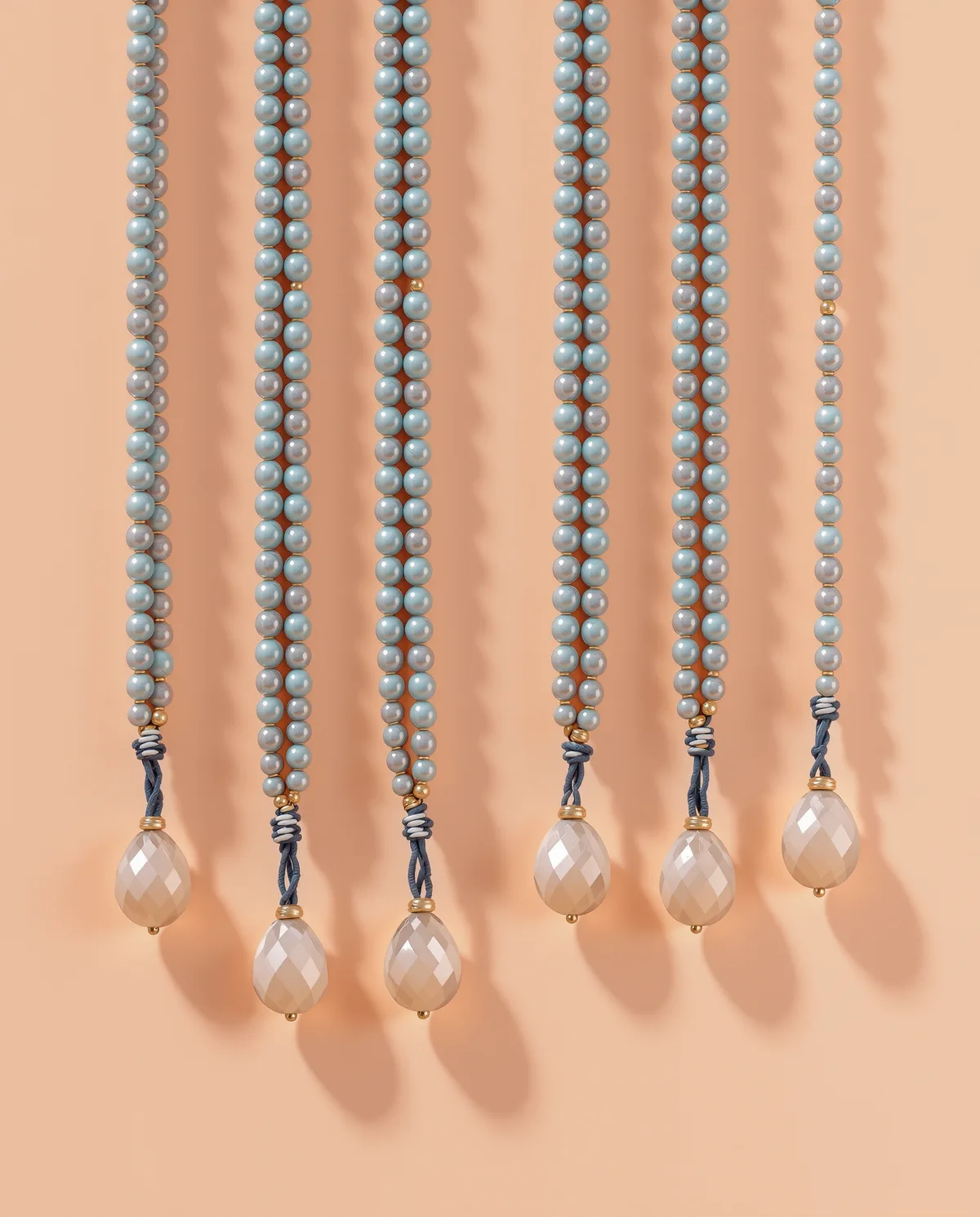
Annealed or not, against each named bead. In practice the useful rule is that any bead large enough to be called a feature bead is annealed, and the base beads carrying it are too small for stress to matter.
The second option a buyer rarely expects is the palette. Glass strength is colour-dependent, because the metal oxides that make a colour also change how the glass behaves. Where a hand-made multi-colour bead programme had a breakage problem, the fix was both a furnace process change with annealing and a revised colour palette, because some colours were not compatible once they were clinking against each other in a panel.
Not by a bead-level test. A first-article inspection checks the beads against the sealed sample and looks for the visible signatures — fine internal lines, chipped drill-hole edges, beads already split in the carton.
The position is that annealing is verified as a process commitment and a sample behaviour, not as a measured property of each shipped bead. There is no annealing certificate for a bead panel and we do not offer one.
The maker chooses, and the cheapest choice is to supply the bead as formed. On small beads that is the right call. On a large hand-made bead it transfers a known risk into an unknown one.
A brief that names a large hand-made or Venetian-style bead and says nothing about annealing is a brief that has not asked the one durability question that applies to it.
The word only applies to glass. Acrylic and resin beads are moulded and have their own stress behaviour, relieved — where it matters — by the moulding cycle, not by annealing. Wood, bone, horn and shell beads are cut and drilled, and their failure mode is splitting at the hole rather than internal stress.
So on a wood or acrylic specification, annealed is simply the wrong word, and seeing it there is a sign the brief has been copied from another material's sheet.
The buyer writes the requirement: these beads must survive normal use in a doorway for the life of the product. The maker writes the process answer: the feature beads are annealed and the palette has been checked for colour compatibility.
That split matters. A buyer who writes "annealed" without a durability requirement has specified a process; a buyer who writes the requirement gets the process plus whatever else is needed to meet it.
From glassmaking generally, where annealing ovens — lehrs — have been standard for centuries. It arrives in beadwork through the hand-made bead trade, because hand-formed beads are the ones made individually at a flame or a furnace and therefore the ones cooled individually.
In our own record the word enters through a problem rather than a catalogue: breakage on a large hand-made bead programme, solved by changing the furnace process and annealing, with the colours altered at the same time.
The stringing specification sheet, where the feature bead and its drill hole are stated together, and the glossary entry for the end bead, which is usually the largest and most exposed bead on a strand and therefore the one annealing matters to most.
A tech pack is where the word has to actually appear, and the tech pack page sets out the field it belongs in.
Extractable data
| Field | Value |
|---|---|
| Term | Annealed |
| Also written | Annealing; annealed feature bead |
| One-line definition | Cooled under a controlled schedule so internal stress is relieved rather than locked in |
| Where it appears | Bead specification line, next to the feature bead reference |
| Confused with | Tempered, toughened, fire-polished, and with surface coatings such as AB finish |
| Who states it | The maker, as a process commitment; the buyer states the durability requirement |
Good to know
Annealing is not a number on a drawing, it is a yes or no against a named bead. The normal specification is that feature beads above the base-bead size are annealed, and that the approved sample is made with annealed beads so the sealed sample and the run match.
A large hand-made bead may be supplied as formed. It will often look perfect on a photographed sample and then fail in a shipped panel, because the stress only shows when beads knock against each other for weeks. The failure arrives as a retail return, not as an inspection reject.
Cooled under a controlled schedule after forming, so stress is relieved rather than frozen into the glass.
On the bead specification line, beside the feature bead reference — for example, a hand-made Venetian-style bead noted as annealed. It belongs with the bead, not with the construction, because it is a property of the component.
Tempering and toughening, which are different treatments aimed at different failure modes, and with fire polishing, which is a surface finish. It is also confused with AB and pearlised coatings, which change appearance and nothing about strength.
Keep exploring
Glossary
The words a bead tech pack uses, defined one term to a page so a specification can cite them.
Read the guideSpecification
Diameters, drill holes, cord selection, strand counts and format dimensions — the sheet to copy into a tech pack.
Specs and sizesGlossary
The last bead on a strand: it closes the cord, finishes the hem, and weights a light strand so it hangs straight.
See the detailGlossary
The historical name for a curtain hung at a doorway — and why the word still earns its place on a brief.
Specs and sizesGlossary
The Indian decorative door hanging placed above a threshold — defined, with no product claim behind it.
Specs and sizes
Start a conversation
Send a reference, a colour chip or a sketch. Minimums are set per design and confirmed per quote; sampling is quoted separately and usually runs 16 to 20 days from an agreed brief.