Reference
The RFQ template
A blank request-for-quote sheet and a bead tech pack template, field by field, usable with any maker.
Compare the optionsOrdering · Briefing
Nine fields turn a question into a quote. A brief missing any one of them comes back as a question rather than a number, and that round trip costs more days than the sample does.
Send nine things: product type, finished width and longest drop, strand count or pitch, bead material and size for the main and accent beads, a colour reference or physical chip per colour, the pattern as artwork or a reference photograph, the top fixing, the packing specification, and the quantity per colourway with its destination. A reference photograph can stand in for a drawing.
Send nine fields. Product type, finished size, strand count or pitch, bead material and size, colour, pattern, top fixing, packing, and quantity with destination. Nothing more is needed to produce a rough cost sheet, and nothing less produces one.
The brief does not have to be a drawing. A photograph of a piece whose density you like, plus a size and a colour reference, is a workable brief and is how most of our programmes start. What cannot be substituted is the colour reference and the quantity per colourway. Those two are the fields that decide whether the answer we send back is a number or another question.
The brief arrives. We read it for completeness and come back on anything missing within one business day. With a complete specification we build a rough cost sheet, which shows where the cost sits and which lever moves the price, so you can trade look against price before a sample exists.
Once the cost position is agreed we match colour against the reference or physical chip you supplied, string a sample to the specification, photograph it and send the photographs for approval before the sample ships. On approval the colour-count sheet is written for production. Nothing is strung at volume from a brief; everything at volume is strung from an approved sample.
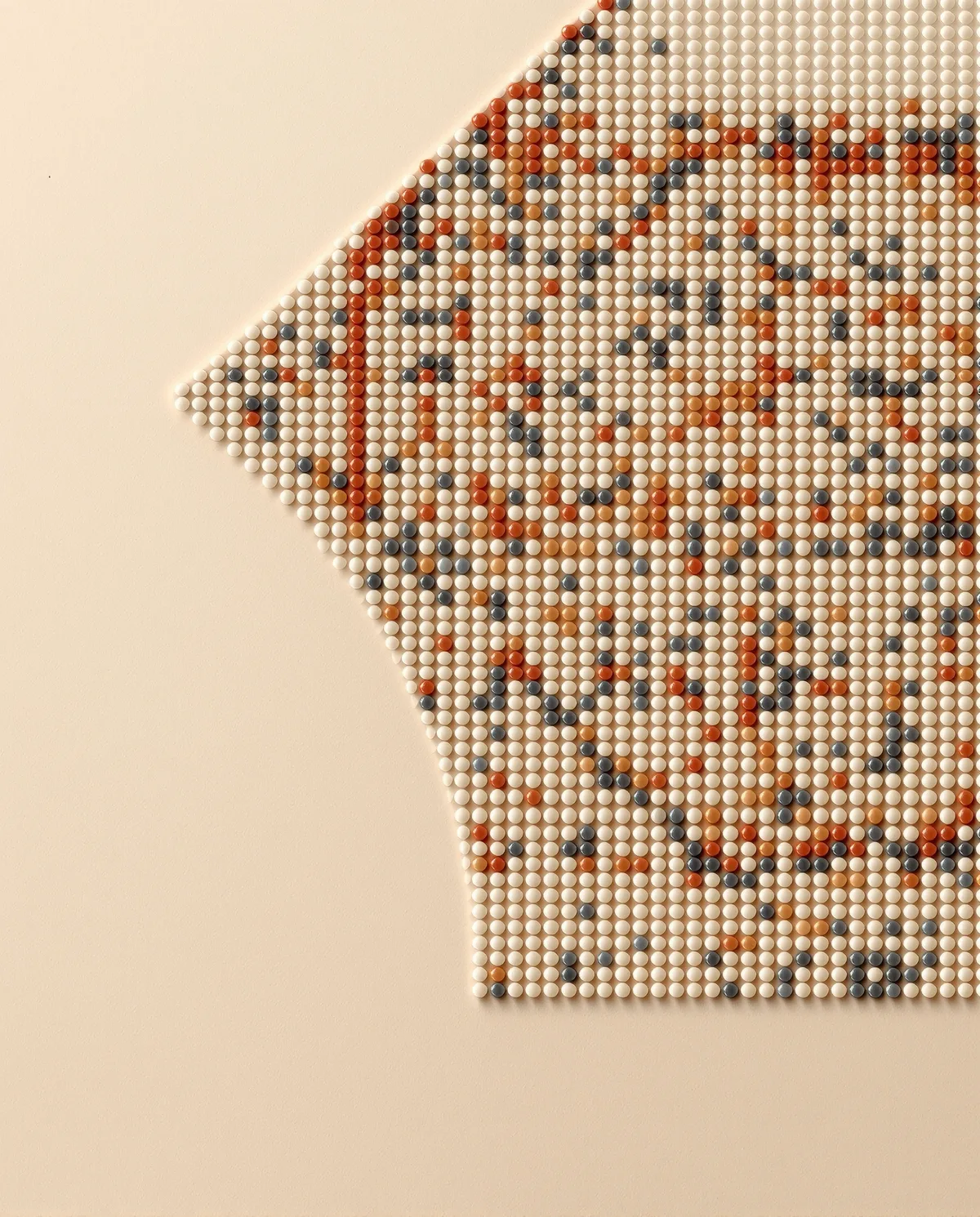
The pattern, more than the dimensions. Two panels at 90 by 200 cm can differ by a factor of several in bead count: a densely patterned one can hold about 11,800 beads, and a spaced one on the same dowel holds a fraction of that. Bead count drives both material and stringing hours, and stringing hours are placed one bead at a time.
After the pattern, the bead itself. A standard library bead costs what it costs; a bead that does not exist yet has to be moulded or drawn, and where a design needs a custom bead the die is a one-time cost that has to be recovered against the run.
Reply within one business day. Formal quote within 48 hours of a complete specification. Sampling usually 16 to 20 days from an agreed brief, with photographs approved before the sample ships. Production 40 to 60 days after sample approval for beaded décor, and 60 to 90 days for bohemian and macramé work.
Those are the only timings we publish. Freight, inspection scheduling and any market testing sit outside them and are quoted per programme, which is why the seasonal calendar counts backwards through all of them rather than only through production.
Briefing and the rough cost sheet are not charged. Sampling is quoted separately from production. Market testing is quoted per market and can be amortised across the units of an order rather than charged to a first shipment alone. Tooling, where a design needs a bead that has to be moulded to a new die, is a one-time item that is identified on the cost sheet rather than buried in the unit price.
Minimums and pricing are set per design and confirmed with your quote. Both come back against the specification.
On colour, and on the drill hole.
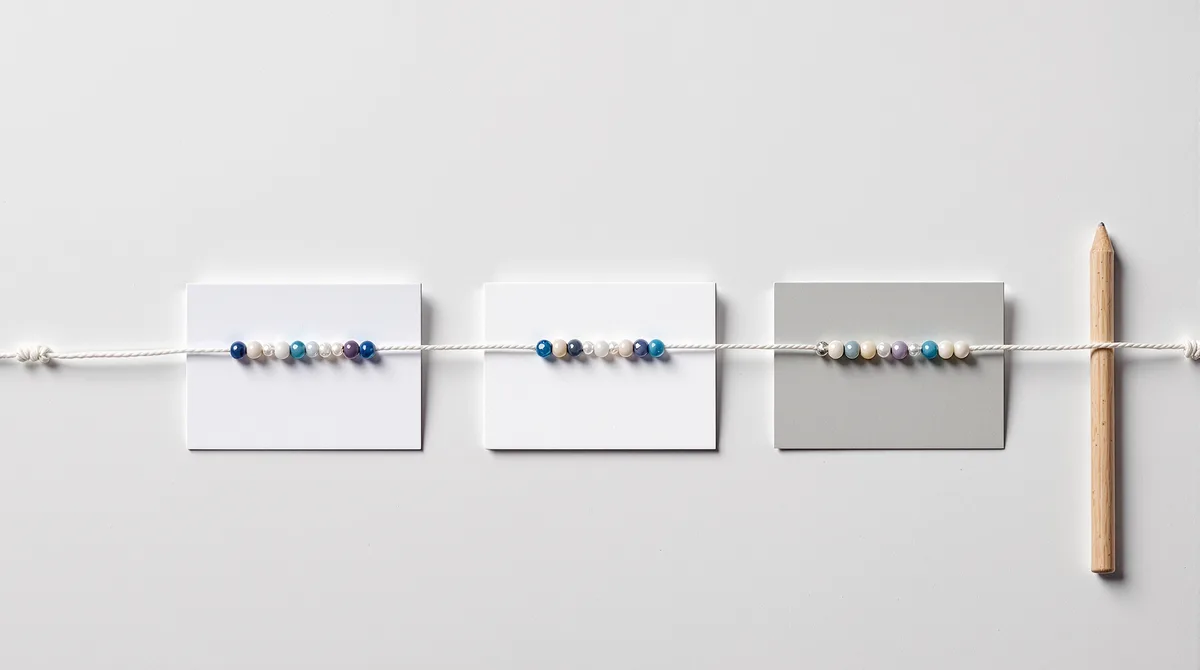
Colour given as a word — "rust", "honey", "sea glass" — produces a sample that is somebody's interpretation, and the review then costs a second sampling cycle. A reference or a physical chip removes the argument entirely, and the colour is confirmed on the sample rather than on the brief.
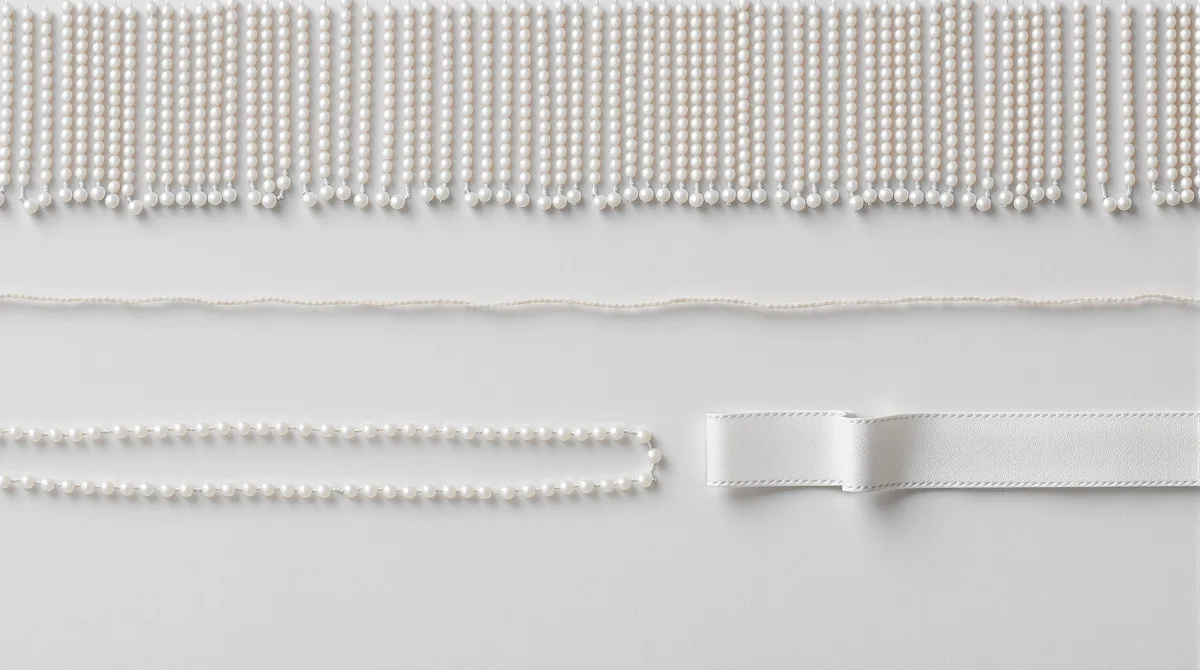
The drill hole is the specification buyers most often omit and the one that stops assembly. Cord is selected from the smallest hole in the build, which on most panels means the seed beads on the base strand rather than the large accent bead the design is about.
Most home categories are specified by dimensions and material. Beadwork is specified by count. The number of beads, the number of strands, the spacing between them and the position of every accent are the product, and they are what the colour-count sheet records so that a repeat lands identically across a run.
That is also why a brief that would be complete for a textile is incomplete for a bead panel. "Multi-colour, 90 by 200" fully describes a printed curtain. For a strung one it leaves the two most expensive decisions open.
That clarification rounds, not production, are where weeks are lost. The briefs that move from brief to approved sample quickly are the ones that arrive with a reference image and a physical chip. The ones that run through iteration after iteration are usually chasing a cost target, which is a cost conversation rather than a specification one — and the cost conversation is the one the rough cost sheet exists to shorten.
Where a design has needed a bead that did not exist, a custom moulded bead has been developed to our own dies. That adds a tooling step before sampling, not during it.
The approved sample reference, by number and date. The colour references per bead. The finished size with the longest and shortest drop if the hem is shaped. The strand count. The top fixing and its length. The packing specification including carton, labels and barcodes. The quantity per colourway. The destination port or warehouse. The inspection standard and who attends.
An order that names the sealed sample is enforceable. An order that names a colour by word is not.
Three sheets answer the fields buyers most often leave blank: bead sizes and stringing specifications for the drill hole, strand count and pitch for density, and panel headers for the top fixing. Bead colour matching covers the colour field, and the colour-count sheet is what your brief becomes once it reaches the bench.
From you, in this order: the brief, the colour references or chips, approval of the sample photographs, the purchase order against the approved sample, and the packing and label artwork. From us: the rough cost sheet, the formal quote, the sample photographs, the sample itself, the colour-count sheet summary where you want it, the inspection report, and the packing list and shipping documents.
Market test reports, where the programme needs them, are commissioned against the approved sample and travel separately.
Compressible: the brief, the quote turnaround, and the number of sampling rounds — one well-specified round beats three guesses. Partly compressible: the production window, by running strand sets in parallel across the beadwork studios, and this is agreed per programme rather than promised.
Not compressible: colour approval, because it depends on a physical object reaching a human being, and glass development where a new colour needs annealing trials before anyone strings a strand. Pushing on either produces a sample that fails review, which costs more than the time it saved.
Ask what the minimum is for this specific design, and ask for it in the same message as the price. Minimums are set per design, so asking in the abstract gets an abstract answer. Then ask which single change would move the price most — that answer is the cost-lever hierarchy applied to your design, and it is usually the fastest route to a viable programme.
Extractable data
| Field | Example value | What happens if it is missing |
|---|---|---|
| Product type | Door portal with an arched centre opening | We quote the wrong construction; a portal and a divider are strung differently |
| Finished size | 90 × 200 cm, longest drop 200 cm | No bead count can be derived, so no cost sheet can be built |
| Strand count or pitch | 30 strands on a single dowel | Density is guessed, and density is what the piece is judged on |
| Bead material and size | Glass seed base, 13 × 22 mm pressed oval accents | The largest single cost driver is left open |
| Colour | A colour reference or a physical chip per bead colour | Colour comes back as an interpretation, and the sample fails on it |
| Pattern | Artwork, or a reference photograph of the density wanted | We cannot write the colour-count sheet that makes the repeat exact |
| Top fixing | Stained wooden header rail, or a 3 in rod pocket on cotton | The header is a real cost and a real lead-time item |
| Packing | Inner packing, master carton, labels, barcodes | Retail-ready presentation gets decided late and costs more |
| Quantity and destination | Units per colourway, and the port or warehouse named | Minimums and freight cannot be confirmed |
Good to know
Briefing and the rough cost sheet are not charged. Sampling is quoted separately from production, and it is quoted against the brief — which is the practical reason a complete brief is cheaper than an incomplete one. Testing is quoted per market.
The field list is the same but three values change meaning. Strand count becomes cord count and knot type, bead size becomes cord diameter, and the frame or dowel becomes a structural item rather than a fixing. Knotted work also runs on the longer 60 to 90 day production window rather than the 40 to 60 day beadwork window.
The brief itself can be compressed to a photograph plus size, quantity and colour references, and we will quote from that. What cannot be compressed is the colour decision: a bead has to be matched against something physical, and no description of a colour has ever survived a sample review.
The minimum, the price and the sampling charge. All three depend on the specification in front of them, which is why they are confirmed against a brief rather than listed. A plain-strand panel and a fully patterned panel of identical dimensions are different products commercially.
A change after sample approval is a new approval. If it touches the bead, the pattern or the size it resets the cost sheet and can reset the production window, because the colour-count sheet and the bead allocation are both built from the approved sample. Changes to packing and labelling are the cheapest kind and can usually be absorbed.
We reply to enquiries within one business day, and formal quotes follow within 48 hours of receiving a complete specification. For a multi-SKU programme a discovery call is scheduled first, which is faster than three rounds of email.
The product type, the finished size and the colour references. With those three we can tell you whether the idea is viable, and where the cost levers sit in it, before you spend time on the other six fields.
Keep exploring
Reference
A blank request-for-quote sheet and a bead tech pack template, field by field, usable with any maker.
Compare the optionsGlossary
The document an order is made and inspected against — the ten fields a bead specification has to carry.
See the detailPillar
Brief, rough cost sheet, colour match, sample, production, packing — the six stages with the real published timings.
Compare the optionsReference
The method for establishing duty on beaded décor: classification, the current tariff, trade measures, then a binding ruling.
Compare the optionsReference
The beadwork defect taxonomy, how each defect is detected, and which are rejects rather than repairs.
Open the reference
Start a conversation
Send a reference, a colour chip or a sketch. Minimums are set per design and confirmed per quote; sampling is quoted separately and usually runs 16 to 20 days from an agreed brief.