Specification
Panel weight and load
What a beaded panel weighs by material and density, and which fixings suit light acrylic against heavy glass.
Read moreReference · Headers
The header is the only part of a beaded panel that touches the building. It decides what the panel can hang from, what it weighs, and how it packs.
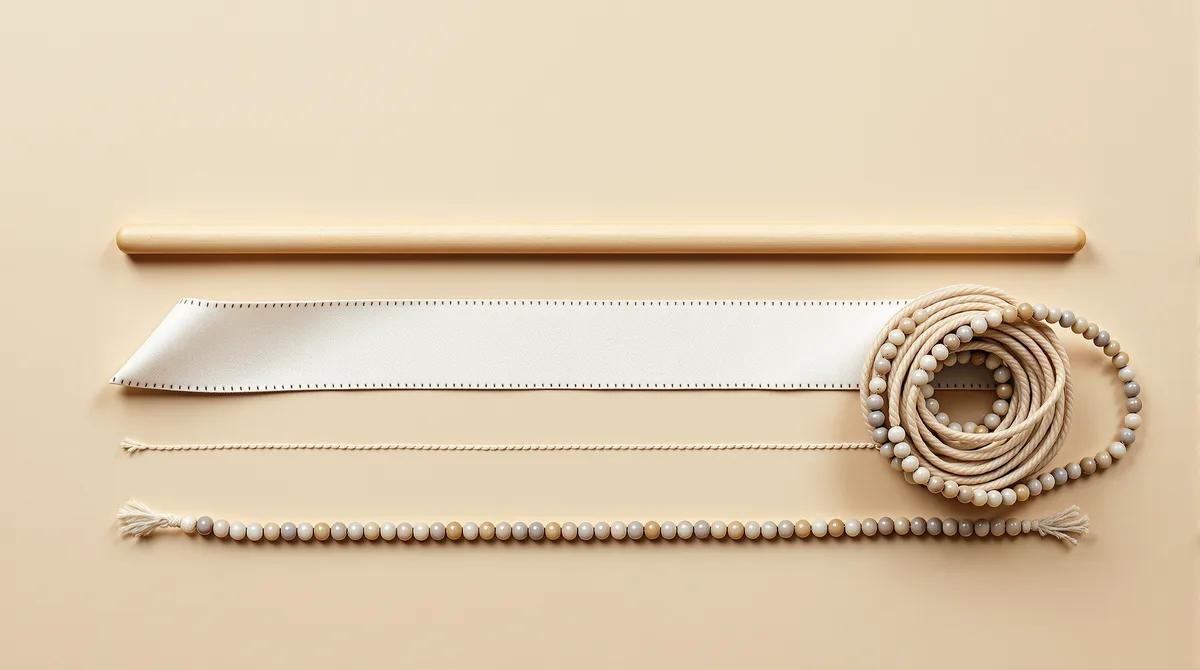
Four headers are in production use: a single turned wooden dowel, a stained rectangular header rail, a sewn cotton header band with a three inch rod pocket, and end suspension loops knotted at the top of each strand. Dowels and rails are turned in our own wood factory; the rod pocket is a textile construction and loops need no hardware at all.
Three things: which header, how long it finishes, and what it will hang from. The third is the one most often missing, and it is the one that determines whether the header can work at all.
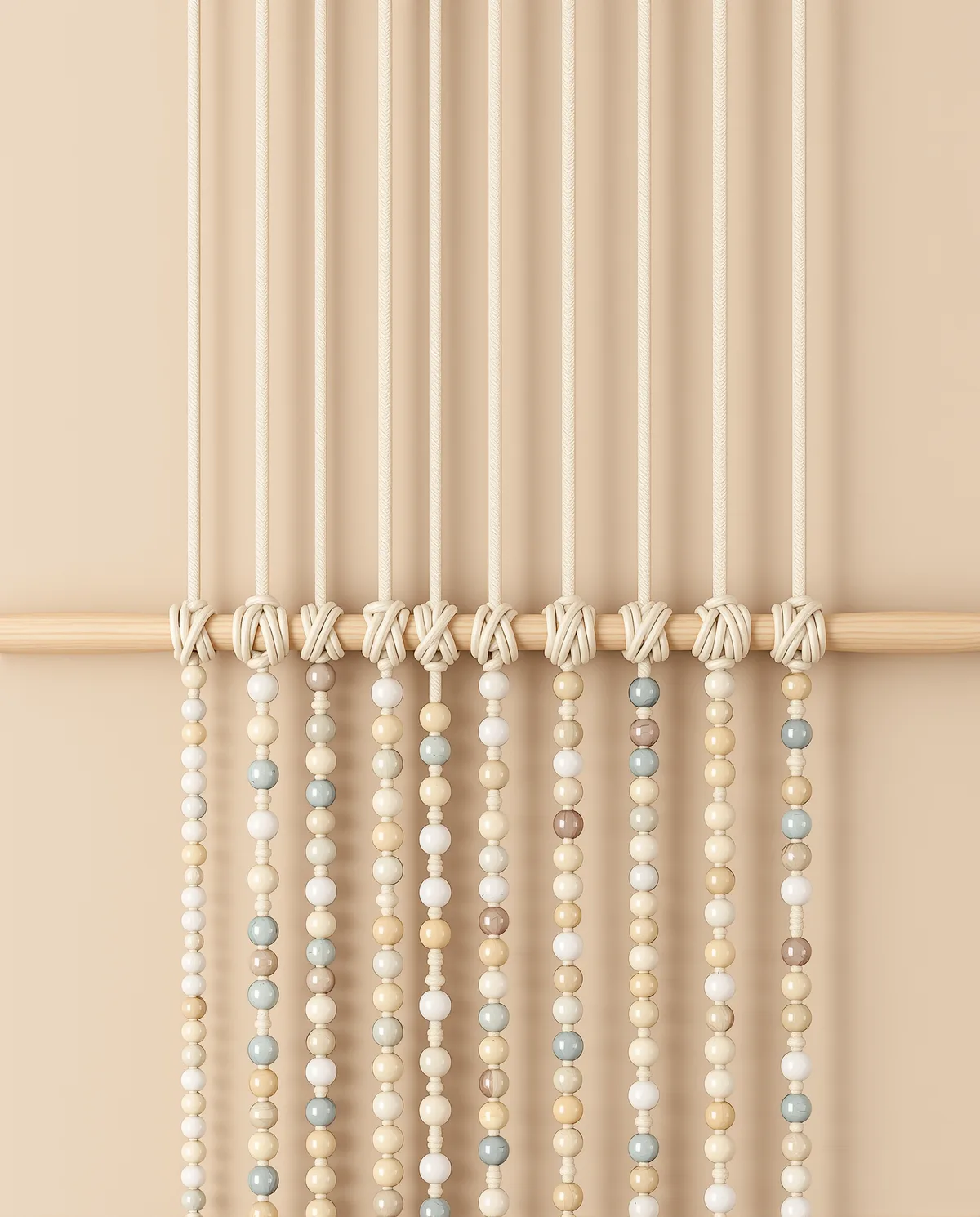
A header is a structural component dressed as a detail. It carries the whole panel into the building, and the panel's weight arrives at the fixing through it.
| Header | Construction | Hangs from | Best for |
|---|---|---|---|
| Single wooden dowel | Turned round section; strands knotted over it | Cup hooks, screw hooks, or brackets carrying the dowel ends | Door panels, valances, wall hangings — the default |
| Stained header rail | Rectangular beam section, stained to the design | Brackets, or fixings through the rail | Portals and panels where the header is part of the look |
| Cotton header band with 3 in rod pocket | Stitched band, top edge folded and sewn to form a pocket | Any rod that passes the pocket | Café curtains, window panels, rod-pocket wall hangings |
| End suspension loops | Loops knotted at the top of each strand | Hooks, a dowel, a rod, or a track | Level door or wall mounting without a visible header |
| Canvas mounting panel with rod pocket | 10 oz canvas pattern with a 3 in rod pocket | A rod through the pocket | Fabric-mounted beaded portals |
| Wooden hanging mount | Shaped wooden mount rather than a plain dowel | Fixings through the mount | Café curtains where the mount is visible |
All four main headers are from the production record. The single wooden dowel is the default across the shipped bead programme, with dowels turned in our own Saharanpur wood factory. Stained header rails appear on portals where the header reads as part of the design.
The cotton header band with a three inch rod pocket comes from the café curtain and window panel work, where it follows buyer-side rod-pocket panel standards. End suspension loops come from a portal built specifically so it could be hung level on either a door or a wall.
Header length end to end, separately from the beaded width, because the header normally overhangs the beadwork at each end and the overhang is a design decision.
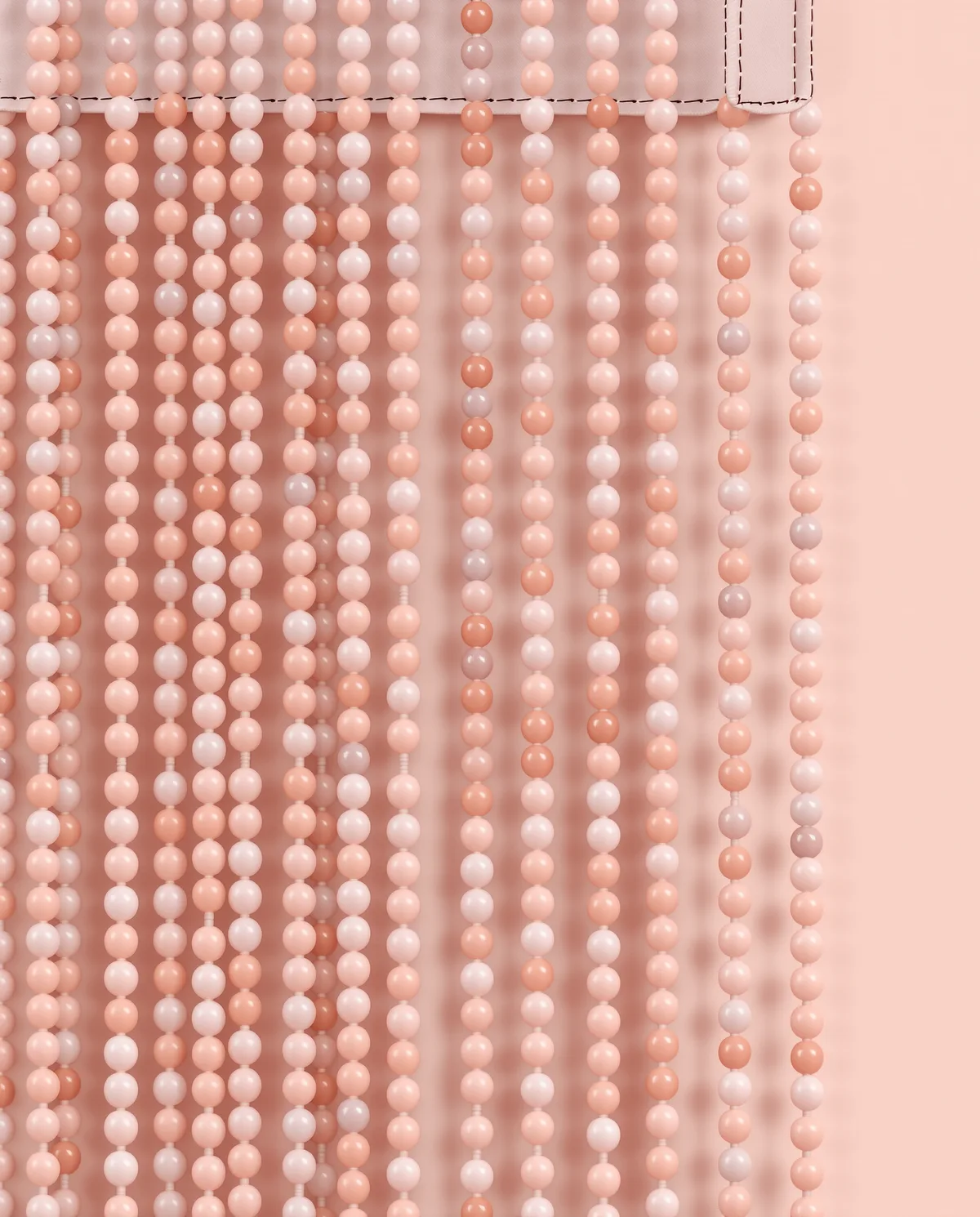
Rod pocket depth is the finished pocket, three inches being the standard, and it should be stated with the maximum rod diameter it will pass. A pocket that takes a 20 mm rod will not take a 32 mm one, and that is a site problem rather than a factory one.
That the header changes the piece, not just its mounting. The clearest case in the record is a laser-cut blossom wall hanging at 18 by 30 inches: the dowel version carries 155 to 170 blossoms and the rod-pocket version 130, for the same finished size.
That is not a rounding difference. A textile header occupies drop that a dowel does not, so the beadwork below it is shorter and the component count falls with it. Specifying the header late means re-costing the piece.
In its own block, not inside the dimension block. Header type, finished length, section or diameter where it is a timber component, pocket depth and maximum rod diameter where it is a textile one, and the intended fixing.
Where a panel is going into a building rather than onto a shelf, the fixing line should name the substrate as well, because that is what the contractor will ask.
Header length, the position of the first and last strand relative to the header ends, every strand's knot or stitch at the header, and pocket depth where there is one.
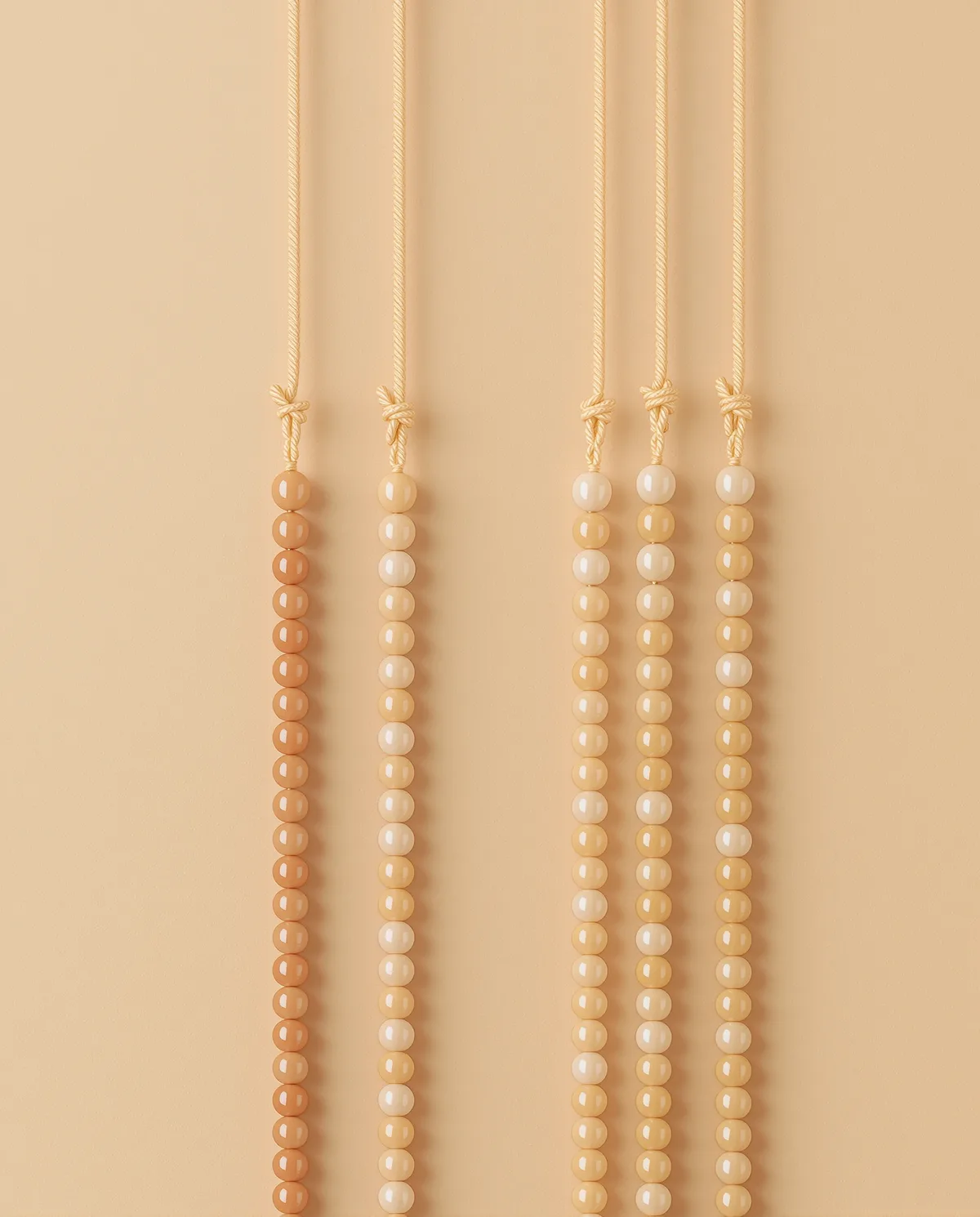
On a loop header the check is loop length, strand by strand. Unequal loops hang a panel out of level, and the error is invisible until the panel is up.
Three inches as 75 mm. It is about 76 mm, and on a rod pocket the difference decides whether a nominal rod passes.
The other is header length as panel width. They are different numbers: the header overhangs, and a brief that gives one figure for both produces either a header flush with the last strand or a panel narrower than intended.
The spec table above. Read it against the formats sheet, which gives the drops each header is matched to, and the weight and load sheet, which is where the header's real job is set out.
Linked disc hangings use the same header family — a dowel or a rail — with the columns hung from it rather than strands.
A dowel diameter or a rail section, confirmed per design. Both follow the panel weight and the look rather than a house standard, which is why the section is checked against the finished weight on the sample rather than carried over from the last build.
The header's rating follows the same route. A header carries the whole panel, so its section is set against the weight taken off the approved sample and written onto the tech pack beside the dowel diameter.
The default is a single wooden dowel, which is right for most door panels and wrong for anything intended to hang from a rod the buyer already owns. A pocket cannot be added after the strands are fixed.
The second failure is quieter: a header specified without a fixing. The panel arrives correct and the contractor has nothing to hang it from, because no rods, brackets, hooks or tracks are supplied with a panel.
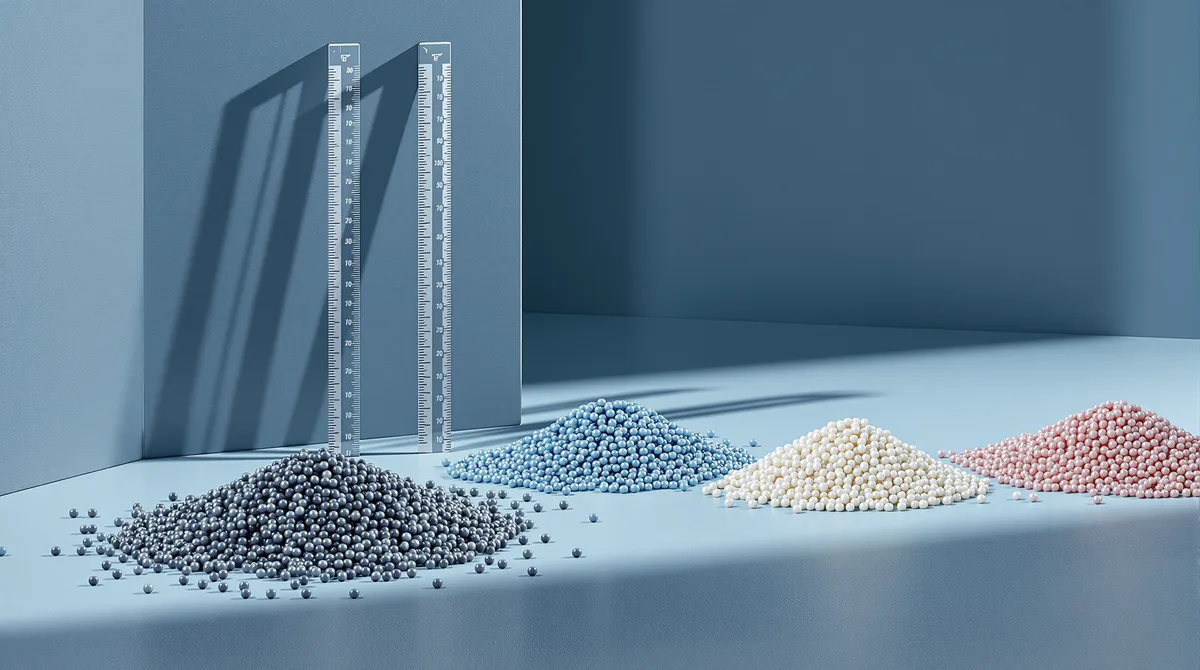
Heavier bead materials push the header towards timber in brackets and away from a pocket on a tension rod. Glass runs around 2.5 grams per cubic centimetre against acrylic at about 1.2 and most woods below 1, so a glass panel at full drop is a materially different load from an acrylic one at the same dimensions.
The header material itself is almost always timber in our work, turned or cut in our own wood factory, which is the one part of a beaded panel that is a joinery component rather than a beadwork one.
Good to know
A single turned wooden dowel is the standard header for a door panel, and a three inch rod pocket is the standard textile header. Neither carries a published dimension: dowel diameter and rail section are confirmed per design, because they follow the panel weight rather than a house size.
Header length end to end, separately from the beaded width, because the header normally overhangs the beadwork at each end. Rod pocket depth is measured as the finished pocket, three inches being the standard, and the maximum rod diameter it will pass should be stated beside it.
Header length holds closely, because it is a turned or cut component. The tolerance that matters is the position of the first and last strand relative to the header ends, since that is what makes a panel look centred, and it should be dimensioned rather than left to the bench.
The header choice follows the panel weight, which follows the bead material. A glass panel at full drop loads a header considerably more than an acrylic one of the same dimensions, so it suits a dowel or rail in brackets rather than a rod pocket in a tension rod.
The header type, its finished length, and what it will hang from. If the fixing is already decided on site — a tension rod inside a frame, a track in a ceiling — say so, because the header is made to suit the fixing rather than the other way round.
Header length, the position of the first and last strand, the knot or stitch holding every strand, and the pocket depth where there is one. On a loop header the check is that every loop is the same length, because unequal loops hang a panel out of level.
Keep exploring
Specification
What a beaded panel weighs by material and density, and which fixings suit light acrylic against heavy glass.
Read moreProcess
Turning, drilling on centre, staining and lacquering in our own wood factory — and why an off-centre hole is the defect no finish can hide.
Specs and sizesReference
Specification sheets and definitions — the pages to send a designer before they draw.
Read the guideSpecification
Rondelle, bicone, pony, tile, coin drop, trapezoid, teardrop and cabochon — what each shape does in a strand.
Read the guideGlossary
The words a bead tech pack uses, defined one term to a page so a specification can cite them.
Open the reference
Start a conversation
Send a reference, a colour chip or a sketch. Minimums are set per design and confirmed per quote; sampling is quoted separately and usually runs 16 to 20 days from an agreed brief.