Specification
Headers and dowels
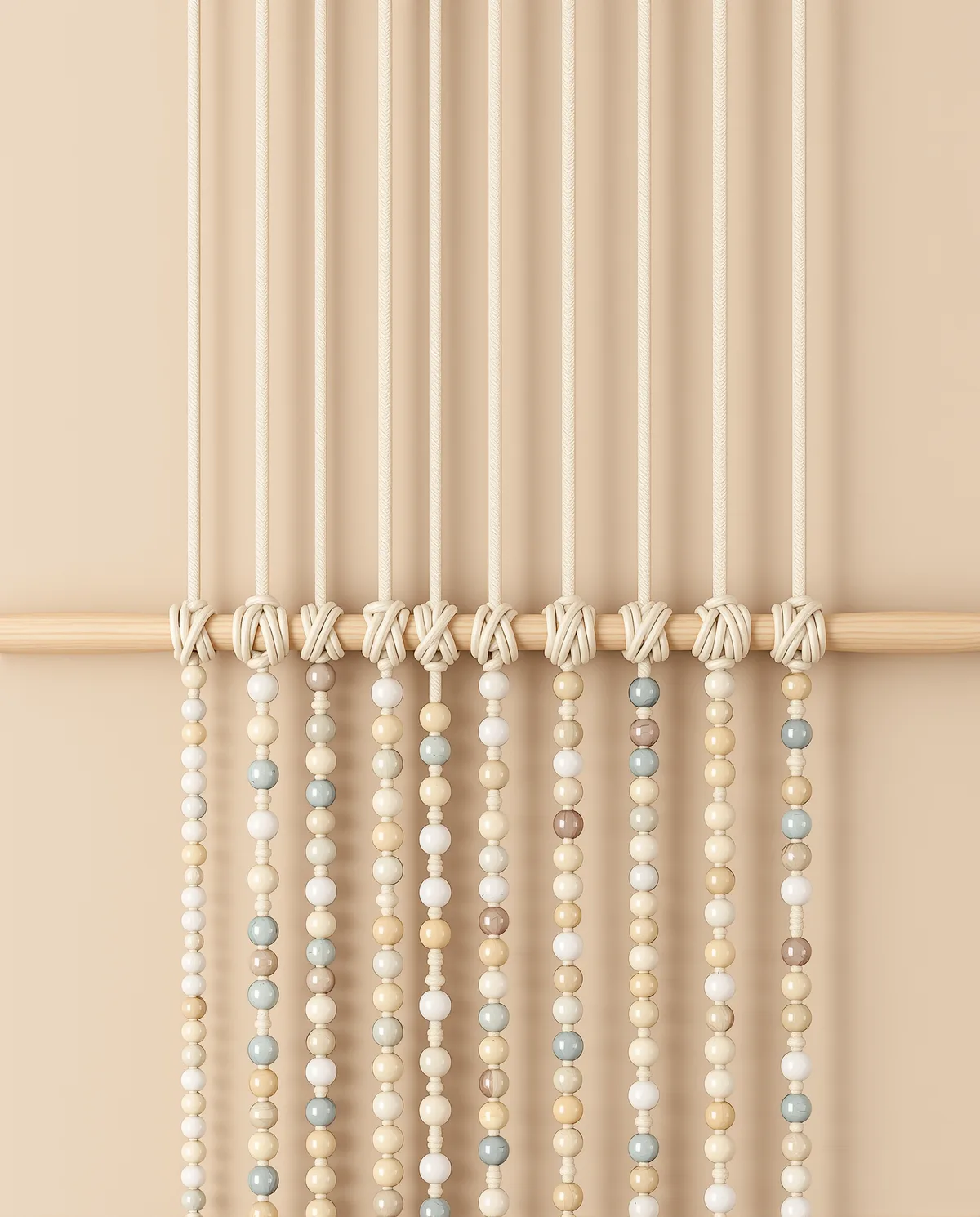
Dowel, stained header rail, sewn rod pocket or suspension loops — what each hangs from and when each fits.
Open the referenceReference · Load
Glass runs about 2.5 g/cm³ against acrylic at 1.2, and all of it arrives at the fixing through the header. Panel weight is taken off the approved sample, because a bead panel's weight is set by the bead you chose and the density you specified, not by the format name.
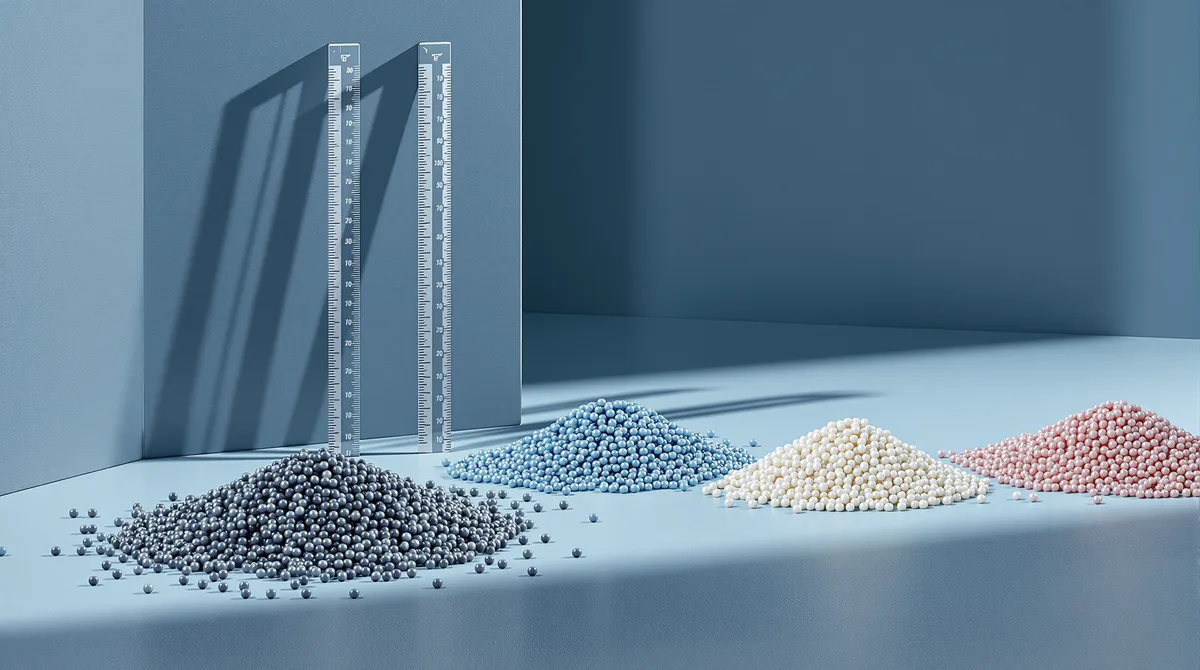
Panel weight follows bead material density, bead count and header mass. Glass runs about 2.5 grams per cubic centimetre, acrylic about 1.2 and most woods below 1, so a glass panel can weigh roughly twice an acrylic one at identical dimensions. The panel is weighed on the approved sample, and the fixing is selected against that weight.
Four inputs and one output. The inputs are bead material, bead count or density, header type and the substrate the panel is fixed to. The output is a fixing selection with margin over the load.
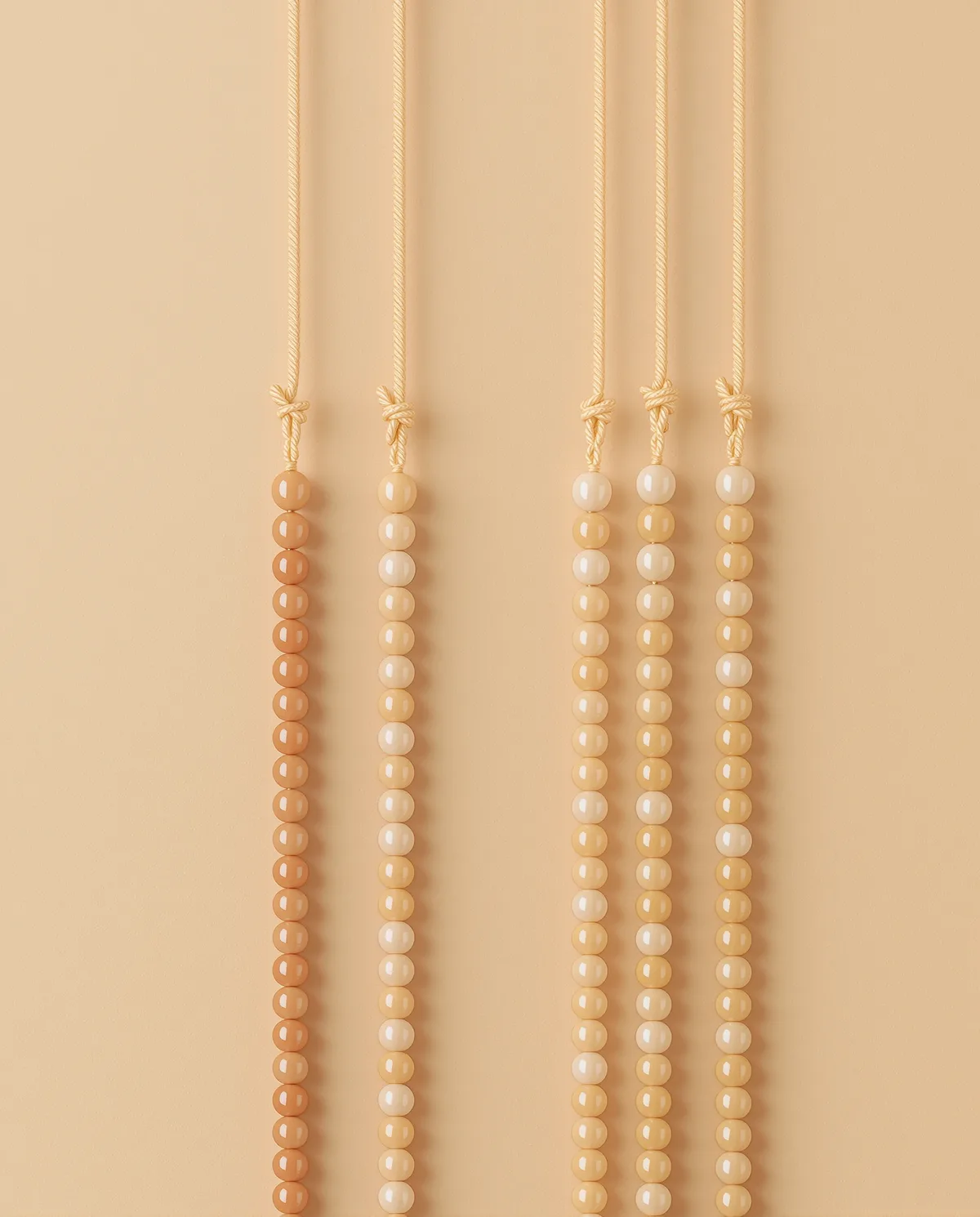
The output belongs to a specific build, so it comes from the approved sample rather than from a page. What this sheet does is make the arithmetic explicit, so the number you weigh can be checked against the number you expected.
| Input or fixing | Figure or best for | Note |
|---|---|---|
| Glass bead density | About 2.5 g/cm³ | Heaviest; hangs straight and settles fast |
| Acrylic bead density | About 1.2 g/cm³ | Light; needs design help to hang straight |
| Wood bead density | Mostly below 1 g/cm³ | Light, soft movement; avoid damp |
| Bead count, dense 90 × 200 cm panel | About 11,800 beads | The high end of the material load at that format |
| Bead count, spaced 90 × 200 cm panel | About 3,100 beads | The spaced end of the same format |
| Header mass | Timber dowel or rail, per design | Adds to the load and is carried by the same fixing |
| Tension rod, no drilling | Light acrylic, bamboo and wood panels; rented spaces | Not for a glass panel at full drop |
| Cup hooks or screw hooks | Simple and strong; holds a dowel or its loops | Load goes into whatever the hook is fixed to |
| Rod and brackets | Heavier glass panels and wide openings | The default for a specified installation |
| Ceiling hooks or track | Panels hung away from a wall | Fix into a joist or other structure, never into board alone |
The densities are general material physics rather than measurements on our own beads: glass around 2.5 grams per cubic centimetre, acrylic about 1.2, most woods below 1. They are reliable as a ratio and should not be used as a precise input.
The bead counts are working figures for a dense and a spaced build at the same 90 by 200 cm format. The fixing rows name the family that suits each load; the fixing itself is selected by the project against the weighed panel.
Weight by weighing, on the approved sample. That is the only route to a panel weight for a specific build, and once it exists it belongs on the tech pack as a recorded value.
Bead count comes off the colour-count sheet. Header mass is a timber component and can be calculated. Everything else about the load follows from those three.
As a recorded sample weight, with the build it was measured on named beside it. Not as a calculated estimate, and not as a range.
The fixing is written as a requirement on the specification rather than as a product: the panel header suits a rod of a stated diameter in brackets, and the brackets and their fixings are the installer's responsibility. No rods, brackets, hooks or tracks are supplied with a panel.
Construction, not load. Every strand secured at the header, the header sound, every knot or crimp holding. Those are the things that fail inside the product.
A panel can pass inspection in full and still come down, because what it was hung from was never in the specification. That is why the fixing is a drawing item rather than an inspection item, and why it belongs with the substrate page rather than with this one.
Treating density as weight. A bead that is twice as dense is not twice as heavy unless it is also the same size: a 1 to 3 mm glass seed bead weighs a fraction of a 13 by 22 mm pressed oval of the same glass.
The other is assuming the hem carries the load. It does not. All of it arrives at the fixing through the header, which is why the header choice and the fixing choice are a single decision made twice.
The spec table above, which pairs the material inputs with the fixing families. Read it against the headers sheet, because the header is where the load is collected, and against the strand count sheet, because count and pitch are what the load is made of.
For a panel hung away from a wall, the ceiling fixing page carries the substrate and services coordination that the table only gestures at.
Because every one of the values a table would carry — weight per panel, per strand, per thousand beads, per dowel — moves with the bead you chose and the density you specified. A 1 to 3 mm seed bead and a 13 by 22 mm pressed oval are the same panel in a drawing and two different loads on a ceiling.
This is the figure specifiers ask for most often. A ceiling fixing has to be sized against a real number, and the real number is the weight of the approved sample — which is why it is weighed and recorded on the tech pack before anything is installed.
The panel is made correctly and nobody has sized a fixing. In a retail context that lands on the customer, who will reach for a tension rod whatever the panel is made of. In a specified installation it lands on the contractor, late.
Stating the bead material and the header in the brief at least lets us say which fixing family is wrong.
By roughly a factor of two between glass and acrylic at the same size and count, and more again against most woods. That ratio is why a glass panel at full drop belongs on a rod in brackets and an acrylic one of the same dimensions is comfortable on a tension rod.
It also changes behaviour, not only magnitude. A heavy glass panel hangs straight and settles fast. A light acrylic, wood or bamboo panel moves more and often needs a deliberately heavier end bead to hang straight at all.
A few per cent between panels of the same build, which comes from bead variation, cord and header timber. That is not a tolerance worth specifying, because nobody buys a panel to a weight.
Where it matters is in the margin on the fixing. A fixing is chosen with headroom over the load, not matched to it, and the headroom absorbs both the panel variation and whatever the installation does not know.
Through freight more than through manufacture. Glass is the heaviest bead material and the dearest to ship; acrylic and wood are much lighter and cheaper to move. On a low-value, high-volume category that difference is a real line in a landed cost.
Weight also drives the header and the fixing. A heavier panel needs a more substantial dowel or rail, and that is a timber cost and a packing-volume cost at the same time.
Good to know
By weighing. The approved sample is the only reliable source of a panel weight for a given build, and the number should be recorded on the tech pack once it exists. Estimating from bead counts and material densities gets you an order of magnitude, which is enough to choose a fixing family and not enough to size one.
On weight, a few per cent between panels of the same build, from bead variation and cord. On the fixing, no tolerance at all: a fixing is selected with margin over the load, not matched to it, and the margin is the installer's decision rather than ours.
It is the thing material changes most. Glass at around 2.5 grams per cubic centimetre against acrylic at about 1.2 means a glass panel can weigh roughly twice an acrylic one at the same dimensions and the same bead count, before the header is added.
The bead material, the bead count or density, the header type, and what the panel will be fixed to. From those four we can say which fixing family is appropriate; the load figure itself comes from the weighed sample.
Not weight. Inspection checks construction: that every strand is secured at the header, that the header is sound and that the knots or crimps hold. A panel that passes inspection can still be hung from an inadequate fixing, which is why the fixing is a specification item rather than an inspection item.
The weight of its approved sample, recorded on the tech pack. Weight is set by the bead material, the bead count and the header, so it belongs to a build rather than to a format name: the same 90 by 200 cm panel in glass and in acrylic are two different loads. The density ratio here tells you which fixing family to plan for; the sample tells you how to size it.
There is not one. What is standard is the ratio: glass roughly twice acrylic by density, and most woods lighter again. That ratio is enough to know that a fixing suitable for an acrylic panel may not be suitable for the same panel in glass.
Keep exploring
Specification
Dowel, stained header rail, sewn rod pocket or suspension loops — what each hangs from and when each fits.
Open the referenceGuide
Find the load, pick the fixing, mount the header level, load the strands dry, then let them settle before judging it.
How it is madeSpecification
The dimensions, strand values, fixings and performance limits a drawing and schedule have to carry.
Open the referenceReference
Specification sheets and definitions — the pages to send a designer before they draw.
Read moreSpecification
Cotton cord, nylon thread and coated steel wire compared on drape, repair and how each one eventually fails.
How it is madeReference
The core, the bead field, the fixing and the load a tieback has to carry — made to order against an approved sample.
Specs and sizes
Start a conversation
Send a reference, a colour chip or a sketch. Minimums are set per design and confirmed per quote; sampling is quoted separately and usually runs 16 to 20 days from an agreed brief.