Style
Hippie beaded curtains
Unmatched beads and uneven strands are the signature, not a palette — and genuine randomness has to be engineered.
See the detail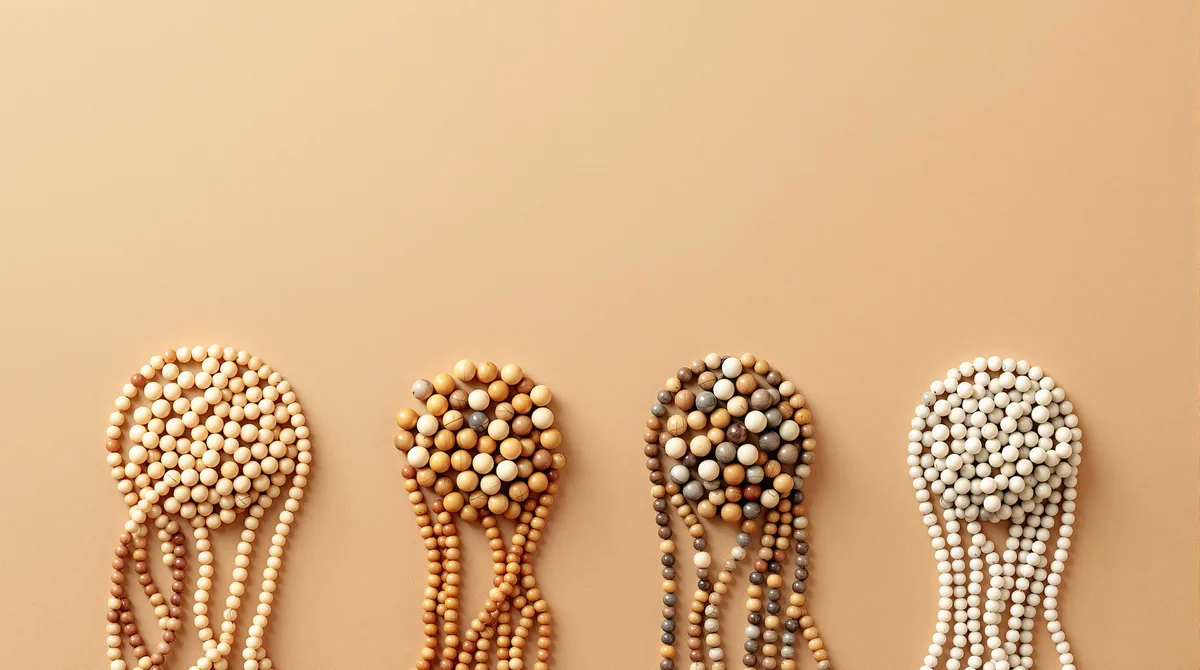
Style · Era
The boho panel that works is not the one with the most colours in it. It is the one where the variety sits in bead size and placement, and the palette stays narrower than anybody expects.
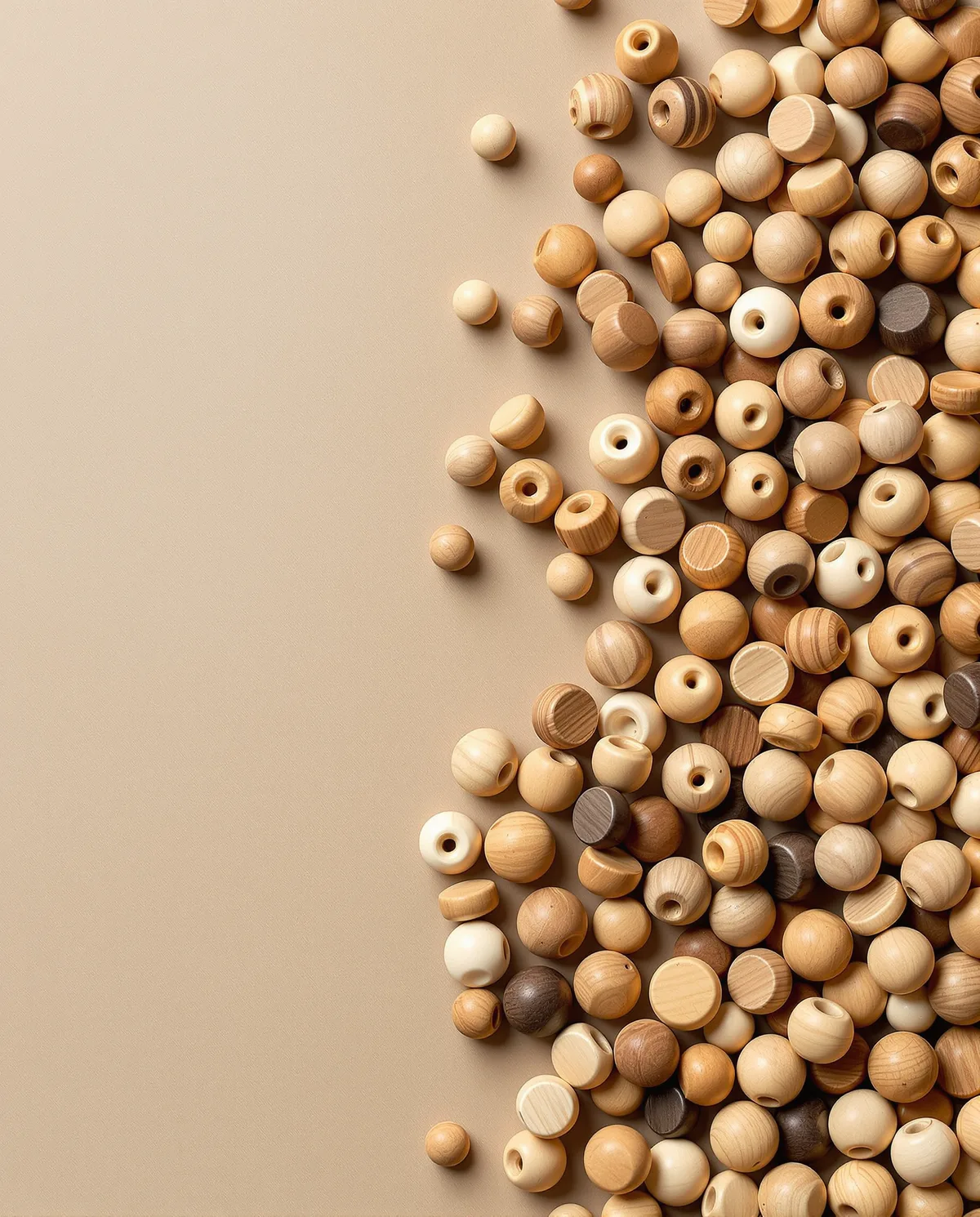
Four bead families grouped in a row — turned wood, cut bamboo, polished bone and glazed ceramic — each with a threaded sample strand falling below it.
A bead curtain reads as boho when the variation sits in bead size and placement while the palette stays tight — warm neutrals plus one accent. Add natural materials, a visibly hand-made cord and an uneven hem, and the panel reads as made rather than assembled. Widen the palette instead and it reads as a jumble.
Boho is a retail term for a curated version of the late-1960s import aesthetic. The original doorway panels that the look refers to were made from whatever beads arrived — Indian glass and wood, North African and Central American trade beads — and they looked unplanned because they were. Boho is that same visual grammar with a buyer's eye applied: the same materials, the same irregularity, but a palette somebody chose. The difference between boho and the hippie look is editorial control, and it is the whole difference.
Four rules. Natural materials, visible in the surface rather than implied by colour. A narrow warm palette with one accent. Variation in bead size and position rather than in colour. And a hem that is uneven, staggered or swagged instead of cut straight. The fourth rule is the one briefs supply; the third is the one they miss. A panel with eight colours and one bead size reads as confetti; a panel with three colours and five bead sizes reads as handmade.
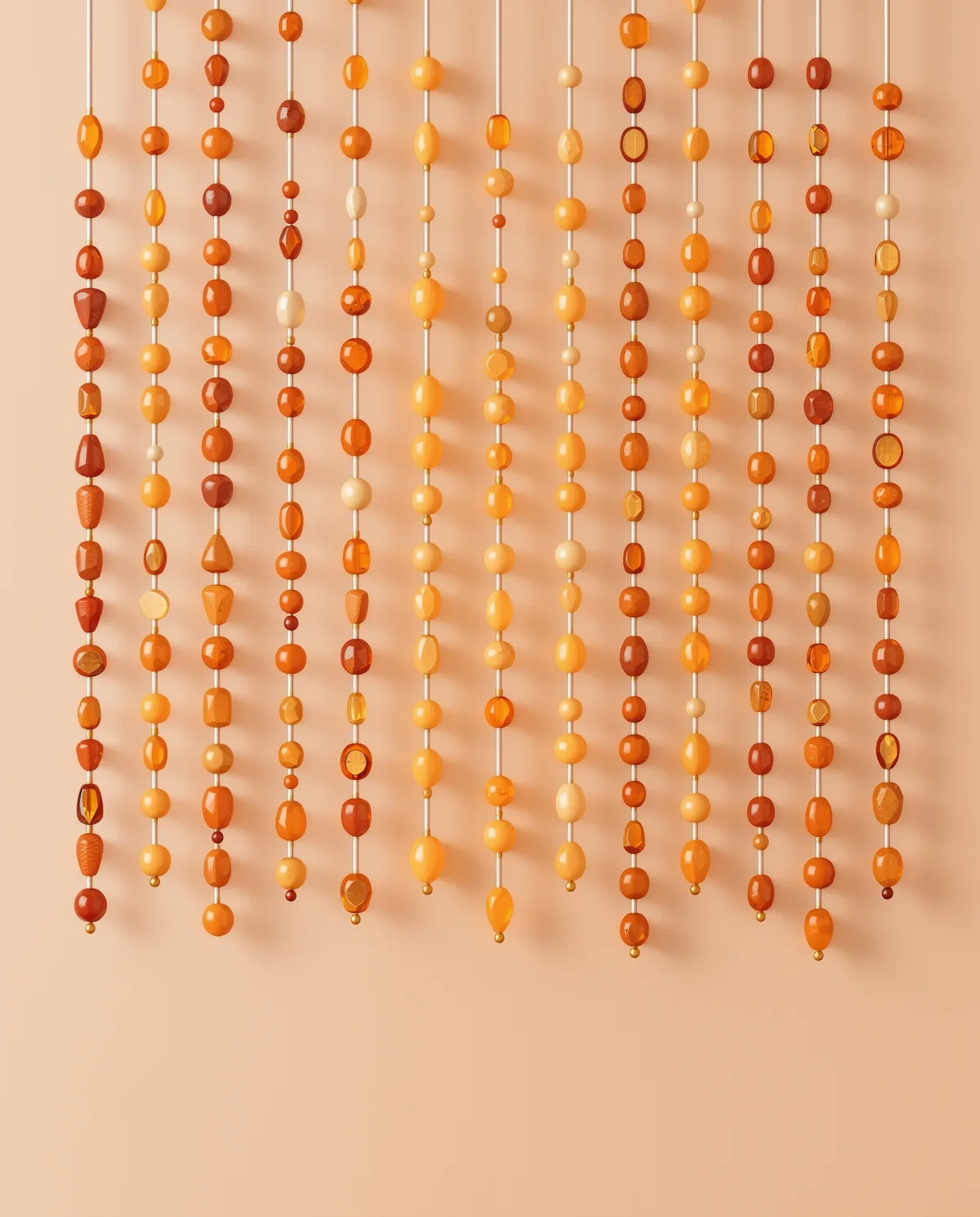
Wood discs, rondelles and ovals, mixed with bone and horn tubes and a run of amber or honey glass for light. In our library the Ember and Honey colour story is the direct expression: rust and burnt orange through amber to honey mustard, with the translucent glass passing light where the wood holds it. Uneven and staggered hems, sometimes with a longer drop at one side. Wood needs a weighted end bead or a light strand will not hang plumb.
This is where boho gets misunderstood as the easy look. A stringer cannot be instructed to improvise, because improvisation does not repeat and a reorder would arrive as a different product. So the irregularity is specified: a defined pool of bead sizes, a permitted-position rule per strand, and a count sheet that writes the unevenness down. Hand-strung construction is where that rule is actually enforced, strand by strand, against the sheet.
The bead count is typically moderate, because clear cord between beads is part of the look. The cost arrives in picking: five bead lines open at the bench instead of one, and a sequence that changes from strand to strand. Reducing the number of distinct beads is the first lever here, and it usually costs the look less than reducing the bead size does.
Bedrooms, dorms, studio flats, yoga and wellness studios, and the kind of café where the fittings are all second-hand. It is the strongest home-retail register in beadwork because it forgives a plain room: the panel supplies the warmth the room does not have. It is weaker in a finished, specified interior, where the irregularity reads as untidy next to joinery.
Drop the macramé reflex and raise the bead scale. The 2010s version of boho was fringe plus knotwork plus beads all at once; the version that sells now is quieter — larger beads, fewer materials, a cleaner header, and the texture doing all the work. Keep the uneven hem, lose the tassels.
A fixture. Boho has outlived three cycles of surrounding décor fashion because it is a solution to a real problem — a bare rented room — rather than a seasonal palette. The palette inside it moves; the structure does not.
The original mixed materials because the materials were whatever was available. The revival mixes materials because a buyer specified a mix, which means the revival can be colour-matched and repeated and the original could not. That is a genuine improvement, and it is also the trap: a mix that is too clean stops reading as boho. The target is deliberate imperfection, held to a tolerance.

Ember and Honey for the warm earth reading. Rose Clay Garden — sun-baked rose, soft sage, butter yellow and a milky glaze, in matte and satin — for the pastel reading that sells into bedrooms. Olive Press for a greener, quieter version. All three sit in the design library with the bead and size information attached, which is what makes them specifiable rather than aspirational.
It photographs warm and it sells on texture, which means close detail frames matter more than room shots. A buyer deciding on a boho panel wants to see the end grain of the wood and the cord at the knot, not the panel in a styled bedroom. It sells best as a small family — one design in two or three colours — rather than as a single hero.
Retailers and e-commerce sellers in home and lifestyle, brands buying under their own label for bedroom and dorm ranges, and gift and lifestyle stores. It is also the register most often requested by interior designers working on short-lease or rental projects, where nothing can be drilled and a dowel on two hooks is the whole installation.
Acrylic printed with a wood grain, a visible mould parting line, a uniform colour that real wood never has, and a hem cut straight because an uneven hem costs a sheet to specify. It fails at arm's length, which is exactly the distance a doorway panel is looked at. If the budget cannot carry turned wood, the move is a plain glass or acrylic panel in a boho palette rather than a wood imitation.
Good to know
Turned wood is the backbone, because the open end grain around each drill hole is the one detail an imitation never gets right. Bone and horn add quiet density and natural banding. Warm amber and honey glass gives the one note of light the palette needs. Many boho designs mix all three in one panel.
We can match its look, colours and bead sizes in new materials, as a vintage-inspired design. We do not reproduce another brand's protected design. With boho references the valuable information in the old piece is usually the size mix and the knot spacing, not the colours.
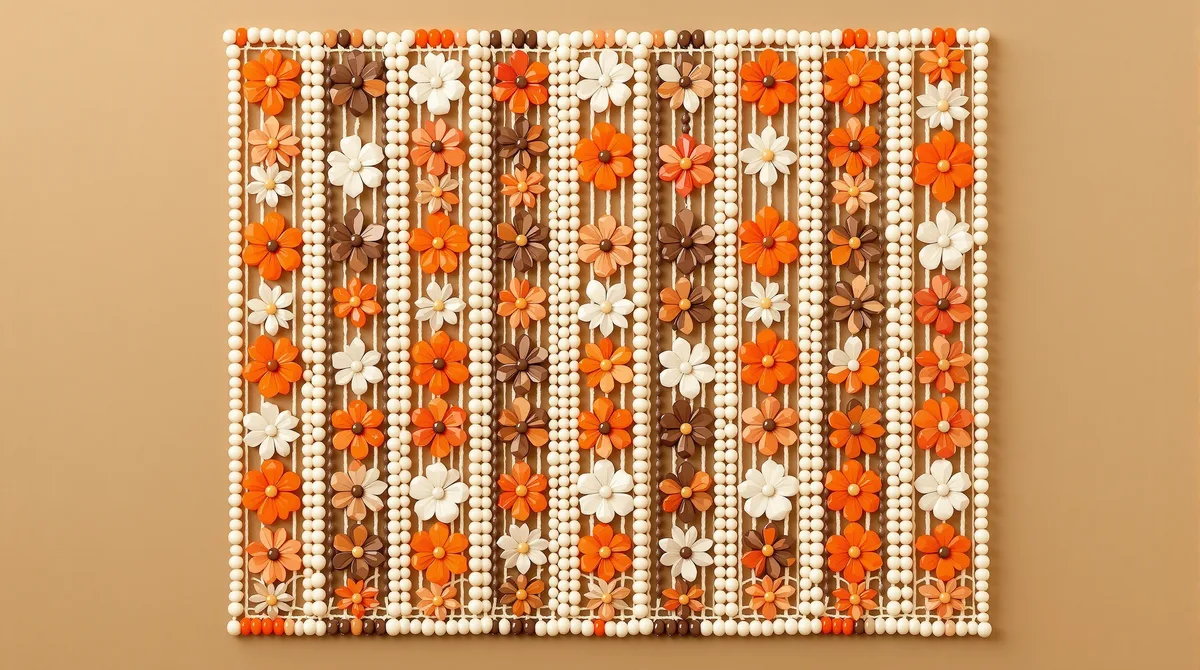
Terracotta, rust, mustard, olive, cream and chocolate brown, with one brighter accent. A pastel reading — pink, lilac, mint and butter yellow — sells strongly into bedroom and dorm ranges. Either way the range inside the palette should be narrow.
Somewhat, and the cost is in picking rather than in beads. A mixed-size build needs more bead lines open at the stringing bench than a single-bead panel, so the labour is in selection and sequence. Bead count is usually lower than a graphic design at the same size.
All of them, which is unusual. The looseness survives being scaled, so a door curtain, a café length, a valance and a wall hanging can be developed from one count sheet and sold as a set. That coordination is the commercial argument for the look.
Cut the ornament count and raise the material quality. Boho pastiche is pom-poms, shells, feathers and every palette at once. Boho done properly is three materials, one palette, a good cord and a hem that is uneven because someone decided where.
Yes, and in our own brief flow it is the most persistent style language in the category. Boho and bohemian are the words buyers reach for first, which is why the register sits across the range rather than in one corner of it.
Keep exploring
Style
Unmatched beads and uneven strands are the signature, not a palette — and genuine randomness has to be engineered.
See the detailMaterial
Turned and drilled in our own wood factory: grain variation you approve rather than eliminate, the finishes that hold colour, and the dowel from the same plant.
Read the guideIndex
Twenty-four named looks, each described by the material, palette, pitch and hem that actually produce it.
Read the guideStyle
Hard flat colour, discs and ovals, op-art repeats and a fabric-mounted header — and how it differs from the seventies.
See the detailStyle
Translucent acrylic, frosted pastels and iridescent finishes — a material decade rather than a motif one.
See the detail
Start a conversation
Send a reference, a colour chip or a sketch. Minimums are set per design and confirmed per quote; sampling is quoted separately and usually runs 16 to 20 days from an agreed brief.