Pillar
The beaded curtains index
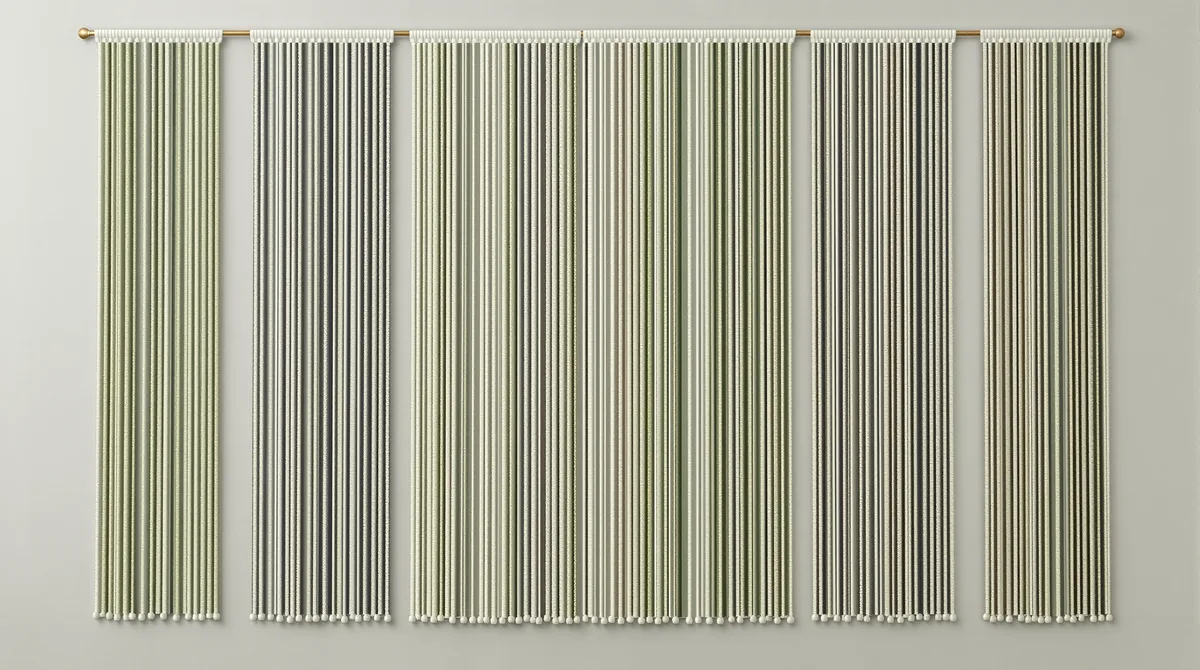
Door curtains, portals, café lengths and valances: the standard sizes, the strand counts and the one question each format answers.
Read the guide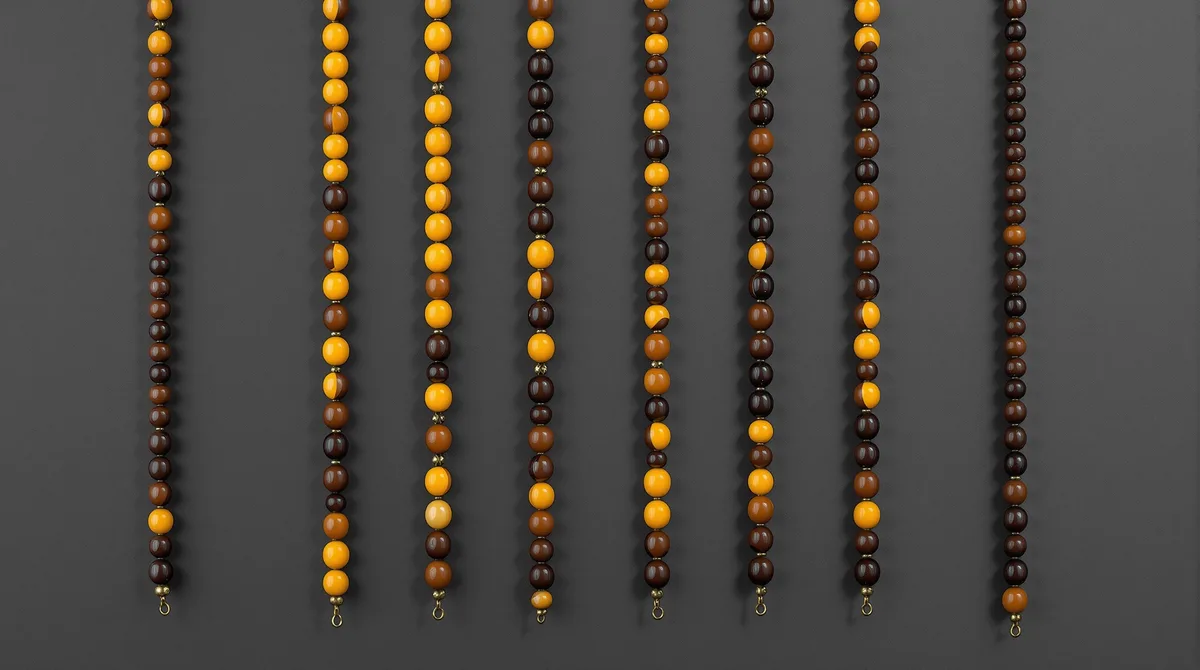
Guide · Performance
No — and that is the point rather than the flaw. A bead panel is a device for changing light, not for removing it, and the difference is worth understanding before you hang one at a window.
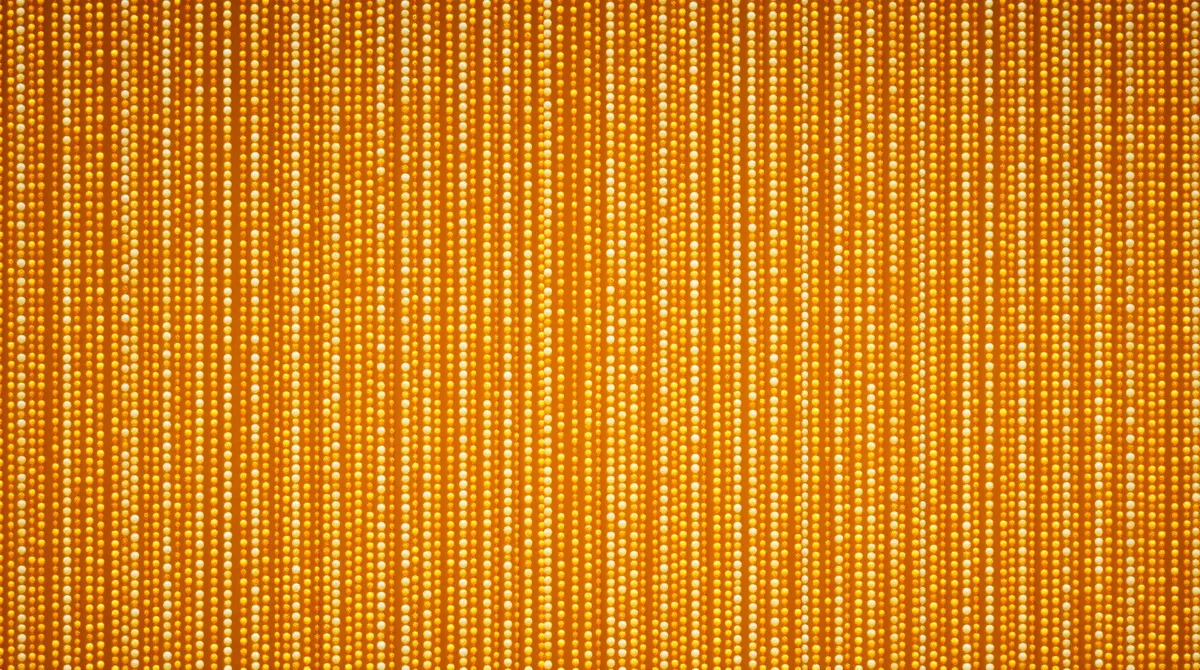
Hand-strung strands of opaque amber and chocolate-brown beads against a dark ground, the clear gaps between the cords the only way light gets through.
No. A beaded curtain breaks light rather than blocking it. Glass beads refract it into moving bright points, translucent acrylic diffuses it into a glow, and opaque wood or ceramic casts small hard shadows while the clear gaps between strands pass light untouched. Nothing in the category darkens a room. For that, specify a blind.
It breaks light. Three different mechanisms, depending on the bead:
Glass refracts. Each bead is a small lens: it bends light and throws a bright point somewhere else. Because the strands move, those points move.
Translucent acrylic diffuses. Light passes through the bead body and comes out scattered, so the bead glows rather than glints.
Opaque beads shadow. Wood, ceramic and opaque acrylic simply block their own area and cast small hard shadows.
And underneath all three, the clear gaps between strands pass light untouched. That is the fact that answers the question: whatever the bead does, most of the aperture is still air.
Because blocking requires a continuous surface and a bead panel is deliberately discontinuous. Parallel strands with clear gaps between them is the construction, and the gaps are what make the panel a bead panel rather than a screen.
The same openness is why it gives no acoustic or thermal separation and only partial privacy. One property, several consequences.

Opaque ones at a tight pitch. Turned wood is the most completely opaque bead in regular use, matte so it does not even reflect; glazed ceramic is equally opaque and heavier; opaque acrylic is the engineered equivalent and genuinely different from the translucent version of the same bead.
Then tighten the pitch. The arithmetic is strand count into width: the shipped construction is 30 strands across 90 cm, a 3 cm pitch, and the design library draws 40 strands across 90 cm at roughly 2.25 cm and 60 across 120 cm at roughly 2 cm. Coming below those figures reduces the clear gap, and it is the only lever that changes the quantity of light rather than its character.
Even at the tightest practical pitch, a panel still passes most of the daylight falling on it. The improvement is real and the ceiling is low.
This is the part worth hanging a panel for. At a window, a glass panel in morning sun throws distinct bright points across the floor and the opposite wall, and they travel as the sun moves. By midday with the sun high, the panel reads mostly as colour. In late raking sun it does its most dramatic work, because light comes through the beads almost horizontally and every bead lights up.
In flat overcast light it does almost nothing, which is the other half of that description. Faceted and cut beads in particular need a point source; without one they read as grey.
It takes the hard edge off glare without darkening the room — a useful middle ground that neither a blind nor an open window provides.
A low sun coming down a hallway through a bead panel arrives broken up rather than as a single blinding plane, and the effect is pleasant rather than merely tolerable. What it will not do is make a screen readable in direct sun, or cool a room by excluding solar gain.
No. There is no UV coating on these beads and most of the aperture is open gap, so assume ultraviolet passes essentially unimpeded.
There is a related point that runs the other way: the panel's own surface-dyed beads are vulnerable to strong daylight, because dye on a bead is a surface property. At a sunny window, specify body-coloured glass, where the colour is in the glass itself, rather than surface-dyed beads.
If something behind the panel is fade-sensitive, it needs a blind or a window film. Beadwork is not a protective layer.
Because the brighter side swaps. In daylight the outside is brighter, so the panel reads as a dark screen from within and a bright one from without. Switch a light on and the room becomes the brighter side, and the panel conceals and dims almost nothing from outside.
People discover this on the first evening and it is the most common surprise in the category. It matters most for ground-floor windows and for doorways onto shared hallways.
The character, not the quantity. A large translucent bead acts as a single lens and throws a distinct bright point; a seed-bead strand scatters light into a soft continuous glow.
At the same strand pitch the amount of light reaching the room is broadly similar either way. So bead size is a decision about what the light looks like, and pitch is the decision about how much of it there is.
A roller or roman blind, with the beadwork in front of it. It is a good arrangement rather than a compromise: the blind controls the light and disappears when it is up, and the bead panel does what it is actually for.
Asking one object to be both a light-control device and a decorative open screen produces something that fails at the first job. The construction that blocks light is a closed one, and a bead panel is not that, by design.
Screening a doorway is the companion page, because concealment and light are governed by the same two levers. A window bead panel is where backlighting matters most, and glass bead curtains is the material that does the most interesting things with it. Choosing a bead size explains why size changes the character of the light rather than the quantity. The limits page sets out the other four things a bead panel cannot do. And a wood bead curtain is the material to specify if shading rather than refraction is the point.
Two further pages are worth the detour. Bead curtain formats sets out which format suits which opening, since a valance and a full drape do quite different things to a room's light. Tangled strands explains why a wider pitch is often the better specification even though it passes more daylight. And if a panel is being made for a brand rather than bought for a room, built to your design is where the pitch and the bead get written down.
Good to know
No, and no specification will make them. The construction is open — parallel strands with clear gaps between them — so light passes through the gaps regardless of what the beads are made of. What changes is the character of the light that gets through, not the quantity by very much.
Opaque ones at a tight strand pitch: turned wood, glazed ceramic, opaque acrylic. They cover their own area properly and cast small hard shadows. Even so, the clear gaps between strands remain, and at the tightest practical pitch a panel still passes most of the daylight reaching it.
It refracts it. Each bead acts as a small lens, bending light and throwing a bright point somewhere else in the room — and because the strands move, those points move. In direct sun that is the most striking thing a bead panel does, and it is the reason to hang glass at a window rather than anywhere else.
It takes the hard edge off glare without darkening the room, which is a genuinely useful middle ground. A low sun coming down a hallway through a bead panel arrives broken up rather than as a single blinding plane. It will not make a screen readable in direct sun.
Not meaningfully. There is no UV coating and most of the aperture is open gaps, so assume ultraviolet passes essentially unimpeded. If something behind the panel is fade-sensitive, it needs a blind or a film, not beadwork.
No, and the relationship inverts, which surprises people. With a light on behind it the room is the brighter side, so the panel conceals and dims almost nothing from outside. In daylight it reads as a dark screen from within and a bright one from without.
A roller or roman blind, behind the beadwork. That arrangement works well: the blind does the light control and stays invisible when up, and the bead panel does the thing it is actually good at. Trying to make one object do both jobs produces a panel that fails at one of them.
Keep exploring
Pillar
Door curtains, portals, café lengths and valances: the standard sizes, the strand counts and the one question each format answers.
Read the guideGuide
Air moves through, insects are discouraged rather than excluded, and strand pitch is the only lever that changes either.
Read the guideGuide
Opaque beads at a tight pitch screen movement and never detail — and nothing in this category works from close up.
Compare the optionsGuide
Backlit all day: why body-coloured glass belongs at a window, how length is measured from the sill, and what fades.
Read the guideGuide
No soundproofing, no blackout, no insulation, no insect exclusion, no close-range privacy — and why none of them is fixable.
How it is madeSpecification
How transmission, refraction and cast bead-shadows behave through the day — and where glare control fails.
Read the guide
Start a conversation
Send a reference, a colour chip or a sketch. Minimums are set per design and confirmed per quote; sampling is quoted separately and usually runs 16 to 20 days from an agreed brief.