Specification
What a panel conceals
How pitch, diameter and opacity combine into a sightline — and the distance at which concealment stops working.
How it is madeSpecification · Performance
Beadwork is not a shading device. It is a light-breaking device, and specified as one it does something no blind can do.
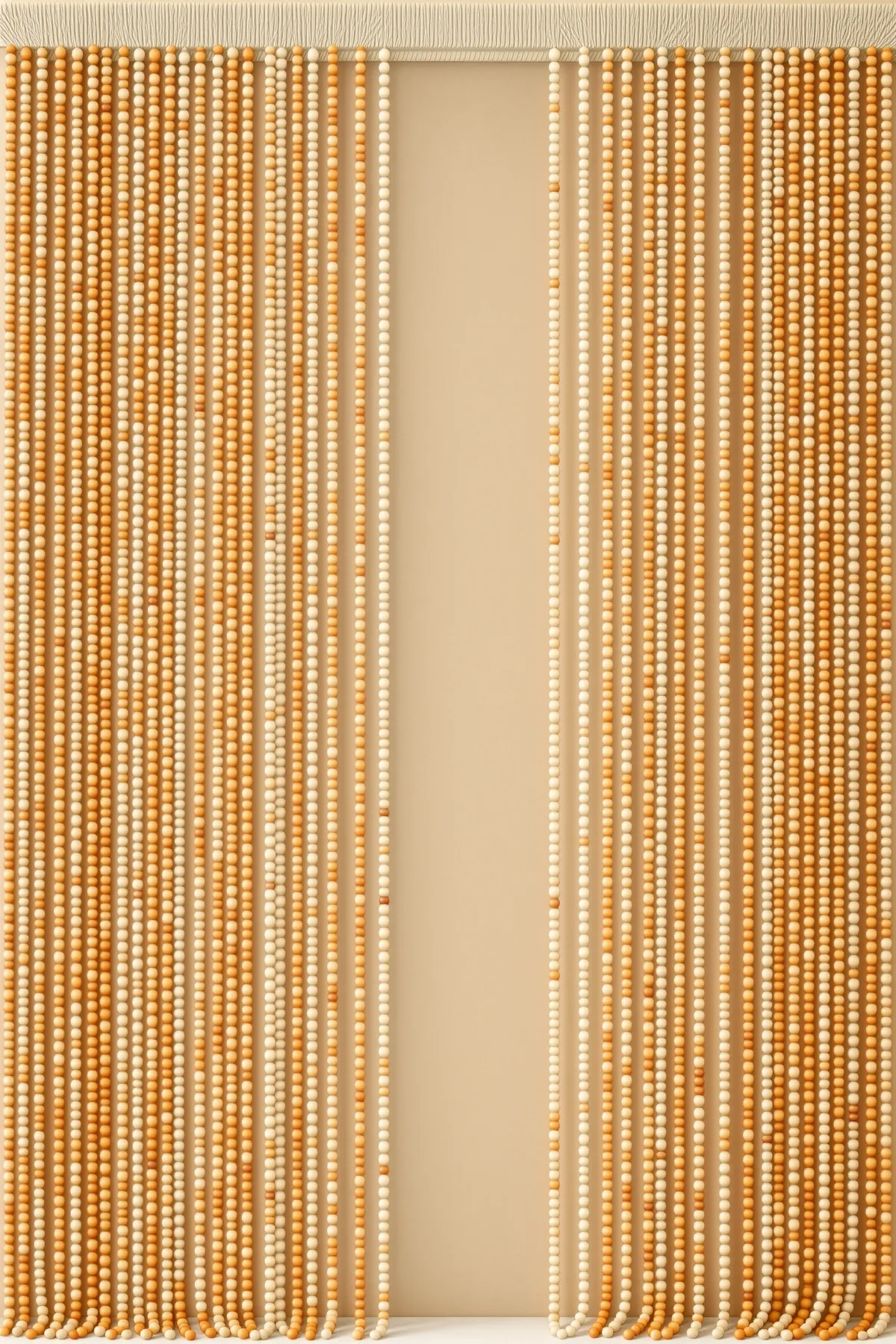
A bead panel scatters and refracts daylight rather than blocking it. Translucent glass passes light through the bead body, frosted beads diffuse it, and opaque beads cast discrete shadows that move through the day. None of this is glare control, and a bead panel should not be specified to meet a glare criterion.
What to do with the light, not how much of it to stop. A bead panel at a daylit opening turns a flat wash into a moving field of refracted points and cast shadows, and that effect is the reason the product gets specified at all.
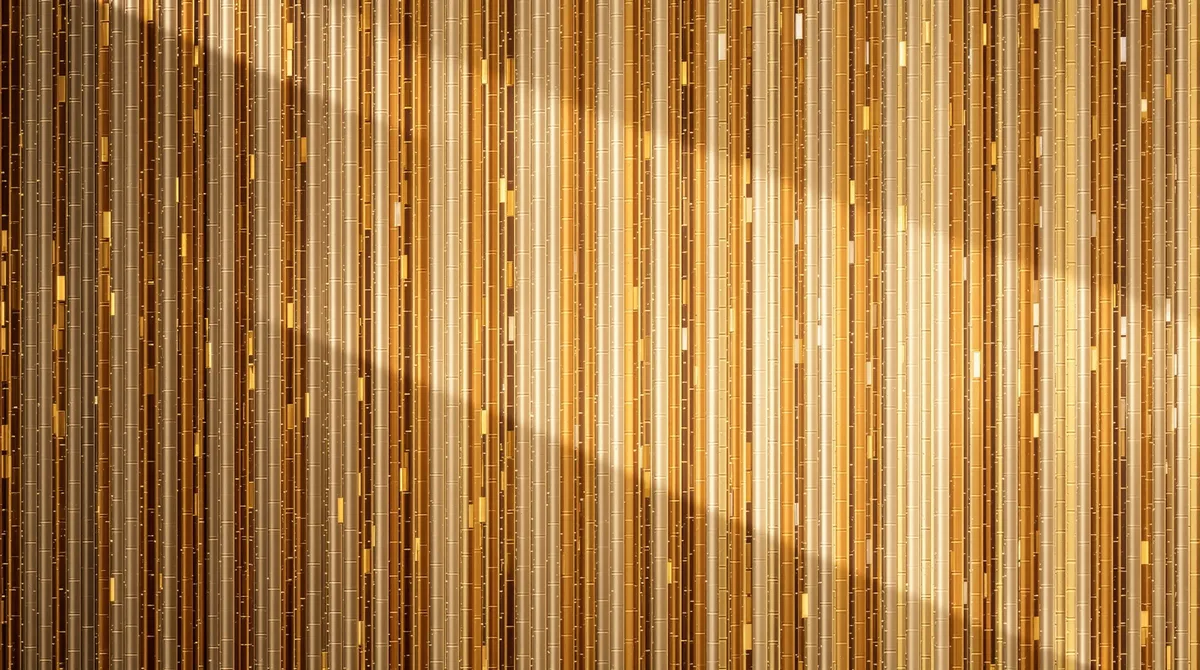
The decision is between characters: transparent glass that throws caustics, frosted glass that diffuses, opaque beads that cast discrete shadows, or acrylic that reads flatter and lighter.
| Value | Unit or option | Note |
|---|---|---|
| Bead optical character | Transparent, translucent, frosted or opaque | The primary control over what the light does |
| Strand pitch | mm, centre to centre | Sets the proportion of direct light that passes between strands |
| Bead outside diameter | mm | With pitch, gives the calculated open area |
| Open area, calculated | Per cent | Geometry only — not a shading coefficient |
| Orientation of the opening | Compass direction, stated | Decides how strongly cast shadows read and when |
| Light transmission | Set by pitch and bead | Judged on the sample in the real light |
| Glare criterion | Not met by beadwork | Specify a blind or a shade in addition where glare matters |
| Secondary shading | Named separately on the drawing | Beadwork and shading are two products, not one |
Bead optical character, pitch, diameter and the orientation of the opening. Calculated open area if it is being used, labelled as geometry rather than as a shading coefficient.
And one negative statement, which belongs on a drawing more often than it appears: that the beadwork does not provide glare control, and that any glare requirement is met by a separately specified shading product.
Establish whether anybody will be working, reading or looking at a screen near the opening. If so, glare is a requirement, and the beadwork is decorative while a blind or shade does the work.
If not, choose the optical character from what the light should do. Transparent faceted glass for caustics and sparkle. Frosted irregular beads for a soft diffuse glow. Opaque beads or discs for graphic cast shadows. Then set the pitch, then check the weight.
A section hung in the real opening, or in one with the same orientation, looked at twice — mid-morning and late afternoon. Light through a bead panel changes character through the day more than almost any other interior element, and a single viewing describes one hour.
Photograph both. The photographs are also the record that settles expectations at handover.
More than on any other performance page. Dust turns a refracting surface into a scattering one, and the caustics that justified specifying transparent glass disappear. A clean glass panel and a dusty one of identical specification are visibly different products.
Frosted and opaque beads are much less sensitive, because they were scattering to begin with. Where a panel is high, hard to reach and specified in transparent glass, the maintenance schedule has to be honest about how often it will actually be cleaned.
Beadwork is not a shading device, and the reason is geometric rather than documentary. A shading coefficient or a g-value describes a surface, and a strung panel is not a surface.
More importantly, the product cannot do the job. Direct sun passes between the strands whatever the pitch, because the strands are discrete and vertical. A panel that stopped glare would have to be a surface, and a surface is not a bead panel.
That the effect is the point. Our own art direction treats light as the subject: driving light through glass beads and using caustics, refraction and cast bead-shadows as composition.
That is a design position with a specification consequence. A panel specified for that effect wants transparent or lightly tinted glass at a reasonably open pitch on a bright orientation, which is almost the opposite of a panel specified for screening.
Bead references with their optical character recorded explicitly — transparent, translucent, frosted, opaque — the pitch, and the orientation of each opening.
A replacement ordered from colour references alone will match the colour and lose the behaviour, because a frosted and a transparent bead can carry the same colour reference and do entirely different things to light.
It is the whole result. Transparent cut or faceted glass refracts and throws caustics; it is the only material in the set that does. Frosted irregular glass at around 4 to 5 mm diffuses into a soft glow. Opaque glass, wood and faux-capiz discs cast shadow shapes rather than light shapes.
Acrylic sits between: it transmits but refracts far less, so an acrylic panel reads lighter and flatter in strong sun than a glass one at the same density. That is a real reason to specify glass on a feature opening even where acrylic would be cheaper to land.
The usual pitch and diameter tolerances. The optical outcome is judged on the sample, in the light the panel will actually sit in.
What the drawing can usefully fix instead is the bead itself, by reference, so that the optical behaviour is controlled by specifying the component rather than by specifying a result.
Through the blind. If an opening has both a bead panel and a shading product, both want the head of the reveal and only one can have it. That is resolved on a section drawing, early, with the contractor and the blind supplier in the conversation.
Lighting commissioning is the second coordination item. A panel designed around daylight will look different under the artificial scheme, which is a separate decision covered on the colour-under-light page.
On west and south-facing openings, where the effect is strongest. A panel that looked delightful in a north-lit studio becomes a field of moving light on a wall at five in the afternoon, and that is either the best thing in the room or a complaint.
The way to avoid finding out late is to sample in the real orientation. It is the single highest-value sample on this entire page set.
Good to know
On the geometry, the usual pitch and diameter tolerances. The optical result is not toleranced: what a drawing usefully states is the bead's optical character — clear, frosted, body-coloured — which is a category rather than a number.
A panel section hung in the actual opening, or in an opening with the same orientation, and looked at in the morning and the late afternoon. The light through a bead panel is not a constant and a single viewing tells you about one hour of the day.
Significantly, for transparent and translucent glass. A dusty bead scatters where a clean one refracts, so a neglected panel loses the caustics and the sparkle that were the reason for specifying glass in the first place. Frosted and opaque beads are far less sensitive to it.
Beadwork is not a shading or glare-control device and should never be specified as one. Direct sun passes between the strands whatever the pitch, because the strands are discrete and vertical. Where glare is a requirement, a blind is specified as well as, not instead of, the beadwork.
The specifier with the contractor, and the coordination item here is the blind. A bead panel and a roller blind at the same opening need their fixings resolved together, because both want the head of the reveal and only one can have it.
The bead references with their optical character recorded, the pitch, and the orientation of each opening. A future replacement specified without the optical character will match the colour and lose the behaviour.
Bead optical character, pitch, diameter and the orientation of the opening, plus any secondary shading named as a separate product. Where glare is a project requirement, the drawing should say explicitly that the beadwork does not address it.
Keep exploring
Specification
How pitch, diameter and opacity combine into a sightline — and the distance at which concealment stops working.
How it is madeSpecification
The dimensions, strand values, fixings and performance limits a drawing and schedule have to carry.
How it is madeSpecification
Air passes, insects are discouraged rather than excluded, and pitch is the only lever that changes either.
Compare the optionsSpecification
A hanging bead panel scatters a little high frequency and reduces nothing meaningfully — and what to specify instead.
How it is madeSpecification
Straight, scalloped, V-point, inverted-V, swag, diagonal and staggered — each with its longest and shortest drop.
Compare the options
Start a conversation
Send a reference, a colour chip or a sketch. Minimums are set per design and confirmed per quote; sampling is quoted separately and usually runs 16 to 20 days from an agreed brief.