Specification
Daylight and glare
How transmission, refraction and cast bead-shadows behave through the day — and where glare control fails.
Specs and sizes
Guide · Format
A window is the one place where a bead panel is lit from behind all day. That is why it looks extraordinary there, and why the wrong bead finish will not survive the summer.
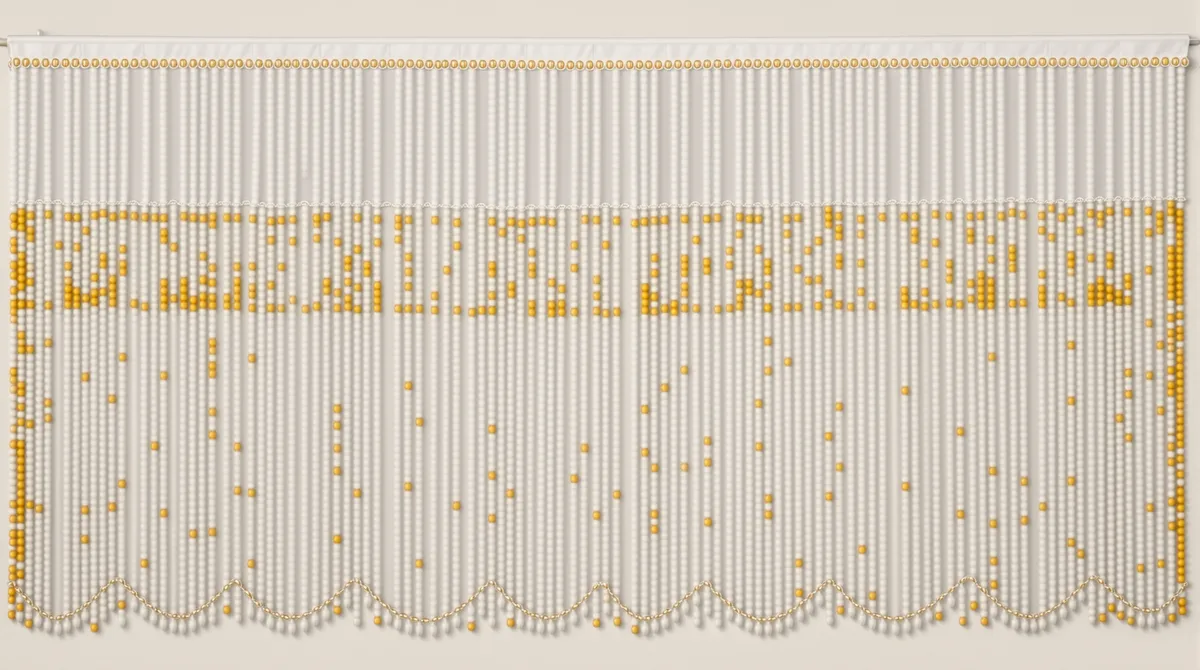
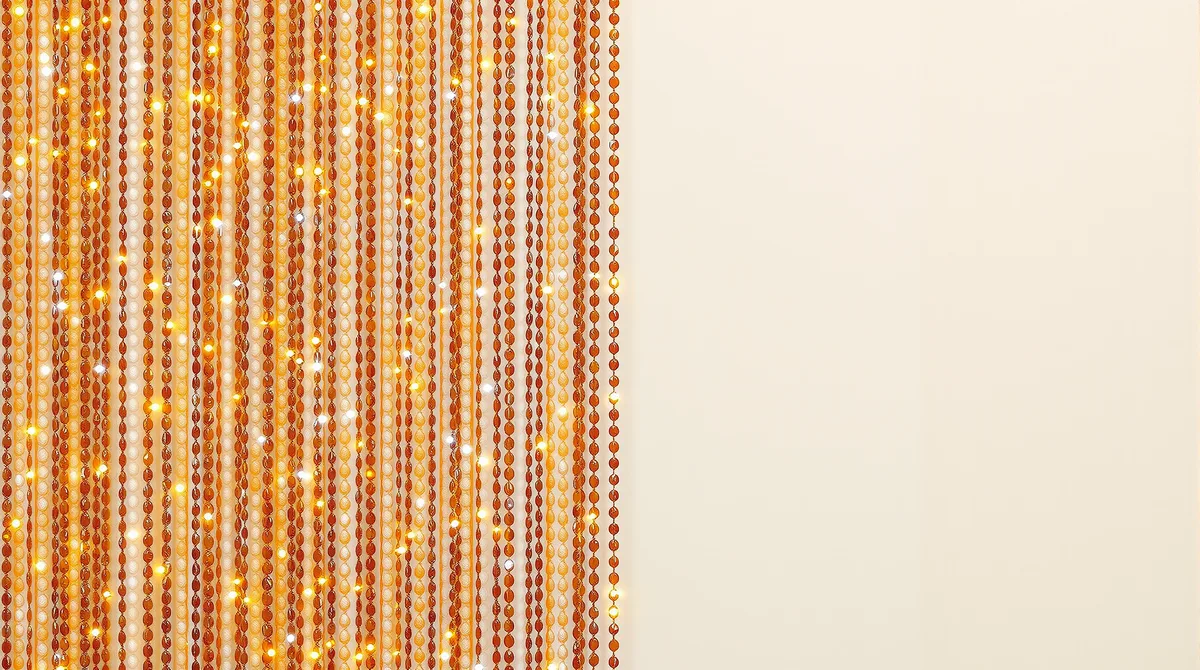
A beaded curtain lit from behind so every translucent bead glows from within, close cords of canary, chalk white and pale amber glass falling to a straight hem.
At a window a bead panel is backlit all day, which is the best lighting it will ever get and the hardest service it will ever see. Specify body-coloured glass rather than surface-dyed beads, because dye is a surface property and strong daylight lifts it. Measure the drop from the rod to the sill, not to the floor.
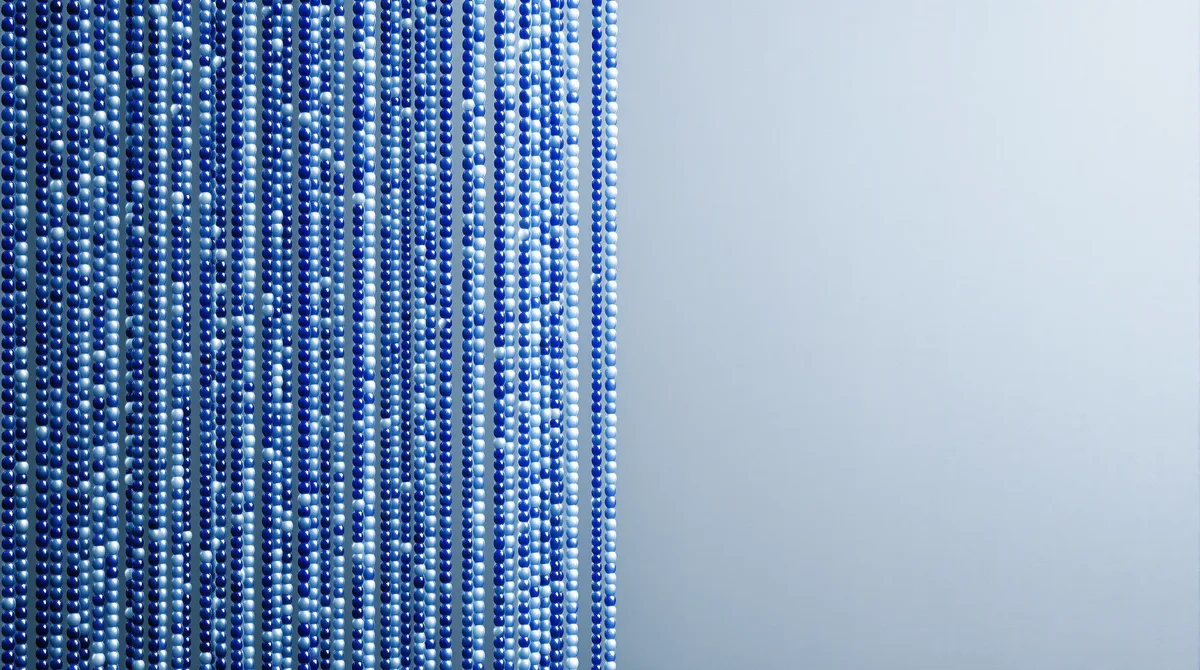
The light comes from behind. That one fact changes the specification more than the dimensions do.
Everywhere else in a house, a bead panel is lit from the front: you see reflections off the bead surface. At a window it is backlit, which means you see light through the bead, and glass stops being a shiny object and becomes a coloured lens. It is the only location where the material does what it is actually capable of.
The same backlighting is also the hardest service a bead panel sees, because strong daylight is what fades a surface finish.
Body-coloured glass, where the colour is in the glass itself rather than on it. Pressed glass is the most tolerant surface in the whole category, and at a window it is the only one that will look the same in five years.
Surface-dyed beads are the ones to avoid. Dye on a bead is a surface property, and strong daylight works on it the way solvents do. That matters most on designs built around dyed-to-match base beads, where a base colour has been dyed to sit against an accent: if the base shifts and the accent does not, the whole relationship drifts.
Translucent acrylic works and glows rather than refracts. Frosted and sea-glass beads scatter beautifully backlit — they are matte because the surface is textured, so handle them gently, because rubbing hard polishes the texture into gloss.
From the rod to the sill, and that is a different measurement from a door drop. A door panel runs to just above the floor; a window panel runs to just above the sill.
Overshooting is the common error. A panel that finishes below the sill rests its hem against the wall underneath, which marks the wall and wears the beads. If you want a full drop past the sill to the floor — a legitimate look on a tall window — the wall below has to be clear, and the drop is then measured as a door drop.
The published format for a strung window panel in the design library is 30 × 24 in at 30 strands. A full-length panel at a tall window follows the door standards: 90 × 200 cm for a single width, 120 cm for a wide one.
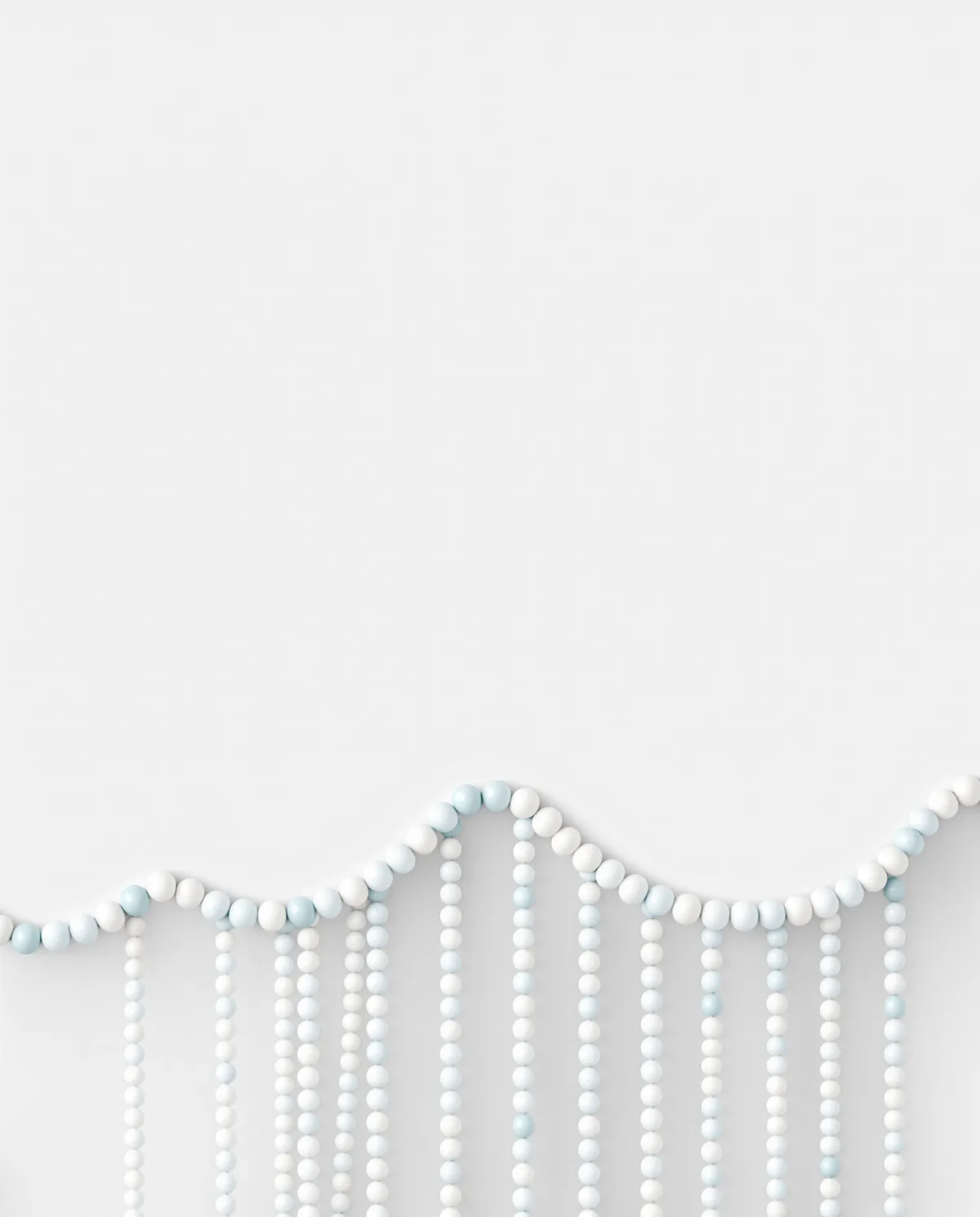
A shaped one, almost always. A straight cut across a window reads as an unfinished edge; a shaped hem reads as a decision.
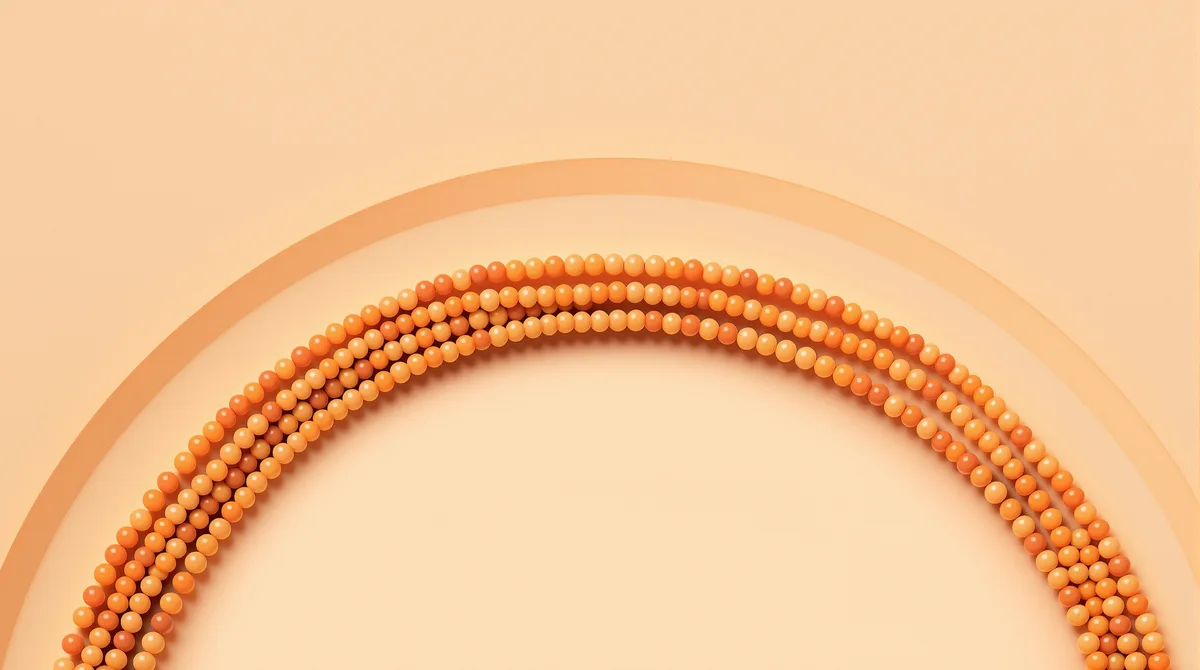
A scalloped arch — fullest at the sides, shortest in the centre — follows the way a window is seen and is the most natural fit. Our frosted sea-glass valance ran from a 24 in longest strand down to a 10 in shortest on exactly that profile. A V-point inverts it and draws the eye down the centre. An inverted-V opens the middle of the view, which is useful if there is something outside worth looking at.
Hem shape is set by strand lengths on the stringing sheet, so it costs no more than a straight cut — it just has to be specified.
Not much, and that is the framing. A bead panel breaks light rather than blocking it. Glass refracts, throwing moving bright points onto the room's surfaces through the day; opaque beads cast small hard shadows; translucent acrylic diffuses.
What a bead panel genuinely does at a window is change the character of the light and take the hard edge off glare. What it does not do is darken a room. If the requirement is reduced light, specify a blind and hang the beadwork in front of it.
Partially in daylight and barely at night. In daylight the street is the brighter side, so an opaque bead at a tight pitch screens movement from outside. After dark, with a light on, the room becomes the brighter side and the panel conceals almost nothing — anyone outside sees in better than they would at noon.
For any window facing a street or a neighbour, the arrangement that works is a blind for privacy and a bead panel for the daytime look.
Worth a thought on an older single-glazed window. Condensation forms on the cold pane, and a panel hanging against it sits in that water — which puts moisture on the cord, the one component that must stay dry.
Hang the rod far enough forward that the strands are clear of the pane. On a deep reveal that is easy; on a shallow one it may mean face-fixing above the window rather than inside the reveal.
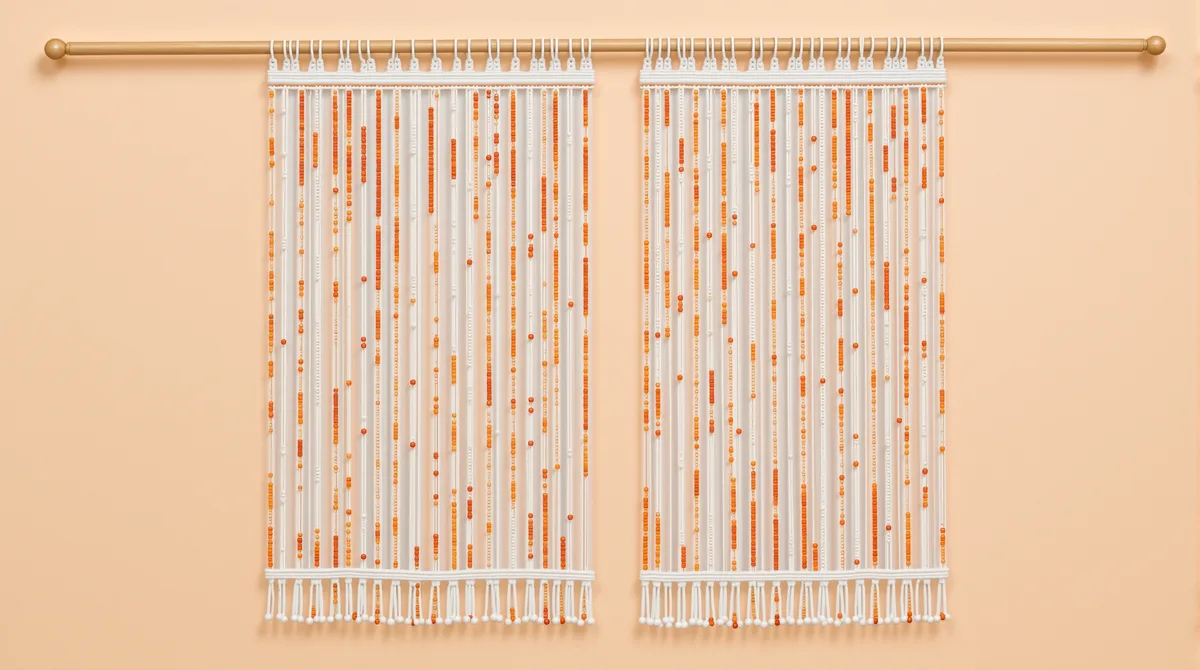
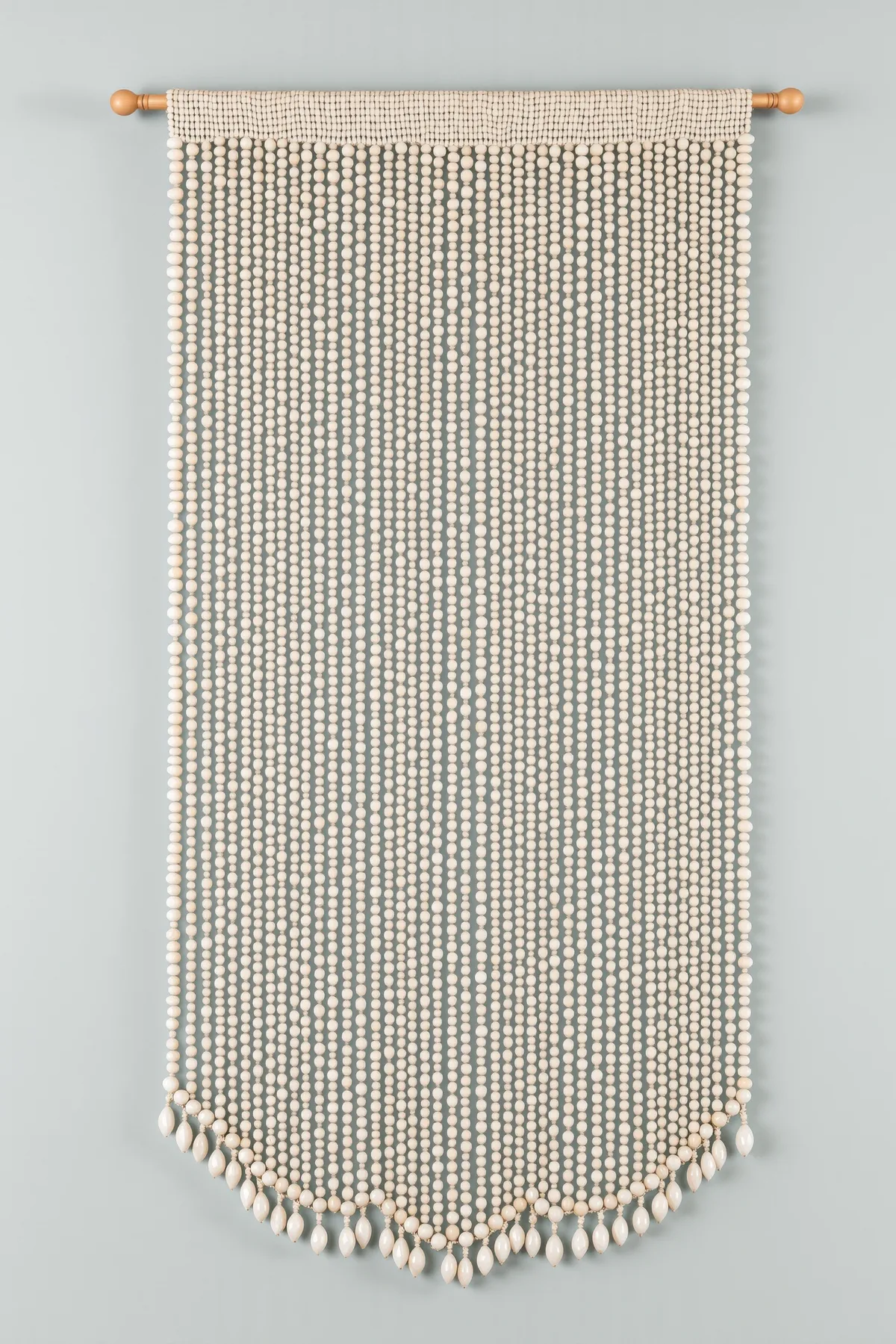
Whatever is already there, if the panel is built for it. A sewn rod pocket — a three-inch pocket on a cotton or canvas header band — threads onto a standard curtain rod directly, which is how our café curtains hang. End suspension loops at the strand tops do the same job and let one panel move between a dowel and a rod.
A panel built on a fixed turned dowel needs the dowel supported on hooks or brackets. In a reveal, a tension rod will carry a light acrylic or wood panel with nothing drilled; a glass panel needs a screwed fixing.
Three things, all avoidable. Surface-dyed beads were specified at a south-facing window and the colour has gone patchy. The drop was measured to the floor rather than the sill and the hem is resting on the wall. Or the panel was bought as a blind substitute and the room is as bright as it ever was.
The first two are specification errors. The third is an expectation one, and it is the reason this page leads with what the light does rather than with what the panel looks like.
Light and beadwork goes further into what backlighting actually does through the day. Choosing a hem is worth reading because a window is the opening where a shaped hem earns most, and glass bead curtains is the material page behind the recommendation here. A short bead panel covers the café length and the valance drop, which suit many windows better than a full drop. Panel headers deals with hanging from a rod that is already there. If the window faces anywhere public, privacy from a bead panel is the page that sets expectations honestly.
Good to know
They work better at a window than anywhere else, visually, because they are lit from behind for most of the day and glass only does its best work backlit. What they do not do is the job of a blind: expect a change in the quality of the light rather than a reduction in the amount.
Surface-dyed beads will. Dye is a surface property on a bead, and strong daylight works on it the same way solvents do. Body-coloured pressed glass, where the colour is in the glass itself, is effectively permanent. At a south-facing window that distinction is the single most important specification on the page.
Measured from the rod to the sill, in most cases, so the strands finish just above it. A panel that overshoots the sill rests against the wall below and marks both. The alternative is a deliberate full drop past the sill to the floor, which is a different look and needs the wall below to be clear.
A shaped one. A scalloped arch — fullest at the sides, shortest in the centre — follows how a window is seen and looks considerably better than a straight cut. Our frosted sea-glass valance ran from a 24 in longest strand to a 10 in shortest for exactly that reason. A V-point does the same job inverted.
Yes, if it is built for it. A panel with a sewn rod pocket threads straight onto a standard rod, and a panel with end suspension loops at the strand tops hangs from one directly. A panel built on a fixed dowel needs the dowel supported instead, which usually means its own hooks.
Less than people hope, and much less at night with a light on behind it. From the street in daylight an opaque bead at a tight pitch screens movement; after dark the room is the brighter side and the panel conceals almost nothing. Pair it with a blind if the window faces anywhere public.
It is worth thinking about on an older single-glazed window. A panel hanging against cold glass sits in the condensation that forms there, which puts water on the cord — the one thing to keep dry. Hang the rod far enough forward that the strands are clear of the pane.
Keep exploring
Specification
How transmission, refraction and cast bead-shadows behave through the day — and where glare control fails.
Specs and sizesGuide
Colour through the glass body survives; surface dye and coated finishes go first; acrylic sits between the two.
See the detailPillar
Door curtains, portals, café lengths and valances: the standard sizes, the strand counts and the one question each format answers.
How it is madeGuide
Three ways to hang beadwork in an arch: a straight rod inside the opening, a hem cut to the curve, or a shaped top rail.
Read the guideGuide
One panel or a pair, where the join falls, and why the walk-through gap should be designed rather than left to chance.
Compare the optionsGuide
Valance, café length and half drop: three short formats, what each one does, and how bead count falls with height.
Compare the optionsGuide
Breaking light rather than blocking it: what a bead panel does to daylight through the day, and which beads come closest to shade.
Compare the optionsGuide
The heaviest panel and the only one that refracts: weight, chime, a straight hang, and the chipping risk that comes with them.
Specs and sizes
Start a conversation
Send a reference, a colour chip or a sketch. Minimums are set per design and confirmed per quote; sampling is quoted separately and usually runs 16 to 20 days from an agreed brief.