Reference
Beadwork techniques: the five craft families
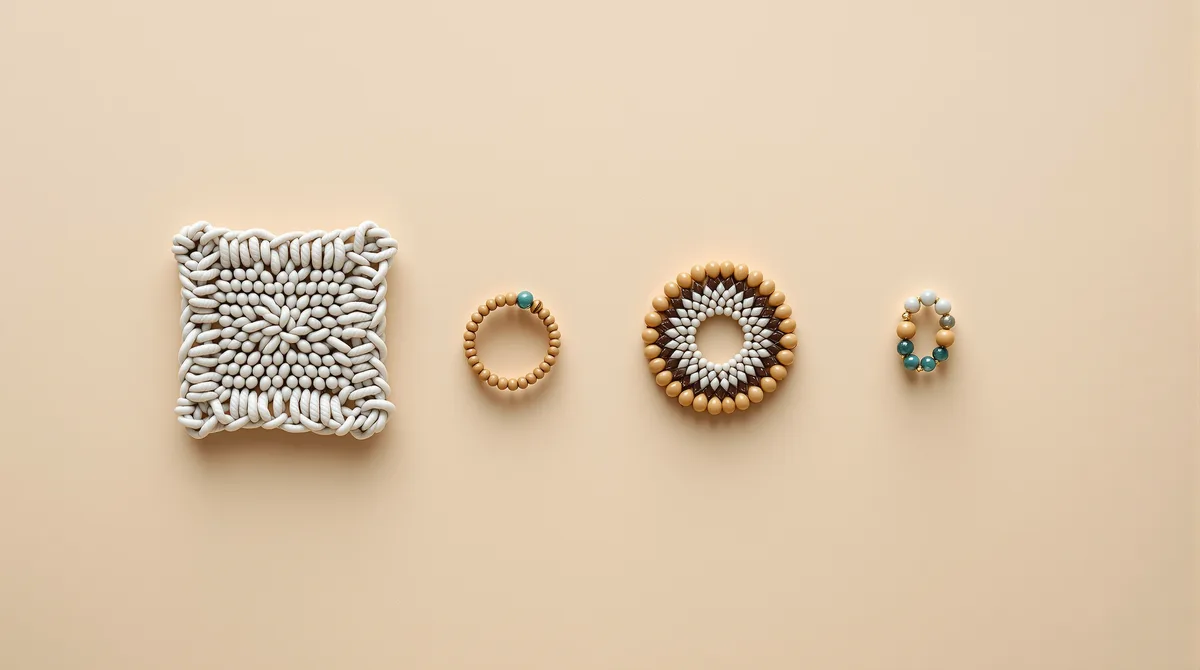
Five craft families — strung, embroidered, wire-wrapped, knotted and wrapped fibre — and what each one is good for.
Read the guide
Manufacturing · Cushions
A cushion is the hardest beadwork to keep together, because it is the only beaded object people lean on. What holds it is not the bead. It is the face cloth, the stitch and how densely the field is worked.
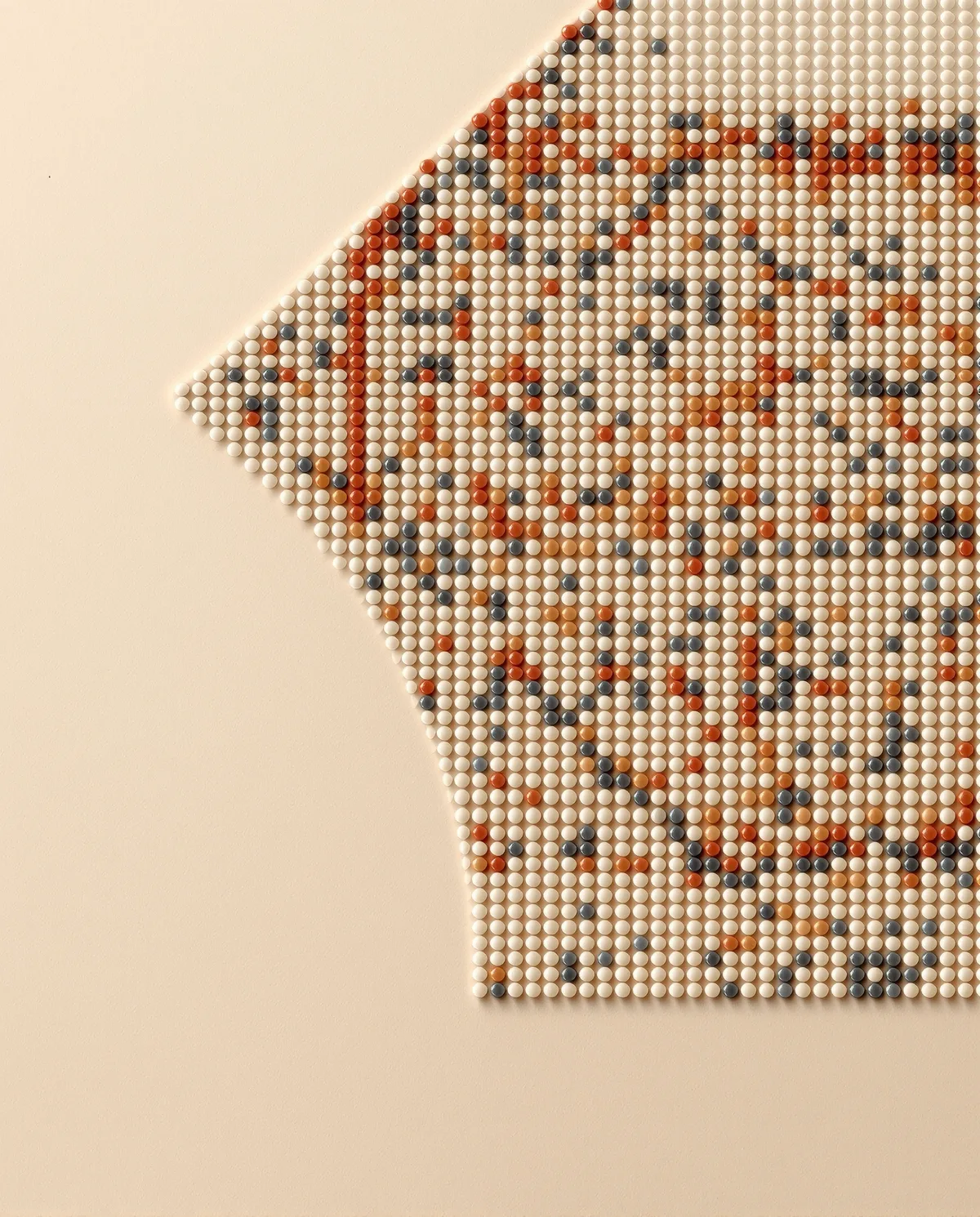
A close view of dense couched glass seed-bead embroidery on a cushion face, thousands of tiny beads stitched in curving rows in coral, cream and butter yellow, with the stitched…
A beaded cushion cover is a face cloth carrying a couched bead field, made up with a closure and sold as a cover or filled. The documented development size is 10 × 10 in, on a woven poly-cotton face around 60 to 65 GSM. Face cloth weight, couching stitch and bead density decide whether the piece survives being leaned on, and de-densifying an infill is the main cost lever.
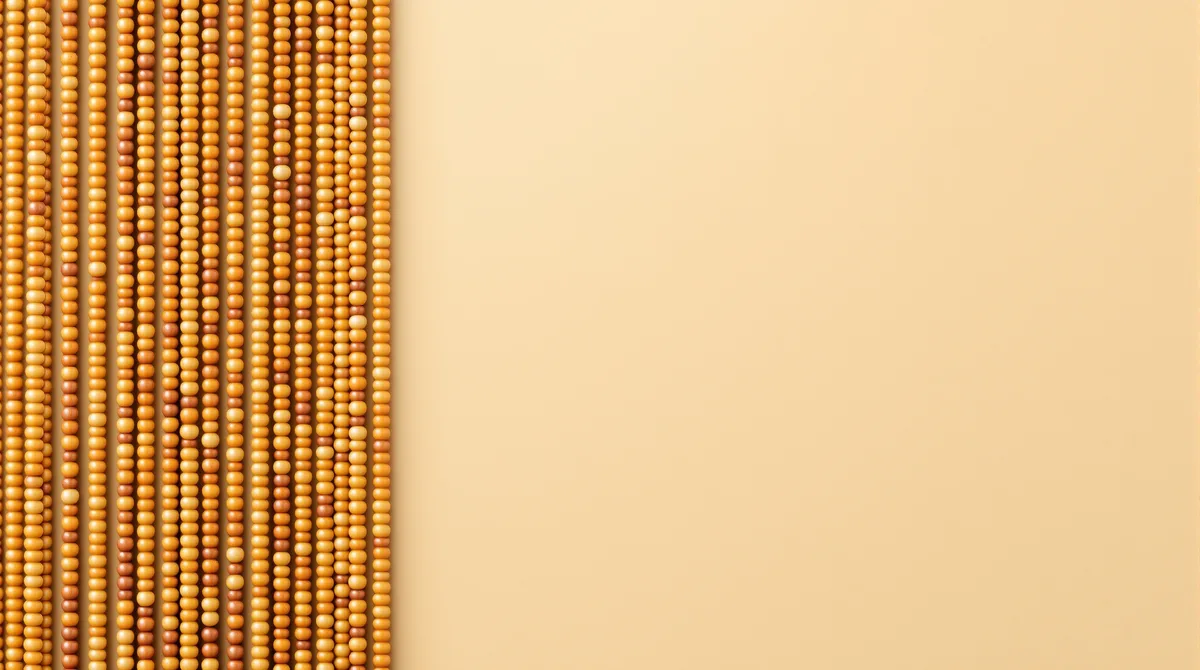
A beaded cushion cover is two objects that have to agree with each other: a woven face cloth and a bead field couched onto it. Glass or acrylic seed beads are stitched down with thread crossing between beads at every stitch — the bead-and-thread embroidery family, worked in the zardozi tradition — and the beaded panel is then made up into a cover with an envelope overlap or a zip. It can be supplied as a cover or filled with polyester.
The documented range starts at a 10 by 10 inch square icon cushion on a woven poly-cotton face around 60 to 65 GSM with a polyester fill, and runs through a set of beaded velvet constructions.
The cloth, the stitch and the density — and we build all three. This is the whole point of the page and the thing briefs get wrong.
Three things hold a beaded cushion together. The face cloth has to be heavy enough for the bead field it carries; a light cloth under a dense field pulls at every stitch every time the cover flexes. The couching stitch has to cross between beads rather than loop through a long run of them, so a broken thread loses two or three beads instead of a whole row. And the density has to leave the cloth room to move — an infill worked solid turns a soft furnishing into a rigid panel, and rigid panels lift their own stitches.
Changeable: cover size and shape, face cloth and its weight, bead material and size, the motif, the infill density, the closure, the edge treatment, whether there is a fringe or a tassel at the corners, and whether the cover ships filled.
Fixed: the bead map comes before the first stitch, so a motif cannot be adjusted on the bench. Glass is allowed for sampling, where a sample has to show the colour honestly, but a production cushion in a high-wear range is normally specified in acrylic seed beads — lighter, and it does not chip where a glass bead would.
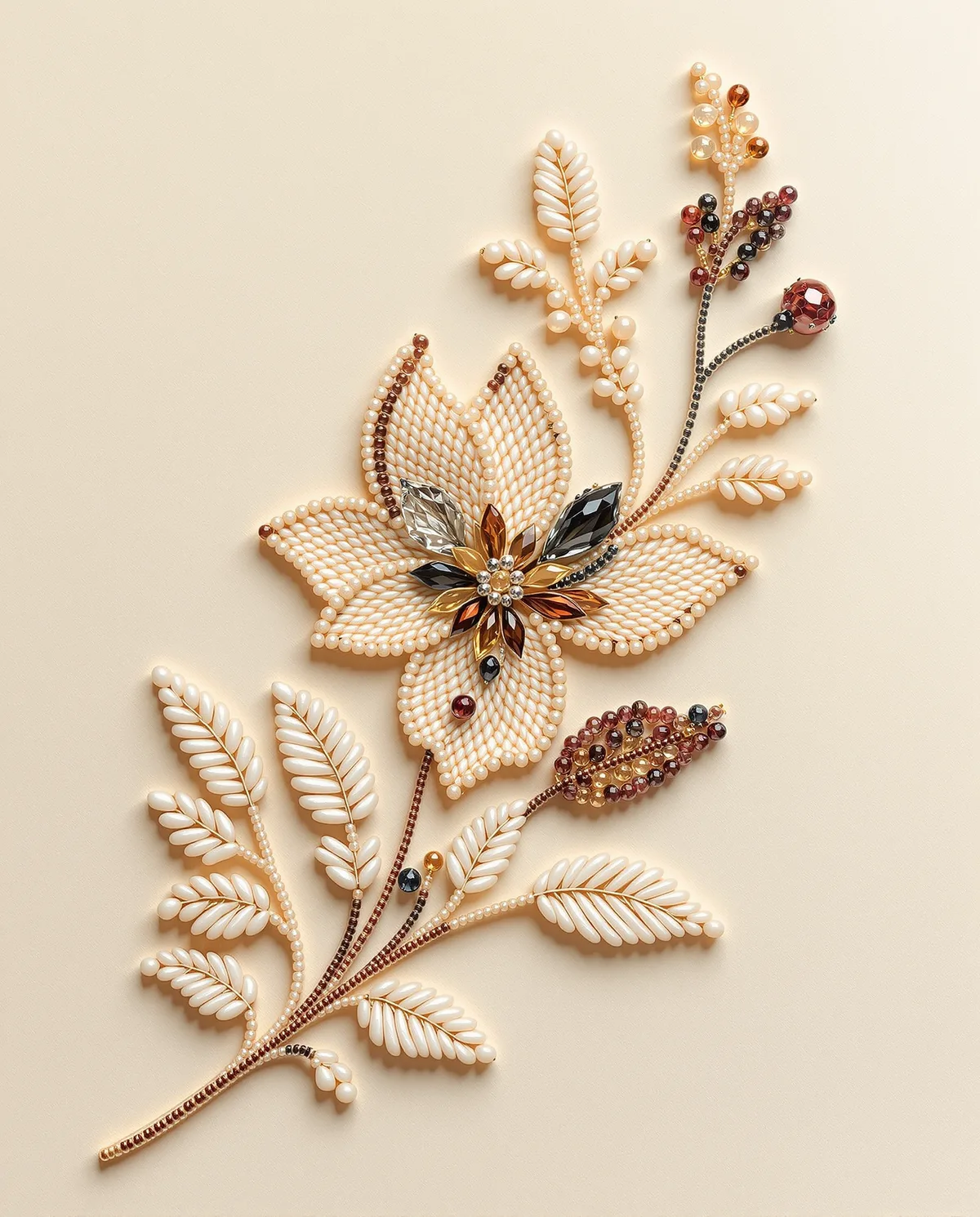
Glass seed and bugle beads give the truest colour and the most light. Acrylic seed beads give lower weight, no chipping and the widest dyed colour range. Metallic thread and zari sit alongside the beads in the same stitch family, and sequins, cabochons and small rhinestone settings are all couched the same way.
On the ground: woven poly-cotton around 60 to 65 GSM is the workhorse. Cotton velvet is the premium ground and behaves differently — the pile hides the stitch, which flatters the beadwork, but it also hides a loose stitch from a checker, so velvet grounds get a closer inspection.
| Specification | Value |
|---|---|
| Documented development size | 10 × 10 in square |
| Face cloth | Woven poly-cotton around 60–65 GSM, or cotton velvet |
| Bead material, production | Acrylic seed beads where weight and wear matter |
| Bead material, sampling | Glass seed beads, where a sample has to show the colour |
| Construction | Beads couched to the face cloth, then made up |
| Closure | Envelope overlap, or a zip |
| Fill | 100% polyester, or cover only |
| Ground treatment | Printed or woven background used to cut bead count |
| Colour matching | To a colour reference or a physical chip, confirmed on the sample |
| Sampling | 16–20 days from an agreed brief, quoted separately |
| Production | 40–60 days after sample approval |
Sizes are set per design in this category. The documented development is a 10 inch square. Everything else is set per design, because the size, the motif and the density are a single decision: a large cover with a small motif needs a ground treatment to carry the empty area, and a small cover with a large motif needs the motif simplified rather than cropped.
The cover size and shape. The face cloth and its weight. The bead material and bead size. The motif, as artwork or a reference image. The infill density, or a reference photograph showing the density wanted. The colours, with references or physical chips for both beads and cloth. The closure. Whether the cover ships filled. Then packing, quantity per colourway, and the port or warehouse.
The two usually missing are face cloth weight and infill density, and they are the two that decide whether the piece lasts.
Beads are matched to a colour reference or a physical chip; the cloth is dyed to the palette separately. Both are approved together on the sample, because the relationship between them is what the customer sees. A bead and a ground at similar value cancel each other out — the motif vanishes at two paces even though both colours are correct.
A brief with the size, the cloth, the motif and the colours. Then a rough cost sheet before anything is made. Then the bead map, drawn so every bead position is fixed. Then the sample, usually 16 to 20 days from an agreed brief, photographed for approval before it ships. Production runs against that approved sample.
Where a cushion lands above target, the first change is almost always the infill rather than the motif — keep the outline tight, open the fill, and the drawing survives intact.
Beaded décor runs 40 to 60 days after sample approval. Bohemian and knotted work runs 60 to 90, which applies if a cushion combines beadwork with macramé or crochet appliqué. Sampling is quoted separately from production.
Those are the published figures. A custom moulded bead adds tooling in front of them, quoted per design.
Flat, with the beaded face protected so the field is never compressed against the face of the cover below it in the carton, and to the carton, label and inner-packing specification you give us. Unfilled covers are the better freight decision in most programmes, because polyester fill is volume without value in a container; filling in market is usually cheaper than shipping air.
Bead security first: every bead held, every thread end secured, and a pull check on the field. Then the motif against the bead map, the colour against the approved sample, the closure for function, and the seams and corners for strength — a beaded cover fails at a corner before it fails in the middle. Velvet grounds are checked more closely because the pile hides a slack stitch. First-article and lot inspection, kitting and export packing run through our own quality and packing house.
Bead count first, which means density is the dominant lever. De-densifying an infill — tight outline, open fill — is the change that has repeatedly brought a cushion to target without altering what the buyer actually looks at. Printed or woven ground treatment is the second lever: letting the cloth carry the background takes a large number of beads out of a design for no visible loss. Bead size is third, cloth and make-up fourth.
Cutting the cover size saves least, because make-up, closure and seams do not shrink with the face.
Home and lifestyle retailers buying under their own label, who sell beaded cushions as the statement piece in a soft-furnishing set. E-commerce sellers, for whom a flat-packed cover is one of the better beaded formats to ship. Interior and hospitality designers specifying for hotel rooms, bars and lounges. And seasonal ranges, where a themed beaded cushion carries a short window at a high perceived value — which puts the order date a long way in front of the selling date.
Good to know
No. There is no retail stock programme for beaded décor, cushions included. Every cover is made to order against an approved sample, in the colours, size, closure and packing you specify.
Yes, on both halves of the object. Beads are matched to a colour reference or a physical chip, and the face cloth is dyed to the palette separately. The two have to be approved together on the sample, because a bead that reads well on white can disappear on a dyed ground of similar value.
Yes, and it is a redraw rather than a scale. Changing the cover size changes the bead count, the motif proportion and often the density, so the bead map is redrawn and the infill re-plotted. A motif that fills a 10 inch square looks lost on an 18 inch one if it is only moved rather than redrawn.
Beaded décor runs 40 to 60 days after sample approval. Sampling usually runs 16 to 20 days from an agreed brief and is quoted separately. A cushion that needs a custom moulded bead carries tooling time in front of that.
Flat, with the beaded face protected so the field is never compressed against another cover, and to the carton, label and inner-packing specification you give us. Beaded covers ship better unfilled than filled: the fill adds volume and nothing else, so the freight maths usually favours sending covers and filling in market.
Glass seed and bugle beads are drawn and hand-strung in our own Firozabad glass works. Acrylic beads are moulded and dyed to our colour, to our own dies where a design needs a custom bead. Beadwork is couched in our own beadwork studios, and inspection and export packing run through our own Greater Noida house.
Not if the construction is right, and that is a specification question rather than a hope. Beads are couched to the face cloth with thread crossing between them at every stitch, so a broken thread loses a few beads rather than a row. The failures we design against are a face cloth too light for the field above it, and an infill worked so densely that the cloth cannot flex without lifting stitches.
Keep exploring
Reference
Five craft families — strung, embroidered, wire-wrapped, knotted and wrapped fibre — and what each one is good for.
Read the guidePillar
Lead, CPSIA, Prop 65, REACH, fire standards, electrical listing and audit — what applies, who carries it, and what we hold.
Specs and sizesManufacturing
The couched bead-and-metal-thread technique behind the flat beaded objects: what it is, what it can depict, and the forms built with it.
Specs and sizesHub
The full beaded range — curtains, portals, valances, tabletop, cushions, textiles and beads — from a leading manufacturer that makes the bead as well as the piece.
How it is madeManufacturing
Widths from 50 to 76 cm on a turned dowel, in glass, wood and cast faux capiz — hem shapes, strand counts and what is a shipped format against a concept.
Specs and sizesManufacturing
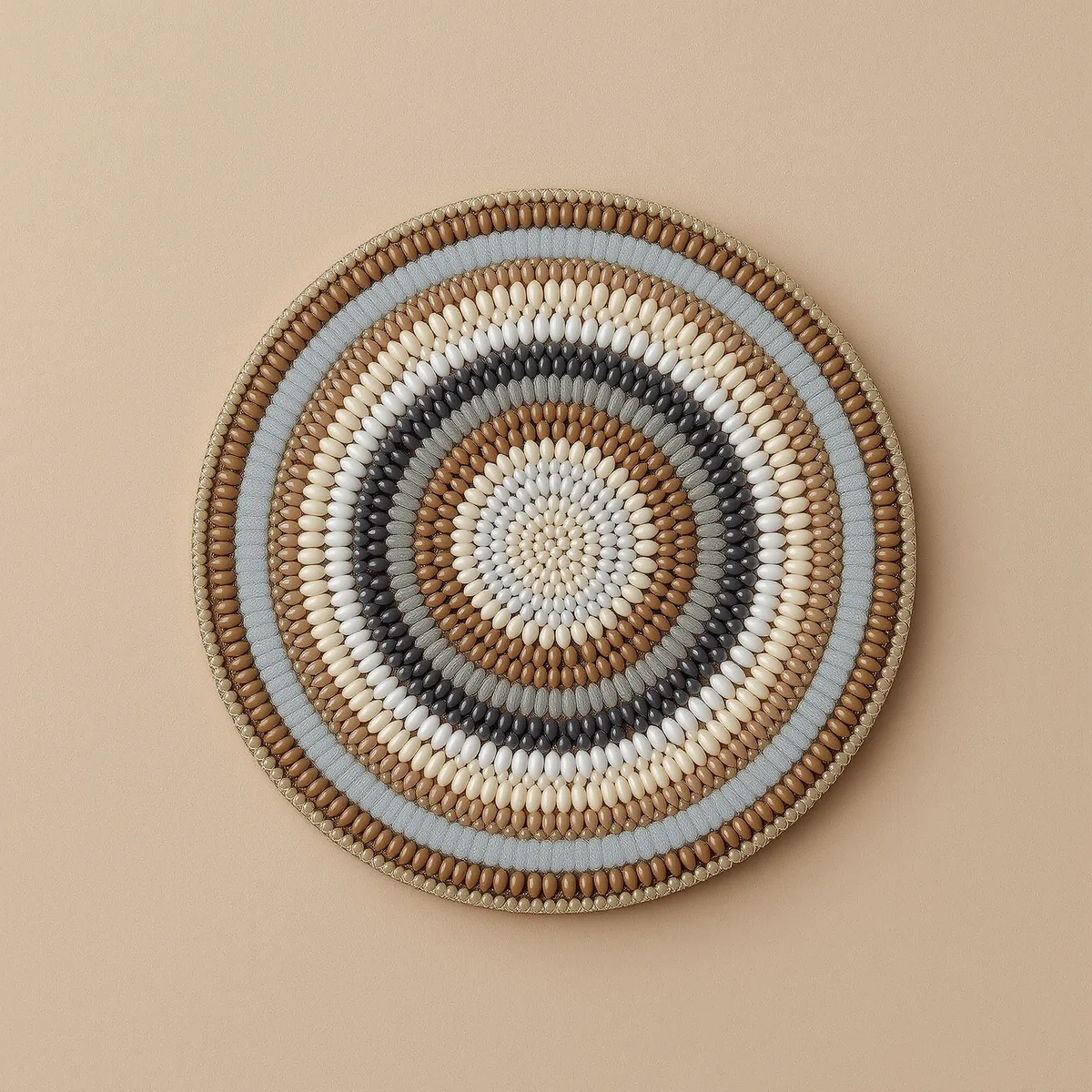
Bead-embroidered glass coasters on stiffened felt, or moulded acrylic sets in translucent and opaque — construction, sizes and what moves the cost.
Specs and sizes
Start a conversation
Send a reference, a colour chip or a sketch. Minimums are set per design and confirmed per quote; sampling is quoted separately and usually runs 16 to 20 days from an agreed brief.