Craft topic
The bead garland tradition
The bead, the hole, the cord and the tassel — how a wood-bead garland is actually made, and what separates a good one from a cheap one.
Read the guide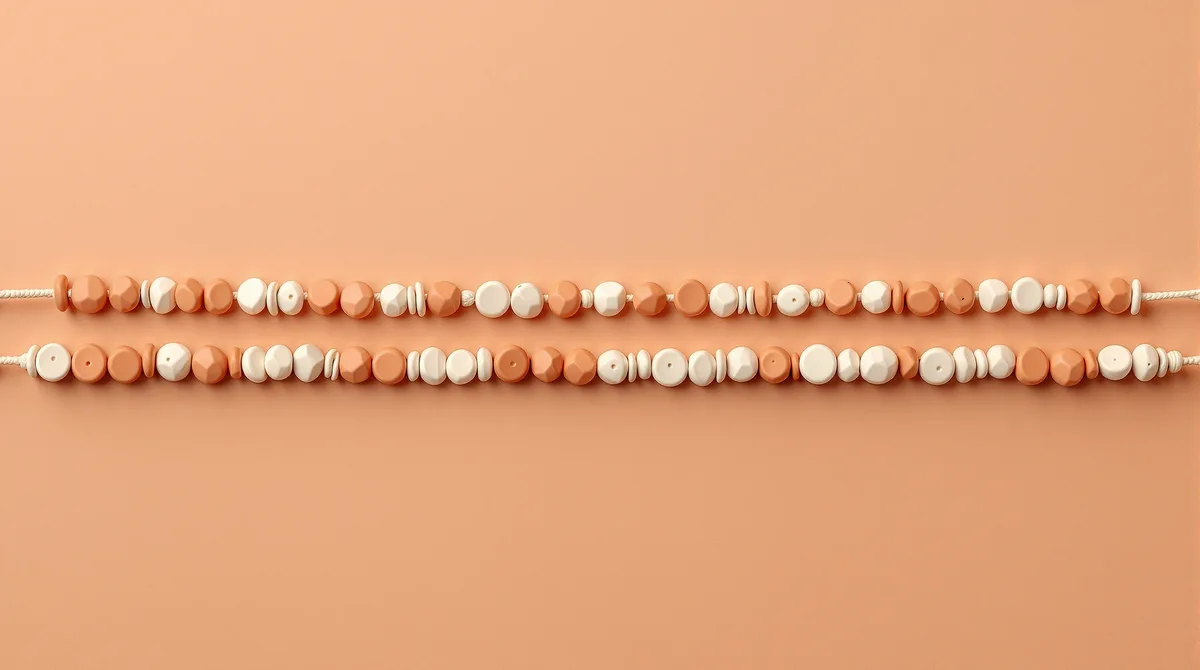
Craft topic
Clay replaced wood in this category for one reason: the colour is in the bead. What it costs is brittleness, weight and a thinner hole wall — three trade-offs that only show up after the garland has been shipped.
Two strands of hand-rolled clay beads on natural cotton cord laid out straight and parallel, every disc slightly irregular with visible hand-formed facets.
A clay bead garland differs from a wooden one in three ways that matter in use. The colour is in the body of the bead rather than on its surface, so the palette is far wider and does not wear off. The bead is denser, so the garland hangs straighter. And it is brittle: a dropped clay bead chips or shatters where wood only dents.
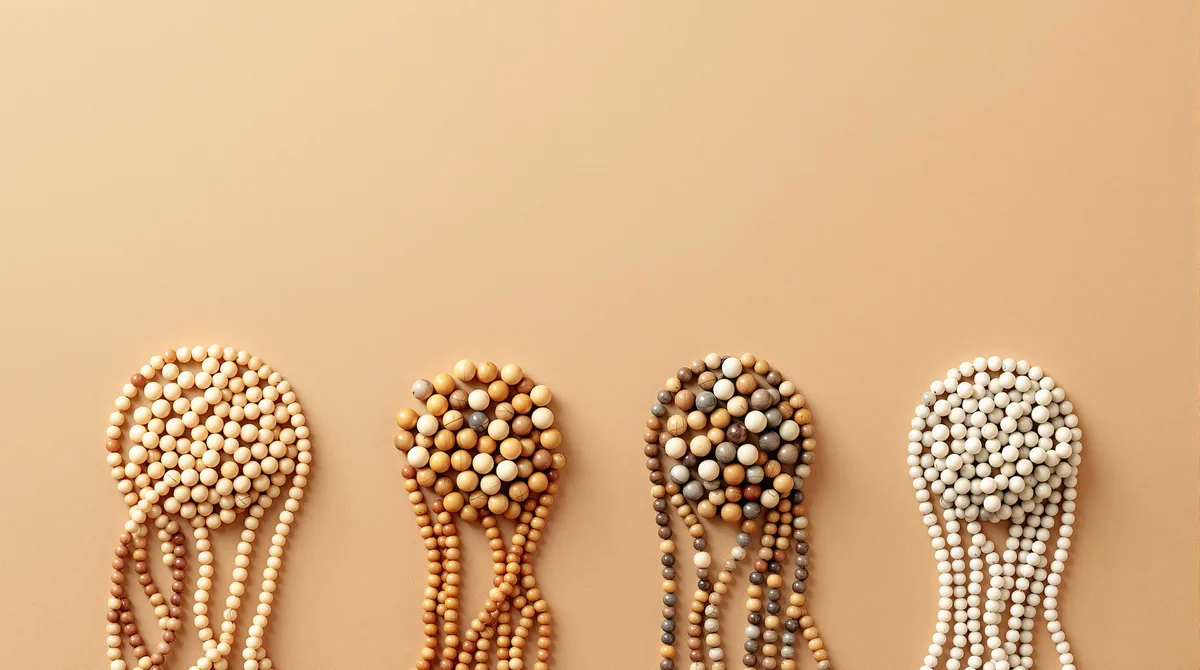
A clay bead garland is the same object as a wood-bead garland — large beads on cord, draped rather than hung — made in a different material. It arrived later and it took the category, because clay solved the one real limitation of wood.
The commercial version is almost always polymer clay heishi: thin flat discs in saturated colour, strung in blocks or gradients. The older and heavier version is fired ceramic or terracotta, which is a kiln product rather than an oven one. Both get sold as clay, and they are not the same thing to live with.
Polymer heishi is extruded. A coloured clay is forced through a die into a rod, the rod is sliced into thin discs, each disc is pierced, and the discs are baked at low temperature to cure. The process is fast, repeatable and almost unlimited in colour, because pigment is mixed into the clay before extrusion.
Fired ceramic is formed — by hand, on a wheel or on a jigger — pierced while the clay is still plastic, dried, glazed and fired in a kiln. That is a slower and far more energy-intensive route, and it produces a genuinely hard bead with a glass surface.
Then, in both cases, stringing: cord through the beads, a stopper knot at each end, often a bound tassel.
Because the colour is in the bead. A wood bead is coloured on its surface — stained, waxed, limewashed, painted — and surface colour rubs, chips at the hole and limits the palette to what looks plausible on timber. Clay colour goes through the body, so it does not wear off, and the palette is whatever a pigment can do.
The second reason is density. Clay is heavier than almost any wood used for beads, which means a clay garland hangs straighter, holds a curve where it is draped, and does not spring back. That reads as quality in a photograph long before anyone has touched it.
Three things.
Brittleness. Wood dents and clay chips. A garland dropped on a tiled floor loses nothing in wood and can lose several beads in clay, with the chip exposing a paler body colour underneath. In a carton, a clay garland needs beads that cannot knock against each other through the whole journey.
Hole wall. A thin heishi disc with a generous bore has very little material left between the hole and the edge. That is the wall that tears under tension, and once one disc splits the cord starts abrading at that point.
Weight. The same density that makes it drape well makes it cost more to ship, and on an object sold on a shelf for very little money, freight is not a rounding error.

Polymer clay, earthenware and stoneware clay bodies, glazes in glossy, matte, speckle and reactive finishes, and cotton or jute cord. The techniques are extrusion and slicing, or forming and kiln-firing; piercing; glazing; and hand-stringing with a bound tassel.
The craft judgement sits almost entirely in the piercing and the slicing. A disc sliced with a dull blade carries a dragged edge that catches light unevenly down the whole strand, and a hole pierced off centre produces the same kink in a clay garland as it does in a wooden one.
We make the beads, not the garland. Ceramic beads are glazed and fired in our own Khurja plant; a finished garland, in clay or in wood, is available to develop.
Ceramic beads are a different matter: ceramic and stoneware forming, slip casting and jiggering, and glazing in glossy, matte, speckle and reactive finishes all run in our own Khurja plant, and ceramic is one of the nine families in the material library of more than seventeen thousand beads. So the bead is real, the garland is not, and this page is written on that basis.
Our beadwork is overwhelmingly many-stranded and held at a header — portals, curtains, valances, wall hangings — where the design problem is making thirty strands agree with each other. A garland is a single strand with no neighbour and no tension.
The relevant difference for clay specifically is handling. A hanging panel's beads knock against each other constantly, which is why glass strength and annealing matter so much in hand-strung strands. A garland's beads are strung tight against each other and never move, so brittleness only matters in transit and on the floor.
Hole wall thickness on a heishi strand, by looking at the disc edge on. Slice quality, by looking along the strand for dragged edges. Hole concentricity, by holding the garland up by one end and seeing whether it hangs straight. Cord fit, by rolling a bead. Then the tassel neck, which should be bound and covered rather than glued. Then colour consistency between blocks, because extruded batches shift.
Polymer heishi is made in enormous volume, overwhelmingly in East and South Asia, and also by individual makers selling direct. Fired ceramic garlands are a much smaller and more expensive market, made where there are kilns and a bead tradition to go with them.
Dust with a soft brush. Glazed ceramic takes a damp wipe. Unglazed terracotta and polymer clay should stay dry, because unglazed clay is porous and takes up oils from handling. Store flat rather than hanging from a single point, and keep it away from anything that can knock it.
Because we fire beads and we do not make garlands, and the gap between those two facts is exactly the gap this section exists to keep visible. Describing a clay bead garland accurately costs nothing and tells a reader something true. Implying we sell one would be the easiest and most damaging sentence on the page.
Good to know
Not as a finished garland. Ceramic beads are glazed and fired in our own Khurja plant, so the bead half of the object is a real capability, and a clay-bead garland is available to develop rather than stocked.
It depends which clay. Polymer clay heishi beads are made by extruding a coloured clay rod, slicing it into thin discs, piercing them and baking them at low temperature. Fired ceramic or terracotta beads are formed by hand or on a jigger, pierced while plastic, dried, glazed and kiln-fired. Both are then strung on cord with a knot or a tassel at the end.
Clay bead garland, heishi garland and boho bead garland all describe the polymer version. Fired ceramic versions are usually sold as ceramic or terracotta bead garlands. Heishi itself is a borrowed word, from shell disc beads made by Pueblo makers in the American Southwest, and the retail use of it has drifted a long way from that origin.
Hole wall thickness first. A heishi disc with a large hole and a thin remaining wall tears under tension, and once one disc has split the cord abrades at that point. Then look at the disc faces: extruded clay sliced with a dull blade leaves a dragged edge that catches the light unevenly. Then check the cord against the drill hole, which on thin discs is doing more work than it is on wood.
Draped, like any garland — over a tray, a shelf edge, a jug handle, a mirror corner. Clay's extra weight is useful here: it drapes with more authority than wood and holds a curve rather than springing back. It is also why a clay garland needs something solid to drape over, not a light picture frame.
Dust with a soft brush. Fired and glazed ceramic will take a damp wipe; unglazed terracotta and polymer clay should be kept dry, because unglazed clay is porous and absorbs oils from handling. Store flat, never hanging from one point with the full weight on a single disc, and never in a drawer where another object can knock it.
The bead is the straightforward half. Ceramic forming, glazing and firing — glossy, matte, speckle and reactive glazes — all run in our own Khurja plant, and piercing a bead while the clay is plastic is ordinary practice there. What is missing is a garland specification: bead profile and diameter, hole bore against a chosen cord, length set, end treatment and a drop-test standard for a brittle object in a carton.
Keep exploring
Craft topic
The bead, the hole, the cord and the tassel — how a wood-bead garland is actually made, and what separates a good one from a cheap one.
Read the guideMaterial
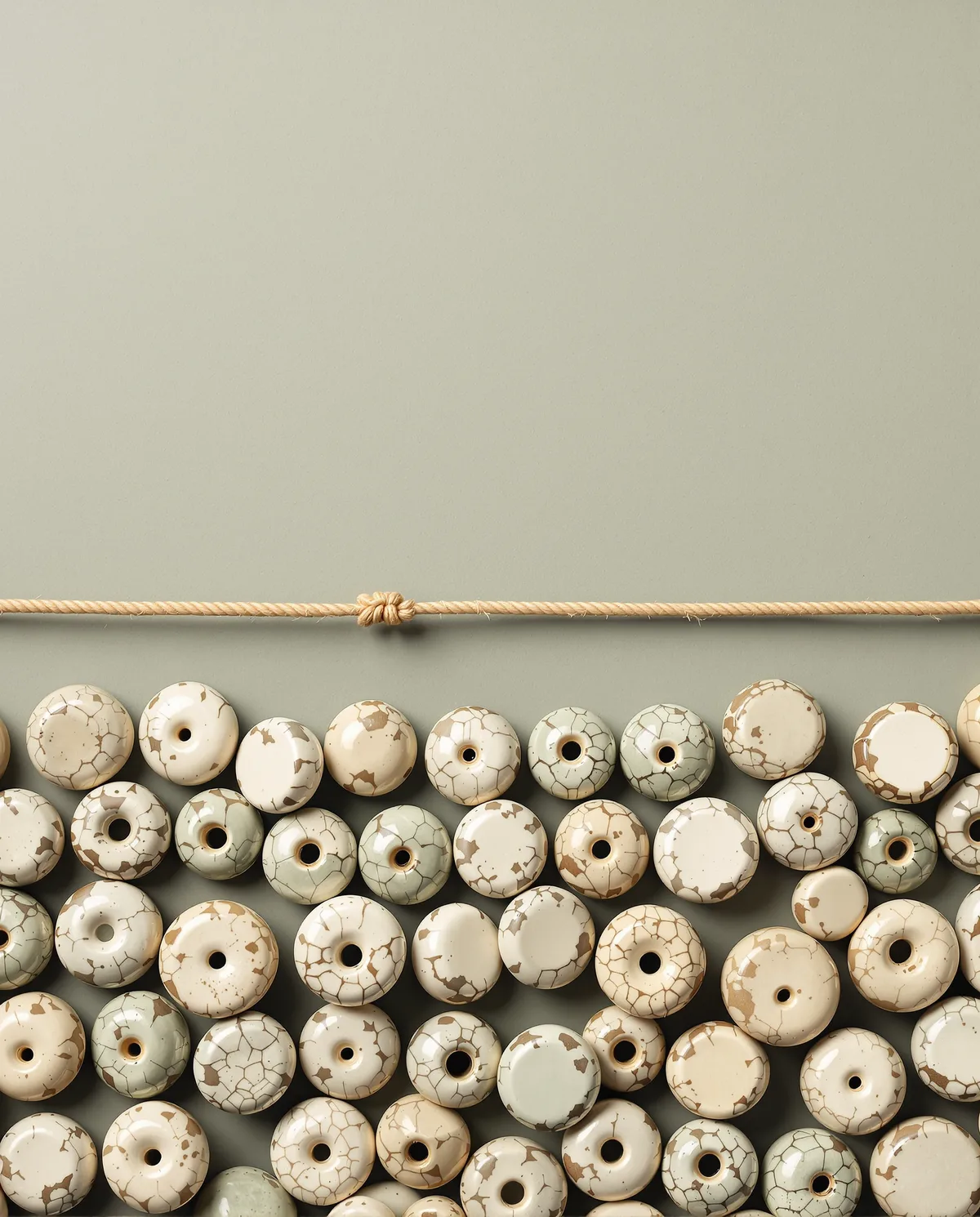
Glazed and fired in our own ceramics plant: glossy, matte, speckle and reactive glazes, and what a dense opaque bead demands of the fixing.
See the detailIndex
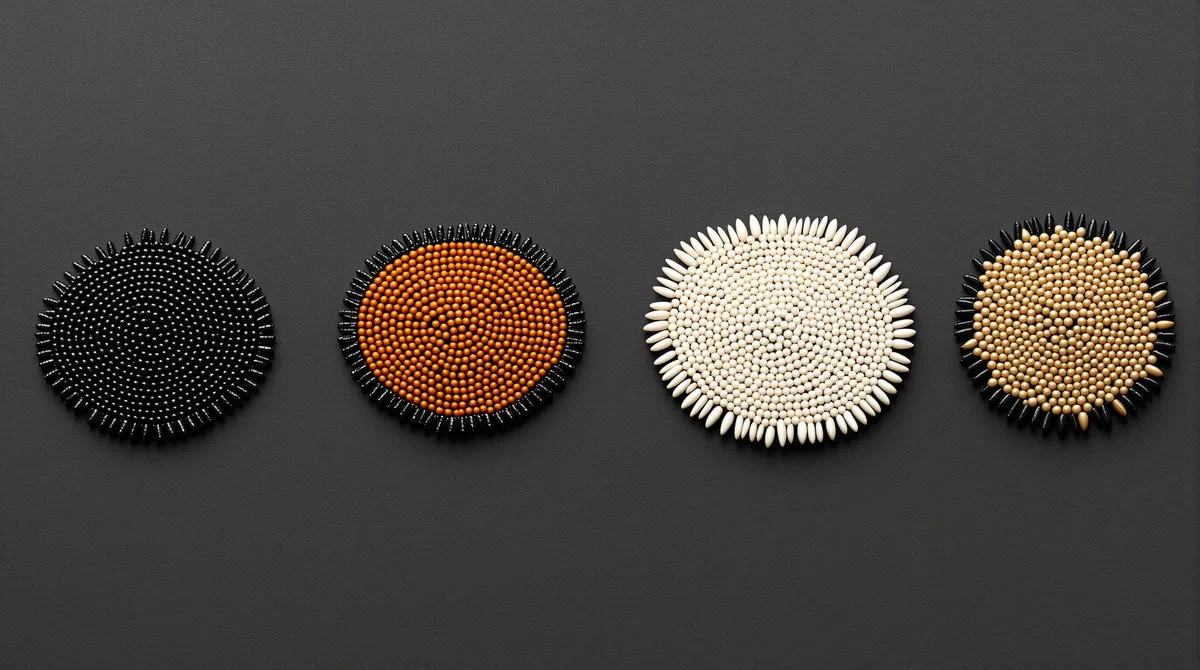
Seventeen beaded objects documented from inside the craft — what each one is, how the tradition builds it, and what it would take to develop one.
See the detailCraft topic
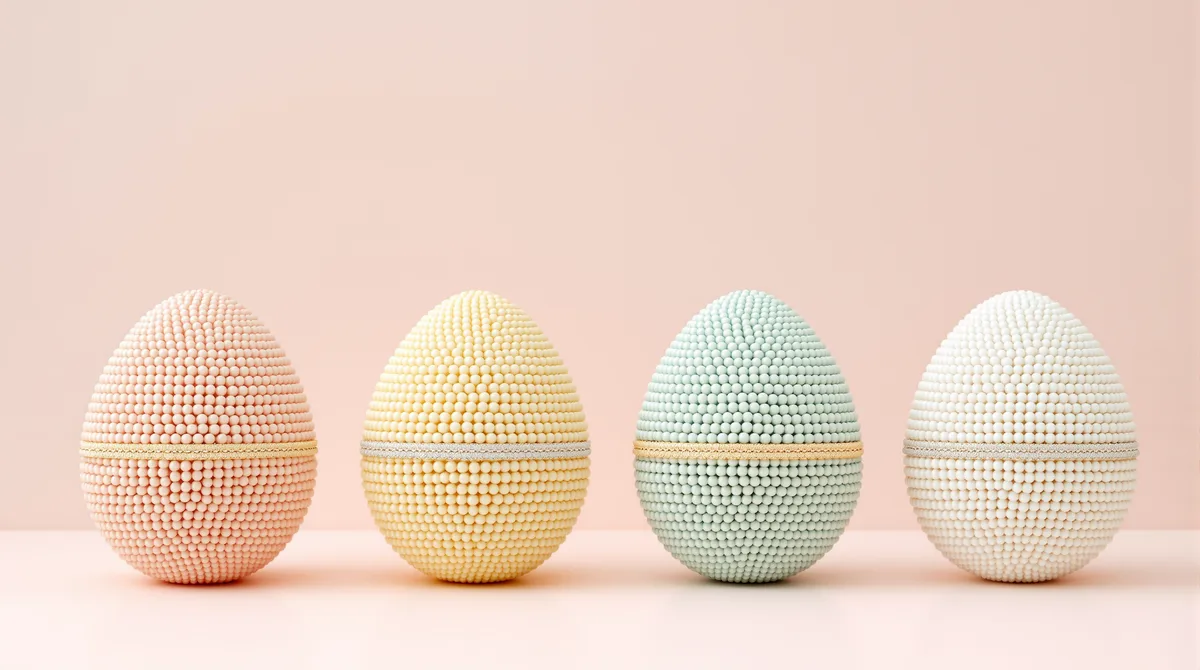
Eggs, flowers and birds at ornament scale, why a moving date tightens the calendar further, and the pastel palette problem nobody plans for.
Specs and sizesCraft topic
The formats a three-week window supports, why opaque beads beat translucent for this palette, and the backwards calendar that puts the brief in spring.
Specs and sizesCraft topic
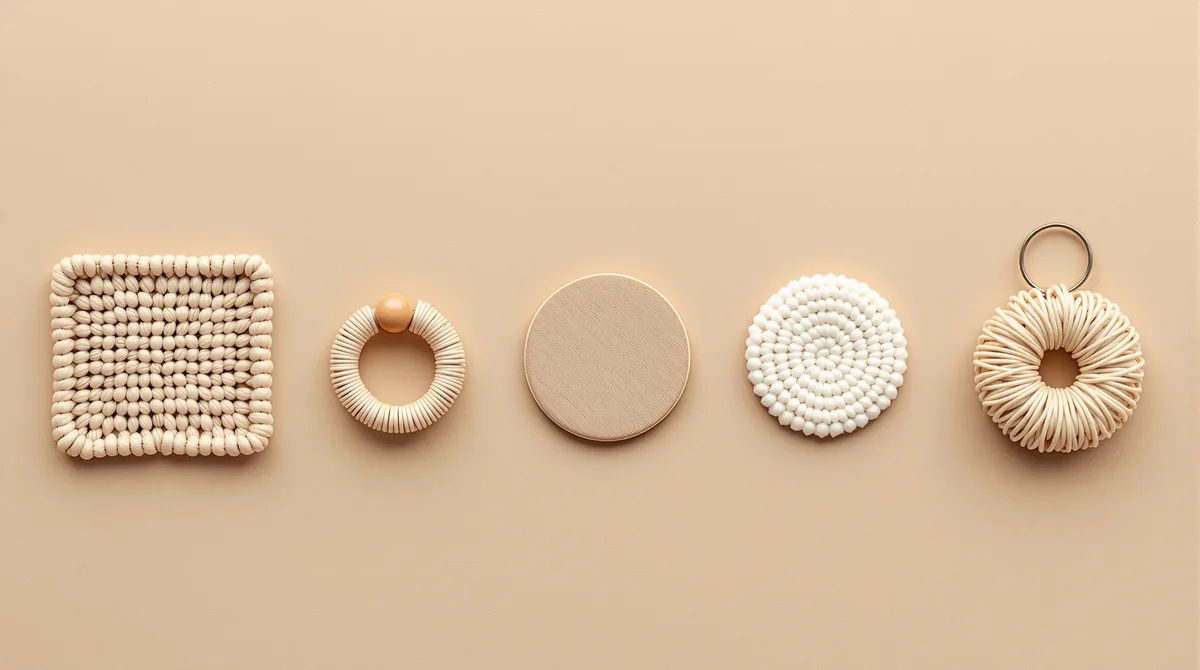
Wire instead of thread, crimps instead of knots, and bead choices that survive keys — plus the wire-wrapped family behind the page.
Compare the options
Start a conversation
Send a reference, a colour chip or a sketch. Minimums are set per design and confirmed per quote; sampling is quoted separately and usually runs 16 to 20 days from an agreed brief.