Material
Glass seed beads: sizes, dye lots and cord
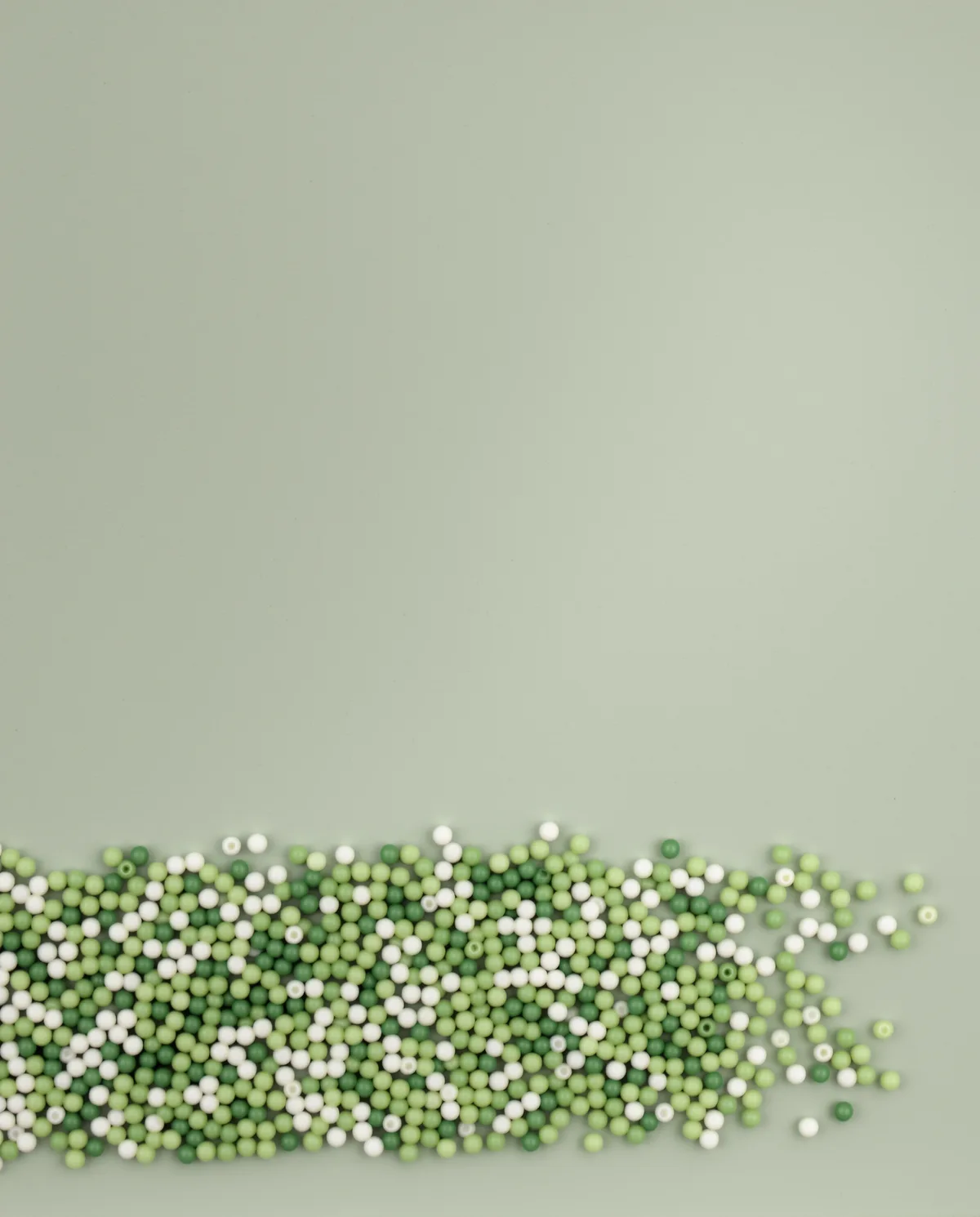
How seed beads are drawn, why dye lots are quoted per run, what the drill hole limits, and where seed-bead work earns its cost.
Compare the options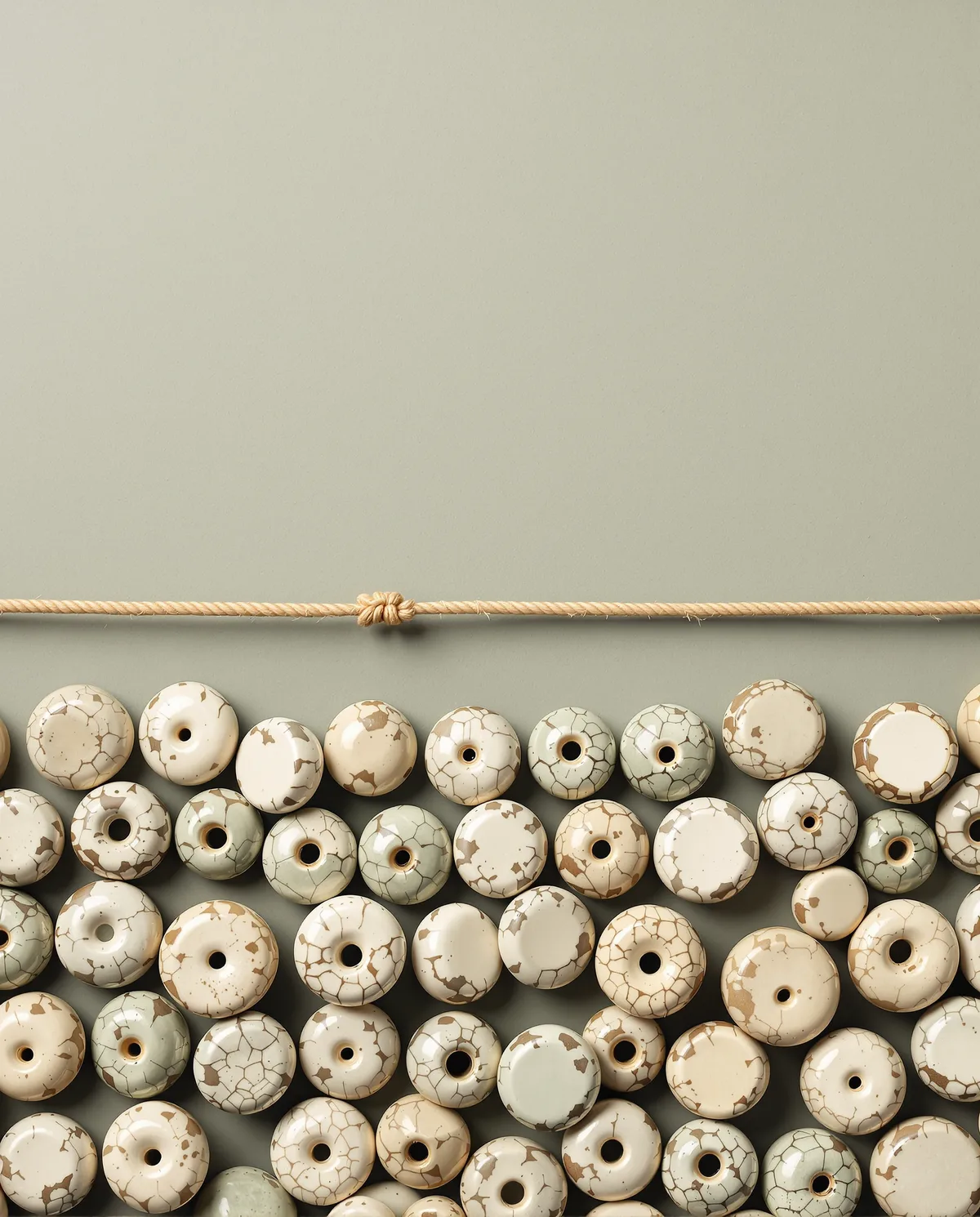
Material · Ceramic
Ceramic is the only bead material whose colour is a fired surface rather than a dye or a melt. That is what gives it depth no acrylic reaches — and a reactive glaze will never give you the same bead twice.
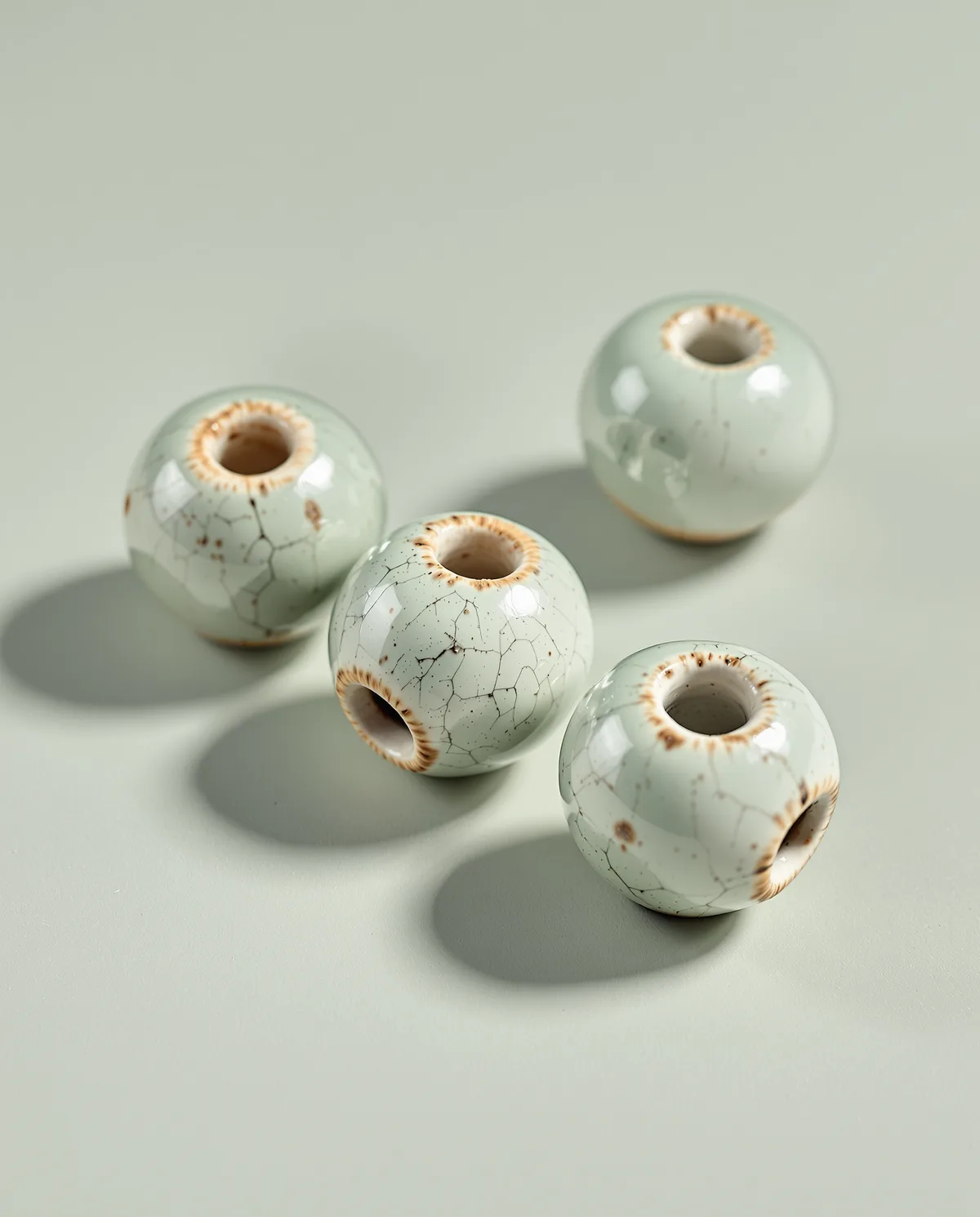
Glazed and kiln-fired ceramic beads in sage and oatmeal, a crackle glaze breaking over the raised edges to show the clay body.
Ceramic beads are formed from clay, glazed and fired, in our own Khurja ceramics plant. The glaze is the colour, and it is a fired surface rather than a dye, which gives depth and a durable finish. Ceramic is close to glass in weight and fully opaque, so it reads as a solid colour in a panel rather than as light.
A ceramic bead is a clay body that has been formed, pierced, coated in a glaze and fired. The firing does two things at once: it vitrifies the clay into a hard, dense solid, and it melts the glaze into a thin layer of glass fused permanently to the surface.
That second fact is the whole character of the material. The colour on a ceramic bead is not a dye and not a melt — it is glass, fired on. It will not fade, it will not rub off, and it cannot be adjusted once the kiln has cooled.
Form, pierce, glaze, fire. Forming can be by hand, by slip casting or by jiggering, and the hole is made in the soft clay before anything is fired. The bead is then glazed and fired, and the glaze and the body shrink together.
All of it happens in our own Khurja ceramics plant, whose published capability list covers ceramic and stoneware forming, slip casting and jiggering, glazing in glossy, matte, speckle and reactive finishes, and hand decoration and decal firing. Khurja is a ceramics town, and the glaze library is the plant's real asset.
Depth in an opaque colour. An acrylic bead dyed to a soft sage is flat sage all the way across. A ceramic bead glazed to the same colour has a glaze that pools slightly at the shoulder, thins at the high point, and breaks over any texture underneath — so the bead reads as a glazed object rather than as a coloured one.
It also gives weight and a particular sound: a low, solid knock rather than a glass chime, because a vitrified body damps rather than rings.
That a glaze colour can be matched to a reference on demand. A glaze is a recipe and a firing schedule; the process is to develop a glaze, fire it and approve the fired sample. That a reactive glaze will repeat — it will not, and selling it as uniform is the fastest route to a rejected shipment. And that the hole dimension from the drawing is the hole dimension of the bead, because clay shrinks in the kiln.
Ceramic sits in the library as an accent and a tabletop material rather than as a hanging field. In the 2027 colour stories it appears where a palette wants chalky, matte or earthy tones that glass does not do convincingly — hand-painted ceramic discs in particular read as craft in a way a pressed bead does not.
Those library figures are derived from the design-library renders rather than from shipped goods, and the pages carrying them say so.
A ten-millimetre ceramic round works out near 1.1 g, so a hundred land near 110 g — arithmetic from a nominal fired density of 2.3 to 2.4 g/cm³, not weighed figures. That puts ceramic within a few per cent of glass and at roughly double acrylic.
On a panel it behaves like glass: it pulls the strand straight, it settles quickly, and it needs a rod with brackets fixed into the frame rather than a tension rod. The difference from glass is that the weight buys no optical return, because the bead is opaque — so a heavy ceramic panel has to justify itself on colour alone.
Wide in range and narrow in precision. A glaze can be developed to almost any colour, with glossy, matte, speckle and reactive surfaces, hand decoration and fired decals on top of that. What it cannot do is hit a colour reference the way a dye bath can, because the result depends on the recipe, the thickness of application and the firing.
So the mechanism is inverted. Rather than matching the ceramic to the palette, the usual route is to let the fired ceramic lead and bring the adjacent beads to it — which is exactly what dyed to match exists for.
The hole is pierced before firing and shrinks with the bead, which makes its final diameter a firing outcome. The practical consequence is that a cord must never be committed from a drawing: the fired sample is measured, and the cord follows that measurement.
After that, the usual rule holds. Cord is chosen from the smallest hole in the whole build, and the fired ceramic hole is often the smallest, which makes it the governing dimension rather than a detail.
It depends entirely on the glaze. A flat glossy or matte glaze is a controlled recipe and a controlled schedule, and it repeats well. A speckle or reactive glaze is irregular bead to bead by design — that is the reason to specify it — so it repeats as a character rather than as an appearance.
The handling is the same mechanism used for wood tone and for antique metal: approve a variation band on the retained sample and hold production inside it. A specification that asks a reactive glaze to be uniform is asking for the one thing it cannot be.
At the hole rim. A glazed bead has a thin glaze edge where the hole breaks the surface, and that edge is where a knock takes a chip — and a chipped glaze shows the pale clay body underneath, which is far more visible than a chip in body-coloured glass.
The design answers are to keep ceramic away from the hem, where the most movement happens, to seat it against softer neighbours, and to prefer a rounded hole profile over a sharp one. Where ceramic has to sit low on a strand, a wood or acrylic bead immediately below it absorbs the knock.
More than glass per bead, because the bead goes through two thermal processes and a glaze application, and much more than acrylic. Against hand-made lampwork glass it is cheaper and more consistent.
The cost lever is the glaze rather than the bead. A standard glaze from the plant's existing library is an ordinary bead; a developed glaze carries trial firings at the front of the sample loop, and that is time at the front of the sample loop rather than a per-bead cost.

Open-pitch hanging work, accent positions, and table and object pieces. On an open panel a handful of substantial ceramic beads carry colour at a distance that fifty small ones would not, and the weight helps the strand hang.
It does not suit a dense panel. An opaque bead at close pitch blocks light, so the piece stops behaving like beadwork and starts behaving like a screen — heavy, dark, and expensive for the effect. And it does not suit embroidery, because ceramic is not made at the sizes that behave as a field.
To the clay and the glaze. Ceramic beads are formed, glazed and fired in a plant we own, and the glaze library in that plant is what makes a developed colour possible at all. No agents, no brokers.
| Specification | Working value | Why it matters |
|---|---|---|
| Production method | Formed, pierced, glazed and fired | Firing is irreversible, so the glaze decision happens before the bead exists |
| Forming routes | Hand forming, slip casting and jiggering | Capabilities on our own Khurja plant list |
| Glaze options | Glossy, matte, speckle, reactive; hand decoration and decal firing | Reactive glazes are deliberately irregular bead to bead |
| Optical behaviour | Fully opaque | Holds a flat colour; does not transmit light |
| Weight behaviour | A 10 mm ceramic round works out near 1.1 g, about 110 g per hundred | Arithmetic from nominal density; close to glass |
| Hole | Pierced before firing; shrinks with the bead | Hole tolerance is a firing variable, not a drilling one |
| Failure mode | Chips at the hole rim; does not fade | A chipped glaze shows the clay body underneath |
| Made where | Formed, glazed and fired in our own Khurja ceramics plant, then strung in our own beadwork studios | Glaze development is an in-plant capability |
Good to know
Whatever a glaze can be developed to, which is a wide range with a particular strength in soft, chalky and earthy tones. Glossy, matte, speckle and reactive glazes are all available, plus hand decoration and decal firing. What ceramic cannot do is take a dye reference the way acrylic can — a glaze is developed and fired, then approved on sample.
The hole is pierced in the soft clay before firing and shrinks with the bead, so its final diameter is a firing outcome rather than a machining one. That means the hole is confirmed on the fired sample, and a cord should never be committed until the fired bead has been measured.
A flat glossy or matte glaze repeats well, because it is a controlled recipe fired to a controlled schedule. A reactive or speckle glaze does not repeat bead to bead by design, so it is approved as a character range on the sample and held to that range rather than to a single appearance.
Close to the same. A ten-millimetre ceramic round works out near 1.1 g against about 1.2 g in glass — arithmetic from nominal densities, not weighed. Ceramic is therefore in the heavy half of the library and belongs on a rod with brackets rather than on a tension rod.
Open-pitch hanging work and accent positions, where a few substantial opaque beads carry colour against a lighter field. Ceramic also suits table and object pieces, where weight is an asset. A densely spaced full ceramic panel is heavy and reads as a solid screen rather than as beadwork.
Shape and nominal fired dimensions, the fired hole diameter, the glaze named by type — glossy, matte, speckle or reactive — and the acceptable variation band where the glaze is irregular. Fired dimensions matter because clay shrinks, and a pre-firing dimension is not a specification.
Yes. Ceramic is formed, glazed and fired in our own Khurja plant, whose capabilities cover ceramic and stoneware forming, slip casting and jiggering, glazing in glossy, matte, speckle and reactive finishes, and hand decoration and decal firing. The beads are then strung in our own beadwork studios.
Keep exploring
Material
How seed beads are drawn, why dye lots are quoted per run, what the drill hole limits, and where seed-bead work earns its cost.
Compare the optionsMaterial
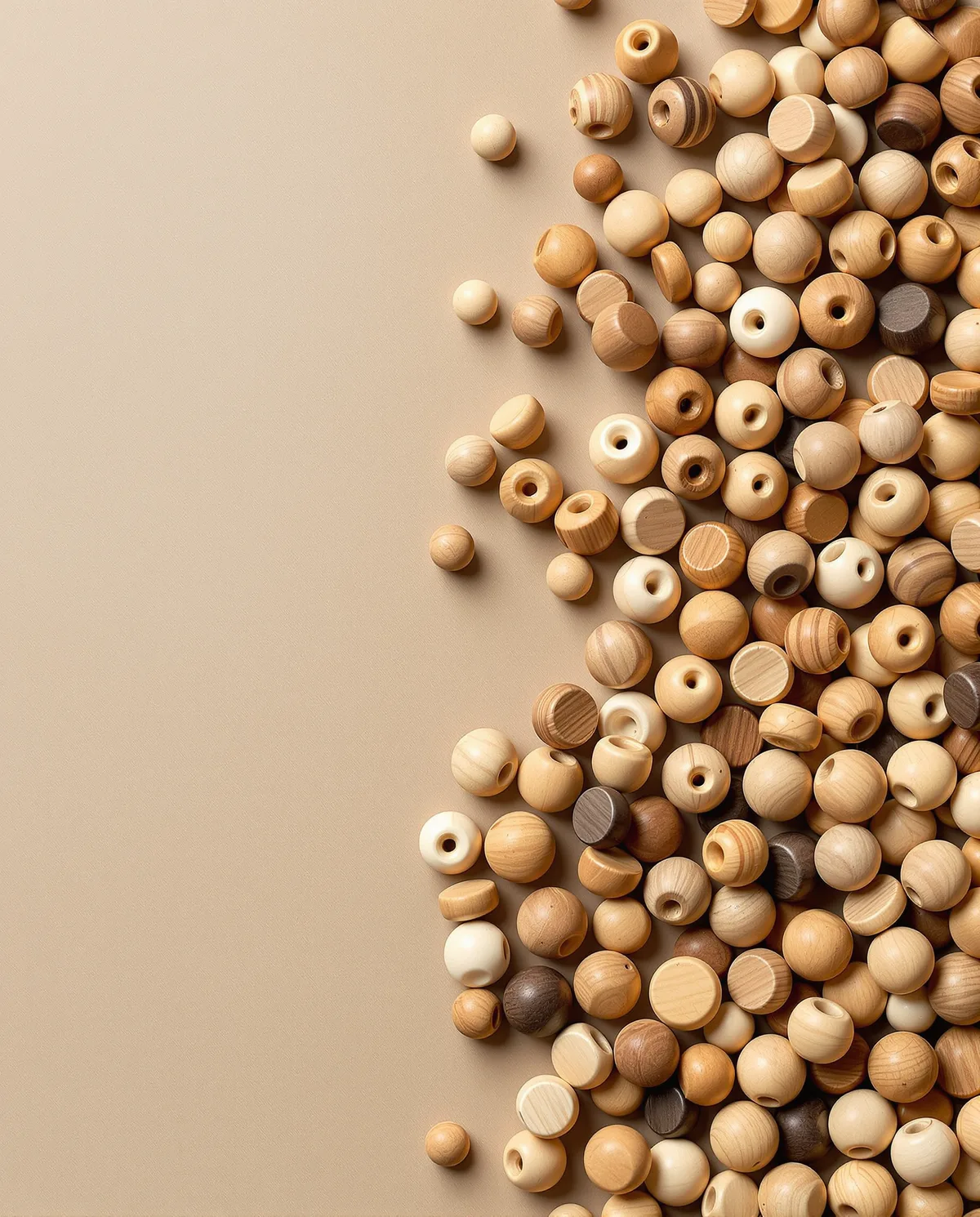
Turned and drilled in our own wood factory: grain variation you approve rather than eliminate, the finishes that hold colour, and the dowel from the same plant.
Read moreMaterial
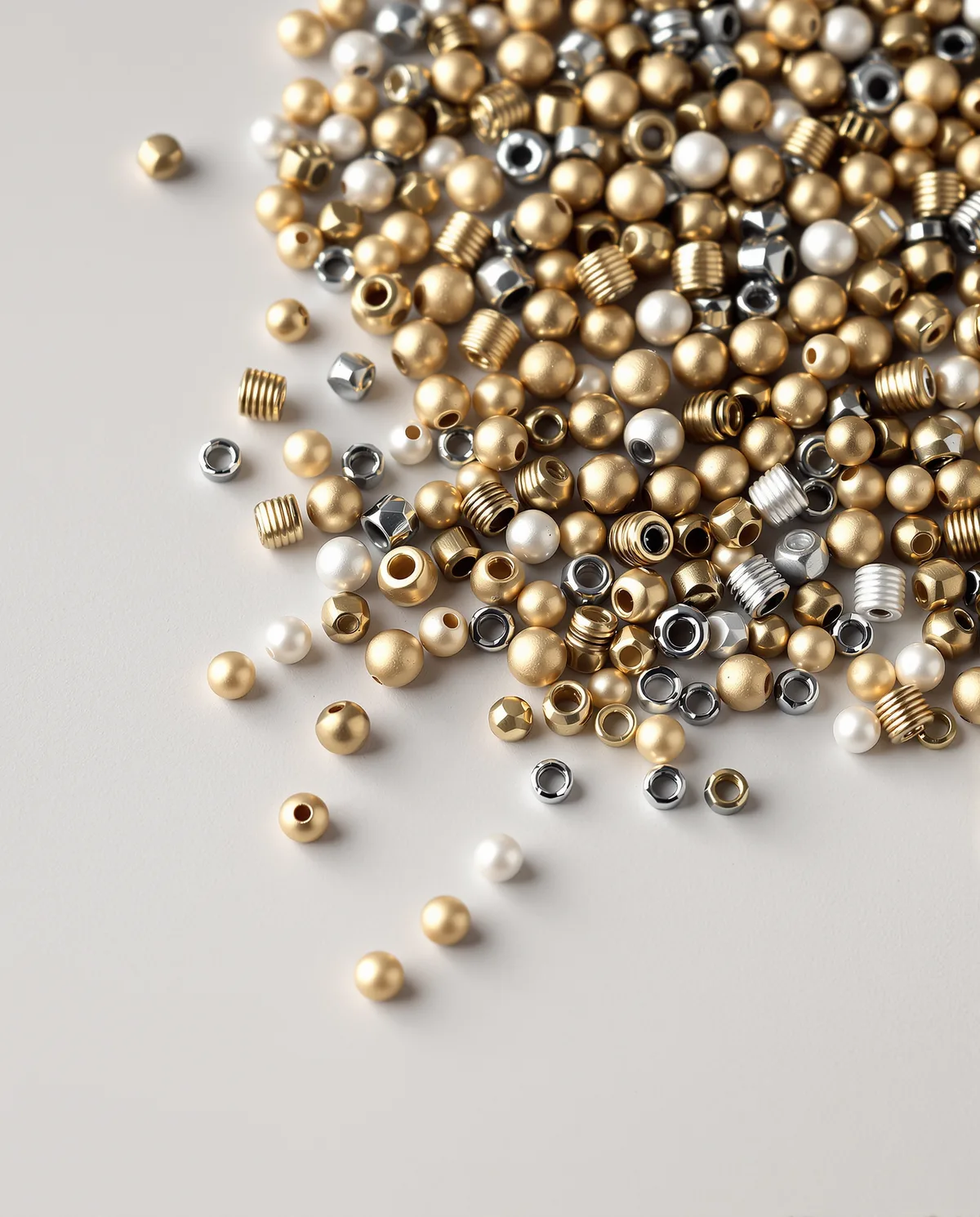
Finished and plated in our own metal plants: eight standard finishes, why metal reads as an accent rather than a field, and what plating does to wear.
Specs and sizesTechnique
The bead map, the cord, thirty strands on a dowel, hem shapes, suspension loops — and the three levers that move the cost.
Read moreReference
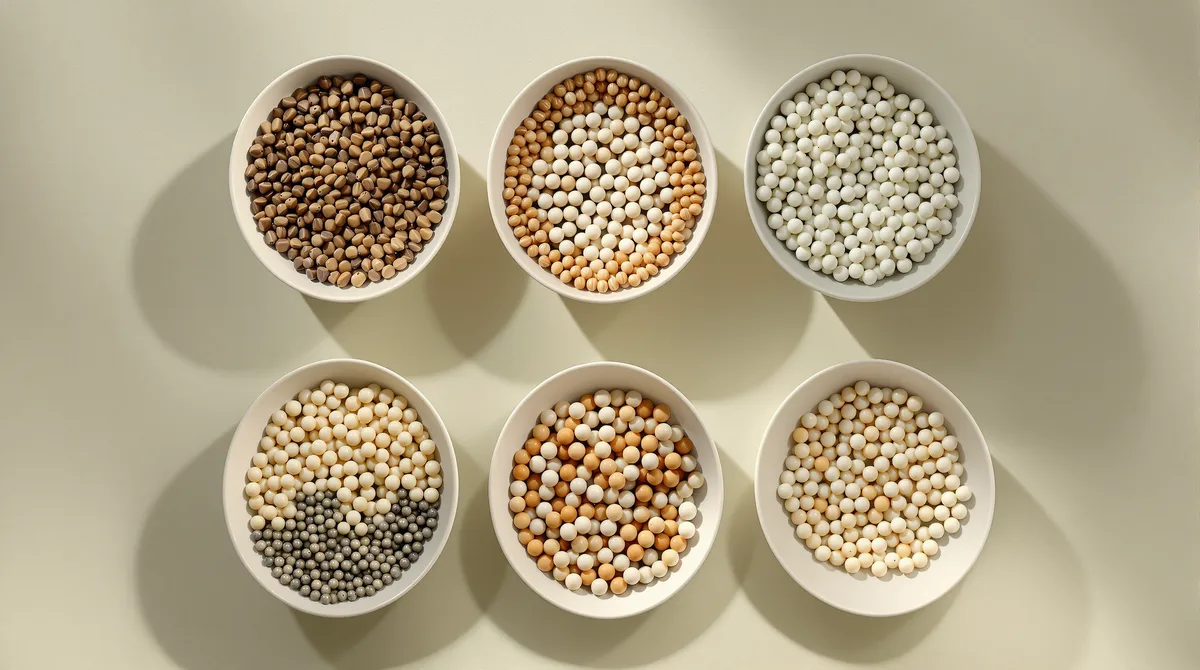
Nine material families, what each gives in light, weight and colour, and how far our own manufacturing reaches into every one of them.
Read the guide
Start a conversation
Send a reference, a colour chip or a sketch. Minimums are set per design and confirmed per quote; sampling is quoted separately and usually runs 16 to 20 days from an agreed brief.