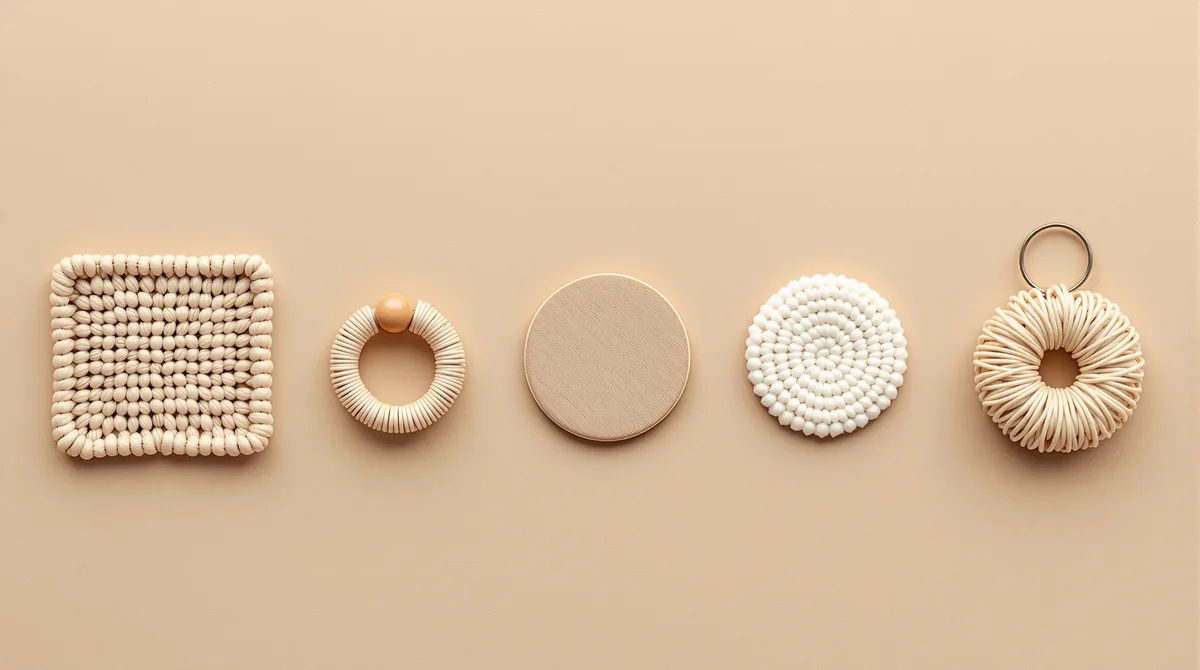
Technique
Wire-wrapped beadwork: the armature sets the shape
Bead wrapped over a shaped brass armature: flat-back for rings, full three-dimensional for figural work, and why the wire gauge is the real specification.
Specs and sizes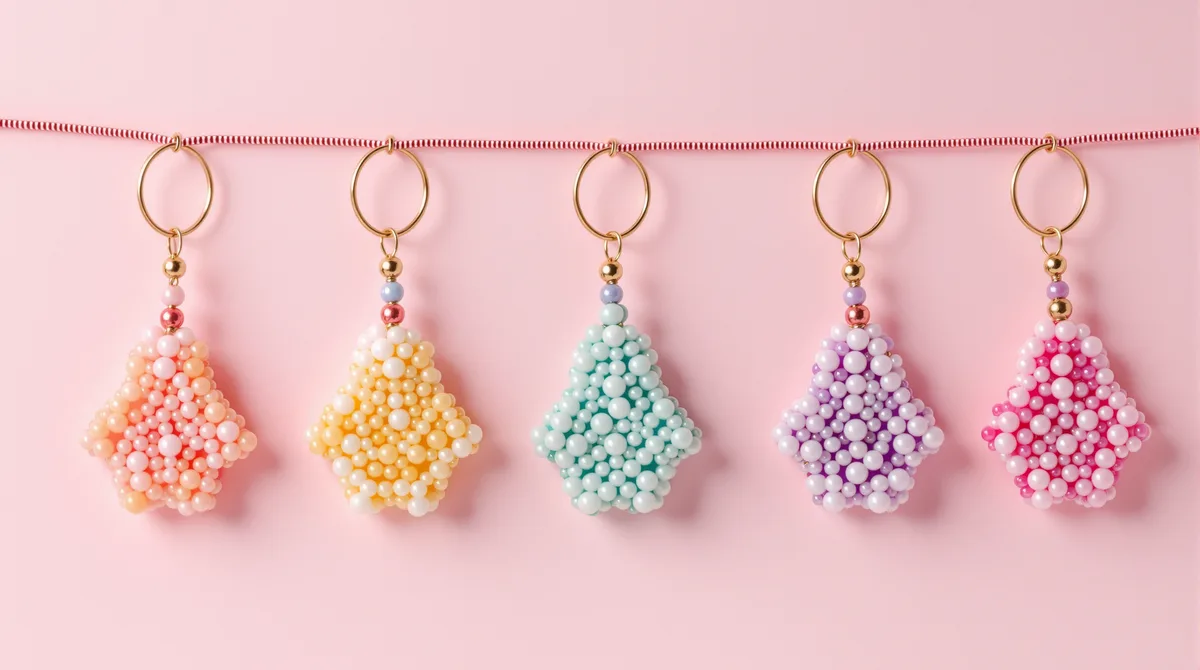
Craft topic
A charm is the only beaded object that lives in a pocket with a set of keys. Thread does not survive that. Wire does, and once you move to wire almost every other decision changes with it.
Beaded charms hanging from plain steel split rings, each a small three-dimensional figure of glass seed beads wrapped over a shaped brass wire armature, in candy pink, lemon…
A beaded keyring or bag charm is built on wire rather than thread, with crimped ends instead of knots, because a pocket abrades thread and a set of keys chips soft beads. Wire-wrapped charms run 7 to 10 cm. The failure points are the crimp, the jump ring and any bead with a painted or surface-dyed finish.
A beaded charm is a small beaded object with a fitting on it. The fitting defines what it is called — a split ring makes it a keyring, a lobster clasp makes it a bag charm, a short chain makes it a zip pull — and the beadwork is the same in every case.
It is the smallest and most abused object in beaded décor, and that is the interesting thing about it. Everything else on this property hangs still: a curtain, a wall hanging, a lamp shade, an ornament. A charm goes into a pocket with a set of keys and comes out again several times a day.
Because thread loses. Abrasion against metal keys cuts thread, and the failure is invisible until the moment the charm comes apart. Worse, a thread can wear through at a point hidden inside a bead, so there is no warning at all.
Wire fails differently. It bends, it kinks, it shows a crimp beginning to open — all of which are visible before anything is lost. For a product designed to be inspected by its owner a hundred times a week, a visible failure mode is a feature.
Once you commit to wire, the rest follows. Knots become crimps. Bead holes have to pass wire rather than thread, so the smallest beads drop out of the specification. And the whole object can be built over a shaped armature, which is what makes figural charms possible.
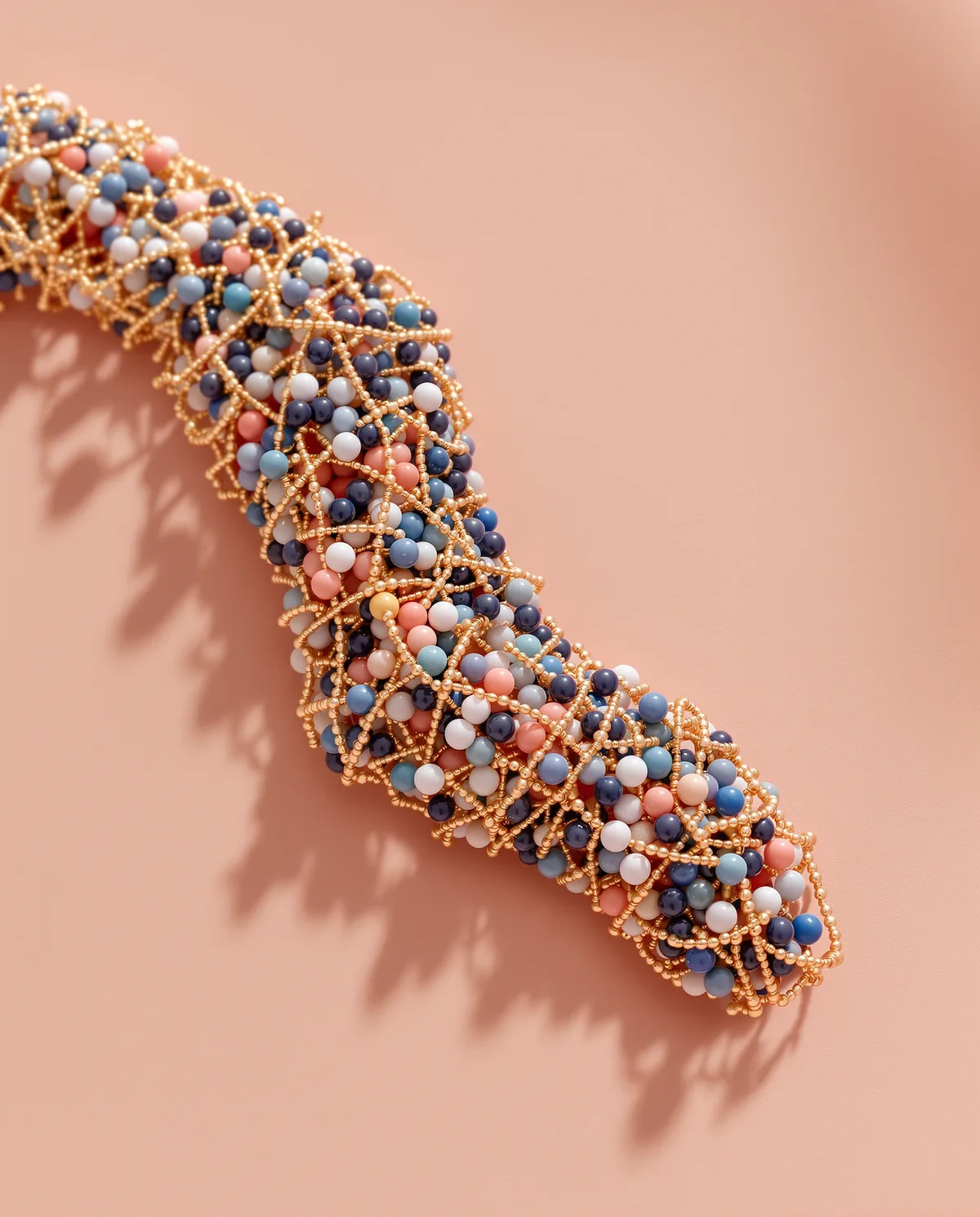
Two levels of it. The simple version is beads on a straight length of wire, crimped at both ends, with the top crimp carrying the ring. The structural version is wire wrapped beadwork: beaded wire wound turn against turn over a brass armature, so the armature holds the outline and the beads are the surface.
Wrapping is what makes a bird, a fish or an animal readable at seven to ten centimetres. Wire-wrapped work in our own studios runs across napkin rings at 6 to 9 cm, charms at 7 to 10 cm and figural birds and animals at 12 to 18 cm, and all of them are the same operation at different scales.
This is the specification question that gets skipped.
Survives: body-coloured glass, where the colour is in the glass; pressed glass in rounded profiles; metal beads; wood; glazed ceramic. Rounded shapes generally, because they present no edge to chip.
Does not survive: painted finishes, which scratch off against a key in days. Surface-dyed glass, which marks under a thumbnail and will certainly mark under a key — bead dyeing on the surface is a finish, not a body colour. Faceted beads, where every cut edge is a chip waiting to happen. Soft plated finishes on a bead that will be rubbing against steel.
The test is crude and reliable: run a thumbnail across the bead. If it marks, it is not a keyring bead. It may still be a perfectly good bag charm, which lives a much gentler life.
Glass seed beads and bugle beads on fine brass wire for wrapped work. Larger body-coloured glass, pressed glass beads, wood beads and metal beads for strung charms. Brass wire and nylon-coated steel wire, crimps, jump rings, split rings, lobster clasps and short chain for the findings.
The metal half comes out of our own metal plants, which make, finish and plate the brass components in eight standard finishes. That matters on a charm more than on a large piece, because on an object this small the metal is half of what anyone sees.
Charms and keyrings are a standing part of our small-object work, and the wire-wrapped family is where they sit: wrapped charms at 7 to 10 cm and figural birds and animals at 12 to 18 cm, over the same shaped brass armature. Lampwork glass beads finished as wine charms are the most recent development in the same family.
The usual caveats, and only those: nothing is held in stock, everything is made to order against an approved sample, and minimums are set per design and confirmed per quote.
The jump ring, held up to the light, looking for a gap. The crimps, closed flat and ideally covered. The bead surface under a thumbnail. Any exposed wire tail, which is a snag and a sign of rushed finishing. The clasp action, worked a dozen times rather than once. And the weight, because a charm heavy enough to swing hard will stress its own top crimp.
Everywhere, at every price. Wire-wrapped figural charms are hand work and are made where bead embroidery and wire work are established trades. The mass market is machine-assembled, which is fine for a bag charm and much less fine for a keyring, and the difference lives entirely in the findings.
On a split ring for keys, a lobster clasp for a bag, or a chain to let the charm hang clear of a zip. In retail, charms are sold from hooks and bowls and get handled constantly, so the finishing has to survive hundreds of strangers before it ever survives an owner.
Almost not at all, which is the appeal. A dry cloth on the beads, a soft cloth on the metal if it dulls. Nothing on a charm should be washed. If a charm has a plated or painted finish worth keeping, put it on a bag rather than on keys, because no finish wins against a key.
Because this section documents objects, and the charm is one where the construction logic is genuinely interesting: it is the one place in beaded décor where the engineering question — what survives abrasion — outranks the design question. The construction is ours, and the page is written to explain it rather than to sell a season.
Good to know
A motif, a size, a bead and colour specification, a wire gauge, a crimp and ring specification and a finish for the metal, then a sample. The craft is already here: wire-wrapped beadwork is one of our standing craft families, and metal findings are made, finished and plated in our own plants.
Charms and keychains are a standing part of what we make, running right through our gift collections, alongside wire-wrapped charms at 7 to 10 cm and figural wire-wrapped birds and animals at 12 to 18 cm. As with all beaded décor, nothing is held in stock and everything is made to order against an approved sample.
Beads are threaded onto wire rather than thread. On a simple charm the wire is crimped at both ends and the top crimp carries a jump ring; on a figural charm the wire is wrapped turn against turn over a shaped armature, which is how a bird or an animal holds its outline. A split ring or a lobster clasp finishes it.
Keyring, keychain, key fob, bag charm, zip pull and purse charm all describe variations on the same thing, and the difference is the fitting rather than the beadwork. A bag charm usually has a lobster clasp so it can be moved between bags; a keyring has a split ring so it will not come off.
Hold the jump ring up to the light and look for a gap: an open ring will eventually part. Then check the crimps are closed flat and covered rather than left as a sharp fold. Then run a thumbnail over the bead surface — if the colour marks, it is surface dye or paint and it will not last in a pocket. Then look for an exposed wire tail, which is both a snag and a sign of rushed finishing.
On a split ring for keys, a lobster clasp for a bag, or a short chain where the charm needs to hang clear of a zip. In retail, charms sell from a hook or a bowl and are picked up constantly, so the finishing has to survive being handled by hundreds of people before it is ever bought.
Very little, which is most of the point. Wipe with a dry cloth; wipe metal with a soft cloth if it dulls. Keep a charm with a painted or plated finish away from keys if you can, which in practice means a bag charm rather than a keyring. Nothing on a charm should need washing, and nothing should be washed.
Keep exploring
Technique
Bead wrapped over a shaped brass armature: flat-back for rings, full three-dimensional for figural work, and why the wire gauge is the real specification.
Specs and sizesIndex
Seventeen beaded objects documented from inside the craft — what each one is, how the tradition builds it, and what it would take to develop one.
Compare the optionsCraft topic
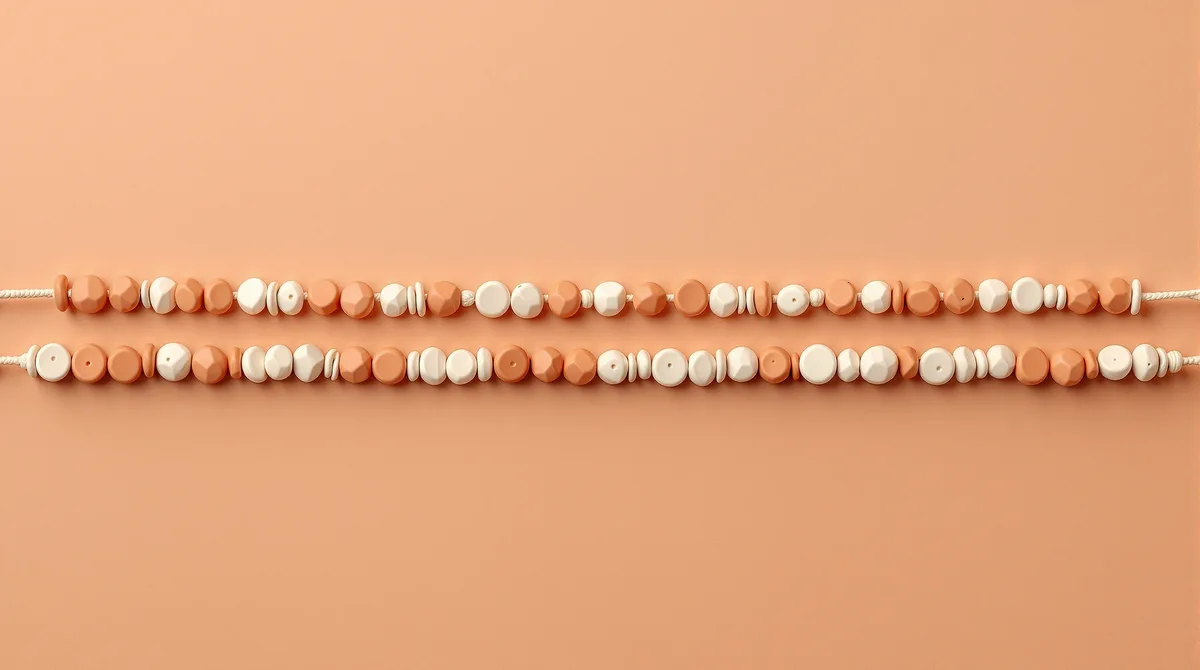
Why clay took the garland market from wood, what polymer heishi and fired ceramic each give up, and the breakage the format carries.
Read the guideCraft topic
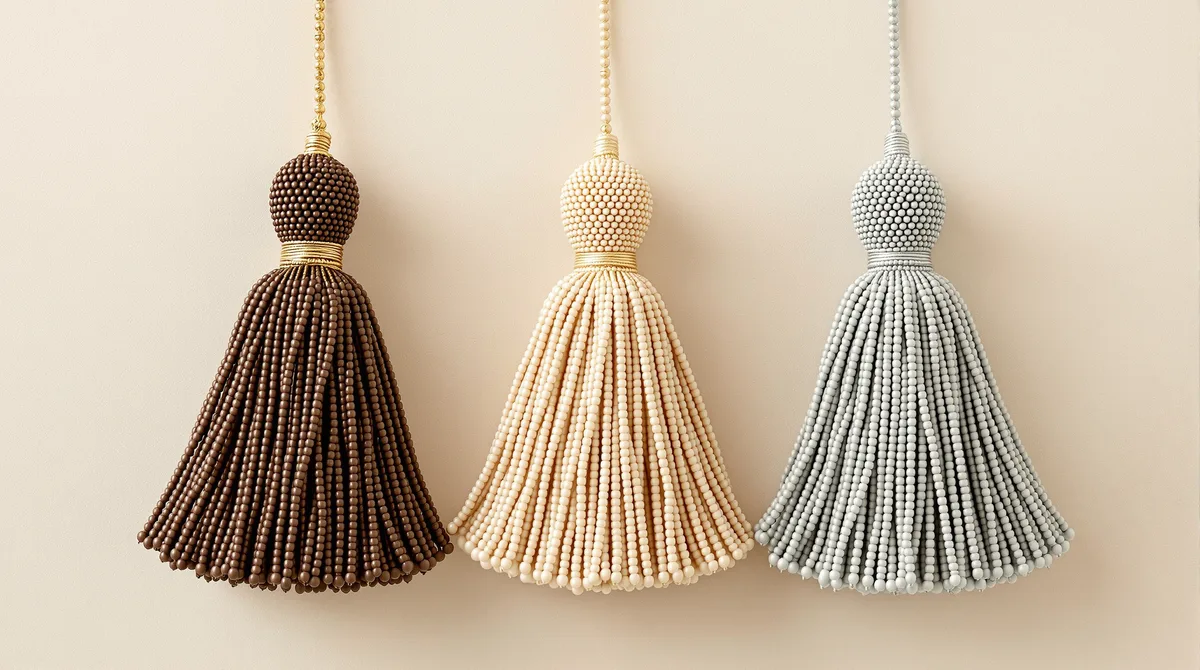
Head, skirt and loop — how each part is built, and the neck that decides whether it survives.
How it is madeCraft topic
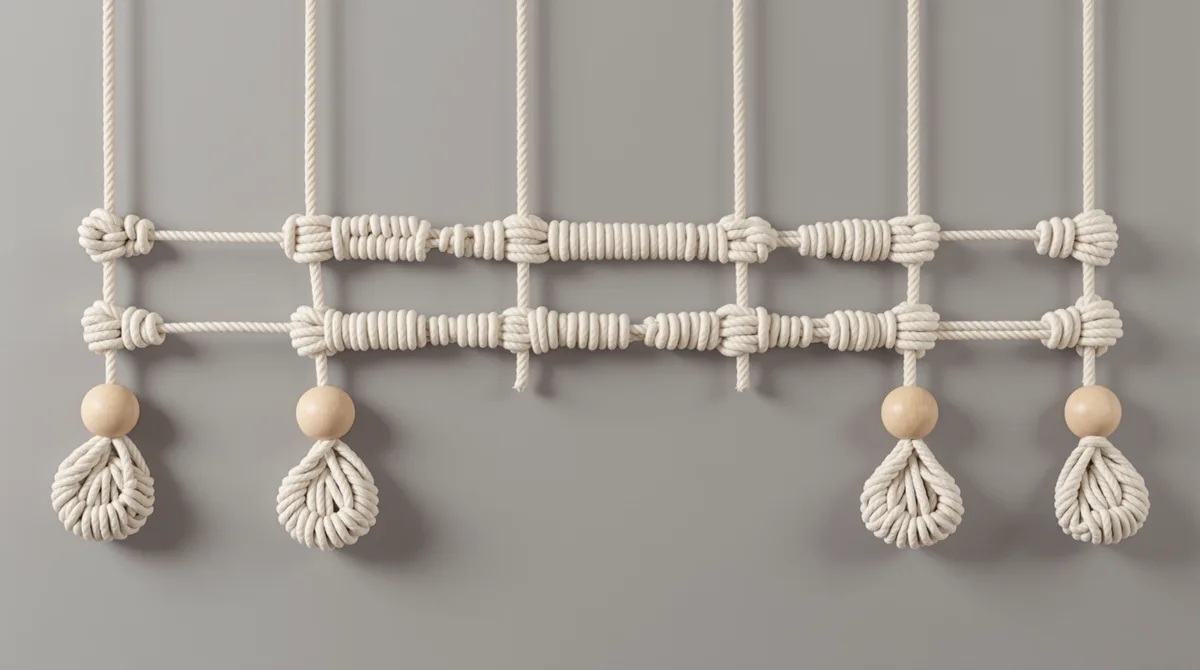
How a bead is trapped between knots rather than strung, why the cord gauge limits the bead, and why knotted work runs 60 to 90 days rather than 40 to 60.
Read the guideCraft topic
A hoop, a clasp and one hand-formed bead — and why lampwork, where each bead is shaped at the torch, is the technique this format exists for.
Compare the options
Start a conversation
Send a reference, a colour chip or a sketch. Minimums are set per design and confirmed per quote; sampling is quoted separately and usually runs 16 to 20 days from an agreed brief.