Reference
The seasonal window
Counting backwards from a floor-set date through sampling, production, inspection, freight and receiving.
Specs and sizes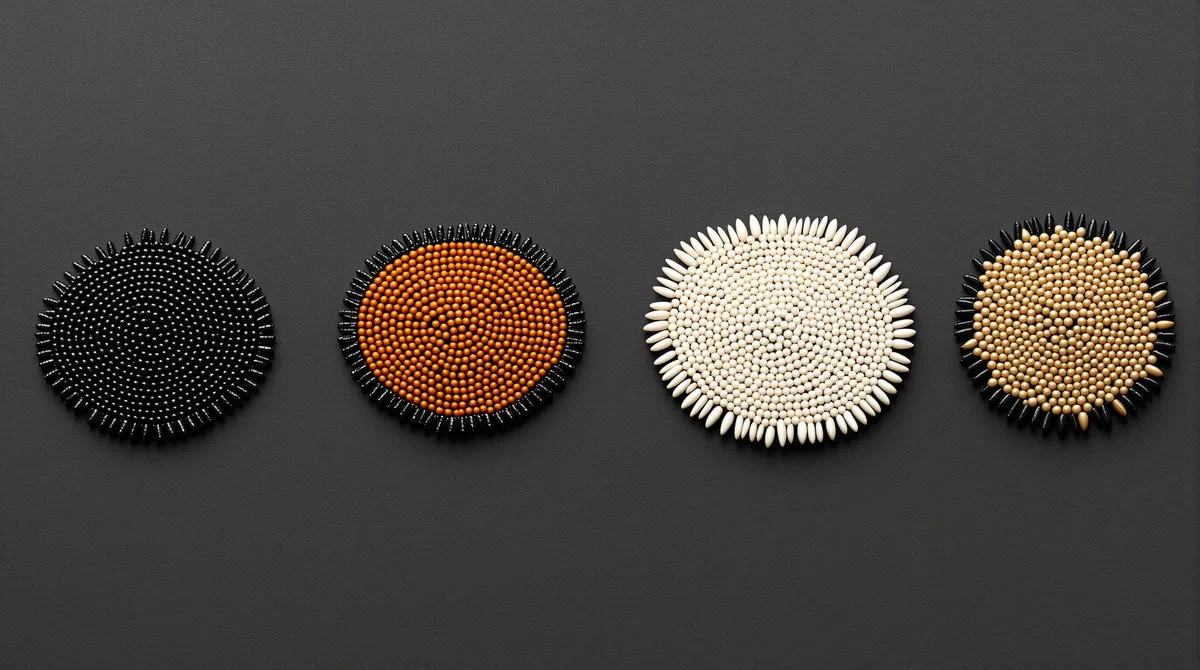
Craft topic
Halloween is the shortest selling window beadwork is asked to serve, and the calendar — not the design — is what decides whether a range happens. Work the dates backwards before anybody draws a pumpkin.
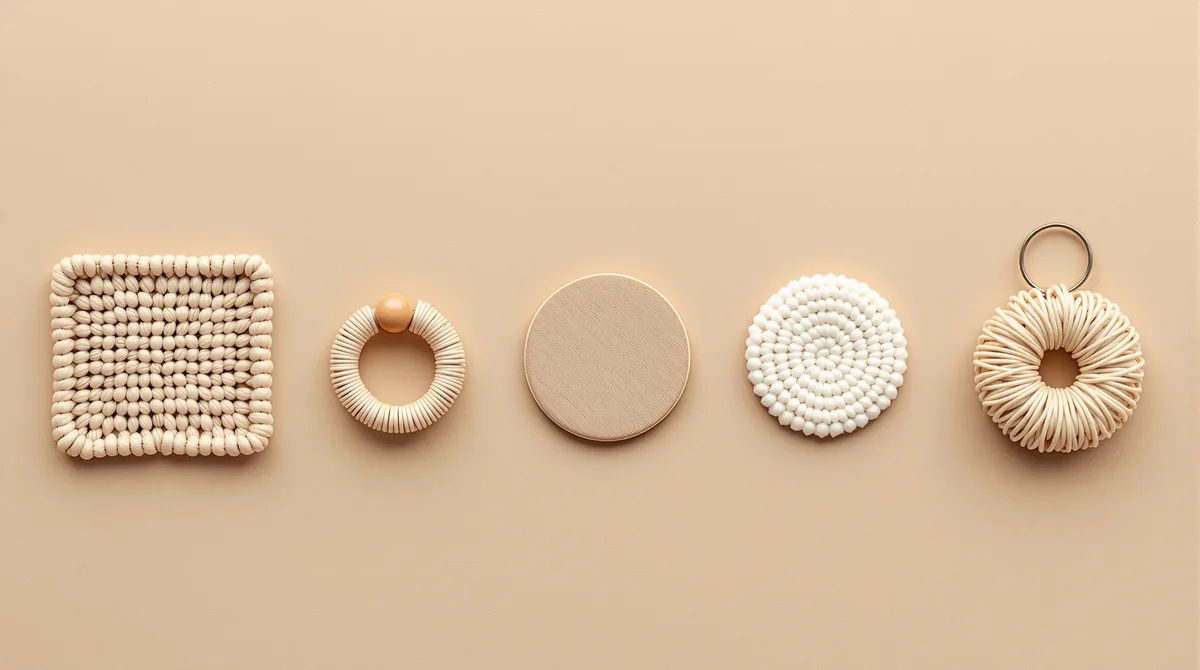
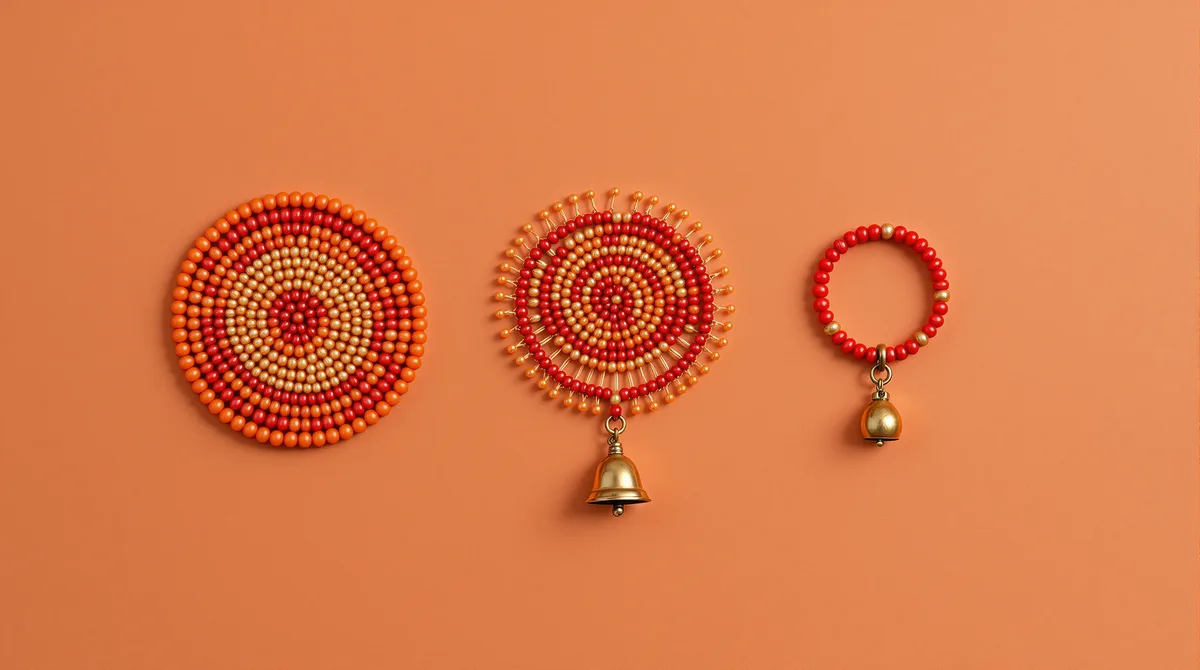
Round bead-embroidered discs in a row, their faces covered in couched glass seed and bugle beads worked in tight concentric rows, in jet black, pumpkin orange, bone white and…
Halloween beadwork works at ornament and cushion scale rather than large-format, because a three-week selling window will not amortise a big development. The calendar is the real constraint: sampling runs 16 to 20 days from an agreed brief and production 40 to 60 days after sample approval, which puts the brief in spring.
Halloween is the shortest meaningful selling window in home décor. The core sell is about three weeks, and anything unsold at the end of it is dead stock for eleven months. Autumn and harvest ranges stretch that to six or eight weeks, which is why a range designed to read as both is commercially stronger than one that only works in late October.
That window is the constraint everything else bends around. It decides the format, the price point, the order quantity and — most of all — the date.
Small ones, in repeating silhouettes.
Ornament scale, roughly 7 to 11 cm: pumpkins, bats, ghosts, spiders, cats, built as couched covered forms or as wire-wrapped figures over a shaped armature. These sell in multiples, display as a mass and store flat.
Cushion faces, where a beaded motif on a woven ground gives a high perceived value at a size people will buy annually.
Flat banners and pennants, couched on a stiffened ground and hung from a dowel.
Charms and wine charms, which carry almost no inventory risk.
What the window does not support is a large-format development. A beaded portal or a wall hanging is a 40 to 60 day production run plus sampling plus freight, against three weeks of sell-through. The arithmetic does not close.
Because the shelf date is fixed and nothing else is.
Our published figures: sampling usually runs 16 to 20 days from an agreed brief, and beaded décor production runs 40 to 60 days after sample approval. Add colour approval, add the buyer's own approval cycle, add ocean freight and a distribution centre.
Counted backwards from an October shelf date, that puts sample approval in early summer and the brief in the spring. A Halloween brief arriving in July is not a late brief; it is next year's brief.
Because black and saturated orange both lose their identity when light passes through them. A translucent black reads as smoke grey; a translucent orange reads as amber. Neither is wrong, and neither is the colour the brief asked for.
Opaque beads reflect rather than transmit, so the colour stays where the designer put it. This is a decision we have taken on a non-seasonal piece for exactly the same reason — a dotted portal was made in both a translucent and an opaque version, and the opaque one was the one adopted, because the dots read as objects rather than as tints.
The corollary is that this palette is the hardest in beadwork to hold across a run. Deep black and saturated orange are both dye-heavy, and in bead dyeing the dye lots on surface-dyed glass shift between runs. On a seasonal range, specify whether a single dye lot is required at the brief, because it constrains scheduling.
Bead embroidery for anything flat or on a covered form. Wire wrapped beadwork over a brass armature for figural pieces that have to hold an outline — wire-wrapped birds and animals run 12 to 18 cm, which is the right scale for a bat or a cat. Crochet and amigurumi for the soft versions. Glass seed beads and bugle beads throughout, with acrylic beads where weight or wear matters.
Beaded Halloween cushions have been through sampling in our cushion development work, alongside seed-bead cushion sampling more generally. That is the sampling a season would build on.
So this page is construction we run, applied to a seasonal brief, and a Halloween range is available to develop on it. That is also exactly how a seasonal programme starts — a brief against documented construction — and it is better than presenting a motif board as a collection.
In risk rather than in craft. Our large-format work reorders: a lead beaded portal has come back season after season, inside a programme that has not stopped running. A seasonal piece is the opposite — it either sells in three weeks or it does not sell.
That changes the design brief. A repeat line can afford a complex construction amortised over years. A seasonal line wants a construction that is right first time and a quantity nobody regrets.
Two pieces side by side under one light, for colour hold. Silhouette readability at three metres, because this is a display season. On a figural piece, whether it stands or hangs without being propped, which tells you whether there is an armature in it. Then the storage case, because a seasonal range is bought on the assumption it comes back out next year.
Seasonal beadwork at this scale is made in India and China in very large volumes for short windows, and the market is dominated by machine-assembled and glued construction. Hand couched and wire-wrapped versions occupy the premium end and sell on the construction being visible.
Because the useful content here is the calendar and the colour advice rather than a motif list. A buyer who takes the backwards date arithmetic from this page and the opaque-versus-translucent point will make a better range with any manufacturer, which is the right thing for a reference page to do.
Good to know
Beaded Halloween cushions have been through sampling in our cushion development work. Everything else on this page is construction we already run, applied to a seasonal brief — which is how a seasonal programme actually starts. Available to develop.
At this scale, by couching or by wire wrapping. A pumpkin, a bat or a ghost at ornament size is a covered form with beads stitched onto it, or a shaped brass armature with beaded wire wrapped over it. Larger pieces — a beaded banner, a pennant, a cushion face — are flat couched panels on a stiffened ground.
Halloween décor, autumn décor and harvest décor overlap commercially, and the distinction matters for the calendar rather than the craft: harvest ranges sell for six to eight weeks where Halloween proper sells for about three. A range designed to read as both buys itself a longer window.
Colour hold first, because this palette is the hardest in beadwork to keep consistent: check two pieces side by side under the same light. Then silhouette, because a Halloween motif has to be readable as a shape — most of these pieces are seen at distance in a shop display. Then, on a figural piece, whether it holds its outline without being propped.
Ornament-scale pieces hang from a loop on a twig display or a hook; banners and pennants hang from a dowel or a cord; cushions and mats sit. The retail reality is that Halloween is a display season, so a piece that cannot be grouped into a mass is at a disadvantage however good it is on its own.
The same way as any couched or wrapped beadwork: soft brush, barely damp cloth on the beads, dried immediately, never immersed. The seasonal addition is storage. These pieces spend eleven months in a box, so they should go away clean, uncrushed and in a divided tray rather than loose in a bag.
A motif set, a format decision, a bead and colour specification with the dye-lot question settled, a size set, and then a bead map and a sample. Sampling runs 16 to 20 days from an agreed brief and production 40 to 60 days after sample approval, so the development has to start a good two seasons before the shelf date.
Keep exploring
Reference
Counting backwards from a floor-set date through sampling, production, inspection, freight and receiving.
Specs and sizesIndex
Seventeen beaded objects documented from inside the craft — what each one is, how the tradition builds it, and what it would take to develop one.
Read the guideCraft topic
Eggs, flowers and birds at ornament scale, why a moving date tightens the calendar further, and the pastel palette problem nobody plans for.
See the detailCraft topic
Thresholds and lamps: the two organising ideas behind Diwali beadwork, the zari and mirror techniques involved, and a note on what we make.
See the detailCraft topic
Backdrop, aisle run and favour — three scales, three constructions, three lead times, and the fixed date that makes the arithmetic unforgiving.
Specs and sizesManufacturing
The face cloth, the couched bead field, de-densified infills and the closure — and what actually keeps beads attached on an object people lean on.
Read the guide
Start a conversation
Send a reference, a colour chip or a sketch. Minimums are set per design and confirmed per quote; sampling is quoted separately and usually runs 16 to 20 days from an agreed brief.