Glossary
Toran
The Indian decorative door hanging placed above a threshold — defined, with no product claim behind it.
See the detail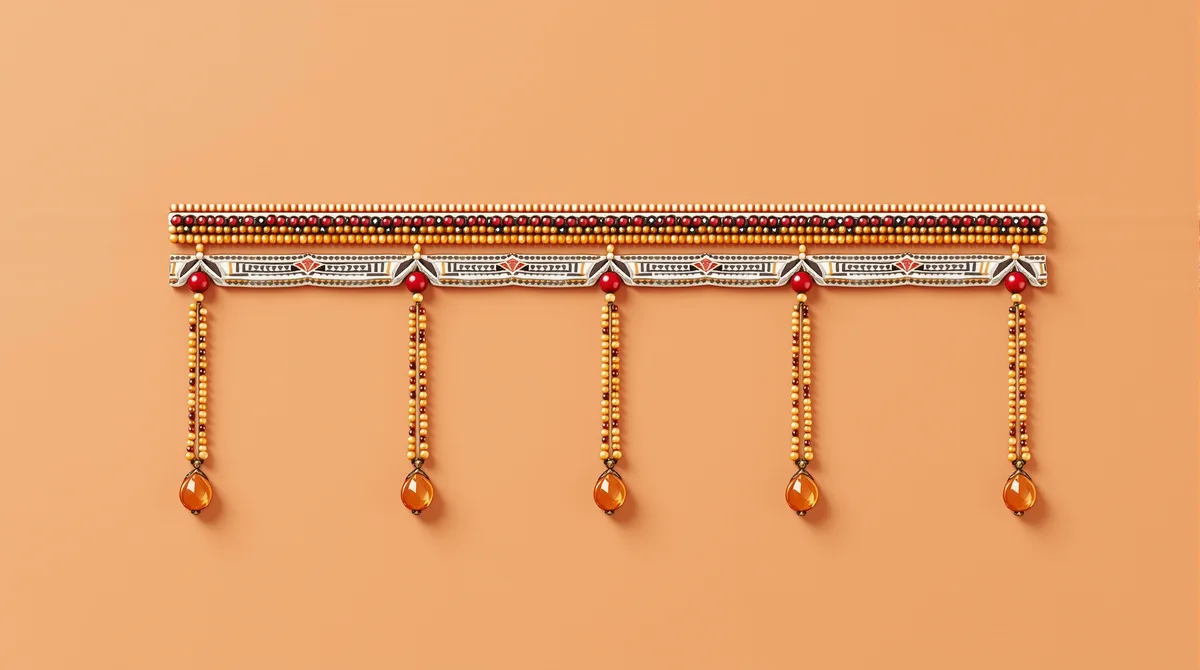
Craft topic
A toran hangs above a doorway, not in it. That distinction carries the meaning of the object, and it is why a toran is a different thing from the door curtains we make. This page is written as craft, not as a catalogue.
A short horizontal beaded door hanging: a narrow band of couched bead embroidery in marigold, crimson and antique gold above five equal beaded pendants, each ending in a larger…
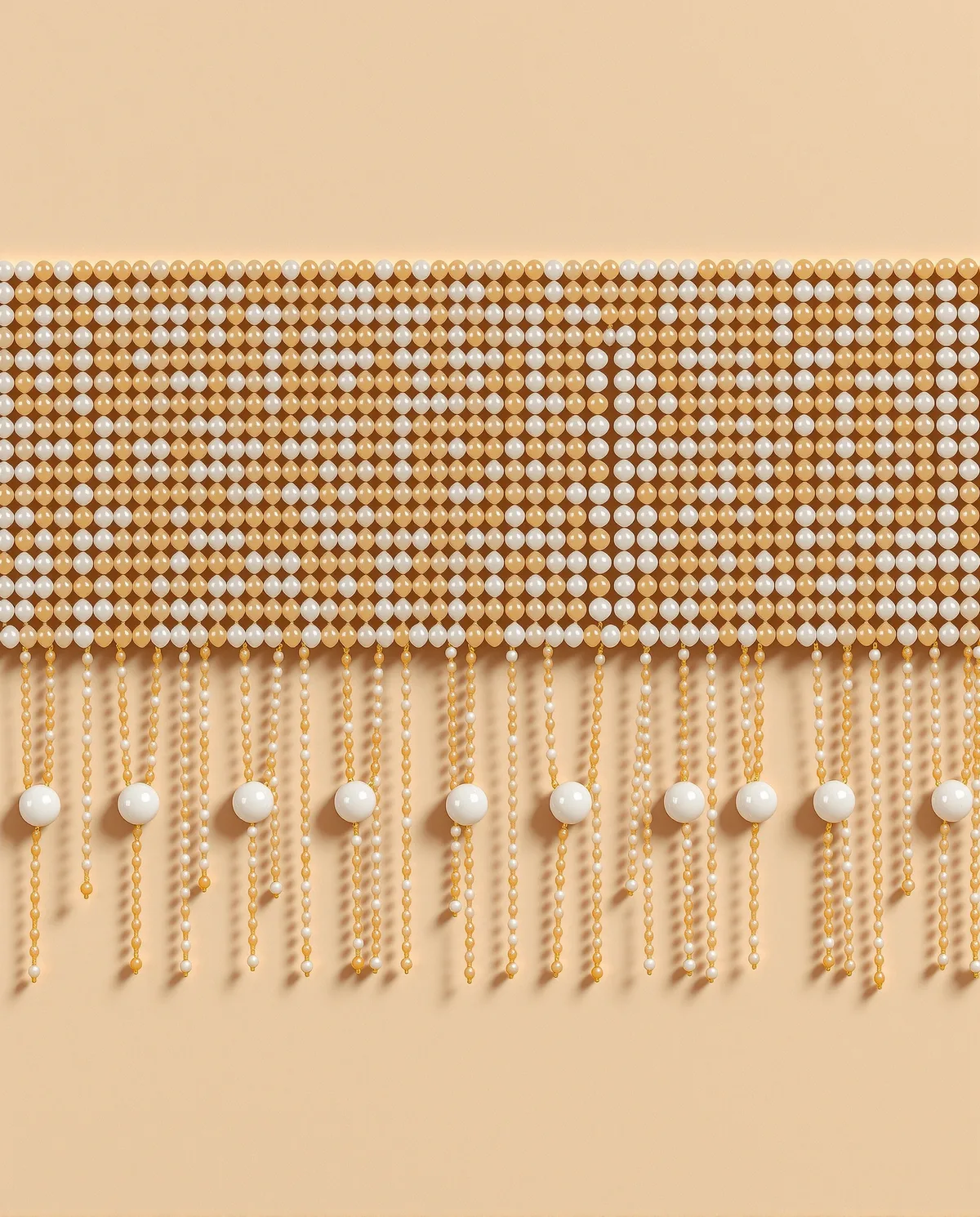
A toran is a decorative hanging placed above the threshold of a doorway in Indian homes, especially at festivals, weddings and housewarmings. It is traditionally a horizontal band carrying a row of pendants below it, made from fresh mango leaves and marigold or from embroidered cloth with mirror work, beads and metallic thread. A toran is available to develop; it is not a current Gemixx line.
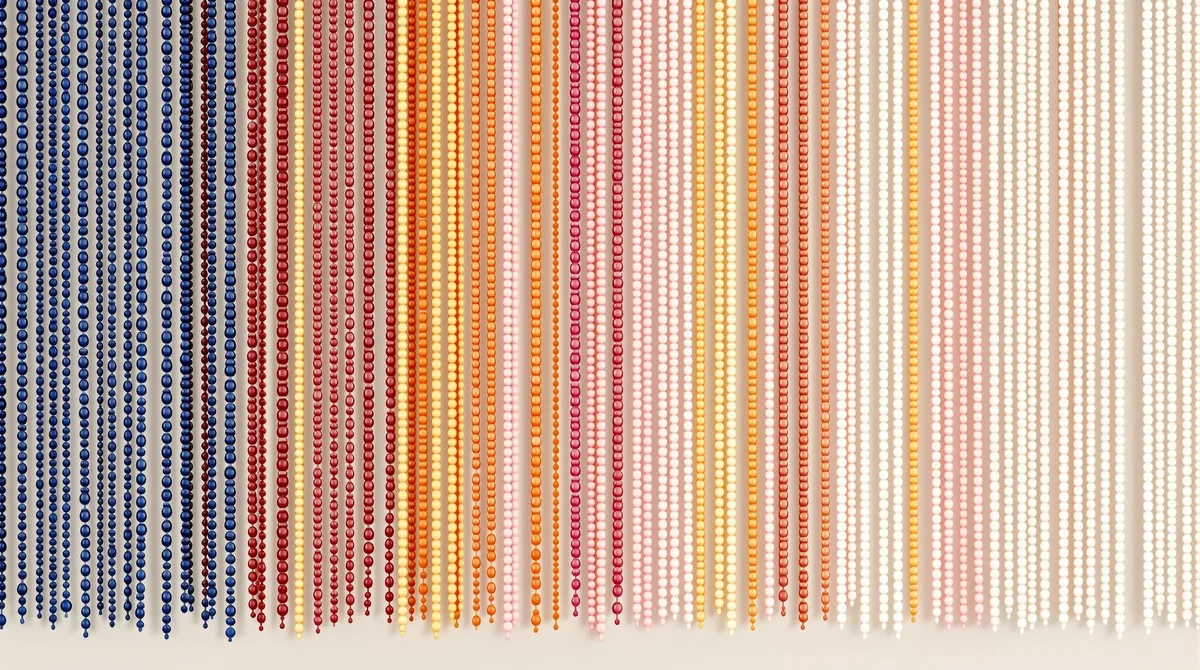
A toran is a decorative hanging placed above the threshold of a doorway in Indian homes. The word comes from the Sanskrit toraṇa, meaning a gateway or an arch, and the object inherits that sense: it marks the entrance rather than decorating a wall. Torans go up at Diwali, at Navratri, at Pongal, at weddings and at housewarmings, and in many households they stay up through the year.
The form is consistent across a very wide range of materials. A horizontal band spans the top of the doorway, and a row of pendants hangs below it. Everything else — leaf, cloth, bead, metal, mirror — is regional and seasonal variation on that one structure.
Two routes, and they are not alternatives so much as different occasions.
The fresh form strings mango or ashoka leaves alternately with marigold heads onto cotton thread, sometimes with a short length of plantain stem or a few bells. It is made on the morning it is needed, by hand, and is not kept. The leaves are the point: mango leaf is auspicious, and its freshness is part of the gesture.
The made form is a textile object. A stiffened or lined cloth band carries pendants — leaves, mango shapes, parrots, elephants, bells, kalash forms — each embroidered or beaded and then attached to the band. Gujarat and Rajasthan traditions are particularly associated with heavy mirror work, or shisha, set with a cradle of stitches, alongside zari and bead embroidery.
This is the distinction that matters most, and it is routinely collapsed in Western retail copy.
A toran hangs above the opening. It is not parted, not walked through, and its pendants hang at head height or above. Its job is to mark a threshold.
A beaded door curtain or portal hangs in the opening. It is parted every time someone passes through it, so its strands must be weighted, spaced and ended to behave under daily handling. Its job is to screen and to frame a walk-through.
They look adjacent in a photograph and they are different objects with different structural requirements. A toran built like a curtain is too heavy for a lintel fixing; a curtain built like a toran tangles the first time someone walks through it.
We do not make torans. The technique base is real — bead and metallic-thread embroidery in our own studios, glass beads drawn in our own glass works — so a toran is available to develop rather than a line to order. A vocabulary entry is not a product, and this page does not treat it as one.
What we do make in and around a doorway is a beaded portal and a beaded door curtain, hand-strung on cord and gathered on a turned wooden dowel, and a beaded valance that dresses the top of an opening without hanging pendants over a threshold. Those are shipped formats with a production record. A valance is the nearest thing we build to a toran in position, and it is still a different object in intent.
Fresh leaf and flower, for the festive form. For the made form: cotton and silk grounds, often stiffened; zari and metallic thread; glass seed and bugle beads; mirror and sequin; small metal bells; and cord or tape for the top band.
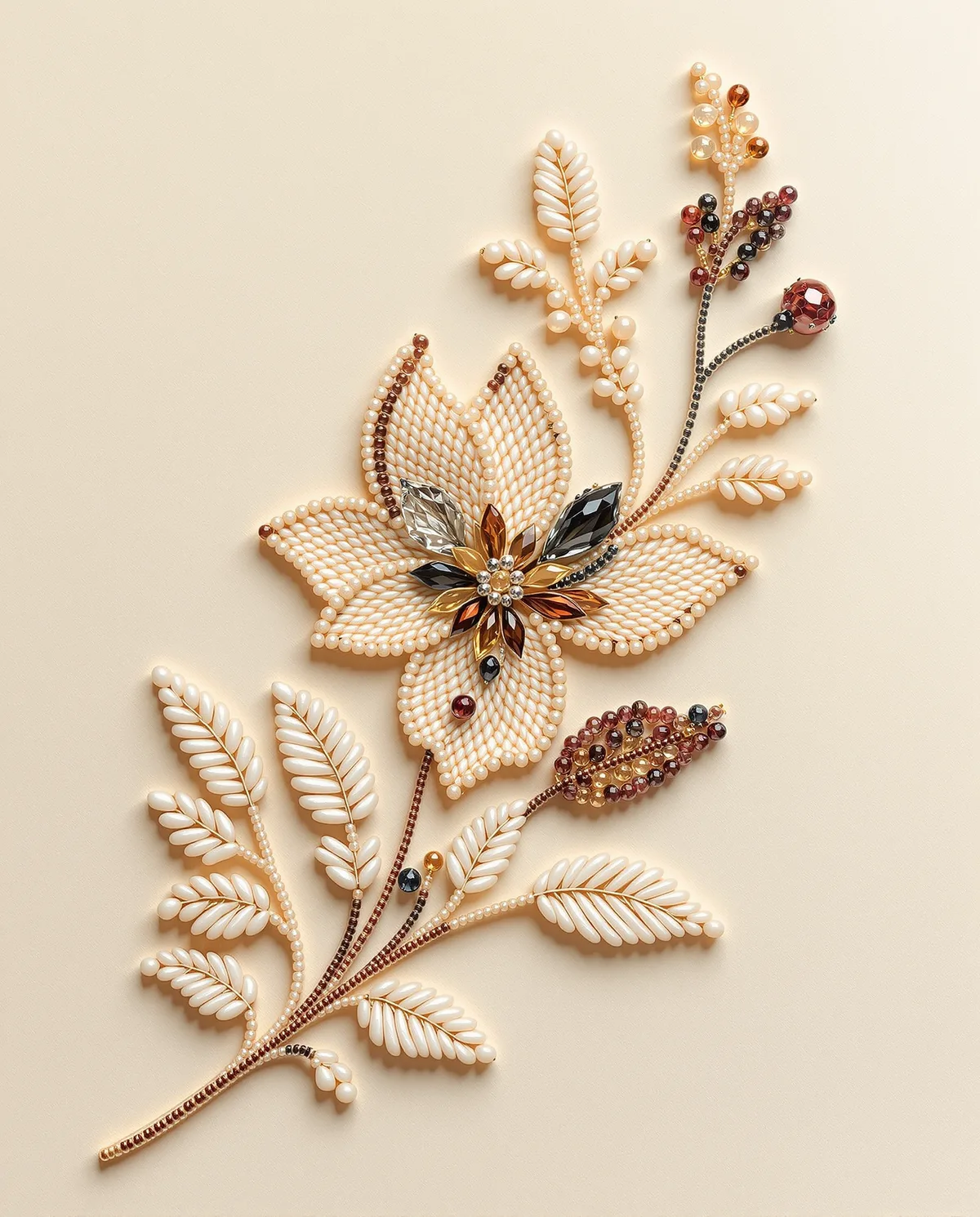
The stitch is couching — material laid on the surface of a stretched ground and held by a separate fine thread — which is the same technique as bead and thread embroidery in the zardozi tradition. That technique family we do run, and it is the limit of what we can claim here: we work in the stitch, not in the object.
Toran is the most widely used, and the one a search engine will understand. Bandarwal and bandhanwar are used across the Hindi-speaking regions for the same threshold hanging. Thoranam appears in Tamil contexts. Gujarati and Marathi both use toran.
The names describe a place and a purpose rather than a construction, which is why a bead toran, a leaf toran and an embroidered toran are all simply torans. There is no separate word for the beaded one.
The top band first. A band that sags when hung drops the whole row of pendants out of line, and nothing about the pendants can fix it. Then pendant drop: hand-made pendants are rarely identical, and the test is whether the variation reads as handwork or as carelessness.
Then the fixings. Mirrors and beads should be held by stitch, not adhesive, because glue on a textile fails at exactly the point where the piece is handled. Then the back, since a toran above a doorway is seen from below and often from both sides.
Overwhelmingly at household and small-workshop scale across India, plus a large seasonal market in machine-made and imported versions. The fresh-leaf version is made in the home. The embroidered version is a craft livelihood, concentrated in the regions with the strongest mirror and zari traditions.
There is also a substantial export market in torans described as décor, sold outside the ritual context entirely. That market is why the search demand exists, and it is also why a page about the object is worth writing.
Spanning the full width of the opening, above the frame, with the pendants hanging against or just below the lintel. Two small hooks or pins at the band ends are normally enough, and the band wants slight tension rather than slack. The piece should sit high enough that nobody brushes it in passing — that is the practical consequence of it not being a curtain.
The fresh form is not cared for; it is made for the day. The made form is dusted with a soft brush and spot-cleaned at most. Zari tarnishes in damp air, mirror settings loosen if the ground is soaked, and surface-dyed beads lose colour in water. Stored flat and out of light rather than folded, a bead-and-zari toran keeps its condition from year to year.
The crafts are here. Bead and thread embroidery in the zardozi tradition is a standing technique family in our own studios, glass seed and bugle beads are drawn and hand-strung in our own Firozabad glass works, and mirror and sequin setting sits in the same couched stitch. Metal bells would come from our own metal plants.
What is missing is everything that makes a product: a design, a size set, a sample, a colour approval, a packing specification. That is a normal development from a brief and it would be the first one, and we would rather say that than imply ten years of torans behind a stock photograph.
Good to know
Not today. What we make in a doorway is a portal or a curtain, which hangs in the opening rather than above it. This page exists because the object is worth documenting accurately; the toran itself is available to develop rather than a current line.
As a horizontal band with a row of pendants hanging below it. The festive form strings fresh mango or ashoka leaves alternately with marigold heads onto cotton thread, made on the day and not kept. The textile form is a stiffened or lined cloth band carrying embroidered or beaded pendants, worked in zari, mirror and bead embroidery.
Toran is the widely used name, from the Sanskrit toraṇa, a gateway or arch. Bandarwal and bandhanwar are used across the Hindi-speaking regions for the same threshold hanging, thoranam in Tamil contexts, and toran in Gujarati and Marathi. The words describe a place and a purpose rather than a single construction.
A top band that holds its line when hung, because a band that sags ruins the whole object. Pendants of genuinely equal drop, which is harder than it looks when each one is made by hand. Mirrors and beads secured by stitch rather than glue. A finished back, since a toran is seen from below and often from both sides of a doorway.
Above the door frame, spanning the full width of the opening, so the pendants hang against the lintel or just below it. Two small hooks or pins at the ends are usually enough, and the band is tensioned slightly rather than left to droop. A toran is not meant to be walked through, which is the practical difference from a bead curtain.
A fresh-leaf toran is not cared for at all; it is made for the occasion and taken down after. A textile or beaded toran is dusted with a soft brush and spot-cleaned at most: zari tarnishes in damp, mirror settings loosen if soaked, and surface-dyed beads lose colour in water. Store it flat and dark rather than folded.
The component crafts exist here. Zari and bead embroidery in the zardozi tradition is a standing technique family, glass beads are drawn in our own works, and mirror and sequin setting sits in the same stitch. What a toran adds is a design, a size set and a packing specification, and those come out of a normal development from a brief.
Keep exploring
Glossary
The Indian decorative door hanging placed above a threshold — defined, with no product claim behind it.
See the detailIndex
Seventeen beaded objects documented from inside the craft — what each one is, how the tradition builds it, and what it would take to develop one.
Read the guideCraft topic
Thresholds and lamps: the two organising ideas behind Diwali beadwork, the zari and mirror techniques involved, and a note on what we make.
Read the guideCraft topic
Backdrop, aisle run and favour — three scales, three constructions, three lead times, and the fixed date that makes the arithmetic unforgiving.
How it is madeCraft topic
Three routes — coiled rope on a wire ring, a bead net over a vessel, beads threaded into cane — and why the rim is always where these pieces fail.
Read the guideManufacturing
The couched bead-and-metal-thread technique behind the flat beaded objects: what it is, what it can depict, and the forms built with it.
Open the reference
Start a conversation
Send a reference, a colour chip or a sketch. Minimums are set per design and confirmed per quote; sampling is quoted separately and usually runs 16 to 20 days from an agreed brief.