Material
Seed beads, in detail
How seed beads are drawn, why dye lots are quoted per run, what the drill hole limits, and where seed-bead work earns its cost.
How it is made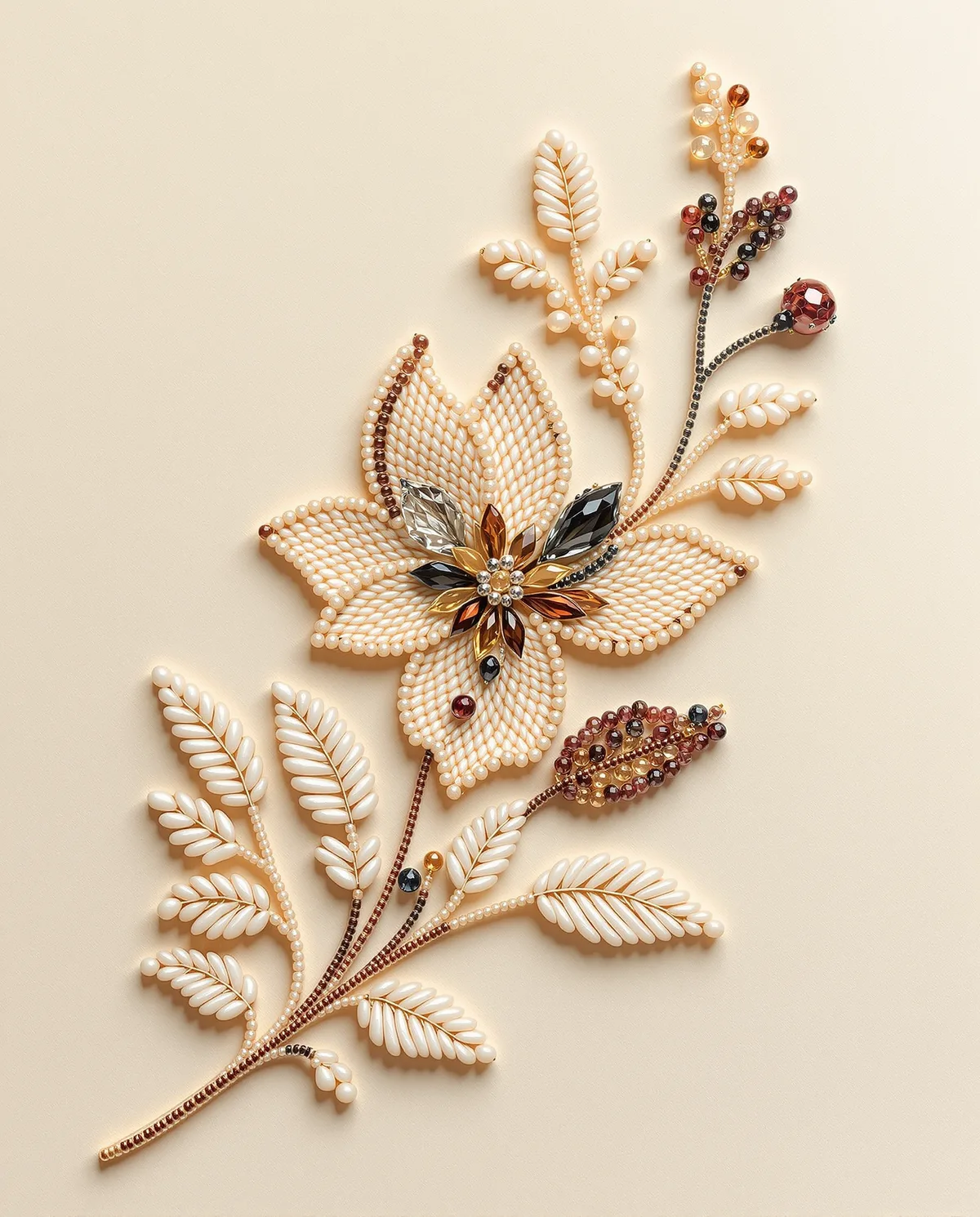
Technique · Embroidery
Every bead on an embroidered piece is held by thread, not adhesive. That single fact decides the ground, the stitch interval, the failure mode and the price — and it is why embroidery is the only construction that can hold an image.
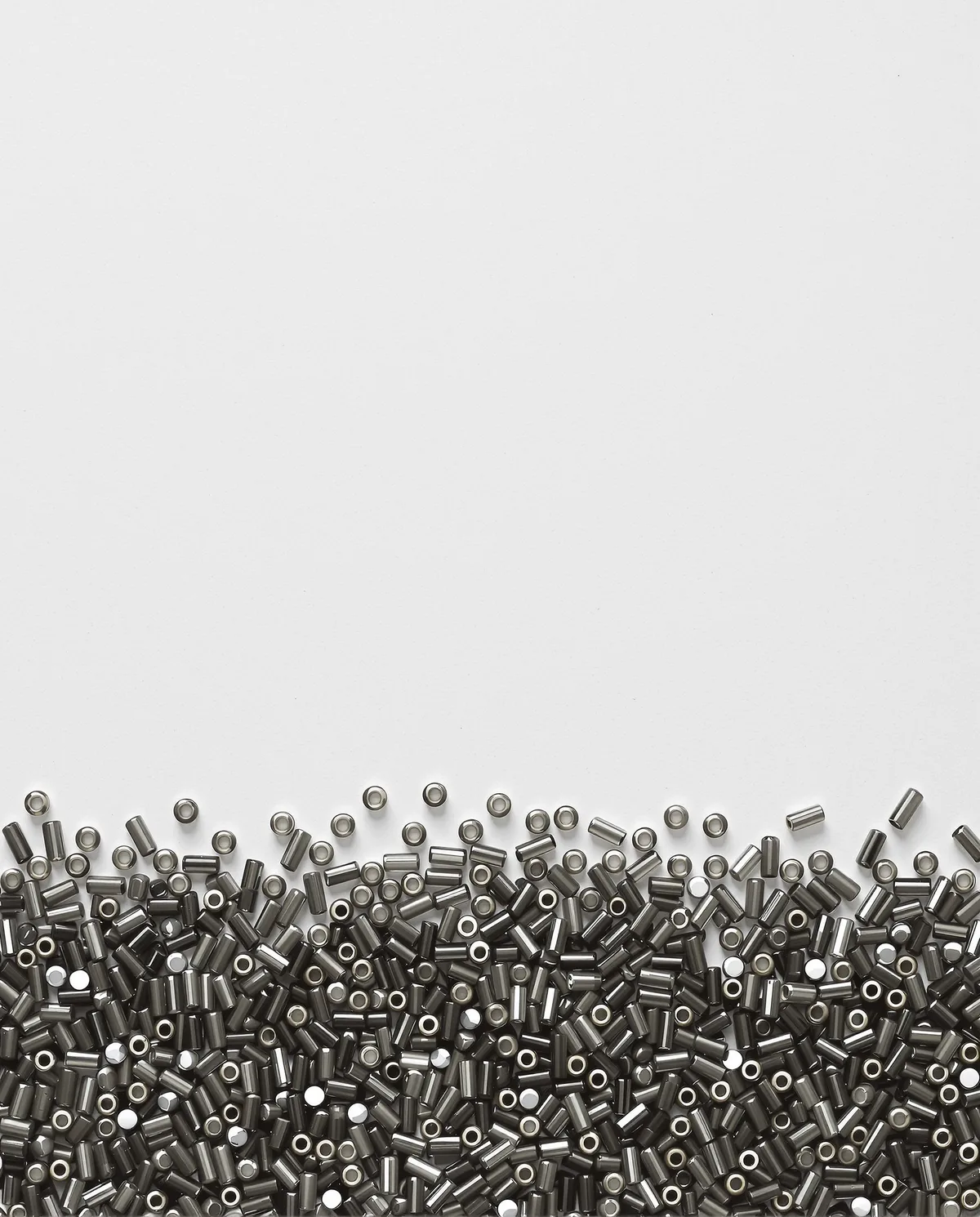
Glass seed and bugle beads couched onto stiffened felt in the zardozi tradition, the fine thread crossing between beads at every stitch.
Bead and thread embroidery couches beads onto a stiffened ground: the bead is threaded, laid in position, and the thread is tacked down on either side so the bead cannot move. It is worked in the zardozi tradition with glass seed and bugle beads and metallic thread, and it is the only beadwork construction that can hold a drawn image.
It is beadwork held by stitch. A bead is threaded onto a working thread, laid where the design wants it, and the thread is then tacked down to the ground on either side of the bead so that it cannot slide. The technique is couching, and it is the same mechanism used to hold metal thread flat in the zardozi tradition our studios work in.
Nothing is glued. The only exception is a cabochon — a flat-backed element with no hole — which has to sit on a glued seat because there is no way to pass a thread through it.
Seven stages, and the first one is about cloth rather than beads. The ground is chosen for the bead load it has to carry, because beadwork pulls: a field of several hundred glass beads on a soft fabric will draw it into ripples that no amount of pressing removes.
Images. This is the only beadwork construction that can hold a drawing, and the reason is geometrical. In hand-strung strands, gravity aligns beads into a line, so a strung panel can carry pattern, colour fields and gradients but not a motif. Embroidery places beads in two dimensions on a fixed ground, and with a bead small enough to act as a pixel that means a letter, a figure or a flower can genuinely be drawn.
That is why beaded table décor is almost entirely embroidered work, and why a brief asking for a recognisable figure belongs here rather than on a doorway panel.
Against two things, because one is not enough. The bead map carries identity and position and is what an inspector samples against. The retained approved piece carries the density and the colour, which are judgements a drawing cannot hold.
Colour is checked against the retained piece in daylight, for the usual reason: a surface-dyed glass bead is a batch property, and bead dyeing and colourfastness explains which finishes drift.
Five, in rough order of frequency. A loose bead, from a couching interval set too long for the bead length. Visible carrying thread between beads, which reads as a line of thread rather than a line of beads. Ripples in the ground. Crushed bugle beads, where a tube was forced over too tight a curve — bugle beads are strong along their axis and weak across it. And exposed thread ends at a turned edge.
All five are bench rejects. The one that escapes inspection is the bead that looks seated and is not, which is why finished pieces are tested with light tension on sampled beads rather than only looked at.
Stitch count. Not bead count, not area, not colour — stitch count, because every stitch is a hand movement and the hand movements are the cost. Two designs with the same number of beads can differ substantially if one couches at every bead and the other at every third.
The levers follow from that. A longer bead covers the same line with fewer stitches, which is exactly why bugle beads are a real cost lever on a direction-neutral field. De-densifying an infill removes beads and stitches together. And a canvas or printed ground behind an open bead field lets the ground carry colour the beads would otherwise have to — a technique used on one of our own 2025 pillow developments to hit its target by de-densifying the infills.
In our own beadwork studios, on an embroidery frame, with a beading needle and thread — plus metallic thread and zari for the raised work. Those studios work glass, resin, bone and shell beads with zardozi embroidery and faux capiz, and they are the same studios that string the hanging work.
The craft lineage matters here more than the equipment. Zardozi is a hand-embroidery tradition, and the mission the company states for itself is to give second and third generation artisans modern manufacturing tools so they can work with their ancestral skills. Embroidery is the clearest place on this property where that is literally what is happening.
The family is documented at object scale: coasters of 10 to 11 cm diameter, dimensional florals of 9 to 12 cm, appliqué patches and brooches.
Above that, two things bind. The bead load distorts the ground, and the stitch count grows with area. There is also a hard physical limit in the craft. Flat bead embroidery is worked on a frame, and the frame sets the practical maximum width; above that size the format is a strung one rather than an embroidered one. That is a format limit, not a cost one.
Dimensions and shape first. Then edge and backing — no exposed cut cloth, no thread ends. Then the bead field, sampled against the map for identity and position, and tested for seating under light tension. Colour last, against the retained piece.
The ground, including whether it is stiffened and what it is backed with. The bead materials and sizes. The couching interval, or at least an instruction that the interval must be specified on the sheet. The motif, as artwork or a reference image. The finished size and edge treatment. And the colours, as references or physical chips.
The couching interval is the entry almost nobody supplies and the one that decides whether the piece survives a year of use.
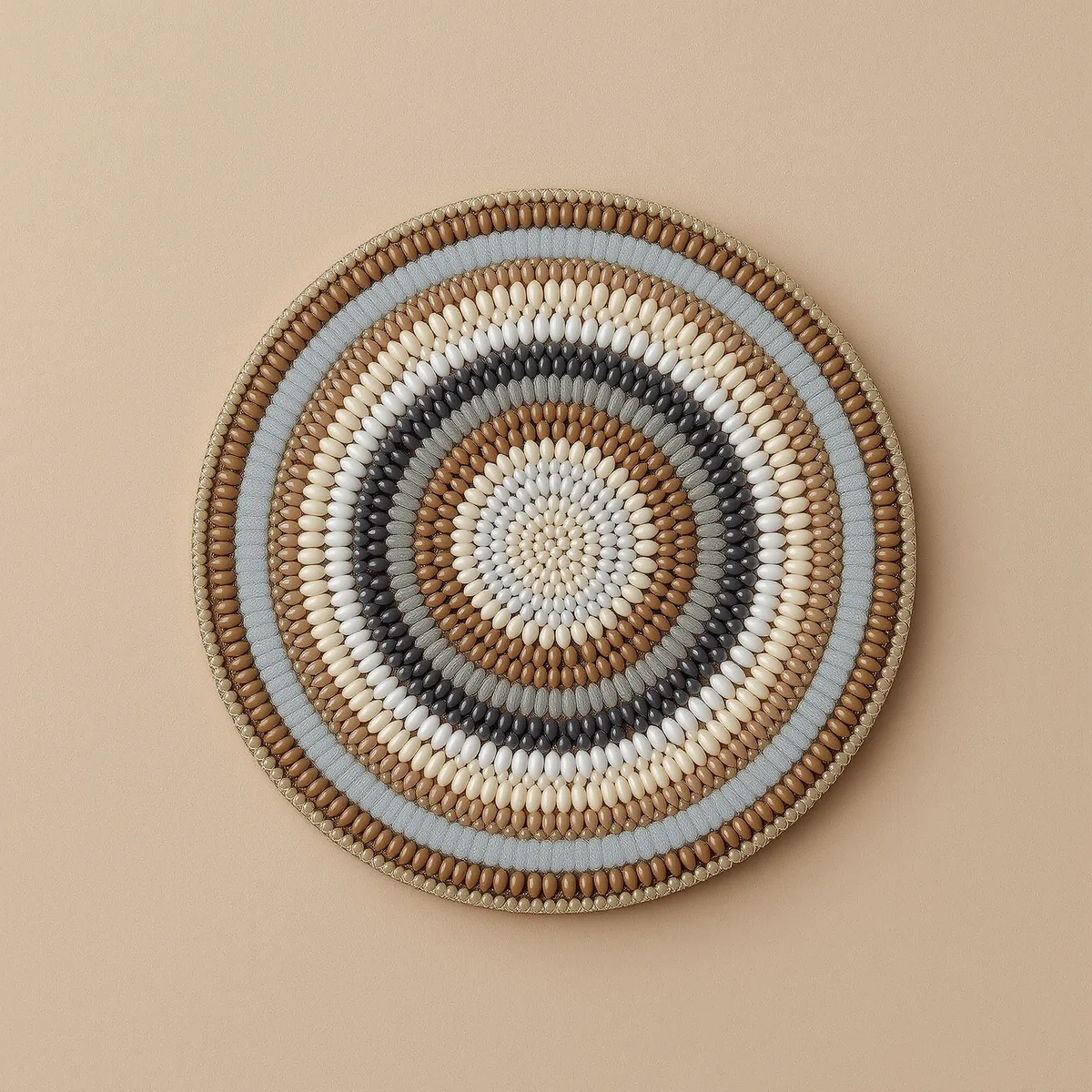
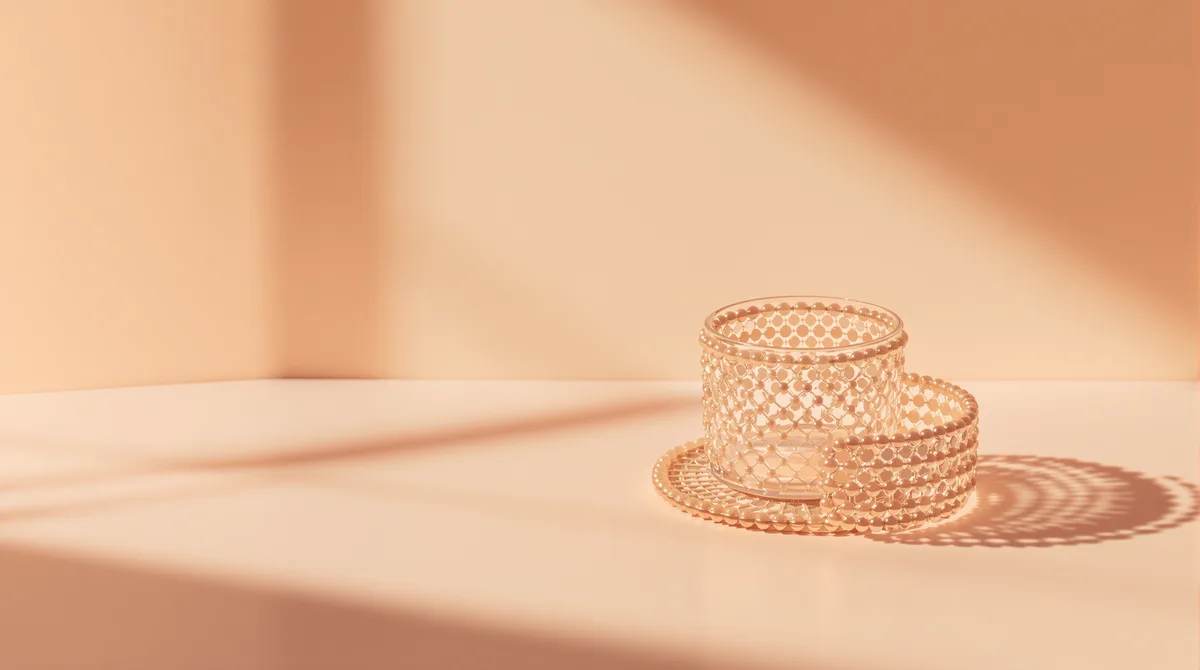
The table and object work. Bead-embroidered coasters in glass seed and bugle beads on stiffened felt, felt-backed with a turned edge, are the clearest example — beaded coasters sets out the two constructions side by side. Beyond coasters, the same bench builds bead-embroidered coin purses, jewellery boxes, round and monogram cases, and ornaments worked in hand bead and zari embroidery.
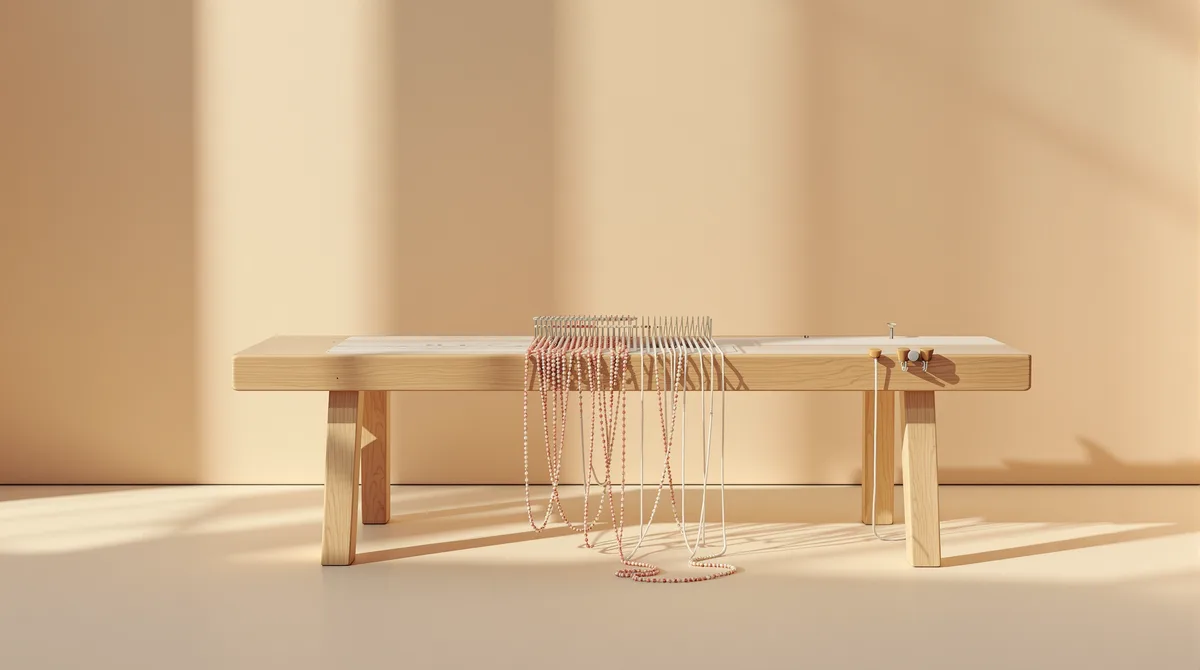
The hanging work that uses embroidery is the seed-bead textile family: a glass dyed seed-bead café curtain on a sheer ground, with a white-on-white version on chiffon developed alongside it, and a seed-bead icon pillow where the field is beadwork on cloth rather than a strung strand.
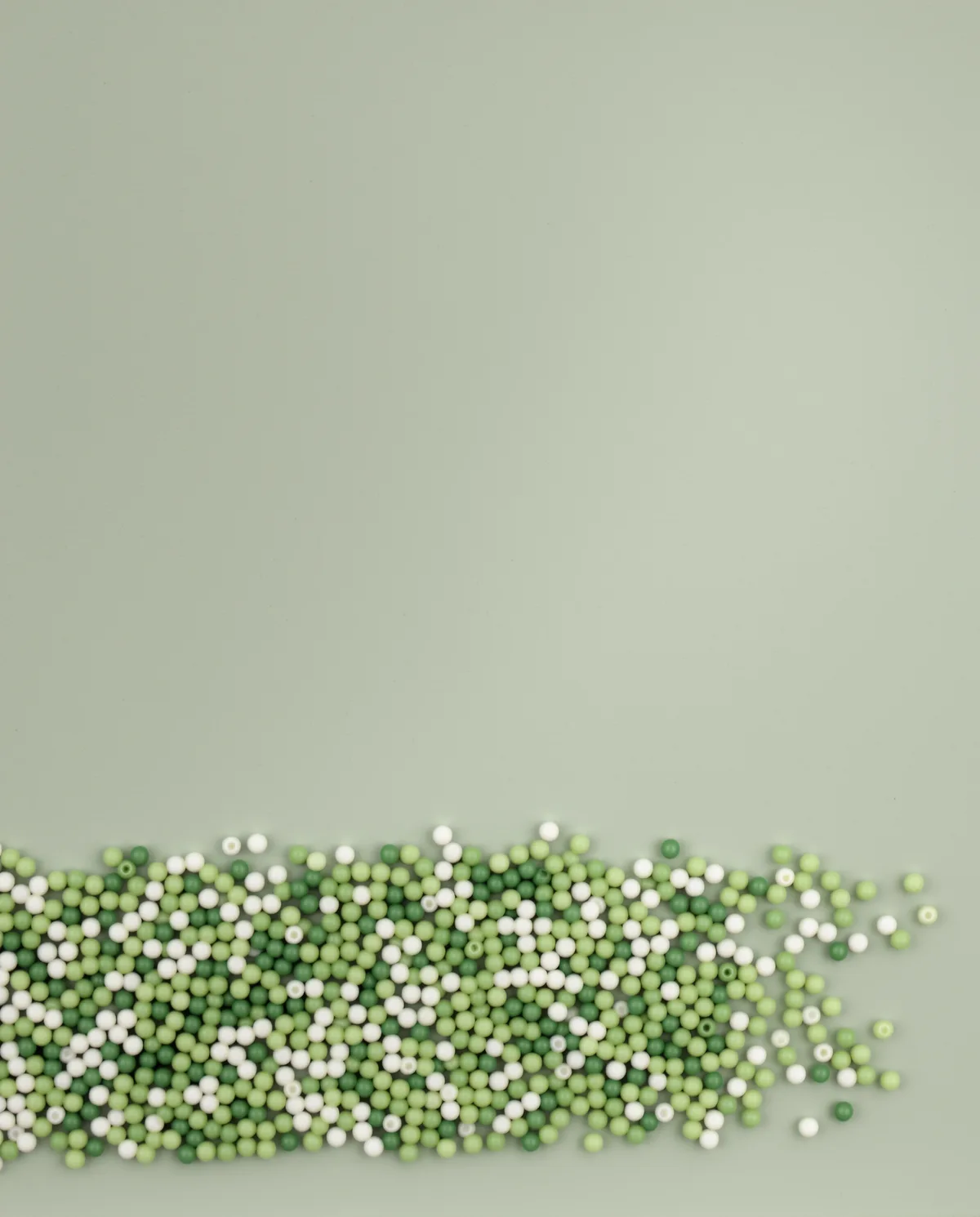
Glass, in seed and bugle sizes, with metallic thread and zari. That is not a preference but a consequence: only beads small enough to behave as a continuous field can resolve an image, and glass is the only family in the library made at those sizes. Glass seed beads is where that behaviour is set out.
Large beads can be couched as single features — a pressed accent at the centre of a floral — but they cannot make a ground. And acrylic seed beads have a place: on one of our own cushion developments, glass was used for sampling and plastic seed beads specified for production, because the weight on a soft face mattered more than the material.
Extractable data
| Stage | What drives the labour | What is rejected here |
|---|---|---|
| Ground selection and stiffening | Bead load the piece will carry | A ground too soft for the design |
| Design transfer | Complexity of the motif | A transfer that does not match the bead map |
| Framing | One pass, but it must be even | Uneven tension before beading starts |
| Couching the field | Stitch interval — the dominant cost | Loose beads, visible carrying thread |
| Raised and directional work | One pass per effect | Uneven relief, crushed bugles |
| Backing and edge turn | Size of the perimeter | Exposed cut cloth or thread ends |
| Documented formats | Coasters 10–11 cm diameter; dimensional florals 9–12 cm; appliqué patches; brooches | Pieces outside the documented size range need a new construction |
Good to know
Sewn. Each bead is threaded and its carrying thread is tacked down on either side, so the bead is held by stitch tension rather than adhesive. Nothing on a bead-embroidered piece is glued except a flat-backed cabochon, which has no hole and has to sit on a glued seat.
It can, but the economics turn against it fast and the ground becomes the limit. The bead load on a large panel distorts the cloth, and the stitch count grows with area. Flat bead embroidery is also worked on a frame, and the frame sets the practical maximum width; above it the format is a strung one rather than an embroidered one.
It is set by stitch count rather than by size. A 10 to 11 cm coaster with a dense field is many hundreds of couching stitches, all by hand. Production for beaded décor runs 40 to 60 days after sample approval, and embroidery sits at the labour-intensive end of that band.
Glass seed and bugle beads above all, with metallic thread, zari, sequins and cabochons as supporting elements. Only very small beads behave as a continuous field, so the large bead families are out — a pressed glass accent can be couched as a single feature but cannot make a ground.
Against the bead map and the retained approved piece together. The map carries bead identity and position; the retained piece carries the colour and the density. Inspection samples positions rather than checking every bead, and tests seating by light tension as well as by eye.
A loose bead where the couching interval was too long. Visible carrying thread between beads. Ripples in the ground from uneven framing or from a ground too soft for the load. Crushed bugles, where a tube was stitched over too tight a curve. And exposed thread ends at the edge.
The same document as for a strung panel, with positions on a grid instead of on strands. It names every bead by material, shape, size and colour route, and fixes where each one sits. For embroidery it also carries the couching interval, which is the entry that decides durability.
Keep exploring
Material
How seed beads are drawn, why dye lots are quoted per run, what the drill hole limits, and where seed-bead work earns its cost.
How it is madeMaterial
Cut long instead of short: how a tube gives beadwork direction, where it outperforms a round, and why the cut ends decide the thread.
Compare the optionsManufacturing
Bead-embroidered glass coasters on stiffened felt, or moulded acrylic sets in translucent and opaque — construction, sizes and what moves the cost.
How it is madePillar
The table cluster: coasters, placemats and chargers, runners and napkin rings, with the construction and ground material each one needs.
View the rangeReference
Five craft families — strung, embroidered, wire-wrapped, knotted and wrapped fibre — and what each one is good for.
How it is made
Start a conversation
Send a reference, a colour chip or a sketch. Minimums are set per design and confirmed per quote; sampling is quoted separately and usually runs 16 to 20 days from an agreed brief.