Design
Colour stories, by construction
Colour stories documented by how they are built, not by how they look in a mood board.
How it is made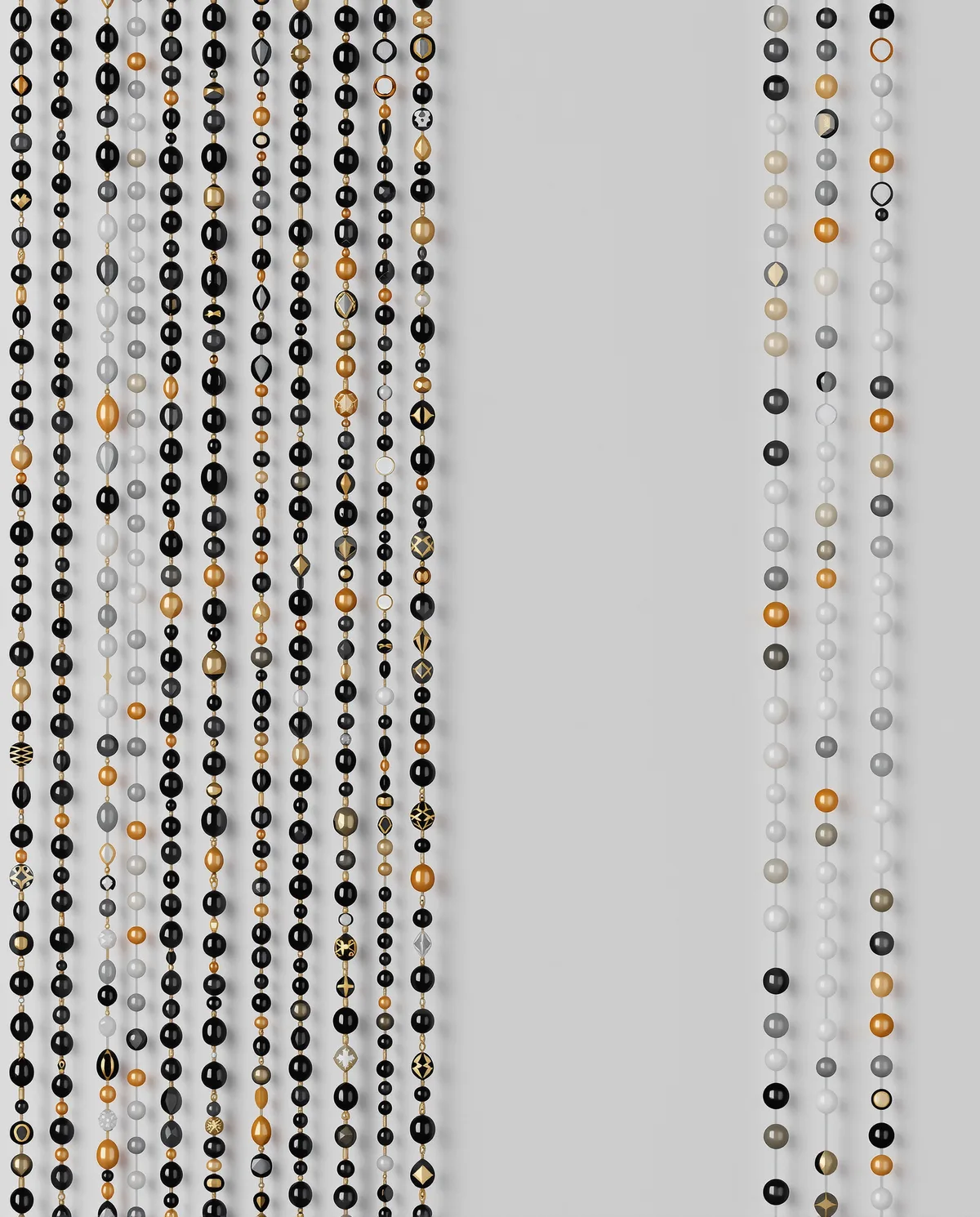
Colour story
The densest all-glass design in the wall-hanging group, which makes weight a design question rather than a packing one.
Six bead strands in the After Hours palette, jet black and smoke grey crystal with antique gold, against a deep charcoal ground.
After Hours is the dark story: jet and garnet glass with gold metal rounds, drawn at 60 × 100 cm on 33 strands with a V-point hem. It is the densest all-glass design in the wall-hanging group, so weight stops being a packing detail and becomes a design constraint — the finished weight is established on the approved sample, not estimated from a render.
After Hours is the dark story in the 2027 design library. Jet black and deep garnet glass, with gold metal rounds supplying the only light in it.
It is drawn as a wall hanging at 60 × 100 cm on 33 strands with a V-point hem. Those 33 strands across 60 cm are the closest spacing in the wall-hanging group — a pitch of about 1.8 cm — and that density is both what makes the story work and what makes weight a real question.
Two body-coloured glass darks and one plated metal. The glass carries the field; the metal carries the event.
The two darks are chosen to be close rather than contrasting, which is what gives the piece its depth — jet reads as absence, garnet reads as a dark with blood in it, and the eye keeps looking for the difference. Without a third element they would average into one black field, which is why the gold is structural rather than decorative. Metal beads are finished and plated in our own Moradabad plants, so the finish is a specification rather than a found look.
Glass by bead line, metal by finish specification. Of the two, the metal is far more likely to drift: plating thickness and final polish both change how warm a gold reads, and neither shows on a colour reading.
So the sample is the control. A plated bead is approved physically, the finish is named from the standard set — Matte Gold, Brilliant Gold, Champagne Gold, Antique Silver and the rest — and production is held to the approved sample.
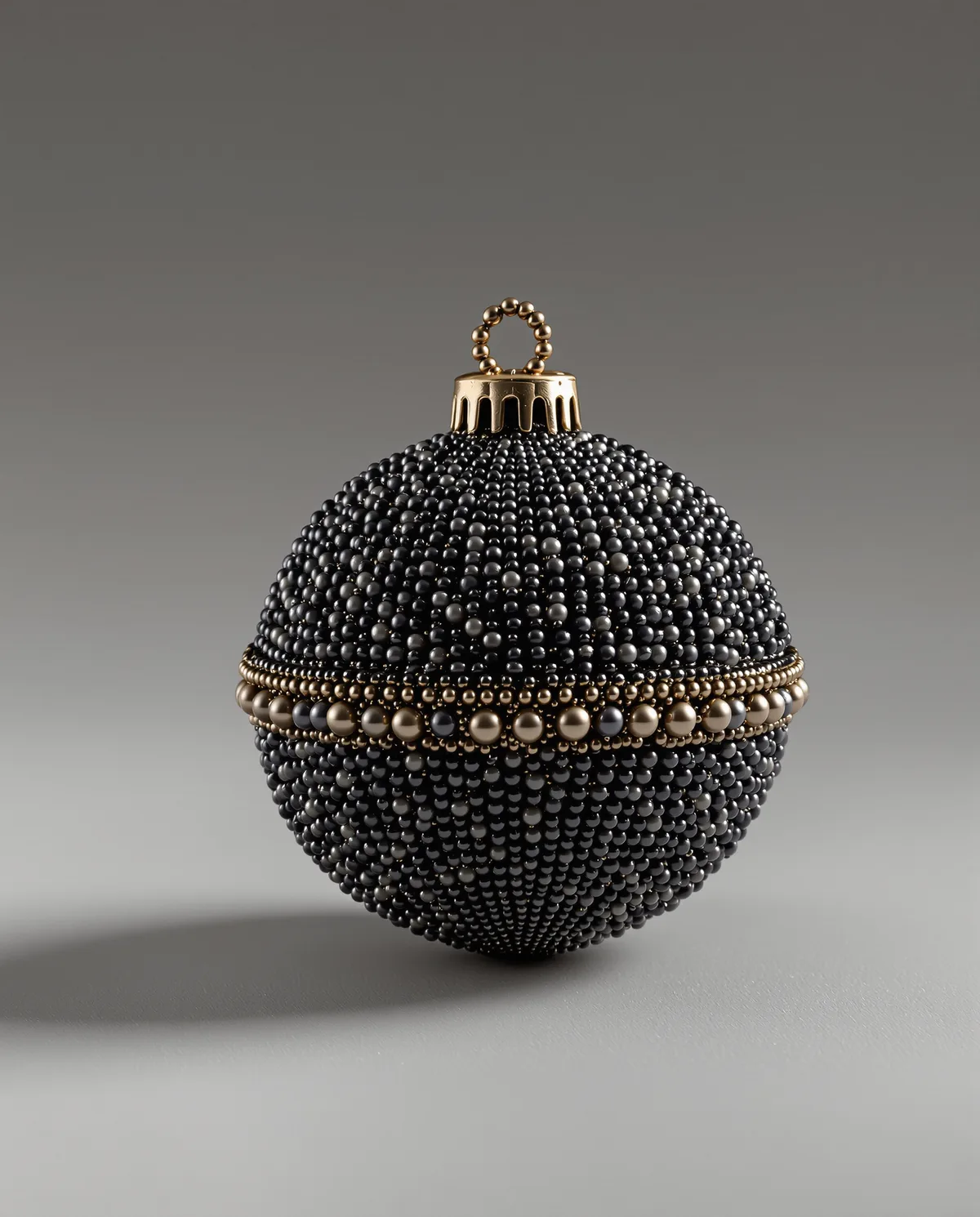
Jet and garnet are close enough in value that the piece needs a third element with a different behaviour. Plated metal reflects where glass transmits, which is the separation.
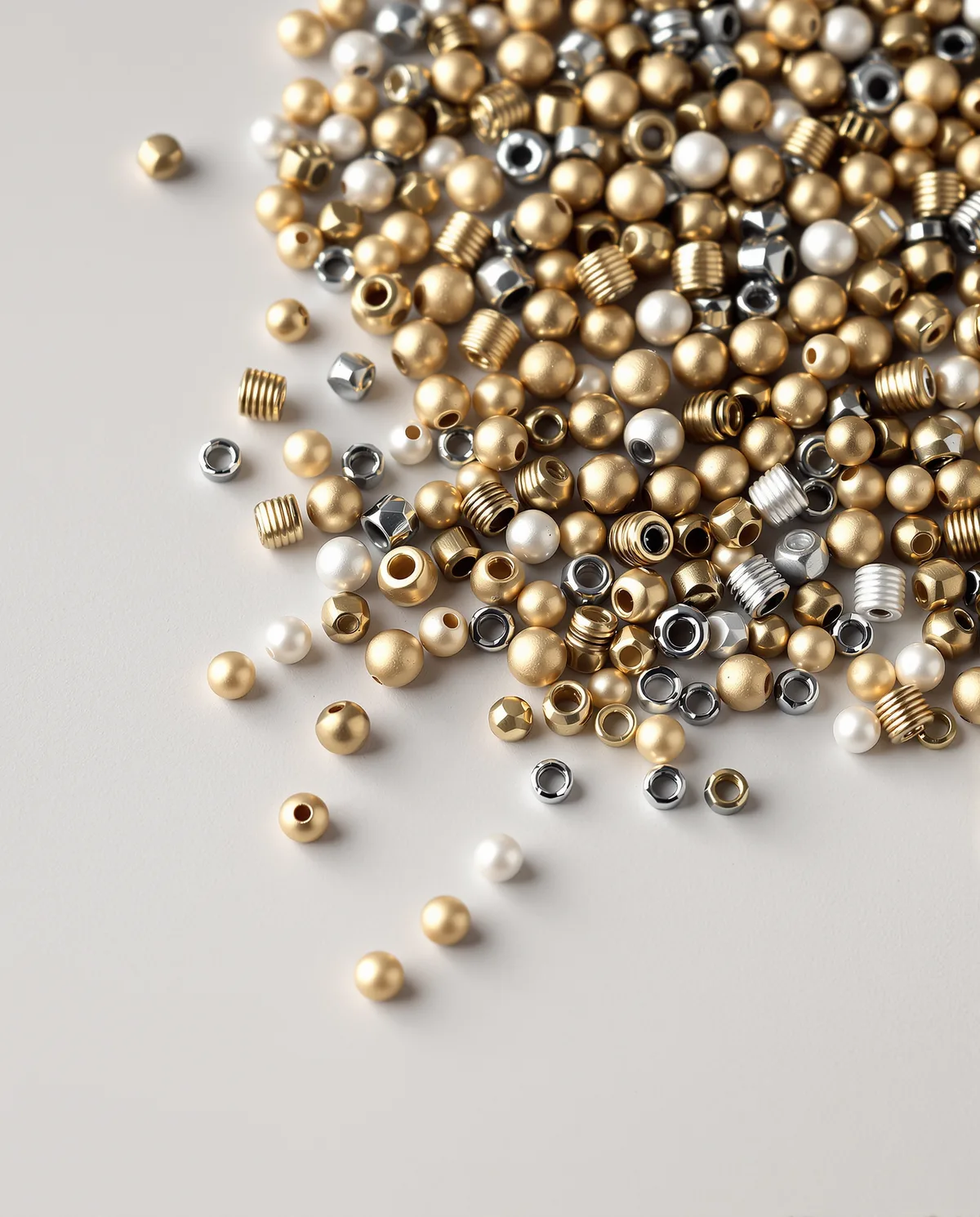
A plated bead is specified by its finish — matte gold reads as a flat warm note, brilliant gold as a highlight. The same bead in two finishes changes the whole story.
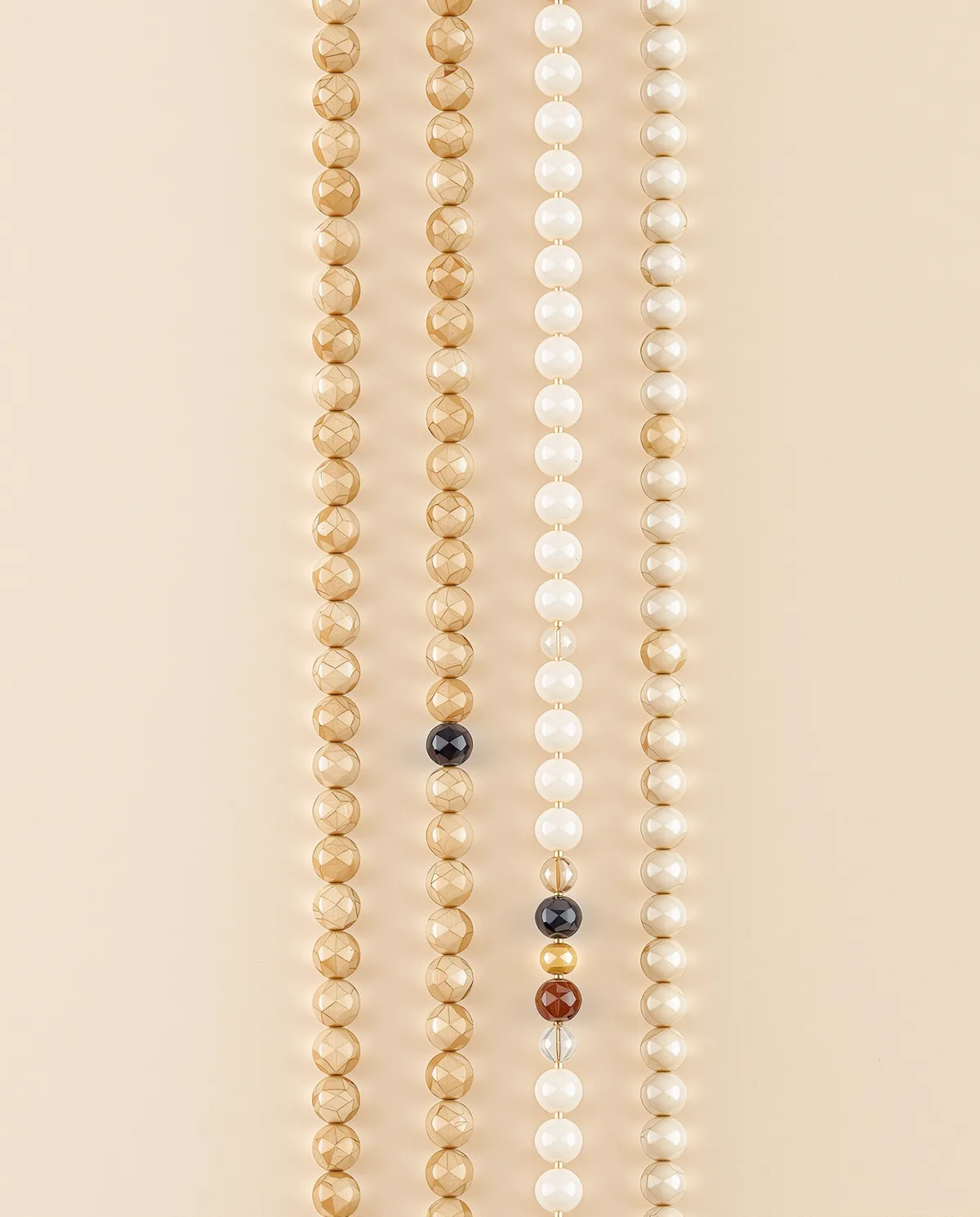
Thirty-three strands across 60 cm is close spacing for a wall piece. The density is what makes the palette read as a solid dark field rather than as stripes.
Wall pieces and short formats. Both read against an opaque ground at close range, which is where a dark glass bead and a plated bead can be told apart.
A full-height doorway in this palette is the format to think hardest about. A dark curtain at 200 cm in a domestic hallway reads as a closed door rather than as a hanging, and the weight at doorway density compounds. If the story has to go full length, the right move is to open the spacing rather than to lighten the colour.
The metal finish, before the glass. Moving from brilliant gold to matte gold turns the story from evening to architectural without touching a single glass bead, and it costs nothing in bead lines.
The second change is strand pitch. Opening 33 strands to 27 — the Op Pennant density in the same format group — lightens the piece physically and visually at the same time, and keeps the palette intact.
As the luxury one, and as the one that is hardest to light in-store. A dark piece needs a dedicated light to show its highlights; under flat ambient shelf lighting it reads as a black rectangle.
Where it sells is as a contrast piece in a set. Beside a pale or pastel story it makes the whole group look more considered, which is a merchandising argument for carrying it even at lower unit volume.
Above a plain strand, and the reason is the metal rather than the glass. Dark body-coloured glass is unremarkable in cost; a plated metal bead is a different manufacturing route with a finishing operation attached to it.
The density compounds that. At 33 strands there are more beads per piece than in any other design in the format group, so every per-bead cost is multiplied by the largest count in the group. Bead size and material is the largest cost driver on any beaded piece, and here the material question is really a metal question.
One: the 60 × 100 cm wall hanging at 33 strands. There is no doorway, valance or portal drawn in this palette in the published library.
Backlighting does almost nothing for it, which is unusual in this library. Jet glass does not transmit, garnet transmits a little, and the metal transmits nothing at all, so a backlit piece is a silhouette.
Low directional lamplight is where it belongs. Garnet picks up a red core, the gold catches hard, and the jet gives the whole thing a ground. It is the one story here designed for evening light rather than for a window.
Glass and plated metal, as drawn. Acrylic will take jet and garnet and is the lighter, cheaper, impact-resistant route, with the trade-off that a dark acrylic bead reads flatter because there is less depth in its own mass.
Horn is the interesting alternative to jet: cut, drilled and finished in our own beadwork studios, it gives a dark with natural variation in it, which is a different and in some rooms a better answer than a uniform black.
Stock for the glass. Specified-by-finish for the metal, from the standard set or as a custom finish. Nothing in the published palette needs dyeing to match, which makes this one of the more straightforward stories to reorder — and the care note is the mirror of that simplicity: dark beadwork shows dust more than pale beadwork does, so routine care matters more here than the material does.
Extractable data
| Specification | Value |
|---|---|
| Palette | Jet black, deep garnet, gold |
| Beads that carry it | Body-coloured jet and garnet glass, with plated metal rounds |
| Wall design | 60 × 100 cm, 33 strands, V-point hem |
| Strand pitch | About 1.8 cm centre to centre |
| Density | The highest strand count in the 60 cm wall format |
| Metal | Finished and plated in our own Moradabad plants |
| Standard finishes available | Matte Gold, Brilliant Gold, Champagne Gold, Antique Silver and the rest of the standard set |
| Weight | Established on the approved sample |
| Production | 40 to 60 days after sample approval |
Good to know
Glass for the darks, plated metal for the gold. Jet and garnet are among the colours glass holds best as body colours. Acrylic will take both and is the lighter route, but a dark acrylic bead reads flatter because it transmits less light through its own mass.
Yes, and the weight problem disappears with it. A dark palette compresses well because a short piece reads as a band rather than as a field, and the gold note has more impact when there is less dark around it.
Yes. The structure is two close darks plus one reflective note, and it carries into any dark family — ink and aubergine with antique silver, or chocolate and oxblood with champagne gold. The standard finish set gives eight metal options to work from.
A strung wall hanging drawn at 60 × 100 cm on 33 strands with a V-point hem. It is available to develop at that size.
The glass is stock body colour, which is why a dark palette is one of the cheaper ones to hold across reorders. The metal is specified by finish from the standard set, or in a custom finish using techniques such as hand battering, large-grain sand casting, physical vapour deposition or gold plating.
The glass by its bead line. The metal by its finish specification, confirmed on the sample — a plated finish is the element most likely to drift, because plating thickness and polish both affect how warm the gold reads.
Keep exploring
Design
Colour stories documented by how they are built, not by how they look in a mood board.
How it is madeIndex
Twenty-four named looks, each described by the material, palette, pitch and hem that actually produce it.
Compare the optionsColour story
Wood rondelles with honey glass and dotted drops on 30 strands — warmth carried by the wood rather than the glass.
See the detailColour story
Cream, lagoon and jade glass ovals on 27 strands, where the optical read comes from bead geometry rather than colour.
See the detailColour story
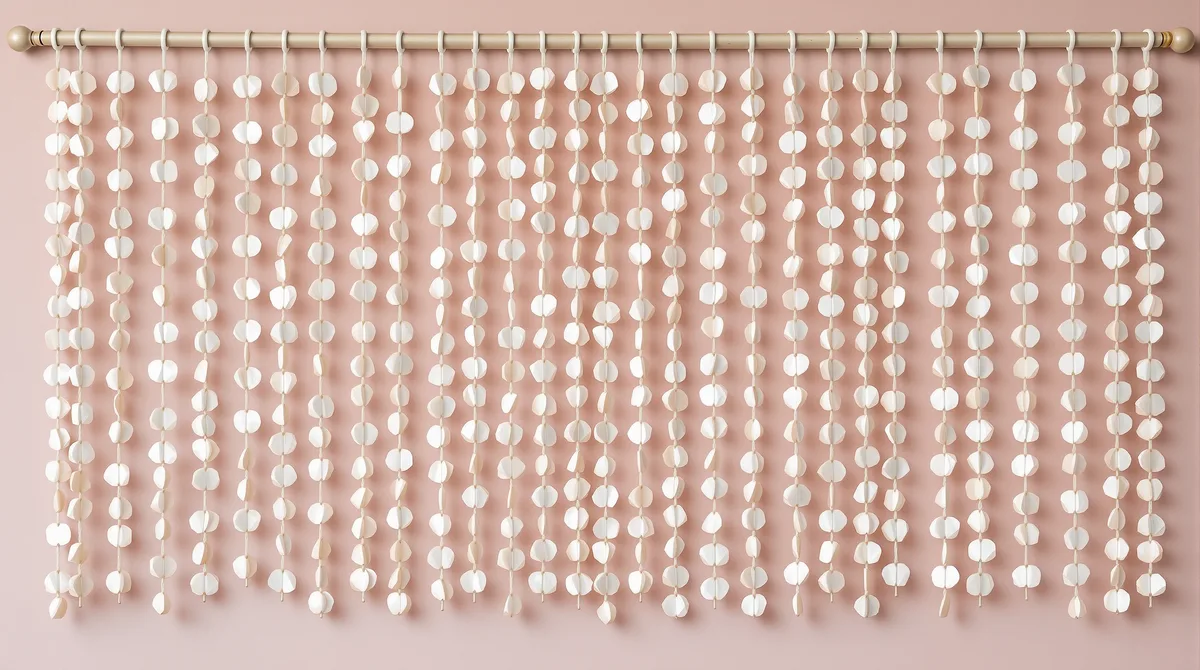
Five-petal faux capiz blossoms cut to shape, each held by a spacer bead dyed to match, in a sampled and approved build.
See the detailDesign
60 × 100 cm on 33 strands of jet and garnet glass with plated gold rounds, to a V-point hem.
See the detail
Start a conversation
Send a reference, a colour chip or a sketch. Minimums are set per design and confirmed per quote; sampling is quoted separately and usually runs 16 to 20 days from an agreed brief.