Glossary
Dyed to match (DTM) in beadwork
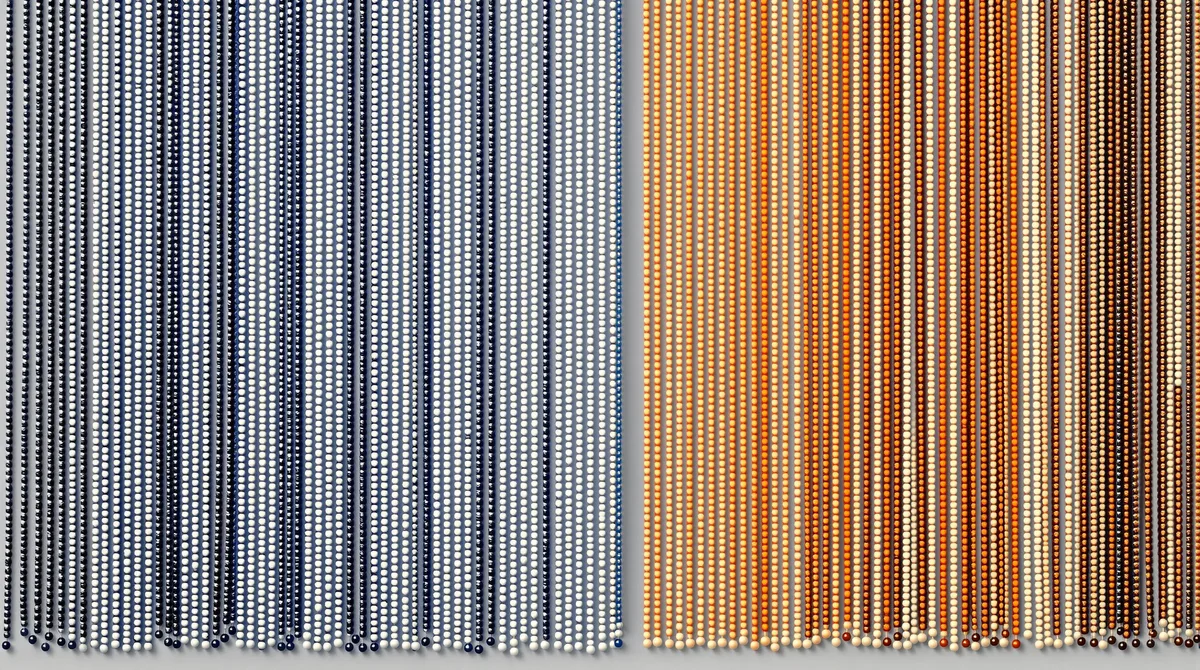
Dyeing one bead to another bead's colour rather than to a swatch — why it is used, and what it does not promise.
Read the guide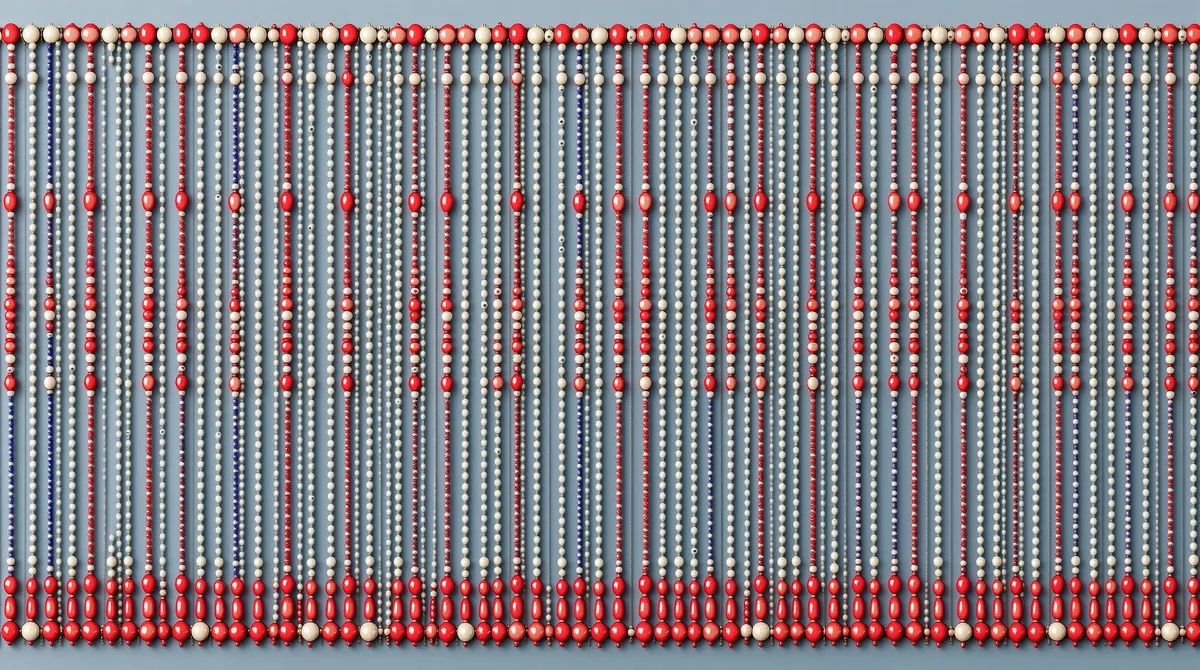
Design · Dot Beaded Portal
A large feature bead on a ground dyed to match it. The ground is the invisible half of the design and the half that makes it work.
A beaded portal in which large dotted oval pressed-glass beads in cobalt and cherry red with raised chalk-white dots sit on a base of small plain beads in the same cobalt, lining…
The Dot portal is a 200 × 90 cm doorway built on 30 hand-strung strands, with 13 × 22 mm dotted oval glass beads as the feature. Around 90 to 120 dots go into one curtain, scattered three or four to a strand and never aligned in a row. The base seed beads are dyed to match the dot colours rather than chosen independently.
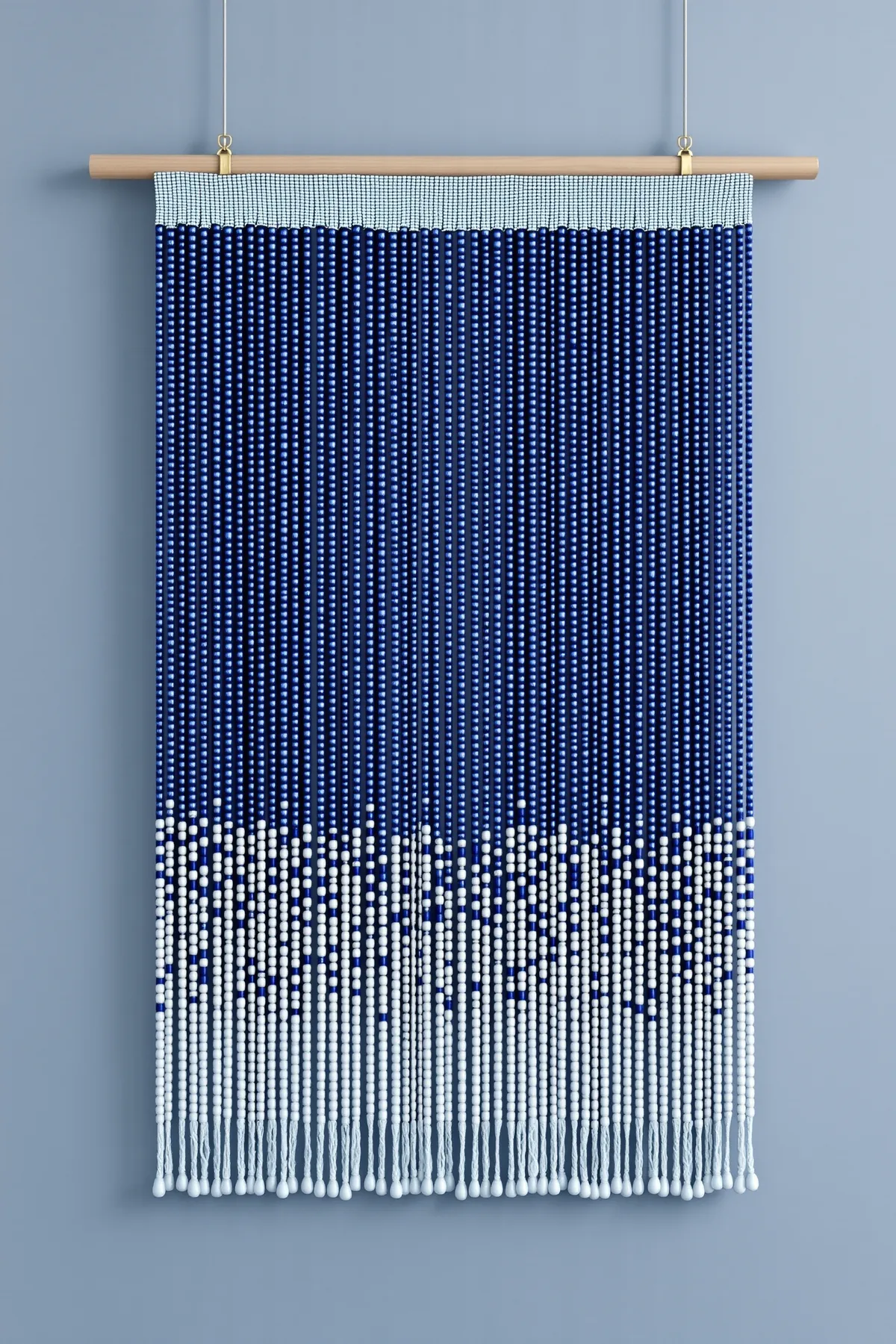
The Dot portal is a 200 × 90 cm doorway built on the same 30-strand hand-strung construction as our lead portal, with one element changed: a large dotted oval glass bead at 13 × 22 mm.
That bead is the design. Around 90 to 120 of them go into one curtain, which is a small number against the thousands of base beads around them, and the whole page is really about how a hundred beads are placed.
Three to four dots per strand, offset from strand to strand so that no horizontal row ever forms. That is written as a rule on the sheet, not left to judgement at the bench.
The distinction matters commercially as well as visually. A scatter written as a rule repeats across a production run, so piece 1 and piece 400 look like siblings. A scatter decided by eye at the bench does not, and the variance shows up as a quality complaint rather than as charm.
Three documents sit behind the table. The colour-count sheet carries the base sequence and the dot positions together. The bead count is split between a few hundred thousand ground beads and about a hundred feature beads, which is why coverage per panel is the wrong way to think about cost here. And the carton sizes follow the dowel length rather than the drop.
| Specification | Value |
|---|---|
| Finished size | 200 × 90 cm |
| Strand count | 30, hand-strung on cord |
| Feature bead | Dotted oval glass, 13 × 22 mm |
| Feature bead count | About 90 to 120 per curtain |
| Scatter rule | Three to four dots per strand, offset so no row forms |
| Base | Glass seed beads dyed to match the dot colours |
| Header | Single turned wooden dowel |
| Finish versions | Translucent and opaque; the opaque version went into production |
| Production | 40 to 60 days after sample approval |
Straight. A scattered-accent design is already carrying a pattern, and a shaped hem gives the eye a second rhythm to follow. The published build keeps the hem flat so the dots are the only event.
A single turned wooden dowel, made in our own Saharanpur wood factory. The weight question on this design is unusual in that it is concentrated. A hundred large glass beads distributed through a mostly seed-bead panel means the mass sits in a hundred points rather than spread evenly, which is a reason to agree inner packing on the sample.
Both, with one dependency. Recolouring means recolouring the dot and then dyeing the base seed beads to match the new dot colours. The base is dyed to match by design: its specification is another bead.
Resizing is routine. Scaling down is where attention is needed, because the three-to-four dots per strand rule is a density decision rather than an absolute, and a shorter strand with four dots on it reads much busier than a long one with four.
Retailers and brands buying under their own label, and it has a specific appeal in kids, teen and dorm ranges, where a graphic spotted pattern reads well and the glass is heavy enough to hang straight without a weighted end bead.
It is in production as part of the beaded portal programme. The opaque version is the one that went into production.
Two things, both about the unglamorous half of the design.
First, that the ground decides whether the accent works. Dyeing the base seed beads to the dot colours was the change that made the dots read as part of the strand rather than as something applied to it. Second, that translucent and opaque versions of the same bead are different products: the translucent dot glows and recedes, the opaque dot holds its edge. Both were made; the opaque one was the one taken forward.
On this design inner packing is agreed on the sample rather than assumed, because a 13 × 22 mm glass bead is heavy enough to chip a neighbour in transit if the strands are allowed to move.
It shows scatter, ground and bead scale, which is what a specifier needs to understand before writing a brief. It does not show the piece a buyer receives, and it is not captioned as if it did.
The slot on this page that genuinely needs a record photograph — a real dotted bead as run — ships marked as pending rather than filled with an approximation.
None of the named 2027 stories. The Dot portal belongs to the production programme, and its palette is a set of base-and-dot pairs rather than a palette family.
The closest story in the design library by method rather than by colour is Sorbet Parade, which uses the same scattered-accent-on-a-matched-ground mechanism in a different register.
The dot, almost entirely. Everything else in the build is there to carry it: seed beads for the ground, cord for the strand, a dowel for the header.
That concentration is why bead size and material is the largest single cost driver here, as it is on any beaded piece. A specialty glass bead at 13 × 22 mm is an expensive bead, and the design's economy comes from needing only about a hundred of them.
Good to know
Yes. Send a sketch, photo or artwork with size, materials, colours and quantity, and it becomes a colour-count sheet. A rough cost sheet is produced before any sample is made, so the cost levers are visible before money is spent on tooling or sampling.
Yes, and recolouring it means recolouring two things. The dot colours change, and the base seed beads are then dyed to match the new dots. Changing the dots alone leaves the ground out of tune with them, which is the commonest mistake on a scattered-accent design.
Yes. Width, drop and strand count are set per order. The one thing to watch when scaling down is the dot count: three to four per strand is the rule, so a shorter strand needs either fewer dots or a tighter spacing decision taken deliberately.
Dotted oval glass beads at 13 × 22 mm as the feature, and glass seed beads dyed to match the dot colours as the base. The base strand build is shared with our 30-strand portal construction, so the dot is the only new element.
Exclusivity is a commercial decision taken per programme rather than a property of the design. Name it in the brief and it is quoted alongside the piece.
The imagery here is editorial and shows the construction principle — scatter, ground, bead scale. What a buyer receives is the approved sample, matched in production. Where a slot calls for a record shot of the dotted bead, it ships marked as a gap rather than filled with a substitute.
Strands are kept in order and protected against knocking in transit, then packed to your carton, label and packaging specification. A large glass feature bead raises the knock risk, so inner packing on this design is agreed on the sample rather than assumed.
Keep exploring
Glossary
Dyeing one bead to another bead's colour rather than to a swatch — why it is used, and what it does not promise.
Read the guideDesign
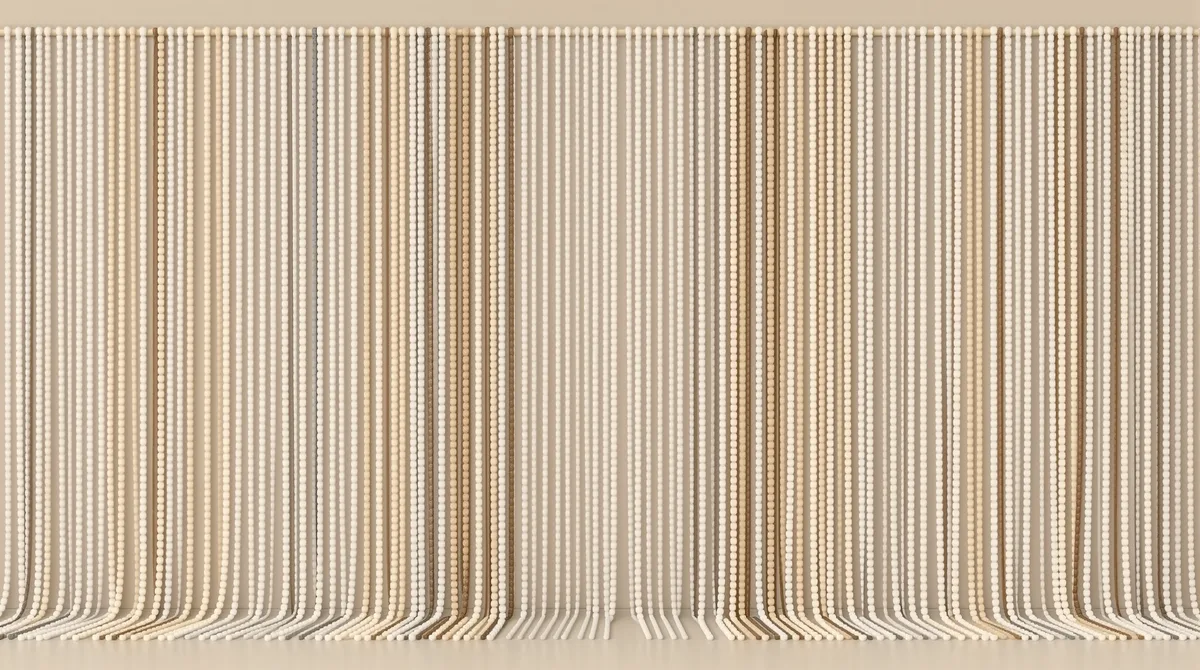
The full-length doorway designs, 90 × 200 to 120 × 210 cm, documented by strand count, hem shape and bead count.
Read the guideDesign
Thirty hand-strung strands of translucent acrylic at 90 × 200 cm on a stained header rail, recoloured season after season on one construction.
See the detailDesign
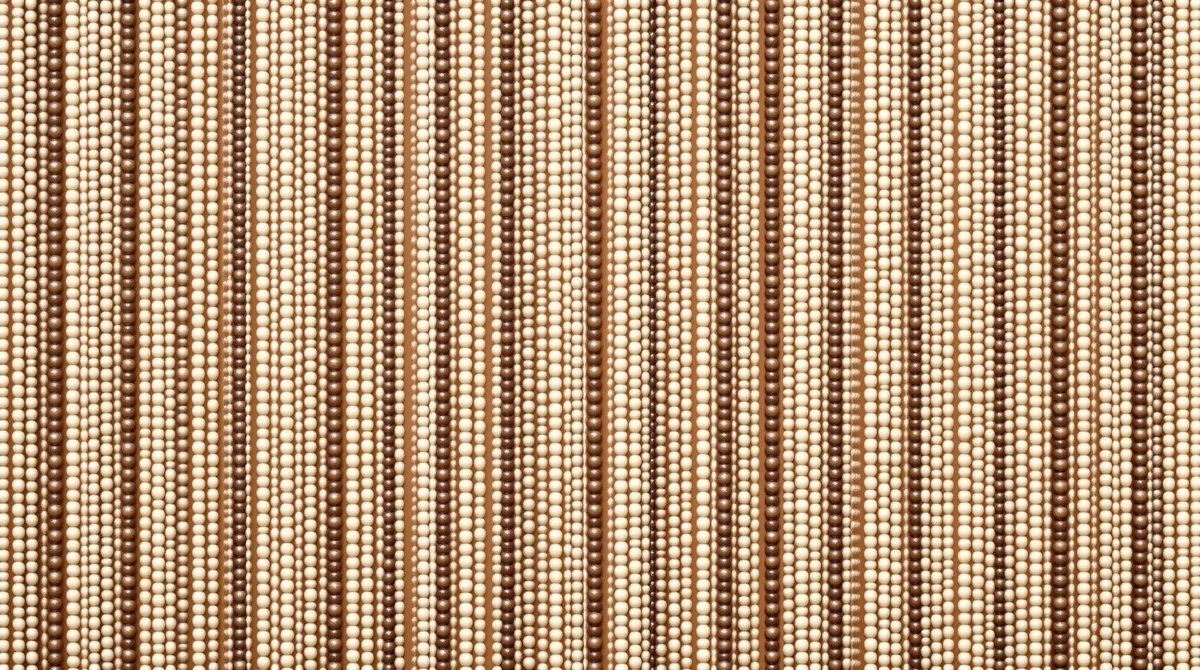
A cream seed-bead base with amber accents and about 120 glass mushroom beads, scattered up to four a strand and never in a row.
See the detailDesign
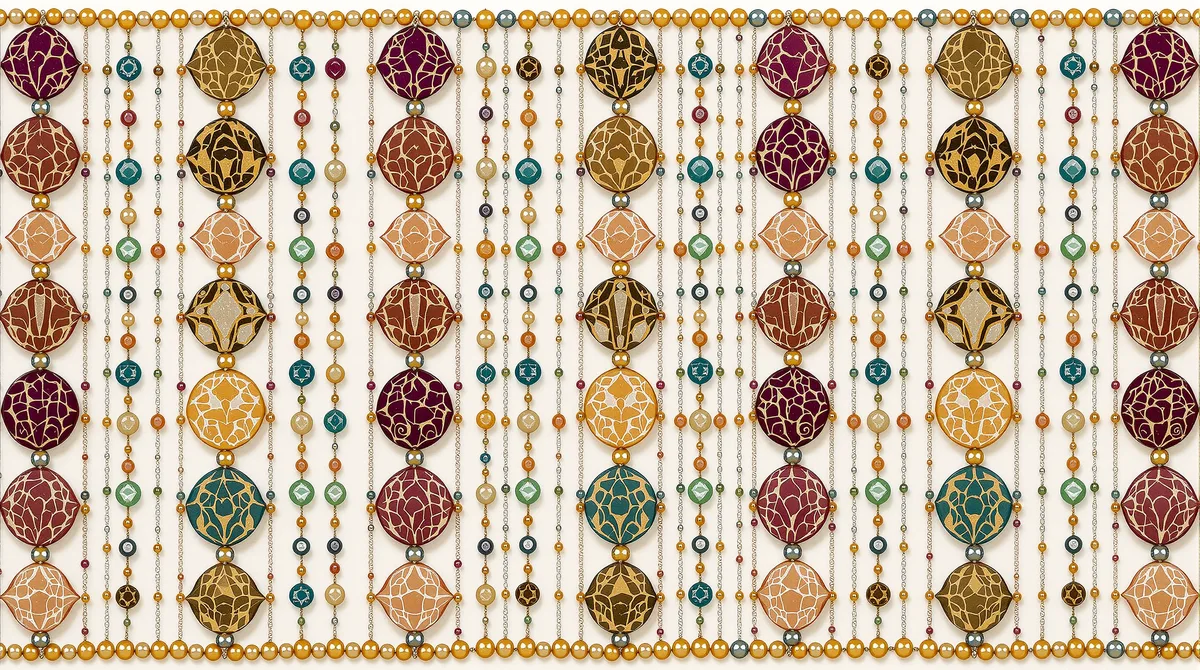
Large hand-made Venetian glass beads on a hand-strung doorway, with the palette edited for glass strength rather than for looks.
See the detailColour story
Scattered pastel accents across 60 strands at 120 × 180 cm, placed from a bead map rather than by chance.
Read the guide
Start a conversation
Send a reference, a colour chip or a sketch. Minimums are set per design and confirmed per quote; sampling is quoted separately and usually runs 16 to 20 days from an agreed brief.