Design
Colour stories, by construction
Colour stories documented by how they are built, not by how they look in a mood board.
See the detailDesign library · Index
Full-length work: a drop long enough that the hem shape and the strand pitch do most of the design, and the palette does the rest.
The doorway designs are the full-length formats, from 90 × 200 cm up to 120 × 210 cm, built at 40 to 60 hand-strung strands on dowels turned in our own wood factory. A spaced design on a 90 cm width runs near 3,100 beads; a densely patterned curtain at the same size holds about 11,800. Several are in continuous production; the rest are available to develop.
Design by design
Each page gives the finished size, the strand count, the bead types and the hem shape, and says whether it is a shipped design or one available to develop.
Design
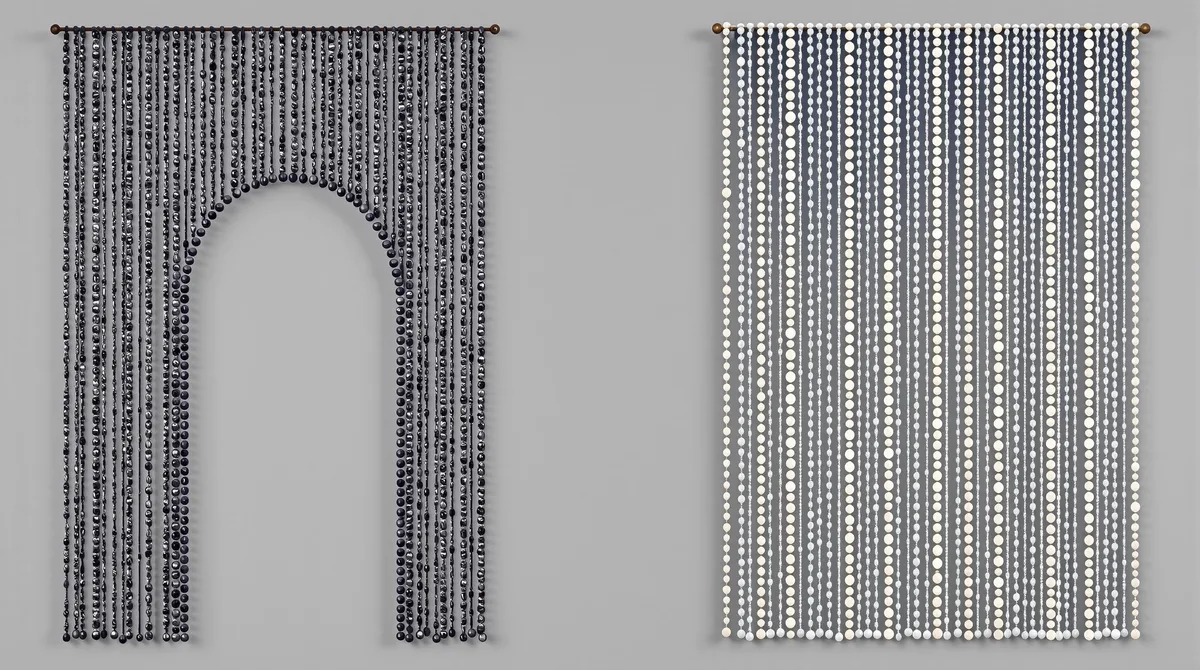
Thirty hand-strung strands of translucent acrylic at 90 × 200 cm on a stained header rail, recoloured season after season on one construction.
Design
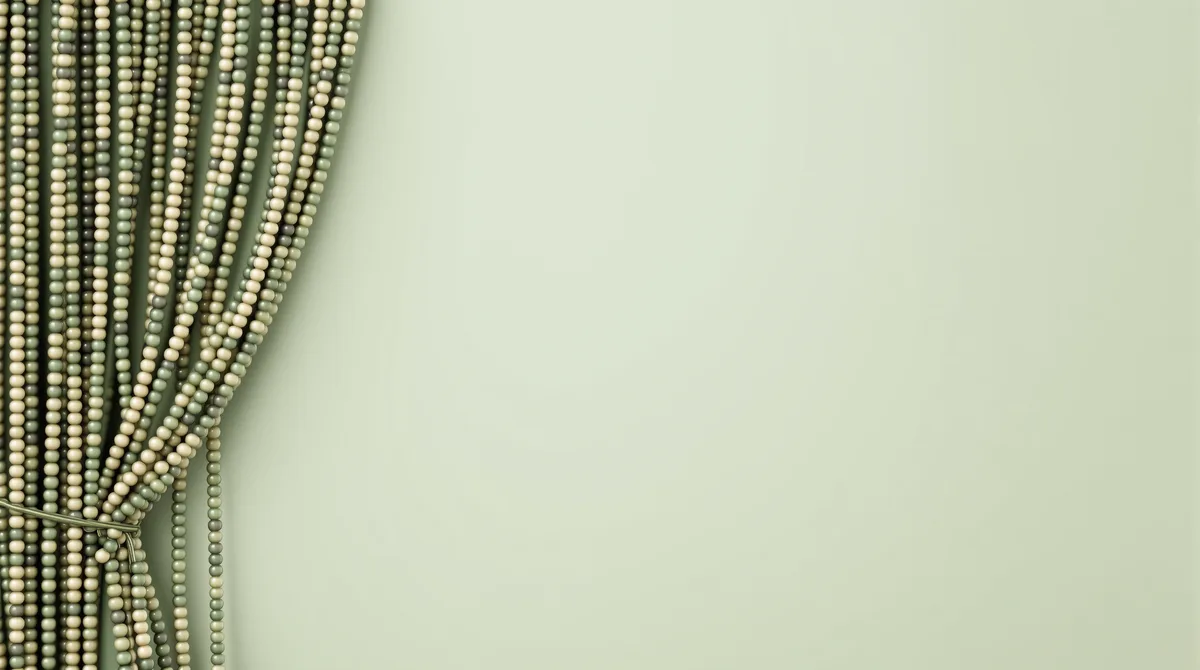
Lime glass seed-bead strands with spaced deep forest rounds at 76 × 140 cm, cut to an arched drop.
Design
Large hand-made Venetian glass beads on a hand-strung doorway, with the palette edited for glass strength rather than for looks.
Design
A cream seed-bead base with amber accents and about 120 glass mushroom beads, scattered up to four a strand and never in a row.
Design
Dotted oval glass beads at 13 × 22 mm, scattered three or four to a strand on a seed-bead base dyed to match each dot.
Design
90 × 200 cm on 40 strands at about 2.25 cm pitch, with a diagonal hem and roughly 3,100 beads.
Design
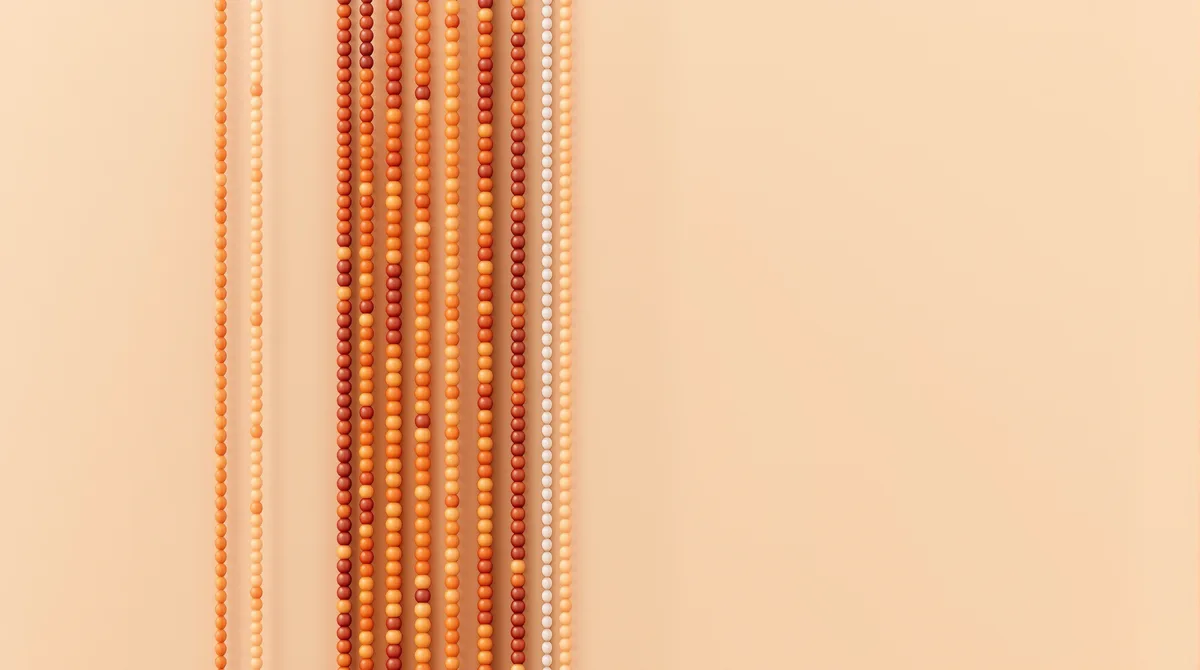
120 × 200 cm on 60 strands with an inverted-V hem, in glossy orange, canary, chocolate and cream soda.
Design
120 × 180 cm on 60 strands at about 2 cm pitch, with pastel accents placed from a written bead map and a straight hem.
Design
120 × 210 cm, the largest drop in the library, in silver, clear and off-white faceted glass.
The full-length doorway work, each design documented the way the bench documents it: finished size, strand count, bead types and sizes, hem shape, header, and what varies when the piece is reordered.
The format sets the constraints. A doorway drop runs from about 180 cm to 210 cm, which is long enough that a strand's own weight settles it straight within a day of hanging, and long enough that a graded or shaped design has room to read. Width runs 76 cm for a portal through 90 cm for a standard single door and 120 cm for a wide opening or a backdrop.
By build, not by mood. Two designs with the same palette and different constructions are different objects, cost differently and reorder differently, so the organising fact on each page is the construction.
Within that, the pages separate along one line that matters more than any other: whether the strand is fully covered in beads or spaced. A spaced 90 × 200 cm design runs around 3,100 beads. A densely patterned curtain at the same finished size holds about 11,800. That is close to a four-fold difference in material and in stringing hours for two pieces a buyer would describe with the same three words.
With the Chiara Beaded Portal. Thirty hand-strung strands of translucent acrylic at 90 × 200 cm on a stained wooden header rail, and a run of colourways built on that one unchanged construction — multi on a clear base, a brighter multicolour, a wood-tone neutral, a faceted iridescent. It is the clearest demonstration on the site that a colourway is a cheap change and a construction is an expensive one.
Finished size, strand count, bead types and sizes in strand order, hem shape, header type, and what varies when the piece is reordered. That set is what a bench builds from and what a tech pack is written onto, which is why every page in the group carries all of it rather than a mood and a name.
Against an approved sample. Every beaded door curtain is made to order in the colours, size and packing agreed on that sample, which is why there is no catalogue number and no shelf: the sample is the specification, and production is held to it by first-article and lot inspection in our own quality house. Prices, minimums and colour references are settled in the quote and on the sample, per design.
Chiara, Naia, Gigi, Mushroom and Dot have been sampled, approved and shipped, and their figures come from production documents. The colour-story doorways are available to develop at the sizes shown.
A bead count drawn for the 2027 library is an accurate count of the beads in the design, taken off real beads at true size, and it is confirmed on the approved sample — because a bench sorting a real bead line can find the drilled hole sits half a millimetre wider than drawn, and that is the kind of thing a sample is for.
The sampled designs, because they carry real answers about reorder behaviour. Chiara answers what happens when a construction is recoloured season after season. Gigi answers what happens when a hand-made glass bead is too fragile for a curtain. Mushroom answers how a figurative accent bead is distributed so it never looks like a repeat.
All of them carry a specification table, and the format pages behind them carry the rest. Hand-strung strands covers how a doorway drop is actually assembled, strand by strand, from a colour-count sheet. Bead sizes and stringing specifications is the sheet a finished brief gets written onto, and the document to have open before a width and a drop are chosen.
Good to know
Plants we own. Glass is drawn and hand-strung in our own Firozabad glass works, acrylic is moulded and dyed to our own dies, wooden header rails and dowels are turned, stained and lacquered in Saharanpur, and first-article and lot inspection run through our own Greater Noida house. Every design here carries a size, a strand count, a bead list and a hem shape, because that is what a specifier writes a brief from.
By product format first, then by design. Everything on this index is a full-length drop, roughly 180 cm and over. Shorter work sits with the valance and café curtain designs, and pieces that hang on a wall rather than in an opening sit with the wall hangings.
Per design, and confirmed with your quote, because a plain-strand curtain and a fully patterned one at the same finished size use very different amounts of material and stringing time. Bead count is the lever: a spaced 90 × 200 cm design runs around 3,100 beads against about 11,800 for a dense one.
The Chiara Beaded Portal, because it is the most reordered build on this index and the one with the fullest record: 30 strands of translucent acrylic at 90 × 200 cm, repeated across a run of colourways without the construction changing.
Chiara, Naia, Gigi, Mushroom and Dot have been sampled, approved and shipped, so their specifications come from production documents. The colour-story doorways are drawn against real beads at true size and available to develop, with every figure confirmed on the approved sample.
Keep exploring
Design
Colour stories documented by how they are built, not by how they look in a mood board.
See the detailPillar
Door curtains, portals, café lengths and valances: the standard sizes, the strand counts and the one question each format answers.
Compare the optionsDesign
Portals at 76 × 140 cm and hanging divisions at 90 × 180 and 120 × 180 cm, documented by strand count and opening shape.
Read the guideDesign
Valances at 120 × 30 to 40 cm and café curtains at 76 × 76 cm, documented by hem shape, strand count and bead count.
Compare the optionsDesign
Strung wall pieces from 50 × 90 to 60 × 100 cm at 20 to 40 strands, documented by hem shape and bead list.
Read the guideTechnique
The bead map, the cord, thirty strands on a dowel, hem shapes, suspension loops — and the three levers that move the cost.
Open the reference
Start a conversation
Send a reference, a colour chip or a sketch. Minimums are set per design and confirmed per quote; sampling is quoted separately and usually runs 16 to 20 days from an agreed brief.