Manufacturing
Graphic patterns across strands
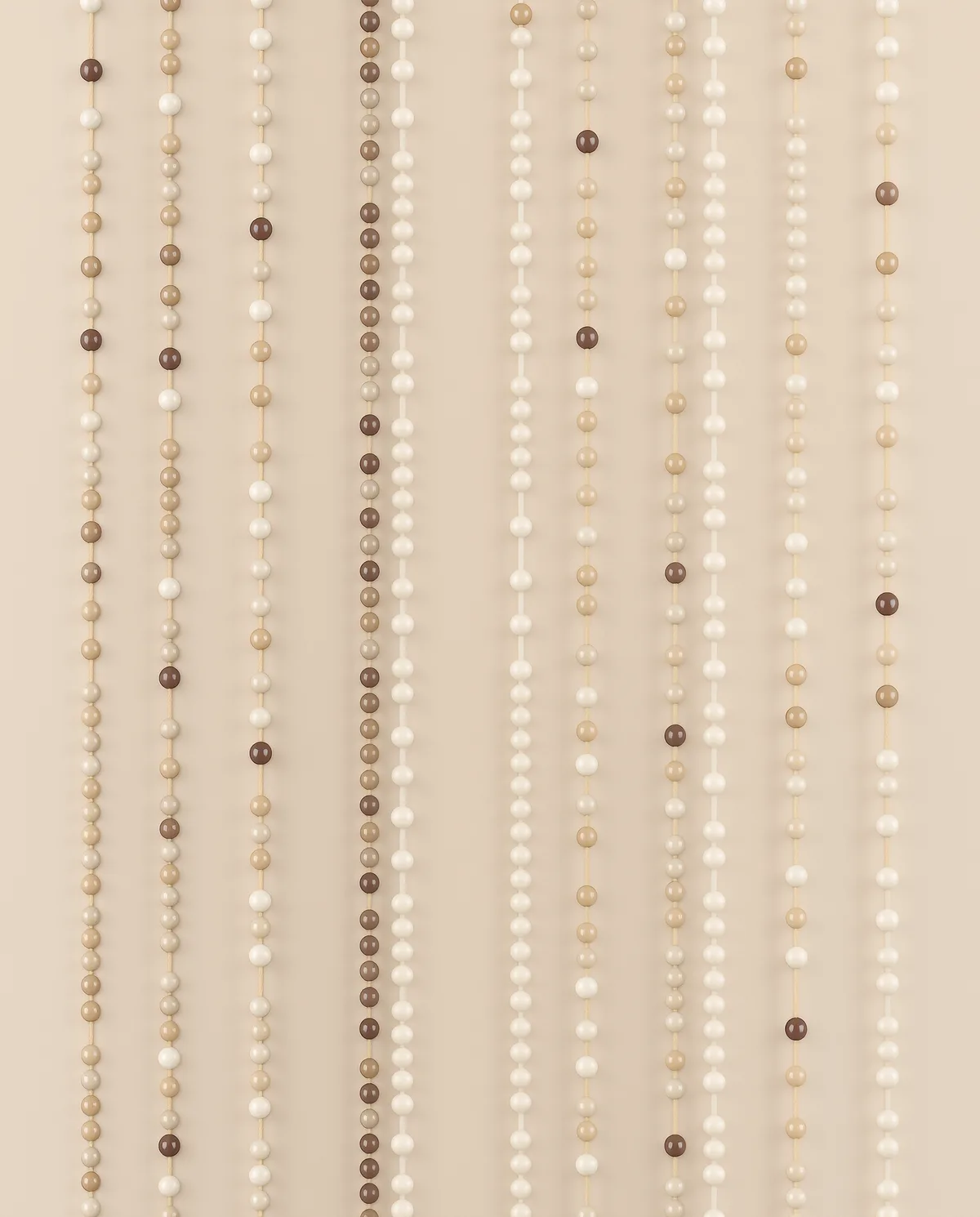
Artwork to bead map, the resolution limit set by bead size, and why a scattered accent costs a fraction of a graphic.
See the detail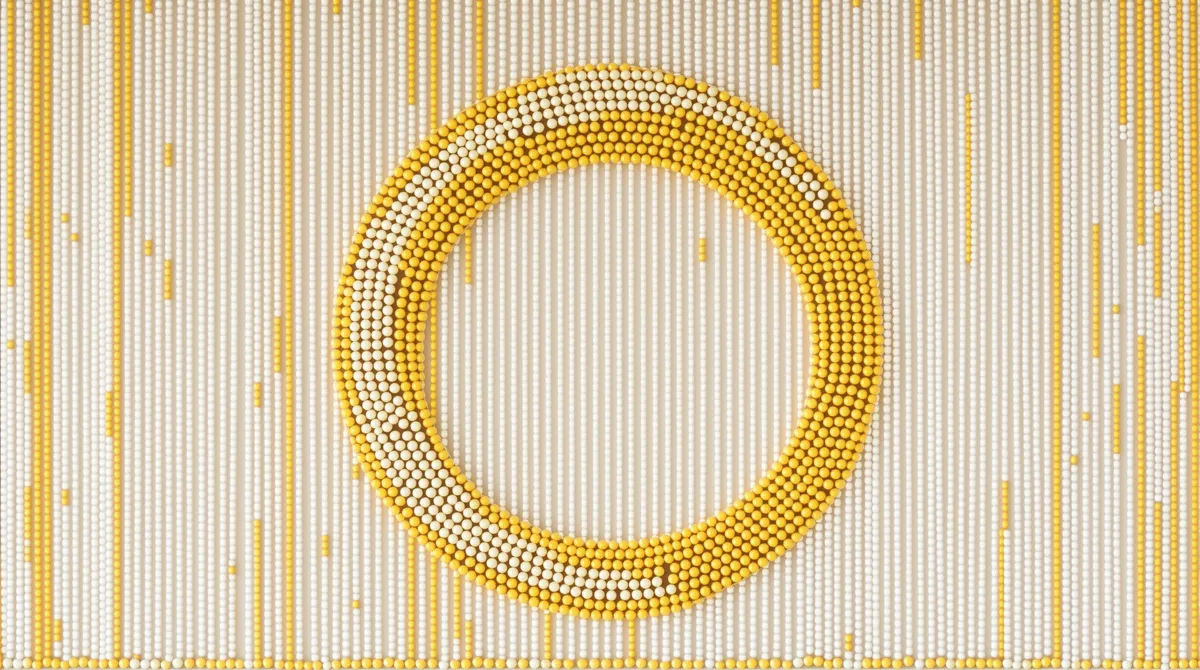
Design · Have a Nice Day Portal
A motif on a beaded curtain is drawn on a grid with gaps in it. Whether it reads at all is decided by bead diameter against strand pitch.
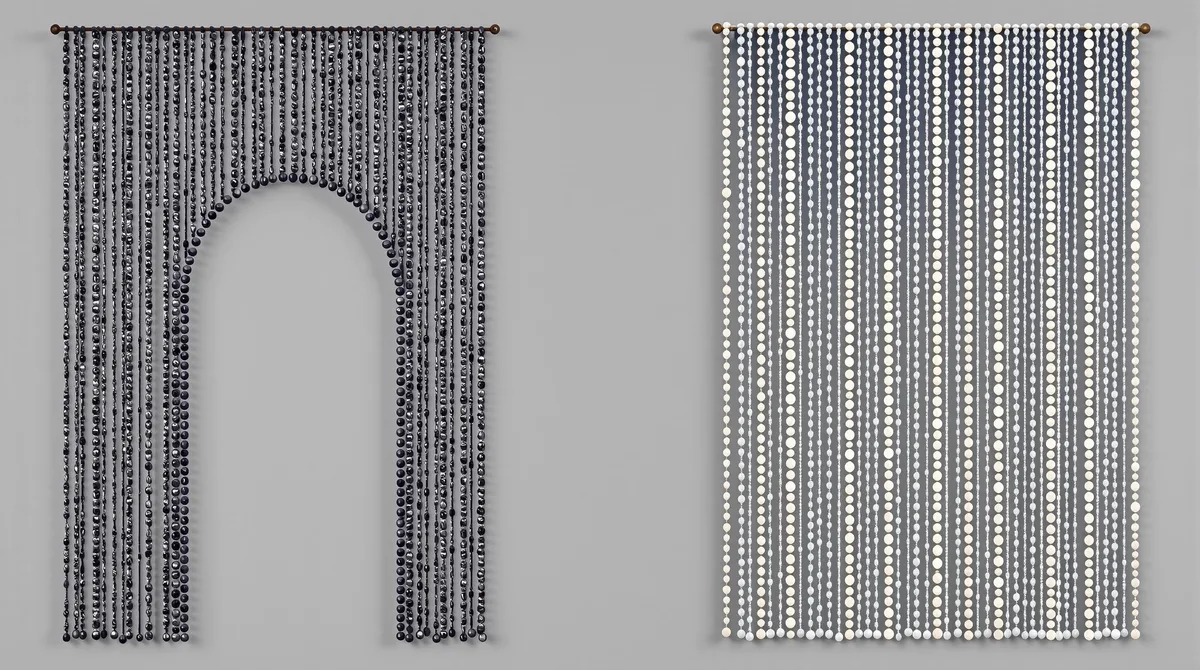
A beaded portal in which the colour changes bead by bead so one large simple round motif in canary yellow reads clearly across separate chalk-white strands.
The Have a Nice Day portal carries a legible motif across separate hanging strands, which makes it a bead-map problem before it is a colour one. The grid is uneven by nature — bead diameter sets the row height, strand pitch sets the column width — so a motif has to be drawn to that grid rather than scaled onto it from artwork.
The Have a Nice Day portal is a motif design in the 2027 library, drawn in the portal format — 76 × 140 cm, at 27 to 40 strands in the library's own portal convention.
Available to develop. But the problem it represents is thoroughly documented, because carrying a legible image across separate hanging strands is the hardest thing beadwork is asked to do.
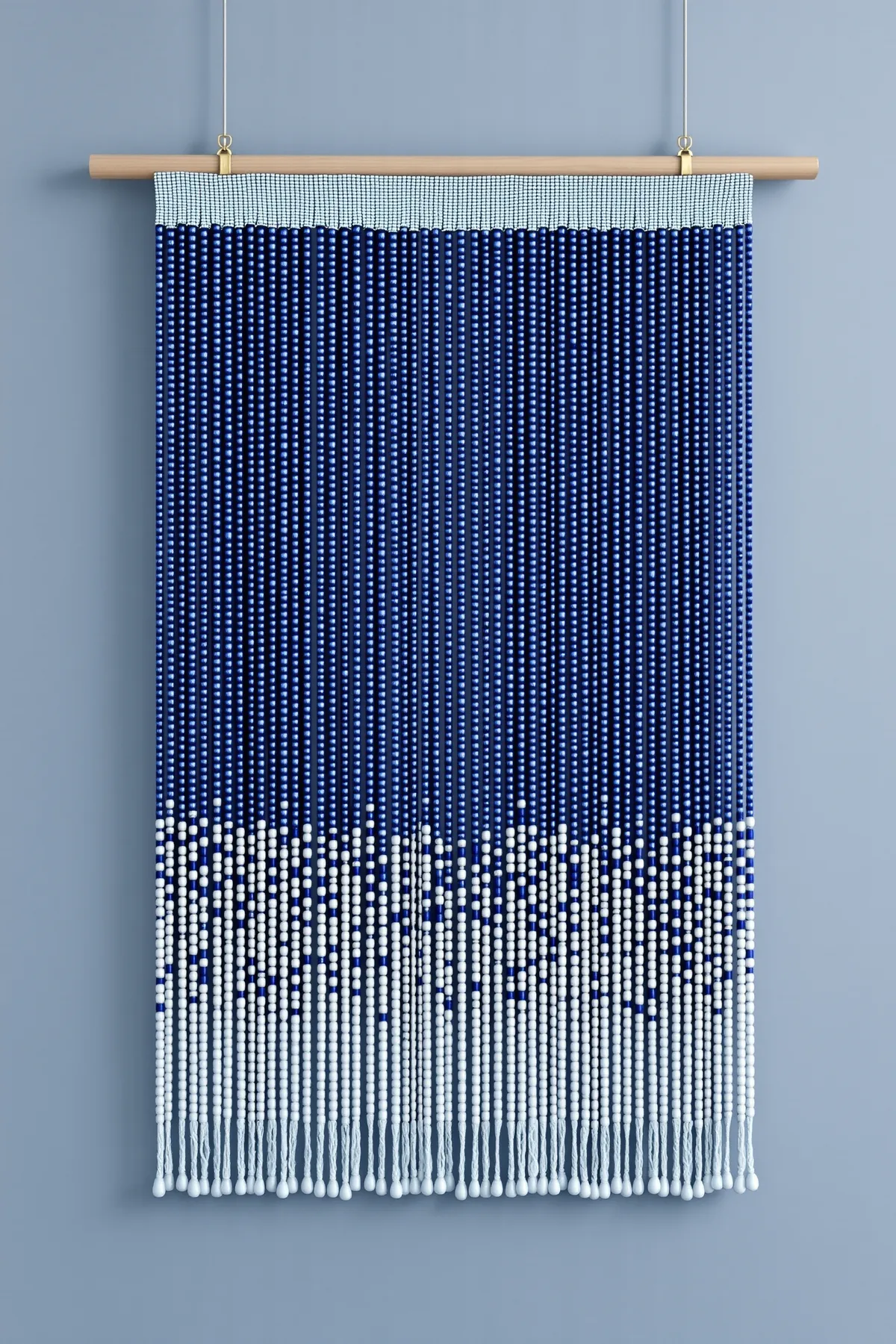
On a grid, and the grid is not square. Each row is one bead high — a few millimetres. Each column is one strand pitch wide — two to three centimetres.
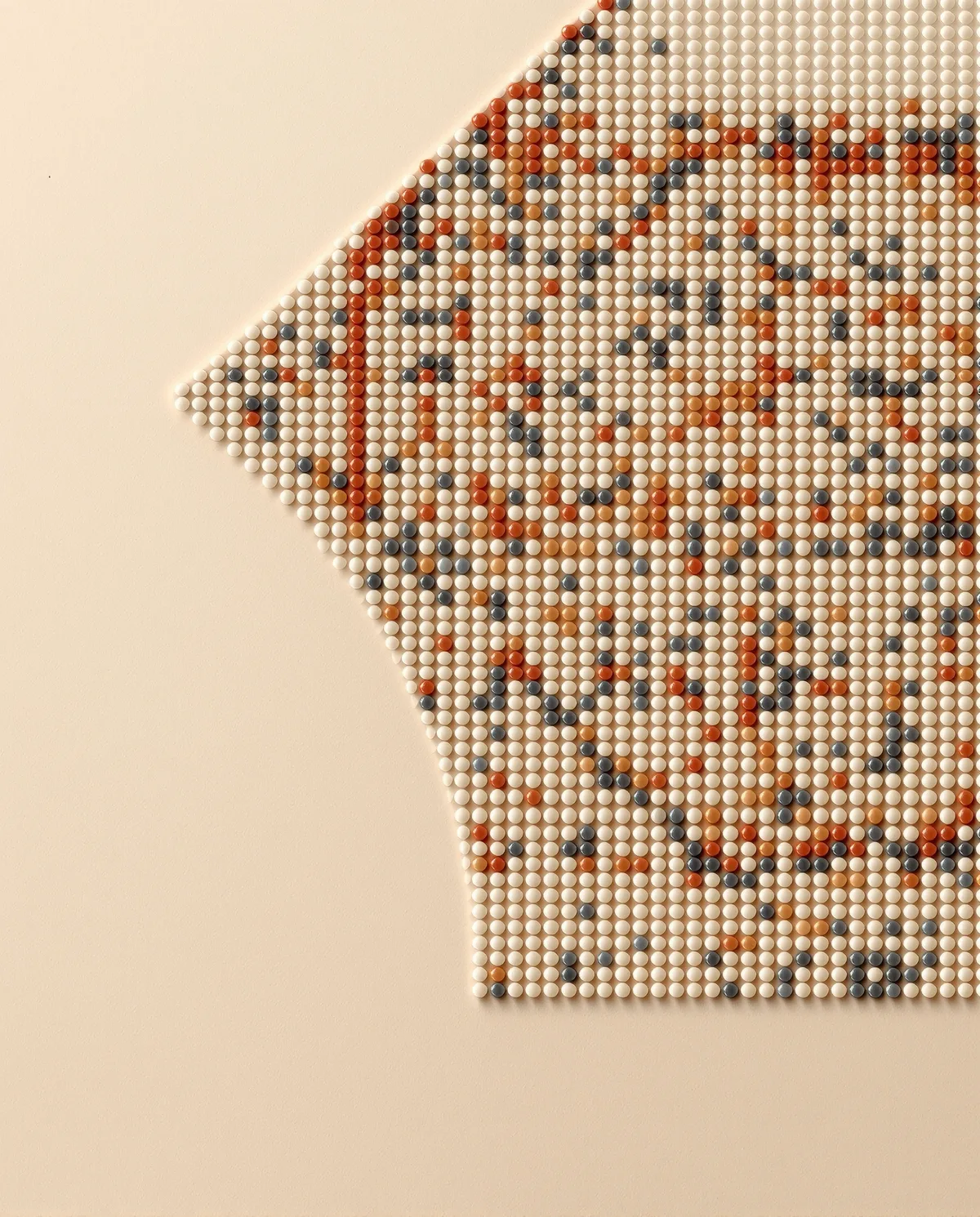
So the drawing surface is stretched sideways by roughly five or ten to one. A circle drawn on paper comes out as a flattened oval in beads, and a diagonal comes out as a staircase with very long treads. Every motif has to be redrawn onto that grid rather than scaled onto it, which is the single fact a designer needs before starting.
A motif design is specified on two axes. Strand pitch sets the horizontal resolution and bead sizes set the vertical, so the bead map depends on both before any colour is chosen. The colour-count sheet is then the only document that makes the image repeatable, and strand order becomes part of retail packing rather than a convenience.
| Specification | Value |
|---|---|
| Format | Door portal, 76 × 140 cm in the library's portal convention |
| Strand count | 27 to 40 for portals |
| Grid, rows | Bead height — smaller beads give finer resolution |
| Grid, columns | Strand pitch, roughly 2 to 3 cm |
| Grid character | Stretched horizontally, so artwork is redrawn rather than scaled |
| Pattern control | Every strand written out bead by bead on the count sheet |
| Cost note | A hand-mapped motif with no chart is the most expensive route |
| Opening | Arched cut available, with the motif resolved around it |
| Status | A design available to develop at the drawn size |
The clearest lesson on that comes from another motif design rather than from this one. A design-led pattern arrived with no artwork file and had to be mapped bead by bead at the bench from a reference image alone.
It was made, and the mapping was by far the largest part of the work in it: days at the bench translating an image into a strand-by-strand grid before anything was strung. The pattern was good; the route to it was slow. Send artwork, or budget for the mapping.
On a motif design strand order is not a convenience: a single strand packed out of sequence destroys the image when the piece is hung, and nothing on the strand itself says where it belongs.
So motif designs are bundled and labelled in sequence, and the hanging instruction is part of the packing rather than an afterthought.
It shows the motif at the design's own resolution. What it cannot show is how that motif resolves in a particular bead size, because resolution depends on the bead line chosen, and that is why a motif design is sampled before it is costed firmly.
None of the named 2027 stories by palette. By method it belongs with the graphic story, which is the other pattern-driven design in the library and shares its whole mechanism.
Pressed glass or moulded acrylic, because a motif depends on dimensional consistency and both repeat from a mould. Hand-made beads are the wrong choice here, however good they look individually: a millimetre of size variation per bead is invisible on one strand and accumulates into skewed rows by the bottom of a 140 cm drop.
Bead size is then the resolution control. A smaller bead gives a finer motif and a higher count; a larger bead gives a coarser, blockier motif and a cheaper piece.
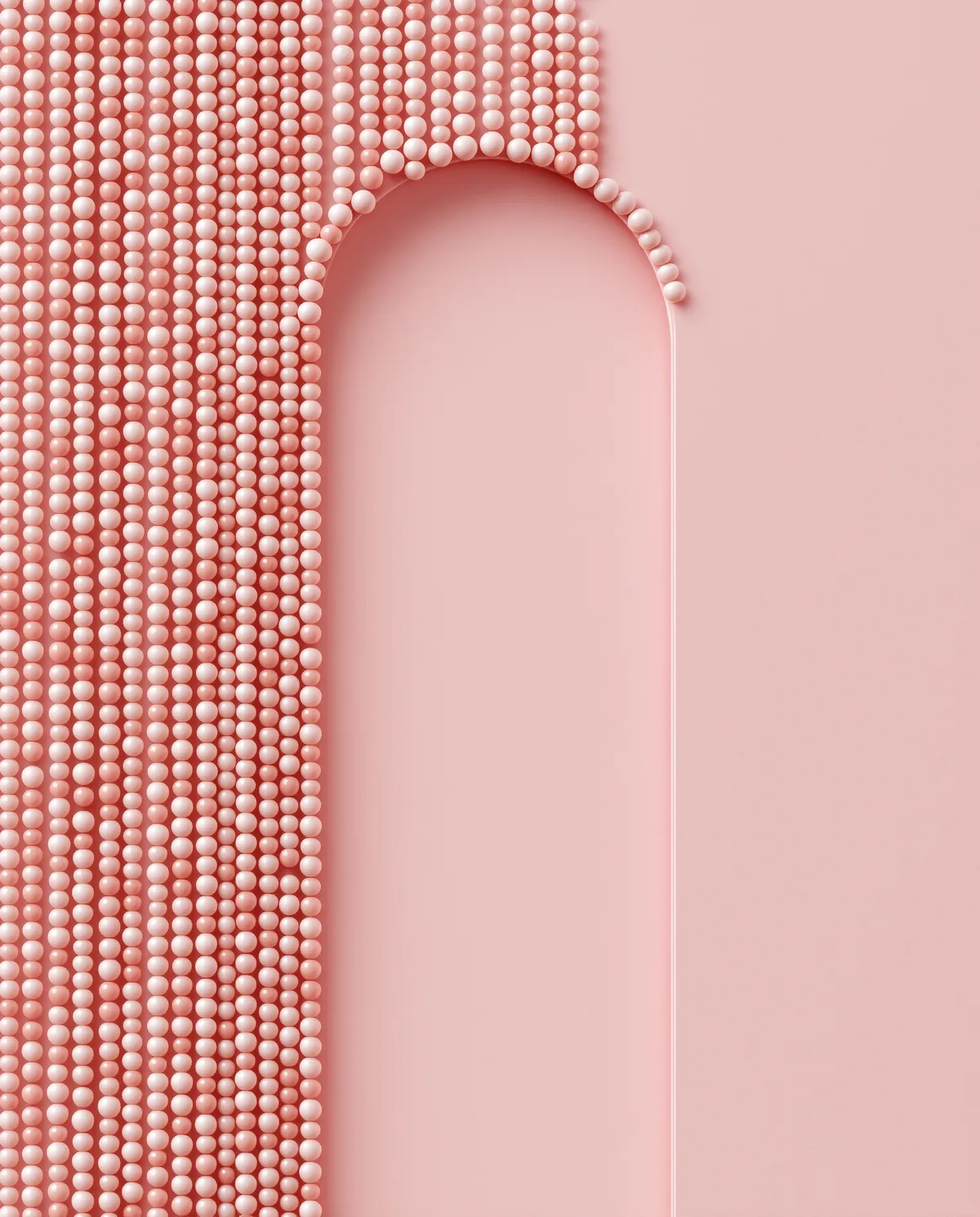
Straight if the motif runs to the bottom, arched if the portal needs a walk-through. An arched cut removes rows from the centre strands, so any motif crossing that area has to be drawn around the opening rather than clipped by it.
That is the main reason to decide the opening before the motif. Drawing the image first and cutting the arch afterwards produces a portal with half a face in it.
A single turned wooden dowel or a stained header rail, from our own Saharanpur wood factory. ## Why is recolouring cheap but resizing not?
Recoloured cheaply, because the map does not move — a two-colour motif can change both colours without a single change to the count sheet's structure. Resized only by redrawing, because a motif has a minimum resolution in beads below which it stops being readable.
Retailers and own-label brands, strongly in gift, novelty, teen and dorm, where a motif gives a beaded curtain a subject. A motif is also the single most photographable thing a beaded piece can carry, which matters for e-commerce listings and for social.
Event and display companies use motif portals as branded entrances, which is a use case that usually arrives with its own artwork and is therefore the cheapest version of the design to produce.
Good to know
Exclusivity is a commercial decision taken per programme rather than a property of the design. Name it in the brief and it is quoted alongside the piece.
It shows the motif as drawn at the design's own resolution. What it cannot show is how the motif resolves in a specific bead size, because that depends on the bead line chosen — which is why a motif design is sampled before it is costed firmly.
Strands are kept in order and protected against knocking in transit, then packed to your carton, label and packaging specification. On a motif design the strand order is not optional: a strand packed out of sequence destroys the image when the piece is hung.
Yes, and a motif is the best case for sending artwork. Send the image and we draw the bead map from it, which converts it into a colour-count sheet. Sending artwork is materially cheaper than asking for a motif to be mapped by eye from a reference photograph.
Yes, and recolouring a motif design is the cheapest change available because the map does not move. Two colours with real contrast is the only constraint — a low-contrast pair dissolves the motif however pleasant the colours are.
Yes, with the motif redrawn rather than scaled. A motif has a minimum resolution in beads, so a smaller piece needs a coarser, bolder version of the same image rather than the same map compressed.
Pressed glass or moulded acrylic, because a motif depends on dimensional consistency and both repeat from a mould. Hand-made beads are the wrong choice here however attractive, because their size variation accumulates down a drop and skews the rows.
Keep exploring
Manufacturing
Artwork to bead map, the resolution limit set by bead size, and why a scattered accent costs a fraction of a graphic.
See the detailDesign
Portals at 76 × 140 cm and hanging divisions at 90 × 180 and 120 × 180 cm, documented by strand count and opening shape.
View the rangeDesign
Mixed translucent jewel-tone beads at 90 × 200 cm, cut to an arched centre opening on a stained header rail.
Specs and sizesDesign
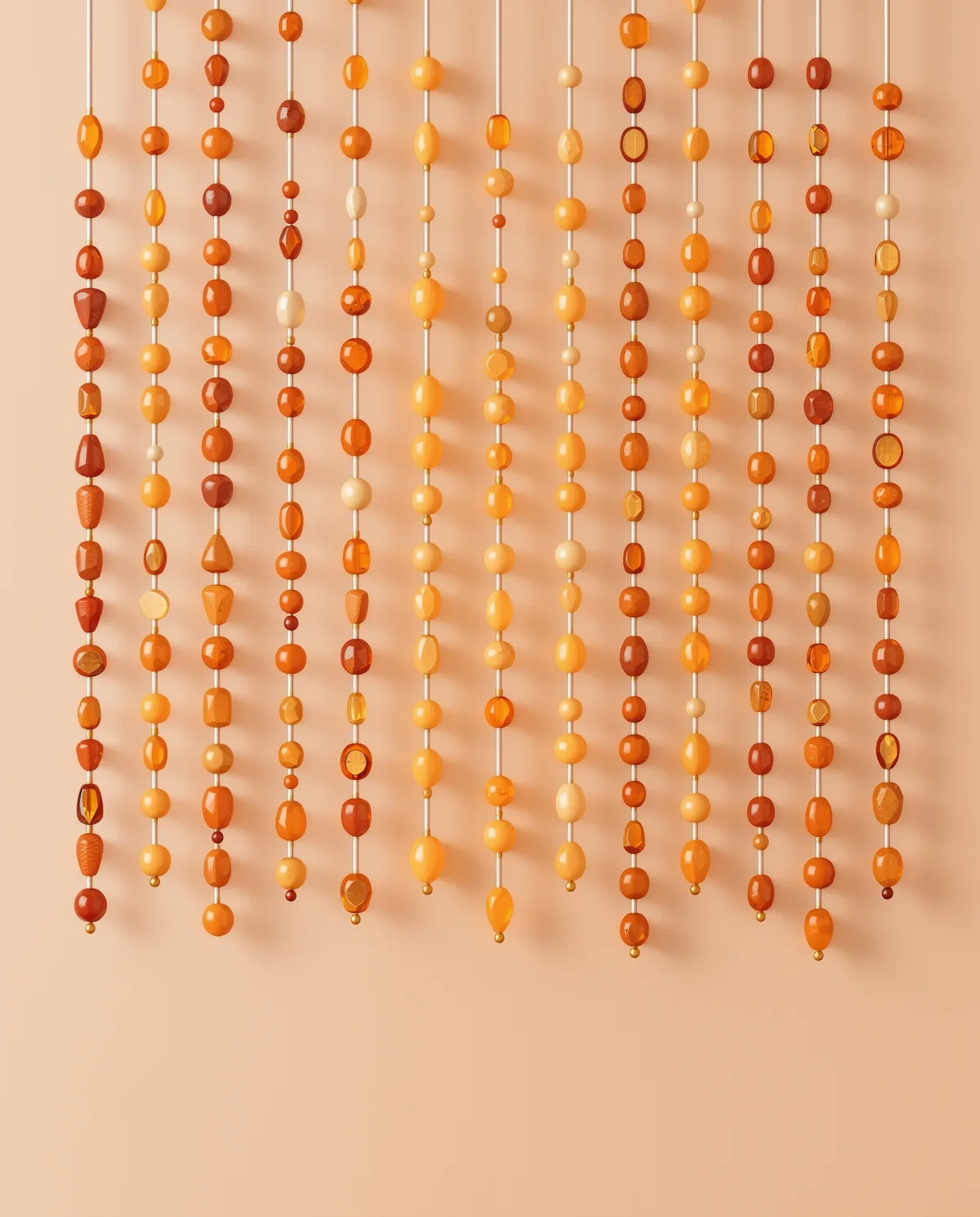
Wood, bone and amber glass on one strand at 90 × 180 and 120 × 180 cm — a design available to develop, not a current line.
Compare the optionsDesign
A scattered accent field on an arched portal, where the arch profile and the scatter map are drawn as one document.
Read the guideColour story
A graphic check across the strands, which holds only when the pattern is mapped to the bead grid rather than sketched.
Read the guide
Start a conversation
Send a reference, a colour chip or a sketch. Minimums are set per design and confirmed per quote; sampling is quoted separately and usually runs 16 to 20 days from an agreed brief.