Specification
Drawing a hem
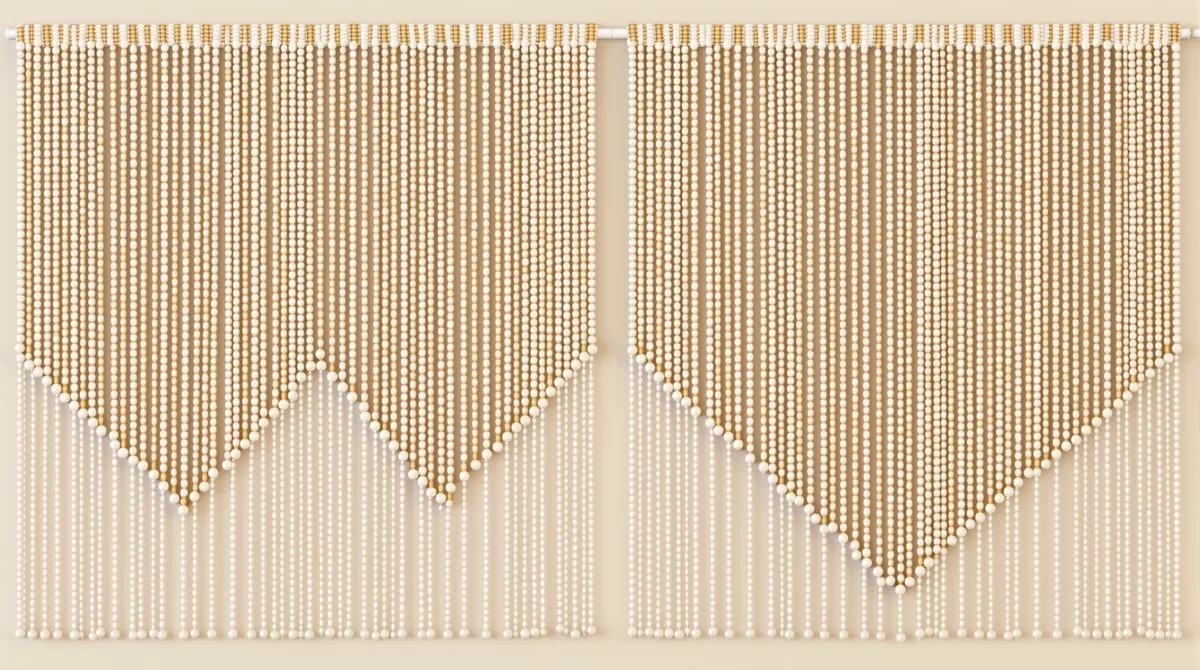
Straight, scalloped, V-point, inverted-V, swag, diagonal and staggered — each with its longest and shortest drop.
Specs and sizes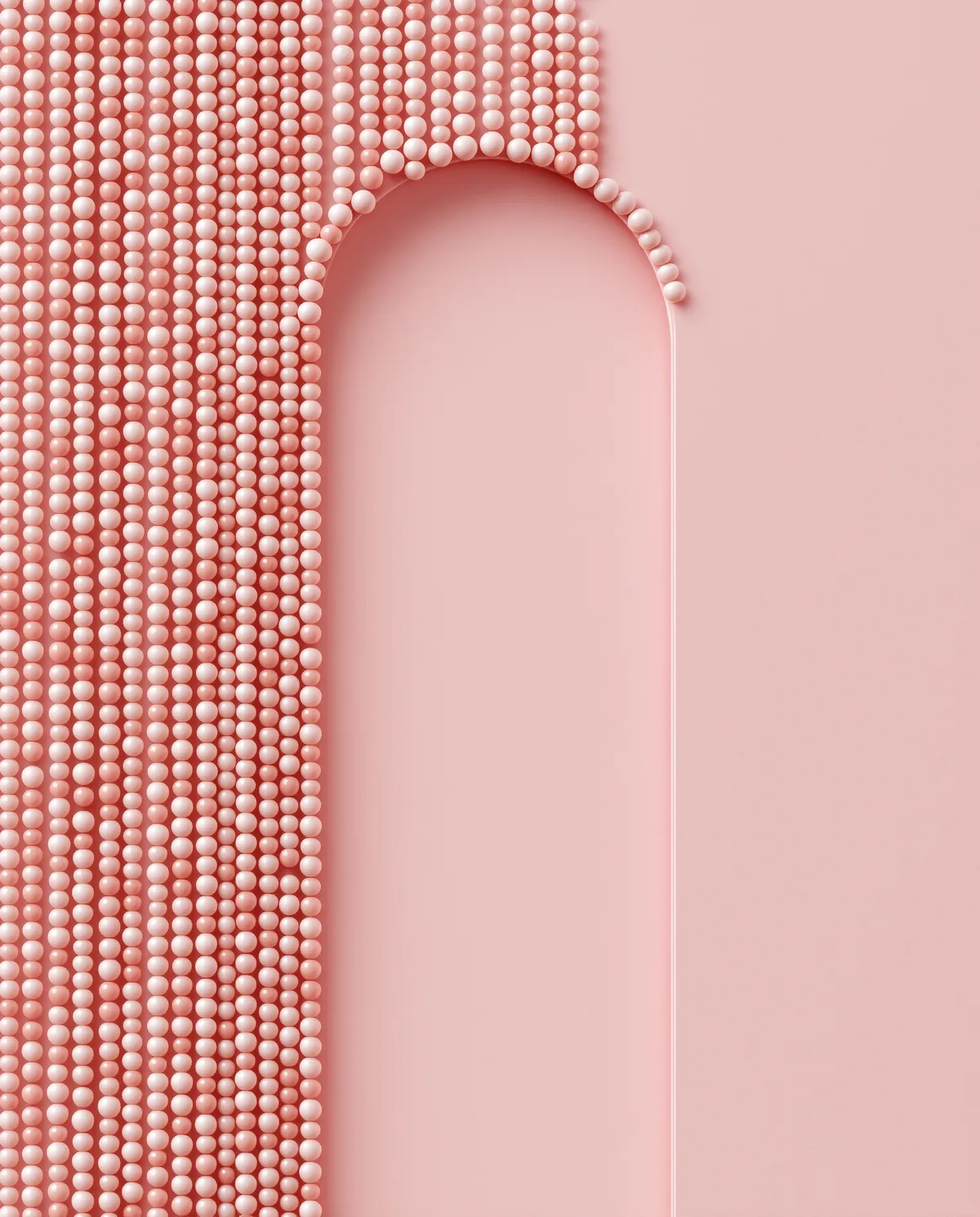
Design · Confetti Arch Portal
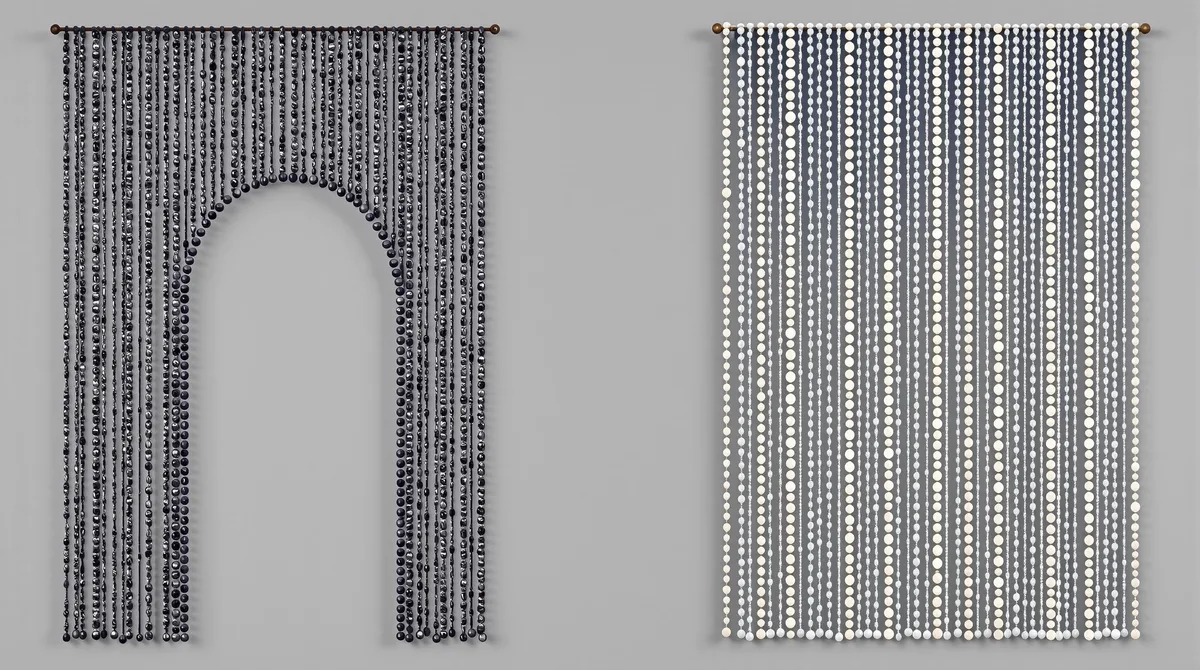
Two patterns in one piece. The scatter and the arch cannot be specified separately, because the arch removes exactly the strand lengths the scatter was distributed across.
Bead strands cut to stepped lengths so an arched opening is cut out of the middle of the panel, the ground showing through the arch.
The Confetti Arch portal puts a scattered accent field on an arched opening, drawn in the library's portal format at 76 × 140 cm on 27 to 40 strands. The two features interact: an arched cut shortens the centre strands, which removes the strand length the scatter was distributed across, so the arch profile and the scatter map are drawn as one document.
The Confetti Arch portal puts two patterns in one piece: a scattered accent field and an arched-cut opening. It is drawn in the library's portal format — 76 × 140 cm, at 27 to 40 strands.
Available to develop. What makes it worth a page is the interaction between its two features, which is a genuine specification problem rather than a styling one.
A ground of plainer beads with larger accents scattered over it, and an arched profile cut into the strand lengths.
Those two decisions fight. A scatter is specified as a count per strand — on a sampled dotted portal the working figure is three to four accents on a full-length strand — and an arch makes the centre strands much shorter than the edge ones. Apply a constant count and the short centre strands come out crowded while the long edge strands look sparse. So the count has to vary with the strand length, which means the arch profile and the scatter map are one document, not two.
Two profiles have to agree on one sheet. The arch is a list of strand lengths, so the longest and shortest drop are both given. The scatter is a count per strand, and the count follows the length. Beyond that the strand count sets the density and the carton sizes follow the longest strand rather than the nominal drop.
| Specification | Value |
|---|---|
| Format | Door portal, 76 × 140 cm in the library's portal convention |
| Strand count | 27 to 40 for portals |
| Hem shape | Arched cut — centre strands shortened |
| Accent | Scattered larger beads on a plainer ground |
| Scatter rule | A count per strand, varied with strand length, plus an offset |
| Working accent figure | Three to four per full-length strand, from sampled practice |
| Ground | Dyed to sit under the accent colours |
| Header | Single turned wooden dowel or stained header rail |
| Status | A design available to develop at the drawn size |
Carton height follows the longest strand rather than the nominal drop.
As on any portal, strand order matters more than on a plain curtain, because strands of different lengths carrying different accent counts are not interchangeable.
It shows the arch profile and the character of the scatter. The accent positions illustrate the rule; the map is written at specification stage against the chosen bead size.
None of the fourteen named 2027 stories by palette. By method it sits with Sorbet Parade, which uses the same scattered-accent-on-a-matched-ground mechanism on a straight-hemmed curtain.
The comparison is instructive. The confetti curtain keeps its hem flat precisely so the scatter is the only pattern. This design accepts a second pattern and takes on the extra specification work that comes with it.
Both halves, unequally. The accents are what a customer sees; the ground is what makes them work, and it is dyed to sit under them rather than chosen first.
Pressed glass is the usual accent route because a mould-made bead repeats its dimensions, which matters when accents are placed to a map. The ground is glass seed beads or small rounds, dyed to the accent colours.
The arch is cut: centre strands shortened on the count sheet, longest strands at the two edges. Nothing in the beadwork is shaped.
On this design the arch has an additional consequence beyond geometry. It removes strand length from the middle of the panel, which is both where a person walks through and where a scatter would otherwise be most visible, so the design is effectively concentrating its pattern at the edges.
A single turned wooden dowel or a stained header rail, from our own Saharanpur wood factory. The load is asymmetric, as on any arched piece: more weight at the ends of the header than at its centre, so the fixings go near the ends.
Recoloured with the ground following the accents. Resized by redrawing both documents — the arch as strand lengths, the scatter as counts per strand — and they have to be redrawn together for the same reason they were drawn together.
Retailers and own-label brands wanting a portal with more personality than a plain arch, and event companies that need a usable opening and a photographable surface at the same time.
It is a harder design to brief than either of its parent ideas, which is worth saying to a buyer at the start rather than discovering at the sample stage.
Nothing directly, since it has not been sampled. The two transferable lessons both come from sampled work: dye the ground to the accents rather than the other way round, and write the arch as a list of strand lengths so it is exact and adjustable.
What this design adds, and what a sample would confirm, is the third rule that follows from combining them — vary the accent count with the strand length, or the arch will crowd the scatter.
Good to know
It shows the arch profile and the character of the scatter as drawn. The accent positions illustrate the rule; the map itself is written at specification stage.
Strands are kept in order and protected against knocking in transit, then packed to your carton, label and packaging specification. Carton height follows the longest strand rather than the nominal drop, which catches people out on arched designs.
Yes. A sketch, photo or artwork with size, materials, colours and quantity becomes a colour-count sheet. On an arched design the arch is quoted from the strand-length map rather than from the outline, so supplying the lengths speeds everything up.
Yes, with one dependency: recolouring means changing the accents and then dyeing the ground to the new accents. Changing the accents alone leaves the ground out of tune with all of them, which is the commonest error on a scattered-accent design.
Yes, with both the arch and the scatter redrawn. The arch is a set of strand lengths rather than a curve, and the scatter is a count per strand, so a size change moves both documents and they move together.
A plainer ground bead with larger scattered accents over it. Pressed glass is the usual accent route because a mould-made bead repeats its dimensions, and glass seed beads or small rounds carry the ground, dyed to sit under the accents.
Keep exploring
Specification
Straight, scalloped, V-point, inverted-V, swag, diagonal and staggered — each with its longest and shortest drop.
Specs and sizesDesign
Portals at 76 × 140 cm and hanging divisions at 90 × 180 and 120 × 180 cm, documented by strand count and opening shape.
Compare the optionsDesign
A fabric-mounted portal at 24 × 30 in on a 10 oz canvas pattern with a three-inch rod pocket, built with a custom moulded flower bead.
See the detailDesign
Mixed translucent jewel-tone beads at 90 × 200 cm, cut to an arched centre opening on a stained header rail.
See the detailDesign
Wood, bone and amber glass on one strand at 90 × 180 and 120 × 180 cm — a design available to develop, not a current line.
Specs and sizesColour story
Scattered pastel accents across 60 strands at 120 × 180 cm, placed from a bead map rather than by chance.
How it is made
Start a conversation
Send a reference, a colour chip or a sketch. Minimums are set per design and confirmed per quote; sampling is quoted separately and usually runs 16 to 20 days from an agreed brief.