Specification
Counting the beads
How bead count is estimated from size, pitch and diameter — and why density matters more than dimensions.
Specs and sizes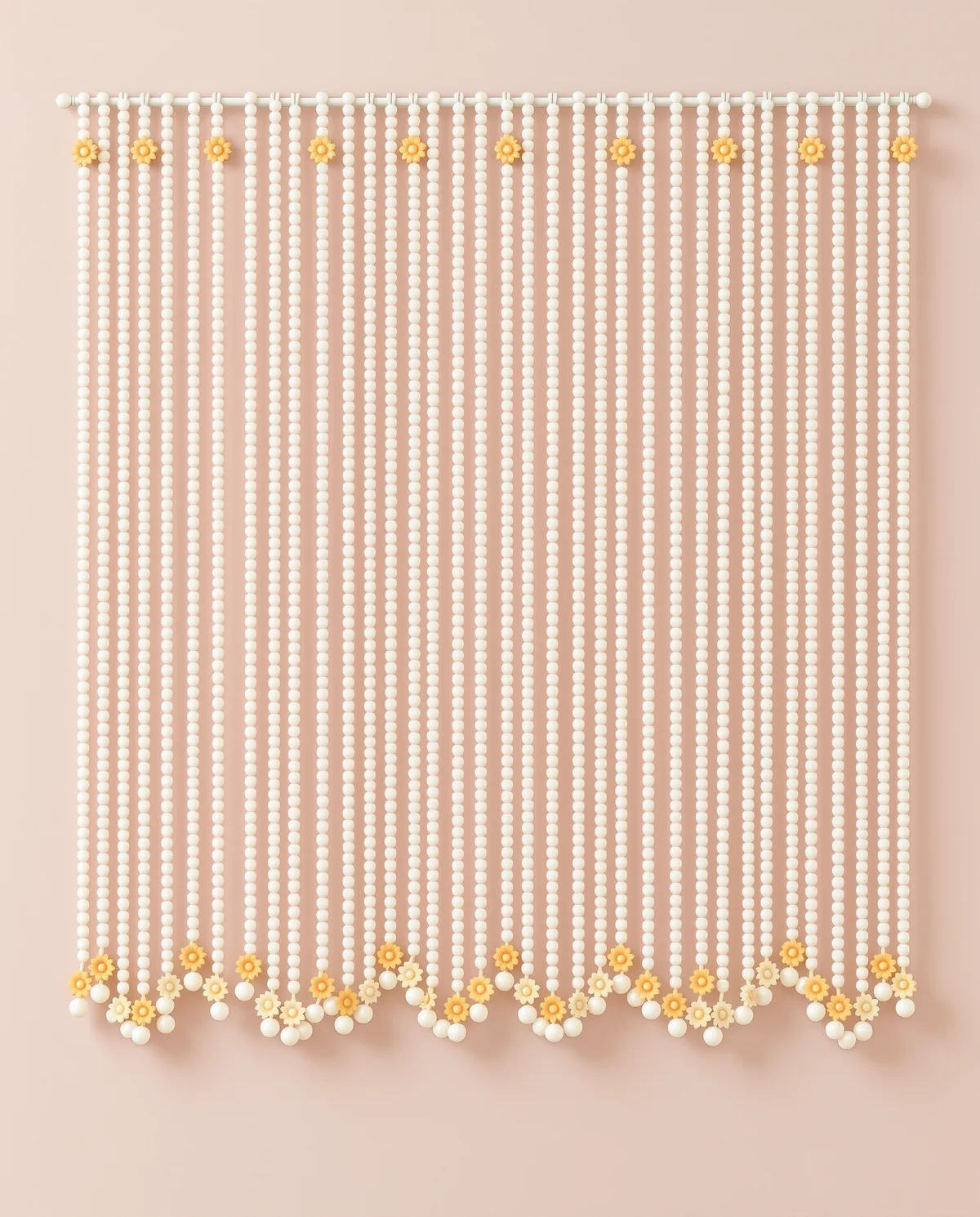
Design · Polka Dot Café Curtain
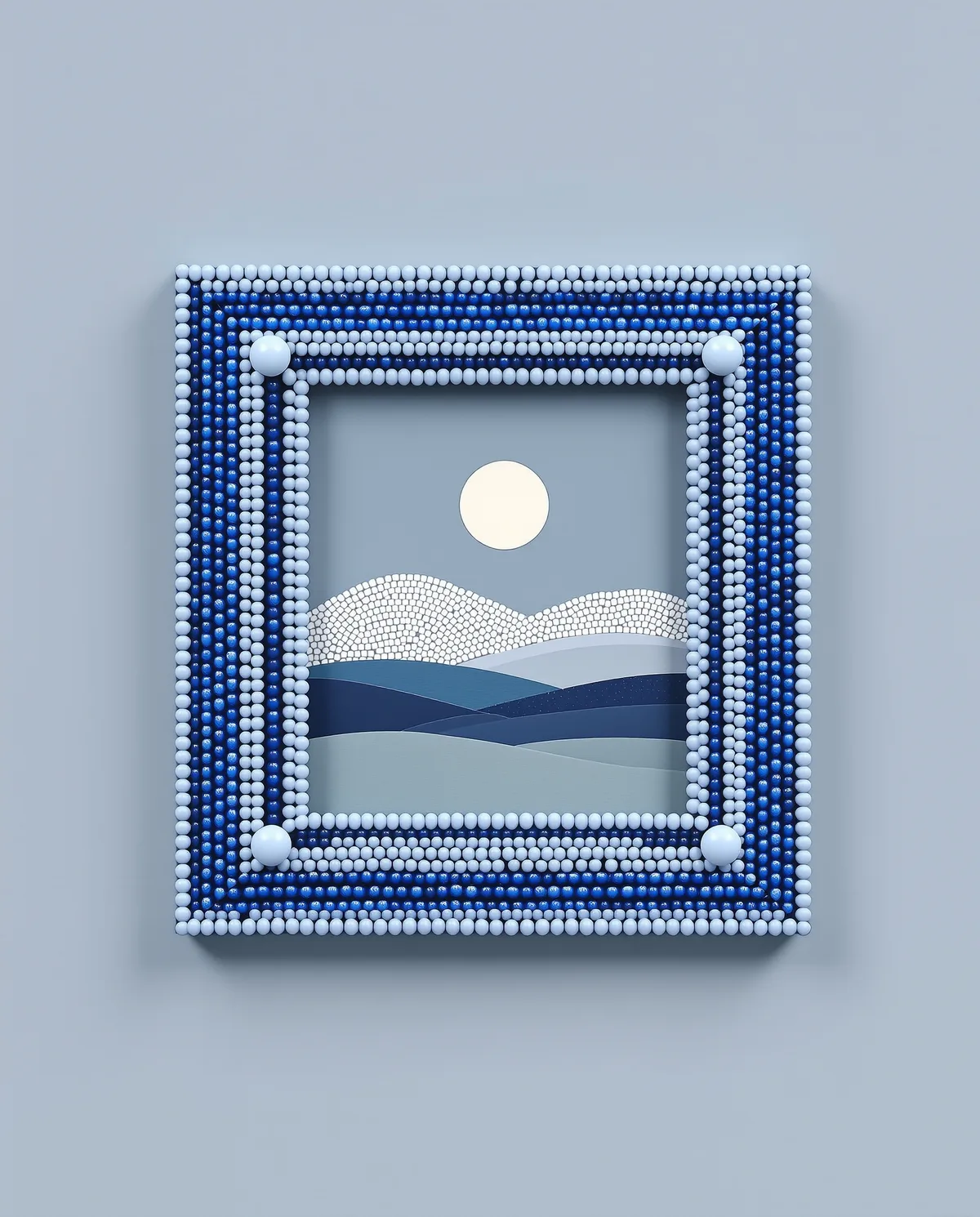
A small square with nearly two thousand beads in it. Size tells you almost nothing about a bead count; density tells you everything.
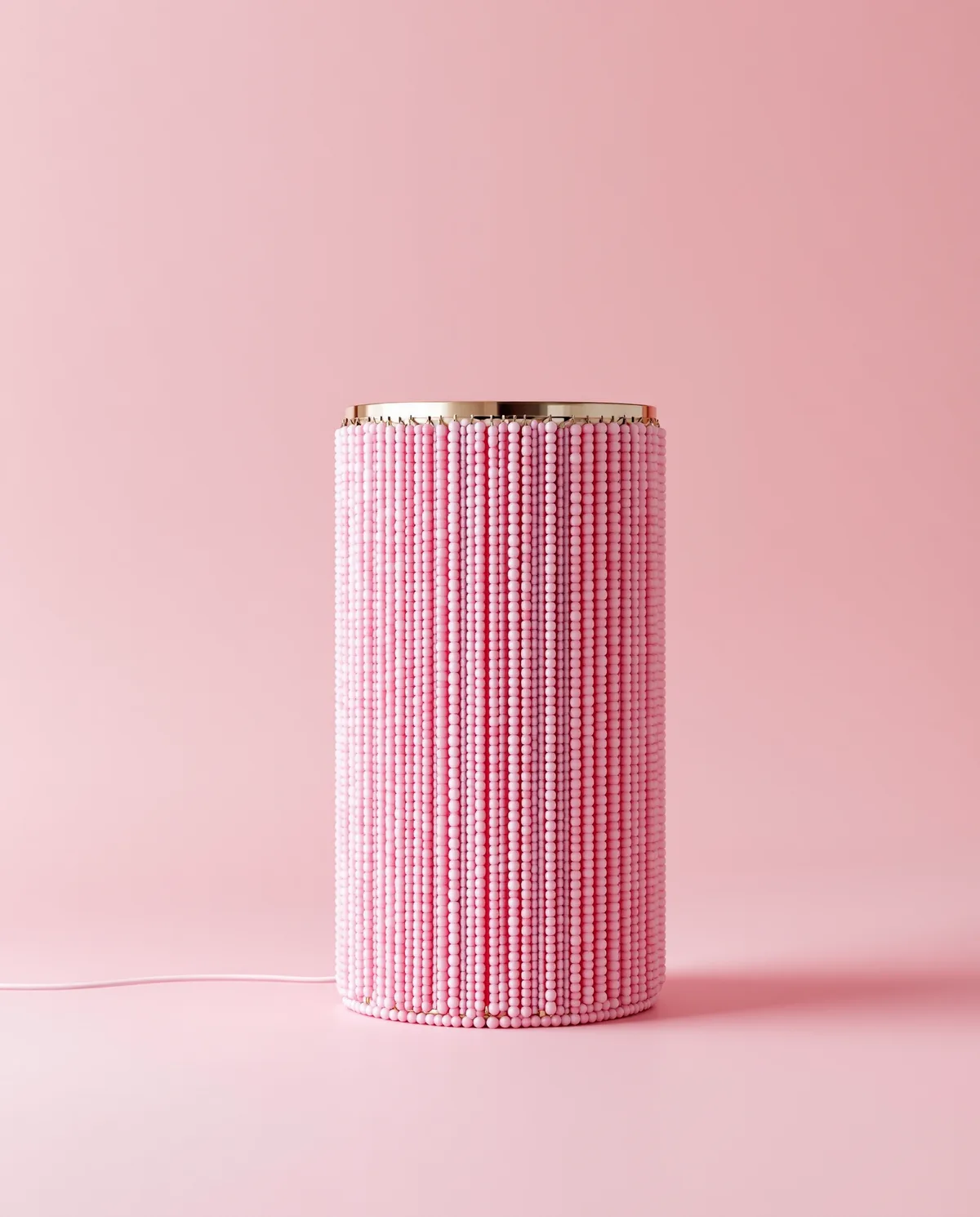
A beaded café curtain in chalk white with moulded daisy connectors, hung from a narrow stitched header band above a shallow scalloped chevron hem.
The Polka Dot café curtain is drawn at 76 × 76 cm and holds about 1,800 beads. It is the clearest illustration in the library that format tells you very little about a bead count — a 90 × 200 cm doorway in a spaced build runs around 3,100, only about 70 per cent more for nearly seven times the area.
The Polka Dot café curtain is drawn at 76 × 76 cm and holds about 1,800 beads. Available to develop at that size. It earns its page on the strength of those two numbers together, because they are the most useful pair of figures in the design library for anyone trying to understand what a beaded piece costs.
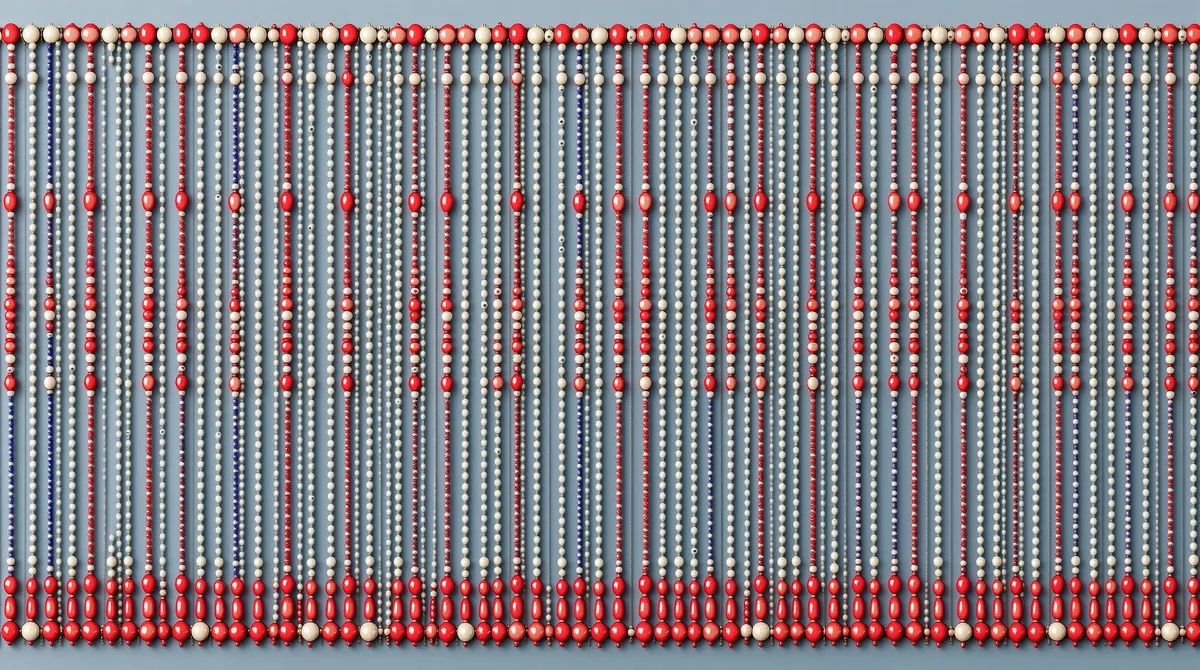
Dotted accents scattered on a plainer ground, in the same construction family as our production dotted portal: a feature bead placed to a map, with the base beads dyed to match the accent colours.
The square format changes the mapping problem. On a 200 cm drop a scatter is offset strand to strand and the vertical distance does the rest of the work. On a 76 cm square both the vertical and the horizontal runs are short, so the map has to distribute in two directions at once or the dots will read as a grid.
One figure on this sheet does more work than the rest. The bead count, not the finished size, is what a quote is built on, and coverage per panel is the variable most briefs forget to state. Against that, the strand count and pitch are routine, and carton sizes are unusually good because nothing in the piece is longer than 76 cm.
| Specification | Value |
|---|---|
| Finished size | 76 × 76 cm |
| Bead count | About 1,800 |
| Format | Café curtain, square |
| Accent | Dotted beads scattered on a plainer ground |
| Comparison, spaced doorway | 90 × 200 cm at about 3,100 beads |
| Comparison, dense doorway | 90 × 200 cm at about 11,800 beads |
| Comparison, valance | 120 × 30 to 40 cm at about 900 to 2,000 beads |
| Ground | Dyed to sit under the dot colours |
| Status | A design available to develop at the drawn size |
Retailers and own-label brands in kitchen, dining and children's ranges, and anywhere a short beaded panel suits a small window. A square café format is also the easiest beaded piece to photograph for an e-commerce listing, because it fits a square crop without losing anything.
It suits gift and lifestyle ranges for the same reason the production dotted portal does: a spotted pattern is immediately legible and needs no explanation.
The design has not been developed, so the lessons come from the sampled dotted portal that shares its mechanism. Three carry over.
Dye the ground to the dot. Specify the scatter as a count plus an offset rather than as random. And decide between a translucent and an opaque version of the same bead deliberately, because they are different products — one glows and recedes, the other holds its edge, and both were made before one was chosen.
This is the most carton-efficient format in the library. Nothing in the piece is longer than 76 cm, so the carton is small, the cube is low and the pieces-per-carton figure is high — which matters more at volume than most design decisions do.
It shows the design as drawn, and the bead count is an accurate count of the design's own beads, because each render in the 2027 library is built from named beads and converts into a colour-count sheet.
The bead count is drawn to size and confirmed on the sample. The two can part company once a bench sorts a real bead line.
Its own dotted family rather than one of the fourteen named 2027 stories. By method it belongs with Sorbet Parade, which uses the same scattered-accent-on-a-matched-ground mechanism at a much larger format.
The dot. On the production dotted portal that bead is an oval glass bead at 13 × 22 mm, which is a large bead for a curtain, and around 90 to 120 of them go into a full-length piece.
A square café format would normally take a smaller dot in proportion — a 13 × 22 mm oval on a 76 cm panel is a very large element relative to the piece. That proportion decision is the first thing a development would settle.
Straight. A square format has no room for a shaped hem: a scallop or a chevron needs width relative to depth, and at 76 cm by 76 cm a shaped edge reads as a bite taken out of the panel.
A single turned wooden dowel, made in our own Saharanpur wood factory, or a rod pocket if the programme needs one. ## Why does bead count scale with area?
Both. Recolour the dots, then dye the ground to them.
Resizing is where the bead count lesson lands. At constant density, bead count scales with area: doubling the drop roughly doubles the count, and doubling the width adds strands and doubles it again. Compare the figures in the specification table — 1,800 beads on a 76 cm square, about 3,100 on a spaced 90 × 200 cm doorway at nearly seven times the area, and about 11,800 on a densely patterned curtain of that same doorway size. Format barely predicts the count. Density does.
Good to know
It shows the design as drawn, including a bead count that is an accurate count of the design. The bead count is drawn to size, and the design is available to develop at 76 × 76 cm.
Strands are kept in order and protected against knocking in transit, then packed to your carton, label and packaging specification. A square café format is one of the most carton-efficient pieces in the library, because nothing in it is longer than 76 cm.
Yes. A sketch, photo or artwork with size, materials, colours and quantity becomes a colour-count sheet, with a rough cost sheet produced before any sample is made so the cost levers are visible early.
Yes, with the ground following the dots. On our production dotted design the base seed beads are dyed to match the dot colours, and the same order applies here — dots chosen first, ground dyed to them.
Yes, and the bead count will surprise people. Doubling the drop roughly doubles the count; doubling the width adds strands and roughly doubles it again. Bead count scales with area at constant density, and density is the variable most briefs forget to state.
Dotted beads as the accent and a plainer ground bead under them. On our production dotted portal the dot is an oval glass bead at 13 × 22 mm with its base seed beads dyed to match; a square café format would normally take a smaller dot in proportion.
Exclusivity is a commercial decision taken per programme rather than a property of the design. Name it in the brief and it is quoted alongside the piece.
Keep exploring
Specification
How bead count is estimated from size, pitch and diameter — and why density matters more than dimensions.
Specs and sizesManufacturing
Built on a cotton or organza header with a three-inch rod pocket: the band, the strands, the hem and the sizes we have shipped.
How it is madeDesign
Valances at 120 × 30 to 40 cm and café curtains at 76 × 76 cm, documented by hem shape, strand count and bead count.
Specs and sizesDesign
The deep blue story at valance drop — 120 × 30 to 40 cm, where the same palette runs a fraction of the doorway bead count.
Read the guideDesign
A scalloped awning profile over a pastel scatter at the 120 cm width, so the short drop reads as deliberate.
Compare the optionsDesign
Dotted oval glass beads at 13 × 22 mm, scattered three or four to a strand on a seed-bead base dyed to match each dot.
Read the guide
Start a conversation
Send a reference, a colour chip or a sketch. Minimums are set per design and confirmed per quote; sampling is quoted separately and usually runs 16 to 20 days from an agreed brief.