Colour story
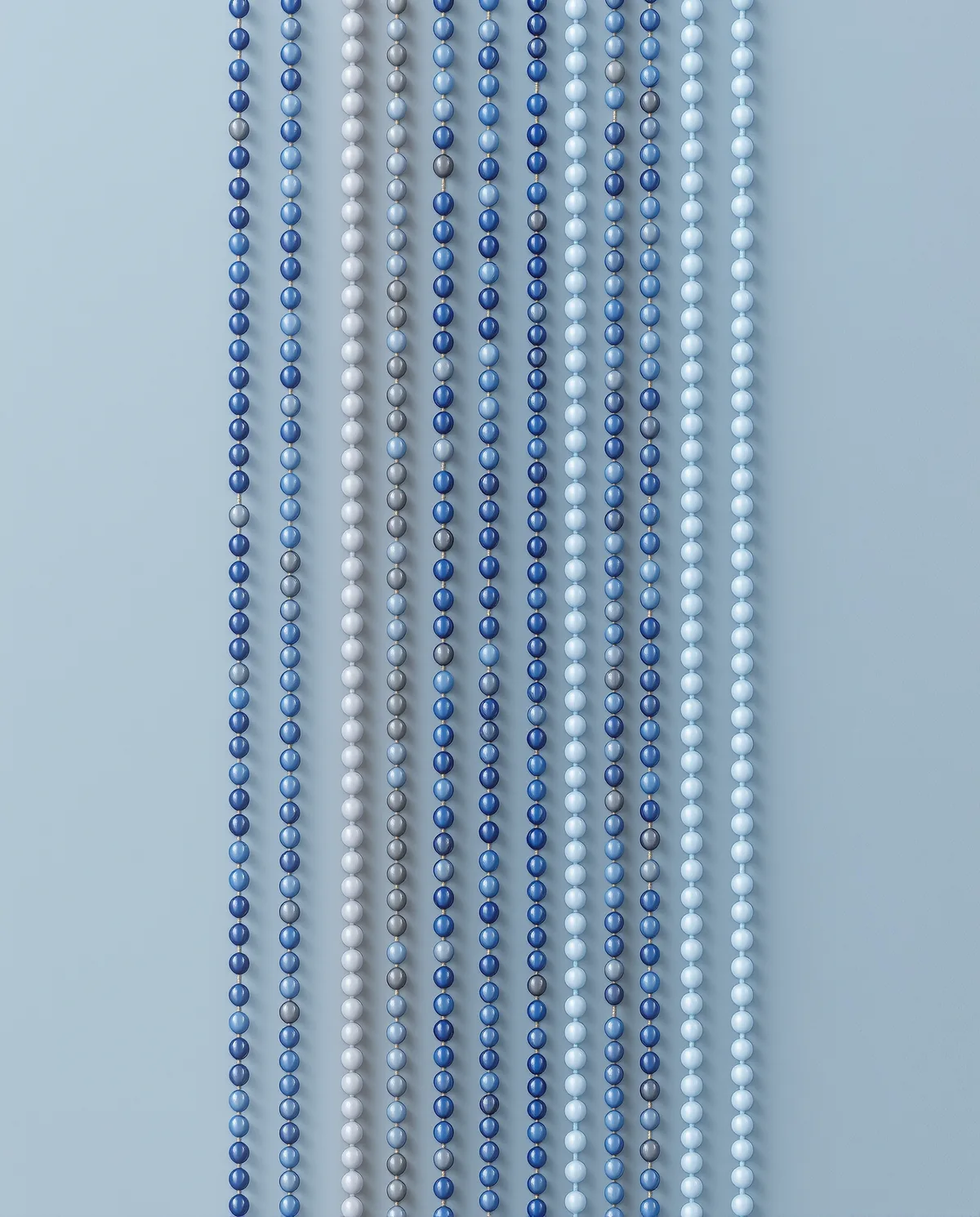
Lapis Hour palette
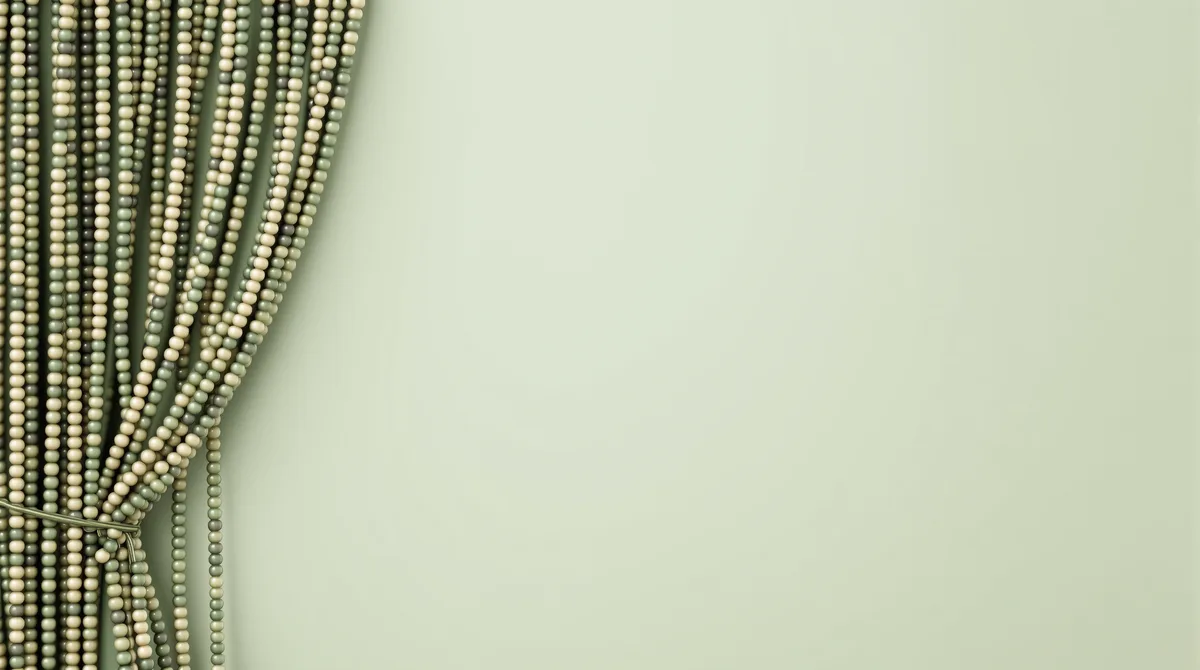
Cobalt and ink glass spaced across 40 strands at about 3,100 beads, where the gaps are as designed as the beads.
How it is made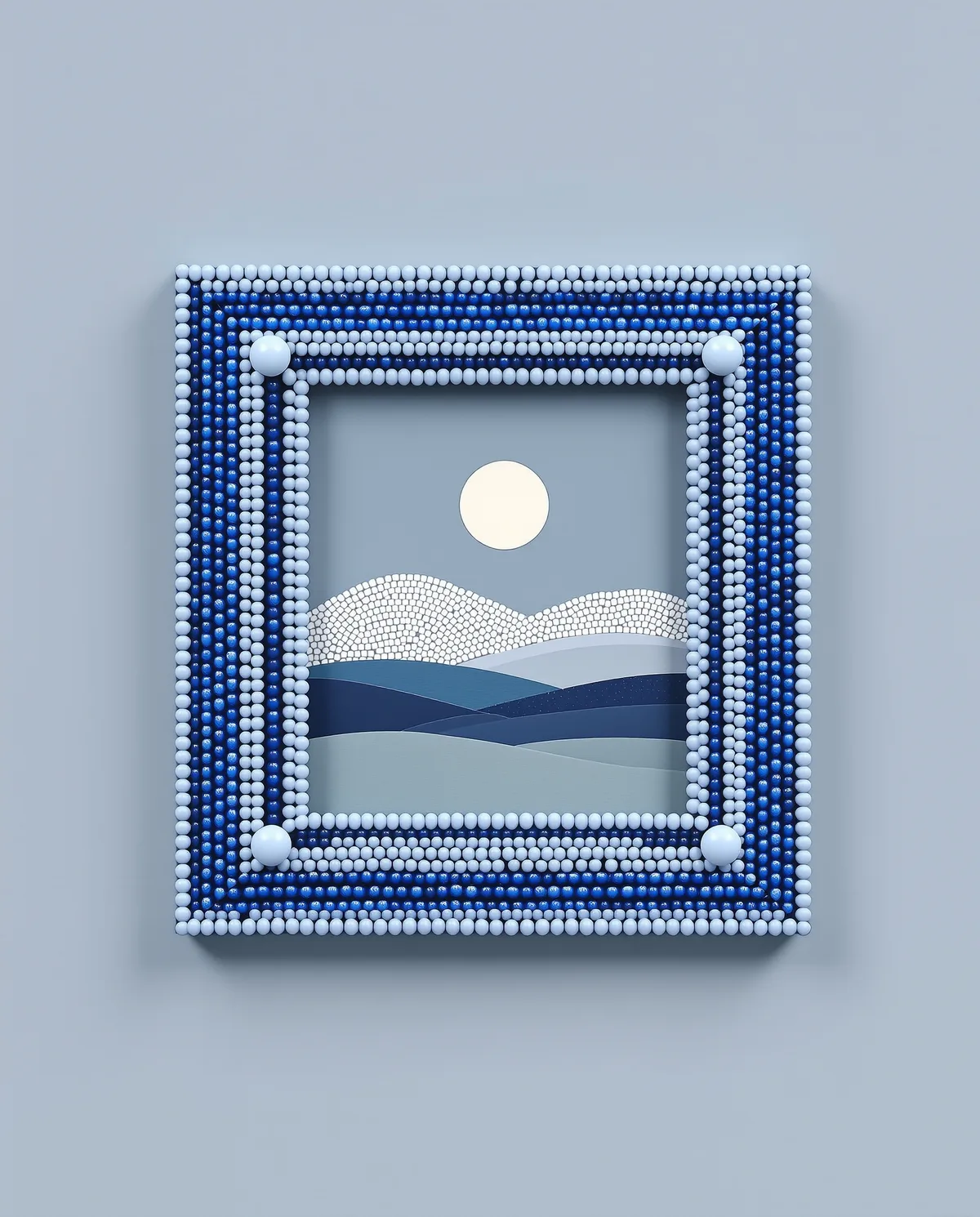
Design · Lapis Hour Café Valance
The same four blues, a sixth of the beads. A short format is the cheapest way to buy a colour story, and deep blue is one of the few palettes it improves.
A beaded picture frame in deep lapis, cobalt and pale sky glass, the beads set in concentric rows around the aperture with rosettes at two diagonal corners.
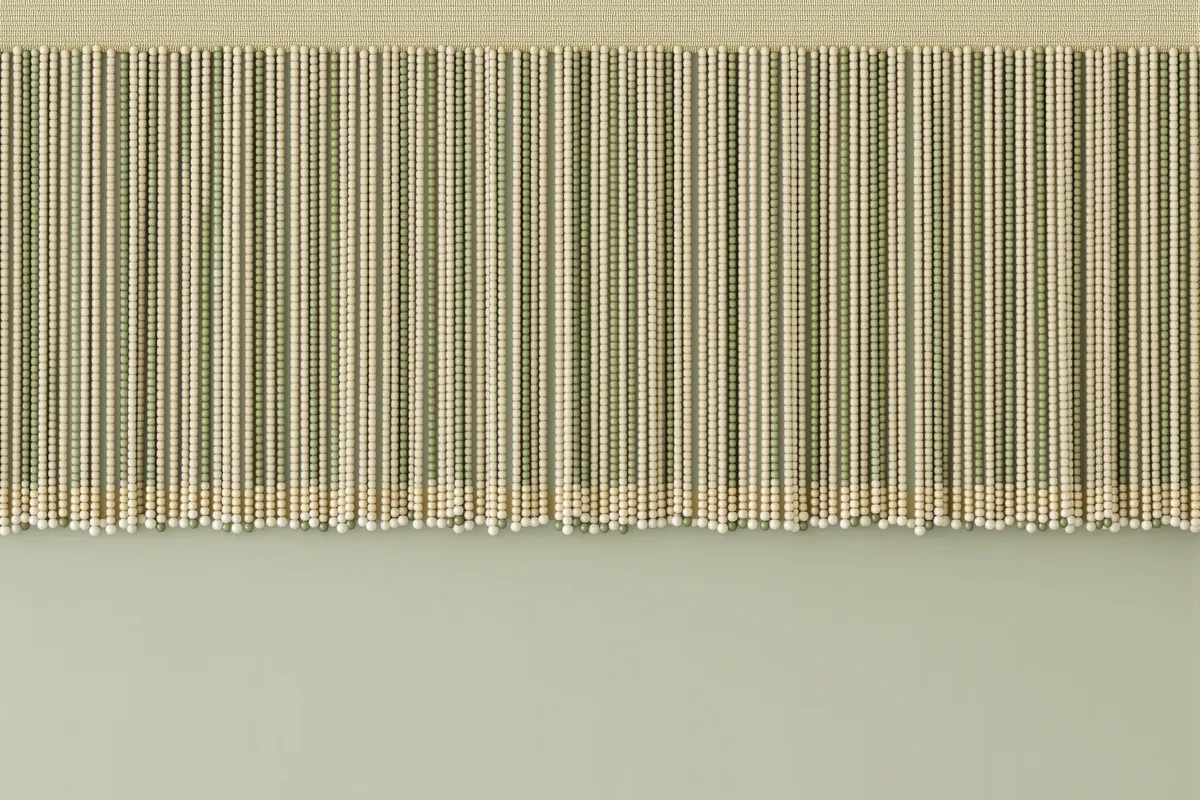
The Lapis Hour café valance puts the deep blue story on a short drop at the library's valance format — 120 × 30 to 40 cm, at 56 to 60 strands and roughly 900 to 2,000 beads. The same palette on a 90 × 200 cm doorway runs about 3,100 beads, so the valance buys the colour story at a fraction of the material.
The Lapis Hour café valance is the short format of the deep blue story, drawn in the library's valance range: 120 × 30 to 40 cm, at 56 to 60 strands and roughly 900 to 2,000 beads.
Available to develop at that size. Its value as a page is the comparison it makes possible: the same colour story exists in the library as a 90 × 200 cm doorway at about 3,100 beads, so these two designs are the clearest like-for-like format test available.
A repeating bead sequence, dense. 56 to 60 strands across 120 cm is a pitch of about 2 cm, which is close — noticeably closer than the 40 strands at about 2.25 cm the same story uses on a 90 cm doorway.
That density is deliberate and it is a rule worth carrying into any short-format brief. A short piece is built denser than a tall one, because a sparse 30 cm panel has nothing holding it together visually, where a sparse 200 cm panel has length doing that job.
Short formats shift which figures matter. The strand count is higher per centimetre than on the doorway in the same story, so panel density is the figure to compare rather than the size. The bead count is a fraction of the full-length version, and carton sizes are set by the 120 cm width rather than by the drop.
| Specification | Value |
|---|---|
| Finished size | 120 × 30 to 40 cm — the library's valance range |
| Strand count | 56 to 60 at about 2 cm pitch |
| Bead count | About 900 to 2,000 |
| Palette | Deep lapis and cobalt, slate grey, one pale sky note |
| Beads that carry it | Body-coloured glass with seed-bead spacing |
| Hem shape | Straight or lightly scalloped |
| Comparison, doorway in the same story | 90 × 200 cm, 40 strands, about 3,100 beads |
| Header | Turned wooden dowel at 120 cm |
| Status | A design available to develop at the drawn size |
Body-coloured glass, with glass seed beads doing the spacing. Deep blue is among the colours glass holds best as a body colour — the colour is in the material rather than on it — which is what makes this palette cheap to hold across reorders.
At 30 cm the palette compresses. The pale sky note that works as a highlight on a 200 cm drop has nowhere to sit on a 30 cm one and reads as a mistake, so the working palette at valance depth is the three deeper values.
Straight, or lightly scalloped. At this depth a strong profile has very little room: a deep scallop on a 30 cm valance leaves the shortest strands barely longer than the header.
If a profile is wanted, the longest and the shortest drop together are the specification. A single height does not describe a shaped hem, and that is the commonest ambiguity in a valance brief.
A turned wooden dowel at 120 cm, made in our own Saharanpur wood factory. The fixing question at this size is about the span rather than the load. A 120 cm dowel with a light bead count on it still needs a section that will not bow, and a dowel adequate at 90 cm is not automatically adequate at 120.
Both freely. A recolour at this size is the whole visual change, because there is no pattern and no significant hem profile to compete with it.
Resizing the width moves the strand count on the library's convention. Resizing the depth is the one to think about: past about 50 cm the piece stops reading as a valance and starts reading as a half-length curtain, which is a different product with different shelf placement.
Retailers and own-label brands as the entry piece in a colour story, and that is the commercial argument for having it at all. A buyer can prove the palette on the valance — roughly a quarter of the bead count of a full drop — and move up to the doorway afterwards.
It also suits kitchen and café windows, hospitality fronts, and interior specifiers dressing a window they do not want to cover.
The transferable lesson comes from the sea-glass valance, where the drop was cut from 30 inches to 26 to bring the bead count down with the hem shape kept intact.
That is the whole economics of a short format in one move. Height is multiplied by strand count, so on 60 strands four inches of drop is a large quantity of beaded length, and it is the least visible change available over a window.
A valance has an awkward carton geometry: at 120 cm wide and 35 cm deep the carton is set by the width, so the piece is long and flat rather than compact. Pieces per carton are agreed at quote stage rather than assumed.
The strand and bead figures are drawn to size against the library's own valance conventions, and they are confirmed on the sample before production. That is the same route every valance in the programme takes.
The Lapis Hour story: deep lapis and cobalt through slate grey with one pale sky note. The story holds two designs in the published library, this valance and the doorway curtain, and reading the two together is the most useful thing a specifier can do with either of them.
Good to know
Yes, and at this size a recolour is the whole visual change, because there is no pattern and no shaped hem competing with it. Glass is matched to a physical chip or a colour reference and confirmed on the sample.
Yes. Width moves the strand count on the library's convention — 56 to 60 strands at 120 cm. A deeper valance is the change to watch: past about 50 cm a short piece stops reading as a valance and starts reading as a half curtain.
Body-coloured glass rounds and ovals with glass seed beads doing the spacing. Deep blue is one of the colours glass carries best as a body colour, which is what makes this palette inexpensive to reorder.
Exclusivity is a commercial decision taken per programme rather than a property of the design. Name it in the brief and it is quoted alongside the piece.
It shows the palette and the format as drawn to size. The strand and bead counts follow the library's valance conventions and are confirmed on the sample.
Strands are kept in order and protected against knocking in transit, then packed to your carton, label and packaging specification. At 120 cm wide the carton is set by the width rather than by the drop, so a valance is an awkward shape to freight despite its low bead count.
Yes. A sketch, photo or artwork with size, materials, colours and quantity becomes a colour-count sheet. For a valance, give the longest and the shortest drop if the edge is shaped — a single height does not describe a shaped hem.
Keep exploring
Colour story
Cobalt and ink glass spaced across 40 strands at about 3,100 beads, where the gaps are as designed as the beads.
How it is madeManufacturing
Short strung panels at 120 × 35 cm and other formats, 56 to 60 strands, with scalloped, fan-arch, V-point and straight hems — and why height is the cost lever.
Read moreDesign
Valances at 120 × 30 to 40 cm and café curtains at 76 × 76 cm, documented by hem shape, strand count and bead count.
See the detailDesign
A scalloped awning profile over a pastel scatter at the 120 cm width, so the short drop reads as deliberate.
Read the guideDesign
The espresso and crema palette at valance drop, with one cherry-red note placed for the light.
Specs and sizesDesign
120 × 35 cm with a radiating hem, in glossy orange, canary, chocolate and cream soda.
Specs and sizes
Start a conversation
Send a reference, a colour chip or a sketch. Minimums are set per design and confirmed per quote; sampling is quoted separately and usually runs 16 to 20 days from an agreed brief.