Reference
The sampling stage
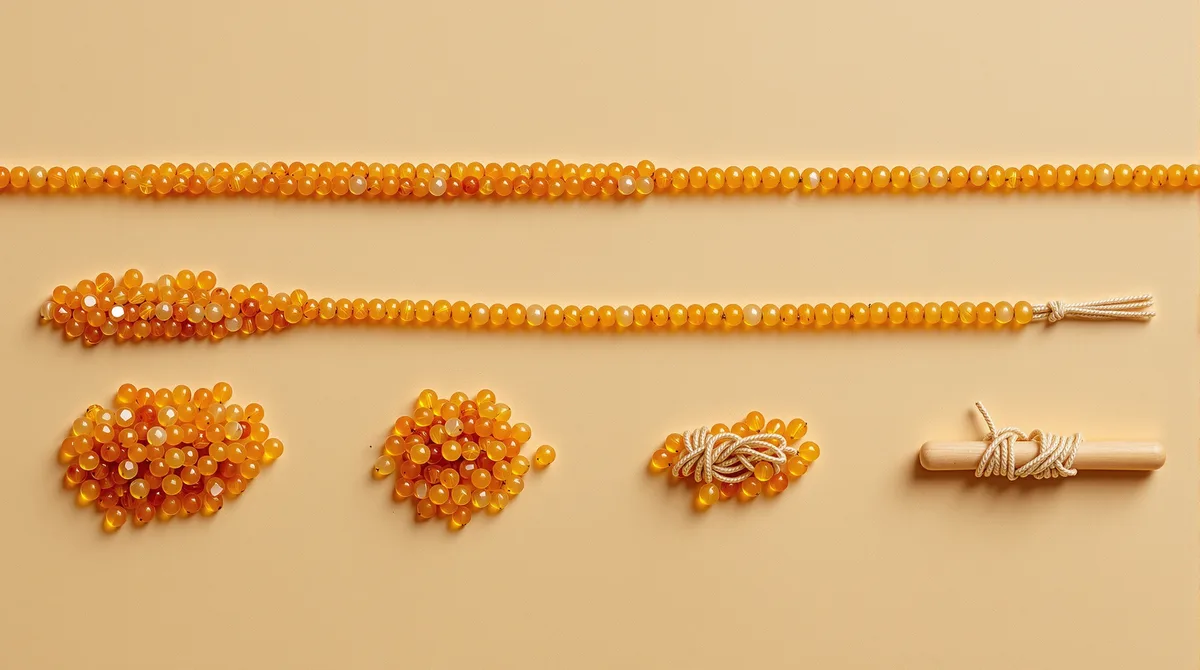
16 to 20 days from an agreed brief, photographs approved before the sample ships, and why the sealed sample is the contract.
How it is madeSpecification · Approval
Four things, and three of them have to be seen hanging. A photograph of a flat strand answers none of the questions a sample is for.
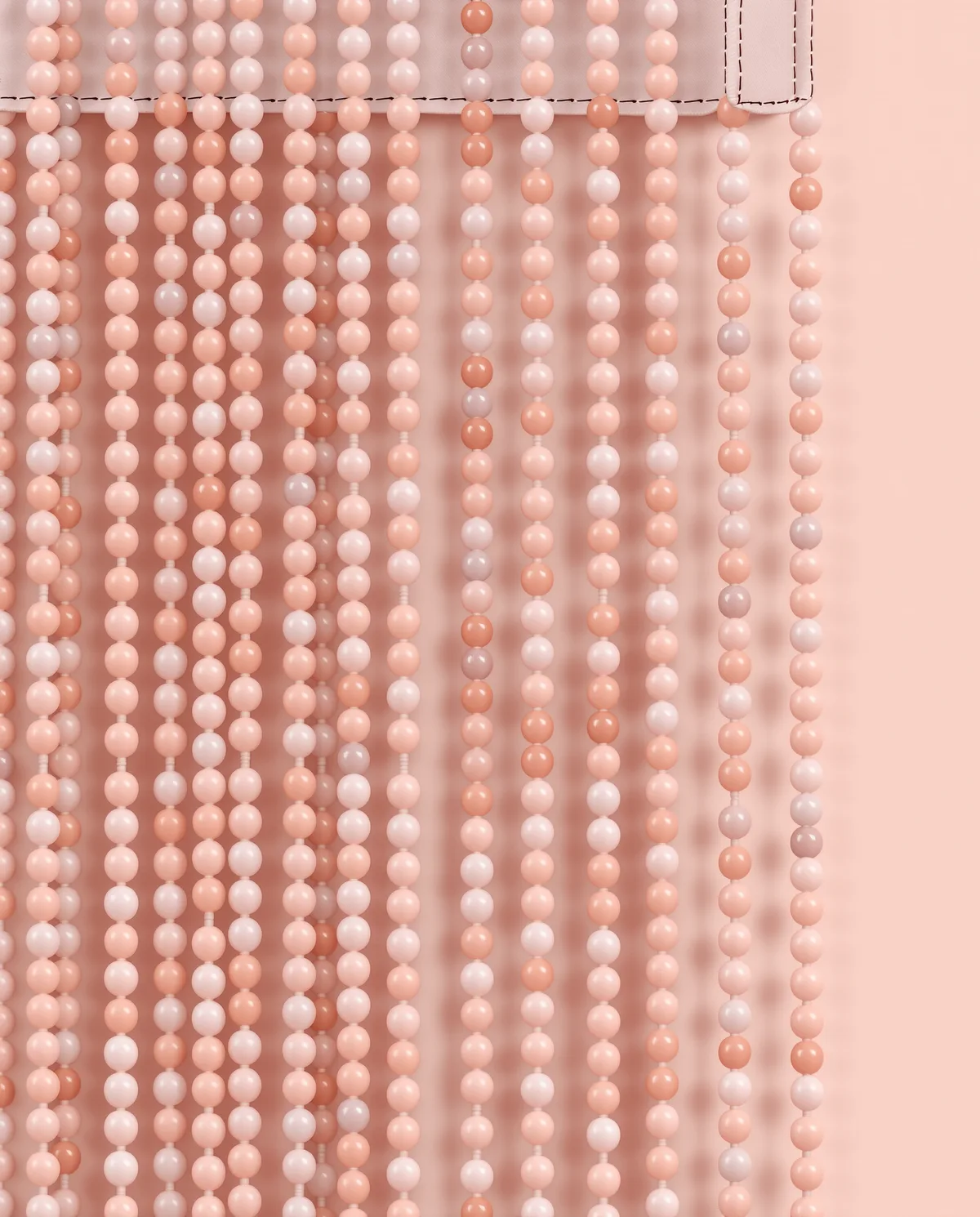
Four things: the complete colourway viewed as a set under the installation light, one full-drop strand hanging, the header detail including its back, and the hem across one complete repeat of its profile. Photographs are approved before a sample ships, and a prototype is approved before production begins.
Which open questions to close before committing. Sampling takes 16 to 20 days from an agreed brief, plus transit, plus the approval itself, so a second round is expensive in programme terms and the first one should be asked to earn its place.
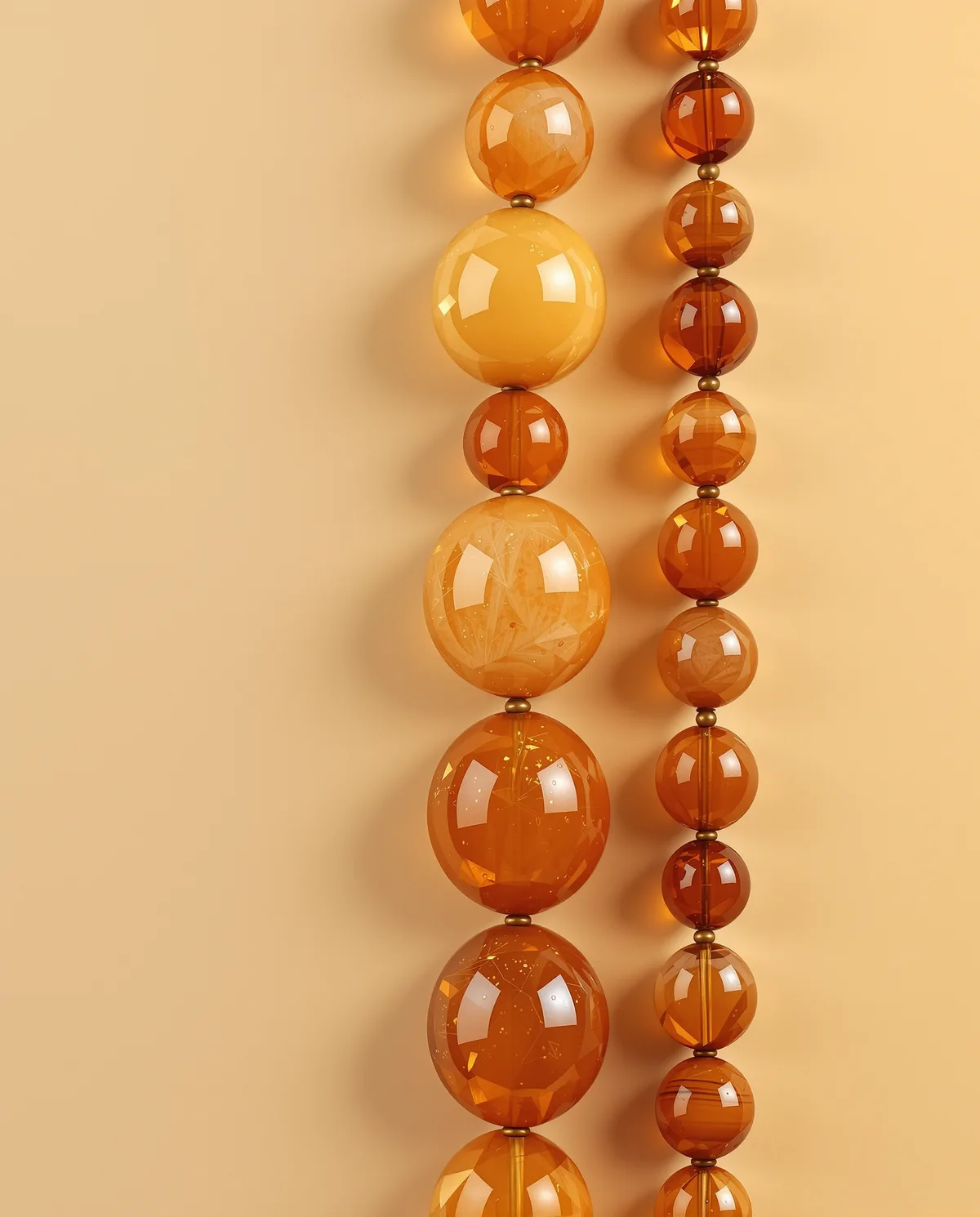
The decision is therefore not whether to sample but what to put in the one sample you can afford.
| Sample | How to view it | What it answers |
|---|---|---|
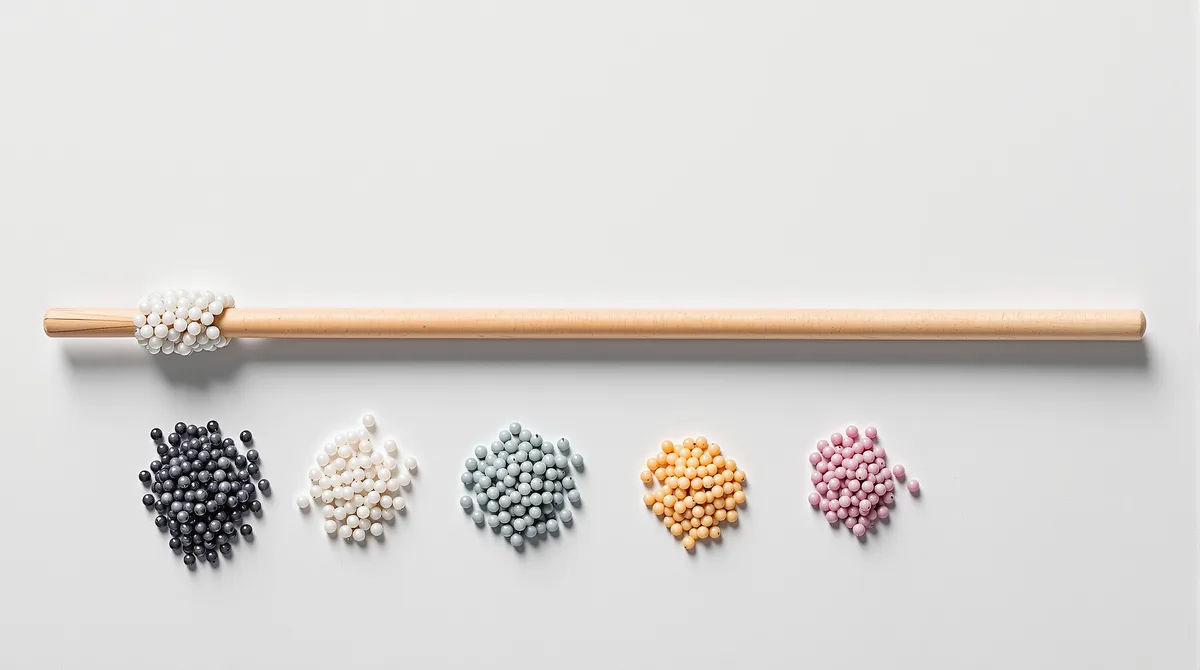
| Complete colourway | All beads together, under the installation light and daylight | Whether the palette holds as a set, and whether dyed-to-match pairs work |
| One full-drop strand | Hanging, at the specified drop | Hang, settling, drop accuracy, end-bead weight |
| Header detail | Front and back, with strands attached | Fixing, finish, both-sides appearance, strand spacing at the header |
| Hem, one full repeat | Hanging, at full drop | Whether the profile reads as a line at the specified depth |
| De-densified option, if budget is tight | Hung beside the full version | Whether the saving is acceptable |
| Fixing, loaded | With a dead weight equal to the panel | Whether the fixing holds — the sample nobody takes |
| Test specimen, if required | Sent to an independent testing house | A flammability or other result against a named standard |
| Sample photographs | Approved before the sample ships | Catches an error while it is still in the studio |
A sample requirement that says what is to be sampled and how it is to be viewed. "Sample required" is not a specification; "one strand at full drop, hung, viewed under the project lighting" is.
The specification should also state that the sealed sample governs the properties that cannot be numbered. Without that sentence, the sample is a reference rather than a control.
Start with the four. The complete colourway as a set, under the installation light and under daylight, because colour approved bead by bead tells you nothing about how the palette holds together. One full-drop strand, hanging, because hang and settling only appear at full length. The header detail front and back. The hem across one complete repeat.
Then add anything project-specific: a de-densified option if budget is open, a test specimen if there is a fire requirement, and the loaded fixing test on site.
Where the sample was approved flat. A strand laid on a table shows the beads and the colour and nothing about how it hangs, how much it settles, or whether the end bead is heavy enough to hold the line.
The second failure is a colourway approved under the wrong light, which is covered on its own page and originates here, in how the sample was viewed.
The four above, and the loaded fixing. The fixing test is the one almost nobody performs: a dead weight equal to the panel, hung on the installed fixing, before the panel arrives.
It costs an hour and it is the only test on this page that prevents a panel coming down rather than a panel looking wrong.
Sample what you will actually have to look after. A transparent glass panel is spectacular clean and noticeably dull dusty, and the way to judge it is to view a clean sample and then ask how often a panel at that height will really be cleaned.
Frosted and opaque beads are far more forgiving, and a sample viewed with that in mind sometimes changes the material specification.
A sample is not a panel. A strand shows hang and colour; a section shows pattern and hem. Neither shows how thirty strands read as a field, how the panel moves when somebody walks through it, or how it behaves in the room's own air.
Where that matters — a feature opening, a hospitality installation, anything on the critical path of a design concept — a full panel prototype is the only answer, and it costs a full production cycle.
That approval runs in two stages and both are documented. Photographs are approved before a sample ships, which catches errors while they are still in the studio and costs nothing. And a prototype is developed and must be approved before the full production run begins.
Our own bead programme also shows what revision costs: one portal design went through six to seven iterations to reach its target, and a wall hanging was re-engineered twice between header options. Iterations are normal; the point of a well-specified first sample is to spend them on design rather than on misunderstandings.
The sealed sample reference and the location of the physical sample. Both halves. A reference with no sample behind it is a number, and every tolerance expressed as matched to sample depends on somebody still holding it.
On a project the sample usually ends up with the client or the facilities team, and the pack should say which.
It changes what the sample has to show. Hand-formed beads vary from piece to piece, so a sample of them establishes the acceptable range rather than the target. Pressed and moulded beads are consistent, so a sample establishes the target exactly.
Surface-dyed beads need a dye-lot conversation at sample stage, because the sample is one lot and production may be another. Body-coloured pressed glass does not have that problem, and knowing which you are looking at changes what the approval means.
The sample is the tolerance for the unnumberable properties. For the numbered ones, state tolerances on the drawing and check them against the sample rather than instead of it.
Where the two disagree — a drawing dimension and a sealed sample that does not match it — the specification should say in advance which governs. Our own practice is that the sample governs construction and the drawing governs dimensions.
Through the fixing sample and through access. The contractor owns the loaded fixing test. The contractor also owns whether the panel can be hung at all at the point the sample suggests, which on a ceiling fixing is worth confirming before the sample is even approved.
Good to know
Sample what you will have to clean. A transparent glass panel that looks extraordinary on day one looks dull when dusty, and the fairest way to judge it is to see a clean sample and then ask honestly how often it will actually be cleaned at that height.
A sample cannot tell you what a full panel looks like. A single strand or a section shows hang, colour and detail; it does not show how thirty strands read as a field, how they move when someone walks through, or how the whole panel behaves in the room's air.
The contractor, and the fixing sample is theirs rather than ours: a dead weight equal to the panel hung on the installed fixing before the panel arrives. It is the cheapest and least-performed test on the whole package.
The sealed sample reference and where the physical sample is held. A sample that cannot be located is not a control, and every tolerance expressed as matched to sample depends on somebody still having it.
A sample requirement listing what is to be sampled and how it is to be viewed. Writing sample required is not a specification; writing one strand at full drop, hung, under the project lighting is.
The sample is the tolerance for everything that cannot be numbered — accent scatter, hand-formed bead variation, colourway balance, how a hem reads. The drawing should say so explicitly, because that is what makes the sealed sample a governing document.
Keep exploring
Reference
16 to 20 days from an agreed brief, photographs approved before the sample ships, and why the sealed sample is the contract.
How it is madeSpecification
The dimensions, strand values, fixings and performance limits a drawing and schedule have to carry.
See the detailSpecification
The colour-count sheet, bead references, fixing details, the care card and the spares inventory.
Specs and sizesSpecification
Sampling, 40 to 60 days of production, freight, and where a specifier should hold float.
See the detailSpecification
What to ask of the cord and the textile header, which standard to name, and what cannot be certified yet.
Specs and sizes
Start a conversation
Send a reference, a colour chip or a sketch. Minimums are set per design and confirmed per quote; sampling is quoted separately and usually runs 16 to 20 days from an agreed brief.