Manufacturing
Custom bead shapes, moulded to our own dies
Draw the bead, cut the die, mould and dye it: what a custom bead shape costs, what it needs from a buyer, and when it pays.
View the range
Process · Moulding
The moment a design needs a bead nobody makes, the question stops being which bead and becomes whether to cut a tool. That decision has a clean answer, and it is not about the price of the bead.
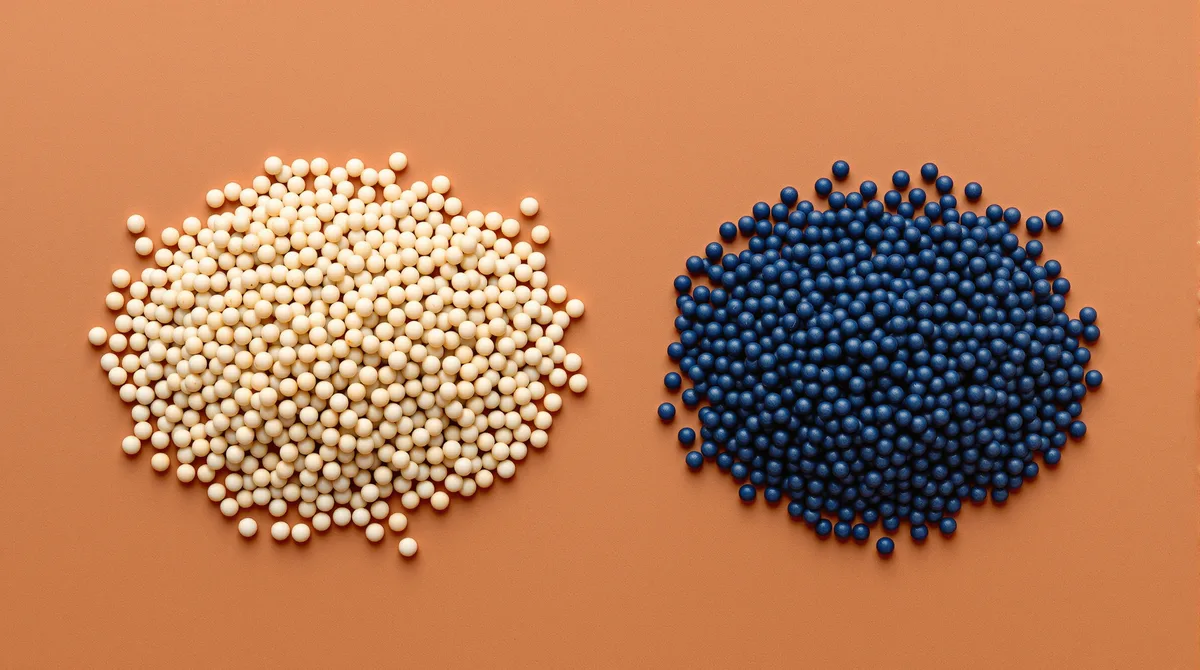
A band of moulded acrylic beads and cast faux capiz discs in candy pink, lemon, cream and mint running across the frame beside a threaded strand.
An acrylic bead is moulded by forcing softened polymer into a steel cavity under pressure, with a core pin forming the hole, then dyed to our colour. A new die is cut when a design needs a shape that does not exist. The tooling is a first-run cost that never recurs, which is what makes a custom bead a reasonable decision rather than an extravagant one.
Moulding makes a bead by filling a cavity. Acrylic is softened and forced into a closed steel tool under pressure, a core pin held in the tool forms the hole, the polymer cools and sets, and the tool opens. Every bead that comes out is the same object, because the object is really the tool.
The one thing moulding does not do is colour. The polymer goes in clear or in a stock colour and the bead is dyed afterwards, which is why acrylic beads carry the widest colour latitude in the library and the shortest colour sample loop.
Seven stages, and four of them happen before a usable bead exists. That front-loading is the whole character of moulded work: the bead cannot be corrected, only the tool can, so iteration happens at tool stage and production is then almost boringly consistent.
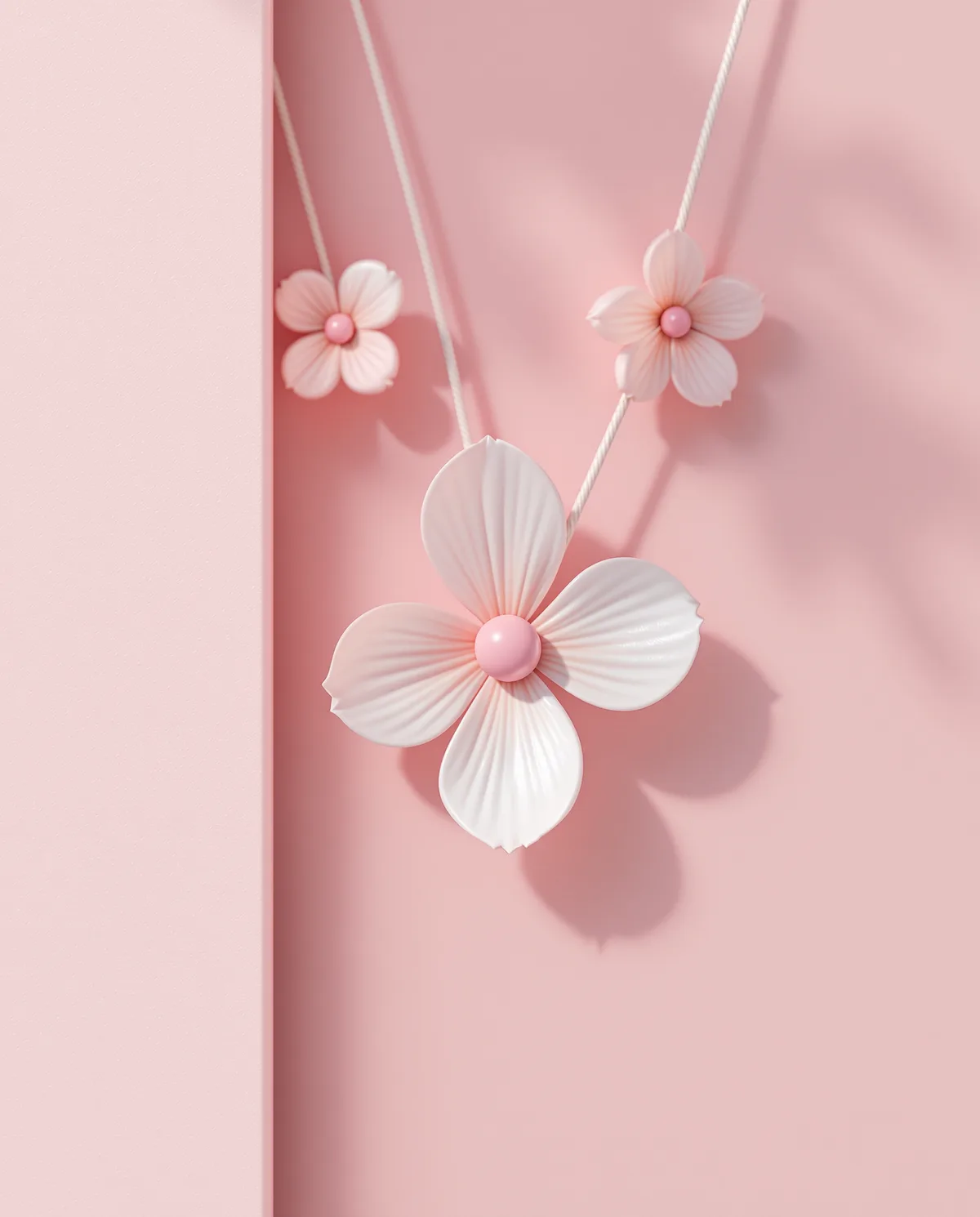
A shape that does not exist yet, repeated exactly. That is a genuinely different proposition from choosing a bead out of a library. In our own record it has produced custom injection-moulded almond-shaped connector beads at three inches, moulded so that six of them assemble into a six-inch daisy, and a custom moulded flower bead for a portal design — both developed because the design needed a bead nobody made.
On those programmes the mould fees were absorbed by us. That is a commercial decision rather than a technical one, but it is the reason a custom bead is a reasonable thing to propose.
Acrylic, moulded under pressure into a closed tool. Resin is the sibling process: cast at low pressure, which fills undercuts and fine relief that pressure moulding cannot reach but gives looser tolerances and slower cycles. Acrylic is the better bead; resin is the better object.
Glass is pressed, not injected, and the processes are genuinely different: pressed glass takes a gather of molten glass and squeezes it, with a pin forming the hole. The tooling logic is similar; nothing else is.
Development, not production. The cycle time per bead is short and the labour per bead is low, which is why a moulded bead is cheap at volume.
What takes time is the front end: turning a design reference into a component drawing, deciding where the split and the gate sit, cutting the die, shooting first samples, and correcting the tool. On one of our own portal developments that loop ran to six or seven iterations of the drawing before the bead hit its target, and two bead sizes were used in the final design to get there.

By the tool and the retained dyed bead together, and the two do different jobs. The tool holds the shape without supervision — that is what tooling is for. The retained bead holds the colour, which is a dye batch and therefore does need supervision.
Keep both and a reorder two years later is a genuine repeat. Keep the tool and lose the sample and the shape will be right and the colour will be an argument.
Four moulding faults, none repairable. A short shot, where the cavity did not fill and the bead is incomplete. Flash, where polymer escaped at the split and left a fin — the same problem a pressed glass mould seam causes, and with the same consequence: a proud edge abrades cord. A sink mark, where a thick section cooled unevenly and pulled the surface in. And a blocked or off-axis hole from the core pin.
All are caught at sort. The design-stage prevention for the third is a controlled wall thickness rather than a thick solid section.
Two separate numbers that buyers often merge. The bead cost is low and falls with volume. The tooling cost is a one-off that lands entirely on the first run.
The lever is therefore programme length, not negotiation. A custom bead across one season carries its whole tool; the same bead across four seasons carries a quarter of it per season and then nothing. That is the arithmetic to put in front of a buyer, and it is why "can we have a bead nobody else has" is a more answerable question than it sounds.
The statement of our reach matters here, because it is narrower than the glass one and should not be blurred. Glass we draw ourselves in our own Firozabad works. Acrylic and resin are moulded and dyed to our colour, to our own dies where a design needs a custom bead, and then strung and finished by hand in our own beadwork studios.
We own the tooling, we specify and approve the colour, and we do the finishing and assembly. The die is ours, and the bead exists because we drew it — which is the difference between a bead chosen from a catalogue and a bead that belongs to a design.
Set by section thickness rather than by overall size. A thick solid section cools from the outside in and pulls the surface down as the core contracts, so large moulded beads are designed with a controlled wall or a hollow core. Our own largest moulded bead in the record is a three-inch almond connector, which is a flat-ish shape precisely because flat sections mould cleanly.
Where a design needs a large solid shape with relief, casting is the right route and resin beads and cast shapes is where that goes.
Dimensionally against the drawing for outline, section and hole; visually for short shots, flash and sink marks; and by colour against the retained dyed sample in daylight. A connector bead gets one extra check — that six of them actually assemble into the motif, because a bead that measures correctly can still fail at the joint.
Inspection and export packing then run through our own Greater Noida quality and packaging house.
Section thickness, before anything else. A moulded bead fails at its thinnest point and shows its gate mark at its thickest, so the two extremes of the section govern both the tool and the reject rate. Everything else on the drawing — the hole, the axis, whether the shape is a standalone bead or a connector — is settled around them.
Hole axis and gate position are the two entries almost never supplied, and both change what the finished bead looks like hanging.
Extractable data
| Stage | What drives the labour | What is rejected here |
|---|---|---|
| Component drawing | Translating a design reference into a tool drawing | A drawing without section or hole axis |
| Split and gate decision | One decision, taken before cutting | A split line across a seen face |
| Cutting the die | Shape complexity; a first-run cost only | A cavity outside tolerance |
| First shots | Number of iterations | Short shots, flash, sink marks |
| Tool correction | How far the first shot missed | A tool that cannot hold the section |
| Dye and approval | Rounds of colour matching | Colour outside the approved sample |
| Production run | Cycle count; labour per bead is low | Short shots, flash, blocked holes |
| Retention | One pass | Nothing; this is the record step |
Good to know
The colour-count sheet is the bead-by-bead plan for every strand. Moulding meets it at bead identity: a custom bead gets a name on that sheet, and the sheet is what tells the bench how many of them go where. On a connector bead it also records how many beads assemble into one motif.
Acrylic above all, which is pressure-moulded into a closed tool. Resin is cast at low pressure into a mould instead, which gives undercuts and fine relief that pressure moulding cannot reach. Glass is pressed rather than injected, and the two processes are not interchangeable.
By the tool and the retained bead together. The tool holds the shape — that part needs no policing. The retained dyed bead holds the colour, which is a batch property and does need policing. Keep both and a reorder is a repeat; keep only one and it is a new development.
Short shots, where the cavity did not fill. Flash, where polymer escaped the split. Sink marks, where a thick section cooled unevenly and pulled the surface in. Blocked or off-axis holes from the core pin. All are moulding faults, caught at sort, and none can be repaired on the bead.
Within limits set by section thickness rather than by overall size. A thick solid section cools unevenly and sinks, so a large moulded bead is usually designed hollow or with a controlled wall. Where a design needs a large solid shape with relief, casting in resin is the better route.
The moulding is. The decisions — the drawing, where the split and gate sit, whether a first shot is acceptable, whether the dyed colour matches — are all human, and they are where the development time goes.
When the shape is the design and the programme runs more than one season. The tooling lands entirely on the first run and never again, so the deciding question is how many runs it will be spread across — not what the die costs on its own. We have cut dies for our own designs and absorbed the tooling on adopted programmes.
Keep exploring
Manufacturing
Draw the bead, cut the die, mould and dye it: what a custom bead shape costs, what it needs from a buyer, and when it pays.
View the rangeMaterial
Moulded to our dies and dyed to the reference: the widest colour latitude in the library, half the weight of glass, and no shatter risk.
Open the referenceMaterial
Poured, not pressed: why casting makes figural shapes possible, how colour goes through the body, and what the mould line costs you.
Compare the optionsProcess
Colour through the body, colour in a dye bath, colour on a surface — what each one promises, what a dye lot is, and what direct sun does to all three.
Compare the optionsReference
Five craft families — strung, embroidered, wire-wrapped, knotted and wrapped fibre — and what each one is good for.
Compare the options
Start a conversation
Send a reference, a colour chip or a sketch. Minimums are set per design and confirmed per quote; sampling is quoted separately and usually runs 16 to 20 days from an agreed brief.