Manufacturing
Patterned strand layout
Artwork to bead map, the resolution limit set by bead size, and why a scattered accent costs a fraction of a graphic.
How it is made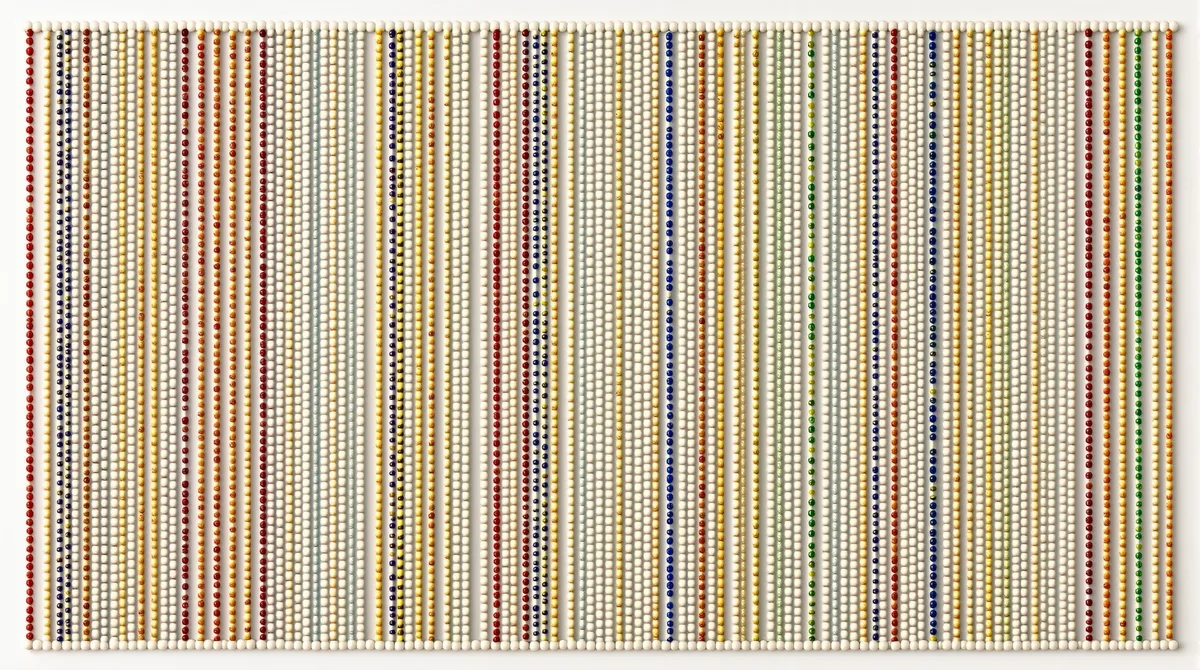
Trend · 2027
In most media a designer can add pattern for free, by printing it. In beadwork every piece of pattern is a physical bead and an hour of somebody's time, which is why this trend arrives here as arithmetic.
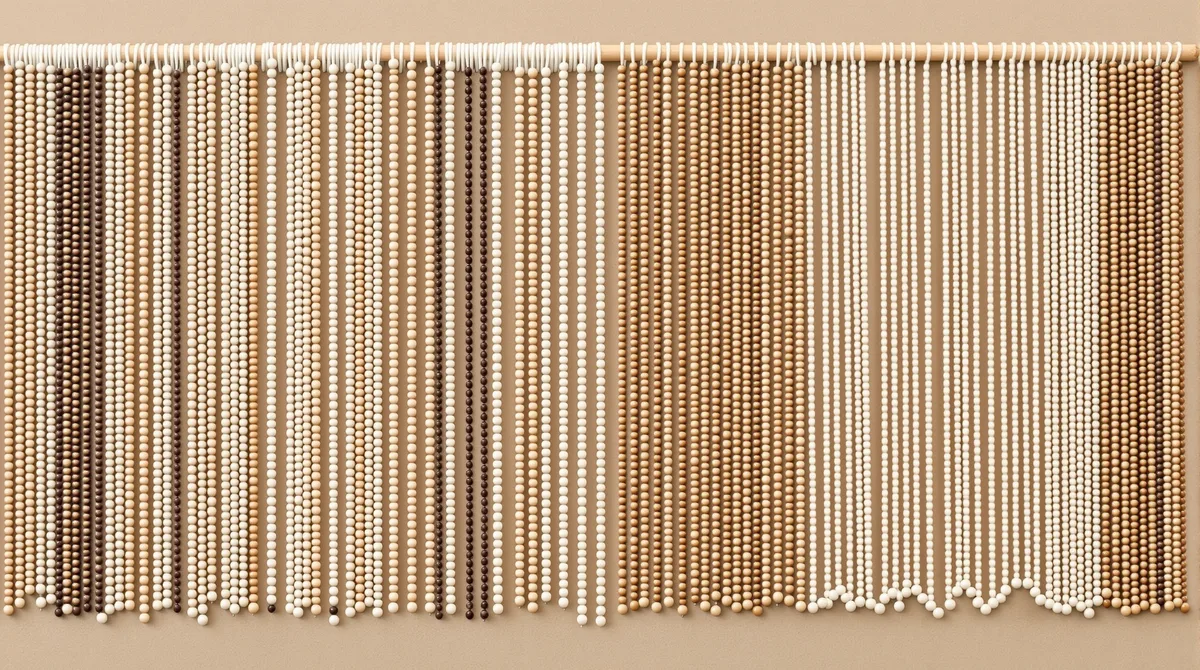
A beaded panel of extreme pattern density, every strand a different repeat in cherry red, cobalt, canary, emerald, plum, antique gold and chalk white.
Dense patterning multiplies bead count, and bead count is the real constraint. A densely patterned curtain at ninety by two hundred centimetres can hold about 11,800 beads against roughly 3,100 for a spaced design the same size, with every bead placed by hand. The affordable version of maximalism is a scattered accent.
Pattern has become acceptable again after a long period in which plain surfaces were the safe decorative choice. For most materials that change is nearly free: a printed fabric, a patterned tile or a wallpaper costs roughly what its plain version costs. Beadwork is the exception. Here pattern is physical — every change of colour is a different bead, selected and placed by hand in hand-strung construction — so a maximalist turn arrives in this category as a costing problem before it arrives as a design one.
Press carries the movement; the floor shows the shape it actually takes. Interiors coverage has been running maximalism as a direction for several seasons. What production adds is more specific and more useful: the dense-look designs approved in 2026 were accent builds — a scattered dot portal, a scattered motif portal — not all-over patterns. That is the difference between a movement and a panel that ships.
Deliver the maximalist read with the minimum pattern. A large scattered accent on a plain ground gives most of the visual abundance of a patterned panel at a fraction of the bead count and the picking time, and it is the construction that has repeatedly been approved. Reserve genuine full coverage for event, display and contract work, where the budget is per project rather than per unit.
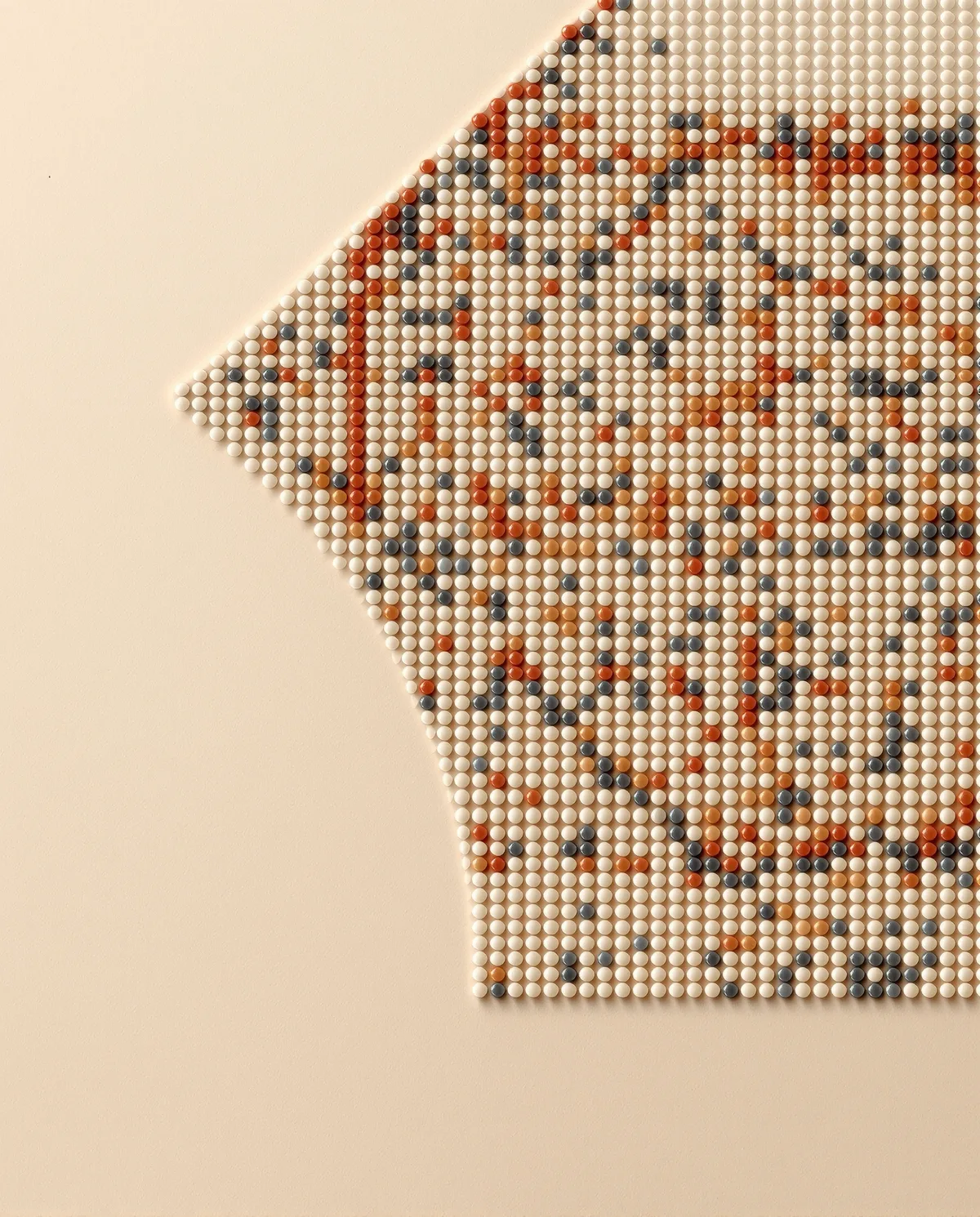
Lead times are unchanged at 40 to 60 days after sample approval. Cost moves twice. First on beads: a densely patterned curtain at ninety by two hundred centimetres can hold about 11,800 beads against roughly 3,100 for a spaced design at the same finished size. Second, and less obviously, on picking: a pattern changes colour repeatedly within each strand, and each change is a separate selection with a different sequence per strand, so nothing batches. Two panels with identical bead counts can differ substantially in labour depending on how often the colour changes.
Wavy Check is the direct graphic answer — oat and chocolate alternating with chalk white bead by bead, so a check steps right across the strands. Sorbet Parade is the confetti answer, with candy pink, lemon, mint and lilac mixed per strand. Café Society is the tonal answer, running espresso and cocoa through crema to dusty cornflower and pistachio with a single glossy cherry-red note. Each is recorded in the design library by construction, which is what makes a density brief costable.
Full-coverage graphic panels at retail price points. We can build them and we have quoted them; the arithmetic simply does not reach a shelf price outside contract work. We would also not take on a graphic brief with no artwork file attached without saying what it involves: one live design had to be pattern-mapped bead by bead from a reference image alone and then assembled by hand. The mapping is the work. Send artwork, or budget for the mapping.
Clashing brights in the coverage, tonal depth in the orders. The version of maximalism that is actually being adopted uses many values of a few hues rather than many hues, which reads as a considered palette rather than as a period reference. Warm and dotted is what buyers are asking for, and a dotted accent is precisely the affordable maximalism this page argues for.
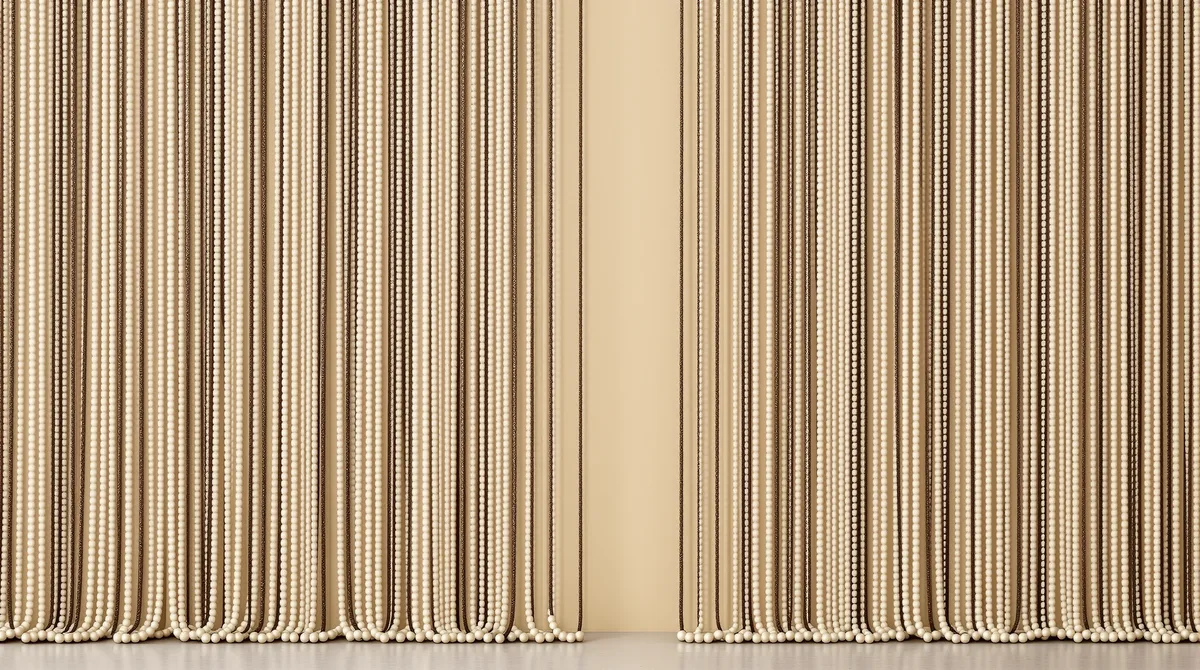
Wall hangings and portals. A dense panel at a doorway is heavy and loud and physically in the way; the same density on a wall is a feature with no downside. Where a brief wants density at a threshold, the construction that solves it is an arched-cut opening through the middle of the panel, which keeps the dense field and removes the obstruction.
That the trend as published and the trend as ordered are two different products, and following the published version is how a range gets built that nobody can retail. The counter-argument also has a quality dimension: density without variation reads as a mat rather than as a pattern, so a cheap route to maximalism — one inexpensive bead, packed — actually looks less expensive than a spaced panel in a good bead. Abundance is not a substitute for material quality.
Unknown as a measured figure, and the two halves of this movement will behave differently. The scattered accent will outlive the cycle because it is affordable and because it is a genuinely good construction. Full-coverage pattern will recede to event, display and hospitality work, where it has had a steady floor of demand for decades regardless of what domestic interiors were doing.
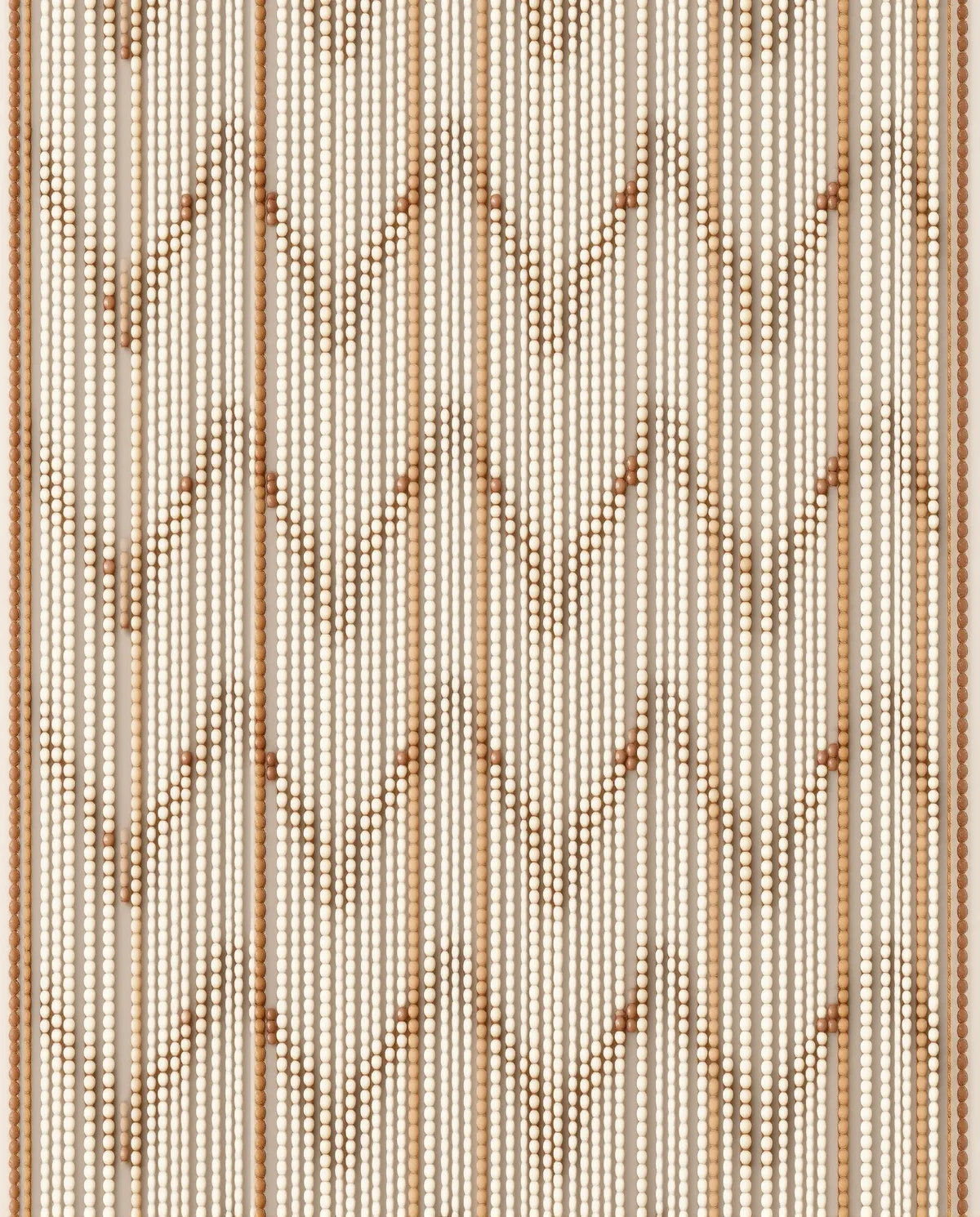
Posted: a room in which every surface carries pattern. Bought: a plain ground with a large accent scattered across it, three or four to a strand, never aligned. Only one of the two is in production. The reason is not that buyers lack nerve; it is that the de-densified version is the one that reaches a shelf price, and the three cost levers that get it there — open the infill, substitute a repeat for a gradient, move to a scattered accent — are all available at the brief stage rather than after the first sample.
Good to know
Clashing warm brights in press, and warm plus dotted in the briefs we take. The pattern-relevant observation is that maximalism in orders is tonal rather than polychrome — many values of a few hues, which reads as deliberate, rather than many hues, which reads as nostalgic.
Wall hangings and portals rather than full door curtains, because a dense panel is heavy and noisy to push through and the same density on a wall is simply a feature. Where density is wanted at a doorway, an arched-cut opening keeps the density and removes the obstruction.
That press maximalism and ordered maximalism are different products. The coverage shows wall-to-wall pattern; production shows a scattered accent on a plain ground. A buyer who designs to the coverage rather than to the production will produce something nobody can afford to retail.
Wavy Check, where the colour changes bead by bead so a check steps across the strands, and Sorbet Parade for the confetti reading. Café Society carries a tonal maximalism rather than a bright one. All three are documented by construction in the design library.
A full-coverage graphic at retail price. It can be built and it has been quoted, and the position is that the arithmetic does not work outside event, display and contract budgets where cost is per project rather than per unit.
The accent build. The dense-look designs approved in 2026 were a scattered dot portal and a scattered motif portal rather than all-over patterns, which is the clearest statement there is of what density does to a panel at retail sizes.
The structural read is that the scattered accent survives the cycle because it is affordable, and full-coverage pattern recedes to event and contract work, where it has always had a floor of demand.
Keep exploring
Manufacturing
Artwork to bead map, the resolution limit set by bead size, and why a scattered accent costs a fraction of a graphic.
How it is madeIndex
Eleven trend reads on beaded décor for 2027, from the floor the movements land on first.
Read moreTrend read
Portals lead, café lengths rose for a manufacturing reason, valances are wanted in short drops, wall pieces have become a repeat category.
Specs and sizesTrend read
What changes when beadwork is specified as a material: dimensions, adjacencies, dye-lot behaviour and a maintenance owner.
See the detailTrend read
Where the open threshold works, the three cases where a door should stay, and the construction a walk-through panel needs.
See the detail
Start a conversation
Send a reference, a colour chip or a sketch. Minimums are set per design and confirmed per quote; sampling is quoted separately and usually runs 16 to 20 days from an agreed brief.