Style
70s beaded curtain
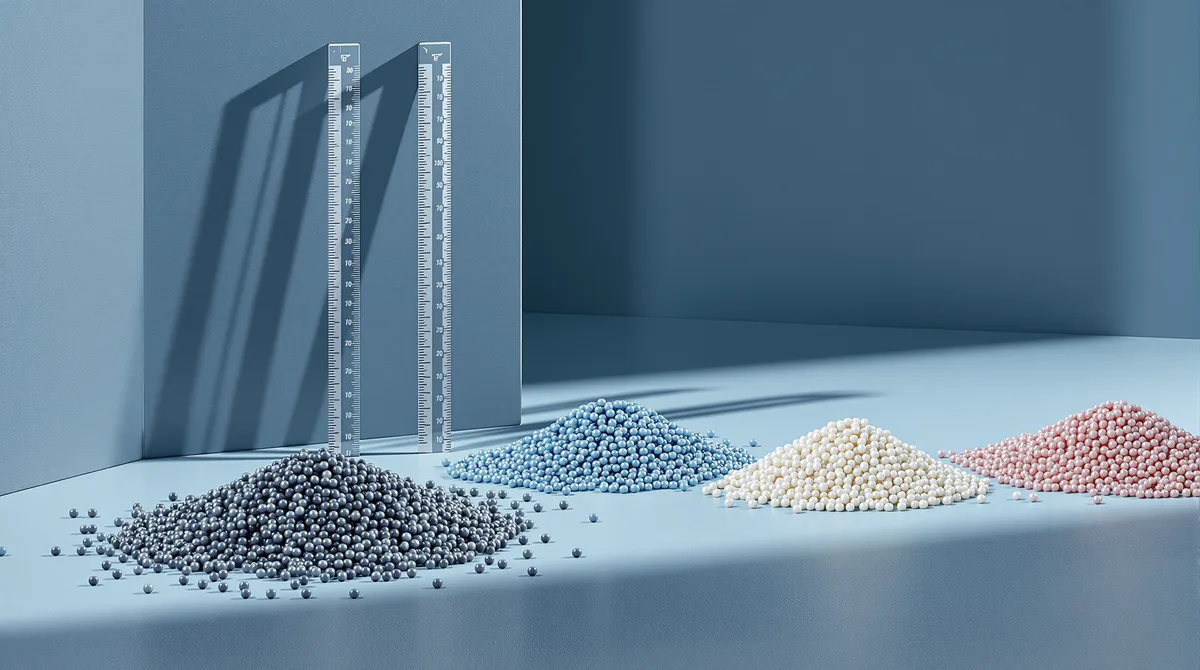
Rust, mustard, olive and amber at ten to sixteen millimetres in glass — why the palette needs the bead size.
How it is made
Trend · 2027
The warm amber family has stopped being a period reference and become the default warm in beaded décor. Press and production agree on it, which is rarer than it sounds.
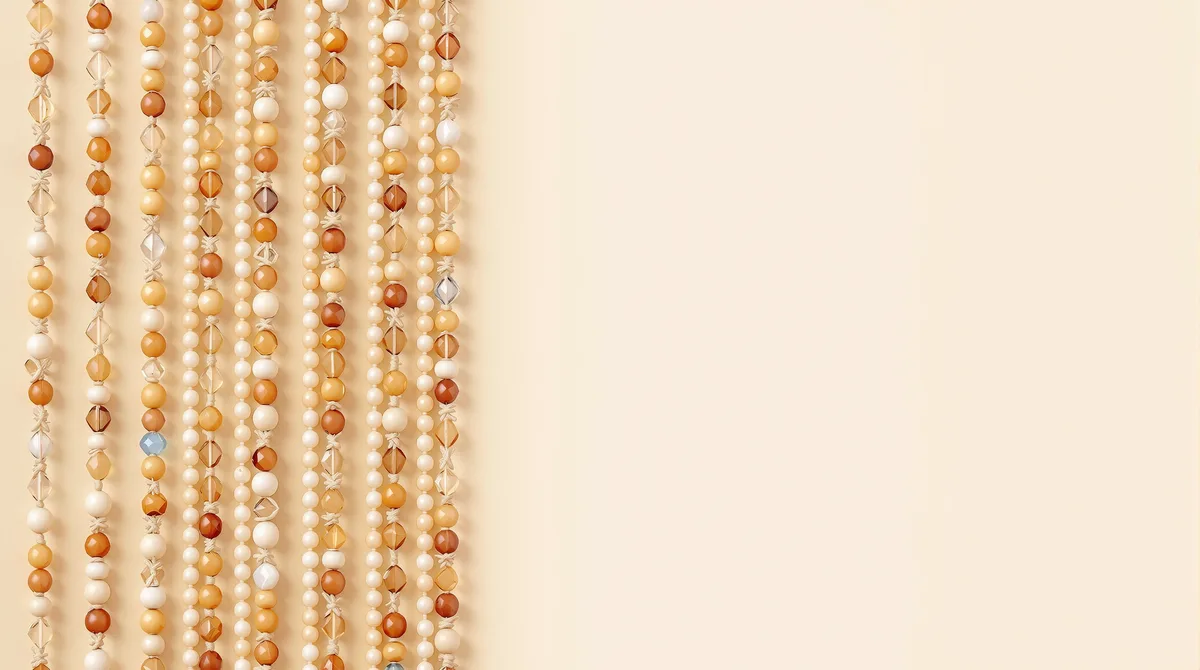
Editorial frame. The honey ombre colour story, styled for light.
The parts being ordered are the warm palette and the scattered accent, in portal and wall formats. Retro is the strongest consumer-demand register in the decade cluster, and buyers are asking specifically for statement pieces in warm, dotted and amber looks, with beaded door curtains rising fast.
The seventies palette has moved from being a period reference to being a default warm option. That is a different and more durable thing than a revival. When a buyer asks for warmth in a 2027 range, the colours they describe — rust, amber, honey, chocolate — are seventies colours, and they are not asking for the decade. The revival proper is the narrower phenomenon sitting on top of that: specific period gestures, specific formats, specific nostalgia, and a measurable amount of search traffic attached to the word retro.
Demand and production, pulling the same way. Retro is the strongest consumer-demand register in the whole beaded style cluster — the general term the decade-specific ones sit under — and it has held rather than faded. On our own floor a 2027 design collection is built in this exact palette, and buyers are asking for beaded door curtains and for statement pieces in warm, dotted and amber looks.
Build the palette, not the period. A range organised around a warm amber-to-chocolate family will absorb the revival while it lasts and keep selling after it, because those colours answer a permanent brief about warmth in interiors. A range organised around swirls and sunbursts expires with the cycle. Our own library is weighted into this family, which is how a palette-led range looks in practice.
Build so the cycle cannot take the range with it. Concretely: depth inside the palette, a light commitment to motif, and no tooling spend on a shape that only reads in one decade. A buyer who follows that rule never has to time the revival.
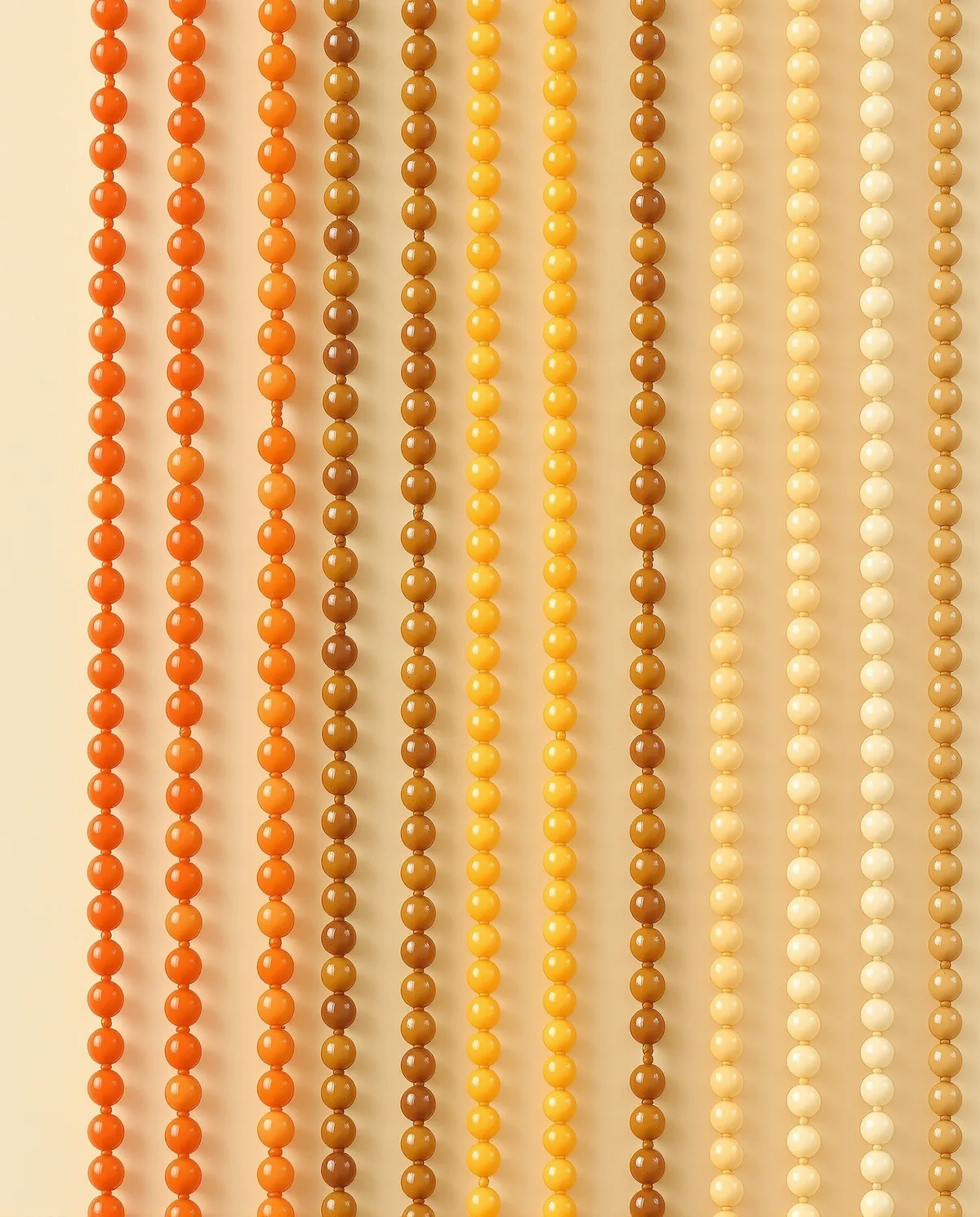
Posted: dense psychedelic patterning, avocado and harvest gold at full strength, and the whole room decorated as a period set. Bought: a warm ground with a scattered accent, in a portal or a wall format, at a palette one step down in saturation. That gap is consistent across the registers in this section and it is the single most useful thing a buyer can know before sampling.
One construction in three formats and two colourways. The construction is a warm translucent glass ground with a large scattered accent. The formats are a portal, a wall hanging and a valance, which in our own 2027 collection run at 120 by 200 centimetres, 60 by 100 and 120 by 35 respectively. The colourways are one bright and one deep from the same family, so they merchandise together rather than competing.
Very little, which is part of the attraction. The large beads this palette requires are cost-efficient, because bead count per drop falls as diameter rises, and the look wants few colour changes per strand. Production runs 40 to 60 days after sample approval, as for all beaded décor, and sampling usually runs 16 to 20 days from an agreed brief and is quoted separately.
Seventies Sunroom directly, with its door curtain, sunburst valance and wall hanging. Ember and Honey for the deeper reading, and Honey Hour for the version where the warmth is graded by bead size rather than by colour. All three are documented in the design library with their constructions attached, so a buyer can price the palette before anything is strung.
Three things. Swirl psychedelia, because it dates the object to one year rather than one decade. Full-strength avocado and harvest gold, because at full saturation those two colours read as a specific 1974 kitchen rather than as warmth. And the macramé-and-beads combination, which belongs to the 2010s boho moment rather than to the seventies and adds a second craft family to a piece that does not need one.
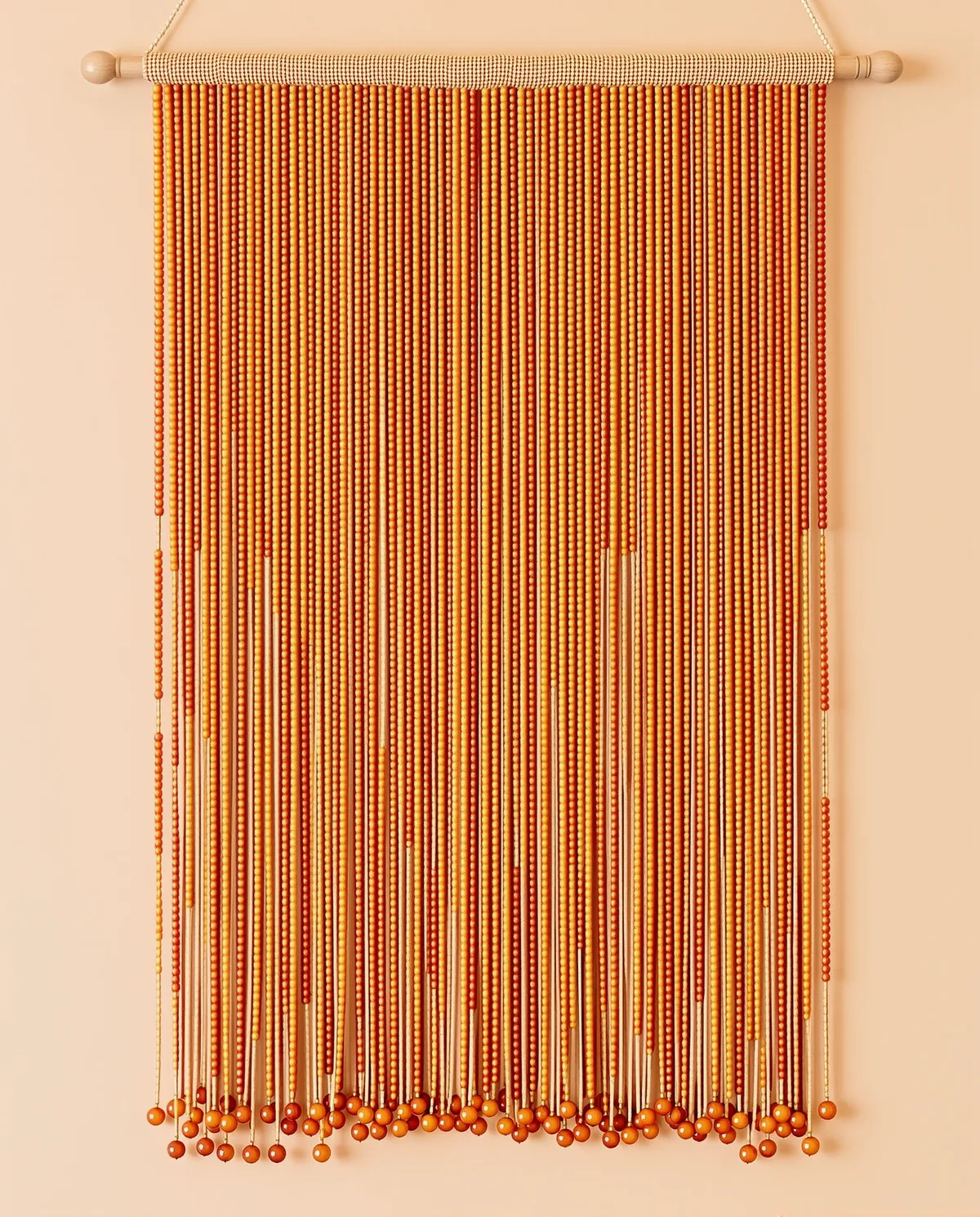
Warm, translucent and glossy. The combination that is actually moving is a saturated warm body colour in glass, with light passing through it, and a glossy rather than frosted surface. Matte finishes read as the Scandinavian and farmhouse registers rather than as this one. Where a matte note is wanted, it comes in as turned wood alongside the glass rather than as a matte glass.
Portals first. In our own beaded programme the lead portal has been reordered season after season, and portals sit at the head of a range covering portals, curtains, café curtains, valances and wall hangings, all of it in continuous production. The seventies palette is being asked for in that format order rather than in the full-length door curtain that the nostalgia implies.
Good to know
Swirl psychedelia, full-strength avocado and harvest gold, and the macramé-plus-beads combination. The first two are the period's least wearable decisions and they are what make a revival read as costume; the third is a different craft family added to supply character the beadwork should carry itself.
A 2027 design collection built specifically in this palette, and buyers asking for warm, dotted and amber statement pieces with beaded door curtains rising fast. The palette is in production rather than on a mood board.
Build range depth inside the palette rather than inside the motif. A palette survives a cycle and a motif does not, which makes the palette the safer place to spend.
The warm amber family. Rust, burnt orange, honey mustard, amber, chocolate and cream soda, with glossy orange and canary as the bright notes. That family is where the 2027 library is pointed, which is itself a directional statement.
Portals first, then wall hangings, then valances in short drops. The full-length door curtain is what people picture when they hear seventies revival, and the portal is what gets reordered.
That a decade revival is a borrowed interest rather than a durable one, and that measured search on the word retro is partly people looking for actual vintage objects rather than new ones. Both are fair. The answer is that this palette is in production and reordering rather than only being searched for.
Keep exploring
Style
Rust, mustard, olive and amber at ten to sixteen millimetres in glass — why the palette needs the bead size.
How it is madeColour story
Glossy orange, canary glass, chocolate brown and cream soda, built as a door curtain, a sunburst valance and a wall hanging.
View the rangeIndex
Eleven trend reads on beaded décor for 2027, from the floor the movements land on first.
See the detailTrend read
Where visible hand work carries a piece, how a de-densified build is engineered, and how provenance is traced plant by plant.
See the detailTrend read
Portals lead, café lengths rose for a manufacturing reason, valances are wanted in short drops, wall pieces have become a repeat category.
Read the guide
Start a conversation
Send a reference, a colour chip or a sketch. Minimums are set per design and confirmed per quote; sampling is quoted separately and usually runs 16 to 20 days from an agreed brief.