Process
Machine-strung panels
What a machine can repeat, what only hands can place, and where the price difference actually comes from.
Specs and sizes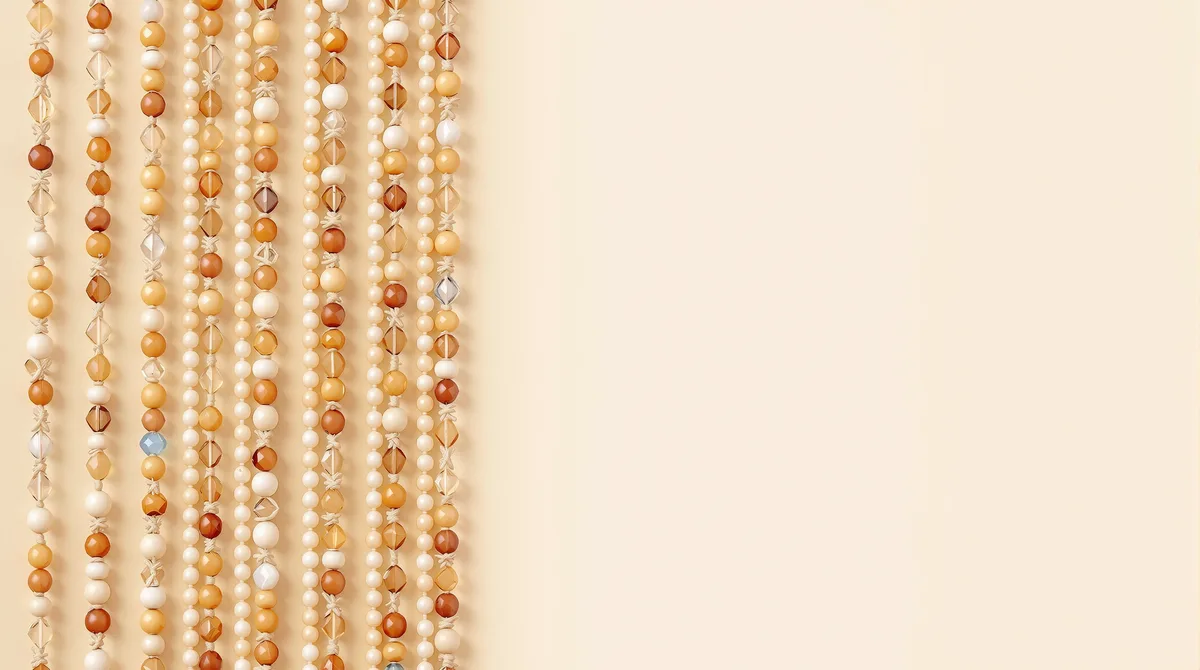
Trend · 2027
The premium holds where hand work is visible and the piece is singular: a large portal, a wall installation, a hospitality feature. On a shallow format the construction has to carry it instead.
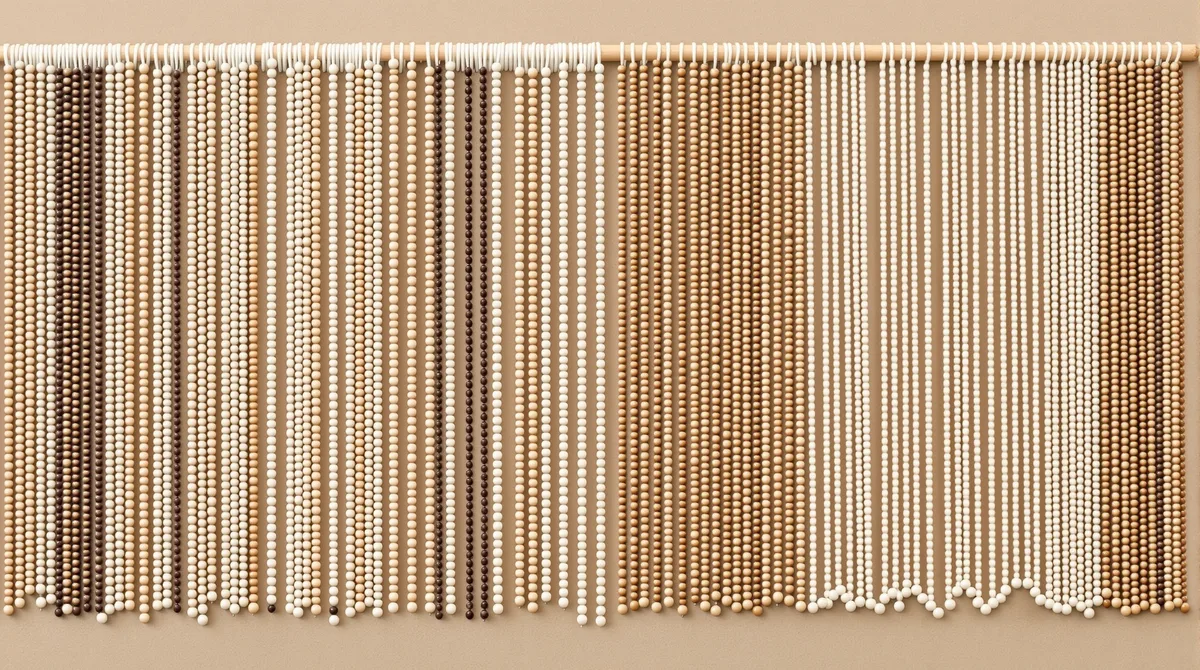
A close field of hand-strung strands in honey, caramel and cream glass filling one half of the frame, every bead separately readable.
The premium holds where hand work is visible and the piece is a statement: portals, wall pieces, hospitality installations. On a shallow format the construction carries it instead — a larger bead, fewer picks, an open fill — because the look has to arrive on a fraction of the beads. Provenance is traced component by component, never asserted as a word.
Nothing about the premium itself, and quite a lot about where it lands. Buyers have never stopped paying more for visible hand work; what has moved is which formats they will pay it on. The money now goes to pieces that are clearly singular — a large portal, a wall installation, a hospitality feature — and it has moved out of the volume end, where the shelf position is settled before the design exists and the hand time has to be engineered to fit inside it.
In the dense formats, every season. Sixteen artisans on average contribute to every finished product we ship, a densely patterned curtain can hold about 11,800 beads placed one at a time, and our lead portal is reordered season after season rather than ordered once. In the shallow formats the bead count falls to a fraction of that, so the hand time at the header and across the shaped hem has to be engineered into a much smaller piece — which is a design decision, taken at the drawing stage.
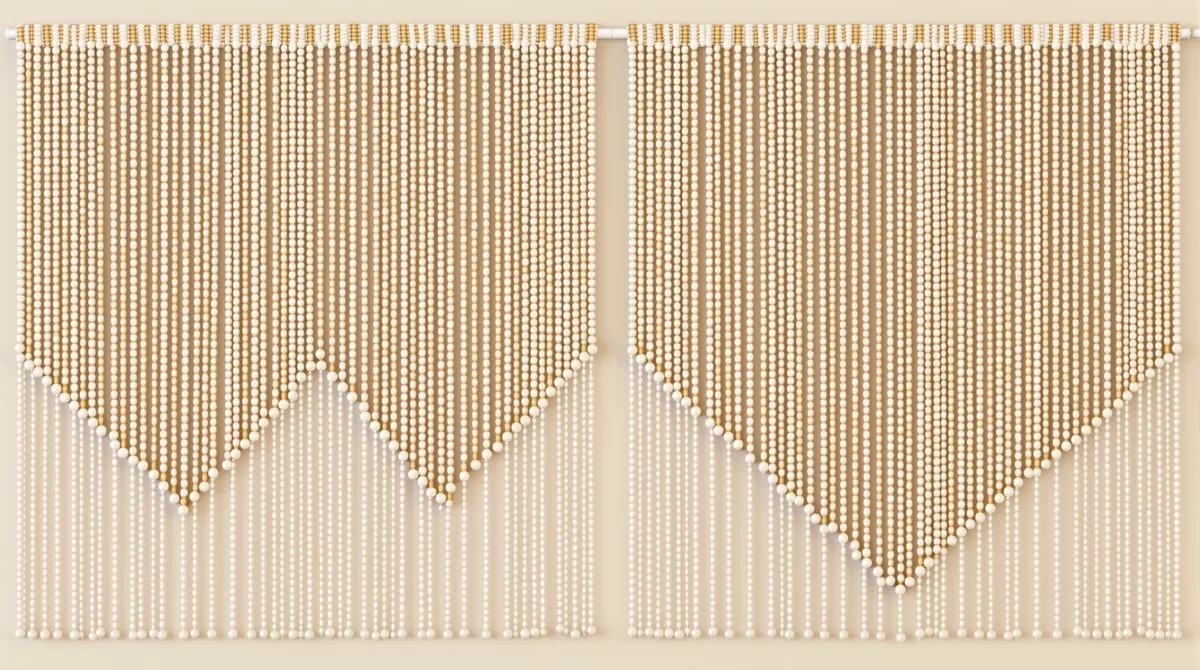
Put the hand work where it can be seen and charged for. A statement format can carry a dense, labour-heavy construction. A volume accessory cannot, and the response is to design it with fewer picks and a larger bead rather than to build a labour-heavy piece and hope the price holds. The de-densified build — tight outline, open fill — is not a compromise on quality; it is the correct engineering for a shallow format.
Portals, wall pieces and installations at the premium end. Valances, café curtains, coasters and small accessories at the squeezed end. The useful planning rule that falls out of this is that the construction has to suit the shelf position the format is going into: the dense, labour-heavy build belongs on the statement piece, and the shallow format is engineered to reach its look on a fraction of the beads.
That handmade is used as cover for inconsistency. Any buyer who has taken a reorder in a different shade, or with a hem that drifts, is entitled to be sceptical of provenance language. The answer is not a better story. It is first-article and lot inspection against the approved sample, run through our own Greater Noida quality house, and a specification that states what a dye lot can and cannot promise before the first order rather than after the second.
The handmade premium is not a trend and has no cycle. It is a permanent feature of how decorative goods are priced. What moves — and what a buyer needs to track — is which formats are currently carrying it, and that moves with shelf position and format rather than with design fashion.

Posted: the maker's hands, the workshop, the process film. Bought: the finished object, at a price. The gap is not cynicism on either side. A process story raises what a buyer believes a piece is worth; it does not change the construction the shelf position will carry, so it helps at the statement end and changes nothing at the volume end. Knowing which end a product is for prevents a lot of wasted development.
Two tiers, cleanly separated. A premium tier where the hand work is the product — hand-strung portals, wire-wrapped and bead-embroidered pieces, installations — priced on labour. And a volume tier engineered to a fraction of the bead count, using larger beads, fewer colour changes and open infills, with no pretence that it carries the same hand content. Trying to sell one construction into both tiers produces a sample that satisfies neither.
Lead time is 40 to 60 days after sample approval for beaded décor, and 60 to 90 days for macramé and bohemian work, which is a genuinely more labour-intensive family. Sampling usually runs 16 to 20 days from an agreed brief and is quoted separately. The work is labour, and the levers are known: de-densify the infill, substitute a repeating pattern for a gradient, increase the bead size, or reduce the piece. Every one of those has been used in our own developments to reach a target.
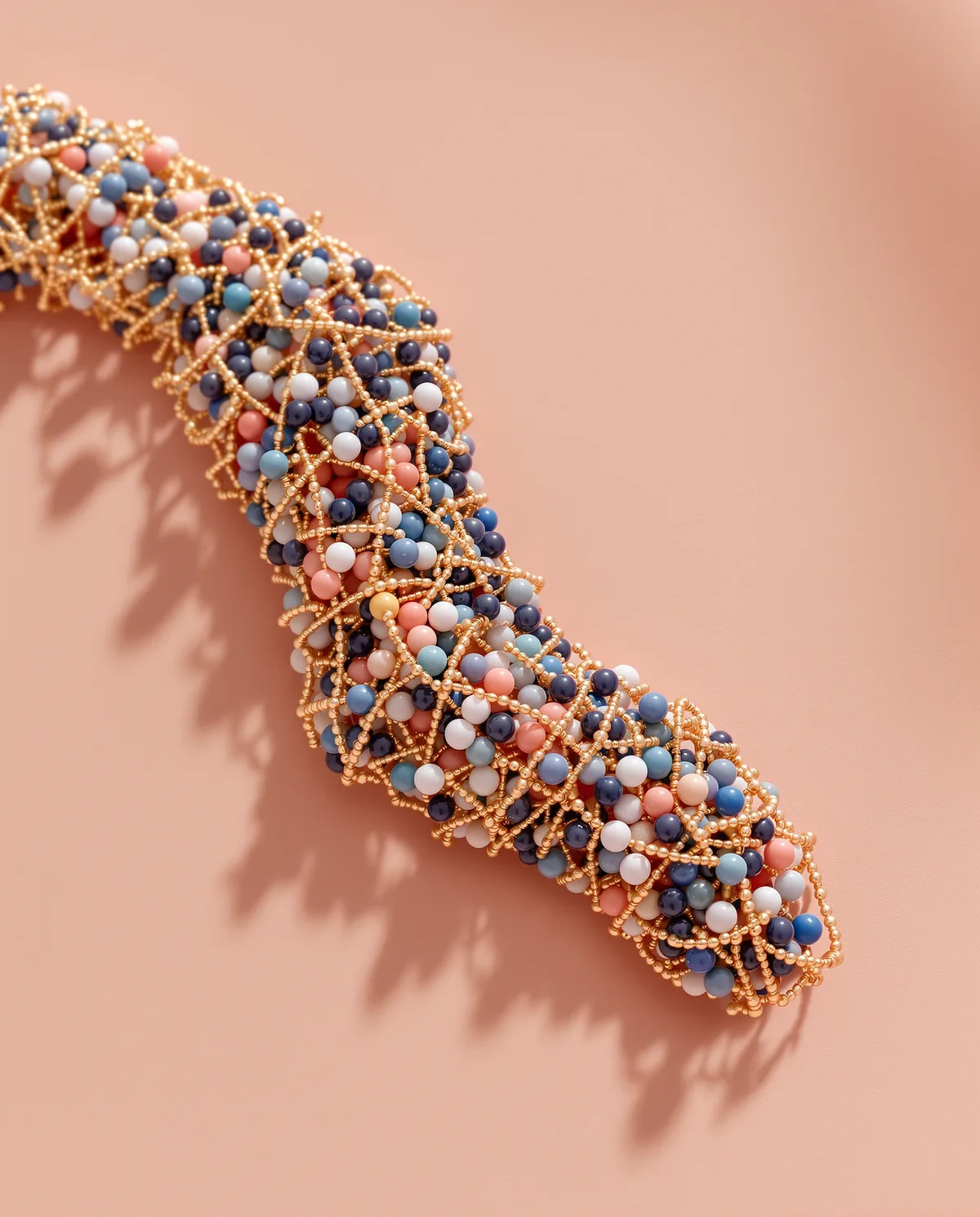
The techniques rather than the designs. Five craft families run in our own studios: crochet, wire-wrapped beadwork on a brass armature, bead-and-thread embroidery in the zardozi tradition, macramé, and natural fibre. Those are where hand content is highest and where it is visible at close range, which is the combination the premium actually pays for.
Provenance as an adjective. If a claim cannot be traced to a named plant, a named process or a named audit, we do not make it. What we can trace: glass beads drawn and hand-strung in our own Firozabad glass works, a vertical that dates to 1992; curtain dowels turned in our own Saharanpur wood factory; ceramic glazed and fired in Khurja; metal finished and plated in Moradabad; inspection and export packing through our own Greater Noida house; Sedex SMETA, FSC, C-TPAT and Omega audits; a zero-interest lending programme for craft partners and average artisan compensation tripled since the early 2000s. We own the plants — no agents, no brokers. That is provenance evidenced rather than asserted, and it is also the reason the tagline is Keeping the Hands in Handicrafts rather than something about heritage.
Colour is close to irrelevant to this read, with one exception worth putting in a specification. A palette achieved by surface dye carries lot-to-lot variation, and variation is the signature of hand work rather than a defect — but it has to be declared up front rather than discovered on a reorder. The finishes that actually signal hand work are the ones that cannot be faked: the open end grain around a drilled wood bead, the mandrel hole in a wound lampwork bead, the thread crossing between beads in couched embroidery, the brass openwork between beads on a wrapped armature. Those four details are what a close-range photograph should be showing when a page claims hand content.
Good to know
Artisan as a marketing adjective. If a claim cannot be traced to a plant, a process or an audit, it should not be made. Hand content is provable: name the works that drew the bead, the process that finished it and the house that inspected it.
The work on our own floor. Sixteen artisans on average contribute to every finished product, and a densely patterned curtain can hold about 11,800 beads, all placed by hand. At the other end of the range the shallow formats — valances, café curtains, coasters — carry a fraction of that bead count, so the construction has to reach the look on fewer picks and a larger bead.
The handmade premium is not a trend. It is a permanent feature of how decorative goods are priced, and what moves is which formats carry it. Treat it as a structural feature of the category rather than a season to time.
Colour is almost irrelevant to this read, with one exception. A palette that depends on surface dye carries dye-lot variation between runs, and variation is the signature of hand work rather than a fault — but it has to be declared in the specification rather than discovered on a reorder.
The premium is paid on portals, wall pieces and hospitality installations. On valances and small accessories the construction does the work instead: fewer picks, a larger bead, an open fill, so the look arrives on a fraction of the beads.
That handmade is used as a licence for inconsistency. A buyer who has received a reorder in a different shade or with a drifting hem has reason to be sceptical, and the answer is not a story about artisans but first-article and lot inspection against the approved sample.
The techniques rather than the designs: hand-strung strands, wire-wrapped beadwork over a brass armature, and bead-and-thread embroidery in the zardozi tradition. All three run in our own studios, alongside macramé and natural fibre, each with its construction and size ranges documented.
Keep exploring
Process
What a machine can repeat, what only hands can place, and where the price difference actually comes from.
Specs and sizesIndex
Eleven trend reads on beaded décor for 2027, from the floor the movements land on first.
Open the referenceTrend read
One piece per space: easier on dye lots, harder on fixing, fire files and whoever owns the dusting.
Read the guideTrend read
A valance tests a palette at a quarter of the bead count of a full drop — and the shaped hem is the whole product.
Specs and sizesTrend read
Portals lead, café lengths rose for a manufacturing reason, valances are wanted in short drops, wall pieces have become a repeat category.
See the detail
Start a conversation
Send a reference, a colour chip or a sketch. Minimums are set per design and confirmed per quote; sampling is quoted separately and usually runs 16 to 20 days from an agreed brief.