Guide
Heat resistance
What a hot dish does to each component, why no temperature rating is published, and the service-piece distinction that resolves it.
See the detail
Craft topic
A candle ring is a decoration that has to live near a flame, which makes it the only beaded object with a safety argument attached. The rule is simple and the reason for it is material science.
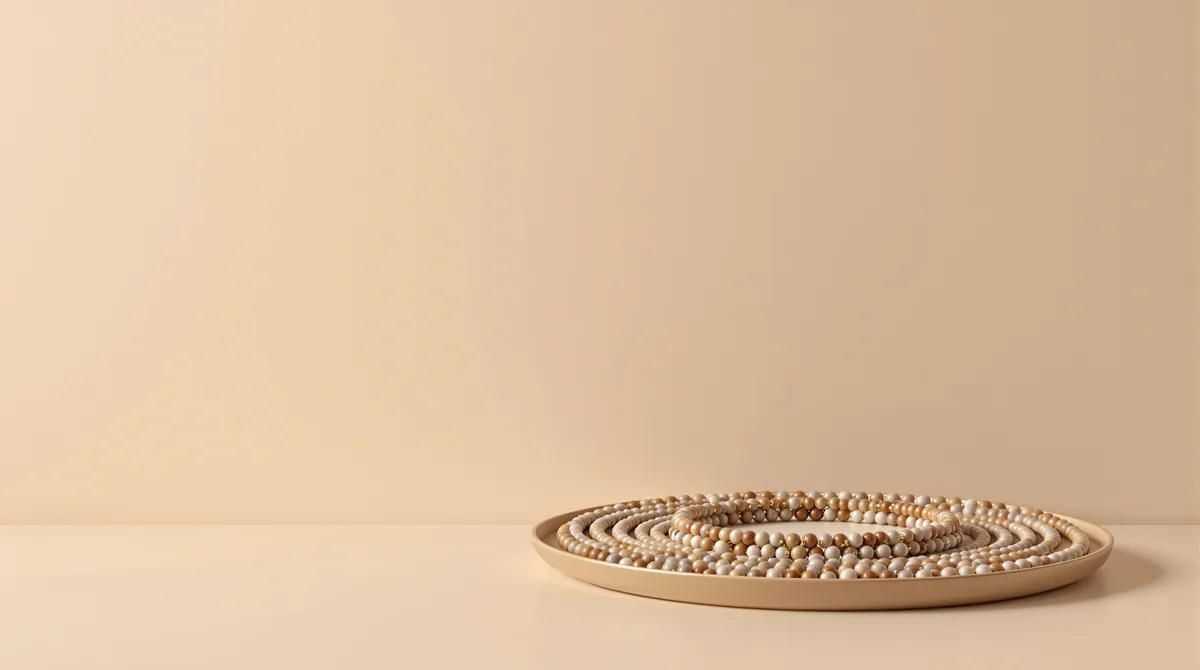
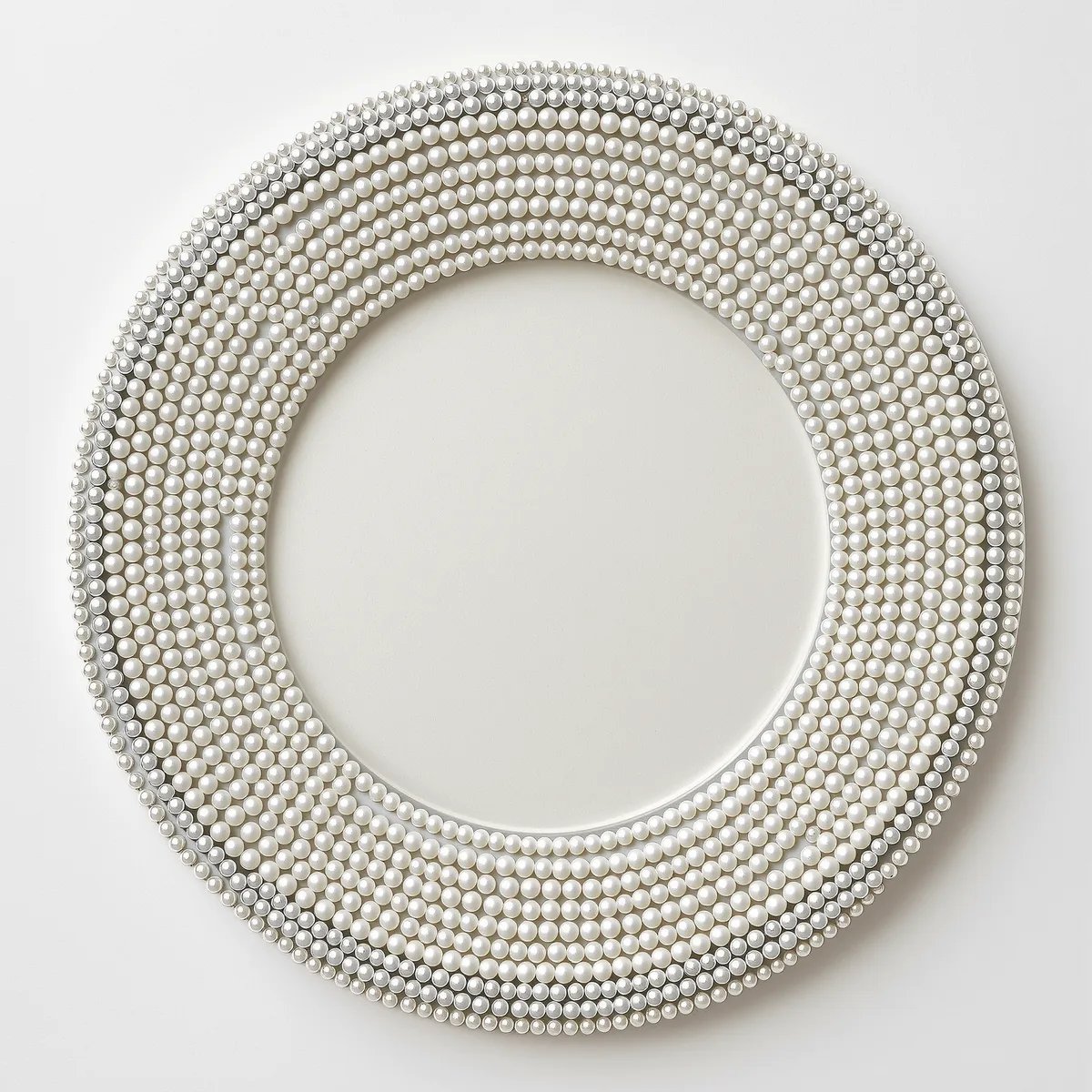
Three beaded rings lying flat, each a short wide open collar with a clear round opening through the middle, tiny glass seed beads wrapped over a brass wire ring in honey amber…
A beaded candle ring is a hoop of beads built over a wire armature or couched onto a stiffened ring, sized to sit around a candle holder rather than against a candle. The heat rule is material-led: glass tolerates warmth, acrylic softens well below it, and thread and fabric grounds should never be within reach of a flame.

A candle ring is a decorative hoop laid around the base of a candle holder. It comes from the same impulse as the table wreath and the bobeche — dressing a light source — and it is one of the oldest decorative objects in the home because a candle has always been the thing a room was arranged around.
In beadwork it is a small, simple object with one unusual property: it is the only beaded piece whose specification has to include a heat instruction.
The ring goes around the holder, not against the candle. That is the whole rule, and the rest is the reasoning.
Glass tolerates warmth. A glass bead near a candle is not at risk from the air temperature. What it is at risk from is contact: a glass bead resting against a hot glass votive conducts, and glass conducts unevenly, which is how a bead cracks.
Acrylic and resin soften well below the temperature a glass holder reaches after an hour of burning. They should not be within reach of heat at all, which in practice means not touching the holder and not sitting in the heat plume.
Thread, cord and fabric grounds are the real caution. A couched ring is a textile object. It belongs on the table around a holder, never on the holder, and never above a flame.
Heat tolerance is confirmed on the sample. Near a flame, the rule is distance rather than a rating: keep beadwork clear of an open flame altogether.
Three routes, in descending order of how well they hold a circle.
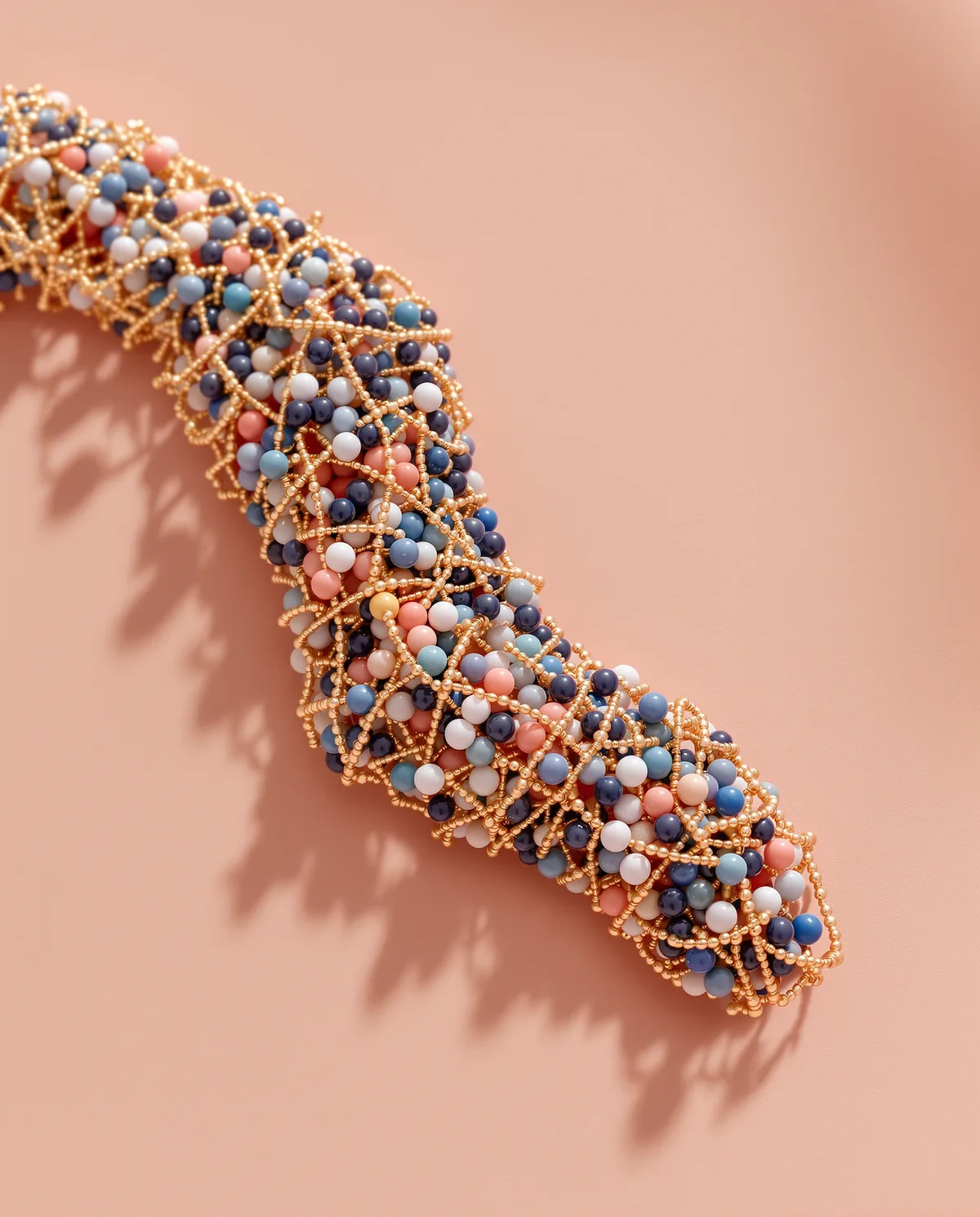
Wire-wrapped over an armature. Beaded wire wound turn against turn over a shaped brass ring. The armature holds the shape; the beads are the surface. This is the same construction as a beaded napkin ring, and it is the only one of the three that keeps a true circle when handled.
Strung and formed. Beads on wire, bent into a hoop and joined. Lighter, cheaper, and it distorts.
Couched on a stiffened ring. Bead embroidery onto a fabric or felt annulus. It carries detail and motif far better than wire work can, and it is the most heat-sensitive of the three because the ground is cloth.
Because the ring has to clear the holder. A ring specified by its outside diameter can be any inside diameter at all, depending on how thick the beadwork is — and a ring forced over a holder distorts while a ring that sits loose slides when the table is knocked.
Next to a flame, a sliding decorative object is a design fault, not a nuisance. Specify the inside diameter against the actual holder, and let the outside follow from the beadwork.
Glass seed beads and bugle beads on fine brass wire for wire wrapped beadwork; larger pressed glass beads and moulded beads as accents; shaped brass wire for the armature, finished and plated in eight standard finishes; stiffened fabric or felt for a couched ring, with metallic thread in the same stitch.
Glass is the material to prefer here for reasons that are not aesthetic. It is the one bead family that is genuinely indifferent to being warm.
Beaded candle rings are available to develop. The format sits in our own declared list — portals, curtains, valances, wall hangings, lamp shades, ornaments, garlands, trims, charms, candle rings and catch-alls — and the glass and candle vessels a ring sits around are a real catalogue category, made in our own plants.
What is real on both sides of the object: glass and candle vessels are one of our published catalogue categories, so the holder a ring would sit around is something we manufacture, and wire-wrapped beadwork on a brass armature is a family we run every day. The ring between them is a short development away.
It is a napkin ring with a different brief and a thermal constraint. Our wire-wrapped rings run 6 to 9 cm and are built to be handled, pushed through and sat on a cloth; a candle ring is usually larger, is never handled in use, and has to be judged on where it is allowed to sit.
The design freedom is also different. A napkin ring has to leave an opening a napkin can pass through. A candle ring has no such constraint, so it can be as wide and as decorated as the table will take.
Lay it flat and look for rock. Measure the inside diameter against the holder. Find the wire anchor and check it is hidden behind rather than showing on the face. Look for any fibre element — a cord wrap, a tassel, a fabric ground — and ask where that element will sit relative to heat. Then check the plated finish at the join, which is where plating thins.
Largely seasonal, and largely at volume: candle rings sell as part of autumn and winter tabletop ranges and are made in very large quantities for short windows. Hand wire-wrapped versions are a small premium market, usually made alongside napkin rings in the same workshops, because it is the same bench and the same wire.
The calendar is the familiar seasonal one: beaded décor runs 40 to 60 days after sample approval and sampling runs 16 to 20 days from an agreed brief, so a Christmas table range is briefed in the spring.
Because the one genuinely useful thing to publish about the object is the heat rule, and a retailer can apply it whichever bench the ring comes off. A beaded candle ring is available to develop here on the wire-wrapped bench, and the heat advice stands on its own either way.
Good to know
Laid flat around the base of a candle holder, on a tray or a tabletop, with the ring's inside diameter clearing the holder rather than gripping it. A ring that has to be forced over a holder will distort, and a ring that sits loose will slide when the table is knocked, which is the opposite of what anyone wants near a flame.
Dust with a soft brush and wipe glass beads with a barely damp cloth. Keep wax off it — wax in a bead hole or in couching thread is effectively permanent, and heating it out is exactly the thing this page says not to do. If a ring does get wax on it, the answer is that it is no longer a clean object.
An inside and outside diameter, a bead specification, an armature or ground, a metal finish and a sample, plus a care and heat instruction we would be prepared to print. The construction is the same wire-wrapped work that builds our napkin rings at 6 to 9 cm, so the craft is in place and the ring is a short development on top of it.
Not today. Glass and candle vessels are a real Gemixx catalogue category, so the holder a ring would sit around is something we already make. The ring itself is available to develop rather than a current line.
Three routes. Beaded wire wrapped turn against turn over a shaped armature, which is what holds a true circle. Beads strung on wire and formed into a hoop, which is lighter and less stable. Or beads couched onto a stiffened fabric or felt ring, which is the softest and the one most vulnerable near heat because the ground is textile.
Candle ring, candle collar, pillar ring, bobeche and candle wreath all overlap. A bobeche strictly sits on the candle itself to catch drips, which is a different and much hotter position; a candle ring sits on the surface around the holder. The distinction matters more than the words, because one of those positions is in reach of heat and the other is not.
Lay it on a flat surface and see whether it sits level — a ring that rocks will not stay put next to a flame. Then check the inside diameter against the holder it is meant for. Then look for the wire anchor, which should be hidden at the back rather than showing on the face. Then check there is no thread or fibre element that would sit where heat can reach it.
Keep exploring
Guide
What a hot dish does to each component, why no temperature rating is published, and the service-piece distinction that resolves it.
See the detailIndex
Seventeen beaded objects documented from inside the craft — what each one is, how the tradition builds it, and what it would take to develop one.
Open the referenceCraft topic
How a bead is trapped between knots rather than strung, why the cord gauge limits the bead, and why knotted work runs 60 to 90 days rather than 40 to 60.
See the detailCraft topic
The portière, the screen and the divider — three different jobs that look alike in a photograph, and which of them we actually build.
Specs and sizesCraft topic
Pinned beads over a foam form, the kit era that made it, what collectors check, and the one thing we make that is genuinely adjacent to it.
See the detailManufacturing
Six to nine centimetres, beads wrapped over a shaped brass armature with a flat-back wrap — the construction, the sizes and what sets the cost.
Read the guide
Start a conversation
Send a reference, a colour chip or a sketch. Minimums are set per design and confirmed per quote; sampling is quoted separately and usually runs 16 to 20 days from an agreed brief.