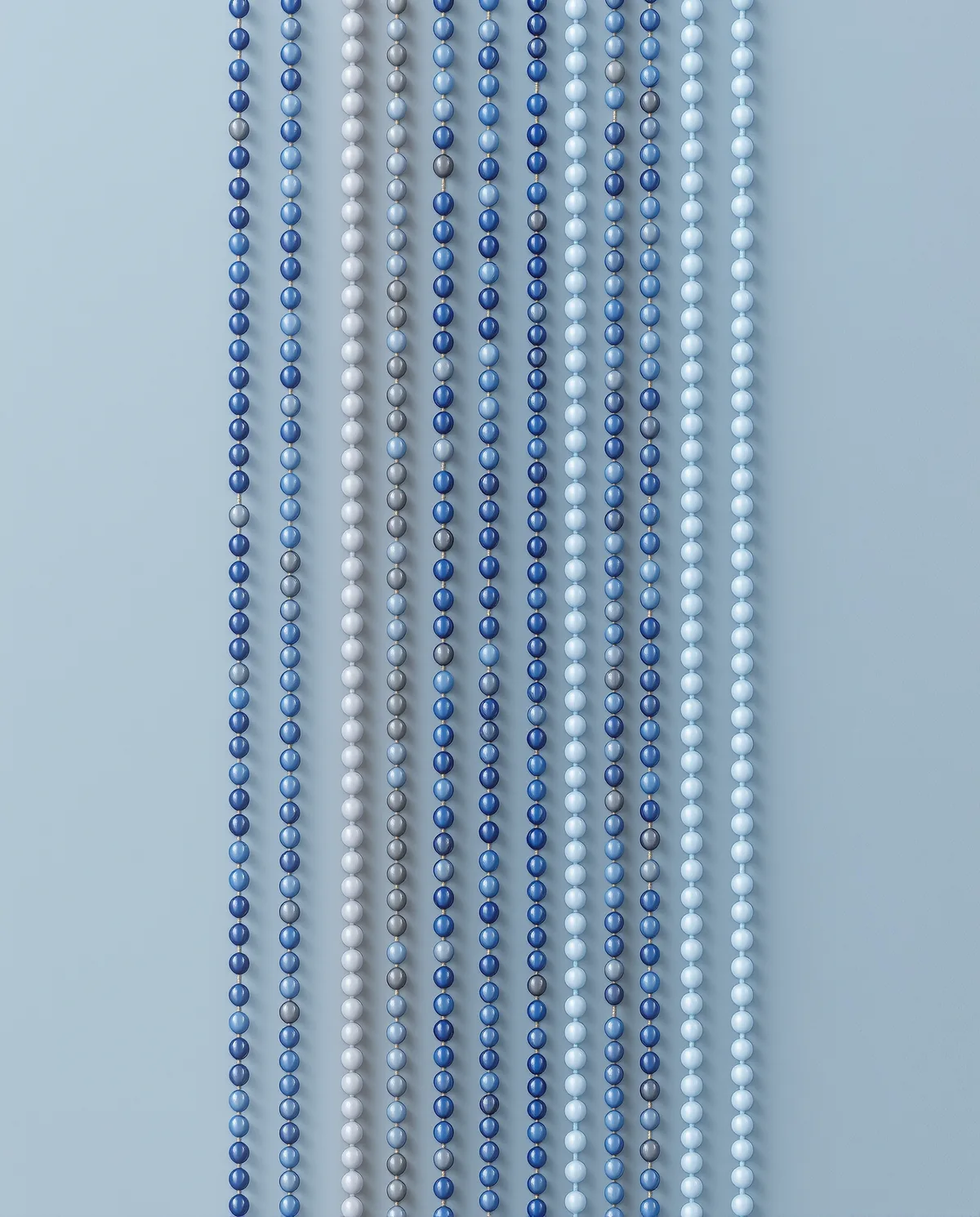
Colour story
Deep blue glass beads
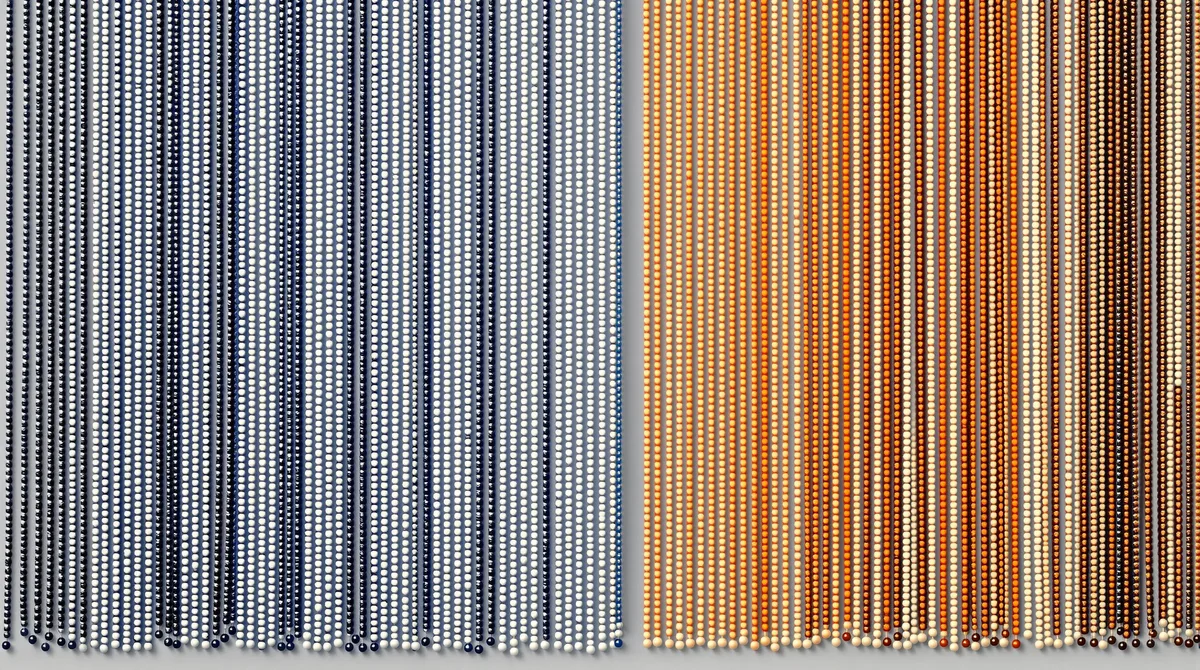
Cobalt and ink glass spaced across 40 strands at about 3,100 beads, where the gaps are as designed as the beads.
See the detail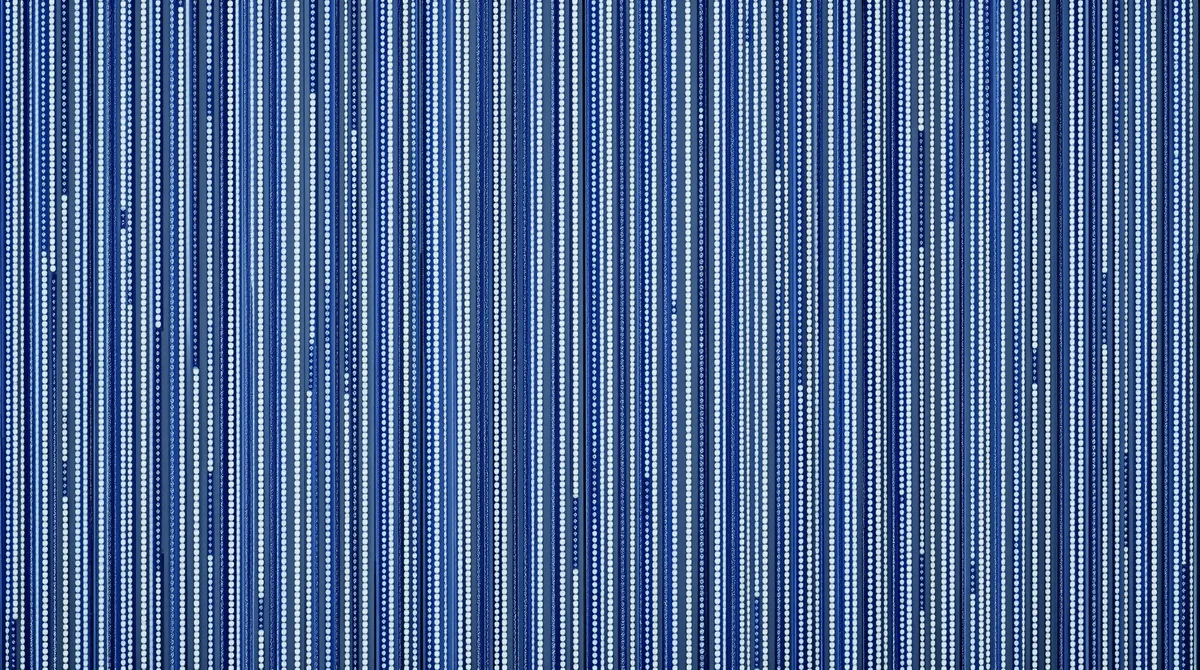
Design · Lapis Hour Doorway
Four numbers describe this design, and the most useful one is the bead count — because it tells you how much cord you are going to see.
A beaded doorway curtain of close strands in deep lapis, cobalt and slate glass, the colour deepening across the panel.
The Lapis Hour doorway curtain is drawn at 90 × 200 cm on 40 strands with a diagonal hem, at roughly 3,100 beads. Those 3,100 beads across 40 strands work out at about 78 a strand on a 200 cm drop, so the beads are spaced and the cord is visible between them. A densely patterned curtain at the same size would hold about 11,800.
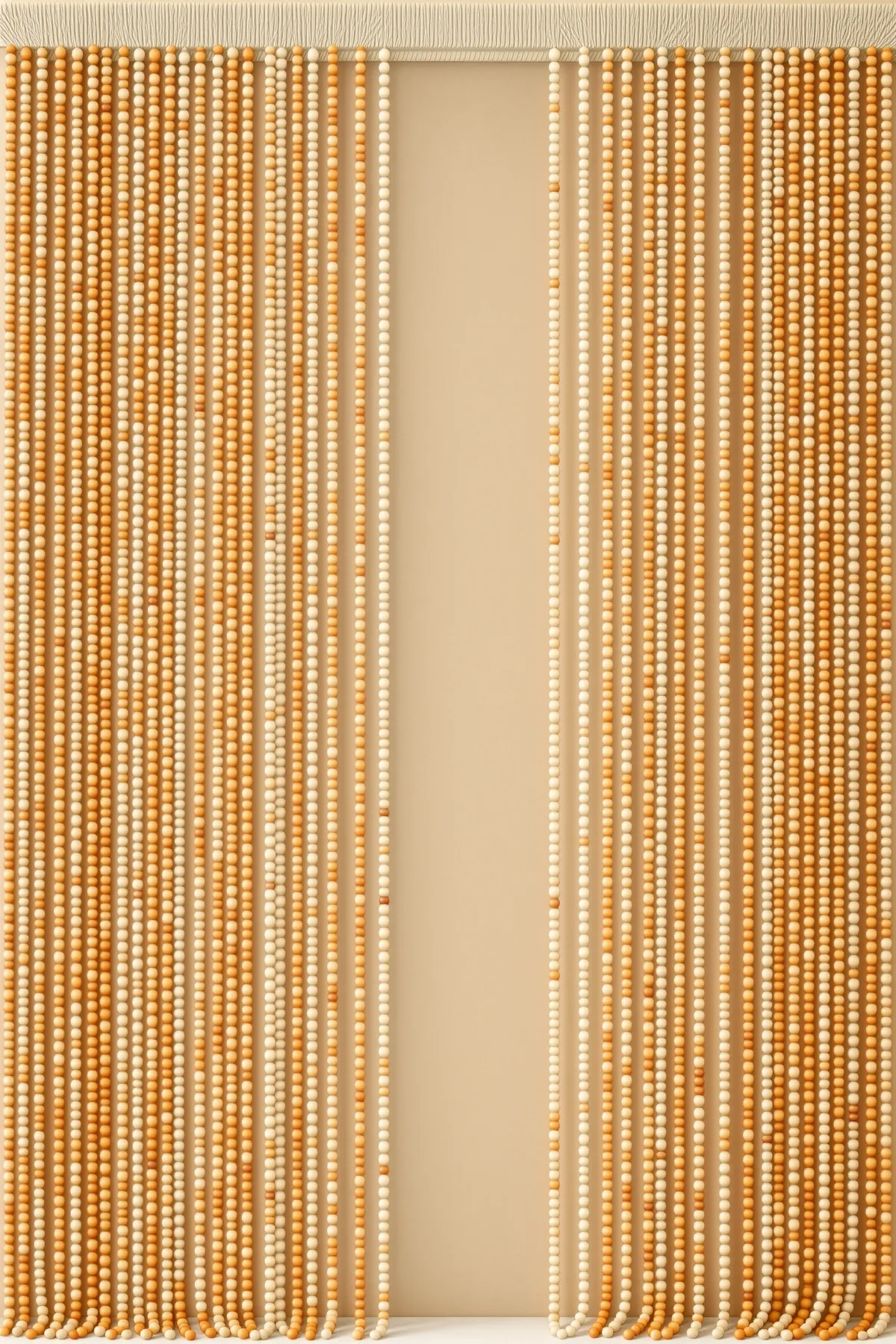
The Lapis Hour doorway curtain is drawn at 90 × 200 cm on 40 strands with a diagonal hem, at roughly 3,100 beads, in the deep blue palette of the Lapis Hour colour story.
Every one of those figures comes from the 2027 design renders. The design has not been sampled at the drawn size, so it is documented here as a design available to develop — which is both the position and the more useful one, because it means the specification is still open.
Spaced, which is the whole character of the design. Divide 3,100 beads by 40 strands and you get about 78 beads a strand; spread 78 beads down a 200 cm drop and the centres sit roughly two and a half centimetres apart.
So the cord is visible, and the gaps are as designed as the beads. That is a deliberate construction choice and it is the reason a saturated dark palette works at full height here — a dense blue panel at this size would read as a wall.
Four figures and a hem. Strand count and strand pitch set the density; the bead count follows from the spacing; the finished drop length and the hem profile together describe the edge. A diagonal hem needs the longest and shortest drop stated, because one height cannot describe a sloping edge, and the format table shows where 90 by 200 sits among the standard bead formats.
| Specification | Value |
|---|---|
| Finished size | 90 × 200 cm |
| Strand count | 40 |
| Strand pitch | About 2.25 cm centre to centre |
| Bead count | About 3,100 |
| Beads per strand | About 78 on a 200 cm drop |
| Hem shape | Diagonal |
| Bead material | Body-coloured glass, deep lapis through slate to a pale sky note |
| Header | Single turned wooden dowel |
| Status | A design available to develop at the drawn size |
Retailers and own-label brands wanting a dark statement piece, and interior specifiers working on hospitality interiors where a deep blue screen suits the scheme. It also suits event and display companies, because a spaced build is lighter to rig than a dense one.
The design has not been through development, and that is the answer. What the library has learned that applies to it comes from elsewhere: that a spaced build is far cheaper than a dense one at the same finished size, that a diagonal hem is the cheapest shaped hem to specify, and that body-coloured glass holds its palette across reorders better than surface-dyed beads do.
A spaced design packs more compactly than a dense one because there is less bead mass per strand, which is a small but real freight advantage at volume.
What it does not show is a shipped piece. The bead count is a count of the design rather than a measurement off a finished curtain, and the two can differ once a bench sorts a real bead line and finds the drilled hole runs half a millimetre wider than drawn.
The Lapis Hour colour story: deep lapis and cobalt through slate grey, with one pale sky note. The story holds two designs in the published library, this doorway and a café valance.
Body-coloured glass rounds and ovals, with glass seed beads doing the spacing between them. Deep blue is one of the colours glass holds best as a body colour, which is what makes this palette cheap to reorder.
The pale sky note is the one bead in the palette likely to be dyed to match a buyer's own colour, and it is also the cheapest line to dye because there is so little of it per strand.
Diagonal: the shortest strand at one edge, the longest at the other, with every length written out on the count sheet. A diagonal is the cheapest shaped hem to specify because it is a straight line expressed in strand lengths — 40 numbers in arithmetic progression.
It also has a practical advantage on a doorway. The long edge can be set to the hinge side, so the shortest strands fall where a person actually walks through.
A single turned wooden dowel, made in our own Saharanpur wood factory. As a direction of travel, a spaced glass build at 3,100 beads is a mid-weight object — much lighter than a dense glass panel of the same size, heavier than an acrylic build at the same spacing.
Both, freely, because nothing in the design is tied to a specific bead line. The palette is the easiest thing to change. The strand count moves with the width on the library's own convention — 40 strands at 90 cm, 60 at 120 cm — and the bead count per strand moves directly with the drop.
Good to know
Yes. The design is a spacing and hem decision with a palette on top, so the palette is the easiest thing in it to change. Glass is matched to a physical chip or a colour reference and confirmed on the sample.
Yes, and a width change moves the strand count with it: the library's convention is 40 strands on a 90 cm curtain and 60 on a 120 cm one. A drop change is simpler, because the bead count per strand scales directly with it.
Body-coloured glass rounds and ovals in the Lapis Hour palette, with glass seed beads doing the spacing. Glass beads are drawn and hand-strung in our own Firozabad glass works, and deep blue is one of the colours glass carries best as a body colour.
Exclusivity is a commercial decision taken per programme rather than a property of the design. Name it in the brief and it is quoted alongside the piece.
It shows the design as drawn: the format, the strand count, the hem and the palette. The design is drawn to size and available to develop. The bead count in particular is a count of the design, not a measurement off a finished curtain.
Strands are kept in order and protected against knocking in transit, then packed to your carton, label and packaging specification. A spaced design packs more compactly than a dense one, because there is less bead mass per strand.
Yes. A sketch, photo or artwork with size, materials, colours and quantity becomes a colour-count sheet, with a rough cost sheet before any sample is made so the cost levers are visible early.
Keep exploring
Colour story
Cobalt and ink glass spaced across 40 strands at about 3,100 beads, where the gaps are as designed as the beads.
See the detailDesign
The full-length doorway designs, 90 × 200 to 120 × 210 cm, documented by strand count, hem shape and bead count.
How it is madeDesign
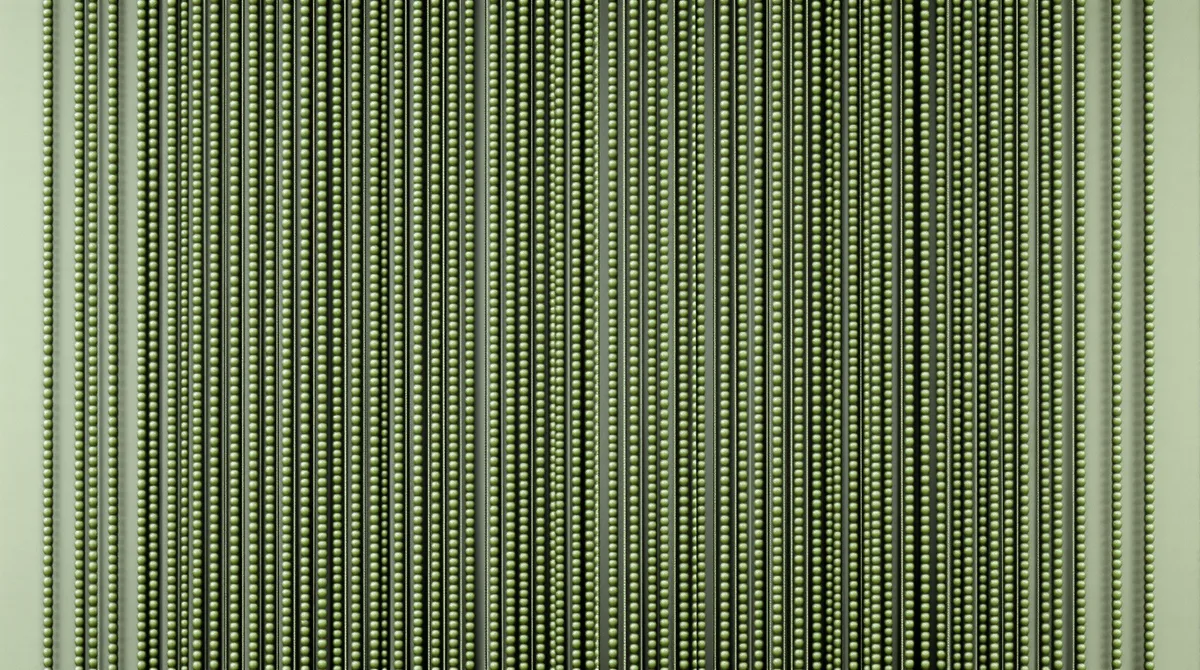
Lime glass seed-bead strands with spaced deep forest rounds at 76 × 140 cm, cut to an arched drop.
Specs and sizesColour story
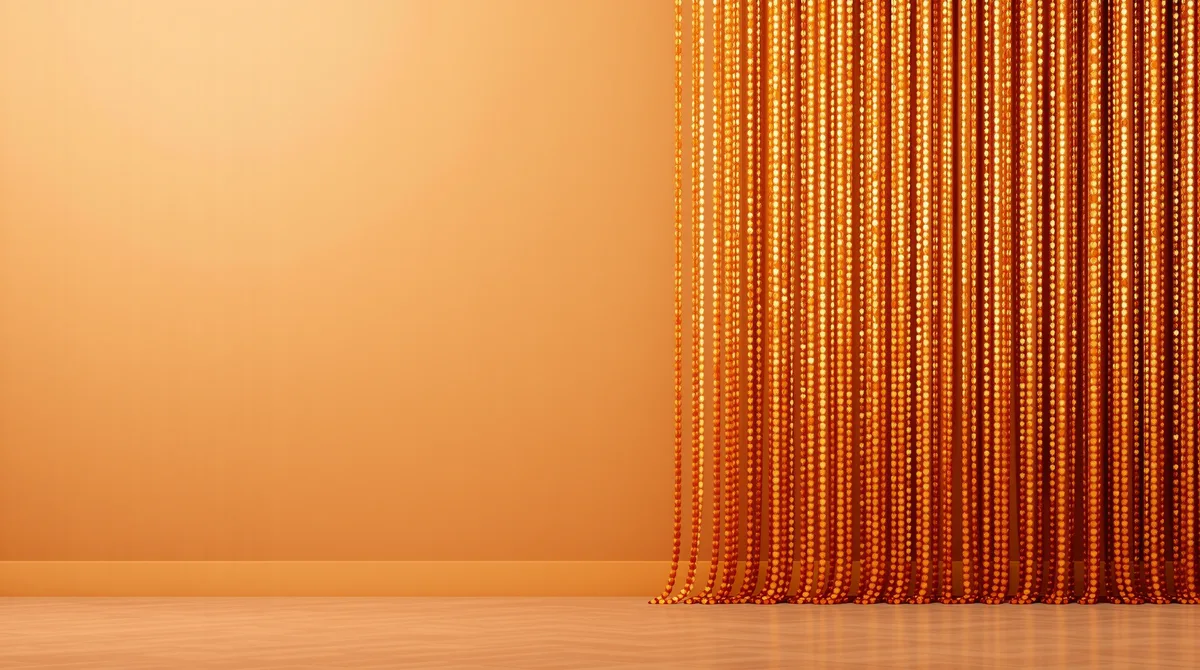
Cornsilk to deep amber down the drop, with the colour change landing on a change of bead size rather than on a dyed gradient.
Specs and sizesDesign
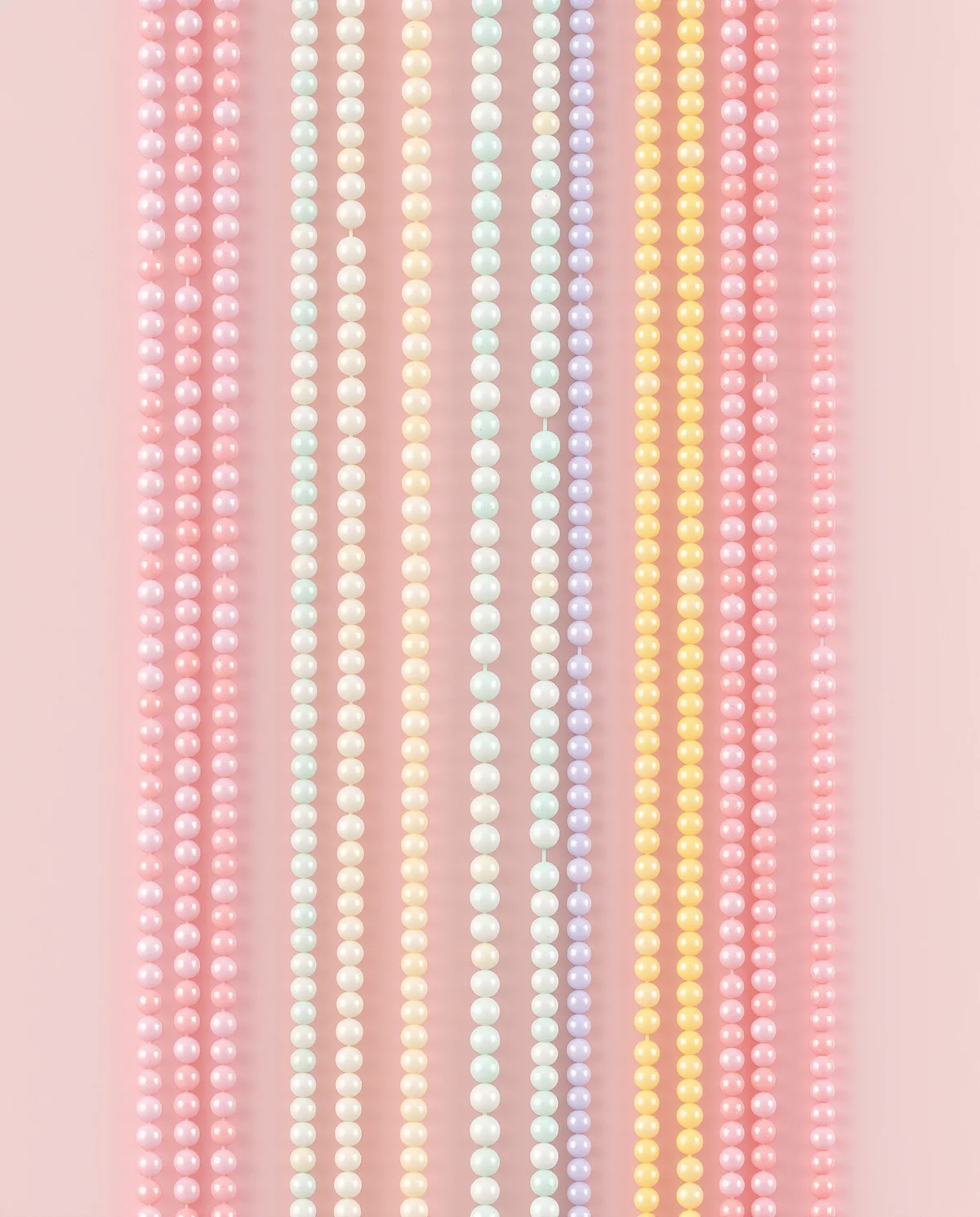
120 × 180 cm on 60 strands at about 2 cm pitch, with pastel accents placed from a written bead map and a straight hem.
Specs and sizesSpecification
Diameters, drill holes, cord selection, strand counts and format dimensions — the sheet to copy into a tech pack.
Read more
Start a conversation
Send a reference, a colour chip or a sketch. Minimums are set per design and confirmed per quote; sampling is quoted separately and usually runs 16 to 20 days from an agreed brief.