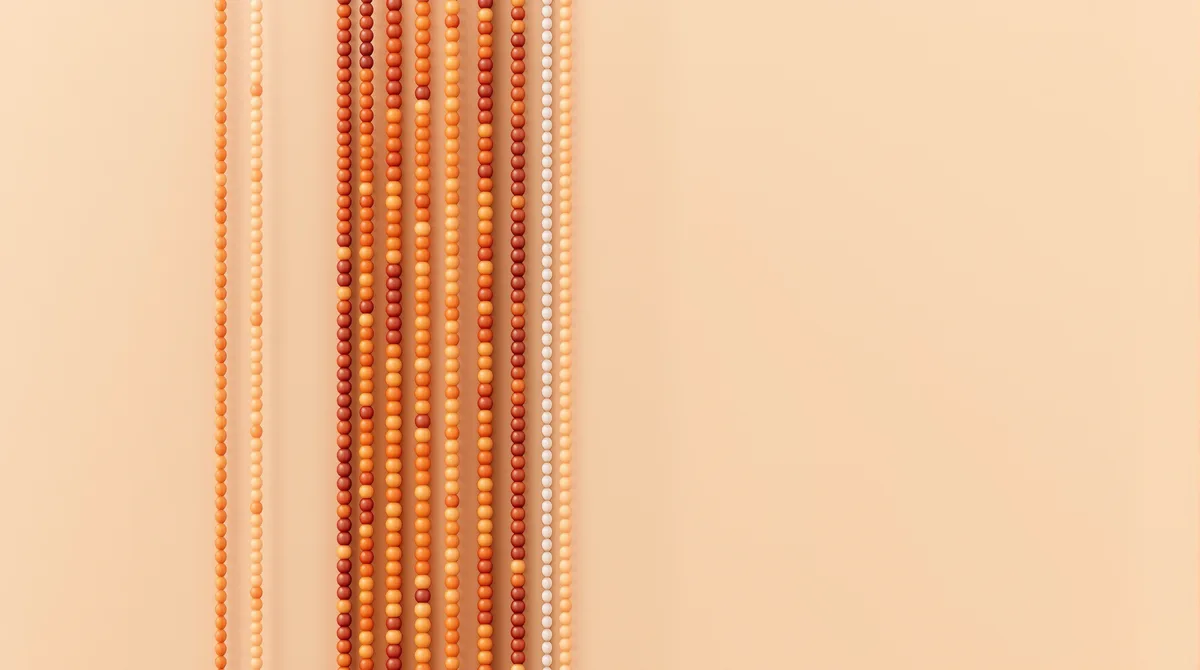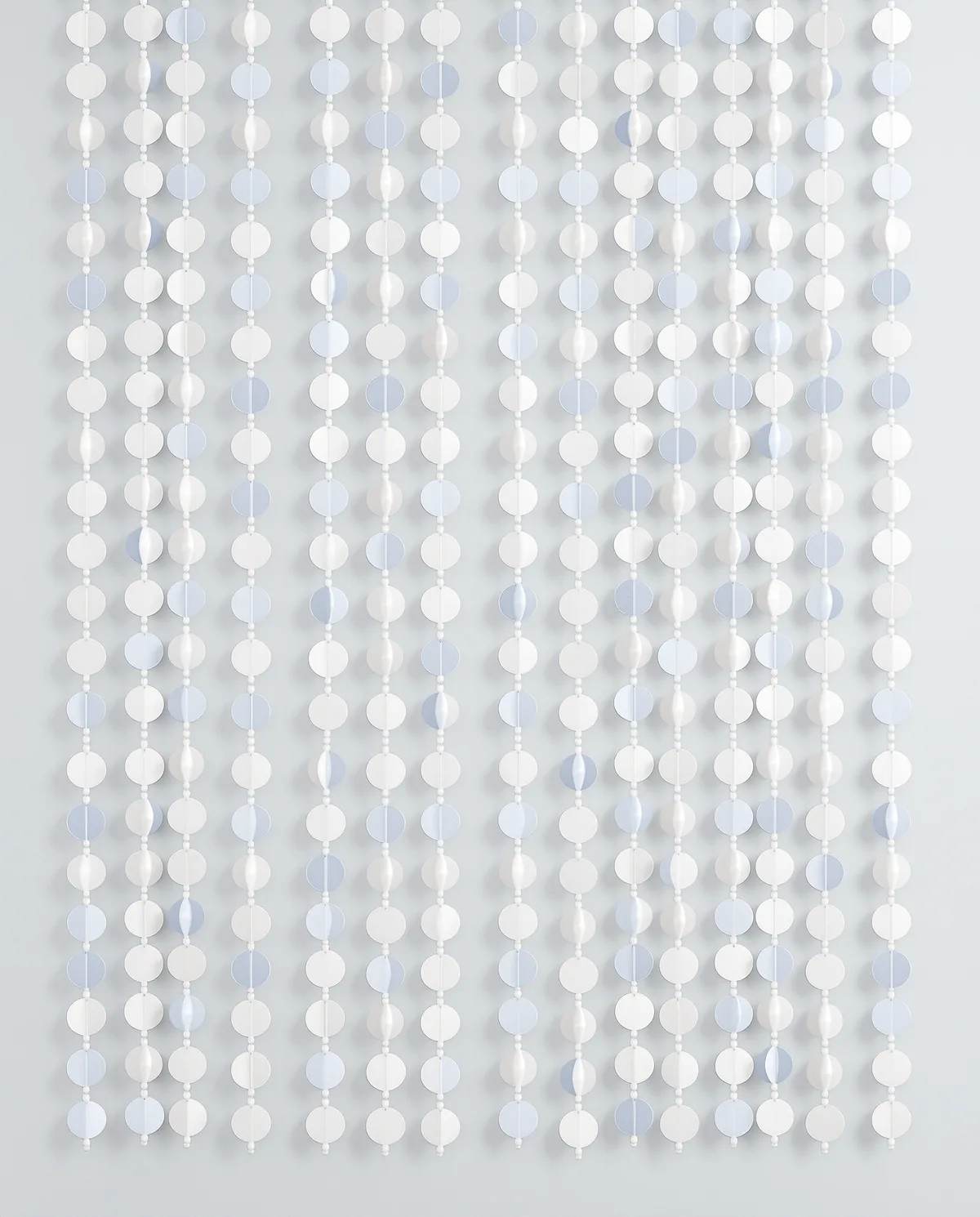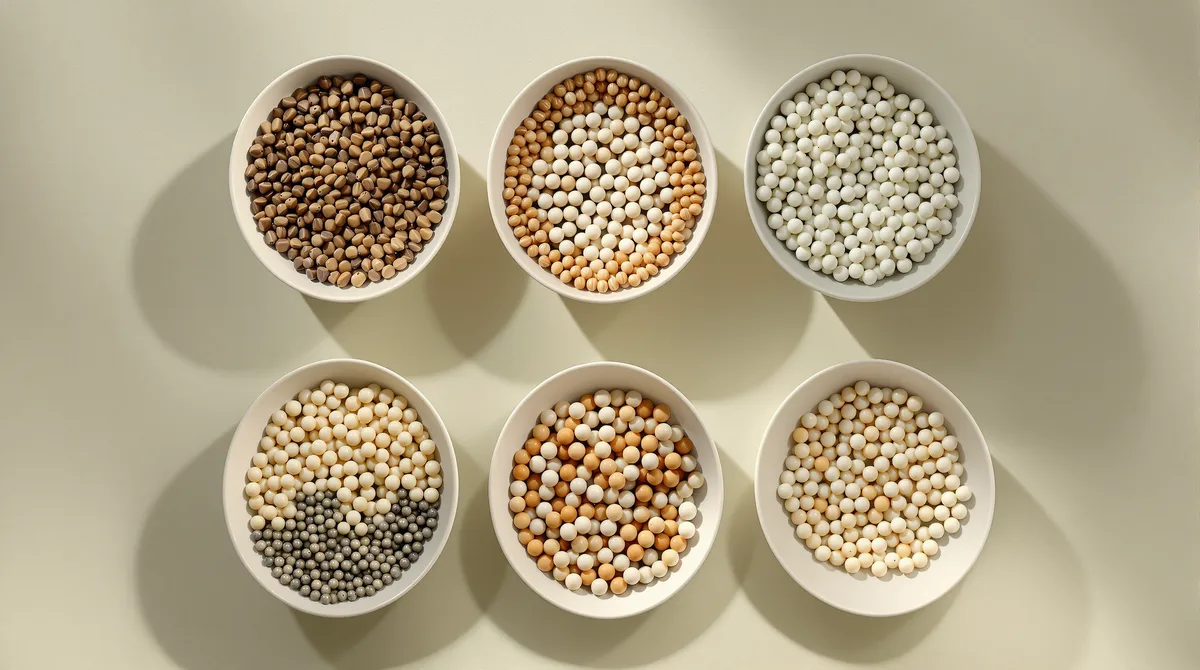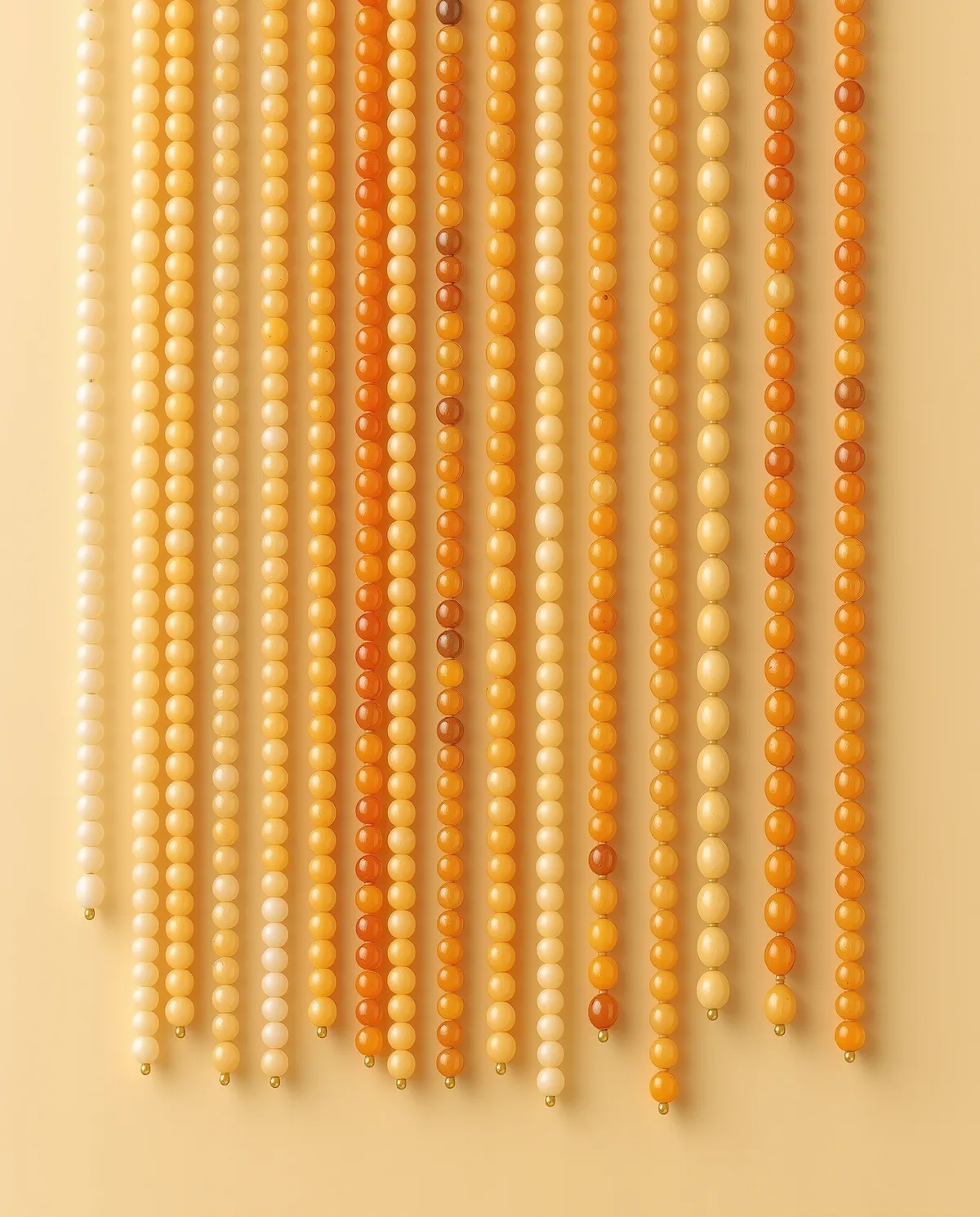
Colour story
Honey Hour
Wood rondelles with honey glass and dotted drops on 30 strands — warmth carried by the wood rather than the glass.
Compare the options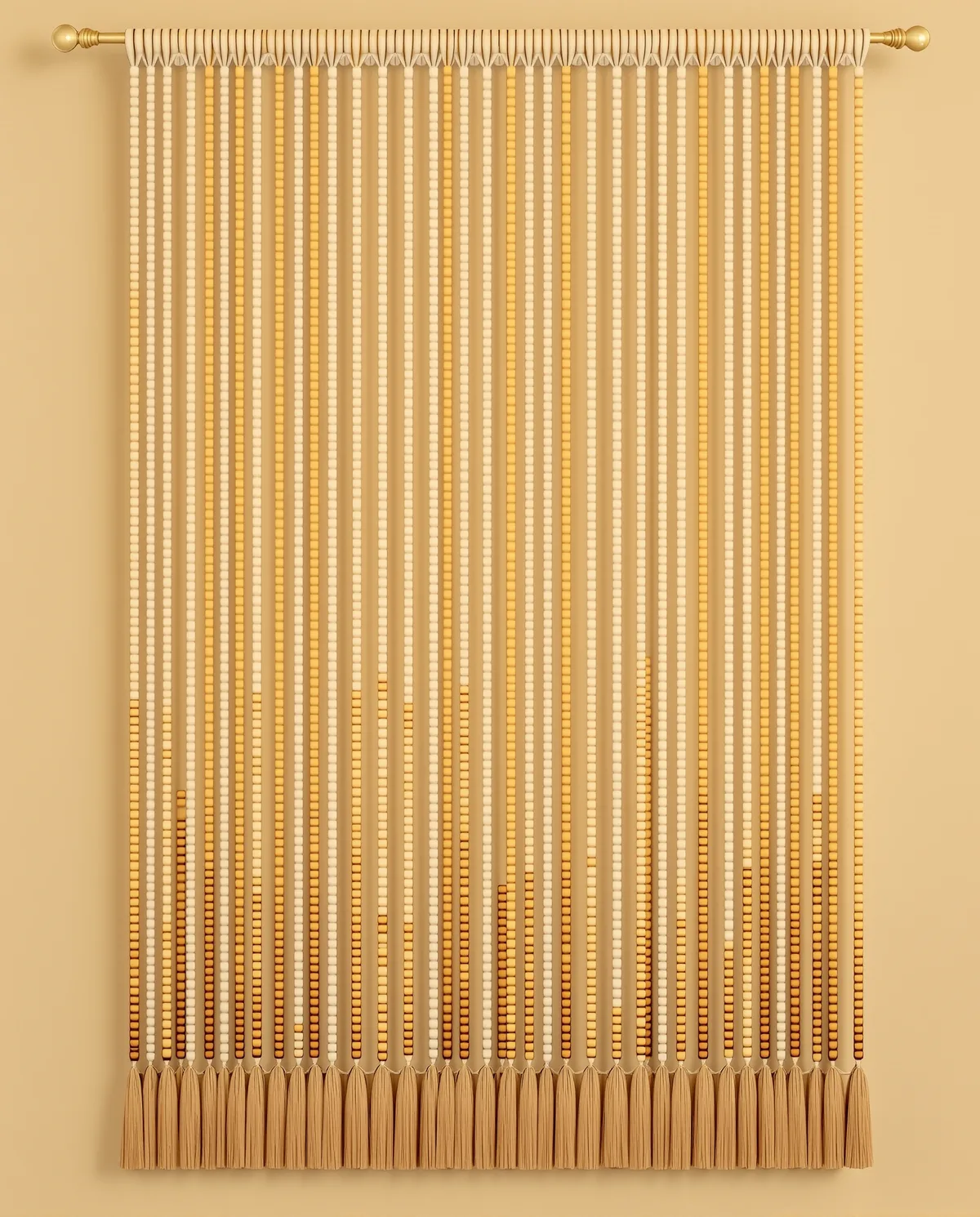
Design · Honey Hour Wall Hanging
The body of each strand is wood, not glass. That one inversion changes the weight, the sound and the price.
A beaded wall hanging graded from small pale cornsilk beads at the header to large deep amber beads at the hem, the colour change falling on the change of bead size.
The Honey Hour wall hanging is drawn at 60 × 90 cm on 30 strands with a V-point hem. Turned wood rondelles form the body of each strand, honey glass supplies the saturated note, and dotted glass drops finish the ends. Thirty strands across 60 cm is about a 2 cm pitch, which is dense for a wall piece and right for an opaque material.
The Honey Hour wall hanging is drawn at 60 × 90 cm on 30 strands with a V-point hem. Turned wood rondelles form the body of each strand; honey glass supplies the one saturated note; dotted glass drops finish the strand ends.
Available to develop. What makes it worth documenting is the inversion: in almost every other warm design here glass is the body and wood is the accent, and this one is the other way round.
A rondelle body with honey glass spaced into it and a dotted drop at the end. Thirty strands across 60 cm is a pitch of about 2 cm, which is dense for a wall piece, and that is appropriate: wood is opaque, so the piece is read as a surface rather than as a screen.
The rondelle shape matters more than the material name suggests. A rondelle is wider than it is tall, so it stacks into a flatter, denser column than a round bead of the same diameter — more visual coverage per bead, and a lower bead count for the same drop.
The sheet names a tone range rather than a colour for the wood, which is the only way to specify a natural material. Bead shapes matter here too: a rondelle covers more drop per bead than a round, so the bead count falls for the same finished drop length. The V-point needs its longest and shortest drop stated.
| Specification | Value |
|---|---|
| Finished size | 60 × 90 cm |
| Strand count | 30 |
| Strand pitch | About 2 cm centre to centre |
| Strand body | Turned wood rondelles |
| Accent | Honey glass rounds |
| Strand ends | Dotted glass drop beads |
| Hem shape | V-point |
| Where the wood is made | Turned in our own Saharanpur wood factory |
| Status | A design available to develop at the drawn size |
A V-point: the longest strand at the centre, the shortest at the two edges, every length written out on the count sheet. The piece reads as a pennant.
The dotted drop is part of the hem rather than an addition to it. On a V-point the drops trace the point, so the hem profile is visible as a line of drops rather than as the end of a bead field — which is why the drop choice carries so much of the design's character.
A turned wooden dowel, made in our own Saharanpur wood factory. As a direction of travel, this is a light build. As general physical properties rather than measurements of our beads, glass runs around 2.5 g/cm³ and most woods below 1, so a wood-bodied strand is a fraction of the weight of a glass one at the same bead count. It is also quieter: a wood strand sounds like a soft knock where glass chimes, which matters in a hospitality specification more often than buyers expect.
The glass and the drops freely; the wood within its own warm family. A wood bead can be stained darker or lighter but will not go cool or bright, because the grain shows through any stain and reads as painted wood rather than as colour.
Resizing means redrawing the V rather than scaling it. The depth of the point relative to the width is what makes it read as a point rather than as a notch.
Retailers and own-label brands, broadly, and it is one of the easier pieces in the library to sell. Wood reads durable where glass reads breakable, and customers handle a wood-bodied piece without hesitating.
It also photographs reliably, which on a wall piece is a commercial property rather than an aesthetic one: the listing shot and the installed piece look like the same object.
Not sampled, so the lesson is borrowed from sampled wood work and it is about approval rather than design. Natural grain varies, so what is approved on the sample is a tone range and production is held inside that range.
Buyers who expect wood to behave like glass are disappointed; buyers who approve a range get what they approved. On a wood-bodied design the sample does more work than the colour reference does, because the reference states an intention and the sample defines the acceptable band.
The fragile element is not the body of the strand but the dotted glass drop at its end. Wood is forgiving in transit; a specialty glass drop at the lowest point of every strand is the part that gets struck.
The specific limitation here is grain. A render gives every wood bead the same figure, and the real material does not, so the render understates the variation that is the whole character of the design. That is the opposite of flattering and it is worth knowing before a sample arrives.
The Honey Hour story: honey, caramel and natural wood tone with dotted accents. This wall hanging is the only design drawn in it, which makes the story and the piece nearly the same thing — there is no doorway, valance or portal in this palette in the published library.
The rondelle, primarily, and the drop disproportionately. The dotted drop is one bead out of dozens on a strand and it is the one a customer describes when they talk about the piece.
That makes it the cheapest significant change available on the design: a plain amber drop reads restrained, a faceted drop reads formal, a dotted drop reads playful, and the strand body never moves.
Good to know
Exclusivity is a commercial decision taken per programme rather than a property of the design. Name it in the brief and it is quoted alongside the piece.
It shows the size, strand count, hem and bead list as drawn, built from named beads so the design converts into a colour-count sheet. What a drawing cannot show is the grain variation that is the whole character of a wood bead.
Strands are kept in order and protected against knocking in transit, then packed to your carton, label and packaging specification. Wood is more forgiving in transit than glass, so the fragile element is the dotted glass drop at each strand end.
Yes. A sketch, photo or artwork with size, materials, colours and quantity becomes a colour-count sheet. On a wood-bodied design the useful thing to agree early is the tone range rather than a colour, because that is what can actually be held.
The glass and the drops easily; the wood within its own warm family. Wood can be stained darker or lighter but will not go cool or go bright. For the same construction in a cool palette, the body bead has to change material.
Yes. The V-point hem is the element to redraw rather than scale, because the depth of the point relative to the width is what makes it read as a point instead of as a notch.
Turned wood rondelles as the body, honey glass rounds as the accent, and dotted glass drop beads at the strand ends. Wood is turned in our own Saharanpur wood factory and glass is drawn in our own Firozabad glass works.
Keep exploring
Colour story
Wood rondelles with honey glass and dotted drops on 30 strands — warmth carried by the wood rather than the glass.
Compare the optionsManufacturing
Widths from 50 to 76 cm on a turned dowel, in glass, wood and cast faux capiz — hem shapes, strand counts and what is a shipped format against a concept.
Read moreDesign
Strung wall pieces from 50 × 90 to 60 × 100 cm at 20 to 40 strands, documented by hem shape and bead list.
Read moreDesign
Rainbow glass seed beads on a rigid bar, using a repeating pattern in place of a gradient to control the bead count.
Specs and sizesDesign
60 × 100 cm on 22 strands of foil-lined and frosted sea-glass tones, with disc drops closing a straight hem.
Read the guideReference
Nine material families, what each gives in light, weight and colour, and how far our own manufacturing reaches into every one of them.
Read the guide
Start a conversation
Send a reference, a colour chip or a sketch. Minimums are set per design and confirmed per quote; sampling is quoted separately and usually runs 16 to 20 days from an agreed brief.