Manufacturing
Beaded table mats
Two constructions — a couched bead field on a stiffened ground, and coiled strung rounds lashed together — plus the limits on heat and washing.
How it is made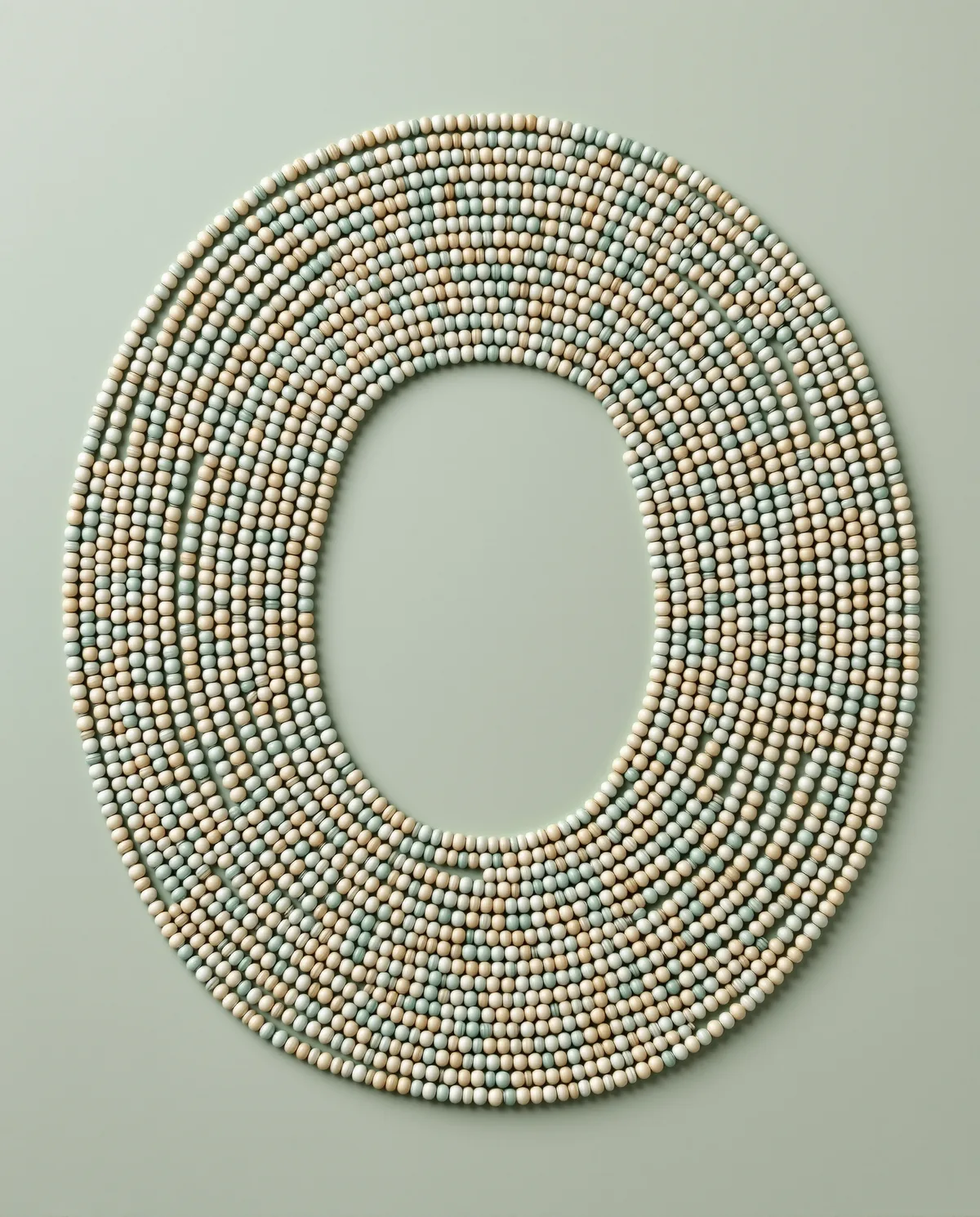
Guide · Tabletop
No, and not marginally. A dishwasher attacks the two things holding a beaded mat together, at the same time, for ninety minutes.
An oval beaded placemat: wooden beads strung on cord and coiled in concentric rounds, each round lashed to the one inside it.
No. A beaded placemat or charger must never go through a dishwasher. The cycle combines water, detergent and heat, and all three attack the couching thread and the stiffened ground rather than the beads: the thread slackens, the ground swells and warps, and felt takes a permanent water line. Spot clean only.
No. Not on a gentle cycle, not on the top rack, not in a mesh bag.
The beads are the only part of a beaded placemat that would survive a dishwasher. Everything holding them in place — the couching thread, the stiffened ground, the felt backing — fails in one cycle, and none of it can be put back.
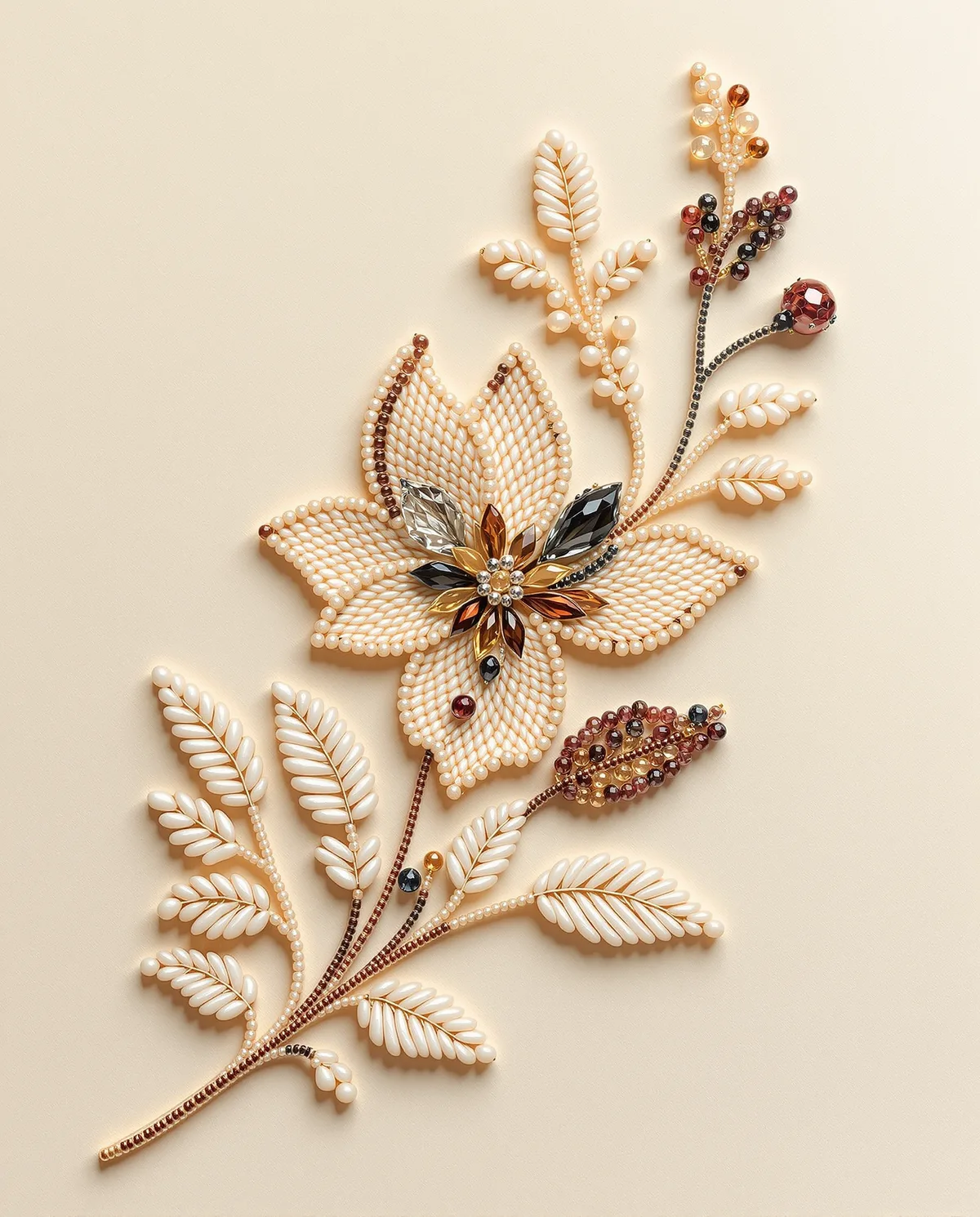
A bead-embroidered mat is not a textile with beads on it. It is a stiffened ground carrying several hundred beads, each one couched down individually with fine thread, in the zardozi tradition. The thread is doing the structural work, bead by bead.
A dishwasher applies water, alkaline detergent and heat together, for an hour and a half. Water slackens every couching stitch simultaneously. Detergent attacks the thread and lifts surface dye from any dyed bead. Heat sets the resulting distortion into the ground and shrinks felt unevenly.
The piece does not fall apart in the machine. It comes out looking almost right and then loosens for the next two months, which is worse, because by then nobody connects it to the wash.
| Component | In a dishwasher | Reversible? |
|---|---|---|
| Glass beads | Survive; may chip where they knock the rack | Chipping, no |
| Acrylic beads | Soften and can deform at wash temperature | No |
| Couching thread | Slackens; every bead loosens at once | No |
| Metallic thread (zardozi) | Tarnishes and frays | No |
| Stiffened fabric ground | Swells, loses stiffness, warps | No |
| Felt backing | Takes a permanent water line; may shrink unevenly | No |
| Surface-dyed beads | Dye lifts in hot alkaline detergent | No |
| Correct method | Soft dry brush, then a barely damp cloth, then dry | — |
Nothing about dishwashers, and this is worth being precise about because buyers often ask the question as though a food-contact rule governed it.
A placemat or a charger used under a plate is not a food-contact article in the regulatory sense: food does not sit on it. Our own published material-compliance statements cover stainless steel lines as food-grade compliant with FDA requirements and California Proposition 65, and copper products with a food-safe coating or a stainless lining. There is no equivalent published statement for a beaded mat, because it is not sold as a food-contact surface, and we will not imply one.
What governs the answer here is construction, not regulation. The thread fails whatever the rules say.
Larger beads make a dishwasher cycle worse, not better, because they knock harder against the rack and against each other. A chipped glass bead on a flat piece is highly visible, since there is no movement in the piece to hide it.
Bead size also decides the coverage density, which is the main cost lever in flat beadwork. A dimensional floral at nine to twelve centimetres across, or a coaster at ten or eleven, is covered densely enough that a loosened thread shows immediately as a sagging motif rather than as a single stray bead.
Nothing in the construction can be designed to survive immersion, and it would be dishonest to suggest otherwise. What can be designed out is the expectation.
The two decisions that matter are both about selling. First, the listing: an explicit "spot clean only, do not immerse, not dishwasher safe" is the single most effective care intervention in tabletop beadwork. Second, the pack: a short care card in the carton saves returns, and we can include a buyer's own care text in the packing alongside labels and cartons to the specification given.
Beads are couched onto stiffened fabric or felt with fine thread, often with metallic thread alongside, and a canvas backing is used on some constructions. Coasters run about ten to eleven centimetres across; dimensional florals nine to twelve.
One genuinely relevant construction decision is de-densifying — a tight bead outline with an open fill. We use it as a cost lever, and it has a side effect worth knowing: an open fill has fewer stitches to slacken, so a de-densified piece is slightly more tolerant of being wiped firmly. It is not more tolerant of being immersed. Nothing is.
A prohibition rather than a tolerance: these pieces are spot-cleaned and never immersed. A cycle count or a temperature limit would be a threshold, and a threshold reads as permission, which is the opposite of the instruction the construction needs.
What is tested on these pieces is the construction. First-article and lot AQL inspection at our quality-control and packaging house in Greater Noida checks the beadwork against the approved sample, and network product issue rates run at a fraction of a percent. That is a manufacturing check, not a care rating, and the two should not be confused in a listing.
Any form of washability. Not hand-washable, not rinseable, not safe on a cold gentle cycle. Every one of those would be read as a licence to immerse, and immersion is the failure.
We also refuse to put a cleanability claim on a tabletop range as a selling point. A beaded mat is a decorative service piece. If a buyer's brief requires a mat that goes through a dishwasher, the correct answer is a different product and we will say so.
Three things. Specify a charger rather than a placemat where food will be served directly, so the plate takes the contact and the beadwork never does. Specify the care text and have it printed in the pack. And specify a coaster or a mat with an open fill rather than a solid field, because the piece that gets wiped most needs the fewest stitches at risk.
For a commercial dining room, think in terms of service life rather than cleanability: a beaded charger is a front-of-house object that goes out for a service and comes back to be dusted, not a working mat that gets wiped between covers.
Exactly this: spot clean only, do not immerse, not dishwasher safe. Then the method — lift crumbs with a soft dry brush, wipe the beads with a barely damp cloth, dry straight away.
That is four short sentences and it prevents almost every care-related return in the category.
Any buyer whose brief genuinely requires a washable mat. The question is a material question and the answer is not beadwork; it is a coated or sealed surface, and it belongs to a different range.
In a nursery, do not specify beaded placemats at all. They are a small-parts and spot-clean product, and a children's table is the worst available environment for both.
In a hotel, specify beaded chargers for banqueting and beaded coasters for bars, both on the understanding that they are dusted and spot-cleaned rather than washed. Housekeeping will follow a care card if one exists and will improvise if one does not, and the improvisation is always a sink.
Good to know
No. The beads would survive but the couching thread and the stiffened ground would not, and a single cycle is enough to slacken every stitch in the piece at once. Spot clean with a barely damp cloth and dry immediately.
Not the answer, only the speed of the damage. Glass beads survive the cycle and acrylic beads can deform in it, but in both cases the failure is in the thread and the ground, which are the same regardless of bead. A wooden-bead coiled mat adds a third problem: water raises the grain.
"Spot clean only. Do not immerse. Not dishwasher safe." Then the method in one sentence. Retailers who omit this get returns, and the return is usually described as a quality fault when it is a care fault that the listing failed to prevent.
No. The answer here is a prohibition rather than a tolerance: spot-clean only, never immersed. A cycle count or a temperature limit would be a threshold, and a threshold reads as permission, which is not what the construction can carry.
Any level of washability. We will not describe a bead-embroidered mat as hand-washable, wipe-clean-plus, or safe on a gentle cycle. Immersion of any kind slackens the couching, and a qualified version of that claim would be read as permission.
If the requirement is a genuinely washable mat for a restaurant or a nursery, the question belongs to a different material entirely — a wipe-clean coated surface or a sealed textile. We would rather say that than sell a beaded piece into a service it will fail at within a month.
Keep exploring
Manufacturing
Two constructions — a couched bead field on a stiffened ground, and coiled strung rounds lashed together — plus the limits on heat and washing.
How it is madeGuide
Why soaking slackens every couching stitch at once, and the brush-then-damp-then-dry routine that works instead.
See the detailGuides
One guide per question that arrives often enough to be worth answering properly.
View the rangeGuide
What a hot dish does to each component, why no temperature rating is published, and the service-piece distinction that resolves it.
Specs and sizesGuide
Why the backing fails before the bead, the blot-and-dry-flat routine, and how a service rotation keeps a set alive.
See the detail
Start a conversation
Send a reference, a colour chip or a sketch. Minimums are set per design and confirmed per quote; sampling is quoted separately and usually runs 16 to 20 days from an agreed brief.