Specification
Density and view through
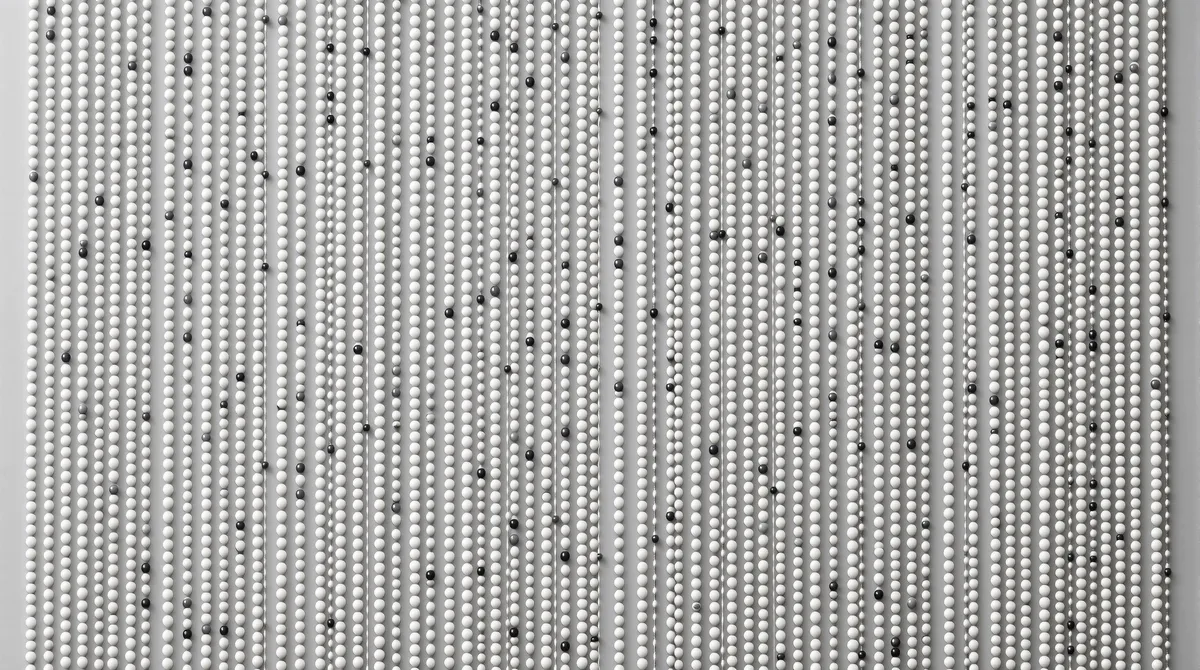
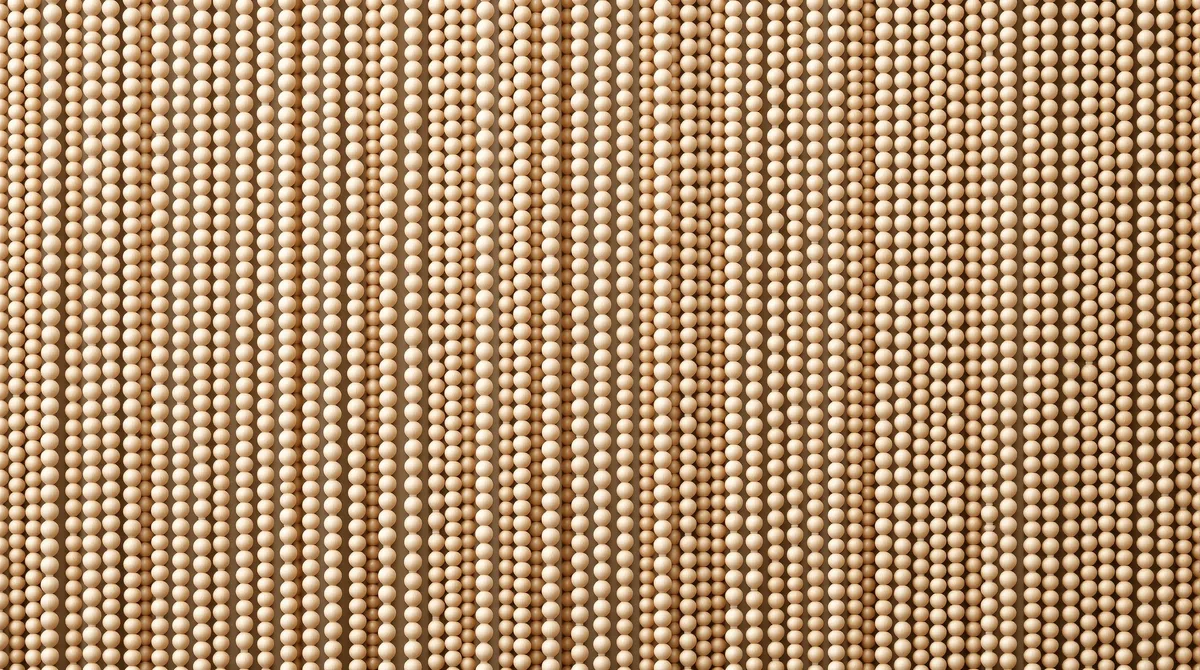
Pitch against bead diameter, the open area it leaves, and how density moves weight and opacity together.
Specs and sizesSpecification · Performance
A bead panel interrupts a sightline. It does not block one. The difference matters most in exactly the rooms people want to use it in.
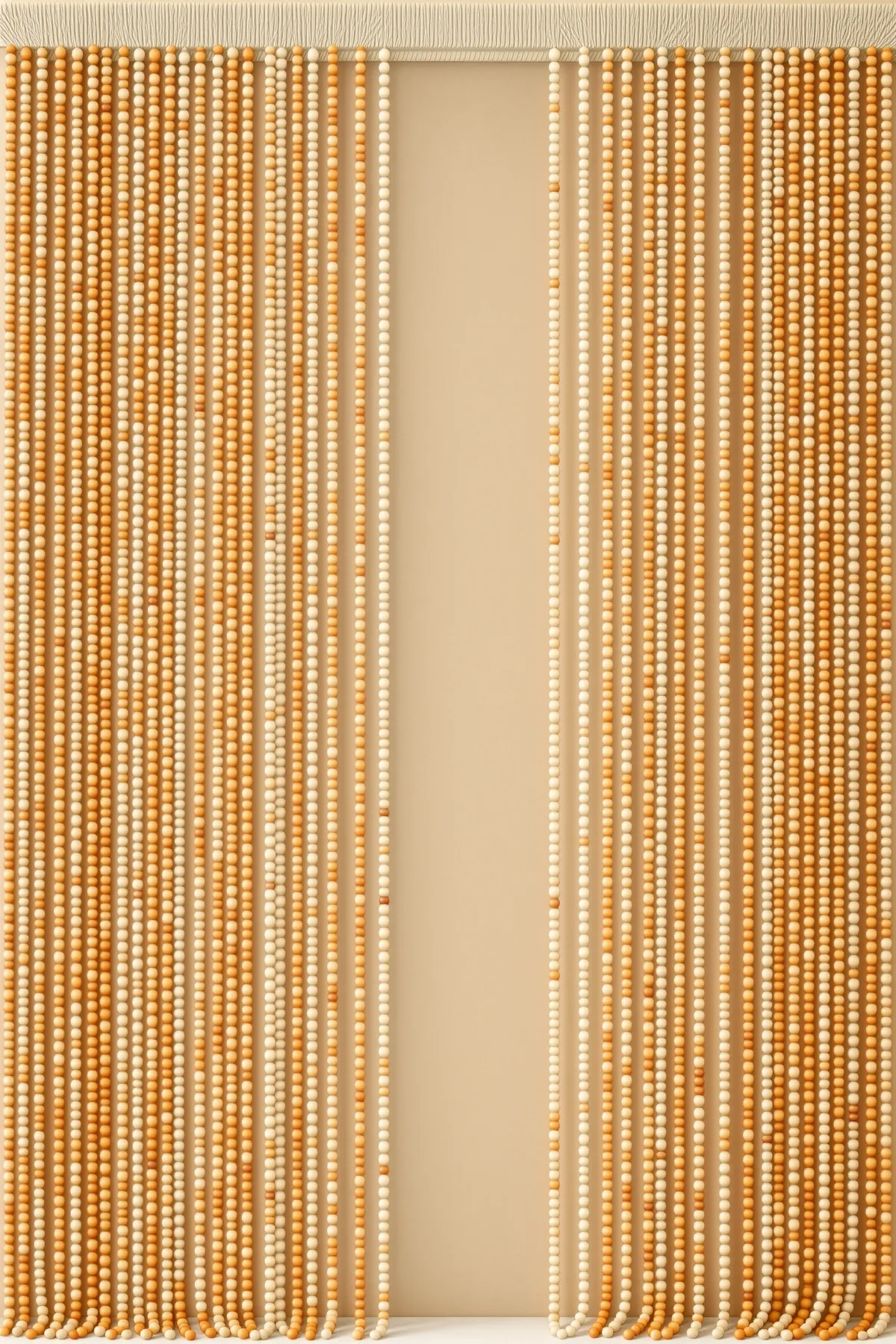
A bead panel breaks up a sightline rather than blocking it. Concealment rises with density and with opaque rather than translucent beads, and falls sharply as a viewer comes closer or moves across the panel. No beadwork specification can promise visual privacy, and a brief that requires it needs a different product.
How much of a view to interrupt, at what distance, under what lighting. Not whether to achieve privacy — that is not available from this product — but how much visual separation is worth the density, the weight and the cost.
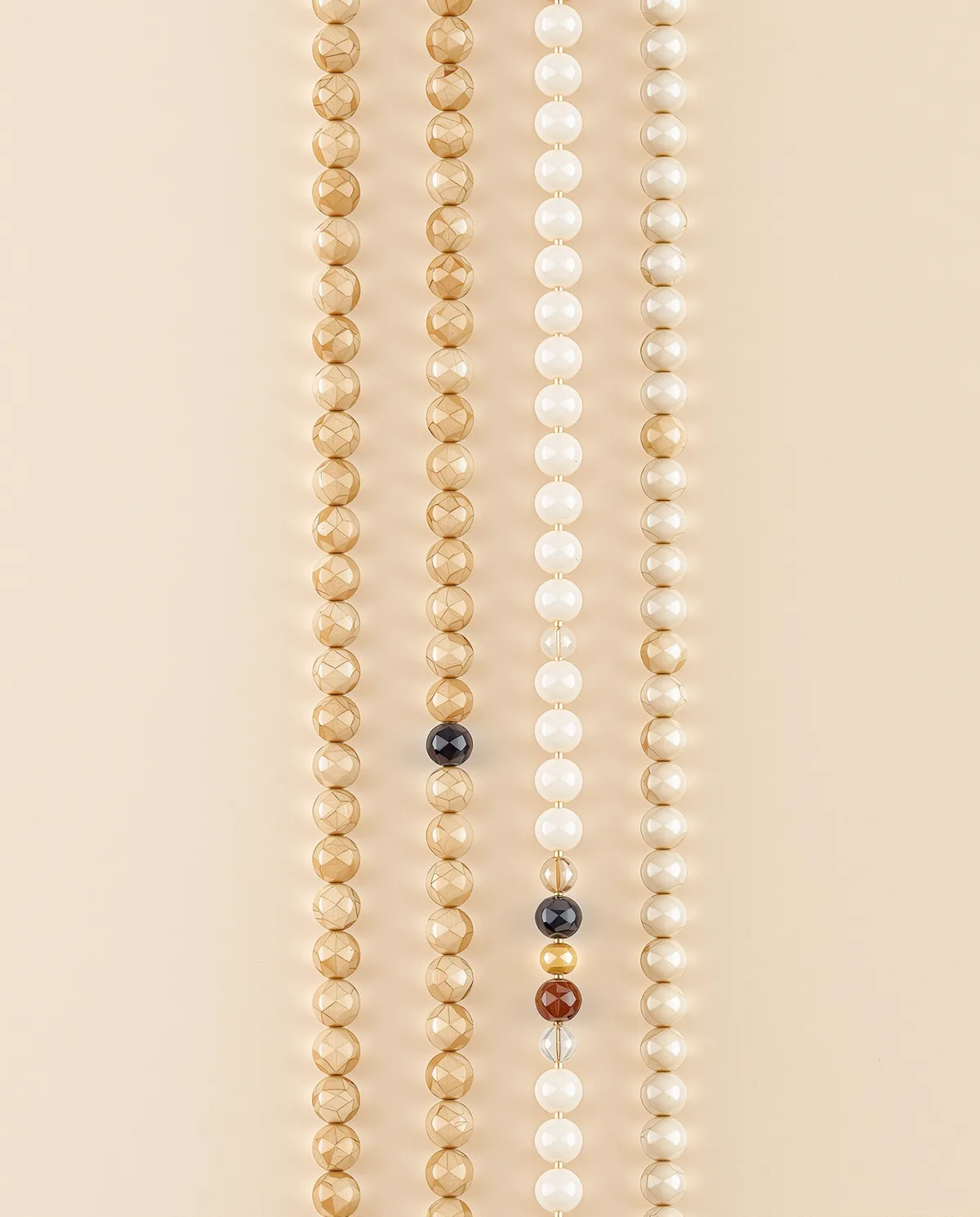
The decision is usually being made for a fitting room, a treatment room, a doorway between a kitchen and a dining room, or a zone in an open-plan space. In each of those the question is whether interruption is enough.
| Value | Unit or option | Note |
|---|---|---|
| Strand pitch | mm, centre to centre | The primary density lever |
| Bead outside diameter | mm | With pitch, gives the calculated open area |
| Bead opacity | Translucent, frosted or opaque | Opaque conceals materially better at the same density |
| Viewing distance assumed | mm or m, stated on the drawing | Concealment falls sharply as the viewer approaches |
| Lighting condition | Which side is lit | The brighter side is the exposed one, whatever the density |
| Concealment claim | None | No privacy rating is published or implied |
| Alternative where privacy is required | A solid panel, door or textile | Beadwork should not be specified to meet a privacy requirement |
Pitch, bead diameter and opacity, as for any density specification. Then one value that is unusual on a drawing and worth adding: the viewing distance the design assumes.
Stating it protects everyone. A panel designed to screen a zone across four metres of restaurant is not defective because it does not screen a changing cubicle at half a metre, and writing the assumption down is what makes that obvious later.
Establish whether privacy is a requirement or a preference. If it is a requirement — a changing area, a treatment room, anything with a regulatory or duty-of-care dimension — stop, and specify a solid element.
If it is a preference, set the density from the view you want interrupted, choose opaque beads rather than translucent ones, consider mounting over the face of the opening rather than inside the reveal to remove edge gaps, and then check the weight that density produces.
At the edges, more often than in the middle. A panel hung inside a reveal leaves a gap at each side, and a sightline straight through that gap defeats whatever the panel is doing across its width.
The second failure is lighting. A panel between a lit room and a dark one conceals the dark side completely and the lit side not at all. That asymmetry is often discovered at handover, when the lighting is commissioned.
A hung section at full drop with a person behind it, in the installation's own lighting, viewed from the design distance and then from close up. Photograph both.
That is a twenty-minute exercise that resolves an argument which otherwise happens after installation, in front of a client.
Marginally. Dust dulls glass and reduces the sparkle that distracts the eye from what is behind the panel, so a neglected panel screens very slightly worse than a clean one even though its geometry has not changed.
The more practical maintenance link is density: a panel dense enough to screen well is dense enough to be awkward to clean, and the cleaning interval has to be set accordingly.
Beadwork cannot provide visual privacy. It interrupts a view and it makes a space feel divided, which is genuinely valuable and is what it is bought for. But any viewer who steps close, or moves laterally so that their line of sight runs between two strands, sees through.
That is a property of discrete vertical elements with gaps between them. It is not a density problem and it cannot be designed out, which is why a privacy requirement should never be met with a bead panel.
That opacity is a specified variable, not an accident. One dotted portal construction in our record was made in both translucent and opaque versions of the same geometry, and the buyer selected the opaque one for production.
That choice is the single biggest concealment lever available without changing density, and it is available because acrylic and resin beads are moulded and dyed to our colour and glass can be specified opaque rather than transparent.
The pitch, the bead diameters, the opacity as built, and the viewing distance the design assumed. The last one belongs in the pack because it is the only record of what the panel was meant to do.
Without it, a future facilities manager inherits a panel and an expectation with no way of knowing whether the two ever matched.
A great deal. Opaque beads interrupt a sightline; translucent beads pass a diffuse image of what is behind them. Frosted beads — the irregular sea-glass type at around 4 to 5 mm — sit between the two and are particularly effective because they scatter rather than transmit.
Wood and faux-capiz discs are opaque by nature and conceal well at the same open area as a translucent glass panel. That is a reason to consider them where screening matters more than sparkle.
Tolerance on pitch and bead diameter, as for density. Concealment is judged on the sample rather than toleranced — in the real light, at the real distance, with the real bead.
The specifier with the contractor, and in this case the coordination item is the edge rather than the load. Face mounting removes side gaps; reveal mounting creates them. Whichever is chosen, the gap at each side should be drawn rather than discovered.
For a panel hung away from a wall as a room divider — a design the library carries and that is available to develop — the edge condition is the whole question, and it is settled on a sample rather than from a drawing.
Good to know
Pitch, bead diameter and bead opacity, plus the viewing distance the design assumes. The last of those is unusual to see on a drawing and it is the one that makes the intent legible: a panel designed to screen at four metres is not a failure because it does not screen at half a metre.
Tolerance on pitch and diameter, as for any density specification. Concealment is not toleranced: it is judged on the sample, in the real light and at the real distance.
A panel section hung at full drop with someone standing behind it, in the lighting the installation will have, seen from the distance the design assumes and then from much closer. The second view is the one that settles whether the brief can be met.
It does not change concealment, but it changes how the panel reads. Dust on glass beads dulls the surface and slightly reduces the sparkle that distracts the eye, which marginally reduces the sense of screening even though the geometry has not moved.
Beadwork cannot deliver visual privacy. It interrupts a view, flatters a sightline and makes a space feel separated. Anyone who steps close, or moves sideways, sees through it. That limit is not a density problem and cannot be designed out.
Not relevant to concealment, but relevant to the outcome: a panel fixed over the face of an opening conceals better than one inside the reveal, because there is no gap at the edge. Edge gaps defeat screening faster than pitch does.
Keep exploring
Specification
Pitch against bead diameter, the open area it leaves, and how density moves weight and opacity together.
Specs and sizesSpecification
The privacy limit of a bead panel, the cases where it works as a secondary screen, and where a solid panel is the only right answer.
Read the guideSpecification
The dimensions, strand values, fixings and performance limits a drawing and schedule have to carry.
How it is madeSpecification
A hanging bead panel scatters a little high frequency and reduces nothing meaningfully — and what to specify instead.
View the rangeSpecification
Air passes, insects are discouraged rather than excluded, and pitch is the only lever that changes either.
How it is made
Start a conversation
Send a reference, a colour chip or a sketch. Minimums are set per design and confirmed per quote; sampling is quoted separately and usually runs 16 to 20 days from an agreed brief.