Material
Faux capiz: the shell look, engineered
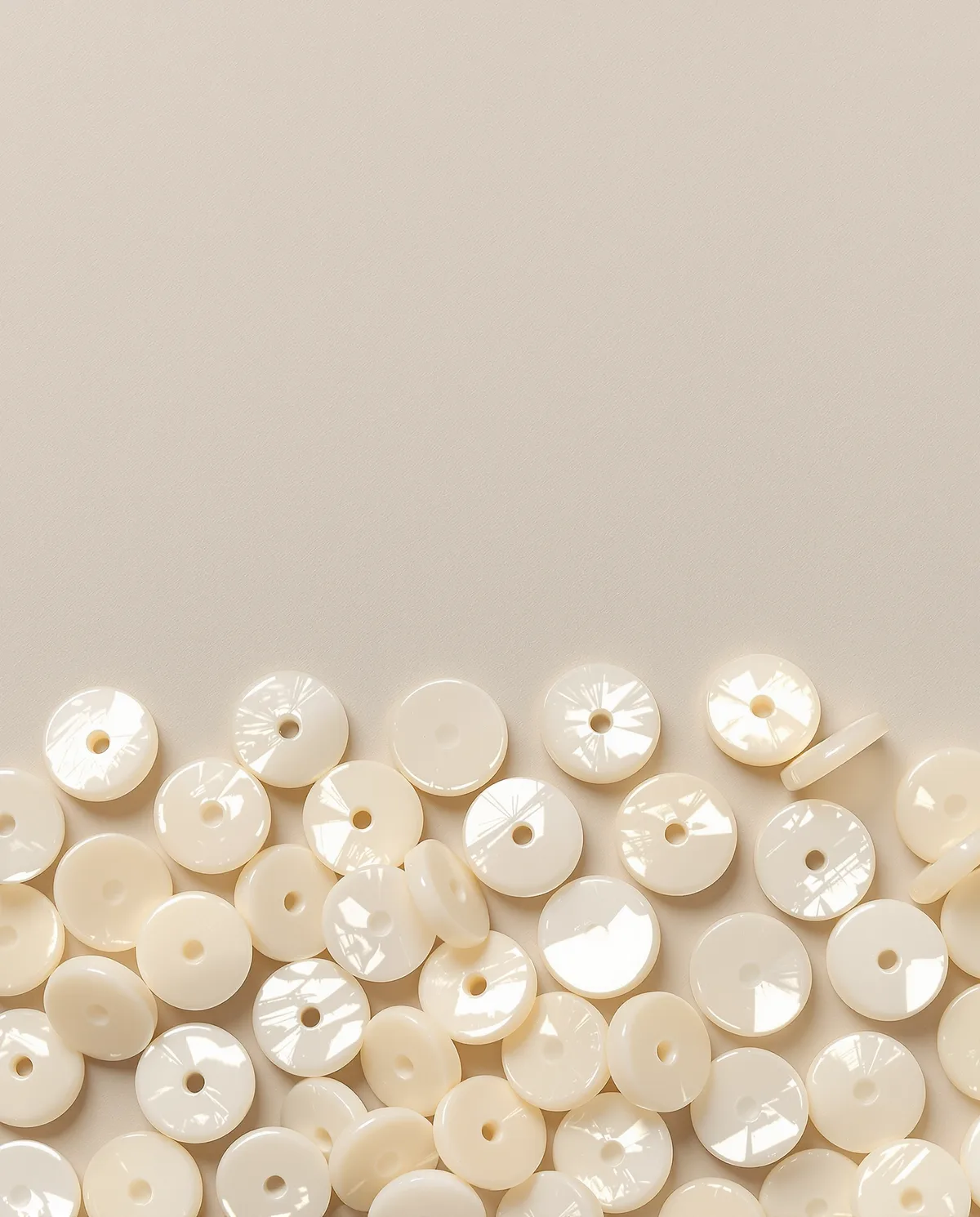
Cast resin or dyed cut acrylic, finished to imitate capiz shell: what it gives that real shell cannot, and why thin discs tangle.
Read the guide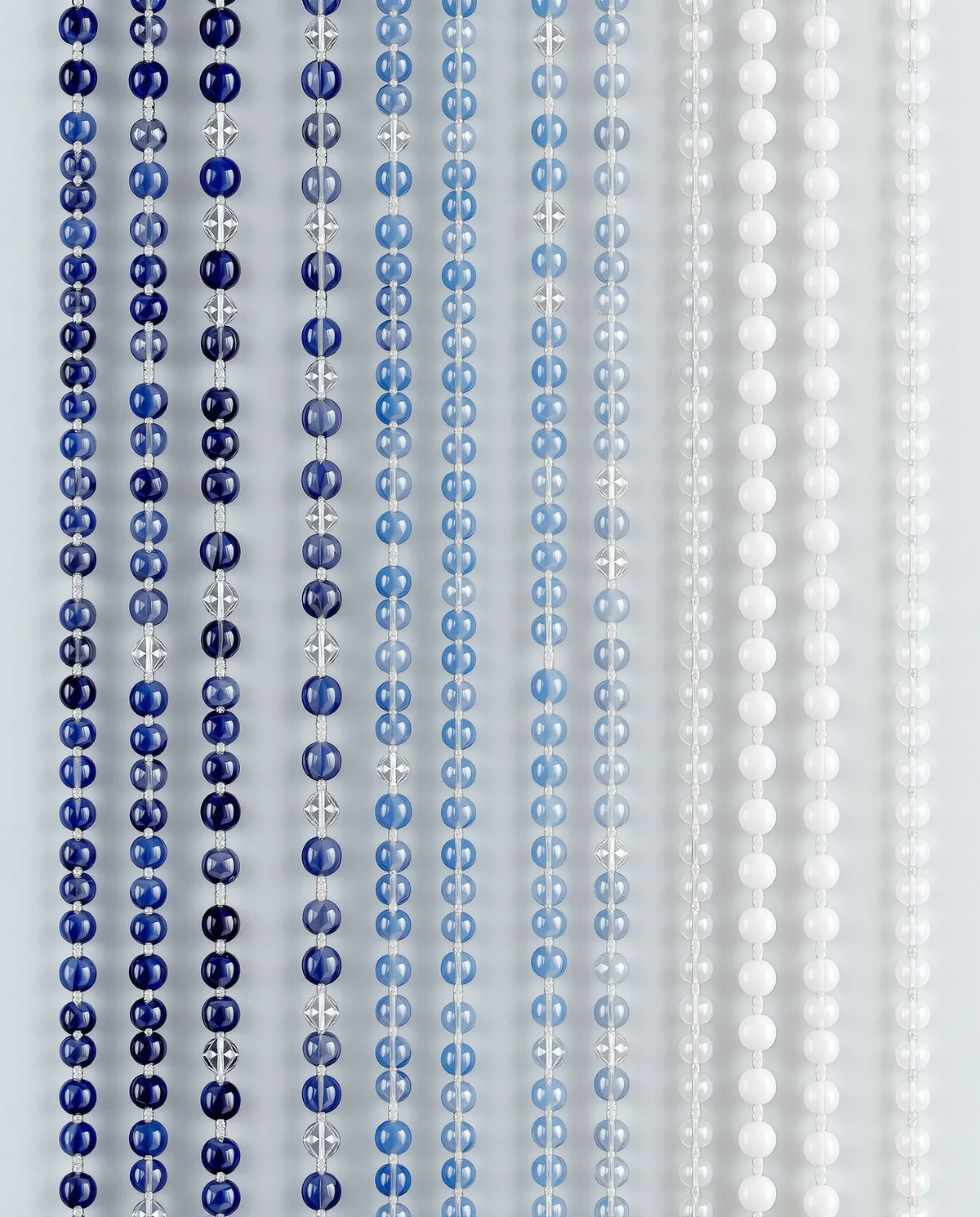
Manufacturing · Faux capiz
This is not a beaded curtain with flat beads. Each disc is linked to the disc below it, so a column is a chain of connections — and that changes how the piece hangs, how it packs and how it is repaired.
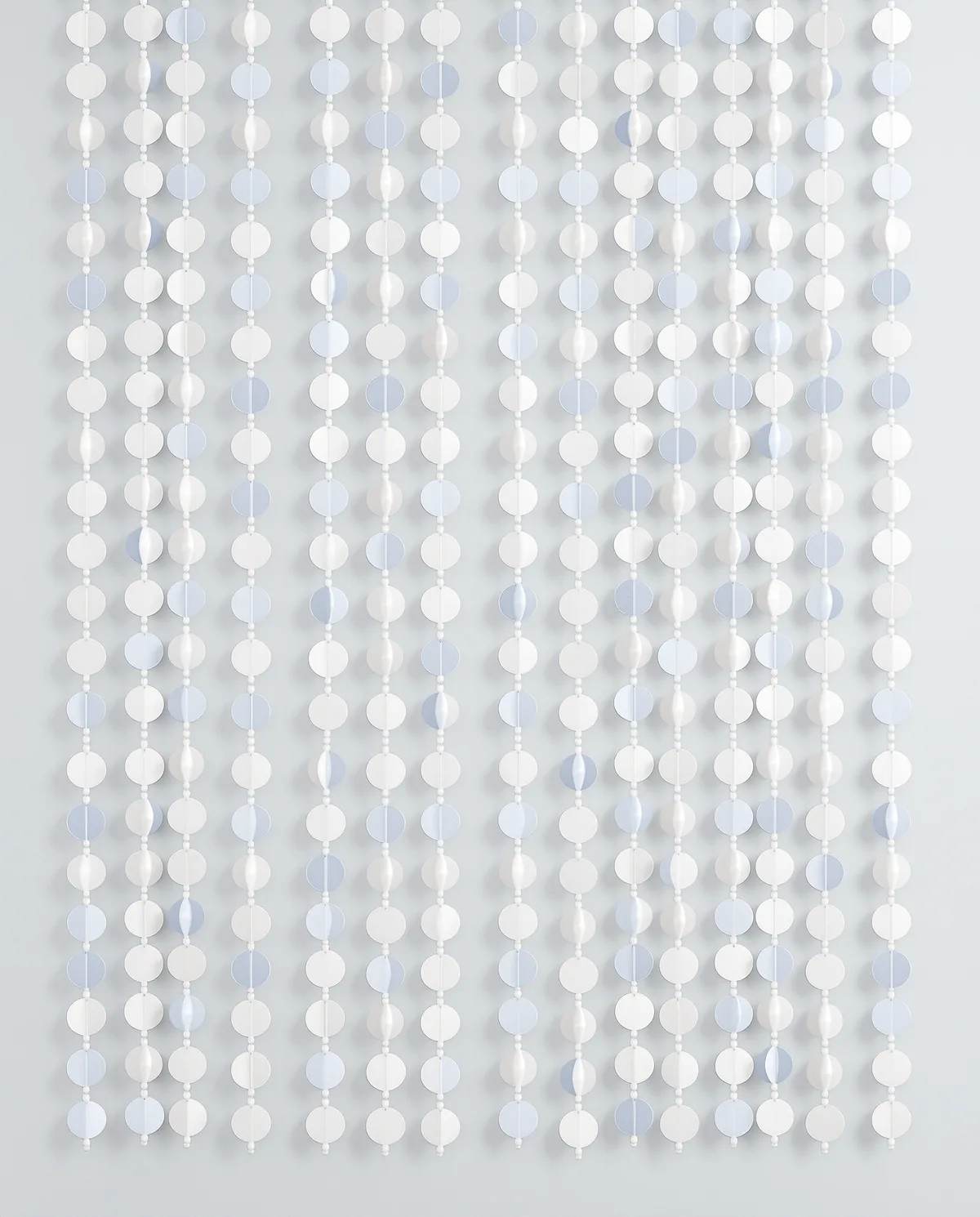
Six bead strands in the Moonwater palette — midnight blue, grey-blue, silver-lined crystal and pearl white — hung parallel against a pale grey-blue ground.
A linked faux capiz disc hanging is built from discs of cast resin or dyed cut acrylic, each joined to the disc below it so that a vertical column is a chain of connections rather than beads threaded on one cord. Columns hang side by side from a turned wooden dowel. Nothing in the range contains shell, and every piece is made to order.
Linked disc hangings in faux capiz: discs of cast resin or dyed cut acrylic, each joined directly to the disc below it, so a vertical column is a chain of individual connections. The columns hang side by side from a turned wooden dowel.
That is a genuinely different construction from a beaded curtain, where every bead on a strand shares one continuous cord. Linked disc construction takes the mechanics apart — the connection carries the load, the disc presents a face, and a flat shape wants to rotate in a way a round bead never does.
Changeable: the disc size, the disc colour, the column count and pitch, the drop and the hem shape, whether a spacer bead is fitted, and the dowel profile and finish. Any of the design-library pieces can be recoloured and resized.
Fixed: the substrate is cast resin or dyed cut acrylic, and the construction is linked rather than strung. Both of those are what the range is.
Finished width and drop, with the shortest drop where the hem is shaped. Column count or — better — column pitch, because pitch is what survives a resize. Disc diameter and thickness. Hole position as a dimension from the rim. Whether spacer beads are fitted. The top fixing. Colours as references or physical chips. And the packing.
Hole position and disc thickness are the two entries almost never supplied, and together they decide whether the piece survives. A disc with too little margin above its hole tears out under the weight of the column below it.
Faux capiz in cast resin or dyed cut acrylic, dyed through the body so a scuff shows the same colour rather than a pale substrate. Finishes run from a clear translucent to a semi-opaque milky, with the colour dyed to the reference.
Spacer and locking beads are dyed to match the disc. Where a design mixes beads into the columns — a glass or acrylic bead between discs to steady the hang — the bead comes from the same library the rest of the property describes.
The 2027 design library records linked pieces from 70 by 130 cm to 90 by 200 cm, at 12 to 16 columns, with roughly 239 to 497 discs per piece, in 25 mm and 50 mm disc sizes. Those figures are drawn to size for the 2027 library and confirmed at sampling.
Disc diameter is set per design and confirmed on the sample. The 2027 linked-disc designs are drawn at 25 and 50 mm, and earlier faux capiz sampling covered a wider span, from 10 to 30 mm, so a programme that wants a diameter between the two is a development rather than a selection from a chart.
Against a physical reference, never a screen. Discs are dyed to a colour reference or a physical chip and the colour is confirmed on the sample, and the spacer beads are dyed to match the disc at the same time.
Because the substrate dyes through, this range is one of the more forgiving in the library on colour. The residual risk is dye-lot drift across a large single-colour field, handled the usual way: hold the lot for the programme, or write the acceptable variation into the specification.
A brief is agreed. A rough cost sheet shows where the cost sits and which lever moves the price, before any sample is made. Colour is matched to a reference or a chip. A sample is produced — usually 16 to 20 days from an agreed brief — and photographs are approved before it ships. Production then runs against that approved sample.
A design built in the Design Studio shortens the front of that, because it arrives already assembled from named components rather than as a sketch.
40 to 60 days for beaded décor. Sampling is quoted separately from production.
The part of that which does not compress is the linking. A 497-disc piece needs roughly 497 connections closed by hand before anything is hung, and no scheduling change removes them.
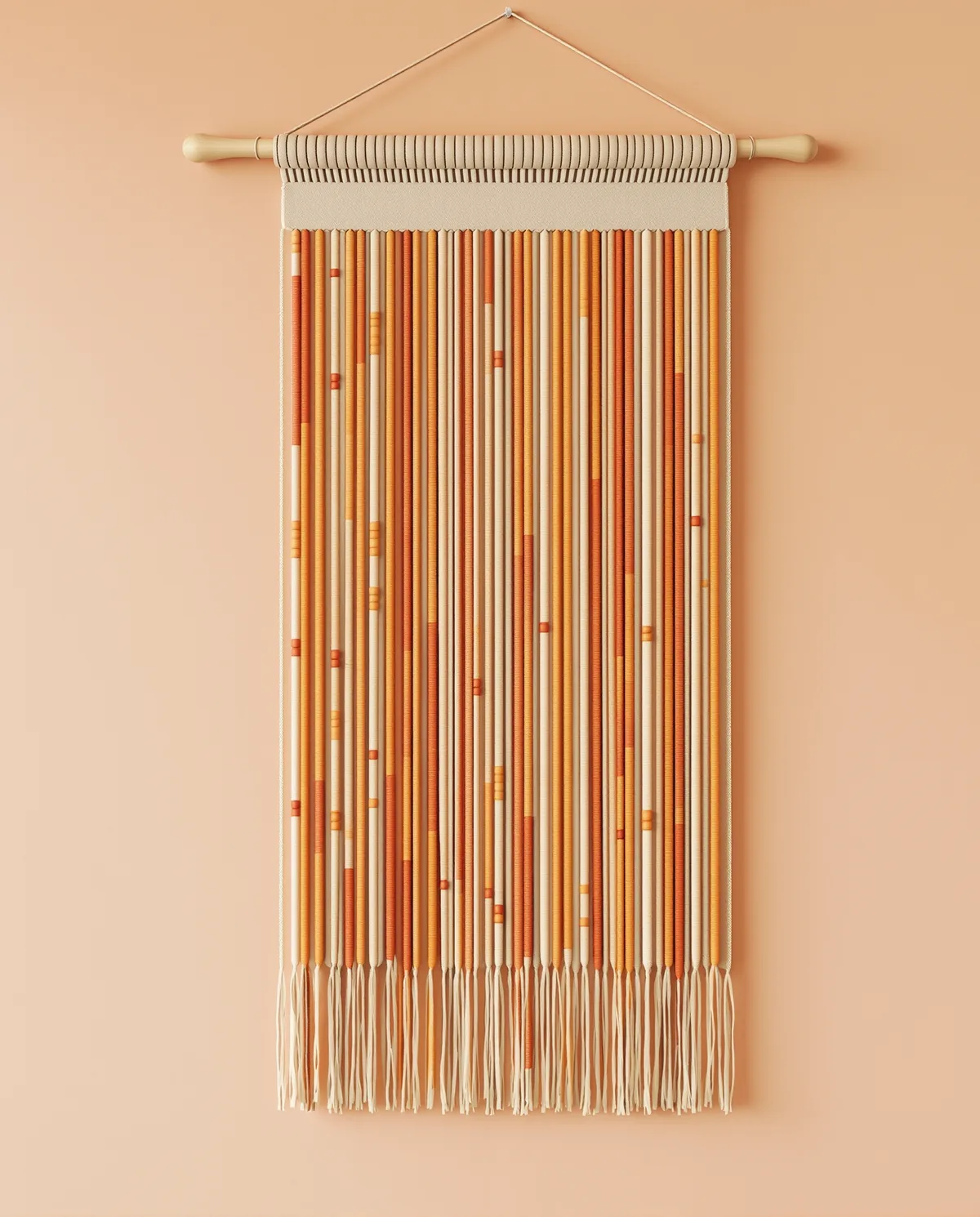
To your carton, label and packaging specification. A linked piece has a packing problem a strung one does not: it cannot be bundled, because there is no cord to bundle, so it ships flat with the columns separated and that sets the carton rather than the other way round.
One packing note is specific to this construction: a column of linked discs does not bundle like a bead strand. Pieces are packed flat and layered so no disc face bears against another disc's edge in transit.
The discs are cast or cut and dyed to our colour, to our own dies where a design needs a shape that does not exist, then finished and linked in our own beadwork studios. The dowel is turned in our own Saharanpur wood factory. Inspection and export packing run through our own Greater Noida house.
The limit on that claim is worth stating: we own the tooling, the colour and the finishing. We do not own a resin plant and this page does not say we do. Factories we own, not vendors we book — and for the disc specifically, dies we own.
First-article and lot inspection through our own Greater Noida house. The checks specific to this construction are link closure, the margin above each disc hole, column pitch at the header, the drop set, and whether any column has twisted so that discs face each other.
Link closure is the one that matters most, because a link that is nearly closed passes a visual check and fails months later. It is checked physically, not by eye.
Connection count, first and overwhelmingly. Then disc size, because a larger disc covers the same drop with fewer connections — which is why the 50 mm size exists alongside the 25 mm. Then the drop, which removes connections proportionally. Then column pitch, which removes whole columns.
Cutting the width saves least, because the header work does not shrink with it. The same asymmetry applies to hand-strung strands, and for the same reason.
The 2027 library holds a 90 by 200 cm linked hanging of about 497 discs in a cool palette, a 70 by 130 cm piece of about 239 discs in a warmer one, and a petal arch at 90 by 180 cm. All are available to develop, with library specifications confirmed at sampling.
The closest relative in the shipped record is a cherry blossom wall hanging — five-petal faux capiz blossoms with a dyed-to-match spacer at each centre, made in two header versions carrying different blossom counts. It is strung rather than fully linked, and it is where the spacer detail was proved.
Extractable data
| Specification | Working value |
|---|---|
| Construction | Discs linked into vertical columns, columns hung side by side |
| Disc material | Cast resin, or dyed cut acrylic — never shell |
| Disc sizes | 25 mm and 50 mm in the 2027 designs |
| Design-library formats | 70 × 130 cm to 90 × 200 cm |
| Columns per piece | 12–16, set by width and column pitch |
| Discs per piece | About 239 to 497, confirmed on sample |
| Top fixing | Turned wooden dowel from our own wood factory |
| Spacer beads | Fitted on cut shapes, dyed to match the disc |
| Colour | Matched to a reference or a physical chip, confirmed on sample |
| Production | 40–60 days after sample approval |
Good to know
The discs are cast or cut and dyed to our colour, to our own dies where a design needs a shape that does not exist, then finished and linked in our own beadwork studios. The dowel is turned in our own Saharanpur wood factory. Inspection and export packing run through our own Greater Noida house. Our making reaches the dies, the colour and the finishing.
No. Minimums are set per design and confirmed per quote, because a 239-disc piece and a 497-disc piece are very different amounts of material and bench time. A single range-wide figure would be meaningless, so we do not publish one.
No. Every piece is made to order against an approved sample. There is no retail stock programme for beaded décor, and the design-library pieces are designs ready to develop rather than items waiting in a warehouse.
Yes. The substrate is dyeable through, so discs are dyed to a colour reference or a physical chip and confirmed on the sample. Spacer beads are dyed to match the disc so the fixing disappears into the face.
Yes. Width is set by column count and column pitch, and drop by the column build, so both are parameters rather than fixed attributes. Keep the column pitch across sizes and the design reads as the same piece; keep the column count instead and it becomes a different one.
40 to 60 days for beaded décor. Sampling usually runs 16 to 20 days from an agreed brief, with photographs approved before the sample ships, and sampling is quoted separately from production.
No. The discs give a shell look without shell: cast resin or dyed cut acrylic, finished to imitate capiz. That is a strength rather than a compromise — the colour repeats, the thickness is controlled, and the piece imports as ordinary home décor.
Keep exploring
Material
Cast resin or dyed cut acrylic, finished to imitate capiz shell: what it gives that real shell cannot, and why thin discs tangle.
Read the guideTechnique
Why a column of linked discs is a different build from a strung strand: the connection, the twist, the packing, and the repair.
Specs and sizesManufacturing
Widths from 50 to 76 cm on a turned dowel, in glass, wood and cast faux capiz — hem shapes, strand counts and what is a shipped format against a concept.
Open the referenceMaterial
Why nacre looks the way it does, what growth marks mean for a specification, and the reason most export programmes choose faux capiz instead.
See the detailHub
The full beaded range — curtains, portals, valances, tabletop, cushions, textiles and beads — from a leading manufacturer that makes the bead as well as the piece.
Open the reference
Start a conversation
Send a reference, a colour chip or a sketch. Minimums are set per design and confirmed per quote; sampling is quoted separately and usually runs 16 to 20 days from an agreed brief.