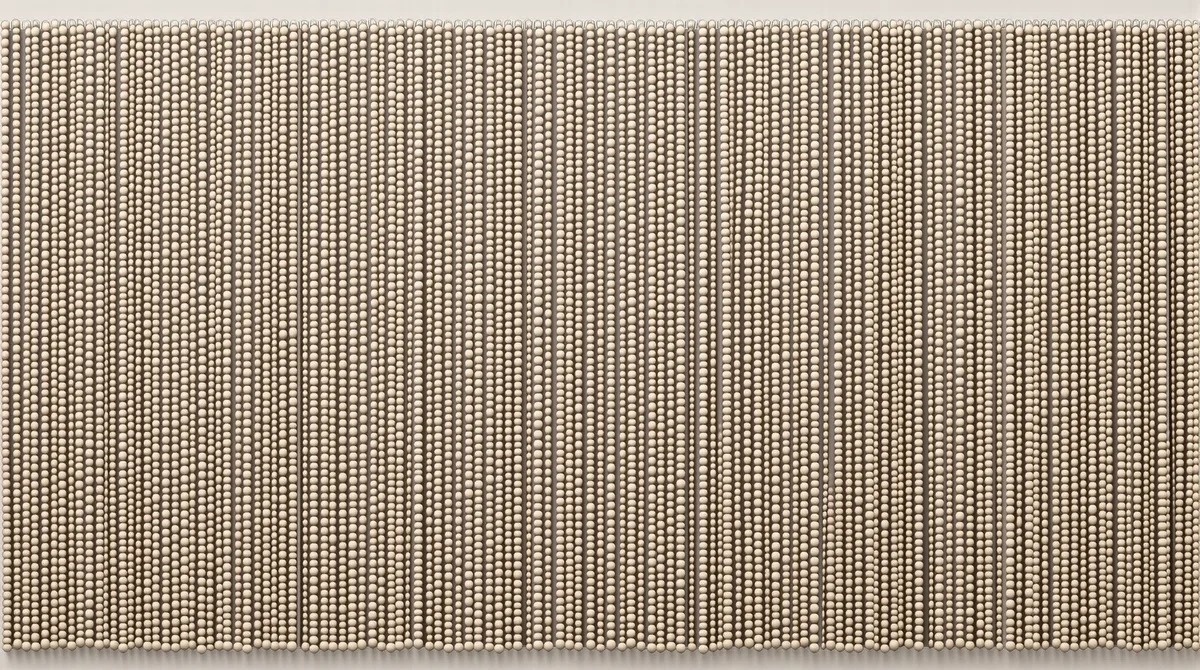
Specification
Feature walls
Modularisation, substrate fixing, tolerance between modules, cleaning access and a repair plan that does not mean replacing the wall.
Read the guide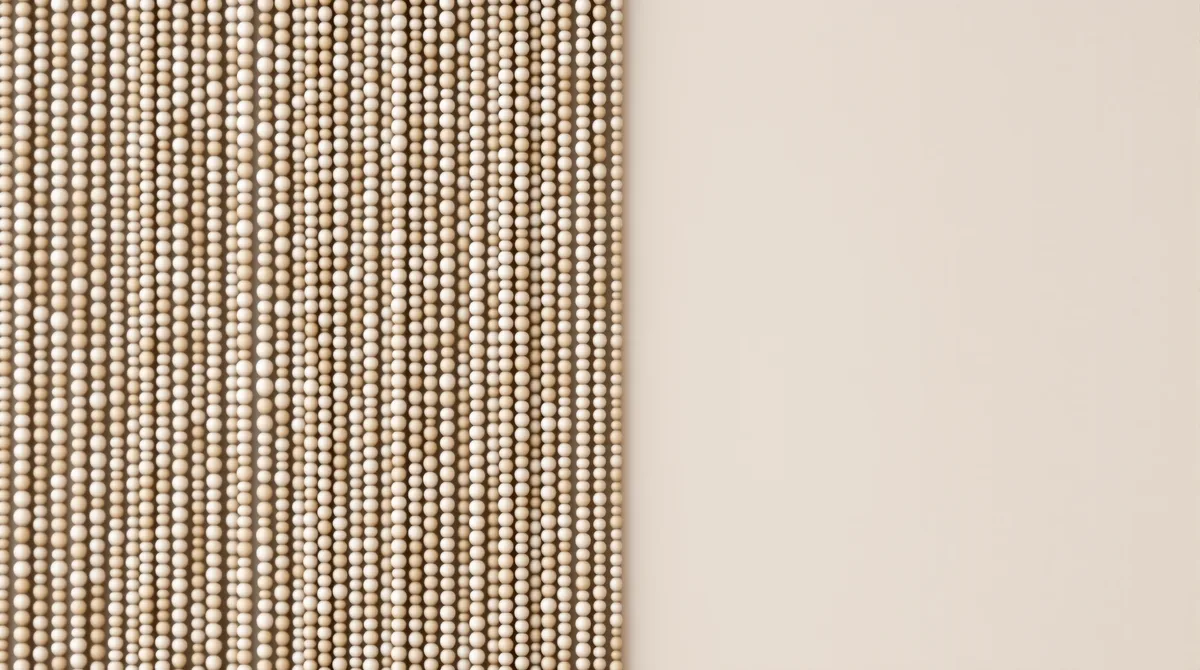
Trend · 2027
Beadwork has one property no flat finish can match: it moves, and it throws a shadow that changes through the day. It also has one it cannot fix: you cannot wipe it.
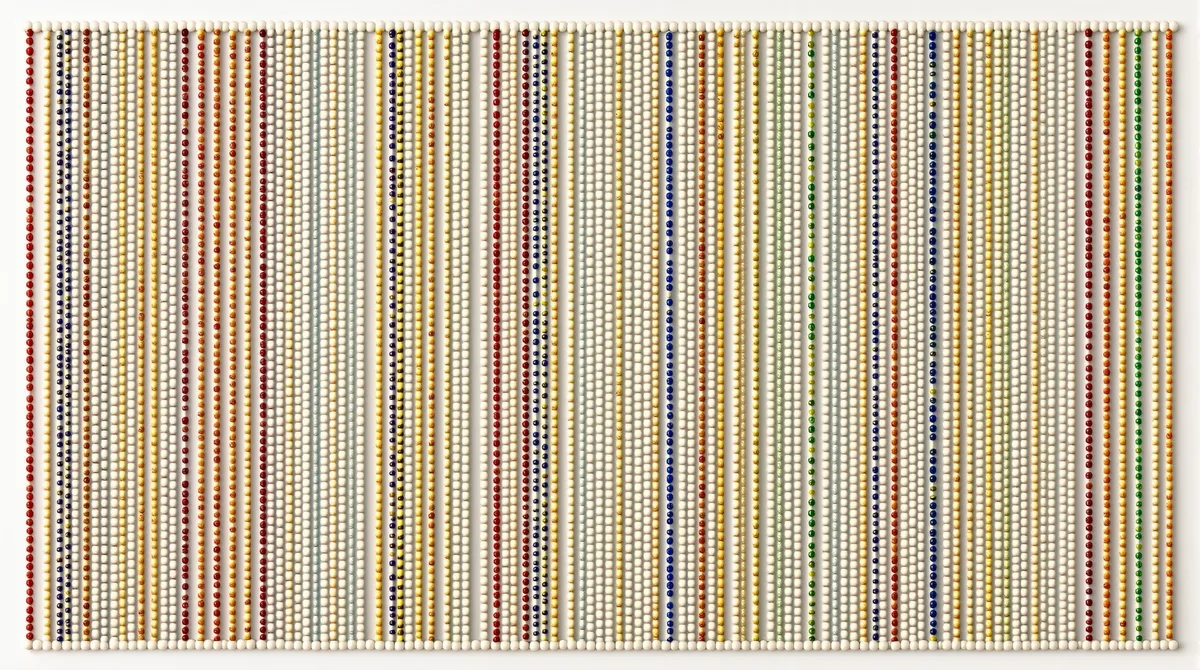
A close field of strands set at the tightest pitch so neighbouring beads touch, building a continuous low-relief surface of glazed ceramic and matte stone beads in greige, oat…
Beadwork is credible as a feature surface and not as a wall finish. It reads at two distances where plaster and tile read at one, and it throws moving cast shadows no flat finish can produce. Against that, it cannot be wiped, cannot run behind furniture, and costs in hand time per square metre.
Walls have stopped being flat. Limewash, plaster, microcement, slatted timber, fluted panels and textile wall coverings have all moved from specialist to mainstream in a few seasons, and the common thread is tactility — a surface that registers as something to touch rather than something to paint. Beadwork sits adjacent to that movement rather than inside it, and the useful thing this page can do is say precisely where it belongs and where it does not.
Press for the movement, and our own record for the application. Interiors coverage has flagged beaded wall coverings alongside the broader texture direction. The firmer evidence is our own: the beaded décor walls at a US casino resort are our reference project in this use — large beaded panels — and in the retail programme wall hangings have become a repeat category rather than a one-off.
Treat it as a contract capability with a retail shadow. The contract version is a large panelised build, specified to a wall, with fixing, fire and maintenance all settled in the specification. The retail version is a wall hanging between 50 by 90 and 60 by 100 centimetres, which is a decorative object rather than a surface. They are different products with different documentation and should not be developed as one.
From one construction at three sizes with a dye-lot plan. For retail, a wall hanging at the documented sizes on twenty to forty strands, in two colourways. For contract, the same construction panelised, with the critical addition that all panels for one wall are strung from one dye lot — a surface-dyed bead shifts between lots, and two adjacent panels from different lots will read as two colours on a wall where they would never be noticed on two separate hangings.
Lead time is 40 to 60 days after sample approval, as across the category, and a panelised contract job should allow for a first-article approval before the full run. Cost is per square metre of hand time in hand-strung construction rather than per material, which is the structural difference from plaster or tile. That makes beadwork expensive for large areas and competitive for a single feature wall, and it is why the sensible specification covers one wall rather than a room.
The wall-hanging group in the 2027 library: Moonwater at 60 by 100 centimetres on twenty-two strands with a straight hem and disc drops; Ember and Honey at 60 by 100 on thirty-three strands with an inverted-V hem; After Hours at 60 by 100 on thirty-three with a V-point; Seventies Sunroom at 60 by 100 on thirty with a scalloped hem; Honey Hour at 60 by 90 on thirty; Op Pennant at 60 by 90 on twenty-seven; Sun Catcher at 50 by 90 on twenty. These are render-library specifications and are design intent rather than production records.
Anything presented as a continuous wipeable wall finish. Beaded tile, bead-faced panel board and beaded wallpaper appear from time to time as ideas, and the material cannot meet the maintenance specification a wall finish is held to. Specifying one means failing a cleaning schedule that a tiled or plastered wall passes without thought.
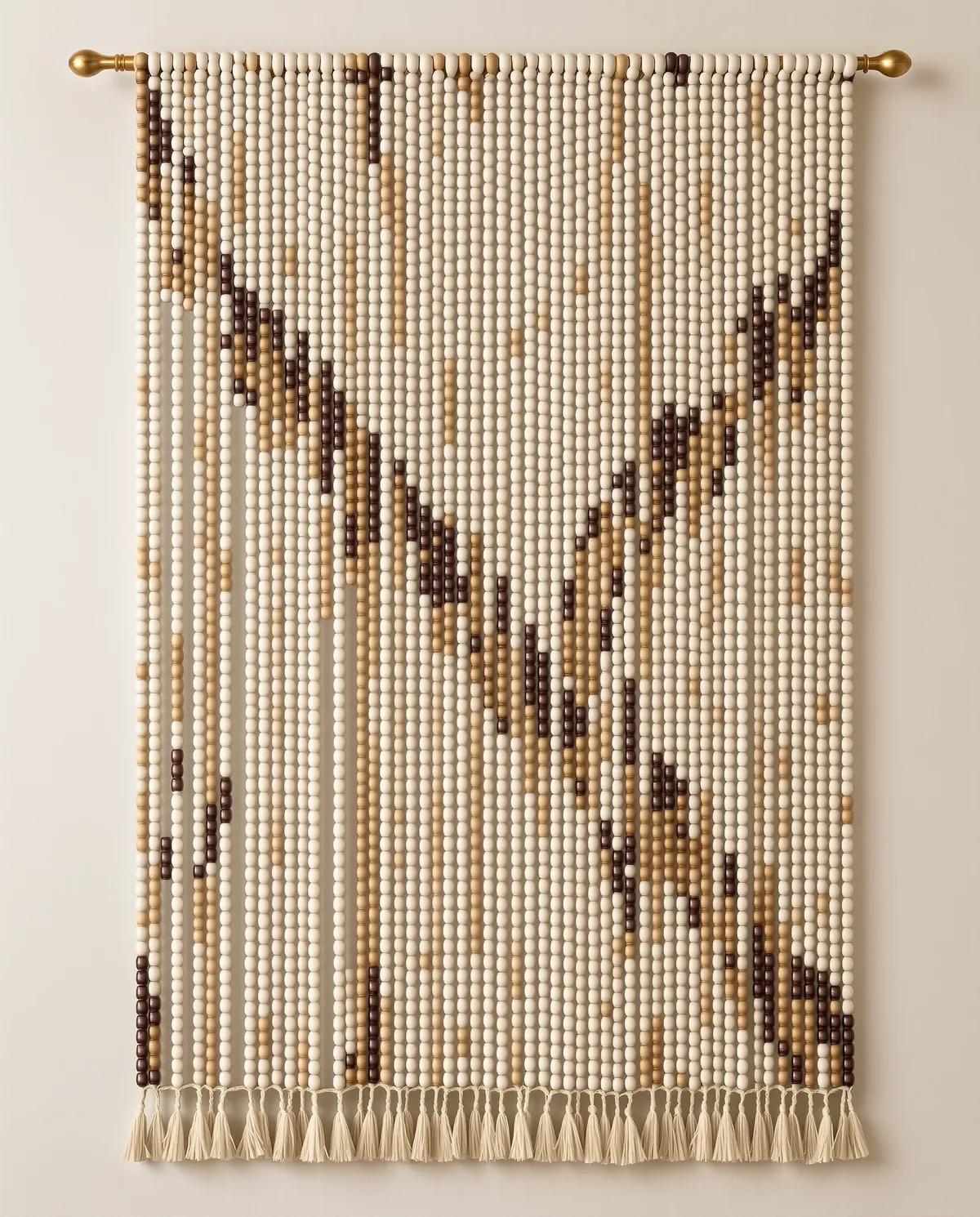
Two different answers depending on who is asking. Press texture trends favour matte, mineral and tonal — limewash and plaster values — which in beads means frosted and matte finishes in oat, chalk and clay — a choice made from the bead materials reference rather than from a paint chart. Hospitality briefs favour the opposite: glossy translucent glass, because a jewelled surface signals occasion and a matte one does not. A range that wants both needs two finishes of the same construction rather than a compromise between them.
Flat panels on rails, sized to a wall rather than to an opening. Where a brief wants a whole wall, the answer is a panelised build with a documented panel layout and a single dye lot, not one enormous piece — a very large single panel is almost impossible to pack, to hang level and to clean. Our documented retail wall-hanging widths run 50 to 76 centimetres, which gives an idea of the module size that handles well.
That the texture trend is mostly about sealed continuous surfaces, and beadwork is the opposite of one. Plaster, limewash and microcement are wipeable, monolithic and permanent; a bead panel is none of those. It collects dust in a way no sealed surface does, it cannot be run behind furniture, and keeping beadwork clean means dusting or wiping strand by strand rather than passing a cloth across a wall. Describing beadwork as a wall finish therefore sets up a specification failure, and describing it as a feature wall does not.
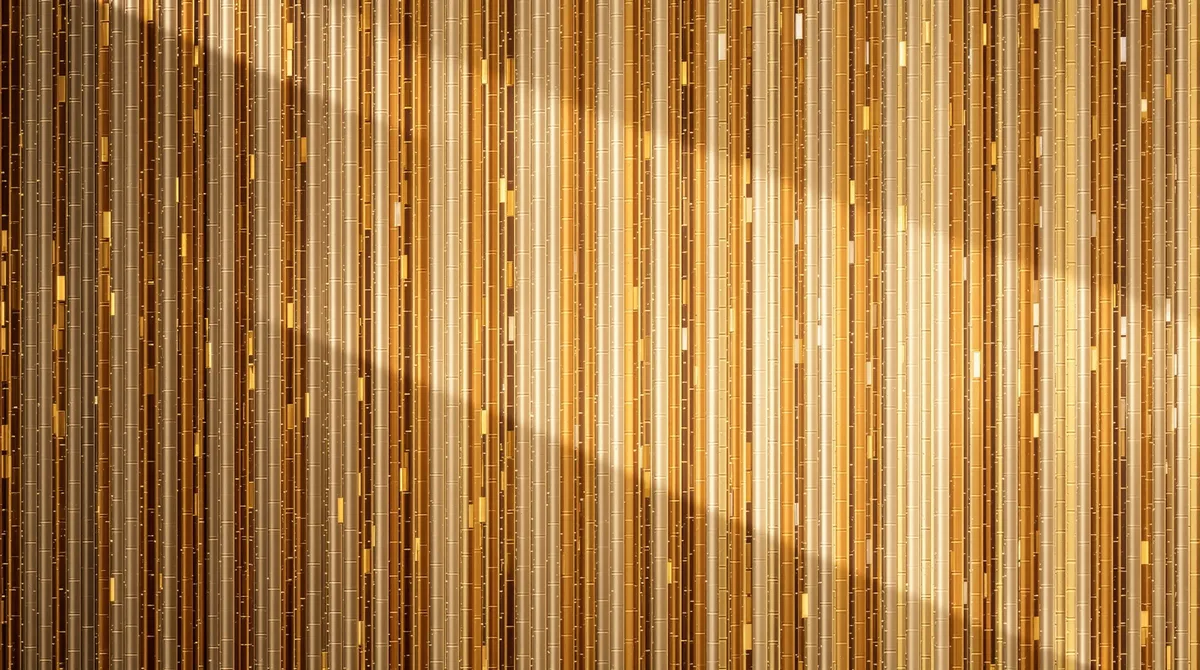
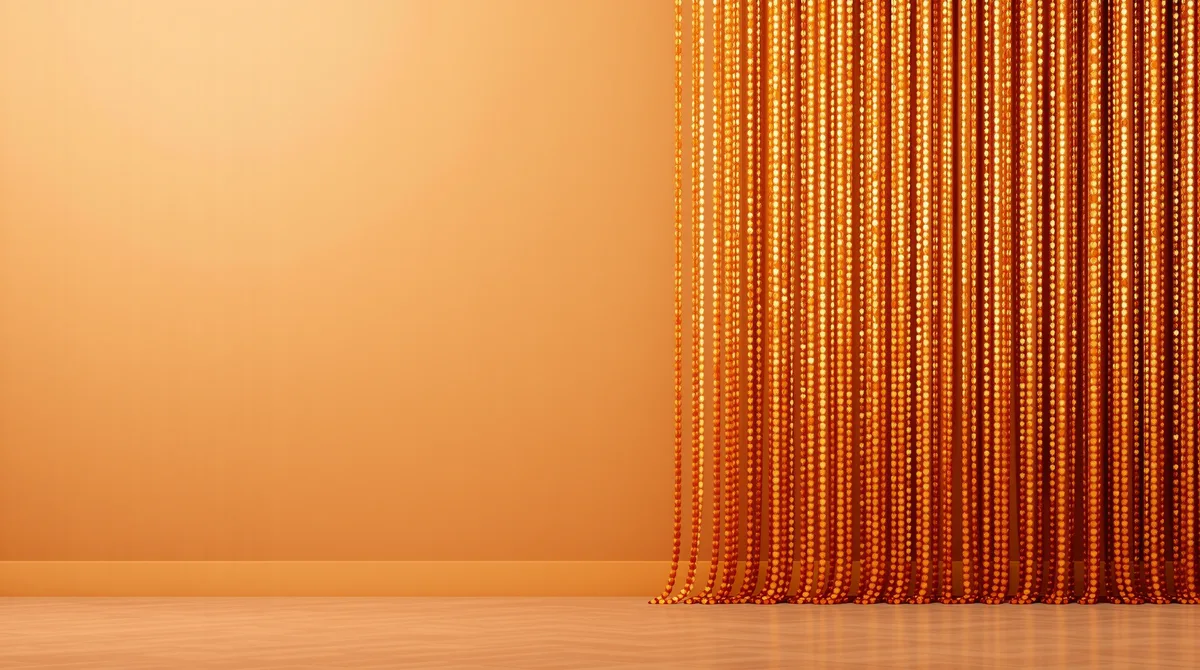
In two places, and both are real. First, it reads at two distances: as a continuous field from across a room, and as thousands of individually legible objects from half a metre. Plaster and tile read at one distance and then stop rewarding attention. Second, it moves, and it throws a cast shadow that travels through the day — in strong raking light the shadow becomes a second pattern on the wall behind it, as long as the panel is tall. No flat finish can do that, and in a lobby or a bar where the light changes, it is the whole argument for the material.
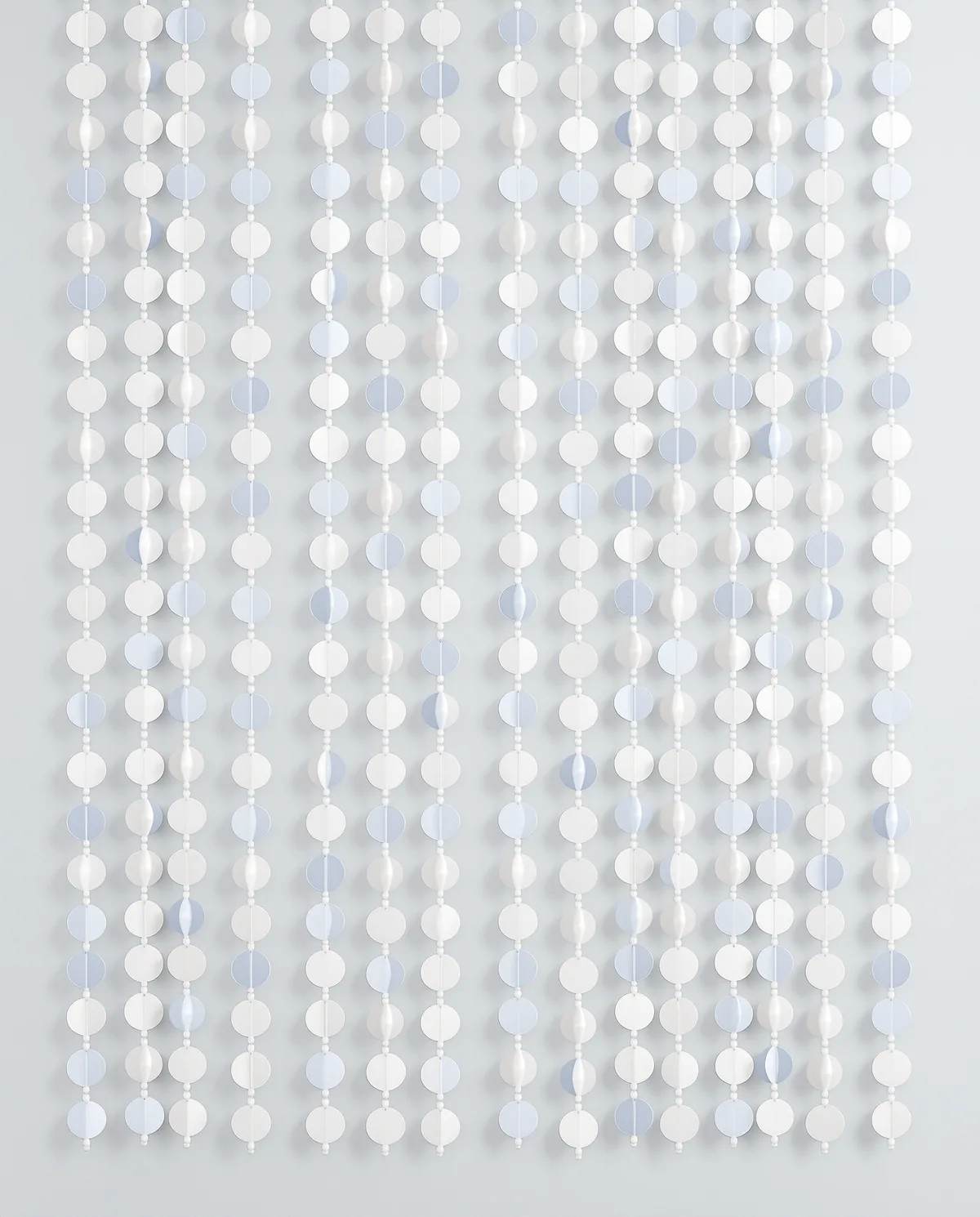
Press direction is seasonal; contract demand for feature surfaces is not. Hospitality interiors have always needed one surface per space to carry the identity of the room, and that requirement does not move with domestic fashion. The sensible planning assumption is that the retail wall hanging follows the texture cycle and the contract feature wall does not.
Posted: whole rooms surfaced in texture, beadwork among them, photographed in low raking light that flatters every finish equally. Bought: one feature wall, or a retail wall hanging between 50 by 90 and 60 by 100 centimetres. The gap is instructive rather than disappointing. A single feature surface is the position where beadwork beats the alternatives on texture and is not asked to meet their maintenance specification, which means the thing being bought is the thing the material is actually good at.
Good to know
The tactile-surface direction in interiors has been running for several seasons in press, which is a description rather than a measurement. The structural point is that feature-surface demand in hospitality is permanent and does not depend on a domestic cycle.
For this use the finish matters more than the hue. A glossy translucent bead throws specular highlights and reads as a jewelled surface; a matte or frosted bead reads as a textile. Press texture trends favour the second, and the hospitality briefs we see favour the first.
Large flat panels rather than curtains, hung from a rail or a track and sized to a wall rather than to an opening. Our documented wall-hanging formats run 50 by 90 to 60 by 100 centimetres, and anything larger is a panelised build with a dye-lot plan across the panels.
That the texture trend in press is mostly about plaster, limewash and microcement — sealed, wipeable, continuous surfaces — and beadwork is none of those. Beadwork is a feature wall, not a wall finish, and describing it as a finish sets up a specification failure around cleaning and durability.
The wall-hanging group, which runs from 50 by 90 to 60 by 100 centimetres on twenty to forty strands with straight, V-point, inverted-V and scalloped hems. Those are render-library specifications and are design intent rather than shipped product.
Beaded tile, bead-faced panel board or any beaded product presented as a continuous wipeable wall finish. Beadwork cannot meet a wall-finish maintenance specification, and accepting that language guarantees a failure later.
Keep exploring
Specification
Modularisation, substrate fixing, tolerance between modules, cleaning access and a repair plan that does not mean replacing the wall.
Read the guideIndex
Eleven trend reads on beaded décor for 2027, from the floor the movements land on first.
Specs and sizesTrend read
Measured demand, warm and dotted in production, and the point where the look tips into pastiche.
How it is madeTrend read
Where the warm amber family sits, where the blues went, and which colour stories are carrying production.
Read the guideTrend read
Dense pattern multiplies bead count and picking operations — and the version that actually gets ordered is the scattered accent.
How it is made
Start a conversation
Send a reference, a colour chip or a sketch. Minimums are set per design and confirmed per quote; sampling is quoted separately and usually runs 16 to 20 days from an agreed brief.