Compliance
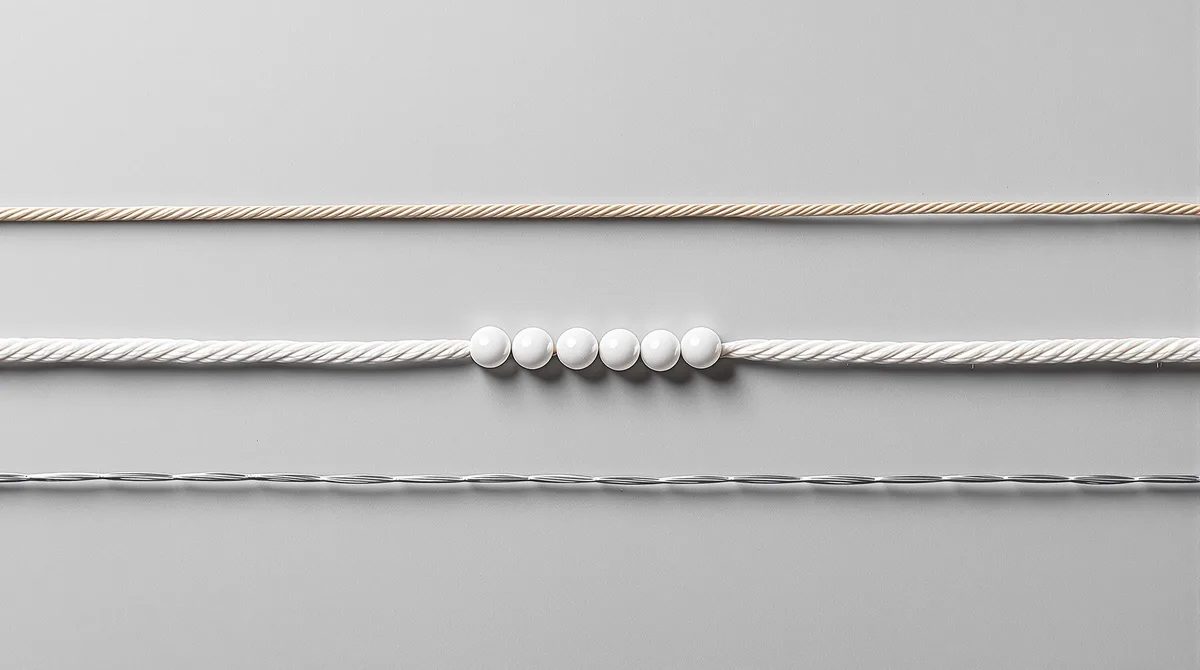
Flame testing a panel
What NFPA 701 burns, why the cord and header carry the result, and how a project gets a report against its own build.
Specs and sizes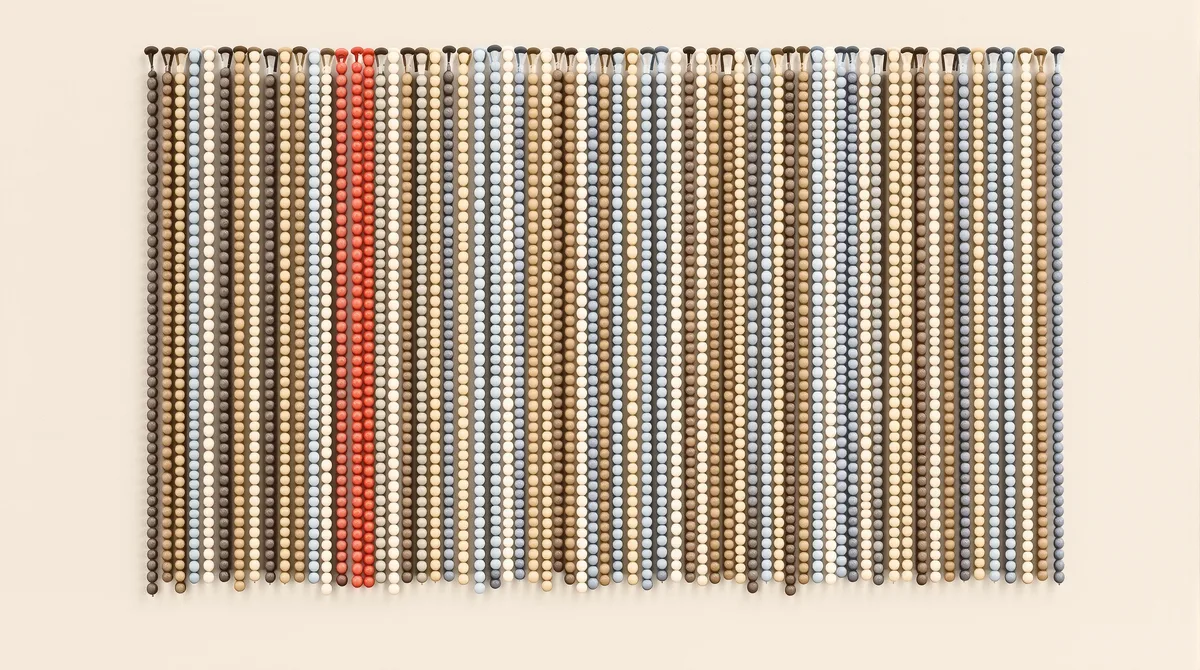
Application · Hospitality
In a restaurant, beadwork is a service item. It sits next to a pass or a doorway that staff move through all night, it collects aerosolised fat, and it has to be cleanable between covers.
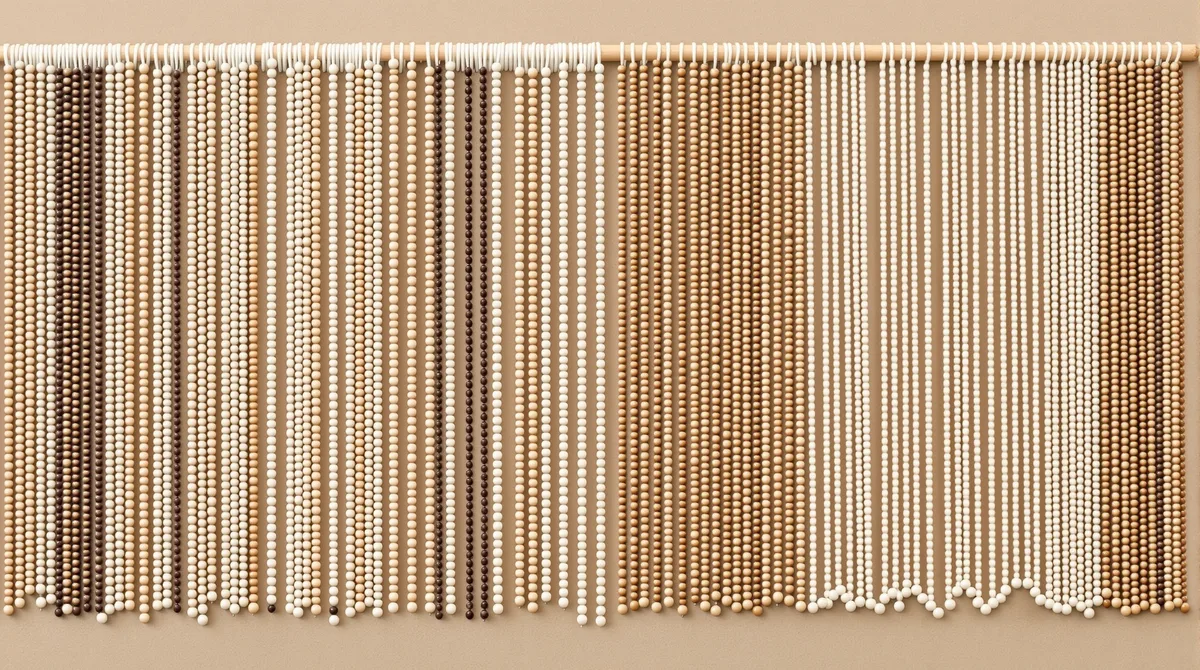
Hand-strung bead strands hung side by side in espresso, crema and dusty cornflower glass, with one cherry-red strand among them.
Beadwork goes into a restaurant or bar as a service item: an arched portal at a service doorway, a screen beside a pass, or a drop between a bar and a dining area. Grease and traffic set the cleaning cycle, and a commercial fit-out will ask for a flammability report that we do not currently hold for any bead panel.

Three briefs recur. Screen the service doorway so the kitchen is hidden but staff are not slowed down. Break the sightline between a bar and a dining room without closing the space. Or put one piece of texture on a wall that photographs well, because a restaurant's interior is also its marketing.
All three are commercial briefs with a hospitality cleaning regime attached. That regime is the thing designers under-specify, and it is the thing the operator will raise first.
A surface that survives repeated wiping. Not one clean — hundreds, with whatever the kitchen porter has to hand.
A pitch that lets staff through. A tight, luxurious pitch interlocks when two people pass carrying things. Wider is better here, and the design has to earn its density some other way.
Replaceability. Something will be torn down by a trolley. A panel built so one strand can be replaced, with spares strung during the production run, is a fit-out item. A panel without spares is a liability.
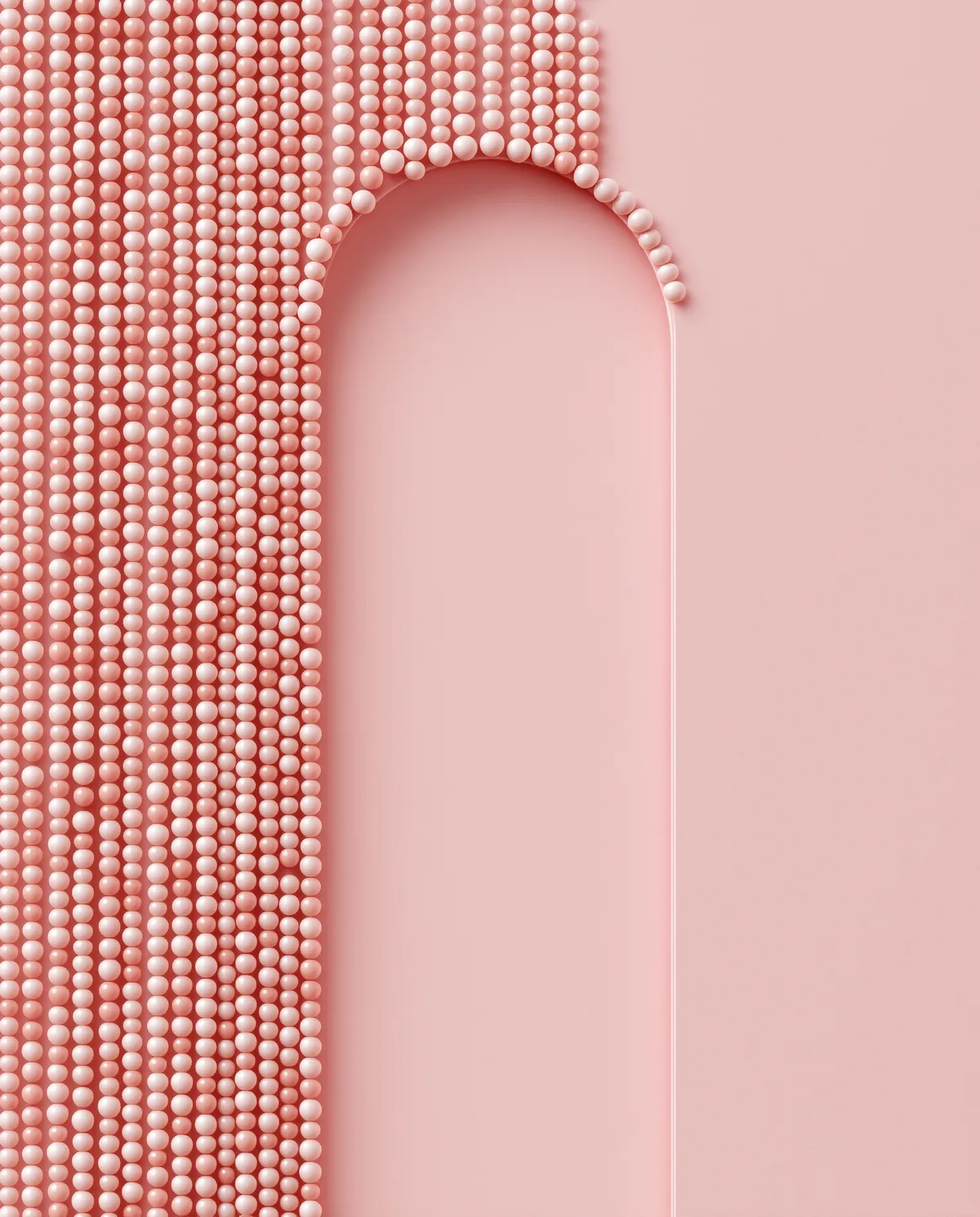
At a service doorway, a portal with an arched-cut drop — 76 × 140 cm in the record — because the arched centre opening exists to frame a walk-through, and a walk-through with trays is exactly the case it solves. Front of house, the standard door curtain at about 90 × 200 cm on a wooden dowel, thirty hand-strung strands.
At a pass or over a bar back, a short drop or valance. The 120 × 35 cm valance format from the design library is the right order of size, and short formats are cheap to replace.
Material: body-coloured pressed glass first. Moulded acrylic away from any heat source. Keep wood out of a steam path and keep surface-dyed beads out of a cleaning routine.
The designer, the operator and the fire file holder — and in a leased unit, the landlord. The operator's sign-off is the one that actually predicts whether the installation survives: ask the general manager who will clean it, with what, and how often, and specify to that answer.
Our sign-off is the sample. Photographs approved before the sample ships, the sample approved before production, production held to it through first-article and lot inspection in our own Greater Noida quality house.
We make the panel and its wooden header rail or turned dowel. Brackets, hooks, rods and tracks are the project's. In or near a kitchen, specify corrosion-resistant fixings: grease and steam will find mild steel.
Fix into solid substrate above the architrave, and leave clearance to lift the panel off in one piece. Deep-clean access is worth more in a restaurant than any other setting, because the panel will need it. The panel is weighed on the approved sample and the fixing is sized to that weight.
A commercial interior in the US will normally be asked for NFPA 701 on hanging decorative material; the UK, EU and Australian equivalents all want a report rather than a description. Fire performance is tested on the specified build and quoted with the project — it has to be the specified build, because bead, cord and header all affect the result.
Two things to plan around. Beads are decorative and are not a food-contact surface — the FDA and Proposition 65 statements we publish apply to our stainless steel and copper lines — so keep a panel clear of an open pass where food is plated. And where an environmental health officer asks for a cleanable-surface classification, bring it with the brief so the material is chosen to suit.
Weekly dry dusting as a baseline, down each strand from header to hem, more often within a few metres of a pass. Then damp spot-cleaning of the beads, cloth wrung nearly dry, dried in the same pass. Nothing wet reaches the cord.
Banned in service: degreaser, solvent, bleach, abrasive cream, steam and hot water. Those are the five things a kitchen reaches for, so write them on the care card that ships with the panel and again on the O&M sheet, because the care card will be lost.
The bead surface. Grease makes dust stick, wiping removes it, and repeated wiping is what lifts a surface dye or buffs a frosted sea-glass bead into a gloss it cannot return from. Body-coloured pressed glass is the material that shrugs this off.
Second, cord discolouration — cosmetic, but it reads as grubby at close range. Third, mechanical damage from trolleys and chairs, which is why spares matter. Actual bead breakage is unusual.
Sampling 16 to 20 days from an agreed brief; production 40 to 60 days after sample approval. On a fit-out the critical path is usually not production — it is the flammability test, if the project needs one, which is quoted and scheduled separately and should be started the day the sample is approved.
Formal quotes come within 48 hours of a specification, and a multi-element fit-out starts with a discovery call rather than an email thread.
Opening dimension, then the finished panel width and the longest drop from the underside of the fixing. Two fields are specific to a restaurant: whether the panel sits in the reveal or on the face, because a face-mounted panel is cleanable from both sides and a recessed one is not; and the hem height above floor, because a hem at ankle level is walked on by service staff carrying plates.
Then the three restaurant-specific notes: the spares allowance, the cleaning method and frequency, and an explicit fire-performance clause naming what will be tested, on which build, by whom, and at whose cost.
A rough cost sheet comes before any sample, and for a restaurant two of its levers work in your favour — a wider pitch is both cheaper and more serviceable, and a short pass screen costs a fraction of a full doorway drop. A densely patterned full-height panel can hold about 11,800 beads, and the hand-stringing hours behind that number are most of the price.
Specifying beadwork for a commercial interior, the bead materials behind it and the routine care the operator inherits are each covered on their own pages.
Extractable data
| Item | What suits a restaurant or bar | Note |
|---|---|---|
| Service doorway | Portal, 76 × 140 cm, arched-cut drop | Clear centre so trays and bodies pass without contact |
| Front-of-house doorway | Door curtain ≈90 × 200 cm, 30 strands | Shipped standard format |
| Pass or bar screen | Short drop or valance, 120 × 35 cm | A current design-library format |
| Bead material | Body-coloured pressed glass | Tolerates repeated damp cleaning |
| Bead material to avoid | Surface-dyed beads; bare or waxed wood | Dye lifts; wood should not meet constant steam |
| Acrylic | Viable away from heat; moulded and dyed to colour | A thermoplastic — keep clear of heat sources |
| Pitch | Wider than domestic, so staff pass cleanly | Tight pitch interlocks under traffic |
| Top fixing | Wooden header rail or dowel, cleanable | Brackets and rods supplied by the project |
| Cleaning | Dry dust weekly; damp spot-clean the beads | Guidance for the material, not a tested cycle |
| Spares | Strung with the production run | Bead-for-bead match later is not guaranteed |
| Sampling | 16–20 days from an agreed brief | Photographs approved before the sample ships |
| Production | 40–60 days after sample approval | Published lead time for beaded décor |
| Flammability | Tested on the specified build and quoted with the project | NFPA 701 or the local equivalent |
Good to know
Beaded décor walls at a US casino resort — large beaded wall panels, and the reference project for hospitality at scale. Beyond that, the formats a restaurant draws on — portals, curtains and valances — are a shipped retail programme, in volume and in the materials a dining room needs.
At a service doorway, a portal with an arched-cut drop: the centre is cut away so staff and trays pass through clear air rather than through strands. Front of house, a standard door curtain at around 90 × 200 cm. At a pass or over a bar back, a short drop or a valance, which is also the cheapest format to replace when the kitchen eventually wins.
The panel hangs from a wooden header rail or dowel that we make. The brackets or hooks are the project's, and in a commercial kitchen area they should be stainless or coated, because a mild-steel hook in a grease-laden extract path will corrode. Fix above the architrave into solid substrate, and leave enough clearance that the panel can be lifted off in one piece for deep cleaning.
Expect to be asked for a flammability report — NFPA 701 in the US, local equivalents elsewhere — plus whatever the landlord's fit-out guide and the environmental health regime require of cleanable surfaces near food. Fire performance is tested on the specified build and quoted with the project. On food safety, beads are decorative and are not a food-contact surface: the FDA and California Proposition 65 statements we publish cover our stainless steel and copper lines.
Dry dusting weekly, down each strand from header to hem, and more often near a pass. Then a damp spot-clean of the beads with the cloth wrung nearly dry, dried in the same pass. Degreasers, solvents and steam are all out: they lift surface dye, dull frosted beads, soften acrylic and put water into the cord, which is the component that actually fails.
Sampling is 16 to 20 days from an agreed brief with photographs approved first, and production is 40 to 60 days after sample approval. On a fit-out programme the thing that moves the date is not production but the fire report: if the project needs a flammability test, that is a separate quotation and a separate lab schedule, and it should be started at sample approval rather than at hand-over.
The bead surface, from grease plus cleaning. Airborne fat turns dust into a film, the film gets wiped, and repeated wiping is what lifts a surface dye or polishes a frosted bead into gloss. Body-coloured pressed glass is the one material that is genuinely indifferent to this. After the surface, cord discolouration near a pass, which is cosmetic but visible.
Keep exploring
Compliance
What NFPA 701 burns, why the cord and header carry the result, and how a project gets a report against its own build.
Specs and sizesPillar
Twenty settings, from a closet front to a hotel lobby, each with the format that suits it, the fixing it needs and the standard that applies.
View the rangeSpecification
Round-the-clock operation, high ceilings, a house fire file and a maintenance window measured in hours — what an entertainment venue demands of beadwork.
How it is madeSpecification
Salt air, humidity, strong daylight and open sides — and the coastal material palette that survives all four.
Read the guideSpecification
Large-format panels, fire performance, the maintenance plan and the approvals a lobby specification has to clear before it gets built.
Compare the options
Start a conversation
Send a reference, a colour chip or a sketch. Minimums are set per design and confirmed per quote; sampling is quoted separately and usually runs 16 to 20 days from an agreed brief.